纺织学报 ›› 2026, Vol. 47 ›› Issue (02): 205-213.doi: 10.13475/j.fzxb.20250701101
白刚1,2, 孙理3, 戴淑娇1,4, 沈修宇1,2, 刘艳春1,2( )
)
BAI Gang1,2, SUN Li3, DAI Shujiao1,4, SHEN Xiuyu1,2, LIU Yanchun1,2()
摘要:
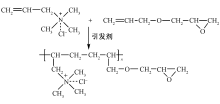
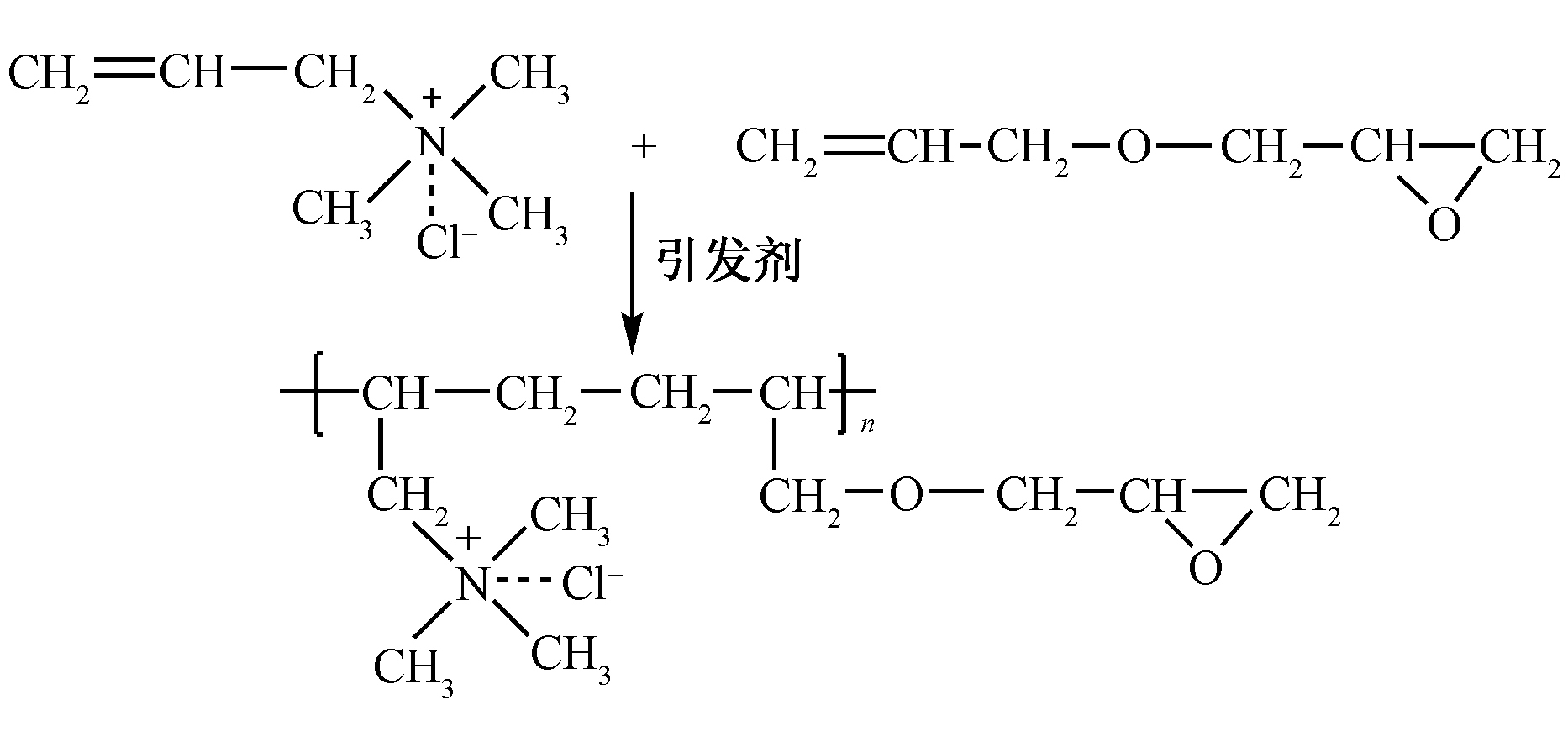
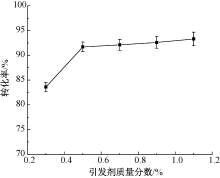
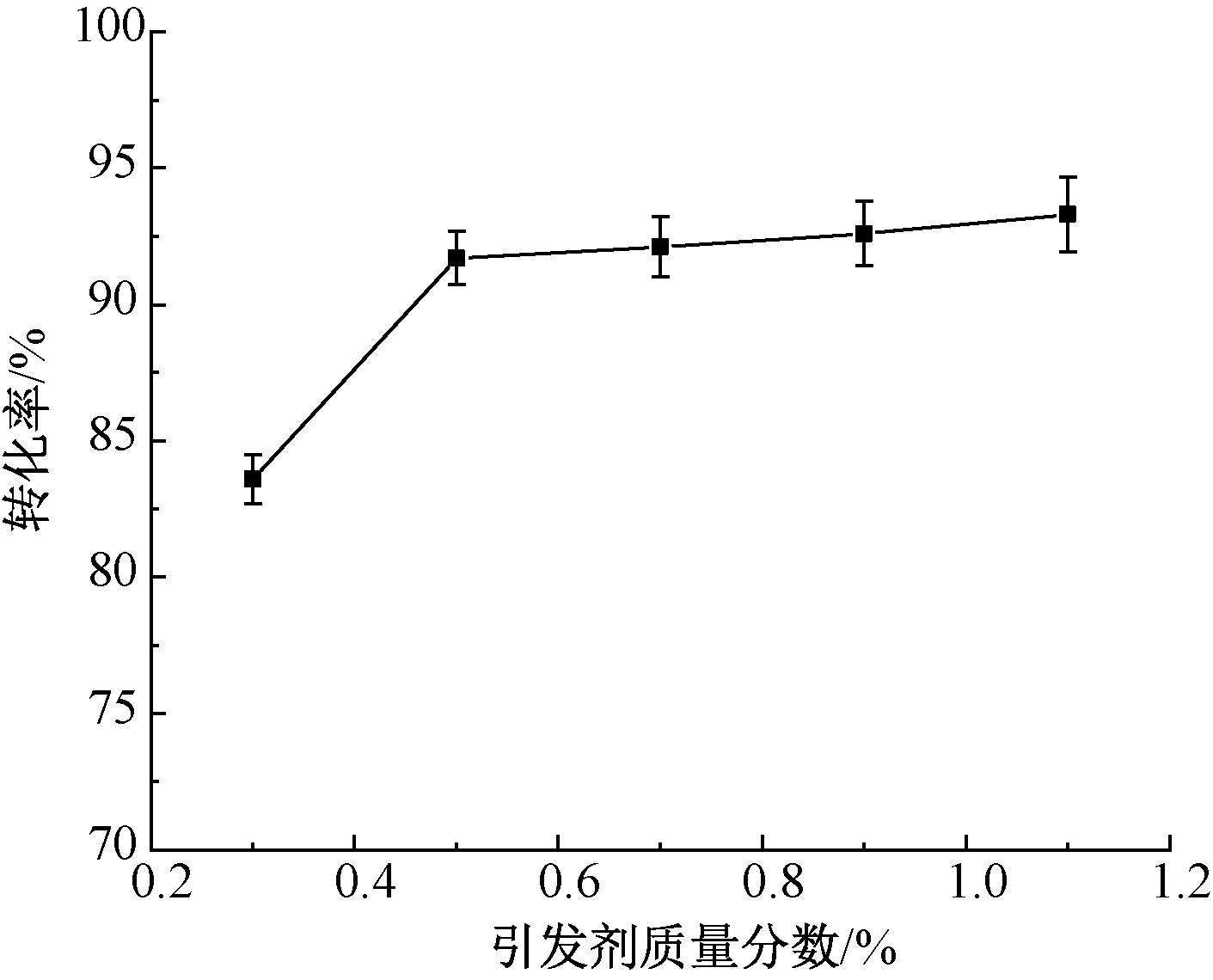
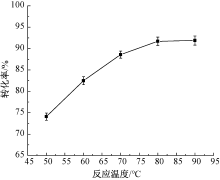
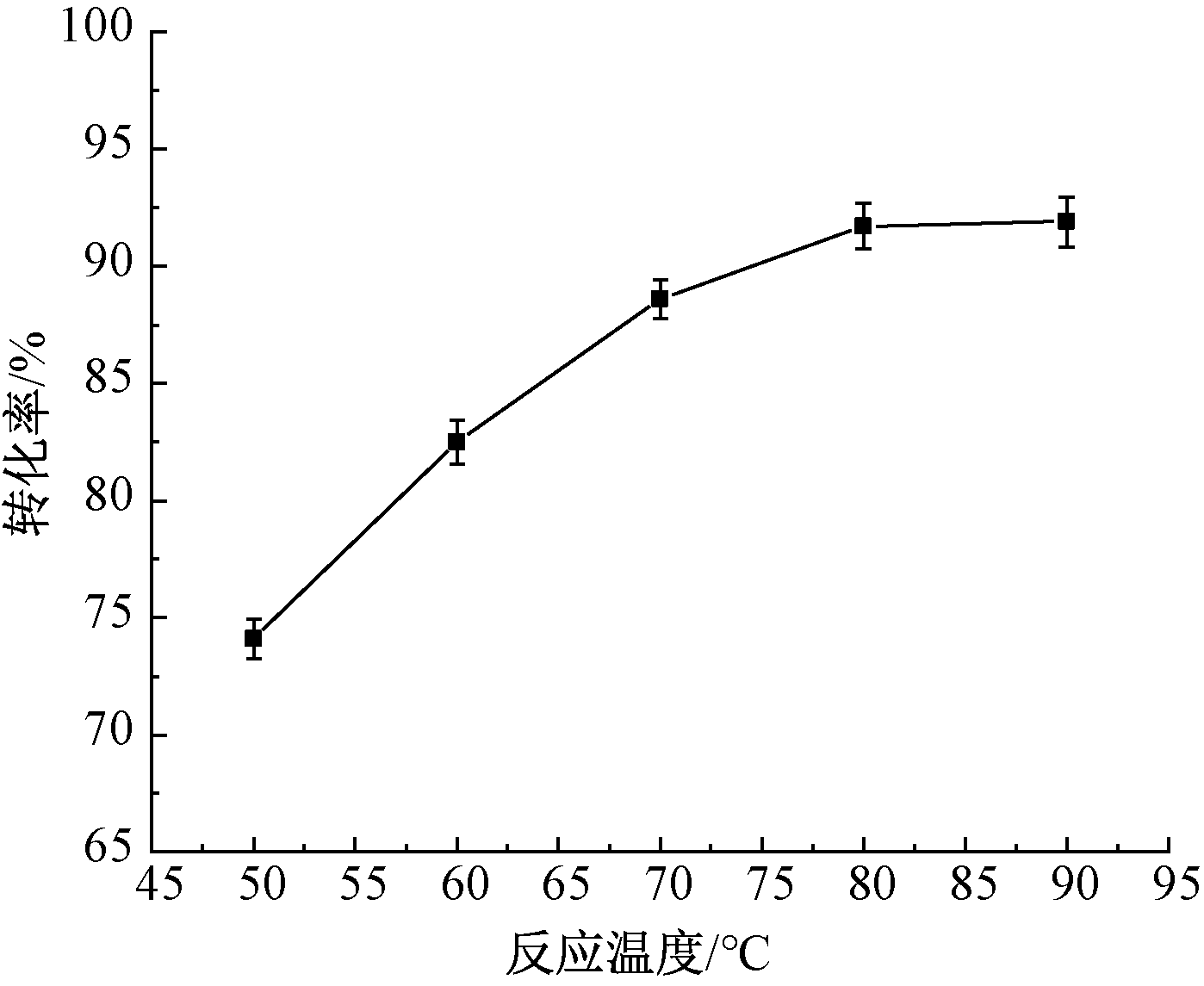
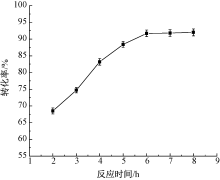
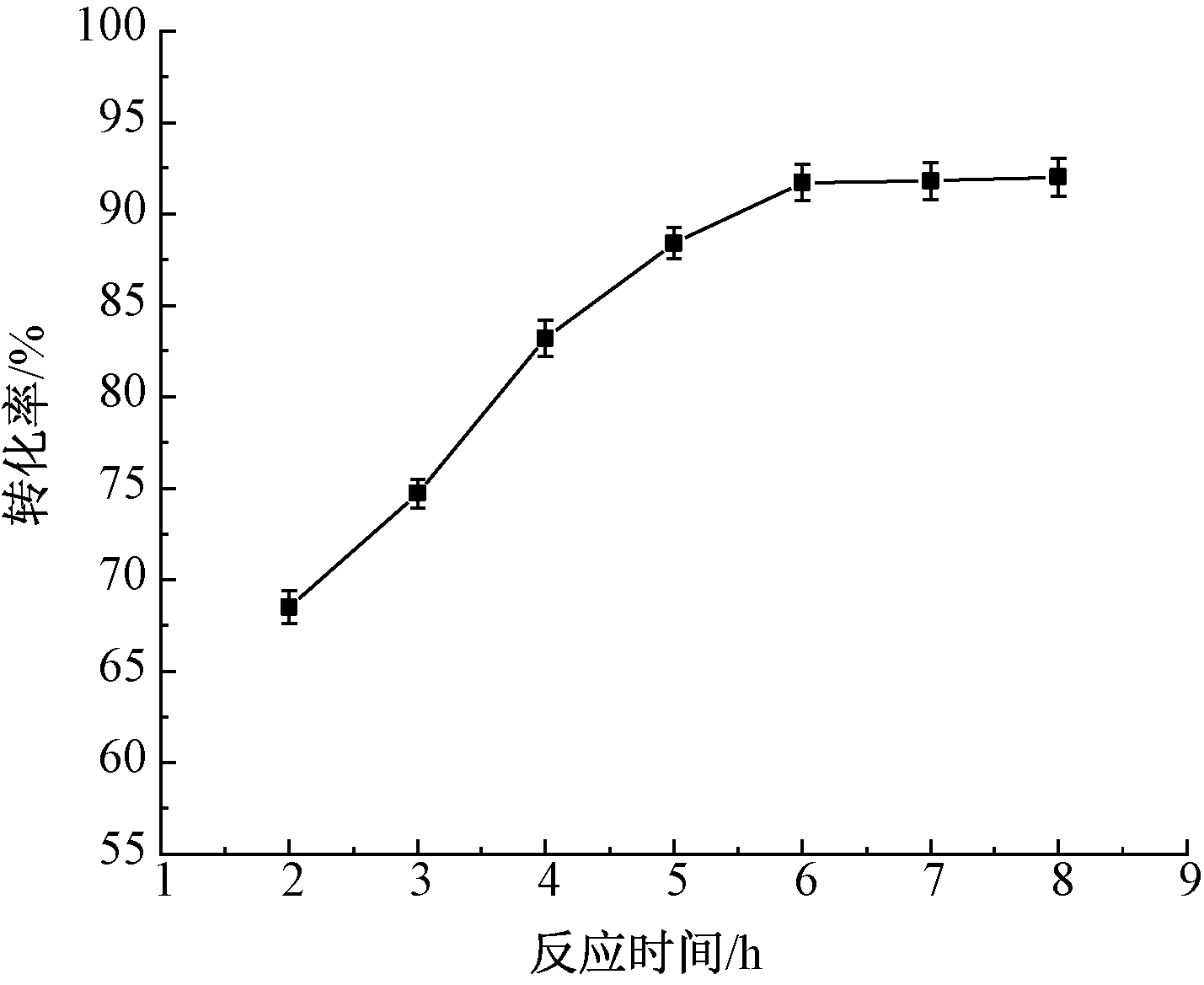
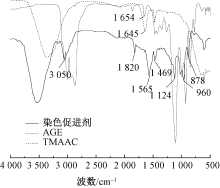
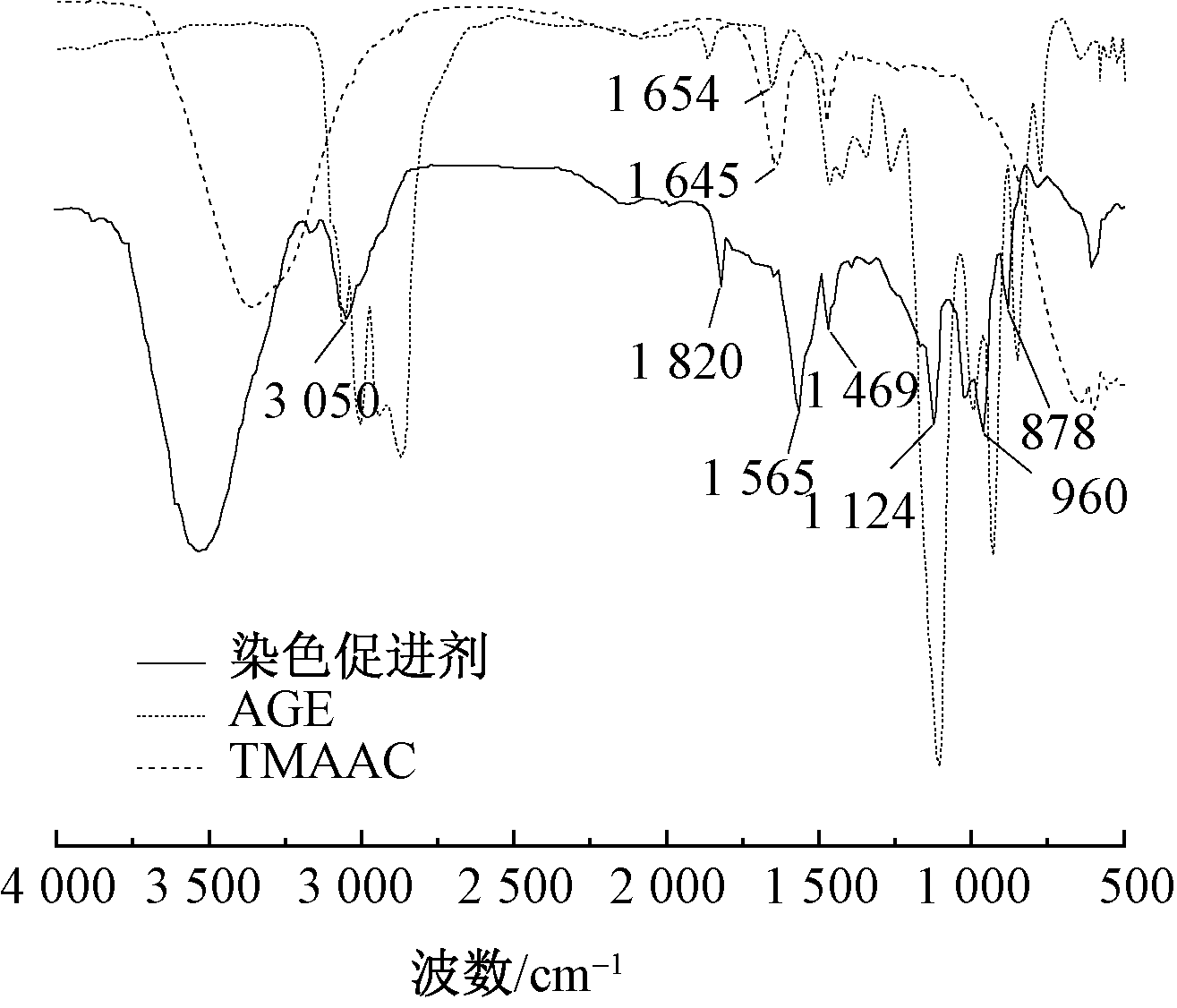
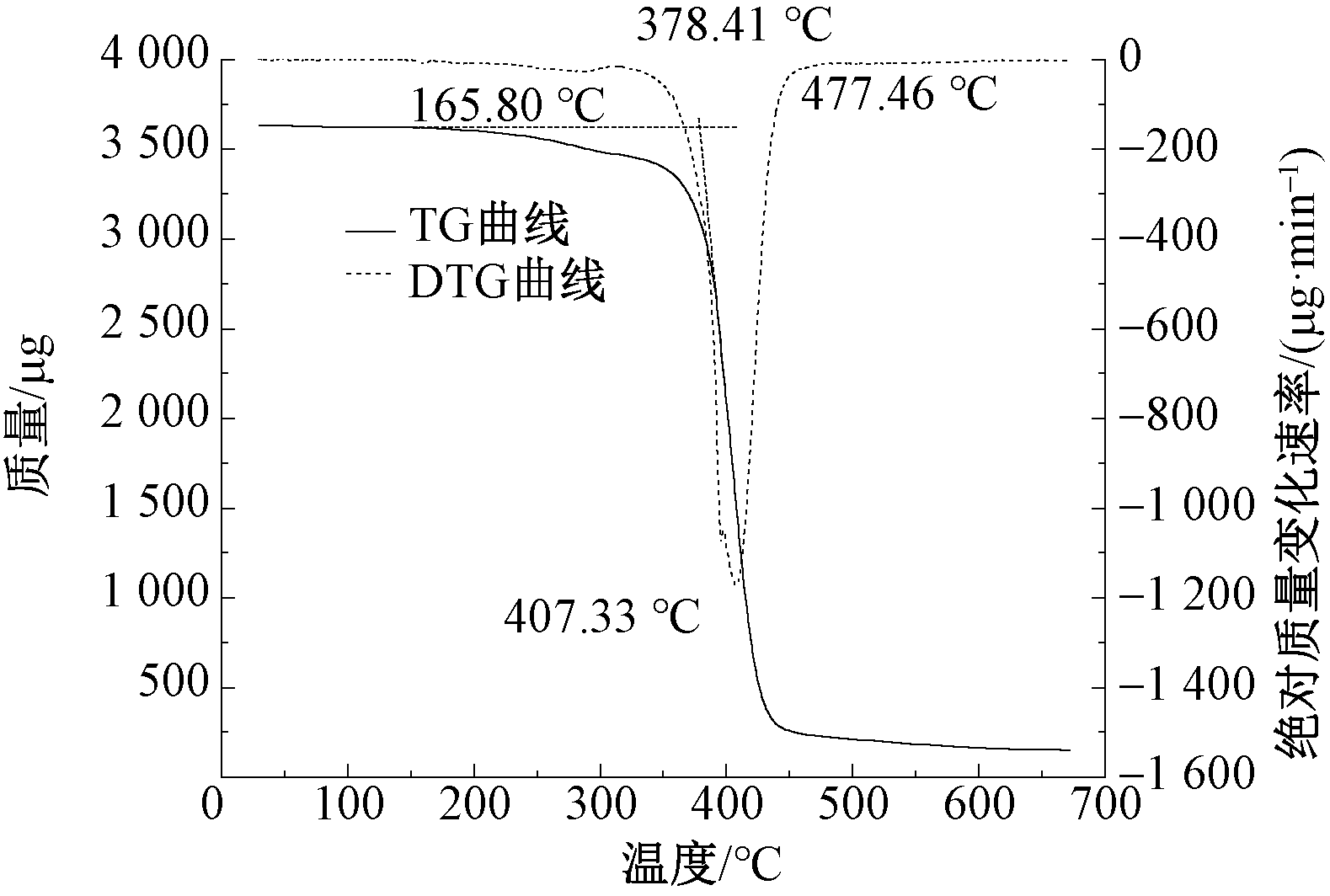
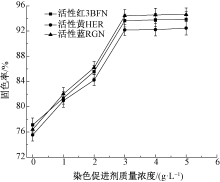
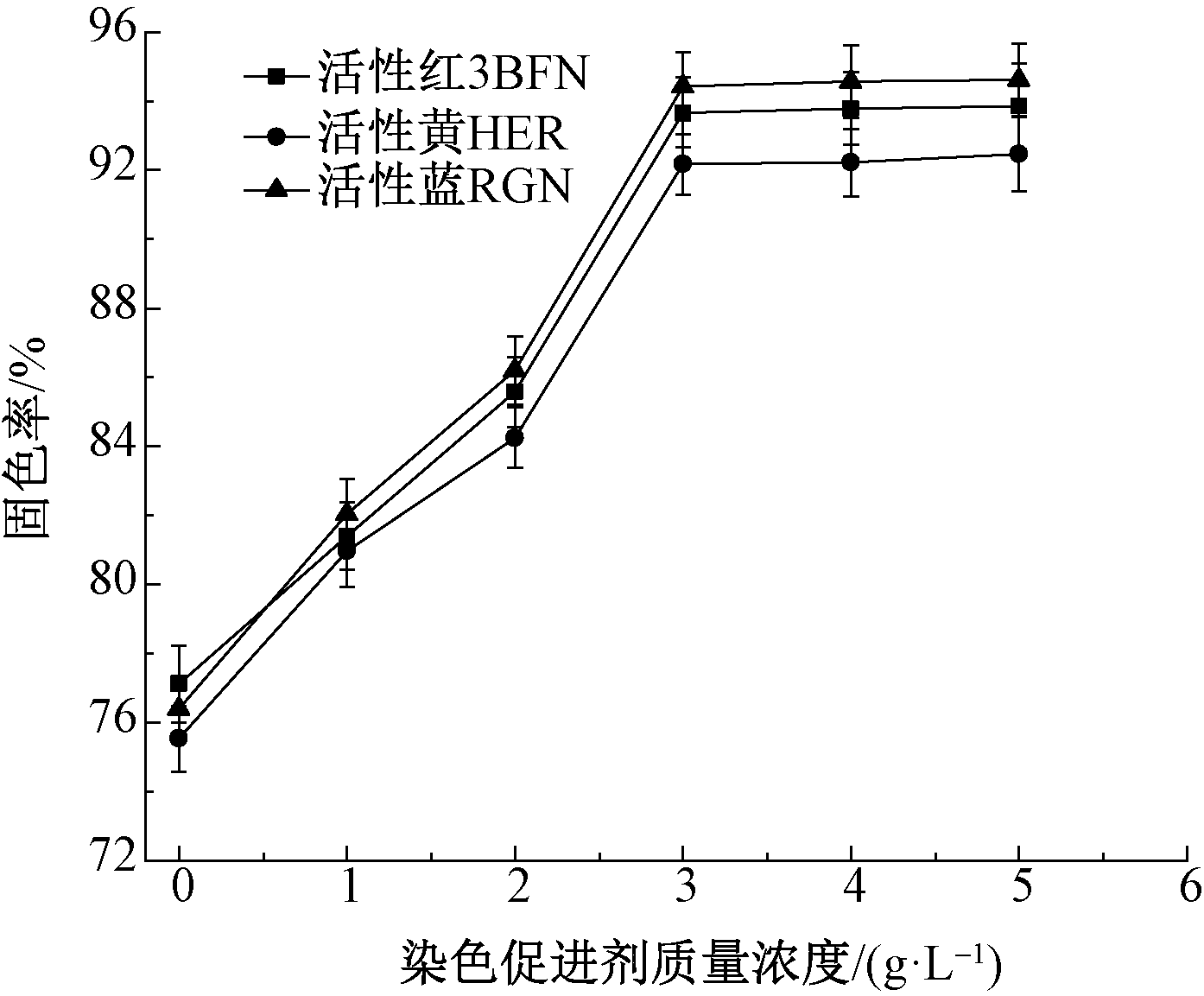
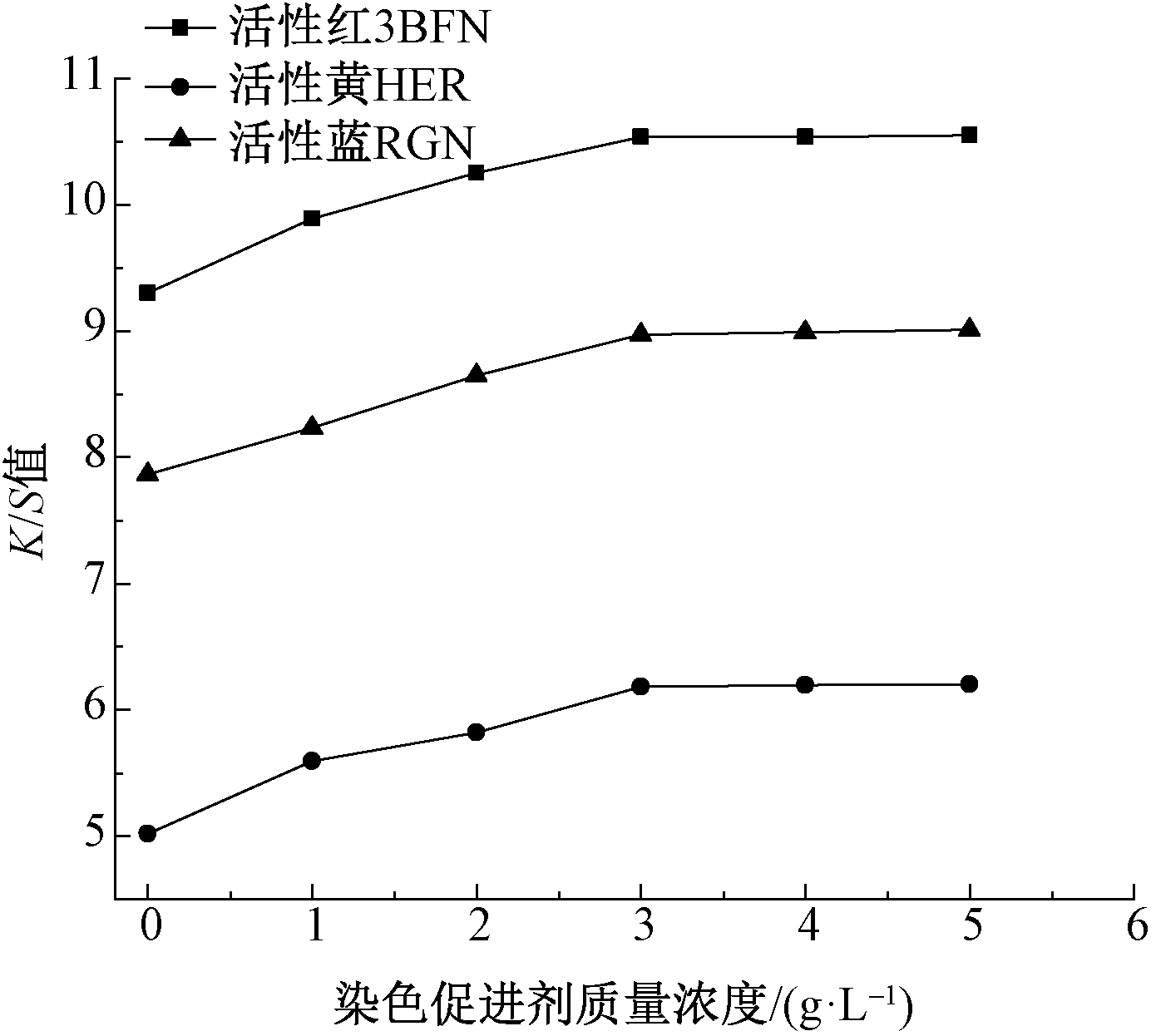
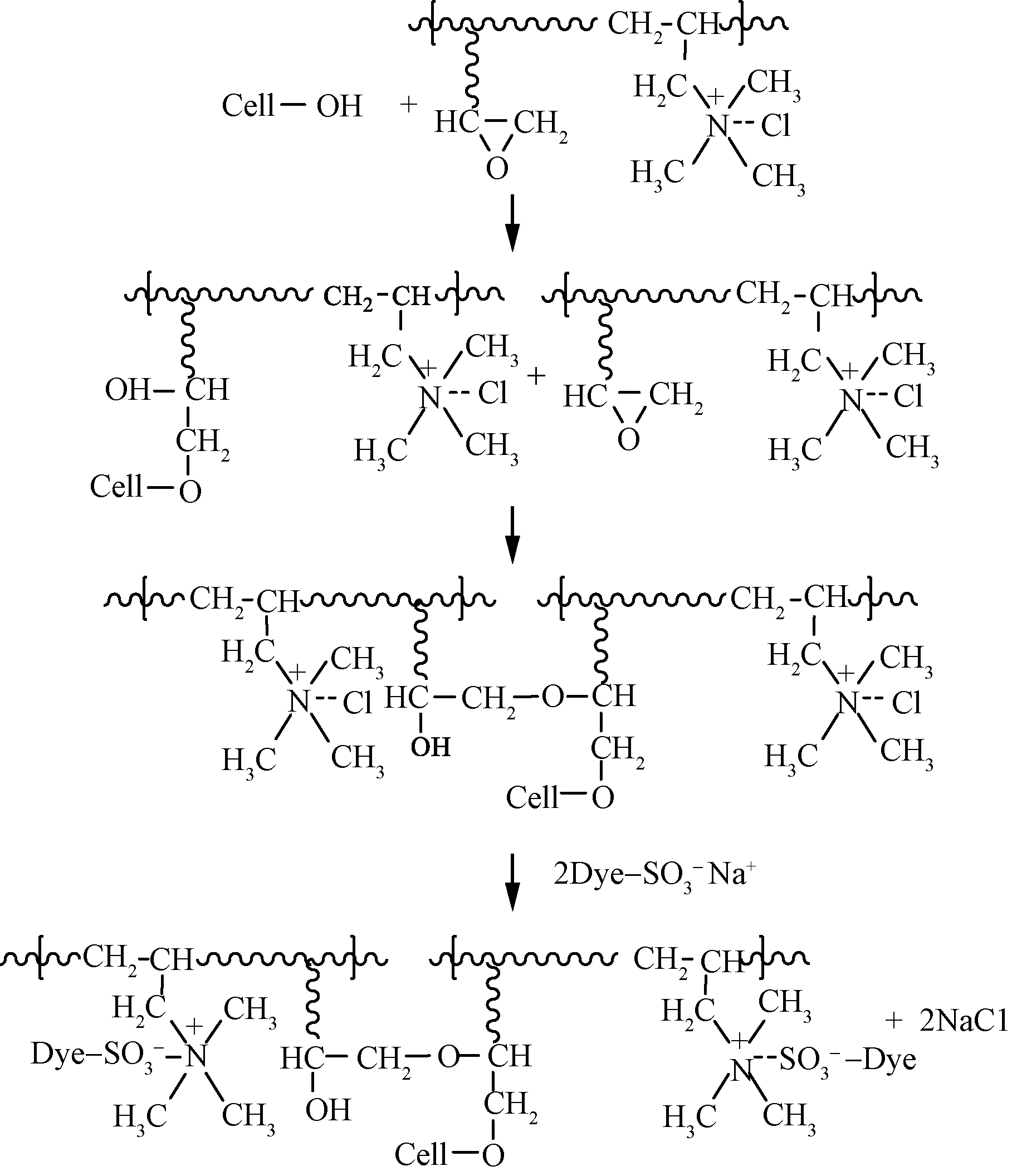
针对活性染料易水解、固色率偏低、染色过程中无机盐消耗量大等问题,以三甲基烯丙基氯化铵(TMAAC)、烯丙基缩水甘油醚(AGE)为反应单体,通过自由基聚合反应合成带有环氧基和季铵盐结构的双活性基染色促进剂,并对合成产物的分子结构及热学性能进行表征。将该染色促进剂应用于棉织物染色,染料选用活性红3BFN、活性黄HER、活性蓝RGN,测试其固色率、表观得色量及色牢度。结果表明,合成染色促进剂的优化工艺条件为:AGE与TMAAC质量比1∶3,总单体初始质量分数为体系总质量的30%,引发剂用量为单体质量的0.5%,于80 ℃下反应6 h。红外光谱测试证实,合成产物存在环氧基和季铵盐的特征吸收峰;热重分析结果显示,该染色促进剂热稳定性较好,热分解起始温度为165.80 ℃,热分解反应终止温度为477.46 ℃。在活性染料染色过程中添加该促进剂后,染料固色率平均提高17.2%,无机盐消耗量可降低66.67%。该染色促进剂具有“双活性基架桥”机制,在碱性条件下可与染料、纤维同步发生反应,显著提高染料利用率,在印染加工领域具有较好的应用前景。
中图分类号:
| [1] | 王政凯, 张红娟, 王辉强, 等. 多活性基绿色活性染料的合成及在丝织物上的应用性能[J]. 印染, 2024, 50(3): 6-10. |
| WANG Zhengkai, ZHANG Hongjuan, WANG Huiqiang, et al. Synthesis of green multi-reactive dyes and the application on silk fabrics[J]. China Dyeing & Finishing, 2024, 50(3): 6-10. | |
| [2] | 吴伟, 纪柏林, 毛志平. 活性及分散染料染色新技术[J]. 纺织学报, 2023, 44(5): 1-12. |
|
WU Wei, JI Bolin, MAO Zhiping. Review of new dyeing technologies for reactive dyes and disperse dyes[J]. Journal of Textile Research, 2023, 44(5): 1-12.
doi: 10.1177/004051757404400101 |
|
| [3] | 陈小文, 吴伟, 钟毅, 等. 棉织物的活性染料低含水率焙蒸固色工艺[J]. 纺织学报, 2021, 42(7): 115-122. |
| CHEN Xiaowen, WU Wei, ZHONG Yi, et al. Low-moisture content baking and steaming color fixation process for cotton fabrics padded with reactive dyes[J]. Journal of Textile Research, 2021, 42(7): 115-122. | |
| [4] |
邵敏, 王丽君, 李美琪, 等. 非水介质-微水体系中活性染料的水解和键合性能[J]. 纺织学报, 2022, 43(11): 94-103.
doi: 10.13475/j.fzxb.20220812110 |
|
SHAO Min, WANG Lijun, LI Meiqi, et al. Hydrolysis and bonding properties of reactive dyes in non-aqueous medium with minimal water systems[J]. Journal of Textile Research, 2022, 43(11): 94-103.
doi: 10.13475/j.fzxb.20220812110 |
|
| [5] | 韩博, 王玉霖, 舒大武, 等. 活性染料染色废水的循环染色[J]. 纺织学报, 2023, 44(8): 151-157. |
| HAN Bo, WANG Yulin, SHU Dawu, et al. Reactive dyeing using recycled dyeing wastewater[J]. Journal of Textile Research, 2023, 44(8): 151-157. | |
| [6] | 胡玲玲, 范雪荣. 双卤代均三嗪活性染料水解反应机制及其动力学[J]. 纺织学报, 2013, 34(10): 68-75. |
| HU Lingling, FAN Xuerong. Hydrolysis mechanism and kinetics of bis(halogeno-s-trazine) reactive dyes[J]. Journal of Textile Research, 2013, 34(10): 68-75. | |
| [7] | PARMAR T V, DESAI H H. "Synthesis, characterization & dyeing properties of bi-functional reactive dye "diazotized 5-(4-methoxy phenyl)-1,3-thiazole-2-amine-cyanurated napthionic acid-para cresidine vinyl sulphone""[J]. Chemistry & Biology Interface, 2021, 11(3): 116-123. |
| [8] |
GUO Q, CHEN W G, CUI Z H, et al. Reactive dyeing of silk using commercial acid dyes based on a three-component Mannich-type reaction[J]. Coloration Technology, 2020, 136(4): 336-345.
doi: 10.1111/cote.v136.4 |
| [9] | 王辉强, 张红娟, 沈楚良, 等. 红色活性染料结构与棉织物无盐染色性能关系研究[J]. 丝绸, 2025, 62(5): 53-60. |
| WANG Huiqiang, ZHANG Hongjuan, SHEN Chuliang, et al. Study on the relationship between structure of red reactive dyes and salt-free dyeing performance of cotton fabrics[J]. Journal of Silk, 2025, 62(5): 53-60. | |
| [10] | 王小丽, 鹿旺, 房磊, 等. 基于聚二甲基二烯丙基氯化铵阳离子改性的棉织物低盐低碱染色[J]. 印染, 2025, 51(5): 12-16, 39. |
| WANG Xiaoli, LU Wang, FANG Lei, et al. Low-salt and low-alkali dyeing of cotton fabrics based on cationic modification with polydiallyldimethylammonium chloride[J]. China Dyeing & Finishing, 2025, 51(5): 12-16, 39. | |
| [11] | 王静, 张建新, 吴明华. 聚酰胺-胺在棉织物低盐低碱活性染料染色中的应用[J]. 染整技术, 2024, 46(12): 25-30. |
| WANG Jing, ZHANG Jianxin, WU Minghua. Application of polyamide-amine for low salt and low alkali dyeing of cotton fabrics[J]. Textile Dyeing and Finishing Journal, 2024, 46(12): 25-30. | |
| [12] | 易菁源, 裴刘军, 朱赫, 等. 非水介质染色体系中分散染料对涤纶/棉混纺织物的沾色研究[J]. 纺织学报, 2023, 44(5): 29-37. |
| YI Jingyuan, PEI Liujun, ZHU He, et al. Study on disperse dye staining on polyester/cotton blended fabrics in non-aqueous medium dyeing system[J]. Journal of Textile Research, 2023, 44(5): 29-37. | |
| [13] | 张卫卫, 李春燕, 梁娟. 棉用活性染料无醛固色剂的合成及应用[J]. 印染, 2024, 50(4): 46-48, 65. |
| ZHANG Weiwei, LI Chunyan, LIANG Juan. Preparation and characterization of formaldehyde free fixing agents for cotton reactive dyes[J]. China Dyeing & Finishing, 2024, 50(4): 46-48, 65. | |
| [14] | WANG Y H, HUANG H. A study on the dye fixation mechanism of waterborne polyurethane[J]. Chemistry Select, 2023, 8(12): e202204620. |
| [15] |
PROSVIRNINA A P, BUGROV A N, DOBRODUMOV A V, et al. Bacterial cellulose nanofibers modification with 3-(trimethoxysilyl)propyl methacrylate as a crosslinking and reinforcing agent for 3D printable UV-curable inks[J]. Journal of Materials Science, 2022, 57(44): 20543-20557.
doi: 10.1007/s10853-022-07902-5 |
| [16] |
邢洋洋, 王冲, 付中禹, 等. PAN链缠结的影响因素及其对PAN/DMSO溶液流变行为的影响[J]. 中国塑料, 2020, 34(4): 1-5.
doi: 10.19491/j.issn.1001-9278.2020.04.001 |
|
XING Yangyang, WANG Chong, FU Zhongyu, et al. Effect of influencing factor of PAN chain entanglement on rheological behavior of PAN/DMSO solution[J]. China Plastics, 2020, 34(4): 1-5.
doi: 10.19491/j.issn.1001-9278.2020.04.001 |
| [1] | 赵君丽, 肖远淑, 陈诚, 李帅, 宋均燕, 单国华. 罗布麻脱胶-染色一浴活性染料筛选及工艺优化[J]. 纺织学报, 2026, 47(02): 195-204. |
| [2] | 马颖媛, 李建芳, 胡毅. 活性红195在异构烷烃体系中对蚕丝织物的少水染色性能[J]. 纺织学报, 2025, 46(11): 178-187. |
| [3] | 金少特, 阎克路, 黄金杰, 陈德芳, 史向阳. 棉散纤维活性染料连续染色技术及其工业化应用[J]. 纺织学报, 2025, 46(10): 129-134. |
| [4] | 赵强强, 王韩星, 张奉轩, 何瑾馨, 周俊, 周兆昌, 董霞. 聚六亚甲基双胍盐酸盐改性对棉织物耐日晒色牢度的影响[J]. 纺织学报, 2025, 46(04): 109-118. |
| [5] | 崔芳, 张鑫卿, 殷斐, 李大伟, 雷苗苗, 谢志勇. 基于泡沫法给碱的粘胶织物活性红24无尿素印花[J]. 纺织学报, 2025, 46(02): 138-144. |
| [6] | 李万新, 舒大武, 安芳芳, 韩博, 任支刚, 单巨川. 碳化钛与三价铁离子协同过硫酸钠对活性染料废水的降解[J]. 纺织学报, 2025, 46(01): 138-147. |
| [7] | 葛怀富, 吴伟, 王健, 徐红, 毛志平. 5-(二甲氨基)-2-甲基-5-氧戊酸甲酯在超临界二氧化碳流体染色中的应用[J]. 纺织学报, 2024, 45(01): 120-127. |
| [8] | 韩博, 王玉霖, 舒大武, 王涛, 安芳芳, 单巨川. 活性染料染色废水的循环染色[J]. 纺织学报, 2023, 44(08): 151-157. |
| [9] | 郭玉秋, 钟毅, 徐红, 毛志平. 拼混活性染料染色多组分定量分析方法[J]. 纺织学报, 2023, 44(07): 141-150. |
| [10] | 吴伟, 纪柏林, 毛志平. 活性及分散染料染色新技术[J]. 纺织学报, 2023, 44(05): 1-12. |
| [11] | 齐浩彤, 张林森, 侯秀良, 徐荷澜. 废食用油-水无盐体系活性染色棉织物的服用性能[J]. 纺织学报, 2023, 44(03): 126-131. |
| [12] | 王金坤, 刘秀明, 房宽峻, 乔曦冉, 张帅, 刘冬冬. 双乙烯砜基团活性染料染色对棉织物防皱性能的提升[J]. 纺织学报, 2023, 44(02): 207-213. |
| [13] | 张帅, 房宽峻, 刘秀明, 乔曦冉. 活性染料结构对彩色聚合物纳米球性能的影响[J]. 纺织学报, 2022, 43(12): 96-101. |
| [14] | 乔曦冉, 房宽峻, 刘秀明, 巩继贤, 张帅, 张敏. 羟乙基甲基纤维素改性对棉和锦纶织物表面性质的差异性影响[J]. 纺织学报, 2022, 43(11): 127-132. |
| [15] | 邵敏, 王丽君, 李美琪, 刘今强, 邵建中. 非水介质-微水体系中活性染料的水解和键合性能[J]. 纺织学报, 2022, 43(11): 94-103. |
|
||
 京公网安备11010502044800号