纺织学报 ›› 2025, Vol. 46 ›› Issue (07): 154-159.doi: 10.13475/j.fzxb.20250202201
张涣东1, 纪柏林1,2, 钟毅1, 徐红1, 毛志平1,2,3( )
)
ZHANG Huandong1, JI Bolin1,2, ZHONG Yi1, XU Hong1, MAO Zhiping1,2,3()
摘要:
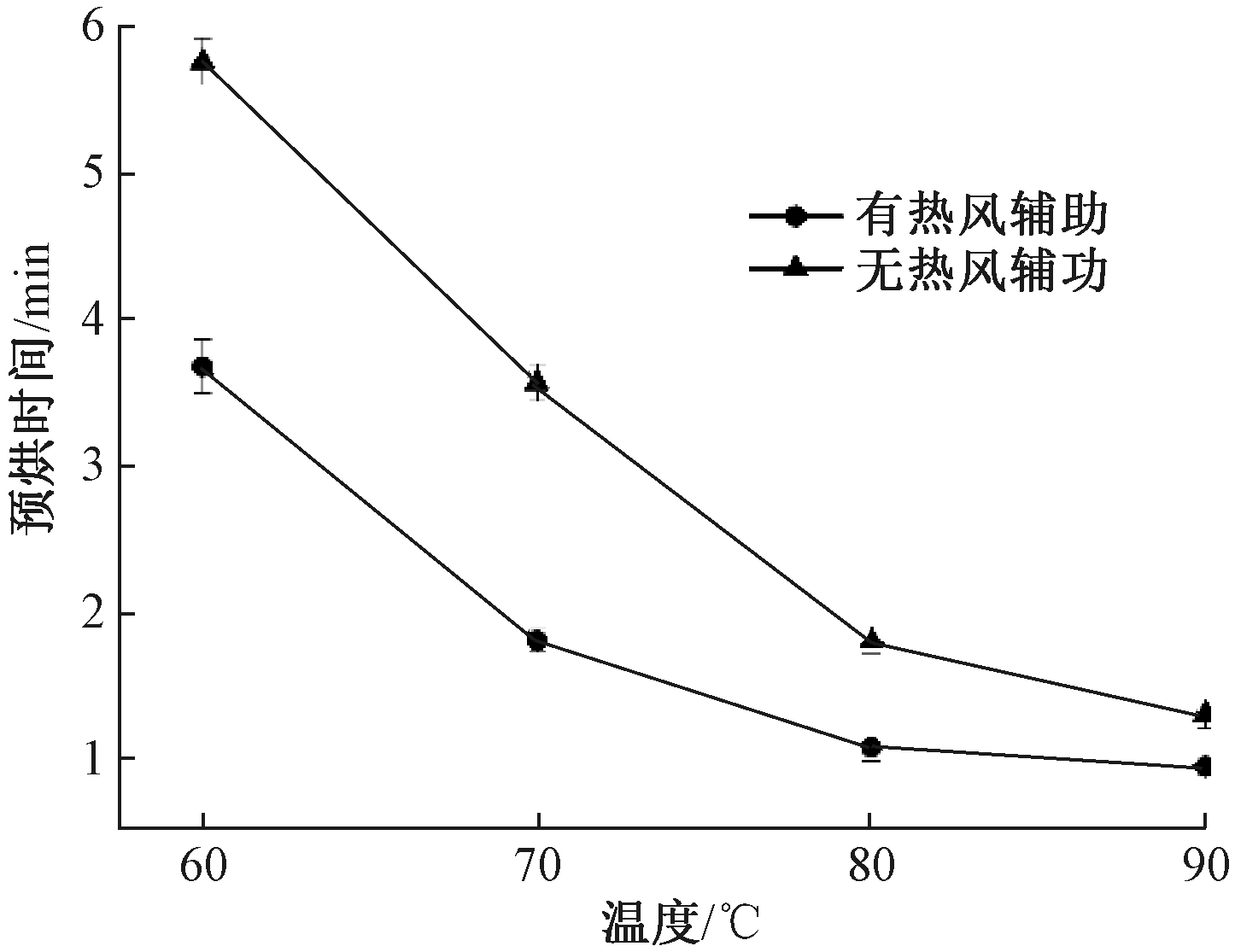
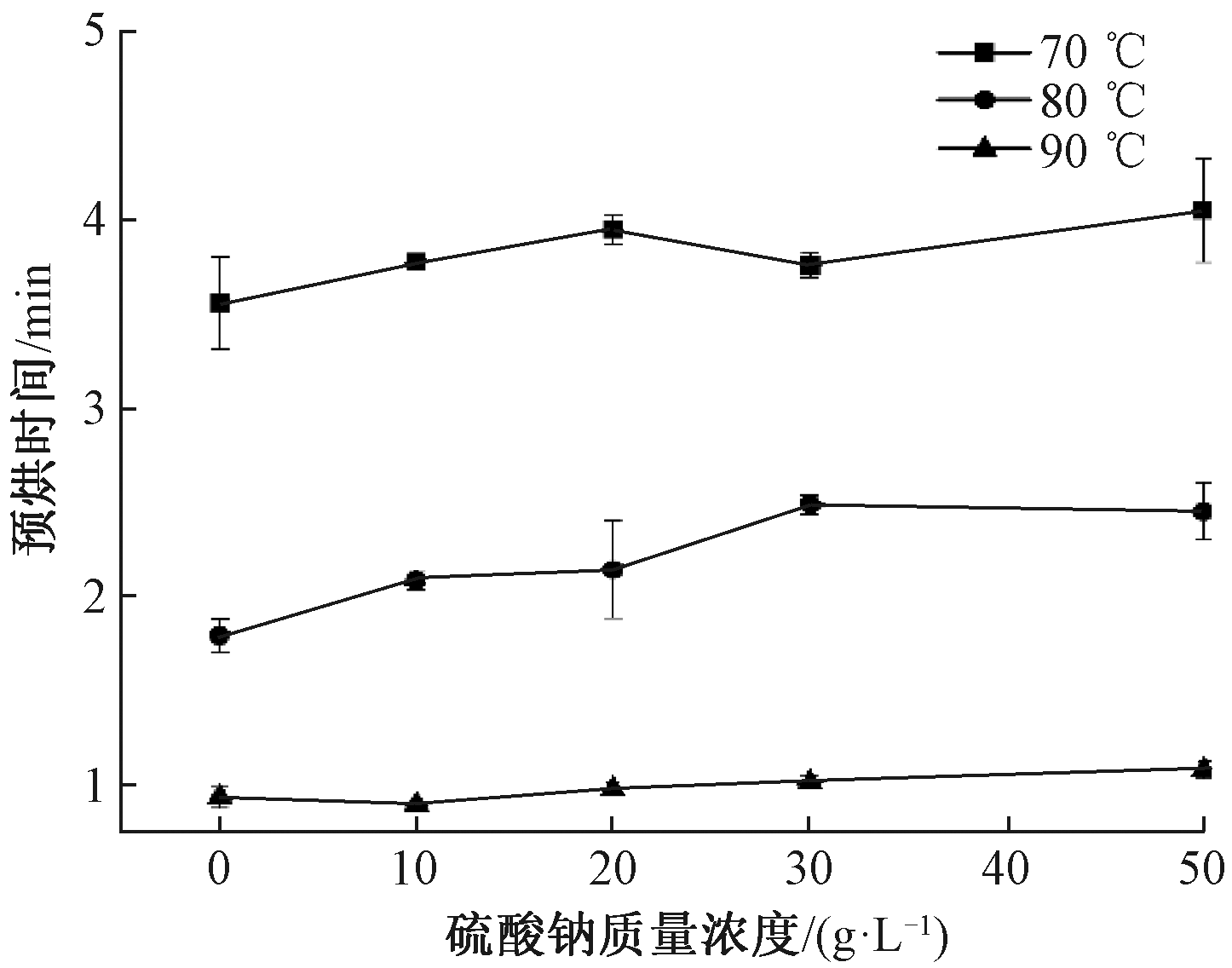
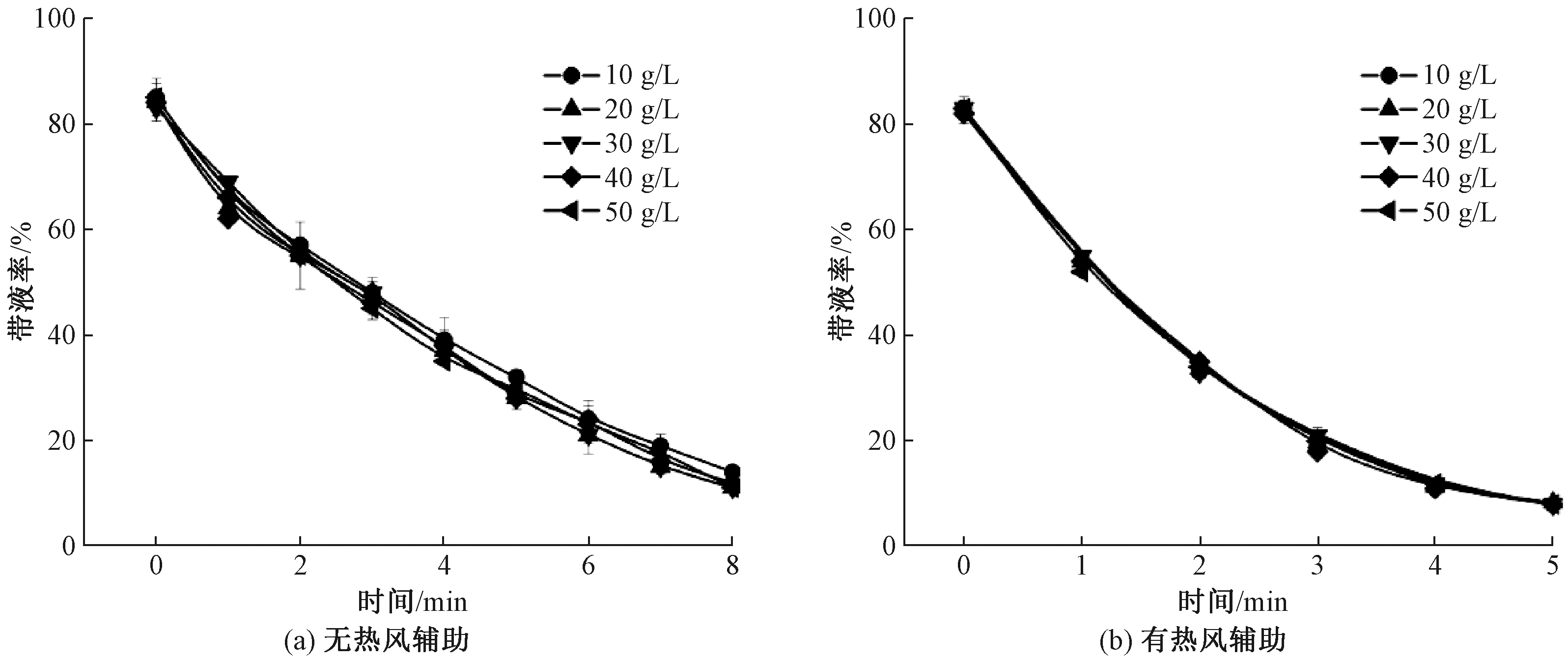
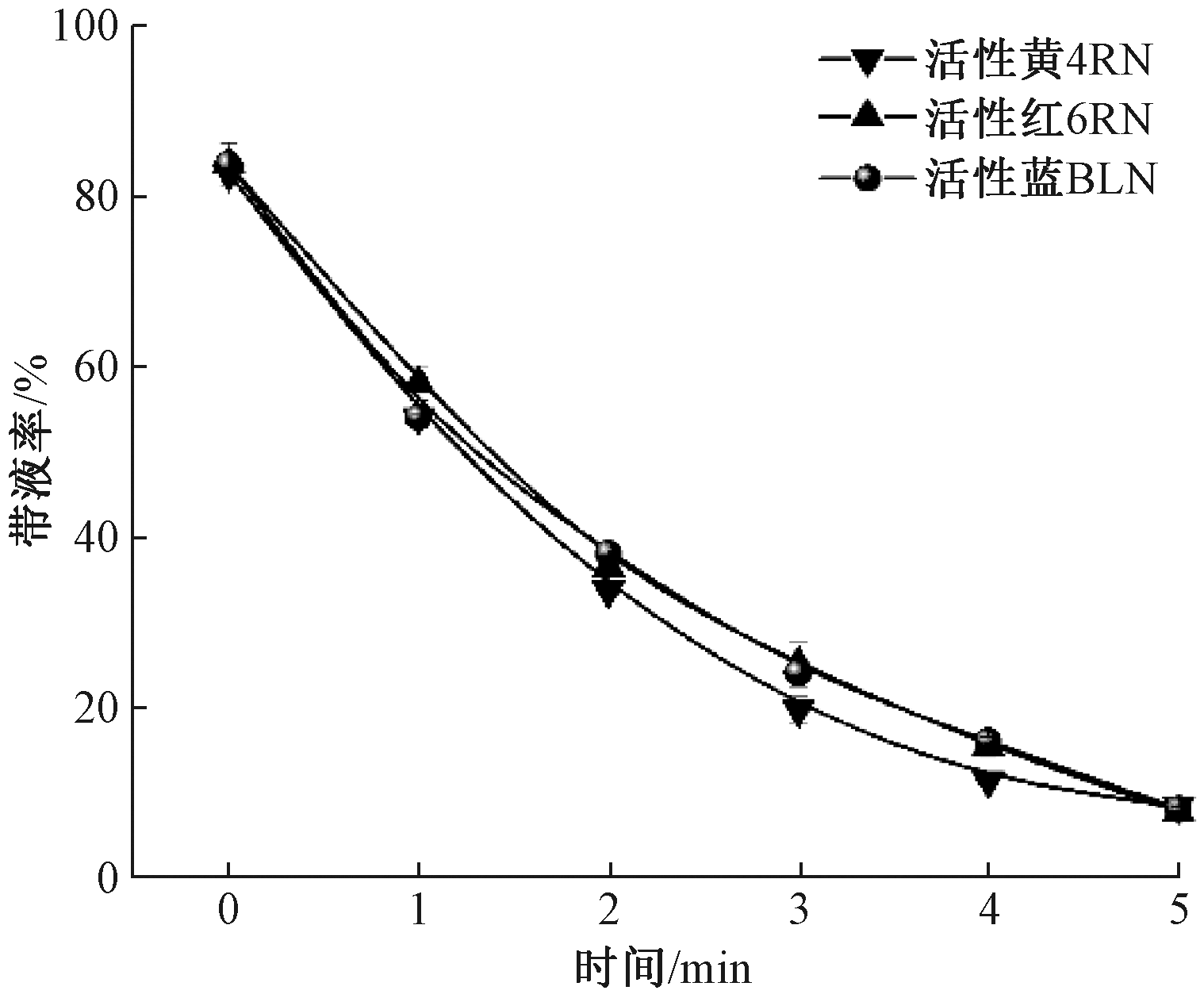
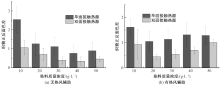
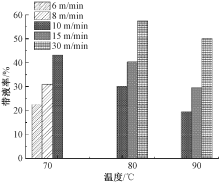
针对纯棉针织物在平幅连续染色过程中采用接触式预烘易导致染料泳移产生色差的问题,探究了预烘温度、无机盐质量浓度、染料质量浓度、染料类型对织物接触式预烘效率的影响,确定了最佳预烘条件;进一步探究了织物单面/双面接触热源和热风辅助对织物正反面色差的影响;基于实验室结果在工厂进行了中试验证实验。实验结果表明:最佳预烘温度为70 ℃;硫酸钠在织物预烘过程中具有保水作用,有利于减少染料泳移从而降低织物色差;所用染料质量浓度和染料类型对织物预烘效率无影响;染料质量浓度在10~50 g/L时,织物双面接触热源有利于水分均匀散失从而减小织物色差;染料质量浓度为10、20 g/L时,不论单面还是双面接触热源,采用热风辅助均有利于减小织物色差,但染料质量浓度为30、40、50 g/L时,采用热风辅助会增加织物色差。中试结果表明,染色织物色差小于1,满足实际生产要求。
中图分类号:
| [1] | 徐顺成. 针织物染整工艺的现状及发展趋势[J]. 纺织导报, 2008 (3): 74-76. |
| XU Shuncheng. Developing trend of dyeing & finishing process of knitted fabrics[J]. China Textile Leader, 2008 (3): 74-76. | |
| [2] | VAN W K. Economy and ecology in continuous dyeing of cotton fabrics using reactive dyes[J]. International Dyer, 1996, 181(1): 28-32. |
| [3] | LEWIS D M, VOLT T. Dyeing cotton with reactive dyes under neutral conditions[J]. Coloration Technology, 2010, 123(5): 306-311. |
| [4] | HASANBEIGI A, PRICE L. A technical review of emerging technologies for energy and water efficiency and pollution reduction in the textile industry[J]. Journal of Cleaner Production, 2015, 95: 30-44. |
| [5] | 孙冰, 王贤瑞, 武生春, 等. 活性染料轧-烘-轧-蒸工艺实践[J]. 印染, 2005, 31(15): 14-16. |
| SUN Bing, WANG Xianrui, WU Shengchun, et al. Pad-dry-pad-steaming dyeing process with reactive dyes[J]. China Dyeing & Finishing, 2005, 31(15): 14-16. | |
| [6] | LI Xue. Process optimization of dryers in the textile industry[D]. Atlanta: Georgia Institute of Technology, 2004. |
| [7] | 薛孟芳, 张京彬, 张子超, 等. 纯棉针织物平幅染色中的烘筒烘干工艺[J]. 上海纺织科技, 2024, 52(4): 15-18,33. |
| XUE Mengfang, ZHANG Jingbin, ZHANG Zichao, et al. Cylinder drying technology in open-width dyeing of cotton knits[J]. Shanghai Textile Science and Technology, 2024, 52(4): 15-18,33. | |
| [8] | HAMDAOUI M, BAFFOUN A, CHAABEN K B, et al. Experimental study and mathematical model to follow the drying phenomenon of knitted textile fabric[J]. Journal of Engineered Fibers and Fabrics, 2013: 8(3): 70-76. |
| [9] | GONG H, OZGEN B. Fabric structures: woven, knitted, or nonwoven[M]. Cambridge: Woodhead Publishing Engineering of High-Performance Textiles, 2018: 107-131. |
| [10] | YU H, WANG Y, ZHONG Y, et al. Foam properties and application in dyeing cotton fabrics with reactive dyes[J]. Coloration Technology, 2014, 130(4): 266-272. |
| [11] | UDDIN M G. Study on the color levelness of silk fabric dyed with vegetable dyes[J]. Sustainable Chemical Processes, 2015, 3(1): 1-4. |
| [12] | YADAV V, MOON C G. Fabric-drying process in domestic dryers[J]. Applied Energy, 2008, 85(2/3): 143-158. |
| [13] | 陈小文, 吴伟, 钟毅, 等. 棉织物的活性染料低含水率焙蒸固色工艺[J]. 纺织学报, 2021, 42(7): 115-122. |
| CHEN Xiaowen, WU Wei, ZHONG Yi, et al. Low-moisture content baking and steaming color fixation process for cotton fabrics padded with reactive dyes[J]. Journal of Textile Research, 2021, 42(7): 115-122. | |
| [14] | 崔浩然. 活性染料轧染实践[J]. 印染, 2005 (4): 14-18. |
| CUI Haoran. Pad dyeing with reactive dye[J]. China Dyeing & Finishing, 2005 (4): 14-18. | |
| [15] | STENZEL M, LIMA O C M, PEREIRA N C, et al. Generalization of drying curves in conductive/convective drying of cellulose[J]. Brazilian Journal of Chemical Engineering, 2003, 20: 81-86. |
| [16] | 吴伟, 陈小文, 钟毅, 等. 硫酸钠在低带液轧-焙-蒸活性染料染色中的作用[J]. 纺织学报, 2020, 41(5): 85-93. |
| WU Wei, CHEN Xiaowen, ZHONG Yi, et al. Role of sodium sulfate in low add-on pad-cure-steam reactive dyeing process[J]. Journal of Textile Research, 2020, 41(5): 85-93. | |
| [17] | MAO Z, YU H, WANG Y, et al. States of water and pore size distribution of cotton fibers with different moisture ratios[J]. Industrial & Engineering Chemistry Research, 2014, 53(21): 8927-8934. |
| [1] | 李一飞, 郑敏, 常朱宁子, 李丽艳, 曹元鸣, 翟旺宜. 二维过渡金属碳化物(Ti3C2Tx)对棉针织物的功能整理及其性能分析[J]. 纺织学报, 2021, 42(06): 120-127. |
| [2] | 张滕家璐, 吴伟, 钟毅, 毛志平, 徐红. 平幅前处理对棉针织物染色性能的影响[J]. 纺织学报, 2021, 42(03): 9-13. |
| [3] | 刘丽宾, 吕汪洋, 陈文兴. 棉针织物漂白中铜配合物催化降解木质素及其模型化合物[J]. 纺织学报, 2021, 42(03): 1-8. |
| [4] | 丁子寒, 邱华. 纳米二氧化硅改性水性聚氨酯防水透湿涂层织物的制备及其性能[J]. 纺织学报, 2021, 42(03): 130-135. |
| [5] | 尉腾祥, 李敏, 彭虹云, 付少海. 纬平针棉针织物平幅丝光条件与其线圈结构的关系[J]. 纺织学报, 2020, 41(04): 98-105. |
| [6] | 尉腾祥, 李敏, 彭虹云, 付少海. 纬平棉针织物双向拉伸线圈形态分析[J]. 纺织学报, 2019, 40(11): 64-68. |
| [7] | 何青青, 徐红, 毛志平, 张琳萍, 钟毅, 吕景春. 高导电性聚吡咯涂层织物的制备[J]. 纺织学报, 2019, 40(10): 113-119. |
| [8] | 张帆, 张儒, 周文常, 周辉, 汪南方. 金属铜配合物催化双氧水用于棉针织物的低温漂白[J]. 纺织学报, 2019, 40(08): 101-108. |
| [9] | 陶开鑫, 俞成丙, 侯颀骜, 吴聪杰, 刘引烽. 基于最小二乘支持向量机的棉针织物活性染料湿蒸染色预测模型[J]. 纺织学报, 2019, 40(07): 169-173. |
| [10] | 马振萍, 毛志平, 钟毅, 徐红. 单面纬平针织物平幅轧蒸染色防卷边控制[J]. 纺织学报, 2019, 40(05): 91-96. |
| [11] | 吴臣仁, 吕汪洋, 陈文兴. 铜配合物在棉针织物低温中性漂白中的应用[J]. 纺织学报, 2019, 40(01): 91-96. |
| [12] | 辛春莉 王子玉 周建 潘如如 高卫东. 数码相机在染色织物色差测量中的应用[J]. 纺织学报, 2018, 39(08): 77-82. |
| [13] | 赵文杰 张晓云 钟毅 徐红 毛志平. 棉针织物的冷轧堆前处理与染色[J]. 纺织学报, 2016, 37(06): 76-82. |
| [14] | 靳贺玲;张玉萍. 碱性果胶酶精练棉针织物表面红外光谱分析[J]. 纺织学报, 2010, 31(1): 81-84. |
| [15] | 吴辉.;钱国坻;华兆哲.;阎贺静.;张朝晖;堵国成.;陈坚.. 新型碱性果胶酶用于棉针织物精练的工艺优化[J]. 纺织学报, 2008, 29(5): 59-63. |
|
||
 京公网安备11010502044800号