纺织学报 ›› 2026, Vol. 47 ›› Issue (05): 190-200.doi: 10.13475/j.fzxb.20251006501
温轶涵1, 鲁虹1,2( )
)
WEN Yihan1, LU Hong1,2()
摘要:
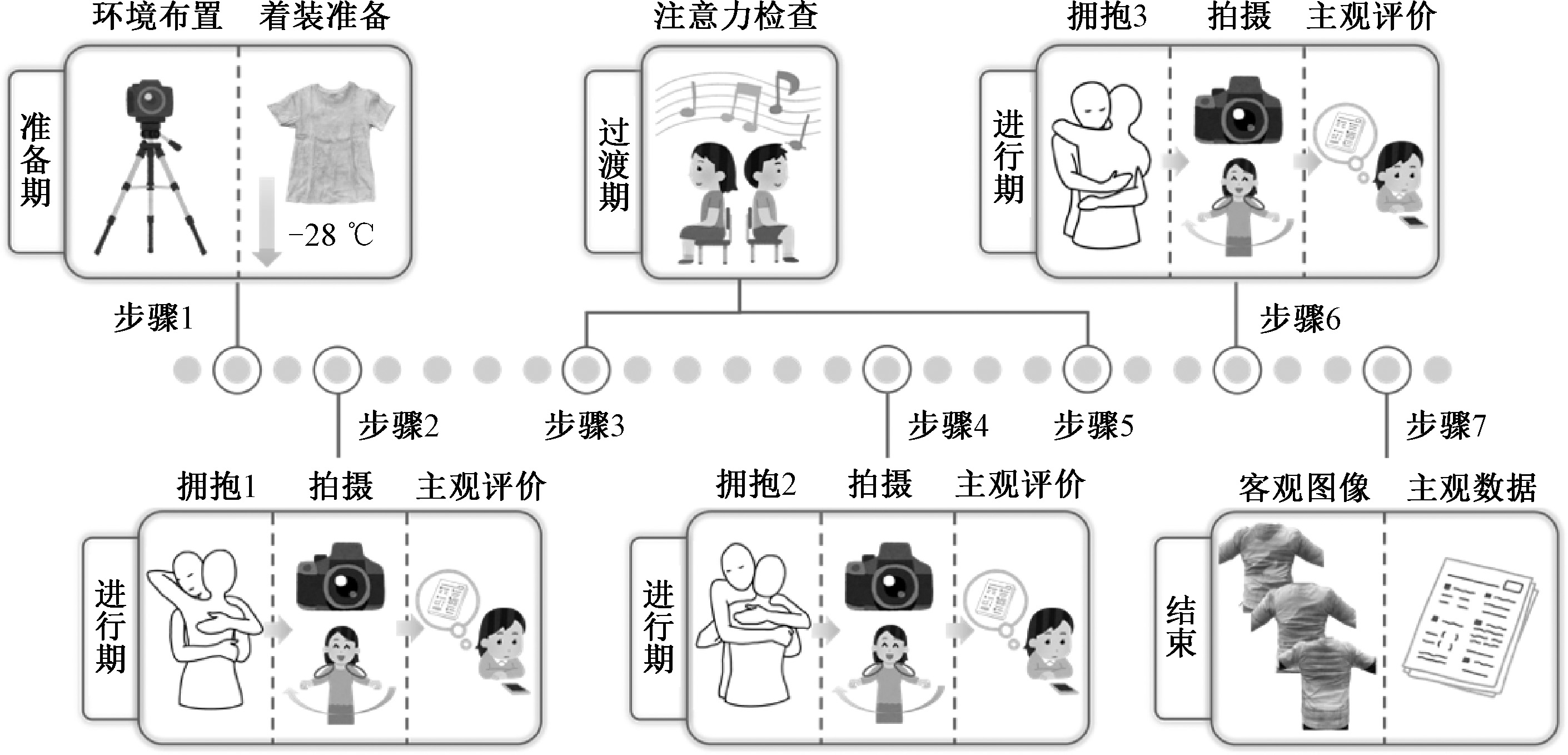
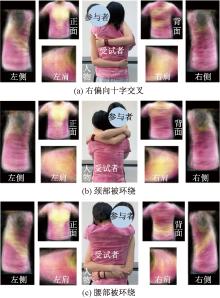
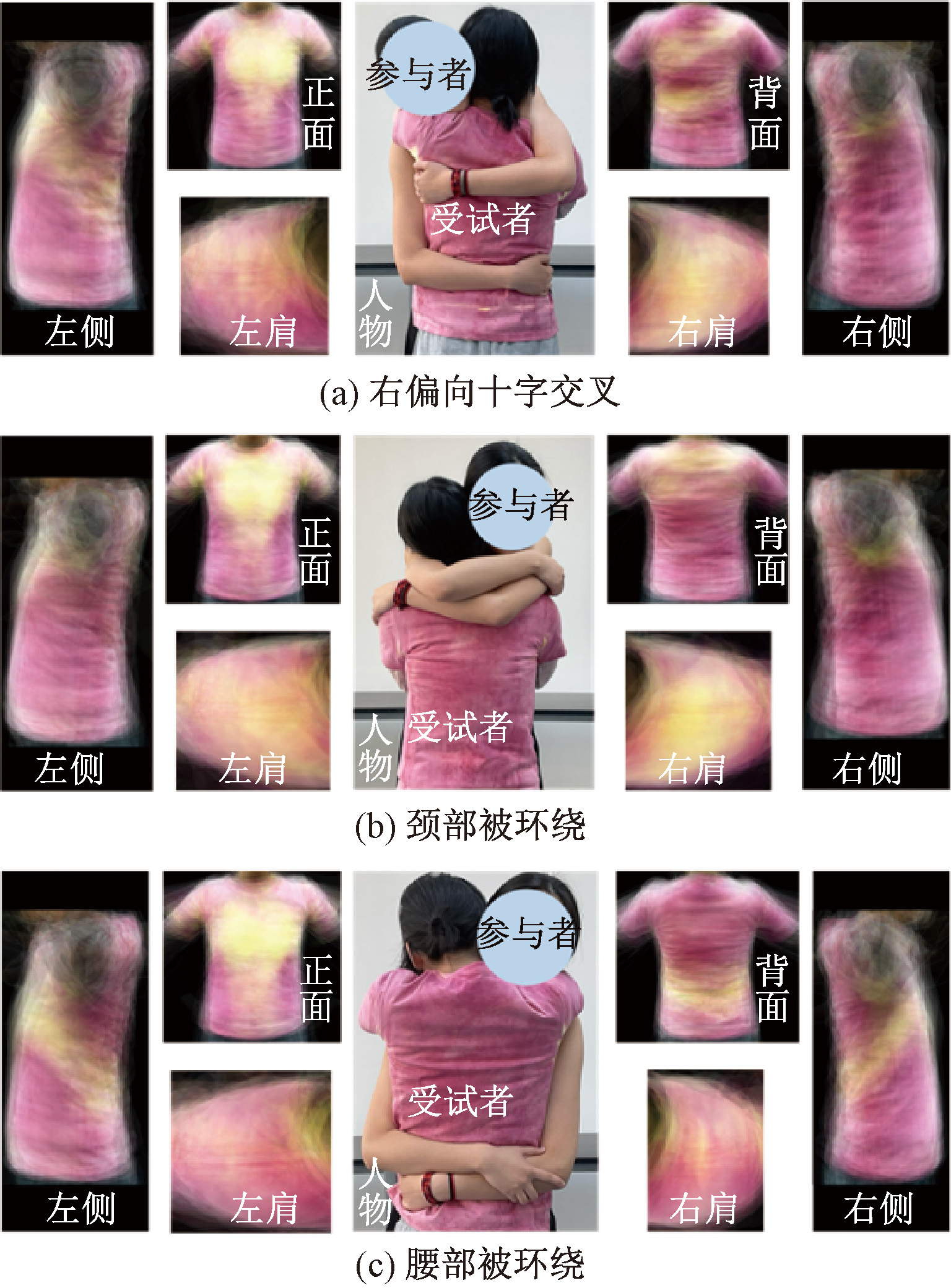
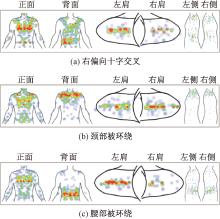
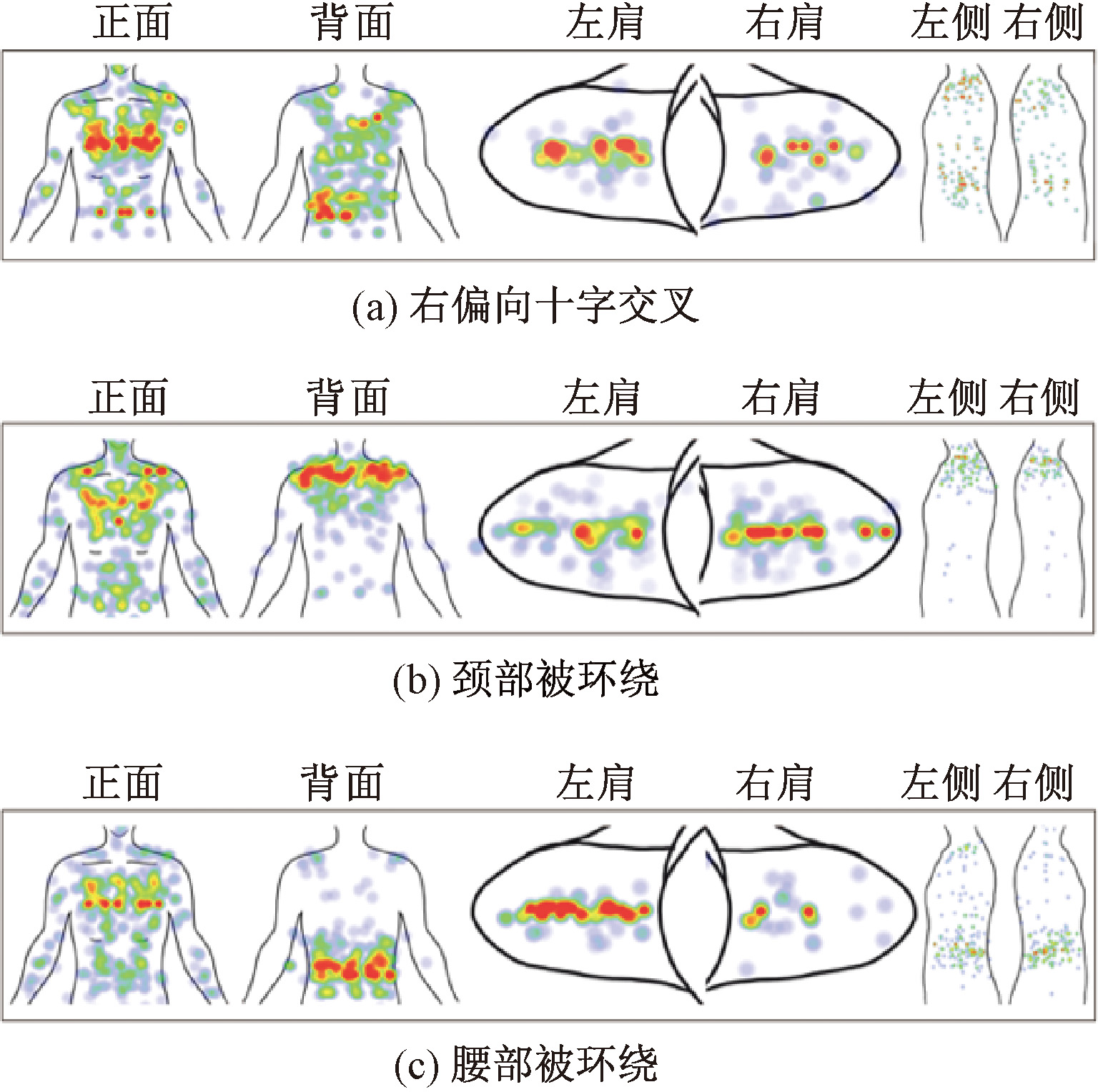
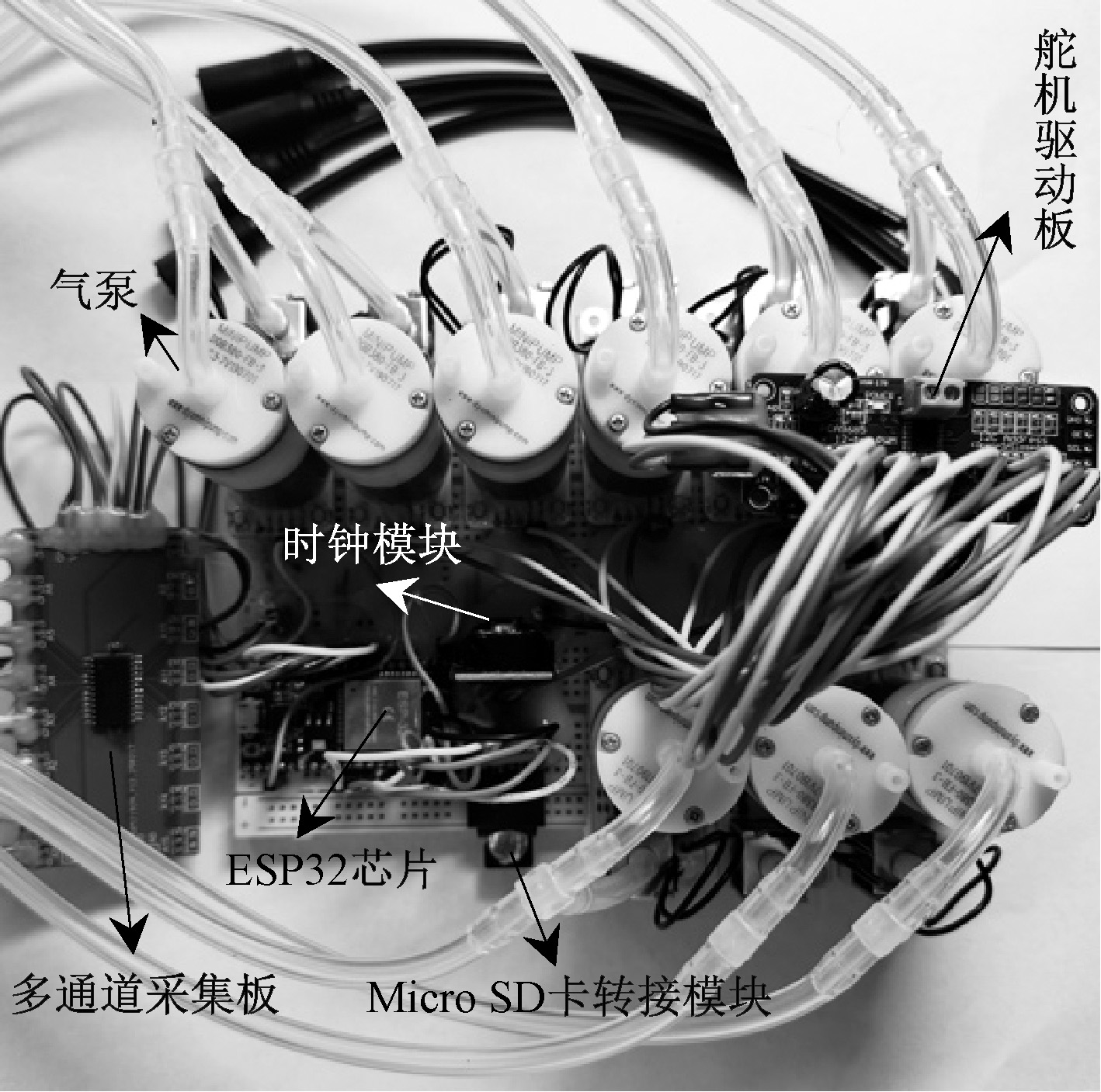
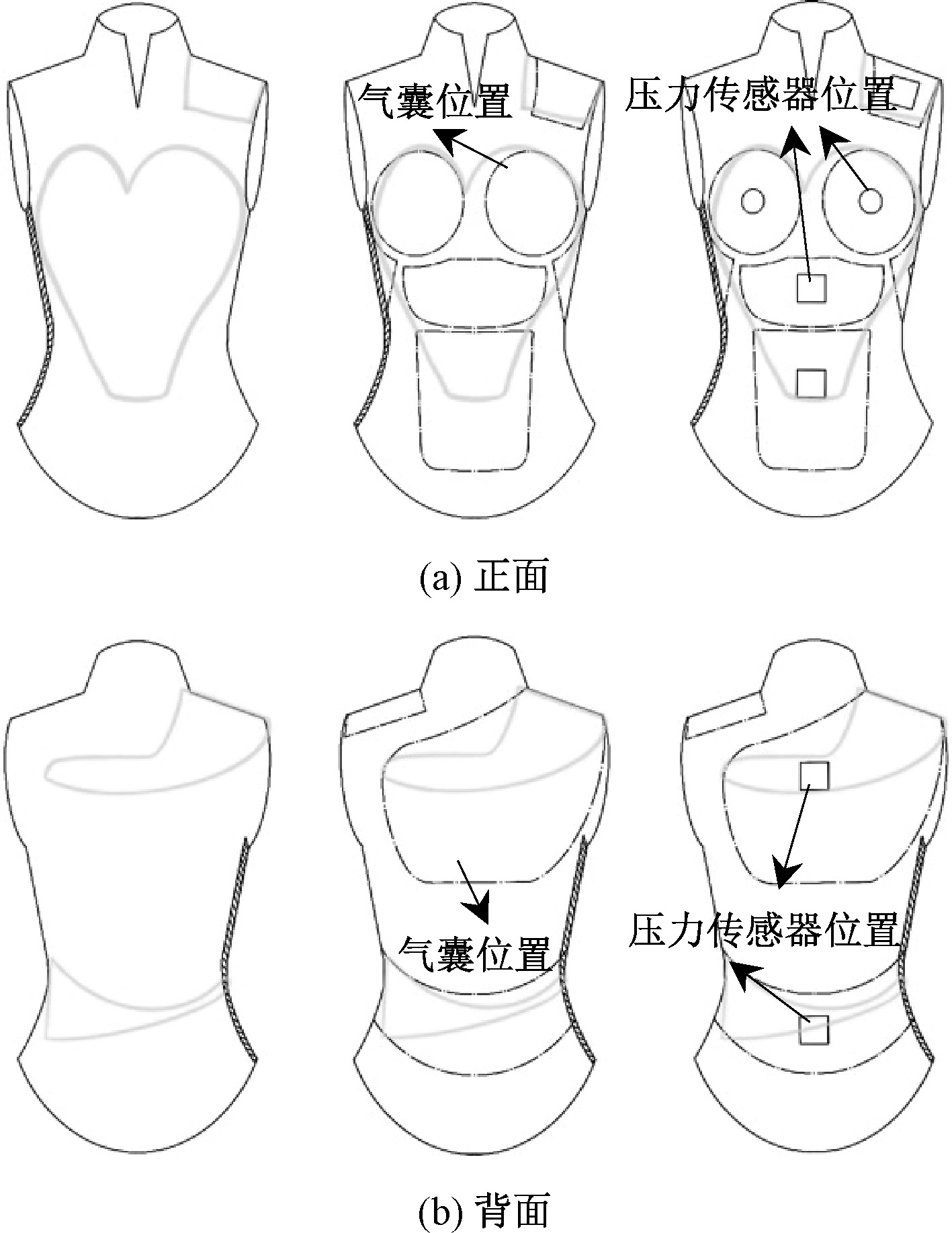
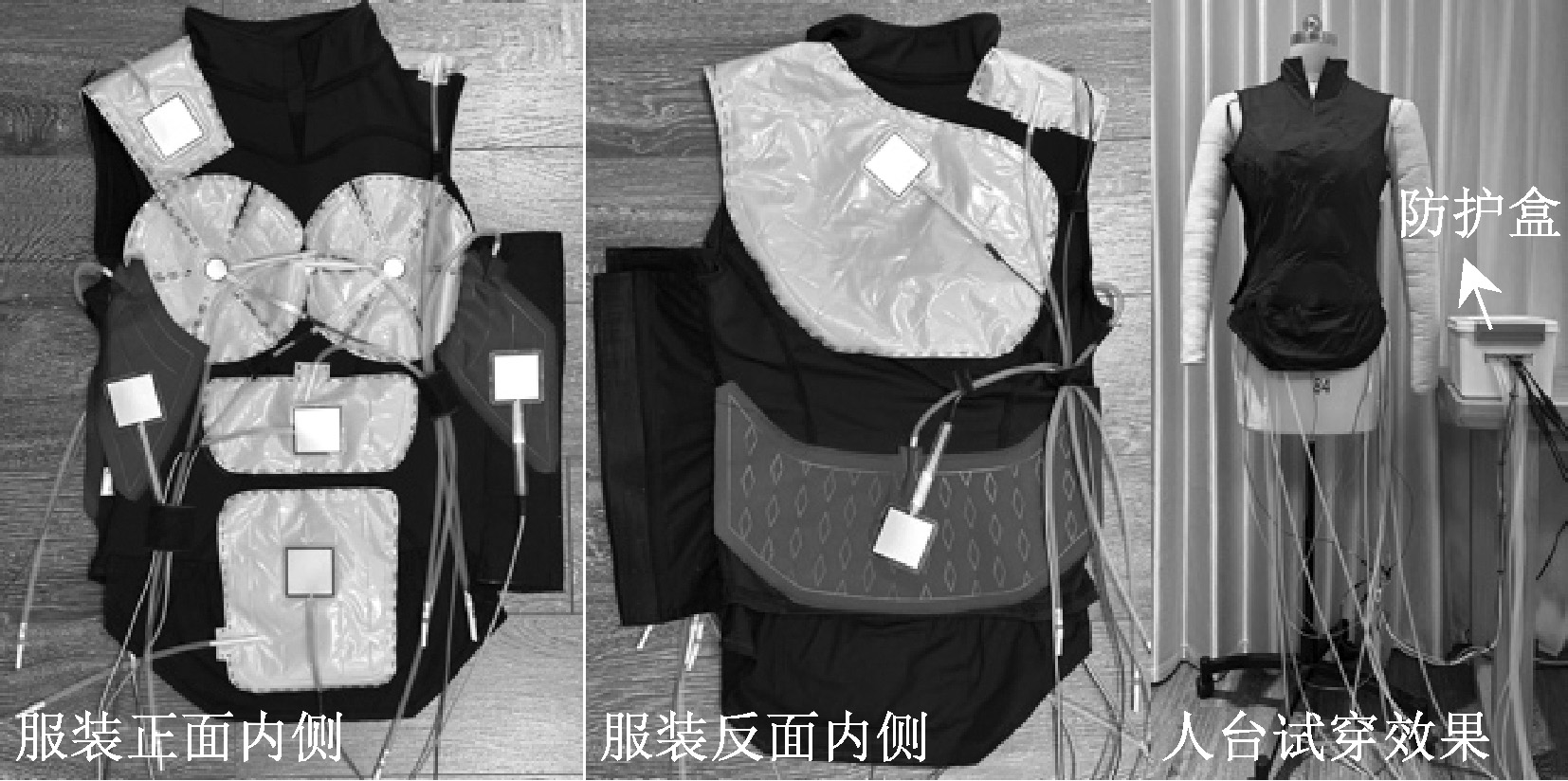
围绕触觉交互需求,针对现有拥抱模拟服装反馈模块定位模糊、压力输出模式固化及互动形式单一等问题,选取具有高情感表达强度的拥抱行为作为研究对象,对亲密关系人群的拥抱姿势展开系统研究,并集成柔性可穿戴设备,设计并开发了一款拥抱模拟压力自适应服装。选取手部位置与躯体姿态作为关键拥抱特征,采用可逆感温变色涂层面料实验服装,结合拍摄记录法采集拥抱图像,通过OpenCV图像处理获得正、背、双侧和肩部共18张成色平均图像,并结合主观数据生成的压力感知热力图,最终划分得到拥抱综合区域定位。在此基础上,以ESP32为核心控制器,电阻式压力传感器作为感应输入单元,气囊作为压力反馈执行单元,开发了具备自适应压力调节功能的拥抱模拟服装。经功能测试,该服装的压力自适应识别在实际预设、系统识别与个人感知三者间完全一致率达60%。本研究不仅为拥抱模拟服装中反馈模块的布局提供了方法与图像依据,也为触觉交互服装与情感可穿戴设备的产品化开发提供了技术参考与实践路径。
中图分类号:
| [1] | FORSELL L M, ÅSTRÖM J A. Meanings of hugging: from greeting behavior to touching implications[J]. Comprehensive Psychology, 2012, 1: 02.17.21.CP.1.13. |
| [2] |
COHEN S, JANICKI-DEVERTS D, TURNER R B, et al. Does hugging provide stress-buffering social support: a study of susceptibility to upper respiratory infection and illness[J]. Psychological Science, 2015, 26(2): 135-147.
doi: 10.1177/0956797614559284 |
| [3] |
VAN RAALTE L J, FLOYD K. Daily hugging predicts lower levels of two proinflammatory cytokines[J]. Western Journal of Communication, 2021, 85(4): 487-506.
doi: 10.1080/10570314.2020.1850851 |
| [4] |
LIGHT K C, GREWEN K M, AMICO J A. More frequent partner hugs and higher oxytocin levels are linked to lower blood pressure and heart rate in premenopausal women[J]. Biological Psychology, 2005, 69(1): 5-21.
pmid: 15740822 |
| [5] |
GREWEN K M, GIRDLER S S, AMICO J, et al. Effects of partner support on resting oxytocin, cortisol, norepinephrine, and blood pressure before and after warm partner contact[J]. Psychosomatic Medicine, 2005, 67(4): 531-538.
pmid: 16046364 |
| [6] | MALLOUK N, ROSHANFAR M, FEKRI P, et al. A brief review on recent advances in haptic technology for human-computer interaction: force, tactile, and surface haptic feedback[C]// 2024 7th International Conference on Information and Computer Technologies (ICICT). New York: IEEE, 2024: 34-39. |
| [7] | MORIKAWA O, HASHIMOTO S, MUNAKATA T, et al. Embrace system for remote counseling[C]// Proceedings of the 8th International Conference on Multimodal Interfaces. New York: ACM, 2006: 318-325. |
| [8] | ARAFSHA F, ALAM K M, EL SADDIK A. EmoJacket: consumer centric wearable affective jacket to enhance emotional immersion[C]// 2012 International Conference on Innovations in Information Technology (IIT). New York: IEEE, 2012: 350-355. |
| [9] | ISRAR A, POUPYREV I. Tactile brush: drawing on skin with a tactile grid display[C]// Proceedings of the SIGCHI Conference on Human Factors in Computing Systems. New York: ACM, 2011: 2019-2028. |
| [10] | KONISHI Y, HANAMITSU N, MINAMIZAWA K, et al. Synesthesia suit: the full body immersive experience[C]// ACM SIGGRAPH 2016 Posters. New York: ACM, 2016: 1. |
| [11] | NOBUHIRO T, RYUTA O, HIROYUKI O, et al. Sense-roid: emotional haptic communication with yourself[C]// Proceedings of Virtual Reality International Conference 2011 (VRIC 2011). Laval, France; 2011: 1-4. |
| [12] | BROWN H, SHANNON E, FITTER N T. Design and preliminary evaluation of the AID vest: an automatic inflatable wearable device for anxiety reduction[C]// 2021 IEEE World Haptics Conference (WHC). New York: IEEE, 2021: 745-750. |
| [13] | 杨乐丹, 刘运娟, 麻文效, 等. 基于接触安慰原理的模拟拥抱功能性服装设计与开发[J]. 丝绸, 2025, 62(1): 77-84. |
| YANG Ledan, LIU Yunjuan, MA Wenxiao, et al. Design and development of simulated hugging functional clothing based on the principle of contact comfort[J]. Journal of Silk, 2025, 62(1): 77-84. | |
| [14] | TEH J K S, TSAI Z, KOH J T K V, et al. Mobile implementation and user evaluation of the Huggy Pajama system[C]// 2012 IEEE Haptics Symposium (HAPTICS). New York: IEEE, 2012: 471-478. |
| [15] | TSETSERUKOU D. HaptiHug: a novel haptic display for communication of hug over a distance[C]// Haptics: Generating and Perceiving Tangible Sensations. Berlin, Heidelberg: Springer, 2010: 340-347. |
| [16] | CHAN A. ″I need a hug right now″: affective support through remote touch technology[C]// 2019 8th International Conference on Affective Computing and Intelligent Interaction Workshops and Demos (ACIIW). New York: IEEE, 2019: 40-44. |
| [17] | LIN W K, ZHANG D S, LEE W W, et al. Super-resolution wearable electrotactile rendering system[J]. Science Advances, 2022, 8(36): eabp8738. |
| [18] | LI J Y, CHEN T S, MA S Y, et al. PuppetAI: a customizable platform for designing tactile-rich affective robot interaction[EB/OL]. 2026: arXiv: 2602.04787. https://arxiv.org/abs/2602.04787. |
| [19] | DELAZIO A, NAKAGAKI K, KLATZKY R L, et al. Force jacket: pneumatically-actuated jacket for embodied haptic experiences[C]// Proceedings of the 2018 CHI Conference on Human Factors in Computing Systems. New York: ACM, 2018: 1-12. |
| [20] | MUELLER F, VETERE F, GIBBS M R, et al. Hug over a distance[C]// CHI05 Extended Abstracts on Human Factors in Computing Systems. New York: ACM, 2005: 1673-1676. |
| [21] |
JIANG M Q, NANJAPPAN V, LI Z M, et al. iPillowPal: exploring affective gesture-based interactive textile design for long-distance relationship couples[J]. International Journal of Human-Computer Studies, 2025, 199: 103466.
doi: 10.1016/j.ijhcs.2025.103466 |
| [22] |
BLOCK A E, KUCHENBECKER K J. Softness, warmth, and responsiveness improve robot hugs[J]. International Journal of Social Robotics, 2019, 11(1): 49-64.
doi: 10.1007/s12369-018-0495-2 |
| [23] | DROLET M, CAMPBELL J, BEN AMOR H. Learning and blending robot hugging behaviors in time and space[C]// 2023 IEEE International Conference on Robotics and Automation (ICRA). New York: IEEE, 2023: 12071-12077. |
| [24] |
DUEREN A L, VAFEIADOU A, EDGAR C, et al. The influence of duration, arm crossing style, gender, and emotional closeness on hugging behaviour[J]. Acta Psychologica, 2021, 221: 103441.
doi: 10.1016/j.actpsy.2021.103441 |
| [25] |
FLOYD K. All touches are not created equal: effects of form and duration on observers' interpretations of an embrace[J]. Journal of Nonverbal Behavior, 1999, 23(4): 283-299.
doi: 10.1023/A:1021602926270 |
| [26] |
TURNBULL O H, STEIN L, LUCAS M D. Lateral preferences in adult embracing: a test of the ″hemispheric asymmetry″ theory of infant cradling[J]. The Journal of Genetic Psychology, 1995, 156(1): 17-21.
doi: 10.1080/00221325.1995.9914802 |
| [27] |
OCKLENBURG S, PACKHEISER J, SCHMITZ J, et al. Hugs and kisses: the role of motor preferences and emotional lateralization for hemispheric asymmetries in human social touch[J]. Neuroscience & Biobehavioral Reviews, 2018, 95: 353-360.
doi: 10.1016/j.neubiorev.2018.10.007 |
| [28] |
PACKHEISER J, ROOK N, DURSUN Z, et al. Embracing your emotions: affective state impacts lateralisation of human embraces[J]. Psychological Research, 2019, 83(1): 26-36.
doi: 10.1007/s00426-018-0985-8 pmid: 29349505 |
| [29] |
FAUL F, ERDFELDER E, LANG A G, et al. G*Power 3: a flexible statistical power analysis program for the social, behavioral, and biomedical sciences[J]. Behavior Research Methods, 2007, 39(2): 175-191.
doi: 10.3758/bf03193146 pmid: 17695343 |
| [30] | YANG Y, REN L, CHEN C, et al. SnapInflatables: designing inflatables with snap-through instability for responsive interaction[C]// Proceedings of the CHI Conference on Human Factors in Computing Systems. New York: ACM, 2024: 1-15. |
| [1] | 张红霞, 齐芳汐, 赵静, 邢毅, 吕治家. 蜂巢结构介电层织物基传感器的一体成形及其性能[J]. 纺织学报, 2025, 46(10): 86-94. |
| [2] | 罗玉玲, 杨喜竹, 王星岚, 郑晓慧, 赵胜男, 常素芹. 以相变包为冷源的冷却服研究进展[J]. 纺织学报, 2025, 46(07): 253-261. |
| [3] | 佘叶美, 彭阳阳, 王法猛, 潘如如. 基于经编间隔织物的柔性压力传感器制备及其性能[J]. 纺织学报, 2025, 46(03): 158-166. |
| [4] | 张蕊, 叶苏娴, 王建, 邹专勇. 全织物型离电式柔性压力传感器的制备及其性能[J]. 纺织学报, 2025, 46(02): 113-121. |
| [5] | 肖渊, 童垚, 胡呈安, 武贤军, 杨磊鹏. 导电复合材料涂覆式全织物基柔性压阻传感器制备[J]. 纺织学报, 2024, 45(10): 152-160. |
| [6] | 汪宇佳, 王怡, 王雅思, 代方银, 李智. 基于家蚕平板丝结构的柔性压力传感器制备及其传感性能[J]. 纺织学报, 2024, 45(09): 10-17. |
| [7] | 王建, 张蕊, 郑莹莹, 董正梅, 邹专勇. 二维过渡金属碳/氮化合物基柔性纺织压力传感器的研究进展[J]. 纺织学报, 2024, 45(06): 219-226. |
| [8] | 丁小蝶, 唐虹, 高强, 张成蛟. 上躯干皮肤温度冷热变化与热量调节区划分[J]. 纺织学报, 2024, 45(05): 147-154. |
| [9] | 王馨雨, 田明伟. 具有距离监测与辅助提示功能的自闭症儿童智能服装设计[J]. 纺织学报, 2024, 45(03): 156-162. |
| [10] | 朱圆圆, 覃蕊, 金佳勤, 雷彧腾, 于淼. 基于ANSYS的人体下肢服装压虚拟仿真预测[J]. 纺织学报, 2024, 45(03): 148-155. |
| [11] | 闫鹏翔, 陈富星, 刘红, 田明伟. 柔性力感知电子织物的制备及其人体运动监测系统构建[J]. 纺织学报, 2024, 45(02): 59-66. |
| [12] | 刘雨婷, 宋泽涛, 赵胜男, 王星岚, 常素芹. 个体冷却服的研究现状与发展趋势[J]. 纺织学报, 2023, 44(12): 233-241. |
| [13] | 苗雪, 王永进, 王方明. 充气保暖复合面料厚度与热阻的相关性分析[J]. 纺织学报, 2023, 44(11): 176-182. |
| [14] | 马亮, 李俊. 多种智能技术在防寒服装功能研发中的应用进展[J]. 纺织学报, 2022, 43(06): 206-214. |
| [15] | 林美霞, 王嘉雯, 肖爽, 王晓云, 刘皓, 何崟. 高灵敏超压缩生物基炭化材料柔性压力传感器的制备及其性能[J]. 纺织学报, 2022, 43(02): 61-68. |
|
||
 京公网安备11010502044800号