纺织学报 ›› 2026, Vol. 47 ›› Issue (07): 27-33.doi: 10.13475/j.fzxb.20260400701
• 第二十八届中国科协年会学术论文·减污降碳共性技术突破专栏· • 上一篇 下一篇
王鑫杨1, 乔曦冉1, 徐成书1( ), 王慧杰2, 任燕1, 韩彬1, 徐子铮3
WANG Xinyang1, QIAO Xiran1, XU Chengshu1(), WANG Huijie2, REN Yan1, HAN Bin1, XU Zizheng3
摘要:
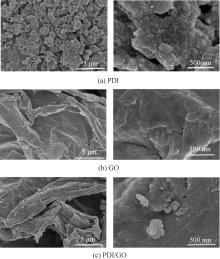
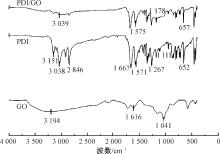
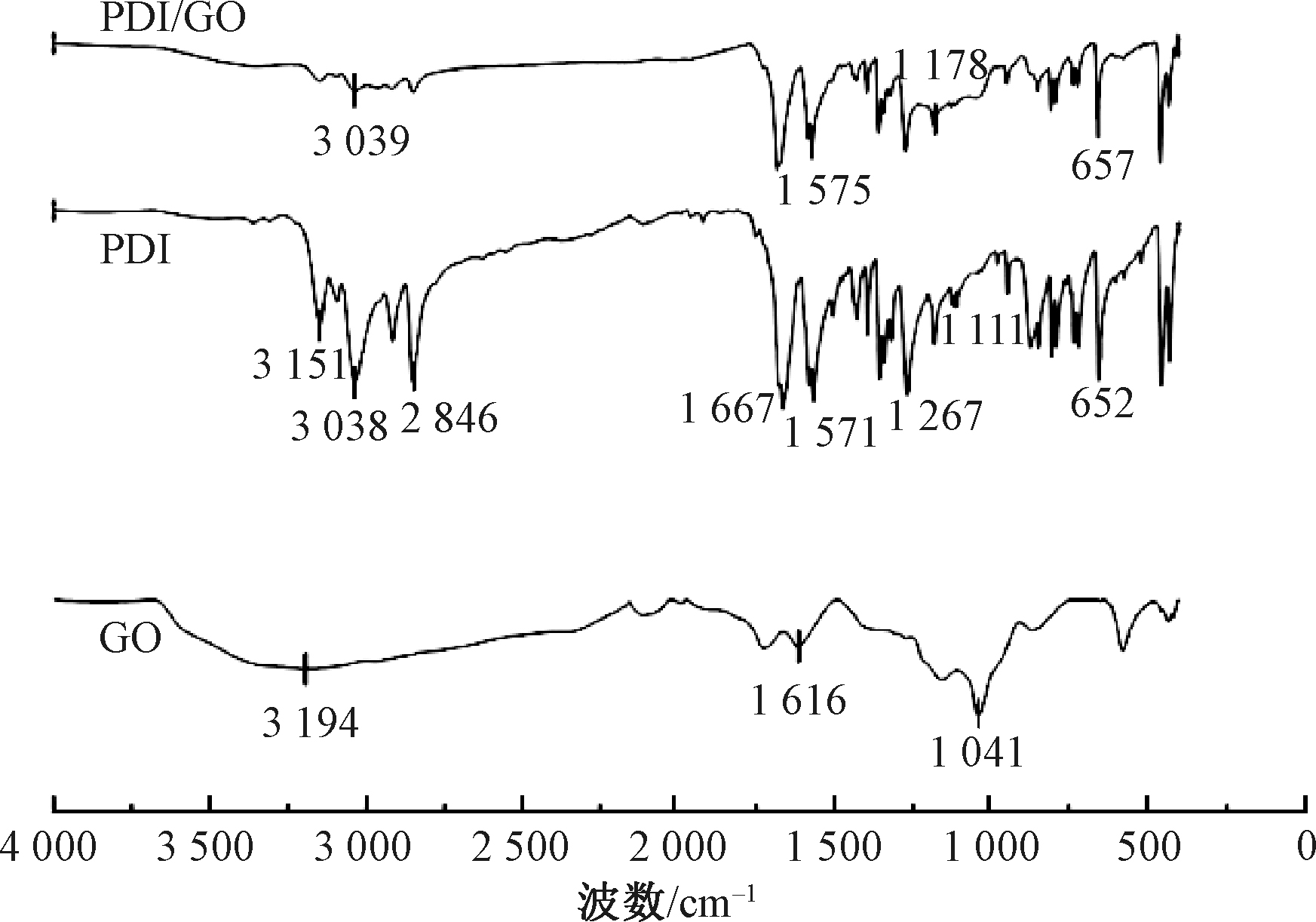
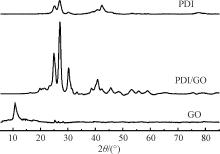
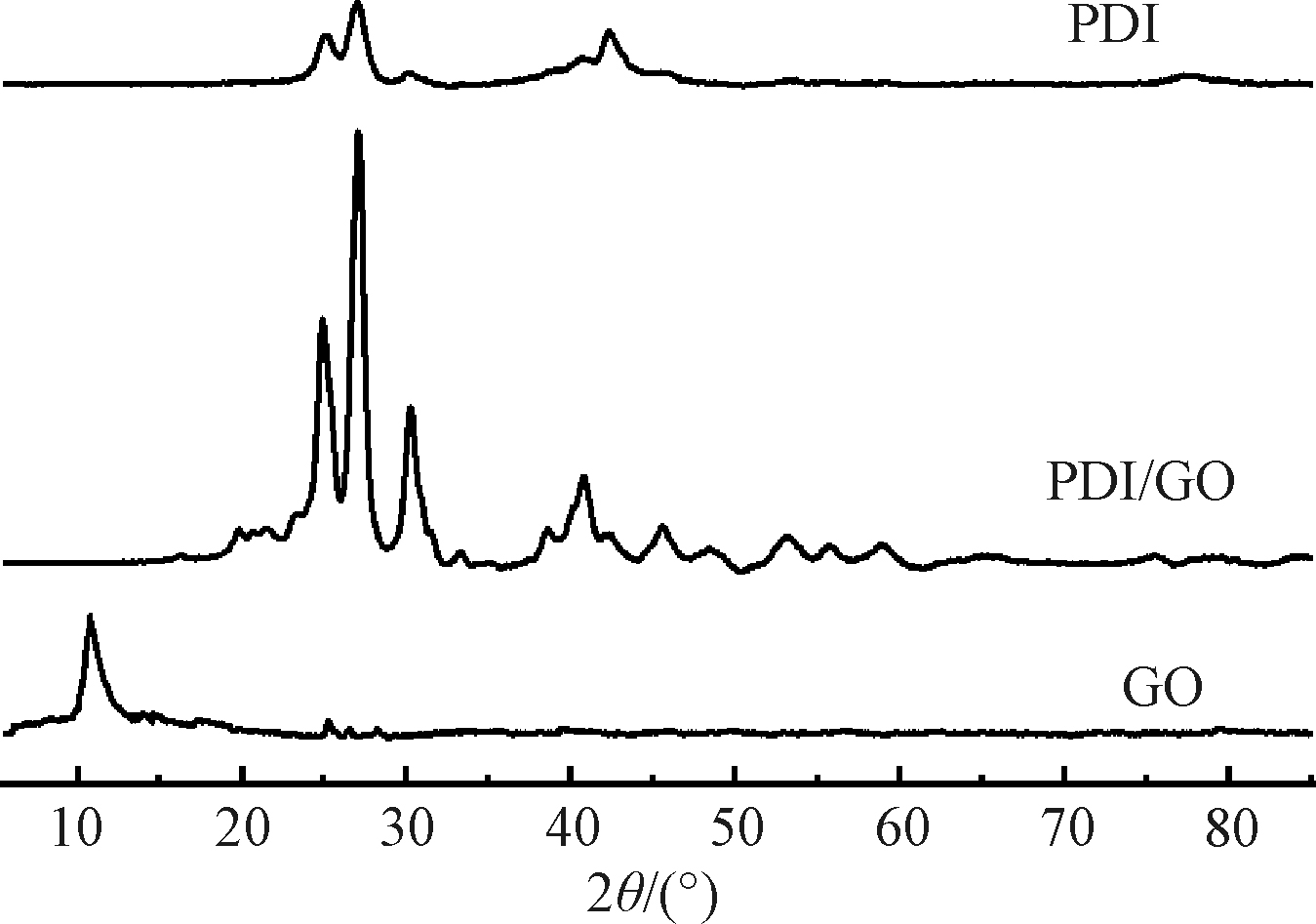
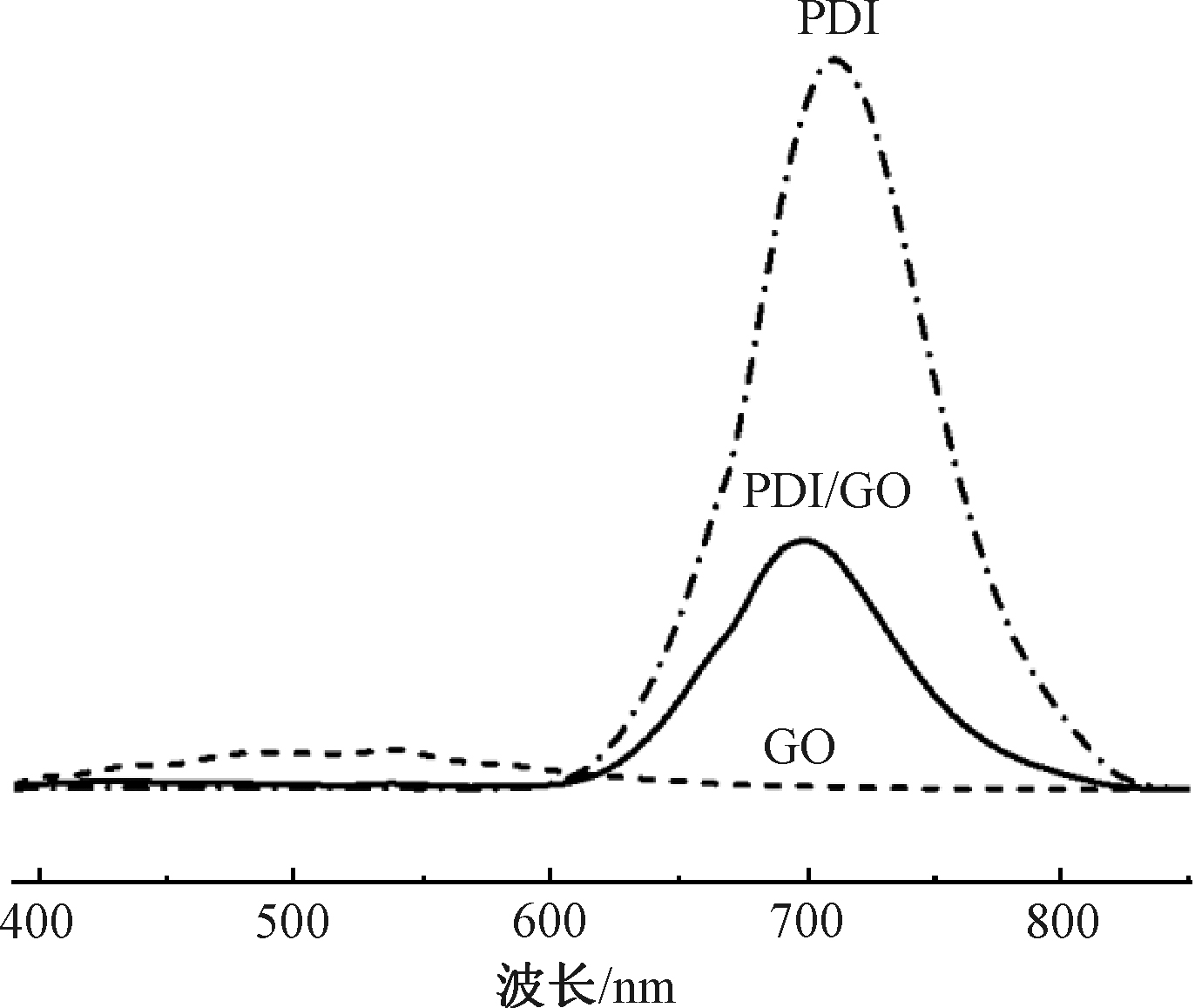
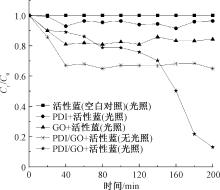
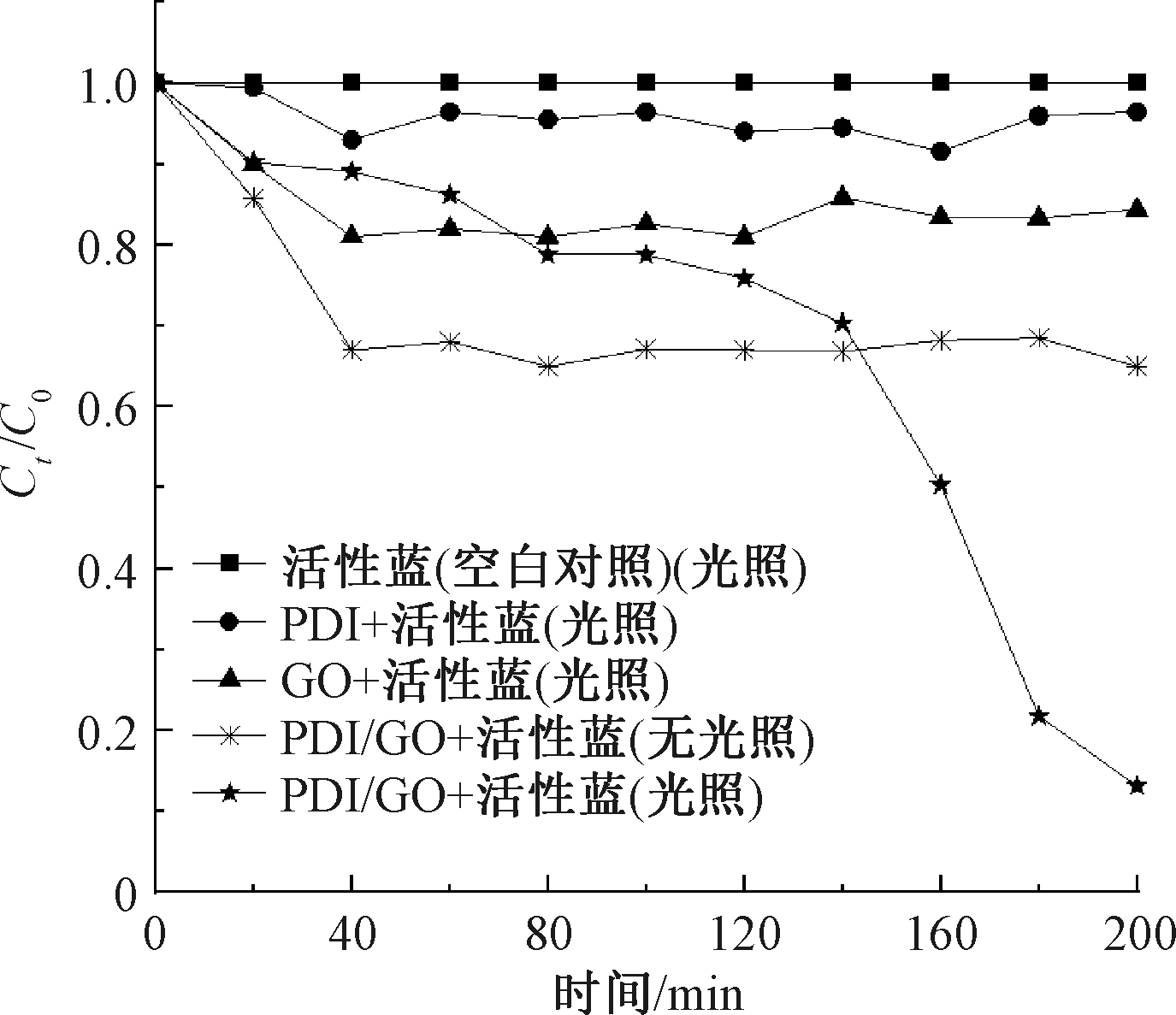
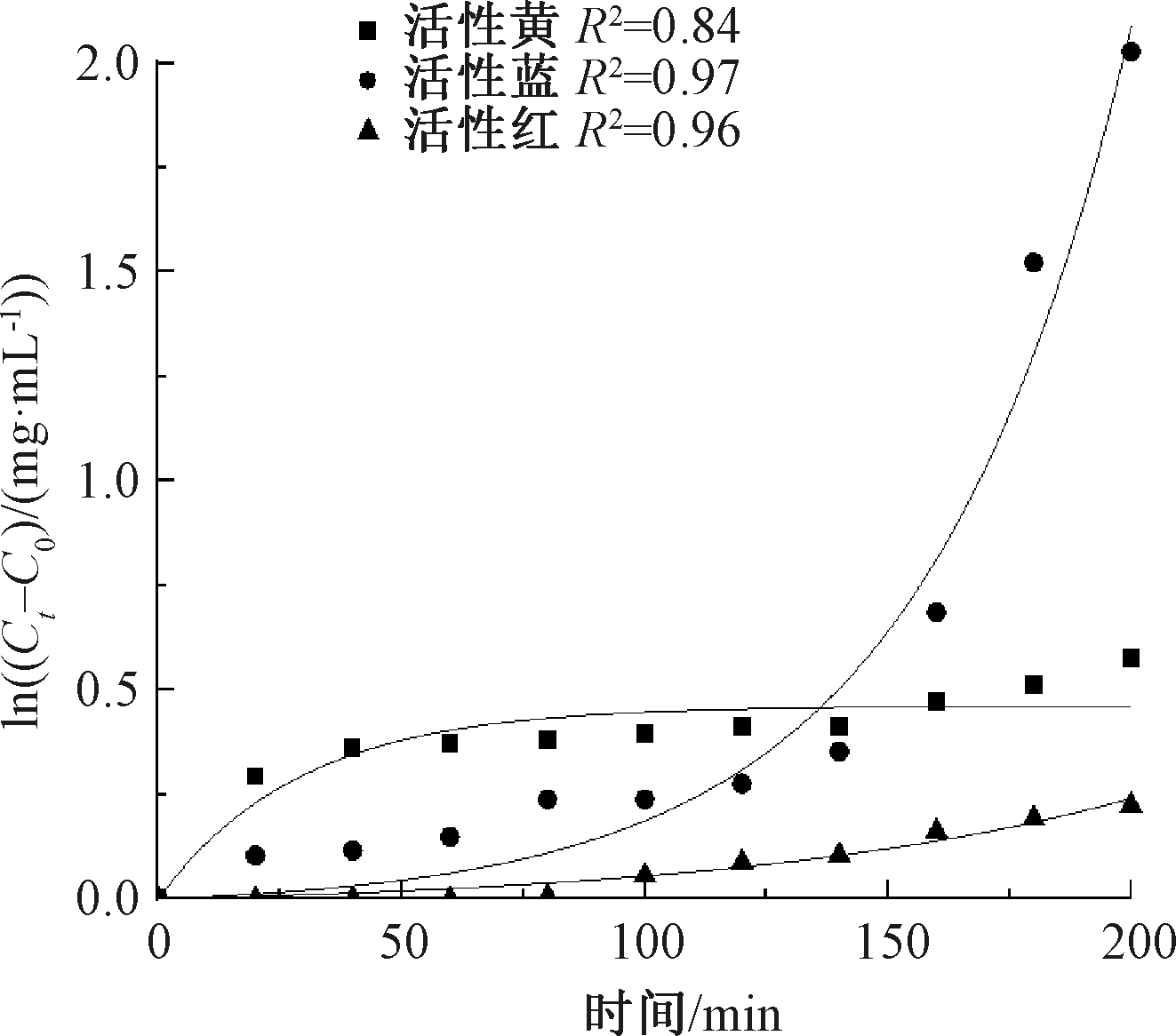
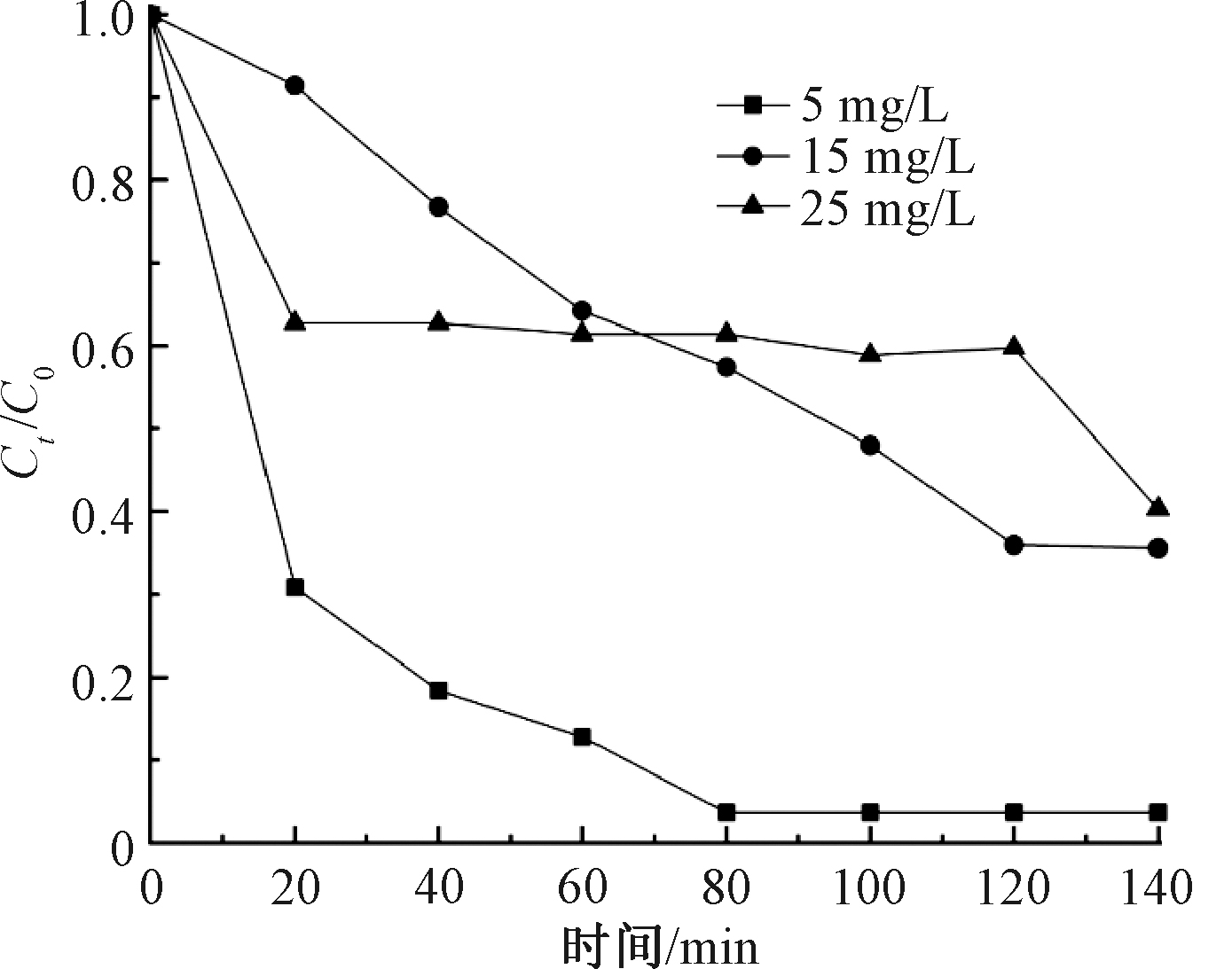
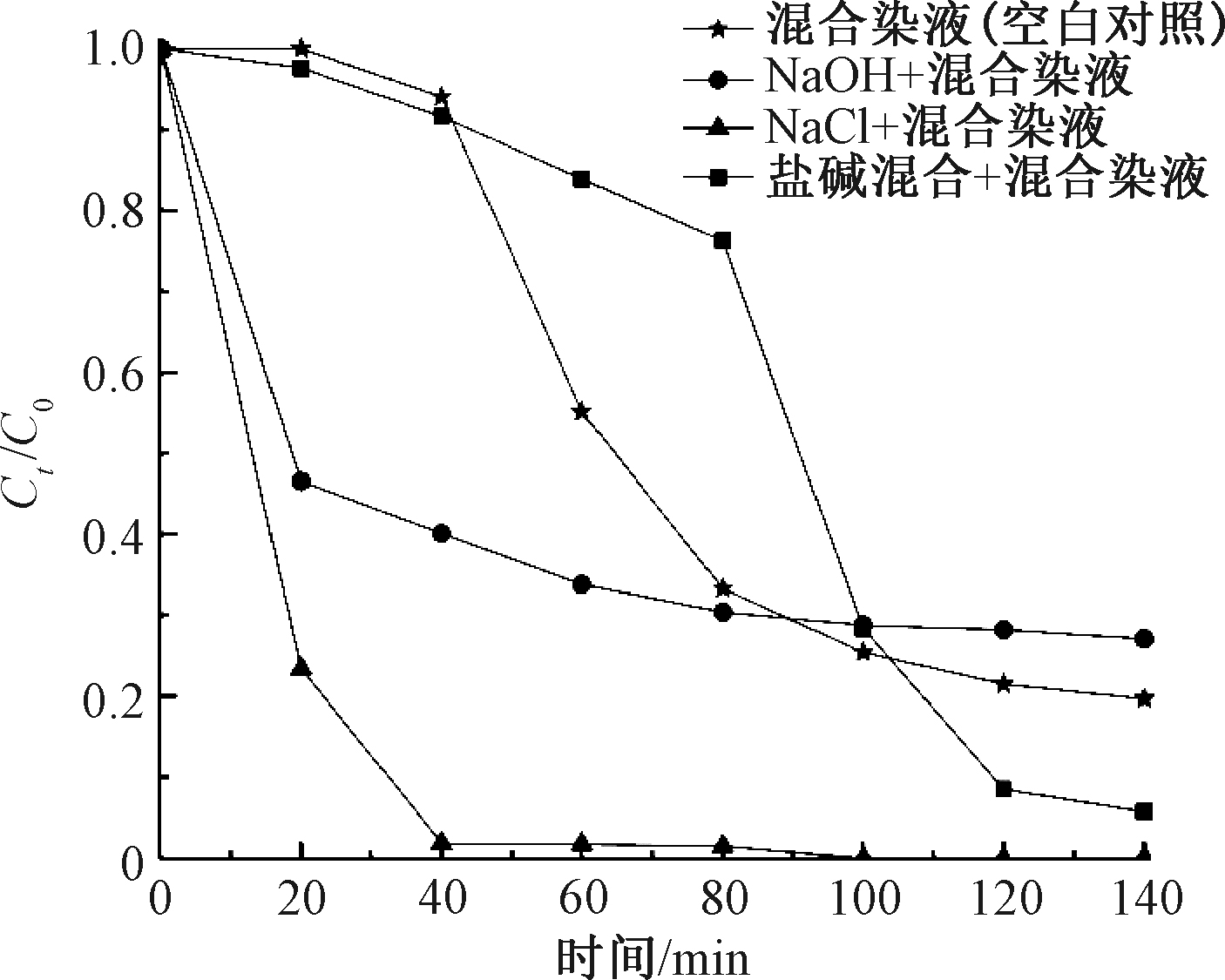
针对传统光催化剂含重金属离子易造成二次污染的问题,为开发无金属、环境友好型印染废水处理光催化材料,采用重结晶法将 3,4,9,10-苝四甲酰二亚胺(PDI)负载于氧化石墨烯(GO)片层表面,制备 PDI/GO 光催化剂,并系统研究其对活性染料的光催化降解性能及盐碱耐受性。通过扫描电子显微镜、红外光谱仪、X射线衍射仪与光致发光光谱仪对材料结构与载流子分离性能进行表征,以活性蓝、活性红、活性黄及其混合染料为目标污染物,在氙灯光照下开展降解实验。结果表明,PDI 均匀负载于 GO 表面,复合材料荧光强度显著降低,载流子分离效率提升;光照 200 min,该催化剂对 10 mg/L 活性蓝降解率达 85% 以上,对 5 mg/L 活性蓝在 70 min 内降解率达 98%;在 40 g/L NaCl、10 g/L NaOH 及盐碱共存体系中仍保持良好降解效果,其中 NaCl 可促进降解,盐碱混合体系前期抑制后期加速降解。制备的 PDI/GO 光催化剂制备简便、无金属、稳定性好,在高盐高碱印染废水处理中具有应用潜力,为有机半导体光催化材料在染料废水治理中的应用提供数据支撑。
中图分类号:
| [1] | 任钢锋. 我国工业印染废水处理状况研究[J]. 节能与环保, 2021(4): 76-78. |
| REN Gangfeng. Study on the treatment of industrial printing and dyeing wastewater in China[J]. Energy Conservation and Environmental Protection, 2021(4): 76-78. | |
| [2] |
MISHRA S, MOHANTY P, MAITI A. Bacterial mediated bio-decolourization of wastewater containing mixed reactive dyes using jack-fruit seed as co-substrate: process optimization[J]. Journal of Cleaner Production, 2019, 235: 21-33.
doi: 10.1016/j.jclepro.2019.06.328 |
| [3] |
BILAL M, ASGHER M, PARRA-SALDIVAR R, et al. Immobilized ligninolytic enzymes: an innovative and environmental responsive technology to tackle dye-based industrial pollutants: a review[J]. Science of the Total Environment, 2017, 576: 646-659.
doi: 10.1016/j.scitotenv.2016.10.137 |
| [4] |
ZAMAN S, SEN S, FATEMA M K, et al. Adsorption of Reactive Red 120 dye from simulated wastewater using rice straw charcoal: isotherm and kinetic studies[J]. H2Open Journal, 2025, 8(3): 89-99.
doi: 10.2166/h2oj.2025.057 |
| [5] |
LAHIRI S K, ZHANG C, SILLANPÄÄ M, et al. Nanoporous NiO@SiO2 photo-catalyst prepared by ion-exchange method for fast elimination of reactive dyes from wastewater[J]. Materials Today Chemistry, 2022, 23: 100677.
doi: 10.1016/j.mtchem.2021.100677 |
| [6] |
MAMBA G, MISHRA A K. Graphitic carbon nitride (g-C3N4) nanocomposites: a new and exciting generation of visible light driven photocatalysts for environmental pollution remediation[J]. Applied Catalysis B: Environmental, 2016, 198: 347-377.
doi: 10.1016/j.apcatb.2016.05.052 |
| [7] |
DONG G P, ZHANG Y H, PAN Q W, et al. A fantastic graphitic carbon nitride (g-C3N4) material: electronic structure, photocatalytic and photoelectronic properties[J]. Journal of Photochemistry and Photobiology C: Photochemistry Reviews, 2014, 20: 33-50.
doi: 10.1016/j.jphotochemrev.2014.04.002 |
| [8] |
FUJISHIMA A, HONDA K. Electrochemical photolysis of water at a semiconductor electrode[J]. Nature, 1972, 238(5358): 37-38.
doi: 10.1038/238037a0 |
| [9] | 蒋文雯, 莫慧琳, 樊婷玥, 等. Ag6Si2O7/TiO2复合光催化剂的制备及其对亚甲基蓝的降解性能[J]. 纺织学报, 2021, 42(4): 107-113. |
| JIANG Wenwen, MO Huilin, FAN Tingyue, et al. Preparation of Ag6Si2O7/TiO2 photocatalyst and its photocatalytic degradation of methylene blue[J]. Journal of Textile Research, 2021, 42(4): 107-113. | |
| [10] | 杨丽, 王涛, 石现兵, 等. 改性聚丙烯腈纤维负载MoSx/TiO2光催化材料制备及其降解染料性能[J]. 纺织学报, 2022, 43(9): 149-155. |
| YANG Li, WANG Tao, SHI Xianbing, et al. Preparation of modified polyacrylonitrile fiber supported MoSx/TiO2 composite photocatalyst and its performance for dye degradation[J]. Journal of Textile Research, 2022, 43(9): 149-155. | |
| [11] |
YANG J, JING J F, LI W L, et al. Electron donor-acceptor interface of TPPS/PDI boosting charge transfer for efficient photocatalytic hydrogen evolution[J]. Advanced Science, 2022, 9(17): 2201134.
doi: 10.1002/advs.v9.17 |
| [12] |
LI Y, ZHANG X L, LIU D. Recent developments of perylene diimide (PDI) supramolecular photocatalysts: a review[J]. Journal of Photochemistry and Photobiology C: Photochemistry Reviews, 2021, 48: 100436.
doi: 10.1016/j.jphotochemrev.2021.100436 |
| [13] |
ZHANG Q C, JIANG L, WANG J, et al. Photocatalytic degradation of tetracycline antibiotics using three-dimensional network structure perylene diimide supramolecular organic photocatalyst under visible-light irradiation[J]. Applied Catalysis B: Environmental, 2020, 277: 119122.
doi: 10.1016/j.apcatb.2020.119122 |
| [14] |
MIAO H, YANG J, WEI Y X, et al. Visible-light photocatalysis of PDI nanowires enhanced by plasmonic effect of the gold nanoparticles[J]. Applied Catalysis B: Environmental, 2018, 239: 61-67.
doi: 10.1016/j.apcatb.2018.08.009 |
| [15] |
ZHANG Z J, CHEN X J, ZHANG H J, et al. A highly crystalline perylene imide polymer with the robust built-In electric field for efficient photocatalytic water oxidation[J]. Advanced Materials, 2020, 32(32): 1907746.
doi: 10.1002/adma.v32.32 |
| [16] |
KONG K Y, ZHANG S C, CHU Y M, et al. A self-assembled perylene diimide nanobelt for efficient visible-light-driven photocatalytic H2 evolution[J]. Chemical Communications, 2019, 55(56): 8090-8093.
doi: 10.1039/C9CC03465J |
| [17] | 卢鹏, 乔曦冉, 任燕, 等. PDINH/GO复合光催化剂的制备及其对甲基橙的降解性能[J]. 印染, 2025, 51(11): 1-5. |
| LU Peng, QIAO Xiran, REN Yan, et al. Preparation of PDINH/GO photocatalyst and its photocatalytic degradation of Methyl Orange[J]. China Dyeing and Finishing, 2025, 51(11): 1-5. | |
| [18] | YU X, ZHAO Z H, REN N, et al. Top or bottom, assembling modules determine the photocatalytic property of the sheetlike nanostructured hybrid photocatalyst composed with Sn3O4 and rGO (GQD)[J]. ACS Sustainable Chemistry & Engineering, 2018, 6(9): 11775-11782. |
| [1] | 沈忱思, 侯传鑫, 苏雄, 李方. 高级氧化预处理阻燃整理有机磷废水效能评价[J]. 纺织学报, 2026, 47(07): 1-9. |
| [2] | 杨帆, 崔松松, 王姗丽, 王振华, 戴高奇, 余德游. 聚四氟乙烯中空纤维膜接触反应器中臭氧传质强化及其应用性能[J]. 纺织学报, 2026, 47(07): 10-18. |
| [3] | 王亚云, 蔺多佳, 高远, 王杰, 夏鑫. 皮芯结构复合纱线电极的制备及其储锂与电致变色性能[J]. 纺织学报, 2026, 47(07): 136-143. |
| [4] | 张一帆, 程小龙, 李海成, 袁子衡, 蒋昌宽, 张寻, 张楠, 鲁育豪, 李伟. 淀粉接枝两嵌段聚醋酸乙烯酯浆料的制备及其性能[J]. 纺织学报, 2026, 47(07): 186-192. |
| [5] | 张昊, 李筱轩, 王纯萍, 胡艳丽, 王金玉. 改性淀粉基絮凝剂的制备及其对印染废水的絮凝性能[J]. 纺织学报, 2026, 47(07): 19-26. |
| [6] | 宋金洋, 房宽峻. 纤维素纤维用活性染料低给液染色研究进展[J]. 纺织学报, 2026, 47(07): 261-269. |
| [7] | 胡浙人, 俞乐, 金楠洋, 罗金明, 孔培振, 余德游. 全氟及多氟烷基物质吸附技术及其处理印染废水研究进展[J]. 纺织学报, 2026, 47(05): 273-282. |
| [8] | 郭正, 张贺凯, 宋云飞, 朱怡雷, 李佳颍, 郑佳悦, 王明环. 聚苯乙烯/ZIF-67纳米纤维的制备及其高级氧化降解应用[J]. 纺织学报, 2026, 47(04): 52-60. |
| [9] | 赵君丽, 肖远淑, 陈诚, 李帅, 宋均燕, 单国华. 罗布麻脱胶-染色一浴活性染料筛选及工艺优化[J]. 纺织学报, 2026, 47(02): 195-204. |
| [10] | 白刚, 孙理, 戴淑娇, 沈修宇, 刘艳春. 活性染料染色促进剂的合成及其应用[J]. 纺织学报, 2026, 47(02): 205-213. |
| [11] | 岳献阳, 王少博, 黄鑫, 王艳芝, 李冲冲, 张晓晓. 黄麻织物基磁性含氮多孔碳对Cr(VI)的吸附性能[J]. 纺织学报, 2026, 47(02): 255-263. |
| [12] | 孔艳辉, 张琳萍, 毛志平, 徐红. 甲基丙烯酰化明胶纤维膜的制备及其止血性能[J]. 纺织学报, 2026, 47(01): 1-10. |
| [13] | 凌磊, 陈凯, 高俊, 武丁胜, 汪邓兵, 张春, 凤权. 聚丙烯腈/共价有机框架复合纳米纤维膜的制备及其对Cr(Ⅵ)的吸附性能[J]. 纺织学报, 2026, 47(01): 54-62. |
| [14] | 刘劲扬, 李成才, 朱海霖, 郭玉海, 姜学梁. 非对称结构聚四氟乙烯中空管式纤维膜的制备及油水分离性能[J]. 纺织学报, 2025, 46(12): 11-18. |
| [15] | 谢围围, 朱庆鹏, 宋娇娇, 陈志明. 磁性固定化漆酶的制备及其对染料的高效降解[J]. 纺织学报, 2025, 46(12): 163-170. |
|
||
 京公网安备11010502044800号