纺织学报 ›› 2026, Vol. 47 ›› Issue (06): 140-147.doi: 10.13475/j.fzxb.20260103801
叶根洋1, 秦晓鹤1, 王佳佳1, 何满堂2, 曹机良2( )
)
YE Genyang1, QIN Xiaohe1, WANG Jiajia1, HE Mantang2, CAO Jiliang2()
摘要:
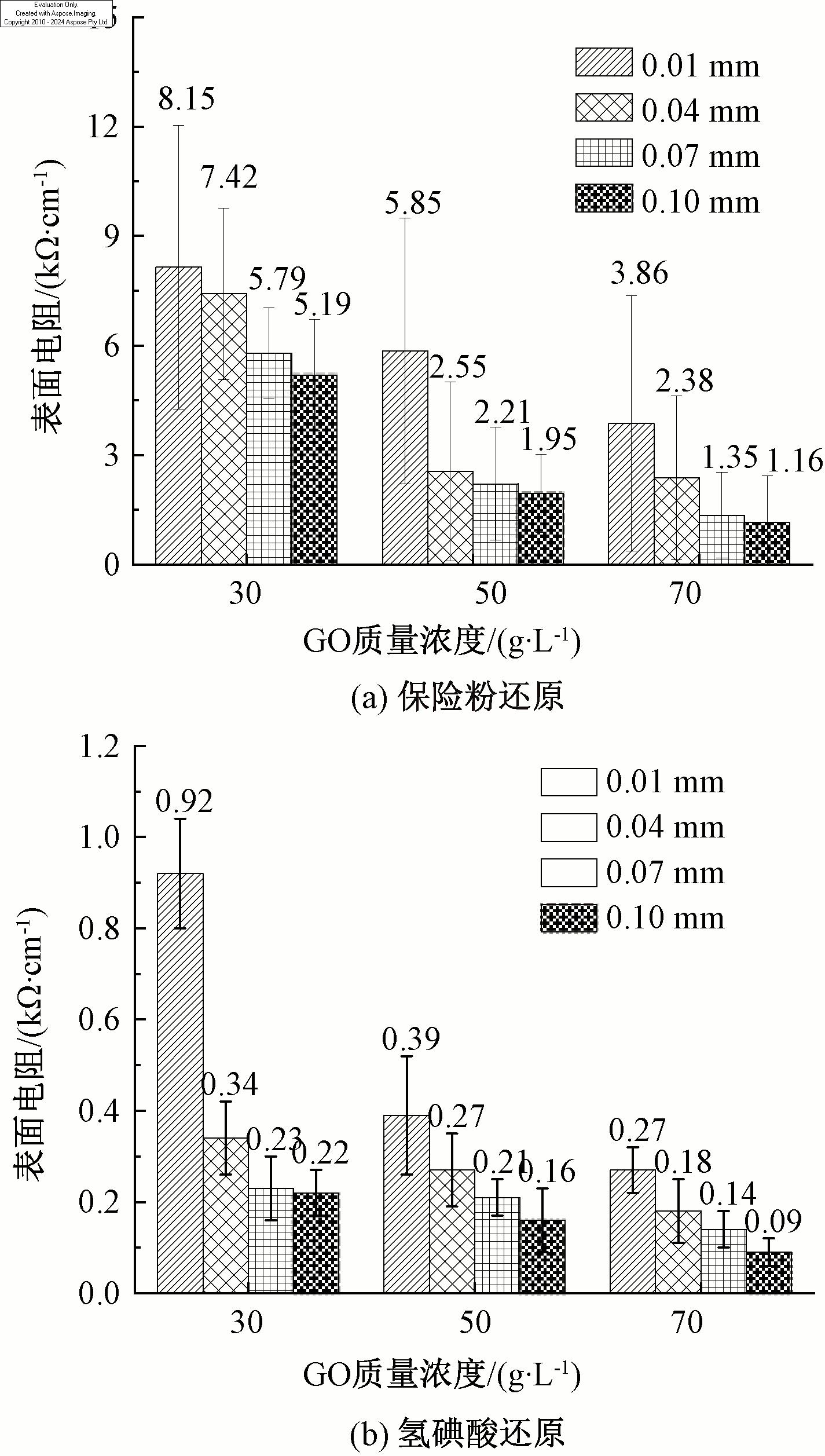
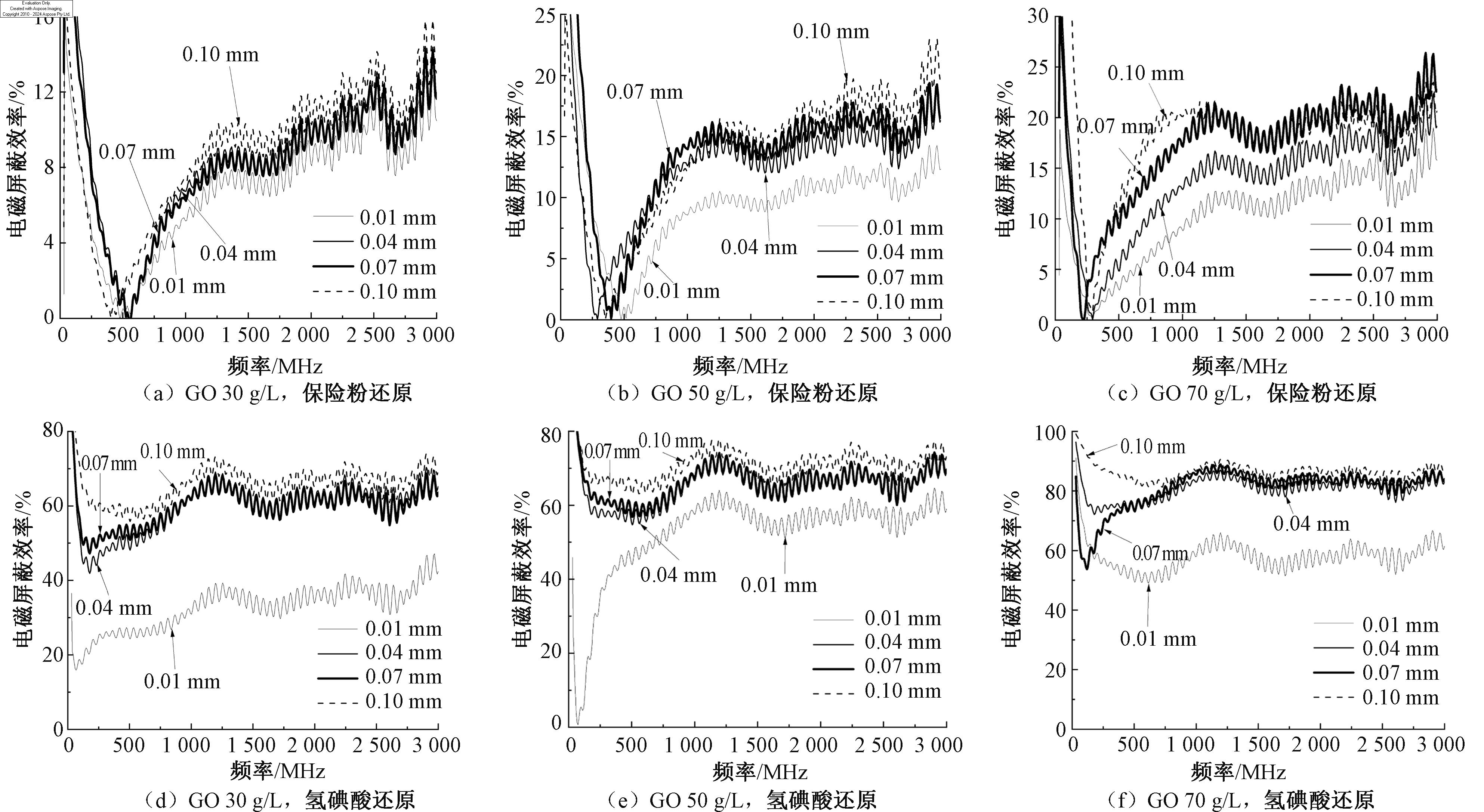
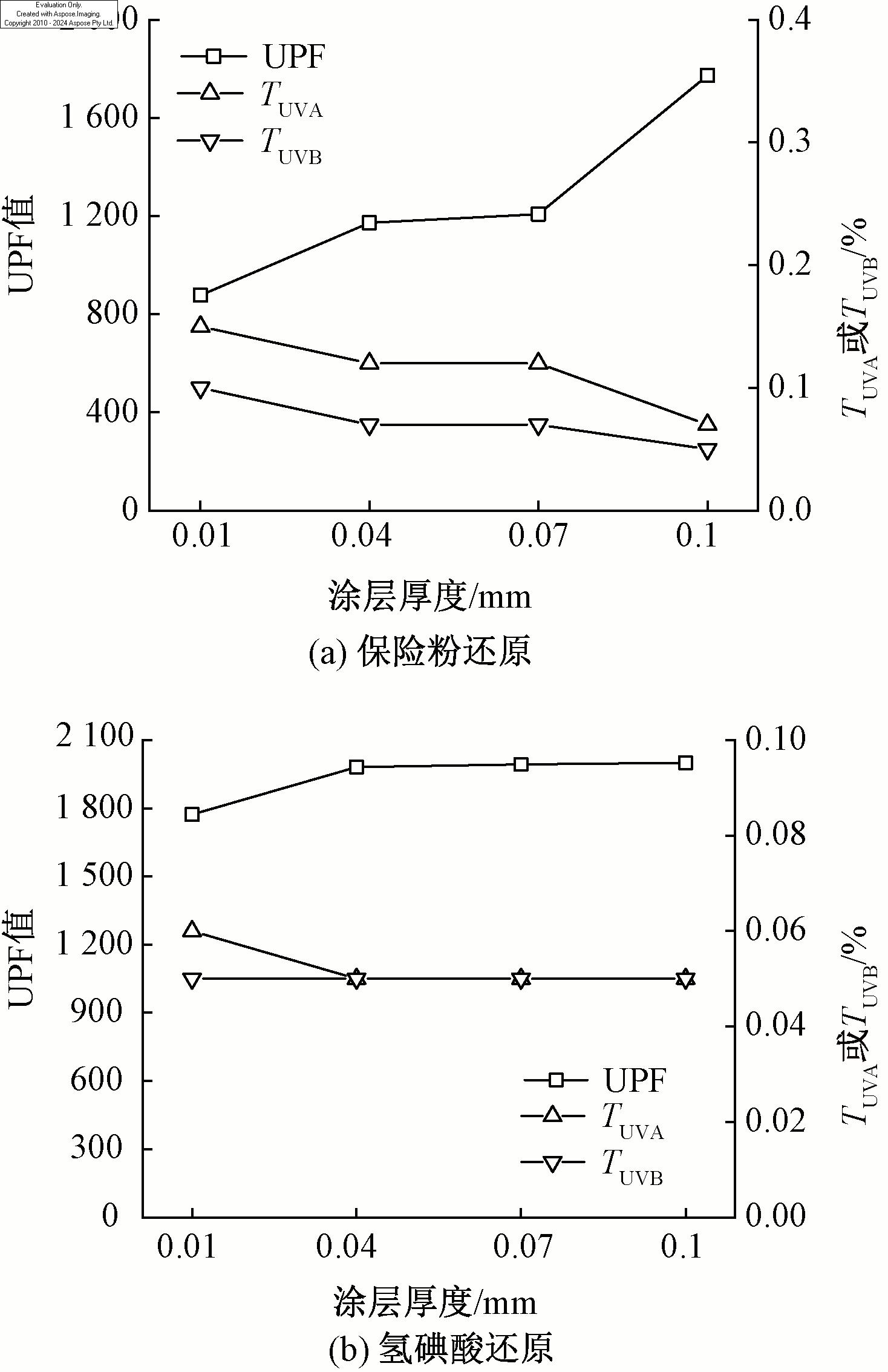
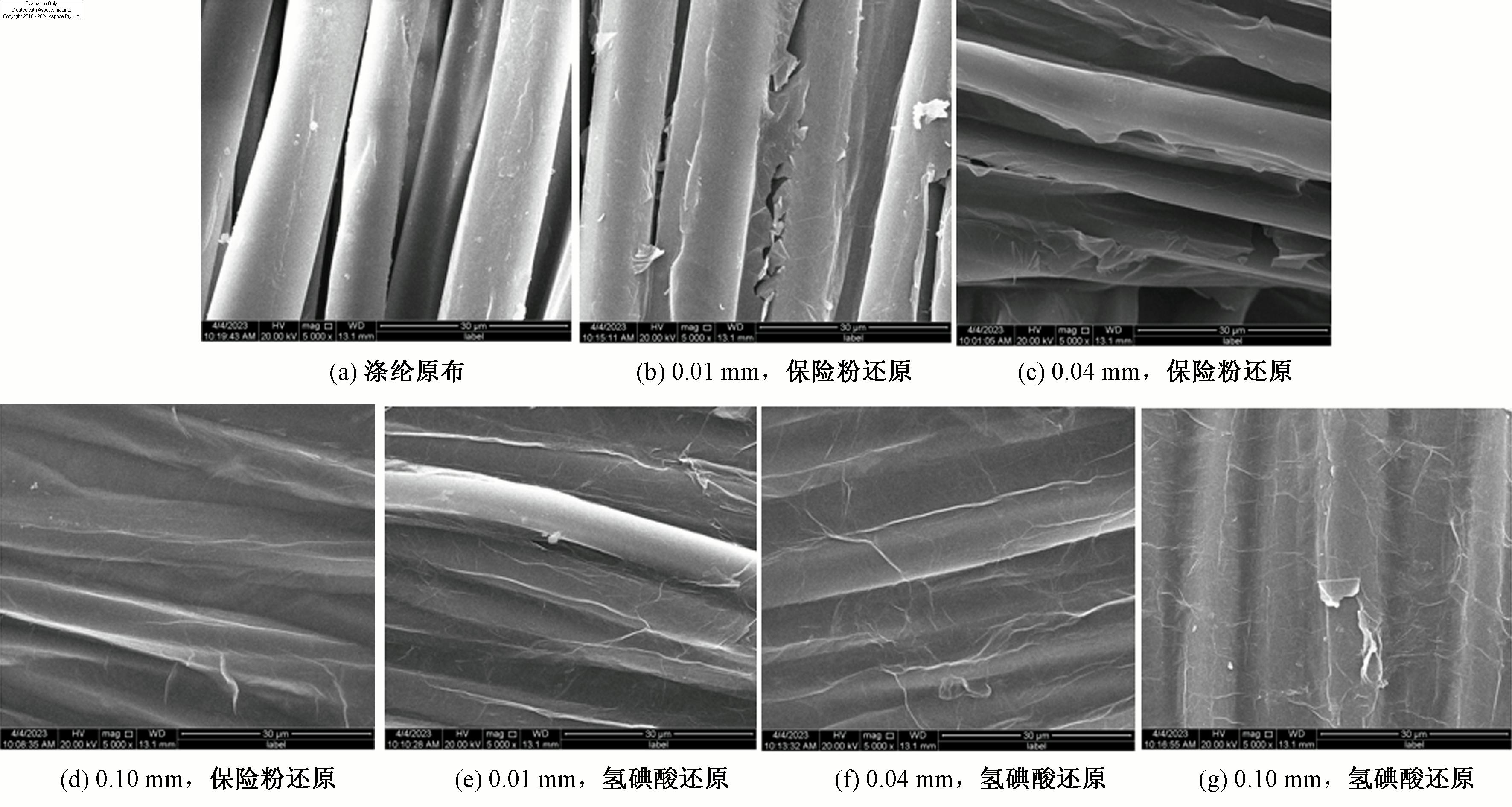
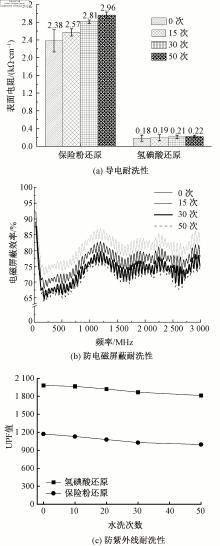
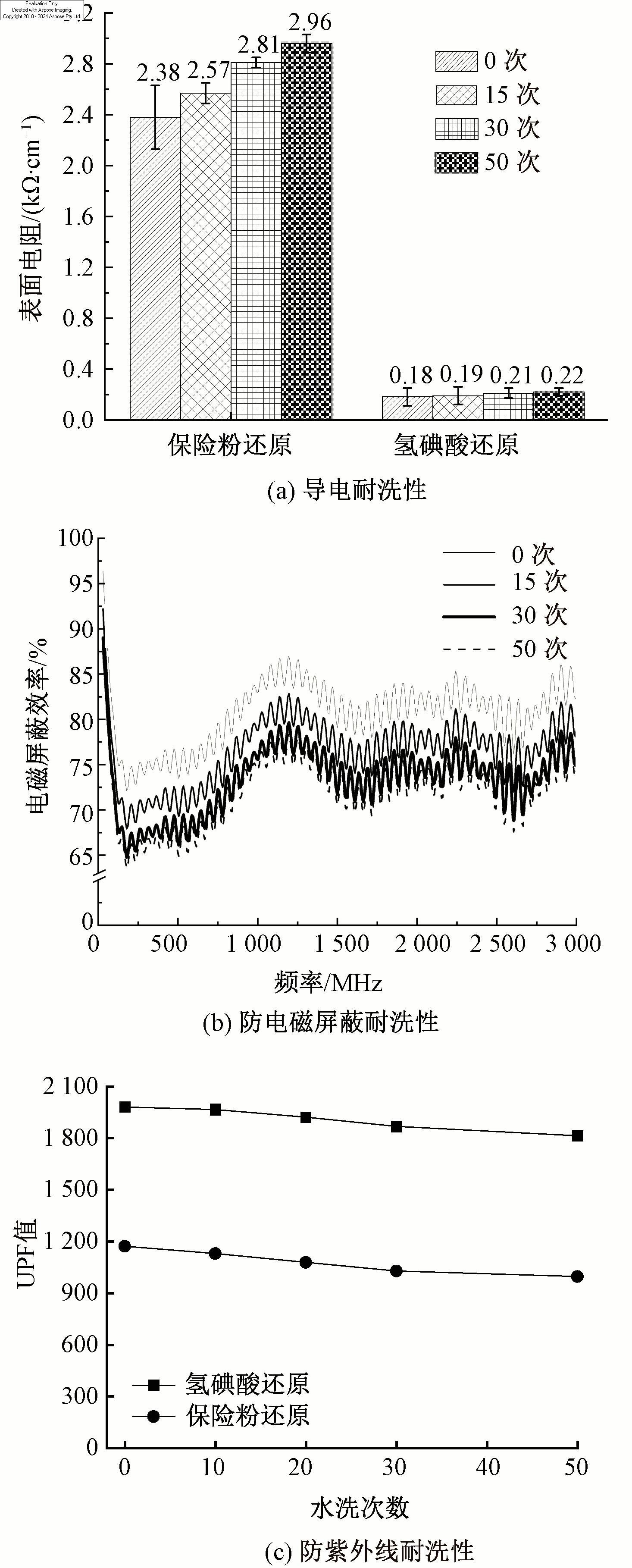
为制备兼具高导电性能、优异防紫外线性能、高效电磁屏蔽性能与一定使用耐久性的涤纶织物,采用纯氧化石墨烯(GO)浆料对涤纶织物进行涂层整理,并以氢碘酸还原制得还原氧化石墨烯(RGO)功能涂层织物。研究了 GO 质量浓度与涂层厚度对织物导电、防电磁辐射及防紫外线性能的影响,对比了保险粉与氢碘酸的还原效果,并对涂层织物进行表征,同时测试了其使用耐久性。结果表明:GO 在织物表面沉积连续、均匀,且可被较充分地还原为 RGO;织物的导电性、电磁屏蔽性能及防紫外线性能随 GO 质量浓度与涂层厚度的增大整体呈提升趋势。优化工艺为:GO 质量浓度 70 g/L、涂层厚度 0.04 mm、氢碘酸还原;在此条件下,织物表面电阻降至 0.18 kΩ/cm,电磁屏蔽效率超过 80%,紫外线防护系数(UPF)提升至 1 981.18,整体表现出优良的导电性、高效的电磁屏蔽性与优异的紫外防护性能,经 50 次水洗后功能略有下降。该织物有望应用于功能防护面料等领域。
中图分类号:
| [1] | 黄田田, 宋媛珠, 赵斌. 单宁酸基阻燃多功能涂层及表面整理Lyocell织物[J]. 纺织学报, 2024, 45(12): 152-158. |
| HUANG Tiantian, SONG Yuanzhu, ZHAO Bin. Tannic acid-based flame retardant multifunctional coating for surface finishing Lyocell fabrics[J]. Journal of Textile Research, 2024, 45(12): 152-158. | |
| [2] | 赵强, 刘正江, 高晓平, 等. 蒙脱土协同TiO2整理棉织物的功能性[J]. 纺织学报, 2024, 45(9): 121-128. |
| ZHAO Qiang, LIU Zhengjiang, GAO Xiaoping, et al. Functionality of cotton fabrics finished by montmorillonite combined with TiO2[J]. Journal of Textile Research, 2024, 45(9): 121-128. | |
| [3] | TIAN M W, HU X L, QU L J, et al. Ultraviolet protection cotton fabric achieved via layer-by-layer self-assembly of graphene oxide and chitosan[J]. Applied Surface Science, 2016, 377: 141-148. |
| [4] | ZHANG H X, CAO J D, WU W, et al. Layer-by-layer assembly of graphene oxide on viscose fibers for the fabrication of flexible conductive devices[J]. Cellulose, 2016, 23(6): 3761-3770. |
| [5] | 曹机良, 杜远远, 白金山, 等. 石墨烯柔性导电涤纶织物的制备与性能[J]. 精细化工, 2020, 37(7): 1478-1483. |
| CAO Jiliang, DU Yuanyuan, BAI Jinshan, et al. Preparation and properties of graphene electric conductive polyester fabrics[J]. Fine Chemicals, 2020, 37(7): 1478-1483. | |
| [6] | 梅敏, 钱建华, 周榆凯, 等. 纳米SiO2/含氟硅防水透湿整理剂的制备及其应用[J]. 纺织学报, 2022, 43(12): 118-124, 130. |
| MEI Min, QIAN Jianhua, ZHOU Yukai, et al. Preparation and application of nano-SiO2/fluorine-containing silicon waterproof and moisture-permeable finishing agent[J]. Journal of Textile Research, 2022, 43(12): 118-124, 130. | |
| [7] | WANG D, LI D W, ZHAO M, et al. Multifunctional wearable smart device based on conductive reduced graphene oxide/polyester fabric[J]. Applied Surface Science, 2018, 454: 218-226. |
| [8] | HE X, LIU Q C, ZHOU Y, et al. Graphene oxide-silver/cotton fiber fabric with anti-bacterial and anti-UV properties for wearable gas sensors[J]. Frontiers of Materials Science, 2021, 15(3): 406-415. |
| [9] | CAO J L, HUANG Z, WANG C X. Natural printed silk substrate circuit fabricated via surface modification using one step thermal transfer and reduction graphene oxide[J]. Applied Surface Science, 2018, 440: 177-185. |
| [10] | CAO J L, WANG C X. Multifunctional surface modification of silk fabric via graphene oxide repeatedly coating and chemical reduction method[J]. Applied Surface Science, 2017, 405: 380-388. |
| [11] | 王刚. 基于氢碘酸还原氧化石墨烯分析[J]. 科技与创新, 2020(19): 132-133. |
| WANG Gang. Analysis of graphene oxide based on hydroiodic acid reduction[J]. Science and Technology & Innovation, 2020(19): 132-133. | |
| [12] | 刘国一, 于朝生, 刘玉菲. 基于氢碘酸还原氧化石墨烯的研究[J]. 化学与粘合, 2020, 42(3): 192-196. |
| LIU Guoyi, YU Chaosheng, LIU Yufei. Research on the reduced graphene oxide based on hydroiodic acid[J]. Chemistry and Adhesion, 2020, 42(3): 192-196. | |
| [13] | 曹机良, 王潮霞. 石墨烯整理蚕丝织物的导电性能[J]. 纺织学报, 2018, 39 (12): 84-88. |
| CAO Jiliang, WANG Chaoxia. Electrical conductivity of silk fabrics finished with graphene[J]. Journal of Textile Research, 2018, 39 (12): 84-88. |
| [1] | 王亚云, 蔺多佳, 高远, 王杰, 夏鑫. 皮芯结构复合纱线电极的制备及其储锂与电致变色性能[J]. 纺织学报, 2026, 47(07): 136-143. |
| [2] | 王永强, 刘淑萍, 李亮, 郭芯冉, 刘让同. MXene/银纳米粒子功能织物制备及其导电与电磁屏蔽性能[J]. 纺织学报, 2026, 47(07): 209-218. |
| [3] | 王鑫杨, 乔曦冉, 徐成书, 王慧杰, 任燕, 韩彬, 徐子铮. 苝二酰亚胺/氧化石墨烯光催化剂的制备及其对活性染料的降解性能[J]. 纺织学报, 2026, 47(07): 27-33. |
| [4] | 季永忠. 超高强高尺寸稳定性高模低缩涤纶工业丝的开发[J]. 纺织学报, 2026, 47(06): 26-34. |
| [5] | 张旭, 许云凯, 刘云. 植酸改性茶多酚阻燃涤纶织物的制备及其性能[J]. 纺织学报, 2026, 47(05): 182-189. |
| [6] | 敖利民, 徐浩文. 集聚包覆技术原理及其对芯纱毛羽的控制效果[J]. 纺织学报, 2026, 47(04): 113-119. |
| [7] | 刘雁雁, 王小艳, 杜金梅, 郑振荣, 韩振邦, 许长海. 基于超临界CO2的涤纶织物无水阻燃整理[J]. 纺织学报, 2026, 47(04): 171-179. |
| [8] | 任毅, 冯清国, 陈宇恒, 王彦彦. 精梳加工方法对涤纶/棉混纺织物舒适性能的影响[J]. 纺织学报, 2026, 47(02): 103-110. |
| [9] | 张苗, 曹高涛, 俞丹, 王玉. 阻抗不对称型三维间隔织物的制备及其电磁屏蔽性能[J]. 纺织学报, 2026, 47(02): 239-246. |
| [10] | 石彬琳, 董智佳, 马丕波, 丛洪莲, 吴光军, 刘博. 机器人颈关节包覆用针织全成形织物结构设计[J]. 纺织学报, 2025, 46(12): 116-122. |
| [11] | 沈昕怡, 李家炜, 邵宇, 郭丁滔, 何贵平, 赵磊, 戚栋明, YOUSSEF Yehya Abel-Gawad, KAFAFY Hany Hassan Ahmed Mohamed. 高色牢度反应性聚合物包覆炭黑直喷墨水制备及其印花性能[J]. 纺织学报, 2025, 46(12): 152-162. |
| [12] | 候志文, 任泽苹, 王晓宁, 张天骄. 棉织物的壳聚糖/海藻酸盐抗菌阻燃整理及其性能[J]. 纺织学报, 2025, 46(12): 171-180. |
| [13] | 王梁宇, 高晓红, 于彩娇, 张雪婷, 杨旭礼. 还原氧化石墨烯/铜纳米颗粒导电棉织物的制备及其传感性能[J]. 纺织学报, 2025, 46(12): 181-187. |
| [14] | 杨迎雪, 高念钊, 邓年明, 江敬辉, 董庆奇, 刘向东. 废旧涤纶纺织品再生循环利用的研究进展[J]. 纺织学报, 2025, 46(12): 251-259. |
| [15] | 叶慧, 丛洪莲, 贺海军. 基于二元脂肪酸的中空涤纶相变纤维制备及其性能[J]. 纺织学报, 2025, 46(11): 188-195. |
|
||
 京公网安备11010502044800号