纺织学报 ›› 2026, Vol. 47 ›› Issue (05): 182-189.doi: 10.13475/j.fzxb.20251001801
张旭1,2,3,4,5, 许云凯1,2,3,4,5, 刘云1,2,3,4,5( )
)
ZHANG Xu1,2,3,4,5, XU Yunkai1,2,3,4,5, LIU Yun1,2,3,4,5()
摘要:
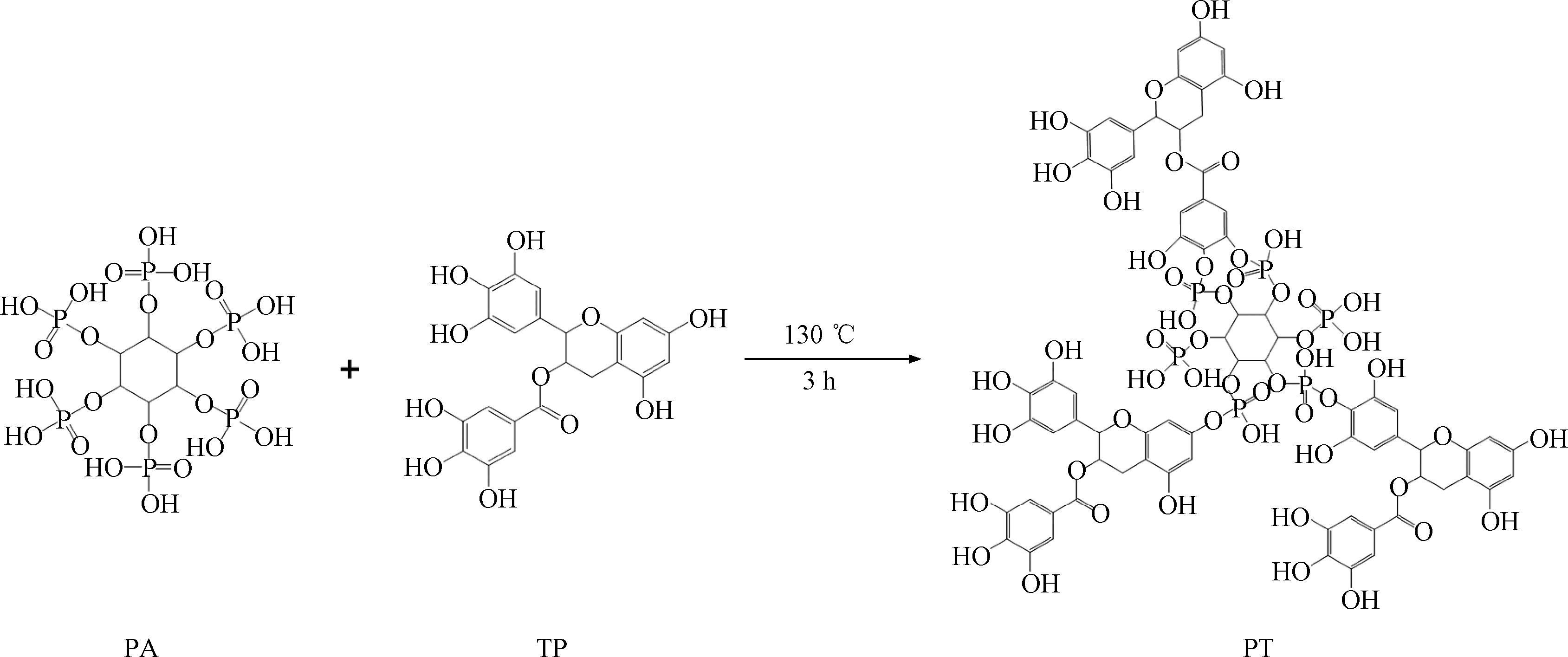
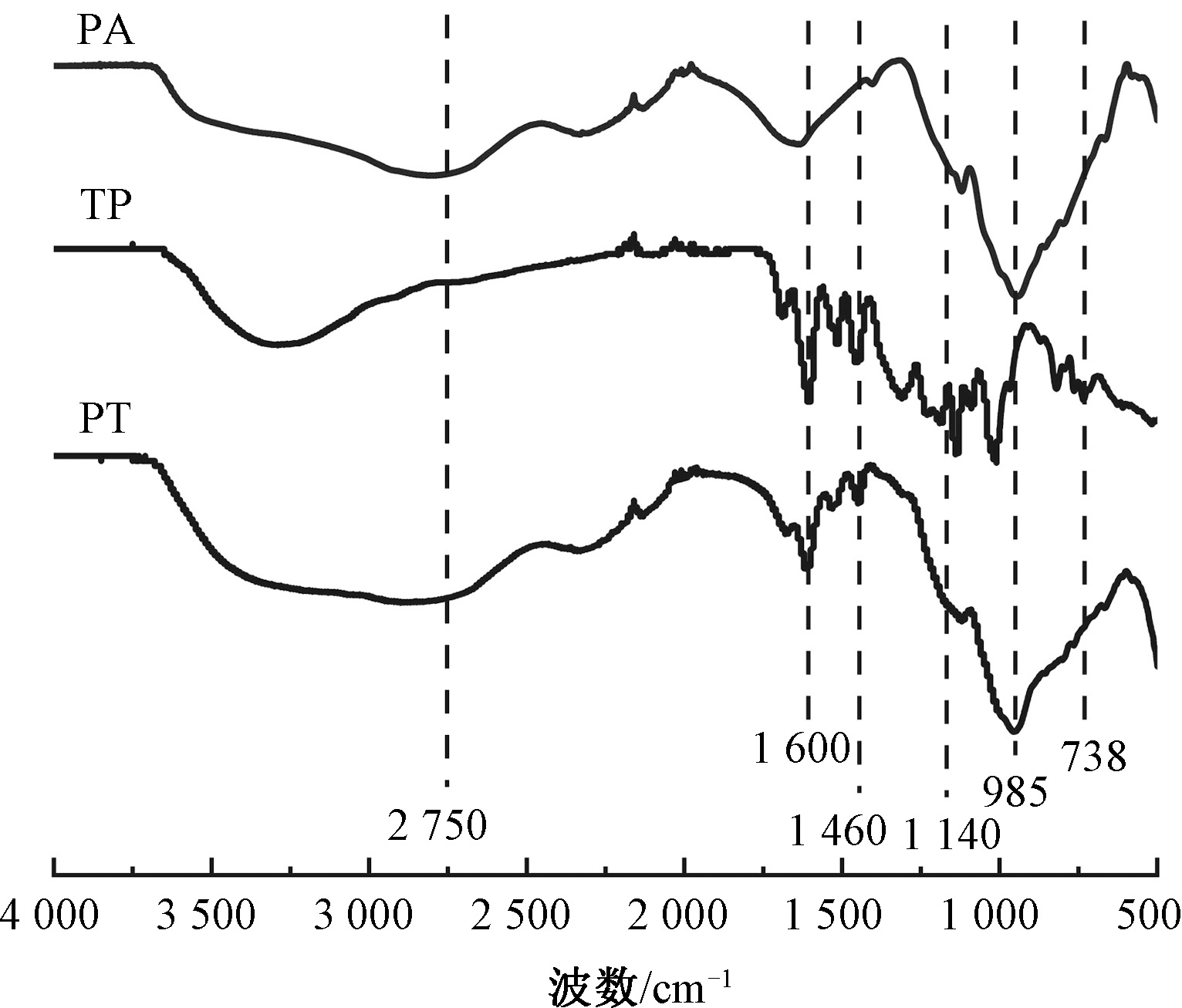
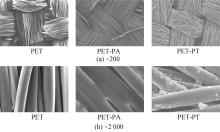
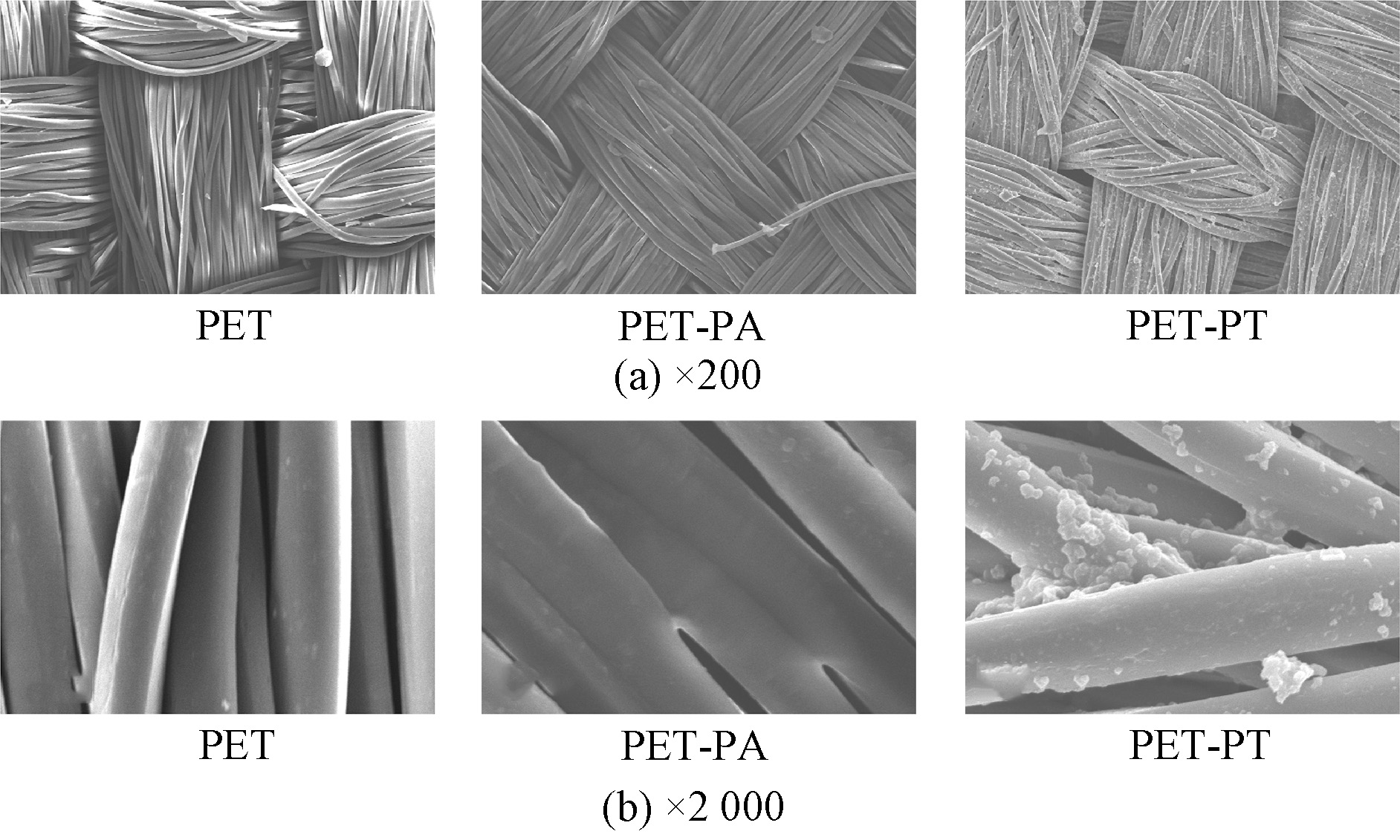
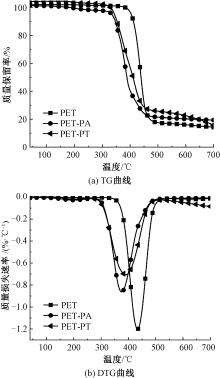
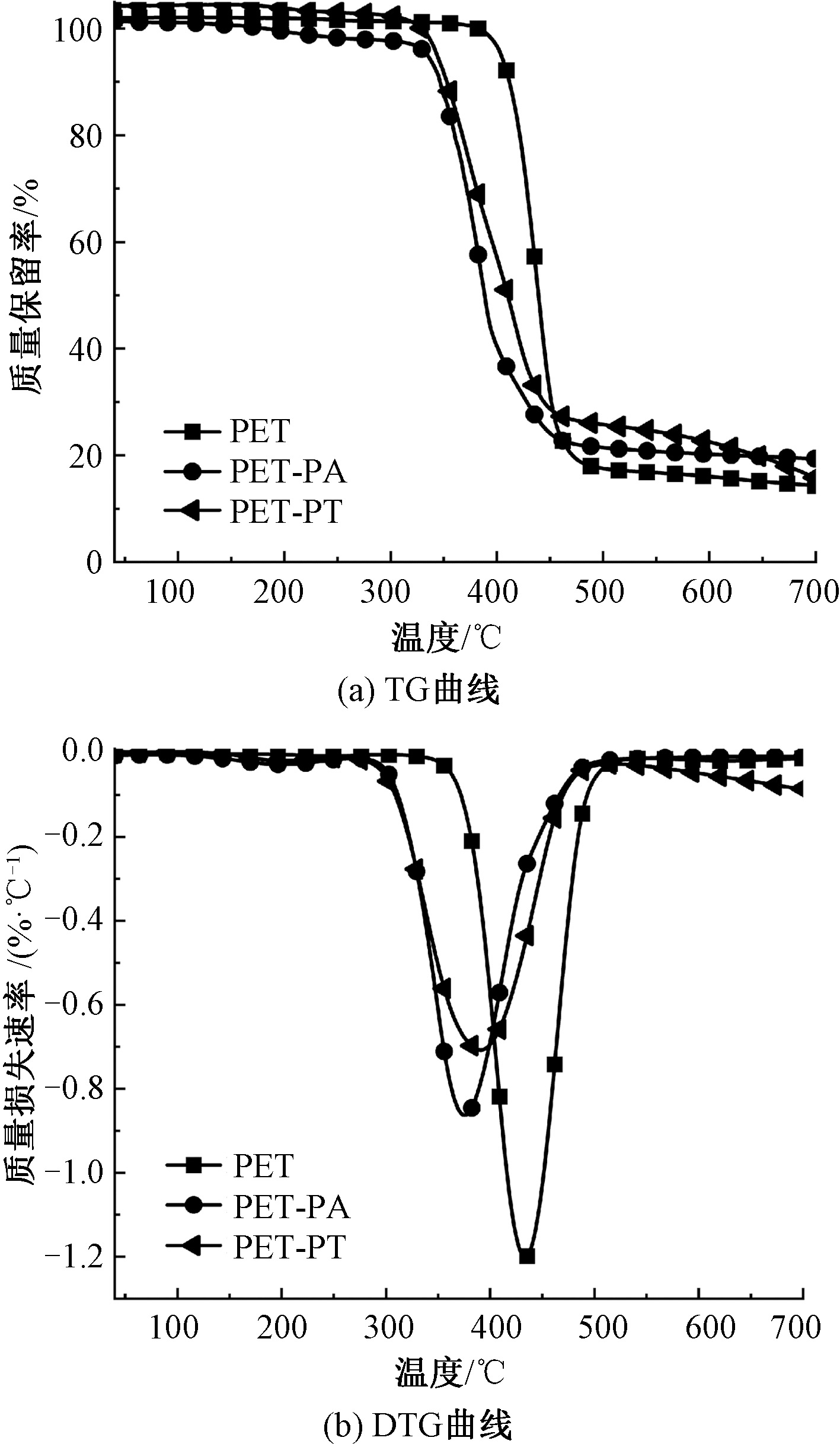
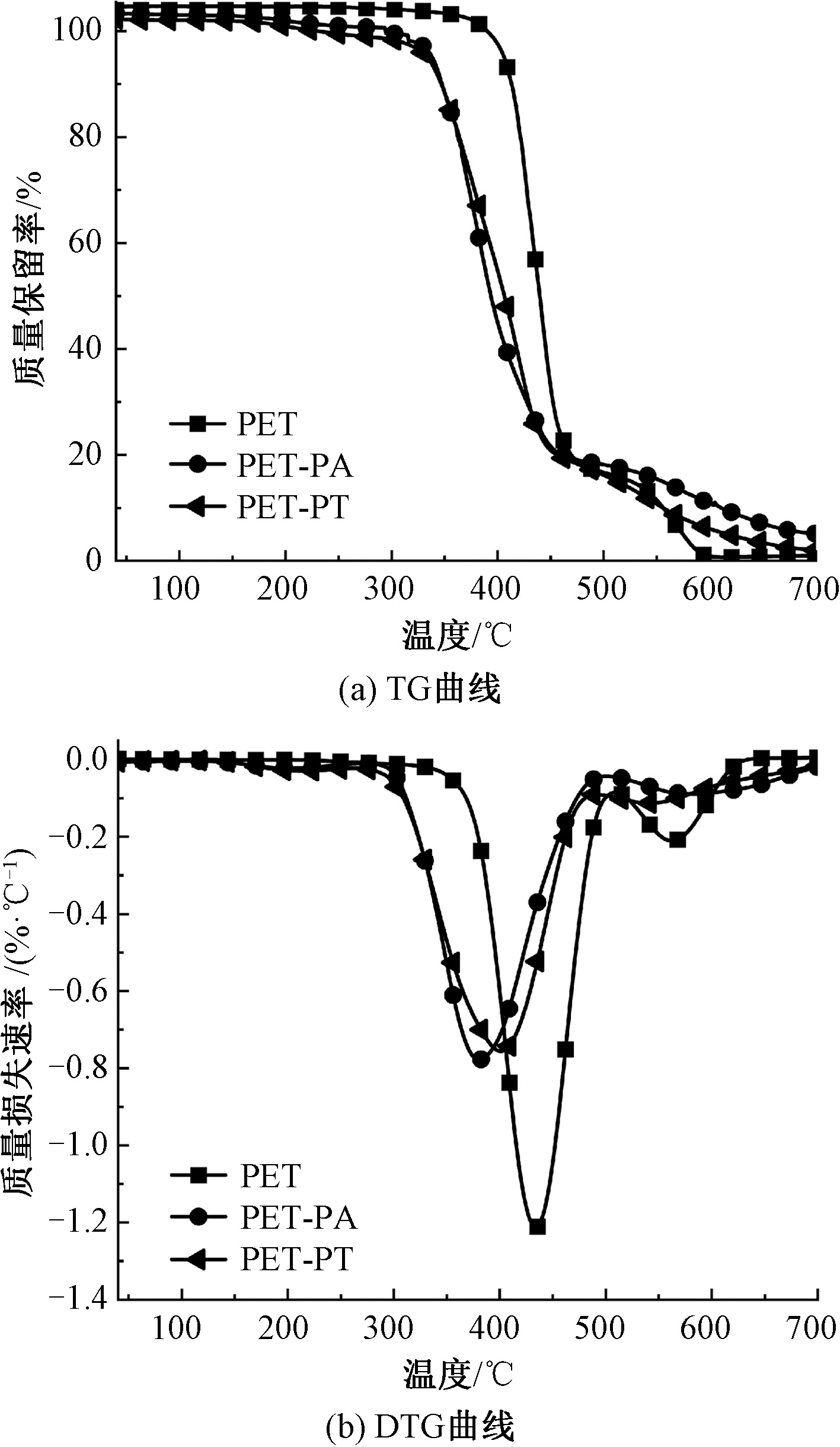
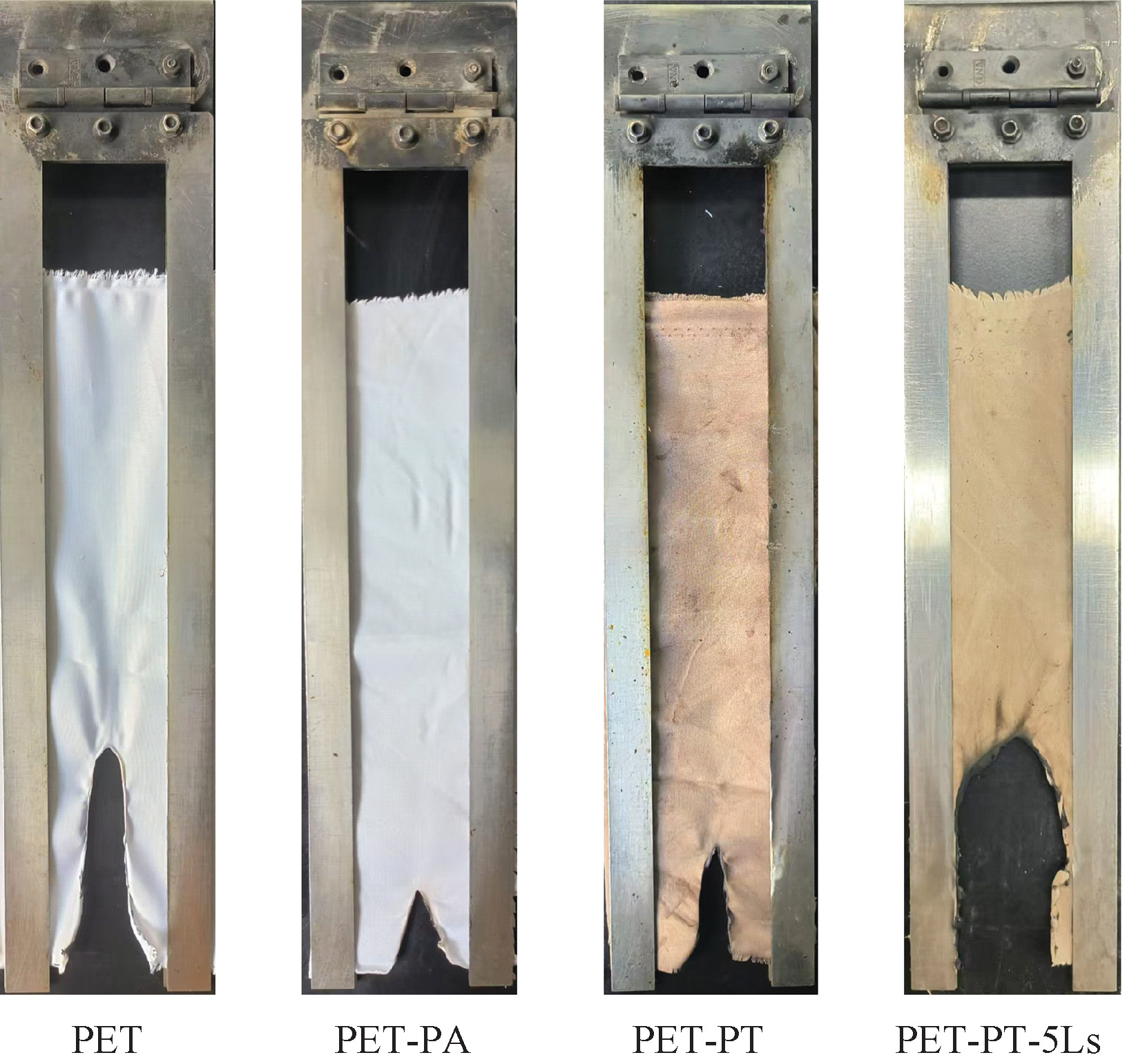
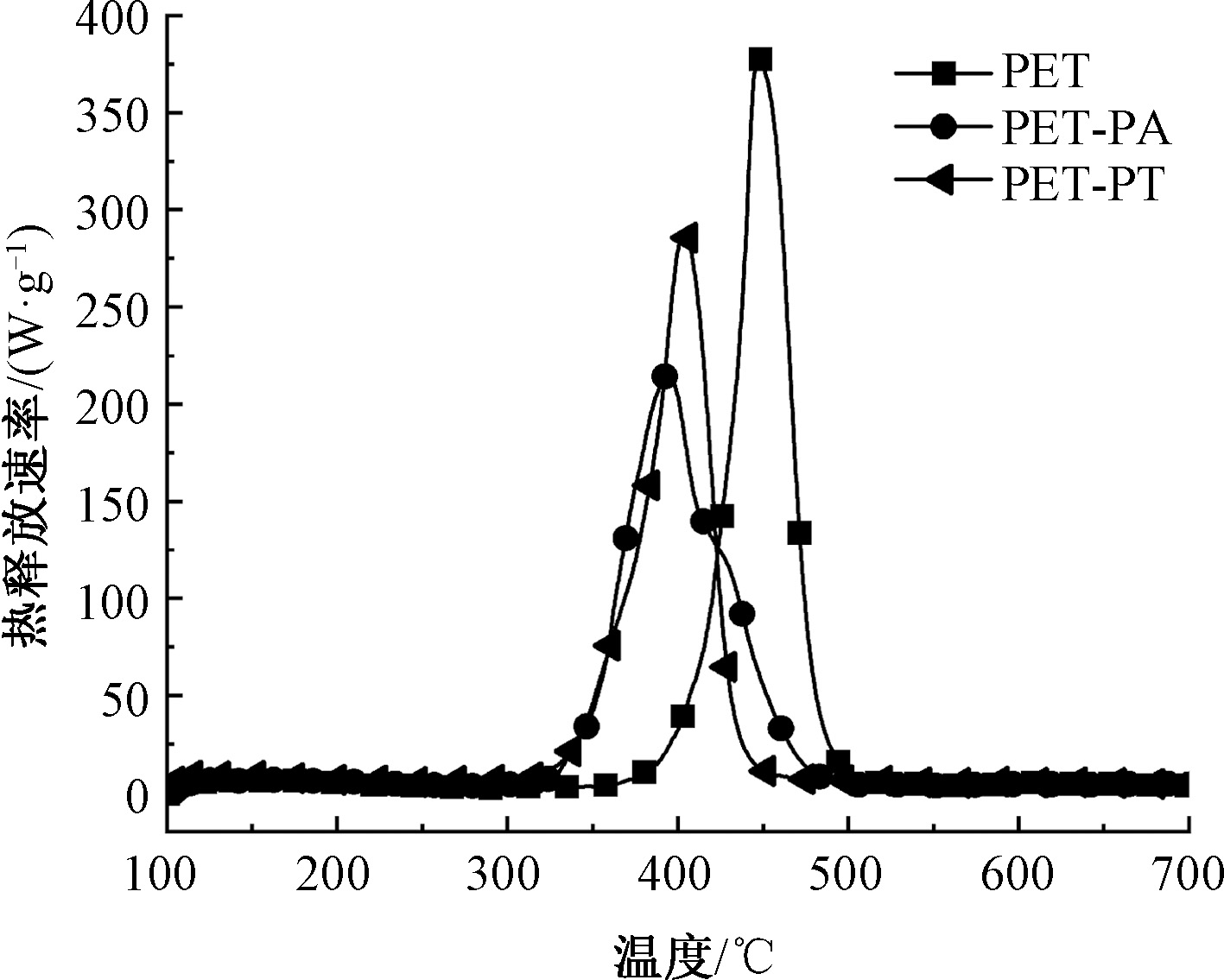
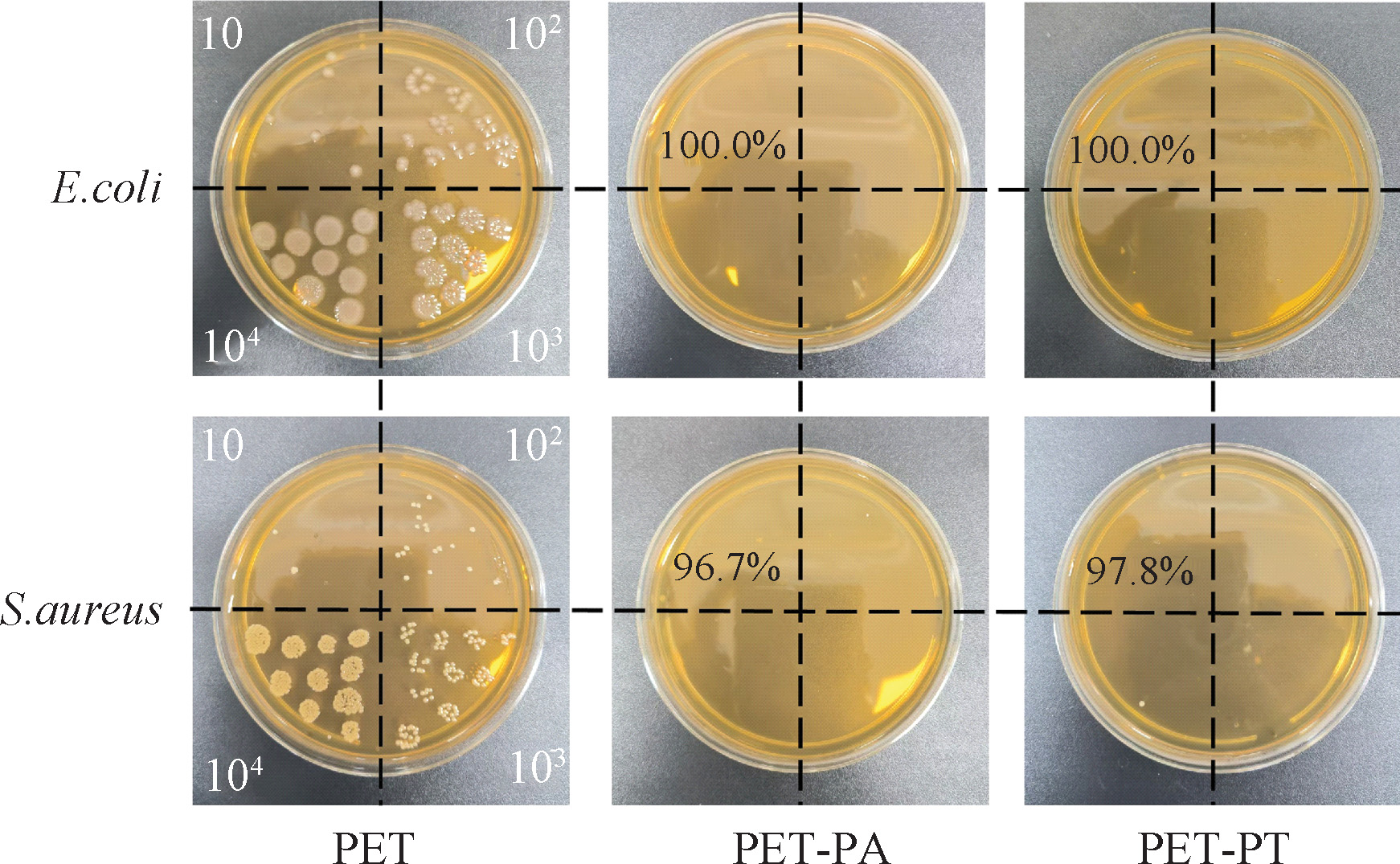
针对涤纶织物极限氧指数(LOI)低,且在燃烧中易产生熔滴的问题,采用植酸(PA)与茶多酚(TP)为原料,通过酯化反应制备阻燃剂PT,并通过轧烘焙工艺对涤纶织物进行阻燃整理。测试了整理前后涤纶织物的微观形貌、热稳定性能、阻燃性能等。结果表明:经过阻燃剂PT整理后,阻燃剂以固体沉积物形式附着在涤纶纤维表面;当增重率为20.8%时,PT整理涤纶织物的损毁长度减至76 mm,LOI值增至26.6%,且无熔滴;与原织物相比,PT整理涤纶织物的热释放速率峰值下降29.2%,总热释放下降28.3%;此外,涤纶织物的抗菌性能也得到明显改善,PT整理涤纶织物对大肠埃希菌、金黄色葡萄球菌的抑菌率分别达到100%、97.8%,但耐水洗性较差,仍需进一步改进。阻燃剂PT赋予涤纶织物多功能性,实现了阻燃与抗菌性能的协同提升。
中图分类号:
| [1] |
AGARWAL R, JASSAL M, AGRAWAL A K. Durable functionalization of polyethylene terephthalate fabrics using metal oxides nanoparticles[J]. Colloids and Surfaces A: Physicochemical and Engineering Aspects, 2021, 615: 126223.
doi: 10.1016/j.colsurfa.2021.126223 |
| [2] |
WANG H X, SUN L, WANG S H, et al. A novel flame-retardant system toward polyester fabrics: flame retardant, anti-dripping and smoke suppression[J]. Journal of Polymer Research, 2022, 29(5): 180.
doi: 10.1007/s10965-022-02961-3 |
| [3] |
LIU L, GU L, ZHANG X, et al. Construction of thermally resistant and flame-retardant multifunctional polyester composite fabrics[J]. Polymer Degradation and Stability, 2024, 225: 110769.
doi: 10.1016/j.polymdegradstab.2024.110769 |
| [4] |
ZHANG L Y, SONG W M, LI P, et al. Green flame-retardant coatings based on iron alginate for polyester fabrics: thermal stability, flame retardancy and mechanical properties[J]. Polymer Degradation and Stability, 2022, 206: 110207.
doi: 10.1016/j.polymdegradstab.2022.110207 |
| [5] |
LIU Y W, HU B Q, GUAN J P, et al. Biomass phytate salt-based flame-retardant polyurethane coating for outdoor polyester fabric: a long-lasting solution[J]. Polymer Testing, 2024, 135: 108467.
doi: 10.1016/j.polymertesting.2024.108467 |
| [6] |
PETKOVSKA J, MLADENOVIC N, MARKOVIĆ D, et al. Environmentally benign few-bilayer intumescent nanocoating for flame retardant enzyme/plasma modified polyester fabric[J]. Polymer Degradation and Stability, 2023, 214: 110406.
doi: 10.1016/j.polymdegradstab.2023.110406 |
| [7] |
SUN L, YANG C H, WANG H X, et al. Bio-based alginate and Si-, P- and N-containing compounds cooperate toward flame-retardant modification of polyester fabrics[J]. International Journal of Biological Macromolecules, 2024, 259: 129121.
doi: 10.1016/j.ijbiomac.2023.129121 |
| [8] |
JAKŠIĆ K, MATEK SARIĆ M, ČULIN J. Knowledge and attitudes regarding exposure to brominated flame retardants: a survey of Croatian health care providers[J]. Environmental Science and Pollution Research, 2020, 27(7): 7683-7692.
doi: 10.1007/s11356-019-07496-7 |
| [9] |
SONG W M, ZHANG L Y, LI P, et al. The fabrication of flame-retardant viscose fabrics with phytic acid-based flame retardants: balancing efficient flame retardancy and tensile strength[J]. International Journal of Biological Macromolecules, 2024, 260: 129596.
doi: 10.1016/j.ijbiomac.2024.129596 |
| [10] |
LIU Y, ZHANG A S, CHENG Y M, et al. Recent advances in biomass phytic acid flame retardants[J]. Polymer Testing, 2023, 124: 108100.
doi: 10.1016/j.polymertesting.2023.108100 |
| [11] |
CHENG X W, LIU Y W, JIN J H, et al. Metallic phytates modified polyurethane coating for constructing long-lasting flame-retardant outdoor polyester fabric[J]. Progress in Organic Coatings, 2024, 188: 108205.
doi: 10.1016/j.porgcoat.2023.108205 |
| [12] | ZHAO W J, LIU Y S, TAN W, et al. Research progress of biomass flame retardant coatings on polyester textiles[J] Fine Chemicals, 2022 39(1): 65-73. |
| [13] |
FANG J, ZHAO C M, MENG C, et al. Preparation and properties of PA@PANI conductive and flame retardant functional polyester fabric without droplet[J]. Materials Today Communications, 2022, 30: 103031.
doi: 10.1016/j.mtcomm.2021.103031 |
| [14] |
LI H S, ZHENG Z R, LIU Y Y, et al. Construction of fully bio-based flame retardant and antibacterial coating on polyester fabric with chitosan and ammonium phytate[J]. Journal of Applied Polymer Science, 2024, 141(37): e55940.
doi: 10.1002/app.v141.37 |
| [15] |
FANG Y C, WU J G, CHANG S, et al. Flame retardant and anti-dripping polyethylene terephthalate fabric based on bio-based phytic acid/gelatine coating[J]. Surface Engineering, 2023, 39(1): 49-55.
doi: 10.1080/02670844.2023.2193004 |
| [16] |
SONG W M, ZHANG L Y, FAN R Y, et al. Multi-functional finishing of viscose fabrics based on tea polyphenols: integrated flame retardant, antibacterial, hydrophobic, and UV-resistant functionalities[J]. Composites Part B: Engineering, 2024, 287: 111848.
doi: 10.1016/j.compositesb.2024.111848 |
| [17] |
SONG W M, FAN R Y, ZHANG L Y, et al. Improvement of fire safety for viscose fabrics based on phytic acid modified tea polyphenols complexed iron ions[J]. International Journal of Biological Macromolecules, 2024, 280: 135981.
doi: 10.1016/j.ijbiomac.2024.135981 |
| [18] |
ZHU B, LI J C, HE Y, et al. Effect of steric hindrance on hydrogen-bonding interaction between polyesters and natural polyphenol catechin[J]. Journal of Applied Polymer Science, 2004, 91(6): 3565-3573.
doi: 10.1002/app.v91:6 |
| [19] |
WANG Z K, HAN Z S, ZHANG L. Advances and outlook of tea polyphenol chemistry: a review[J]. Journal of Agricultural and Food Chemistry, 2025, 73(37): 22994-23002.
doi: 10.1021/acs.jafc.5c04943 pmid: 40910807 |
| [20] | CHEN C, XU Y M, LIN B B, et al. Antibacterial activity and mechanism of green tea polyphenols from Qinling mountains[J], Journal of Sichuan Agricultural University, 2019, 37(6): 821-827. |
| [21] | YANG H L, LIU X X, ZHU J L, et al. Research progress in antibacterial properties of tea polyphenols[J]. Science & Technology of Food Industry, 2015, 36(21): 385-389. |
| [22] |
SUN Y, YANG J X, ZHANG X, et al. Anti-ultraviolet and semi-durable flame-retardant viscose fabrics fabricated by modified tea polyphenols[J]. International Journal of Biological Macromolecules, 2025, 286: 138572.
doi: 10.1016/j.ijbiomac.2024.138572 |
| [23] |
JIANG Q, LI P, LIU Y, et al. Flame retardant cotton fabrics with anti-UV properties based on tea polyphenol-melamine-phenylphosphonic acid[J]. Journal of Colloid and Interface Science, 2023, 629: 392-403.
doi: 10.1016/j.jcis.2022.09.084 |
| [24] |
XIA G M, JI X Q, XU Z, et al. Transparent cellulose-based bio-hybrid films with enhanced anti-ultraviolet, antioxidant and antibacterial performance[J]. Carbohydrate Polymers, 2022, 298: 120118.
doi: 10.1016/j.carbpol.2022.120118 |
| [25] | 费燕娜, 高卫东, 王鸿博, 等. 聚乳酸/茶多酚复合纳米纤维膜的抗菌机制及性能[J]. 纺织学报, 2013, 34(8): 6-11. |
| FEI Yanna, GAO Weidong, WANG Hongbo, et al. Antibacterial mechanism and performance of PLA/TP composed nanofiber membrane[J]. Journal of Textile Research, 2013, 34(8): 6-11. | |
| [26] |
JIANG Z L, WANG C S, FANG S Y, et al. Durable flame-retardant and antidroplet finishing of polyester fabrics with flexible polysiloxane and phytic acid through layer-by-layer assembly and sol-gel process[J]. Journal of Applied Polymer Science, 2018, 135(27): 46414.
doi: 10.1002/app.v135.27 |
| [1] | 邱虹, 陈黎, 王丽芳, 易珊, 唐一卡, 王玉平, 高洪国, 张雯欣, 王克毅, 刘丽芳. 纳米纤维素基温度响应型水凝胶的制备及其性能[J]. 纺织学报, 2026, 47(05): 1-8. |
| [2] | 郑晶晶, 曹源, 陈佳桦, 吕健元. 聚多巴胺/十八胺/氧化锌协同改性香云纱的超疏水与防紫外线性能[J]. 纺织学报, 2026, 47(05): 172-181. |
| [3] | 刘家杰, 孙启龙, 曹丽霞, 叶伟, 张杏, 谭伟. 基于废旧芳纶阻燃服回收纤维的纱线制备及其性能[J]. 纺织学报, 2026, 47(05): 99-106. |
| [4] | 杨鸿杰, 徐丽亚, 汪蔚. 含一氧化氮供体的生物基聚酰胺56纳米纤维膜制备及其性能[J]. 纺织学报, 2026, 47(04): 43-51. |
| [5] | 刘雁雁, 王小艳, 杜金梅, 郑振荣, 韩振邦, 许长海. 基于超临界CO2的涤纶织物无水阻燃整理[J]. 纺织学报, 2026, 47(04): 171-179. |
| [6] | 吴雷蕾, 王强, 王平. 纤维表面无机纳米粒子负载及其抗菌机制研究进展[J]. 纺织学报, 2026, 47(04): 255-264. |
| [7] | 邵英海, 朴洪伟, 曹继鹏, 张月, 许兰杰, 于学智, 张明光. 天然彩棉/柞蚕短纤维混纺纱的制备及其抗菌性能[J]. 纺织学报, 2026, 47(03): 240-246. |
| [8] | 刘鹏碧, 任经岗, 张宽祥, 曹东阳, 刘熙, 郭昌盛. 植酸/苯扎氯铵一步共沉积涂层聚丙烯补片的制备及其抗菌性能[J]. 纺织学报, 2026, 47(03): 77-86. |
| [9] | 黄雍宝, 王一洲, 李梦琪, 万贝贝, 宋悦, 杨帆. 光致变色纺织品的制备及其防伪应用[J]. 纺织学报, 2026, 47(02): 214-221. |
| [10] | 王世杰, 孙辉, 于斌. 聚乙烯醇/牡丹皮提取物复合纳米静电纺丝膜的制备及其抗菌性能[J]. 纺织学报, 2026, 47(02): 56-64. |
| [11] | 任萧, 潘林洁, 姜海霞, 葛凤燕, 高洪国. 生物质多酚-亚铁离子多色系染料制备及其在棉织物上的应用[J]. 纺织学报, 2026, 47(01): 132-141. |
| [12] | 顾家玉, 张炜栋, 董永春, 孙璇, 徐良军. 银杏叶黄酮对羊毛和蚕丝织物的抗菌整理[J]. 纺织学报, 2026, 47(01): 142-150. |
| [13] | 董振峰, 张安莹, 魏建斐, 朱志国, 王锐. 阻燃左旋聚乳酸/季戊四醇磷酸酯纤维及织物的制备与性能[J]. 纺织学报, 2026, 47(01): 63-71. |
| [14] | 宋佳怡, 王政驿, 程献伟, 关晋平, 朱亚伟. 液态靛蓝染料的制备及其对棉织物的染色性能[J]. 纺织学报, 2025, 46(12): 133-141. |
| [15] | 候志文, 任泽苹, 王晓宁, 张天骄. 棉织物的壳聚糖/海藻酸盐抗菌阻燃整理及其性能[J]. 纺织学报, 2025, 46(12): 171-180. |
|
||
 京公网安备11010502044800号