纺织学报 ›› 2025, Vol. 46 ›› Issue (12): 171-180.doi: 10.13475/j.fzxb.20250400501
候志文, 任泽苹, 王晓宁, 张天骄( )
)
HOU Zhiwen, REN Zeping, WANG Xiaoning, ZHANG Tianjiao()
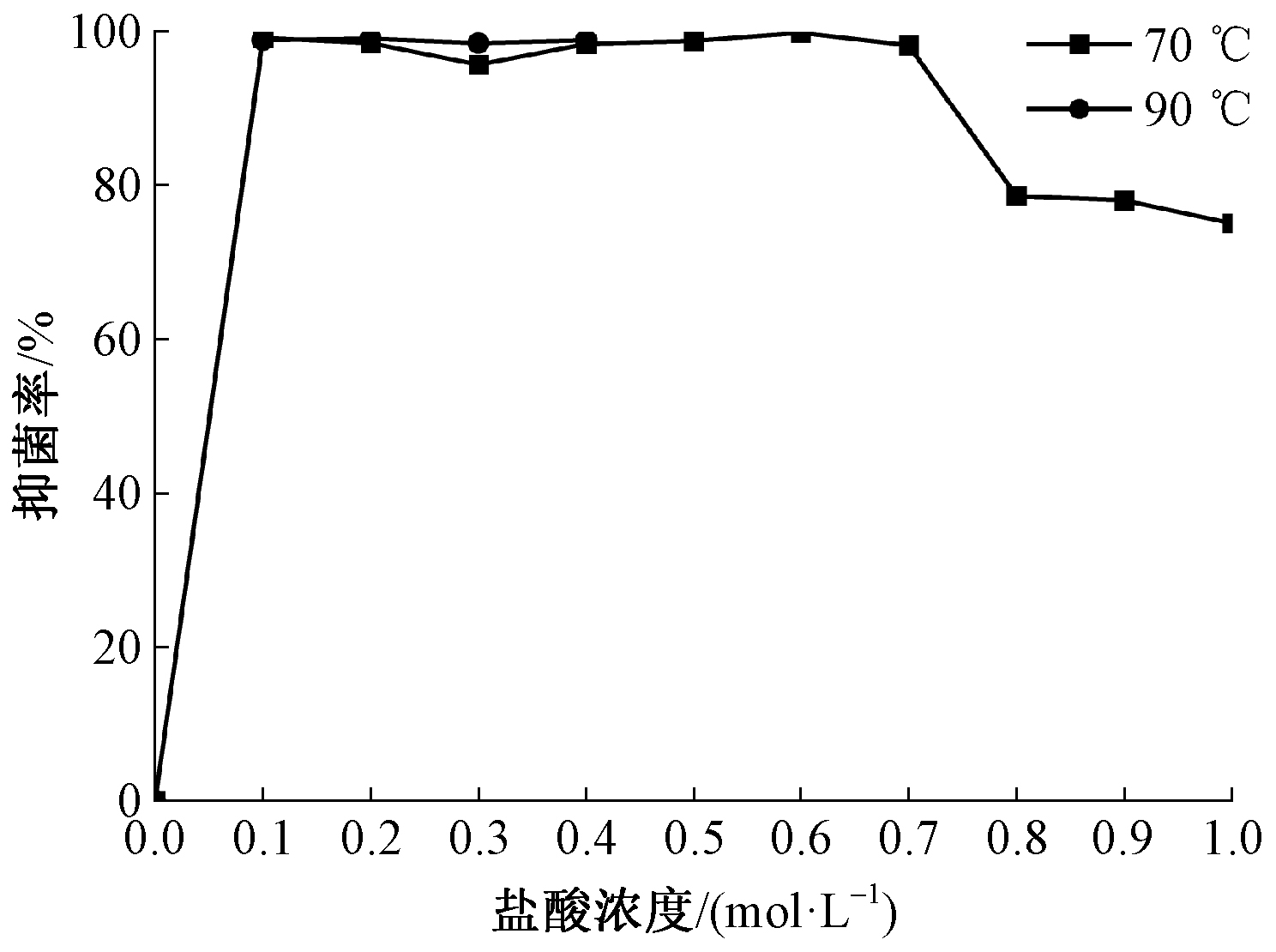
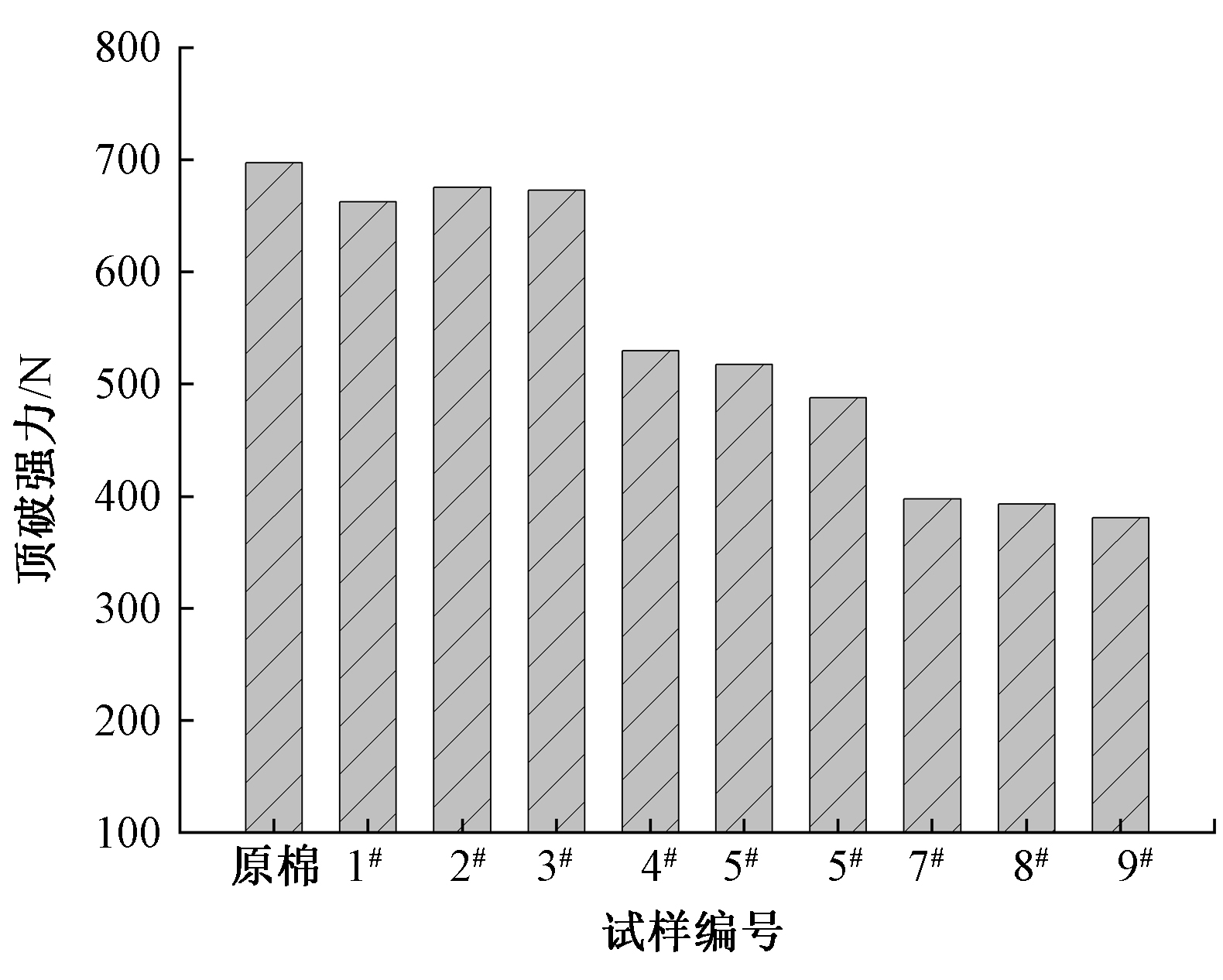
摘要: 为解决棉织物易滋生细菌、易燃等问题,采用羧甲基壳聚糖(CMC)和氧化海藻酸钠(OSA),通过浸轧法实现了对棉织物的抗菌、阻燃双重整理。研究了抗菌整理中盐酸浓度和温度对棉织物抗菌性能及相关服用性能的影响;并利用正交试验研究了抗菌、阻燃双重整理中盐酸浓度、席夫碱反应温度及OSA质量分数对抗菌、阻燃性能及相关服用性能的影响,通过极差分析优选出最佳的整理工艺条件:抗菌整理中盐酸浓度为0.3 mol/L、温度为70 ℃,阻燃整理中OSA质量分数为1%、反应温度为80 ℃。借助扫描电子显微镜、极限氧指数仪、织物阻燃性能测试仪、热重分析仪、顶破强力仪、织物透气仪等对织物进行了表征和测试。结果表明:CMC/OSA整理棉织物对大肠埃希菌的抑菌率可超过98%,水平燃烧速率相较于未经处理的棉织物可降低50%左右,整理工艺对棉织物的弯曲性能几乎没有影响,对热稳定性、顶破强力和透气性的影响也较小。
中图分类号:
| [1] |
TAHERKHANI A, HASANZADEH M. Durable flame retardant finishing of cotton fabrics with poly(amidoamine) dendrimer using citric acid[J]. Materials Chemistry and Physics, 2018, 219: 425-432.
doi: 10.1016/j.matchemphys.2018.08.058 |
| [2] | 张慧卿, 巴都木. 棉纤维微观结构的形成过程及对纤维性能的影响[J]. 中国纤检, 2008(6): 52-55. |
| ZHANG Huiqing, BA Dumu. Formation process of cotton fiber microstructure and its influence on fiber properties[J]. China Fiber Inspection, 2008(6): 52-55. | |
| [3] | 农诚. 我国纺织品阻燃指标可行性分析[J]. 黑龙江纺织, 2020(1): 23-25. |
| NONG Cheng. Feasibility analysis of textile flame retardant index in China[J]. Heilongjiang Textile, 2020(1): 23-25. | |
| [4] |
WANG H P, GONG X C, MIAO Y L, et al. Preparation and characterization of multilayer films composed of chitosan, sodium alginate and carboxymethyl chitosan-ZnO nanoparticles[J]. Food Chemistry, 2019, 283: 397-403.
doi: S0308-8146(19)30089-5 pmid: 30722890 |
| [5] |
EL-SHAFEI A M, FOUDA M M G, KNITTEL D, et al. Antibacterial activity of cationically modified cotton fabric with carboxymethyl chitosan[J]. Journal of Applied Polymer Science, 2008, 110(3): 1289-1296.
doi: 10.1002/app.v110:3 |
| [6] |
EL SHAFEI A, ABOU-OKEIL A. ZnO/carboxymethyl chitosan bionano-composite to impart antibacterial and UV protection for cotton fabric[J]. Carbohydrate Polymers, 2011, 83(2): 920-925.
doi: 10.1016/j.carbpol.2010.08.083 |
| [7] | 曾春梅. 绿色抗菌织物整理研究[J]. 国际纺织导报, 2007, 35(5): 55-56, 58. |
| ZENG Chunmei. Research on environmentally-friendly anti-bacterial finishing process[J]. Melliand China, 2007, 35(5): 55-56, 58. | |
| [8] |
XIAO F L, YUN L G, YANG D Z, et al. Antibacterial action of chitosan and carboxymethylated chitosan[J]. Journal of Applied Polymer Science, 2001, 79(7): 1324-1335.
doi: 10.1002/(ISSN)1097-4628 |
| [9] | 赵江霞. 壳聚糖衍生物的合成及其对棉织物抗菌性能的研究[D]. 青岛: 青岛科技大学, 2006: 3-16. |
| ZHAO Jiangxia. Synthesis of the chitosan derivation and study of its antibacterial activities on cotton fabrics[D]. Qingdao: Qingdao University of Science & Technology, 2006: 3-16. | |
| [10] | 申宏杰, 董朝红, 吕洲, 等. 羧甲基壳聚糖席夫碱的制备及抗菌性能研究[J]. 纤维素科学与技术, 2014, 22(4): 28-33. |
| SHEN Hongjie, DONG Chaohong, LÜ Zhou, et al. Preparation and antibacterial properties of carboxymethyl chitosan schiff base[J]. Journal of Cellulose Science and Technology, 2014, 22(4): 28-33. | |
| [11] |
XU Q B, KE X T, SHEN L W, et al. Surface modification by carboxymethy chitosan via pad-dry-cure method for binding Ag NPs onto cotton fabric[J]. International Journal of Biological Macromolecules, 2018, 111: 796-803.
doi: 10.1016/j.ijbiomac.2018.01.091 |
| [12] |
XU Q B, XIE L J, DIAO H, et al. Antibacterial cotton fabric with enhanced durability prepared using silver nanoparticles and carboxymethyl chitosan[J]. Carbohydrate Polymers, 2017, 177: 187-193.
doi: S0144-8617(17)30989-X pmid: 28962757 |
| [13] |
XU Q B, ZHENG W S, DUAN P P, et al. One-pot fabrication of durable antibacterial cotton fabric coated with silver nanoparticles via carboxymethyl chitosan as a binder and stabilizer[J]. Carbohydrate Polymers, 2019, 204: 42-49.
doi: 10.1016/j.carbpol.2018.09.089 |
| [14] | 陈小璇. 海藻酸盐基棉纤维涂层的构筑和防火性能研究[D]. 合肥: 中国科学技术大学, 2017: 1-15. |
| CHEN Xiaoxuan. Study on the construction and fire resistance performance of alginate - based cotton fiber coating[D]. Hefei: University of Science and Technology of China, 2017: 1-15. | |
| [15] |
BALAKRISHNAN B, MOHANTY M, UMASHANKAR P R, et al. Evaluation of an in situ forming hydrogel wound dressing based on oxidized alginate and ge-latin[J]. Biomaterials, 2005, 26(32): 6335-6342.
doi: 10.1016/j.biomaterials.2005.04.012 |
| [16] |
BALAKRISHNAN B, JAYAKRISHNAN A. Self-cross-linking biopolymers as injectable in situ forming biodegradable scaffolds[J]. Biomaterials, 2005, 26(18): 3941-3951.
doi: 10.1016/j.biomaterials.2004.10.005 |
| [17] | 刘云, 冀虎, 赵瑾朝, 等. 氧化海藻酸钠交联海藻酸钙/明胶(半)互穿网络的制备及性能[J]. 高分子材料科学与工程, 2014, 30(12): 123-127. |
| LIU Yun, JI Hu, ZHAO Jinzhao, et al. Preparation and properties of calcium alginate/gelatin(semi) IPNs crosslinked with oxidized sodium alginate[J]. Polymer Materials Science & Engineering, 2014, 30(12): 123-127. | |
| [18] | 付小蓉, 朱昊, 黄丹. 棉织物壳聚糖衍生物抗菌整理[J]. 印染, 2010, 36(13): 1-4. |
| FU Xiaorong, ZHU Hao, HUANG Dan. Anti-bacterial finish of cotton fabric with chitosan derivatives[J]. Dyeing & Finishing, 2010, 36(13): 1-4. | |
| [19] |
XU D M, JI Q, QUAN F Y, et al. Effect of sodium ion on flame retardance and thermal degradation of cellulose fiber[J]. Advanced Materials Research, 2013, 634-638: 955-959.
doi: 10.4028/www.scientific.net/AMR.634-638 |
| [20] | 顾振宇, 王春梅, 周光华, 等. 壳聚糖整理棉织物的抗菌性能研究[J]. 棉纺织技术, 2022, 50(9): 24-27. |
| GU Zhenyu, WANG Chunmei, ZHOU Guanghua, et al. Antibacterial study of chitosan finished cotton fabric[J]. Cotton Textile Technology, 2022, 50(9): 24-27. | |
| [21] | 周青青, 陈嘉毅, 祁珍明, 等. 阻燃抗菌棉织物的制备及其性能表征[J]. 纺织学报, 2020, 41(5): 112-120. |
| ZHOU Qingqing, CHEN Jiayi, QI Zhenming, et al. Preparation and characterization of flame retardant and antibacterial cotton fabric[J]. Journal of Textile Research, 2020, 41(5): 112-120. | |
| [22] | 刘淑萍, 李亮, 刘让同, 等. 羧甲基纤维素钠改性角蛋白膜的结构与性能[J]. 纺织学报, 2019, 40(6): 14-19. |
| LIU Shuping, LI Liang, LIU Rangtong, et al. Structure and properties of keratin film modified by carboxymethyl cellulose sodium[J]. Journal of Textile Research, 2019, 40(6): 14-19. |
| [1] | 宋佳怡, 王政驿, 程献伟, 关晋平, 朱亚伟. 液态靛蓝染料的制备及其对棉织物的染色性能[J]. 纺织学报, 2025, 46(12): 133-141. |
| [2] | 王梁宇, 高晓红, 于彩娇, 张雪婷, 杨旭礼. 还原氧化石墨烯/铜纳米颗粒导电棉织物的制备及其传感性能[J]. 纺织学报, 2025, 46(12): 181-187. |
| [3] | 龙红霞, 吴伟, 刘娅岚, 徐红, 毛志平. 纤维素纤维孔道吸湿溶胀行为的分子动力学模拟[J]. 纺织学报, 2025, 46(11): 155-163. |
| [4] | 叶慧, 丛洪莲, 贺海军. 基于二元脂肪酸的中空涤纶相变纤维制备及其性能[J]. 纺织学报, 2025, 46(11): 188-195. |
| [5] | 张帆, 蔡再生, 刘慧景, 陆少锋, 黄旭明. 高牢固光致变色棉织物的点击化学法制备及其性能[J]. 纺织学报, 2025, 46(11): 196-202. |
| [6] | 高敏, 程春祖, 徐中凯, 赵庆波, 张东, 代欣欣. 含硅改性磷氮阻燃Lyocell纤维的制备及其性能[J]. 纺织学报, 2025, 46(10): 19-29. |
| [7] | 许云凯, 宋婉萌, 张旭, 刘云. 单宁酸基高效阻燃Lyocell织物的制备及其性能[J]. 纺织学报, 2025, 46(08): 145-153. |
| [8] | 王子涵, 李勇, 陈晓川, 汪军, 梁凌杰. 废旧棉织物破碎加工过程的建模与仿真[J]. 纺织学报, 2025, 46(07): 136-143. |
| [9] | 徐丽亚, 汪瑱, 杨鸿杰, 汪蔚. 氧化锌-银/生物基聚酰胺56纳米纤维膜的制备及其抗菌性能[J]. 纺织学报, 2025, 46(07): 37-45. |
| [10] | 赵强强, 王韩星, 张奉轩, 何瑾馨, 周俊, 周兆昌, 董霞. 聚六亚甲基双胍盐酸盐改性对棉织物耐日晒色牢度的影响[J]. 纺织学报, 2025, 46(04): 109-118. |
| [11] | 黄春月, 黄鑫, 杜海娟, 徐文杰, 杨雪梅, 万科研, 李旭, 高杰. 钼氧簇复合物整理剂制备及其整理棉织物的防紫外线性能[J]. 纺织学报, 2025, 46(04): 138-145. |
| [12] | 廖喜林, 曾媛, 刘淑萍, 李亮, 李淑静, 刘让同. 磷/氮/硅复配协效阻燃棉织物制备及其性能[J]. 纺织学报, 2025, 46(03): 151-157. |
| [13] | 张洁, 郭鑫源, 关晋平, 程献伟, 陈国强. 磷/氮阻燃剂原位沉积对棉织物的耐久阻燃改性[J]. 纺织学报, 2025, 46(02): 180-187. |
| [14] | 宋婉萌, 王宝弘, 孙宇, 杨家祥, 刘云, 王玉忠. 兼具力学性能与高效阻燃性能粘胶织物的制备及其性能[J]. 纺织学报, 2025, 46(02): 188-196. |
| [15] | 袁华彬, 王沂沨, 王家朋, 向永翾, 陈国强, 邢铁玲. 基于山嵛酸和ZIF-8改性的超疏水防结冰棉织物[J]. 纺织学报, 2025, 46(02): 197-206. |
|
||
 京公网安备11010502044800号