纺织学报 ›› 2026, Vol. 47 ›› Issue (02): 56-64.doi: 10.13475/j.fzxb.20250701801
王世杰1,2, 孙辉1,2( ), 于斌1,2
WANG Shijie1,2, SUN Hui1,2(), YU Bin1,2
摘要:
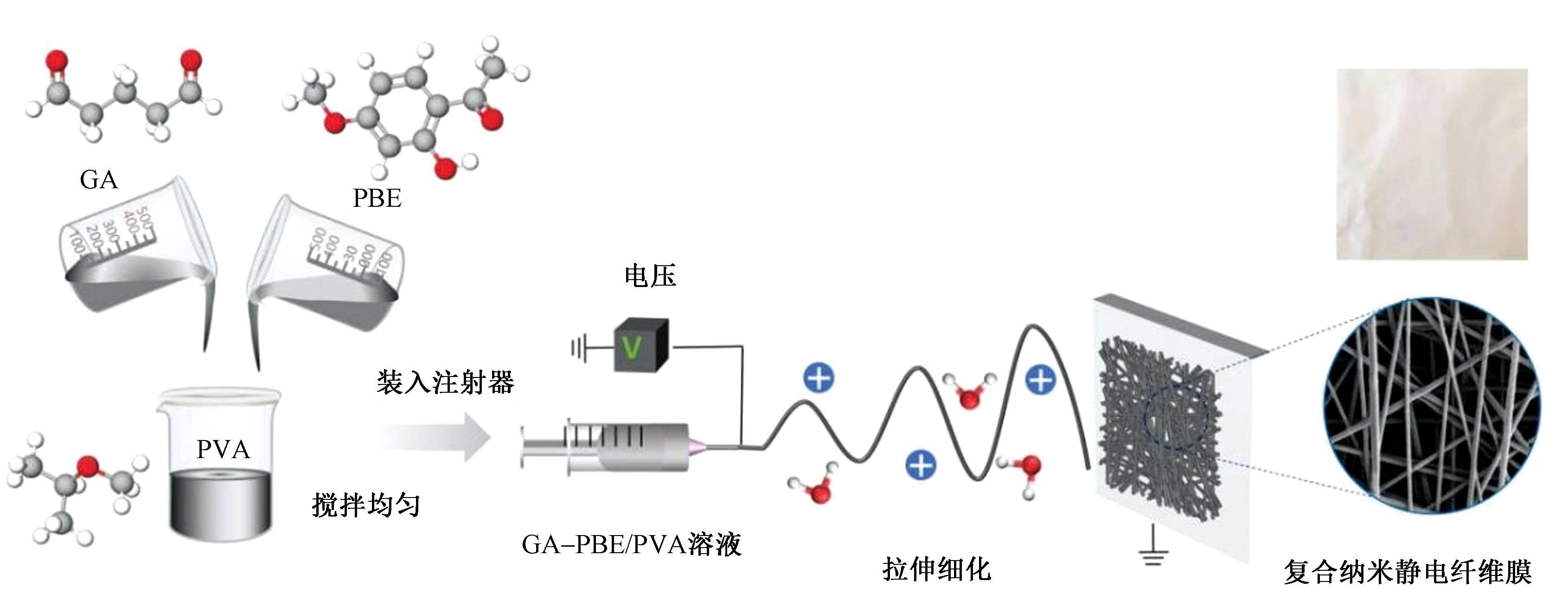
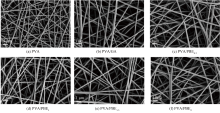
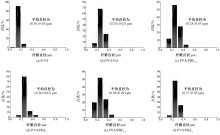
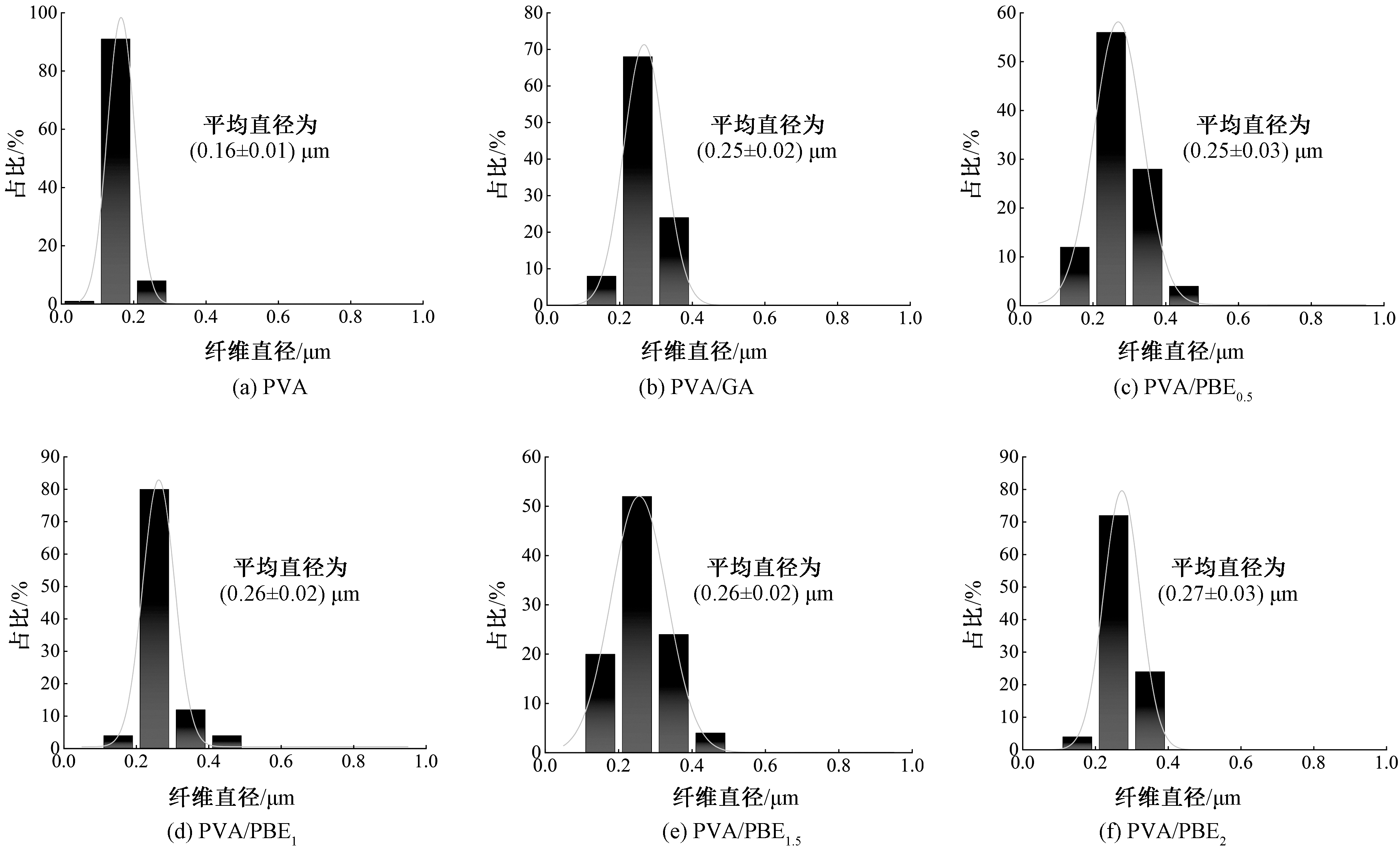
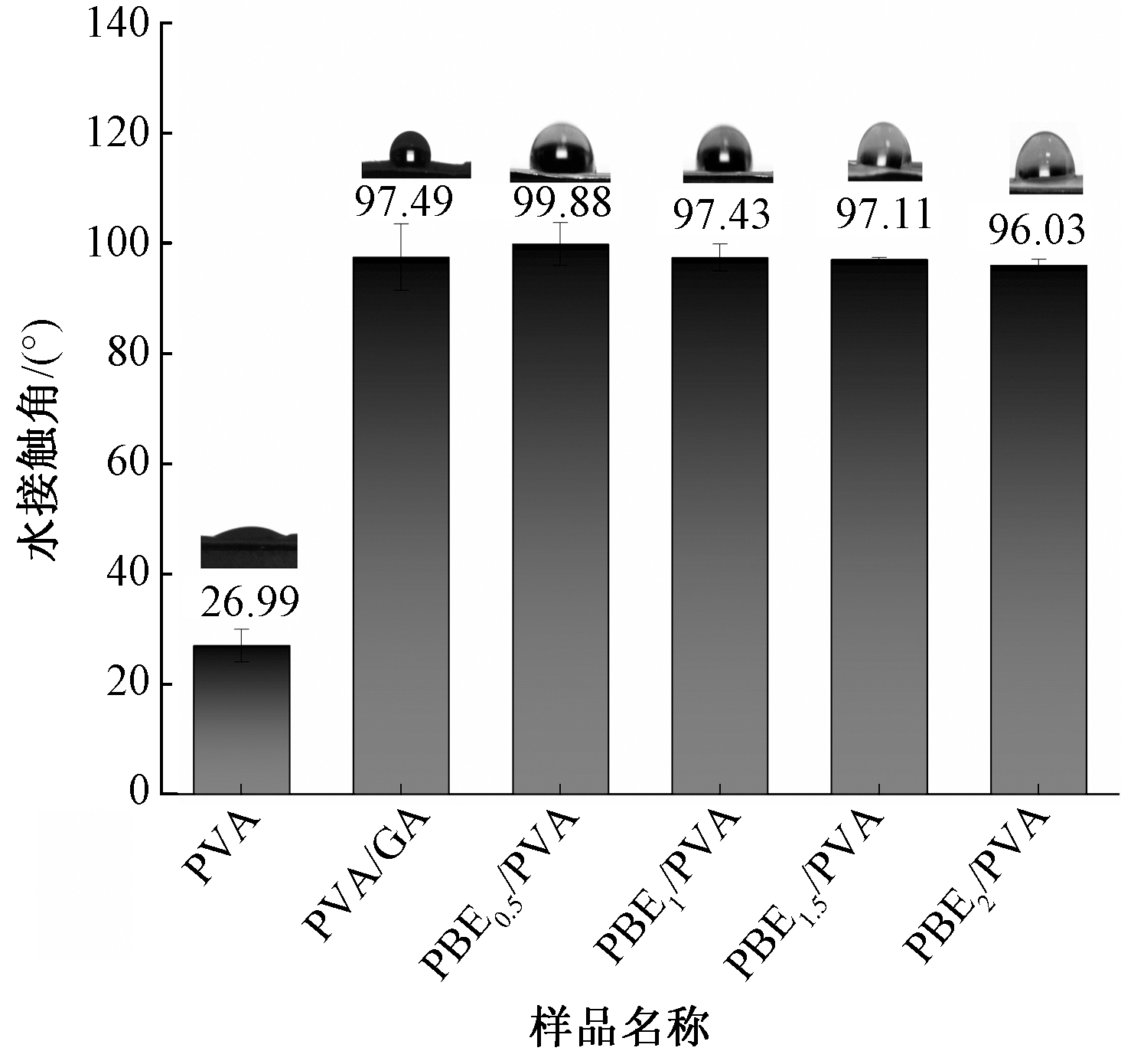
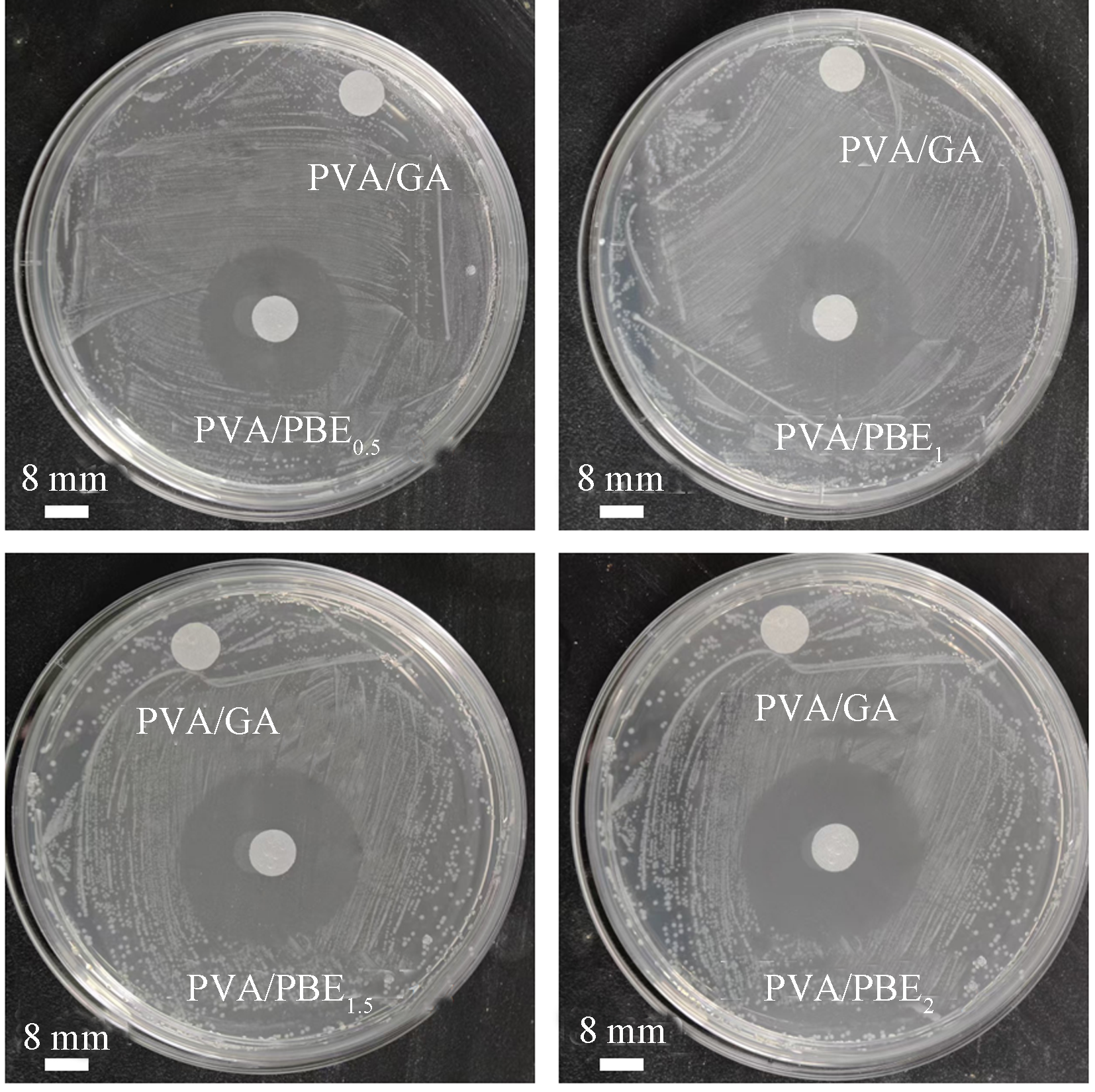
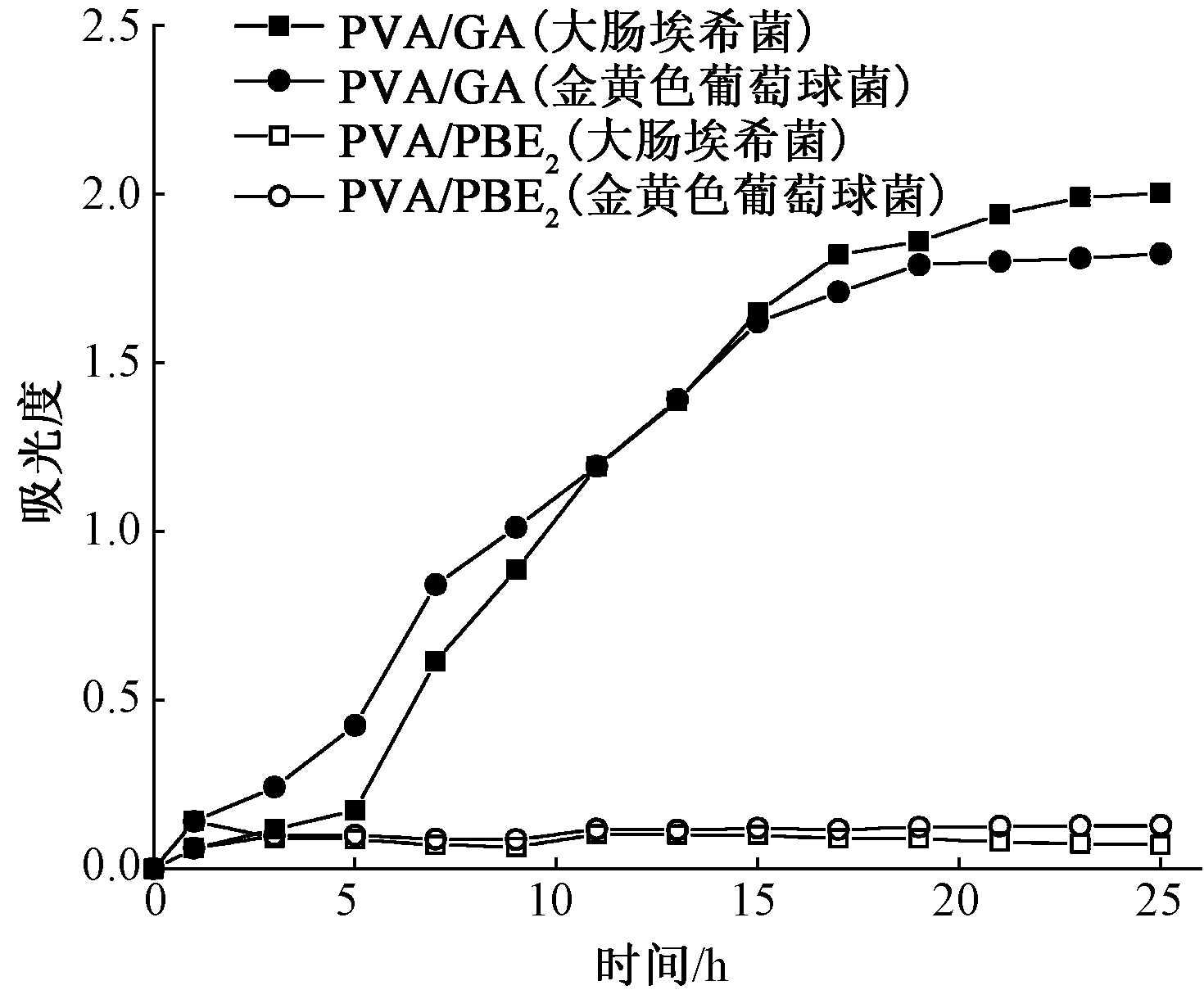
为开发兼具高效抗菌性和良好力学性能的绿色可降解材料,采用静电纺丝技术,以聚乙烯醇(PVA)和牡丹皮提取物(PBE)为原料,并引入戊二醛(GA)作为交联剂,制备了PVA/PBE复合纳米纤维膜。结果表明:纯PVA纳米静电纺丝膜纳米纤维表面光滑,直径均匀,平均直径为0.16 μm;交联之后的GA/PVA和PBE/PVA复合纳米静电纺丝膜纤维形貌无明显变化,而平均直径有所增加;相比于纯PVA,交联之后的GA/PVA复合纳米静电纺丝膜和PBE/PVA复合纳米静电纺丝膜的断裂强度有所提高,但断裂伸长率有所降低,且水接触角角增加;当PBE质量分数为2%时,PBE/PVA复合纳米静电纺丝膜对大肠埃希菌和金黄色葡萄球菌的抑菌率分别为99.99%和99.88%,实现了高效抗菌。该研究成功制备出一种高性能的绿色抗菌材料,在生物医学等领域具有应用潜力。
中图分类号:
| [1] |
AHMED S, SANDOE J A T. A rapid literature review of the impact of penicillin allergy on antibiotic resistance[J]. JAC-Antimicrobial Resistance, 2025, 7(1): dlaf002.
doi: 10.1093/jacamr/dlaf002 |
| [2] | 王春翔, 李姣, 解开放, 等. 天麻多糖/聚乙烯醇静电纺抗菌保鲜膜的制备与性能[J]. 纺织学报, 2025, 46(6): 73-79. |
| WANG Chunxiang, LI Jiao, XIE Kaifang, et al. Preparation and properties of gastrodia elata polysaccharide/polyvinyl alcohol antibacterial food-wrap membrane by electrospinning[J]. Journal of Textile Research, 2025, 46(6): 73-79. | |
| [3] | 吴乐然, 吴霓欢, 李林耿, 等. 负载厚朴酚的抗菌纳米纤维膜的制备及其性能[J]. 纺织学报, 2025, 46(10): 30-38. |
|
WU Leran, WU Nihuan, LI Lingeng, et al. Preparation and performance of antibacterial nanofiber membrane loaded with magnolol[J]. Journal of Textile Research, 2025, 46(10): 30-38.
doi: 10.1177/004051757604600105 |
|
| [4] |
TIAN L, ZHU X Z, MA L X, et al. Waterproof and moisture-permeable electrospinning nanofiber membranes with high air permeability and mechanical properties using low-siloxane-modified waterborne polyurethane[J]. Journal of Environmental Chemical Engineering, 2025, 13(2): 115801.
doi: 10.1016/j.jece.2025.115801 |
| [5] | 姚双双, 付少举, 张佩华, 等. 再生丝素蛋白/聚乙烯醇共混取向纳米纤维膜的制备与性能[J]. 纺织学报, 2023, 44(9): 11-19. |
| YAO Shuangshuang, FU Shaoju, ZHANG Peihua, et al. Preparation and properties of regenerated silk fibroin/polyvinyl alcohol blended nanofiber membranes with predesigned orientation[J]. Journal of Textile Research, 2023, 44(9): 11-19. | |
| [6] | LIU F S, XIAO X L, ZHANG Y, et al. How APTMS acts as a bridge to enhance the compatibility of the interface between the hydrophilic poly(vinyl alcohol) film and the hydrophobic stearic acid coating[J]. ACS Applied Materials & Interfaces, 2023, 15(38): 45322-45335. |
| [7] | JIN Q F, XING S L, JU S, et al. Anisotropic robust Poly(vinyl alcohol) hydrogels inspired by bio-tissue[J]. Materials & Design, 2025, 250: 113613. |
| [8] |
AHN K, PARK K, SADEGHI K, et al. New surface modification of hydrophilic polyvinyl alcohol via predrying and electrospinning of hydrophobic polycaprolactone nanofibers[J]. Foods, 2024, 13(9): 1385.
doi: 10.3390/foods13091385 |
| [9] |
CHANG L X, KONG B H, LIU Q, et al. Effect of freeze-thaw processes on the water-absorption ability and mechanical properties of hydrogel pads with chitosan/poly(vinyl alcohol) based on citrate crosslinks[J]. Food Chemistry, 2025, 471: 142785.
doi: 10.1016/j.foodchem.2025.142785 |
| [10] | 周芳, 牛壮伟, 袁继承, 等. 牡丹皮提取工艺优化[J]. 中国药业, 2025, 34(3): 49-52. |
| ZHOU Fang, NIU Zhuangwei, YUAN Jicheng, et al. Optimization of extraction process of moutan cortex[J]. China Pharmaceuticals, 2025, 34(3): 49-52. | |
| [11] | 王彩虹, 邱智东, 王永春, 等. 牡丹皮的现代研究进展及质量标志物预测分析[J]. 中药材, 2023, 46(9): 2361-2369. |
| WANG Caihong, QIU Zhidong, WANG Yongchun, et al. Modern research progress of cortex moutan and prediction and analysis of quality markers[J]. Journal of Chinese Medicinal Materials, 2023, 46(9): 2361-2369. | |
| [12] | 张树蓉, 赵宏苏, 佟沫儒, 等. 牡丹皮化学成分、药理作用及其质量标志物(Q-Marker)的预测分析[J]. 中草药, 2022, 53(16): 5215-5224. |
| ZHANG Shurong, ZHAO Hongsu, TONG Moru, et al. Chemical constituents, pharmacological effects of Moutan Cortex and predictive analysis on its quality marker(Q-Marker)[J]. Chinese Traditional and Herbal Drugs, 2022, 53(16): 5215-5224. | |
| [13] |
QAVI I, TAN G Z. Modeling the morphology of collagen-loaded sodium alginate-polyethylene oxide composite electrospun fibers using interpretable machine learning[J]. Polymer, 2025, 333: 128704.
doi: 10.1016/j.polymer.2025.128704 |
| [14] | JUN Z, HOU H Q, SCHAPER A, et al. Poly-L-lactide nanofibers by electrospinning-Influence of solution viscosity and electrical conductivity on fiber diameter and fiber morphology[J]. E-Polymers, 2003, 3(1): 102-110. |
| [15] |
KAPLICA Z, SAFAK S, ÇIFÇI D İ. Preparation of PVA-cotton fiber-carbonyl iron composite film for the removal of tetracycline from water[J]. Fibers and Polymers, 2025, 26(1): 65-72.
doi: 10.1007/s12221-024-00790-3 |
| [16] |
MARTINEZ A T T, ZULUAGA-VÉLEZ A, SEPÚLVEDA-ARIAS J C, et al. Development of biocompatible scaffolds of collagen fibers from tilapia scales (oreochromis niloticus) modified with PVA[J]. Fibers and Polymers, 2025, 26(3): 995-1009.
doi: 10.1007/s12221-024-00803-1 |
| [17] |
SHABANNEJAD M, NOURBAKHSH M S, SALATI A, et al. Fabrication and characterization of electrospun scaffold based on polycaprolactone-aloe vera and polyvinyl alcohol for skin tissue engineering[J]. Fibers and Polymers, 2020, 21(8): 1694-1703.
doi: 10.1007/s12221-020-9922-8 |
| [18] |
WANG Y L, TANG Z Y, GUO X P, et al. Hyaluronic acid-cyclodextrin encapsulating paeonol for treatment of atopic dermatitis[J]. International Journal of Pharmaceutics, 2022, 623: 121916.
doi: 10.1016/j.ijpharm.2022.121916 |
| [19] |
BUAKSUNTEAR K, KOHL P, LI Y L, et al. Improvement of carbon black dispersion in mussel-inspired composites from epoxidized natural rubber using aromatic interactions[J]. ACS Applied Polymer Materials, 2025, 7(6): 3576-3587.
doi: 10.1021/acsapm.4c03648 |
| [20] |
CHENG P I, HONG P D, LEE K R, et al. High permselectivity of networked PVA/GA/CS-Ag+-membrane for dehydration of Isopropanol[J]. Journal of Membrane Science, 2018, 564: 926-934.
doi: 10.1016/j.memsci.2018.06.019 |
| [21] | YAHIA I S, KESHK S M A S. Preparation and characterization of PVA/Congo red polymeric composite films for a wide scale laser filters[J]. Optics & Laser Technology, 2017, 90: 197-200. |
| [22] |
BOUGHANEM M O, TOUKA N, MOKHTARI S, et al. Elaboration and characterization of ZnO/CuO nano-composites produced by sol-gel route for supercapacitor application[J]. Journal of Sol-Gel Science and Technology, 2025, 114(3): 1040-1050.
doi: 10.1007/s10971-025-06763-z |
| [23] |
ERKMANN V F, JUNIOR A M, MORONI J G, et al. Perfil de resistência de bactÉrias gram positivas isoladas em culturas de pacientes com iras internados por covid-19 grave em uti[J]. The Brazilian Journal of Infectious Diseases, 2023, 27: 103404.
doi: 10.1016/j.bjid.2023.103404 |
| [1] | 张曼琦, 孙艳丽, 张晓茹, 李博, 刘哲. 共轭静电纺双模态调温织物的制备及其性能[J]. 纺织学报, 2026, 47(02): 153-161. |
| [2] | 孔珂欣, 张怡帆, 卢哲, 王哲. 载钴钌原子无机微纳米纤维的制备及其电催化水分解性能[J]. 纺织学报, 2026, 47(02): 26-36. |
| [3] | 孔艳辉, 张琳萍, 毛志平, 徐红. 甲基丙烯酰化明胶纤维膜的制备及其止血性能[J]. 纺织学报, 2026, 47(01): 1-10. |
| [4] | 顾家玉, 张炜栋, 董永春, 孙璇, 徐良军. 银杏叶黄酮对羊毛和蚕丝织物的抗菌整理[J]. 纺织学报, 2026, 47(01): 142-150. |
| [5] | 赵婧雯, 袁香楠, 高晶, 王璐. 聚丙烯腈-普鲁士蓝/月桂酸/环丙沙星光热响应性抗菌敷料的制备及其性能[J]. 纺织学报, 2026, 47(01): 20-28. |
| [6] | 王世豪, 徐晓禹, 郑挺, 王金星, 姚德刚, 王俊, 叶翔宇, 田慧, 李婷, 朱斐超. 碳纤维非织造材料的研究应用及展望[J]. 纺织学报, 2026, 47(01): 240-249. |
| [7] | 罗家俊, 何耀权, 赵振鸿, 黎锦稻, 赵景, 黄钢, 王先锋. 苯乙烯-乙烯-丁烯-苯乙烯/氟化聚酰亚胺防水透湿纤维膜的制备及其性能[J]. 纺织学报, 2026, 47(01): 38-45. |
| [8] | 凌磊, 陈凯, 高俊, 武丁胜, 汪邓兵, 张春, 凤权. 聚丙烯腈/共价有机框架复合纳米纤维膜的制备及其对Cr(Ⅵ)的吸附性能[J]. 纺织学报, 2026, 47(01): 54-62. |
| [9] | 刘轲, 王雨曦, 程盼, 朱丽萍, 夏明, 梅涛, 向阳, 周丰, 高飞, 王栋. 多孔磺化氢化苯乙烯-丁二烯嵌段共聚物纤维膜制备及其吸附性能[J]. 纺织学报, 2025, 46(12): 1-10. |
| [10] | 王小虎, 包安娜, 魏静雯, 赵晓曼, 韩潇, 洪剑寒. 基于静电纺丝-静电喷涂协同工艺的跨尺度传感纱一步法制备及其应用[J]. 纺织学报, 2025, 46(12): 101-109. |
| [11] | 宋佳怡, 王政驿, 程献伟, 关晋平, 朱亚伟. 液态靛蓝染料的制备及其对棉织物的染色性能[J]. 纺织学报, 2025, 46(12): 133-141. |
| [12] | 候志文, 任泽苹, 王晓宁, 张天骄. 棉织物的壳聚糖/海藻酸盐抗菌阻燃整理及其性能[J]. 纺织学报, 2025, 46(12): 171-180. |
| [13] | 厉宗洁, 李腾飞, 鲁一涵, 康卫民. 多功能耦合静电纺多级结构纳米纤维过滤材料研究进展[J]. 纺织学报, 2025, 46(12): 19-28. |
| [14] | 高俊, 凌磊, 陈缘, 武丁胜, 林韩蕾, 李振宇, 凤权. 氨基功能化聚丙烯腈纳米纤维膜的制备及其对Cr(Ⅵ)的吸附性能[J]. 纺织学报, 2025, 46(12): 57-65. |
| [15] | 张慧杰, 李登宇, 周轩, 李秀艳, 汪滨, 徐泉. 磺化聚醚醚酮基铁铬液流电池隔膜的制备及其性能[J]. 纺织学报, 2025, 46(12): 83-91. |
|
||
 京公网安备11010502044800号