纺织学报 ›› 2025, Vol. 46 ›› Issue (12): 101-109.doi: 10.13475/j.fzxb.20250401101
王小虎1,2, 包安娜1,2, 魏静雯1,2, 赵晓曼1,2, 韩潇1,2, 洪剑寒1,2,3,4( )
)
WANG Xiaohu1,2, BAO Anna1,2, WEI Jingwen1,2, ZHAO Xiaoman1,2, HAN Xiao1,2, HONG Jianhan1,2,3,4()
摘要:
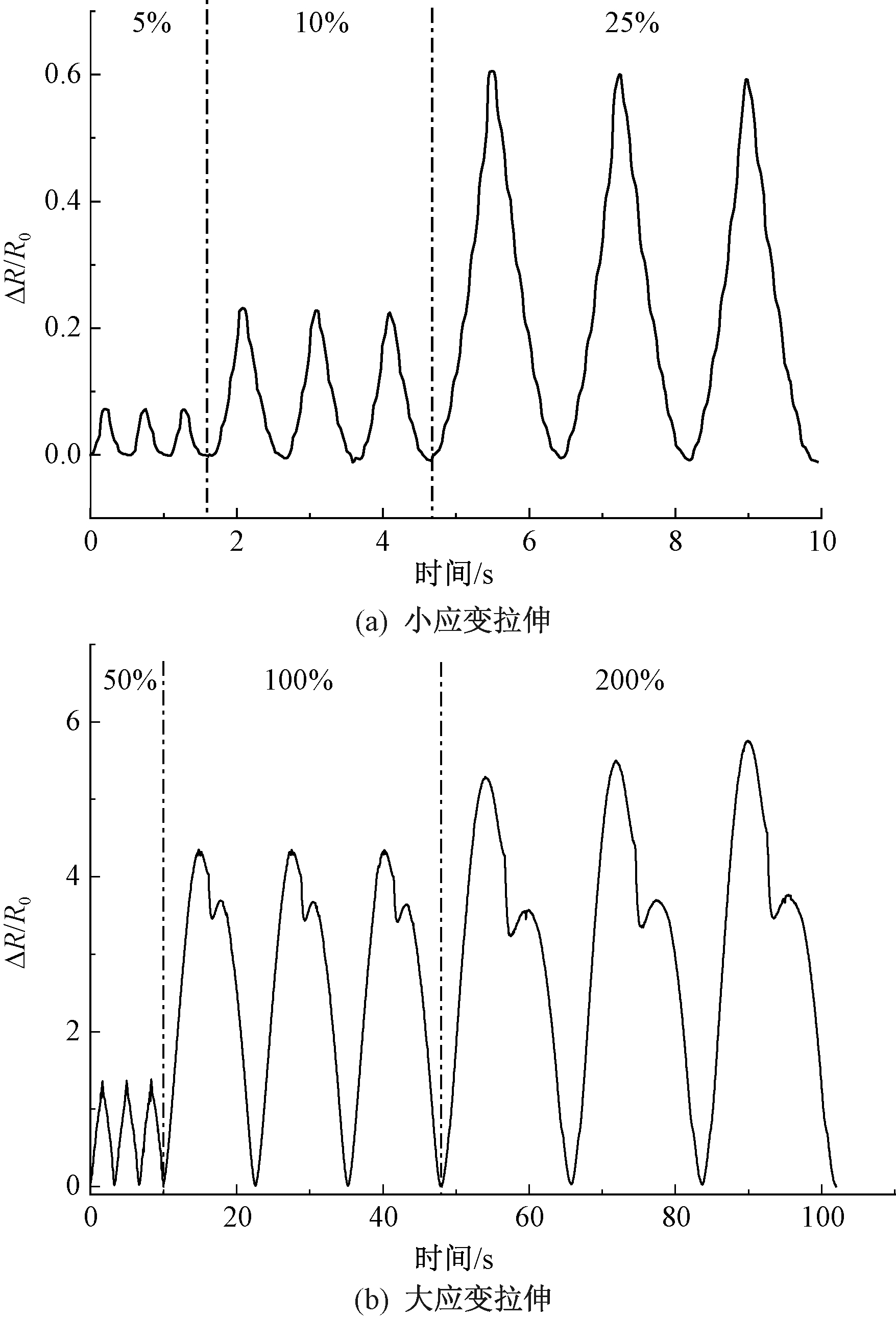
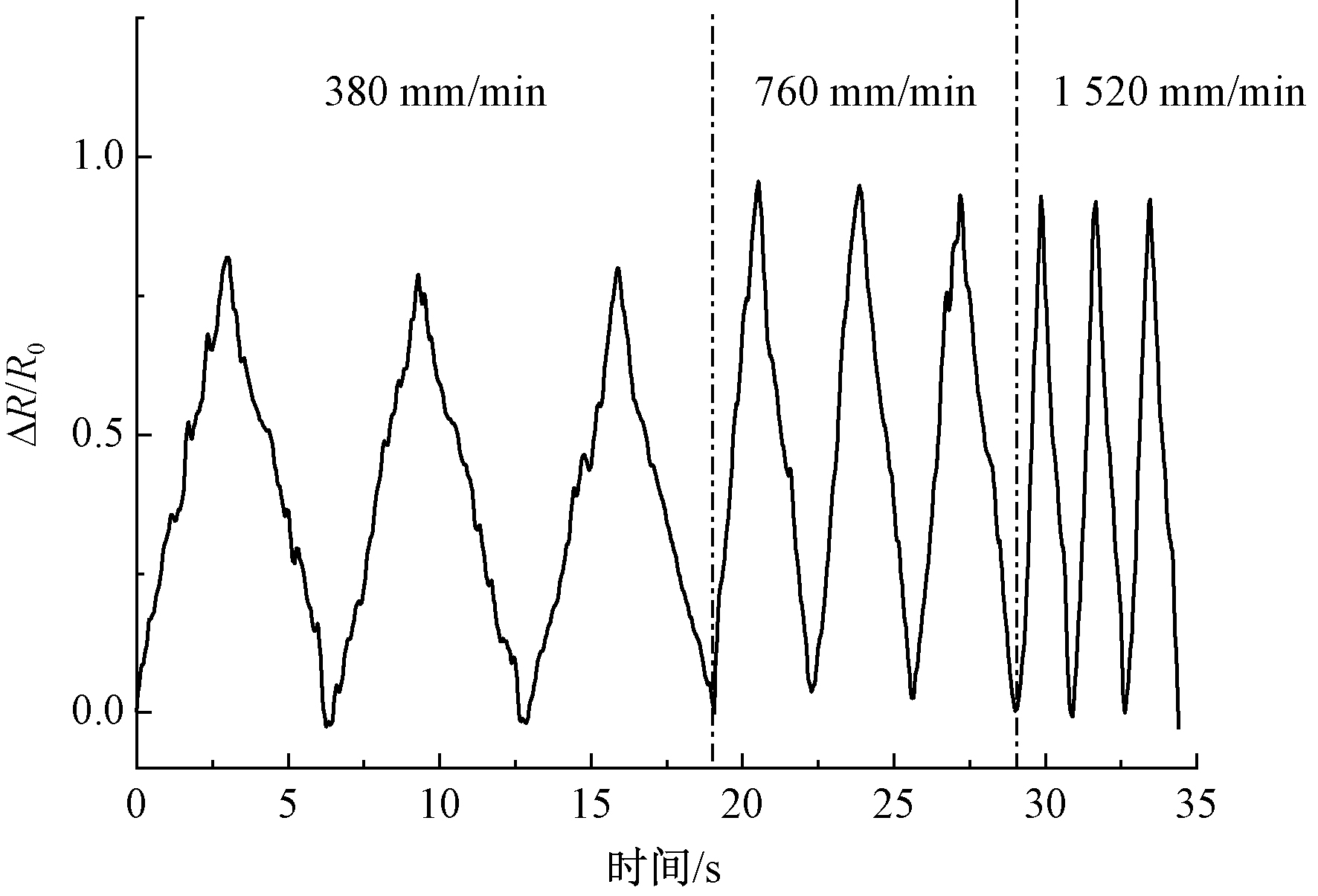
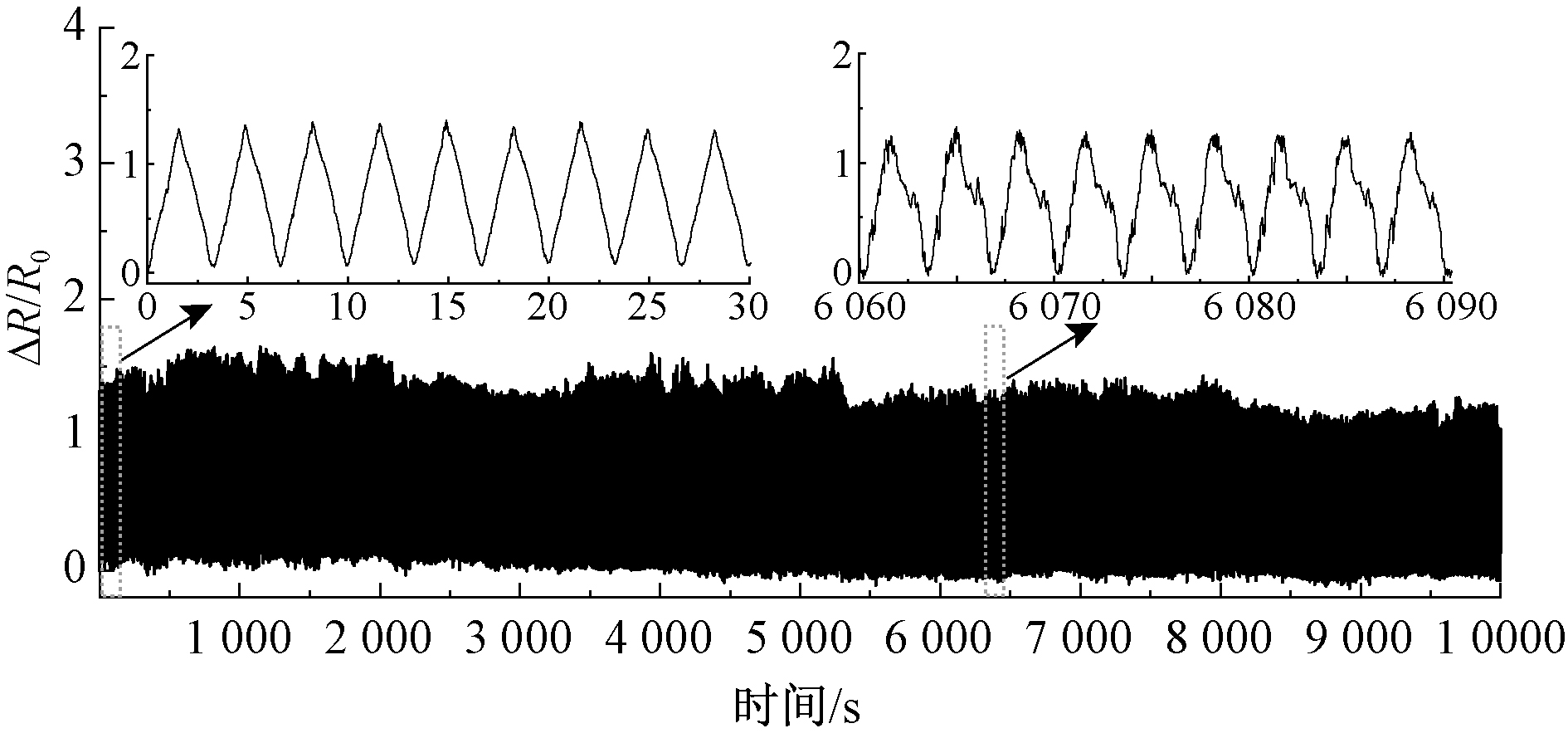
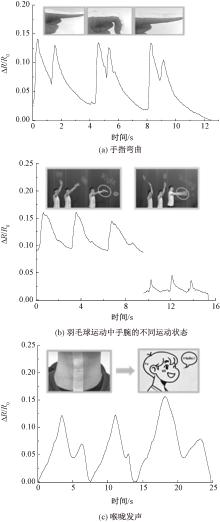
针对目前浸渍、涂敷工艺引入导电材料存在步骤繁琐、效率低且界面结合力弱等问题,基于静电纺丝-静电喷涂协同机制,通过一步法连续成形工艺高效构筑核鞘结构跨尺度传感纱线。采用多针水浴静电纺丝技术,将聚氨酯(TPU)纳米纤维喷射于接收浴面上,同时通过静电喷涂技术,将碳纳米管(CNTs)均匀沉积于TPU纳米纤维表面,构建出稳定的导电网络,然后均匀包覆氨纶上,制得基于纳米纤维包覆纱(NFCY)的CNTs/NFCY传感纱。研究结果表明,该传感纱在0%~200%的宽应变范围呈现高达4.31的灵敏度系数,在反复拉伸循环中表现出优异的耐久性,经过约 3 h拉伸-释放循环仍能保持稳定输出。该传感纱在语音识别、运动监测等应用场景中表现出优秀的性能,在可穿戴电子和柔性传感技术上展示出巨大应用潜力。
中图分类号:
| [1] |
LUO Y, ABIDIAN M R, AHN J H, et al. Technology roadmap for flexible sensors[J]. ACS Nano, 2023, 17(6): 5211-5295.
doi: 10.1021/acsnano.2c12606 pmid: 36892156 |
| [2] |
JI D X, LIN Y G, GUO X Y, et al. Electrospinning of nanofibres[J]. Nature Reviews Methods Primers, 2024, 4: 1.
doi: 10.1038/s43586-023-00278-z |
| [3] |
WANG S G, FAN P, LIU W B, et al. Research progress of flexible electronic devices based on electrospun nanofibers[J]. ACS Nano, 2024, 18(46): 31737-31772.
doi: 10.1021/acsnano.4c13106 pmid: 39499656 |
| [4] |
WANG D Y, WANG L L, SHEN G Z. Nanofiber/nanowires-based flexible and stretchable sensors[J]. Journal of Semiconductors, 2020, 41(4): 041605.
doi: 10.1088/1674-4926/41/4/041605 |
| [5] |
MISHRA R K, MISHRA P, VERMA K, et al. Electrospinning production of nanofibrous mem-branes[J]. Environmental Chemistry Letters, 2019, 17(2): 767-800.
doi: 10.1007/s10311-018-00838-w |
| [6] |
HE M T, LI A L, ZHENG M R, et al. Shape-controllable nanofiber core-spun yarn for multifunctional applications[J]. Advanced Fiber Materials, 2024, 6(4): 1138-1151.
doi: 10.1007/s42765-024-00408-6 |
| [7] | UZABAKIRIHO P C, WANG M, WANG K, et al. High-strength and extensible electrospun yarn for wearable electronics[J]. ACS Applied Materials & Interfaces, 2022, 14(40): 46068-46076. |
| [8] |
WU H Y, YU Y T, YU Y L, et al. A facile method for continuous production of temperature-adaptive hyperthermal management core-sheath polyurethane nanofiber yarns based on vanadium dioxide toward commercialization[J]. Journal of Energy Storage, 2024, 86: 111311.
doi: 10.1016/j.est.2024.111311 |
| [9] |
CHEN L, MEI S Q, FU K, et al. Spinning the future: the convergence of nanofiber technologies and yarn fabrication[J]. ACS Nano, 2024, 18(24): 15358-15386.
doi: 10.1021/acsnano.4c02399 pmid: 38837241 |
| [10] |
GAO Q, AGARWAL S, GREINER A, et al. Electrospun fiber-based flexible electronics: fiber fabrication, device platform, functionality integration and applications[J]. Progress in Materials Science, 2023, 137: 101139.
doi: 10.1016/j.pmatsci.2023.101139 |
| [11] |
ZHOU B M, JIANG X D, WANG R, et al. Developments in electrospinning of nanofiber yarns[J]. Journal of Physics: Conference Series, 2021, 1790(1): 012081.
doi: 10.1088/1742-6596/1790/1/012081 |
| [12] |
NAN N, HE J X, YOU X L, et al. A stretchable, highly sensitive, and multimodal mechanical fabric sensor based on electrospun conductive nanofiber yarn for wearable electronics[J]. Advanced Materials Technologies, 2019, 4(3): 1800338.
doi: 10.1002/admt.v4.3 |
| [13] |
ZHOU M J, XU F, MA L Y, et al. Continuously fabricated nano/micro aligned fiber based waterproof and breathable fabric triboelectric nanogenerators for self-powered sensing systems[J]. Nano Energy, 2022, 104: 107885.
doi: 10.1016/j.nanoen.2022.107885 |
| [14] |
WANG X H, ZHOU X R, ZHAO X M, et al. Electric field simulation, structure and properties of nanofiber- coated yarn prepared by multi-needle water bath electrospinning[J]. Nanotechnology, 2025, 36(1): 015302.
doi: 10.1088/1361-6528/ad8422 |
| [15] |
TANG J, WU Y T, MA S D, et al. Flexible strain sensor based on CNT/TPU composite nanofiber yarn for smart sports bandage[J]. Composites Part B: Engineering, 2022, 232: 109605.
doi: 10.1016/j.compositesb.2021.109605 |
| [16] |
WANG F L, ZHANG W Y, SONG Y, et al. Wearable and cost-effective pressure sensor based on a carbon nanotube/polyurethane sponge for motion detection and gesture recognition[J]. ACS Applied Electronic Materials, 2023, 5(12): 6704-6715.
doi: 10.1021/acsaelm.3c01199 |
| [17] |
TANG K Q, GOMEZ A. Monodisperse electrosprays of low electric conductivity liquids in the cone-jet mode[J]. Journal of Colloid and Interface Science, 1996, 184(2): 500-511.
pmid: 8978553 |
| [18] |
PARK K, KANG S M, PARK J W, et al. Fabrication of silver nanowire coated fibrous air filter medium via a two-step process of electrospinning and electrospray for anti-bioaerosol treatment[J]. Journal of Hazardous Materials, 2021, 411: 125043.
doi: 10.1016/j.jhazmat.2021.125043 |
| [19] |
WU S P, LI K H, SHI W J, et al. Chitosan/polyvinylpyrrolidone/polyvinyl alcohol/carbon nanotubes dual layers nanofibrous membrane constructed by electrospinning-electrospray for water purification[J]. Carbohydrate Polymers, 2022, 294: 119756.
doi: 10.1016/j.carbpol.2022.119756 |
| [20] |
WANG X, SHI H C, PAN Z B, et al. Equipment develop and experiment study of the synchronization of electrospinning and electrospray[J]. Journal of Physics: Conference Series, 2024, 2740(1): 012032.
doi: 10.1088/1742-6596/2740/1/012032 |
| [21] |
SI Y F, SHI S, HU J L. Electrospinning and electrospraying synergism: twins-tech collaboration across dimensions[J]. Matter, 2024, 7(4): 1373-1405.
doi: 10.1016/j.matt.2024.01.009 |
| [22] |
CAO J W, LIANG F, LI H Y, et al. Ultra-robust stretchable electrode for e-skin: in situ assembly using a nanofiber scaffold and liquid metal to mimic water-to-net interaction[J]. InfoMat, 2022, 4(4): e12302.
doi: 10.1002/inf2.v4.4 |
| [23] | GONG M F, TU C L, LIN X T, et al. Liquid Metal-Graphene composite conductive nanofiber flexible pressure sensor for dynamic health monitoring[J]. Materials & Design, 2025, 252: 113811. |
| [24] |
LEPAK-KUC S, TABOROWSKA P, TRAN T Q, et al. Washable, colored and textured, carbon nanotube textile yarns[J]. Carbon, 2021, 172: 334-344.
doi: 10.1016/j.carbon.2020.10.045 |
| [25] |
HE S S, HONG Y, LIAO M, et al. Flexible sensors based on assembled carbon nanotubes[J]. Aggregate, 2021, 2(6): e143.
doi: 10.1002/agt2.v2.6 |
| [26] |
CHEN D P, CAI Y Z, CHENG L F, et al. Structure and function design of carbon nanotube-based flexible strain sensors and their application[J]. Measurement, 2024, 225: 113992.
doi: 10.1016/j.measurement.2023.113992 |
| [27] |
WANG R, SUN L F, ZHU X Y, et al. Carbon nanotube-based strain sensors: structures, fabrication, and applications[J]. Advanced Materials Technologies, 2023, 8: 2200855.
doi: 10.1002/admt.v8.1 |
| [1] | 孔艳辉, 张琳萍, 毛志平, 徐红. 甲基丙烯酰化明胶纤维膜的制备及其止血性能[J]. 纺织学报, 2026, 47(1): 1-10. |
| [2] | 赵婧雯, 袁香楠, 高晶, 王璐. 聚丙烯腈-普鲁士蓝/月桂酸/环丙沙星光热响应性抗菌敷料的制备及其性能[J]. 纺织学报, 2026, 47(1): 20-28. |
| [3] | 王世豪, 徐晓禹, 郑挺, 王金星, 姚德刚, 王俊, 叶翔宇, 田慧, 李婷, 朱斐超. 碳纤维非织造材料的研究应用及展望[J]. 纺织学报, 2026, 47(1): 240-249. |
| [4] | 罗家俊, 何耀权, 赵振鸿, 黎锦稻, 赵景, 黄钢, 王先锋. 苯乙烯-乙烯-丁烯-苯乙烯/氟化聚酰亚胺防水透湿纤维膜的制备及其性能[J]. 纺织学报, 2026, 47(1): 38-45. |
| [5] | 凌磊, 陈凯, 高俊, 武丁胜, 汪邓兵, 张春, 凤权. 聚丙烯腈/共价有机框架复合纳米纤维膜的制备及其对Cr(Ⅵ)的吸附性能[J]. 纺织学报, 2026, 47(1): 54-62. |
| [6] | 刘轲, 王雨曦, 程盼, 朱丽萍, 夏明, 梅涛, 向阳, 周丰, 高飞, 王栋. 多孔磺化氢化苯乙烯-丁二烯嵌段共聚物纤维膜制备及其吸附性能[J]. 纺织学报, 2025, 46(12): 1-10. |
| [7] | 石彬琳, 董智佳, 马丕波, 丛洪莲, 吴光军, 刘博. 机器人颈关节包覆用针织全成形织物结构设计[J]. 纺织学报, 2025, 46(12): 116-122. |
| [8] | 王梁宇, 高晓红, 于彩娇, 张雪婷, 杨旭礼. 还原氧化石墨烯/铜纳米颗粒导电棉织物的制备及其传感性能[J]. 纺织学报, 2025, 46(12): 181-187. |
| [9] | 杨孟晓, 邱小雪, 吴芳, 刘琳, 姚菊明. 蚕丝基导电凝胶纤维的制备及其应变传感性能[J]. 纺织学报, 2025, 46(12): 49-56. |
| [10] | 高俊, 凌磊, 陈缘, 武丁胜, 林韩蕾, 李振宇, 凤权. 氨基功能化聚丙烯腈纳米纤维膜的制备及其对Cr(Ⅵ)的吸附性能[J]. 纺织学报, 2025, 46(12): 57-65. |
| [11] | 邓晶, 王蕊宁, 孙润军, 张亚娟, 郭海冰, 雷轲. 用于脉搏监测的海藻酸钠改性水性聚氨酯/液态金属导电传感纤维[J]. 纺织学报, 2025, 46(12): 74-82. |
| [12] | 张慧杰, 李登宇, 周轩, 李秀艳, 汪滨, 徐泉. 磺化聚醚醚酮基铁铬液流电池隔膜的制备及其性能[J]. 纺织学报, 2025, 46(12): 83-91. |
| [13] | 胡新阳, 王宏志. 聚偏氟乙烯-三氟乙烯共聚物摩擦纳米发电织物制备及其输出功率提升[J]. 纺织学报, 2025, 46(12): 92-100. |
| [14] | 梁治, 姬康瑞, 黎张成, 何钰, 王灿, 侯冲. 热致变色纤维膜的制备及其温度传感性能[J]. 纺织学报, 2025, 46(11): 1-8. |
| [15] | 舒祖菊, 袁自钰, 周斐, 黄秀文, 王权, 房显龙, 曹美雪. 载姜黄素核壳结构纳米纤维膜的制备及其缓释性能[J]. 纺织学报, 2025, 46(11): 26-33. |
|
||
 京公网安备11010502044800号