纺织学报 ›› 2026, Vol. 47 ›› Issue (01): 38-45.doi: 10.13475/j.fzxb.20250602001
罗家俊1, 何耀权1, 赵振鸿1, 黎锦稻1, 赵景1( ), 黄钢1, 王先锋1,2
LUO Jiajun1, HE Yaoquan1, ZHAO Zhenhong1, LI Jindao1, ZHAO Jing1(), HUANG Gang1, WANG Xianfeng1,2
摘要:
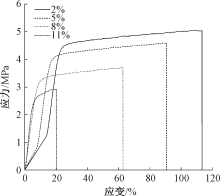
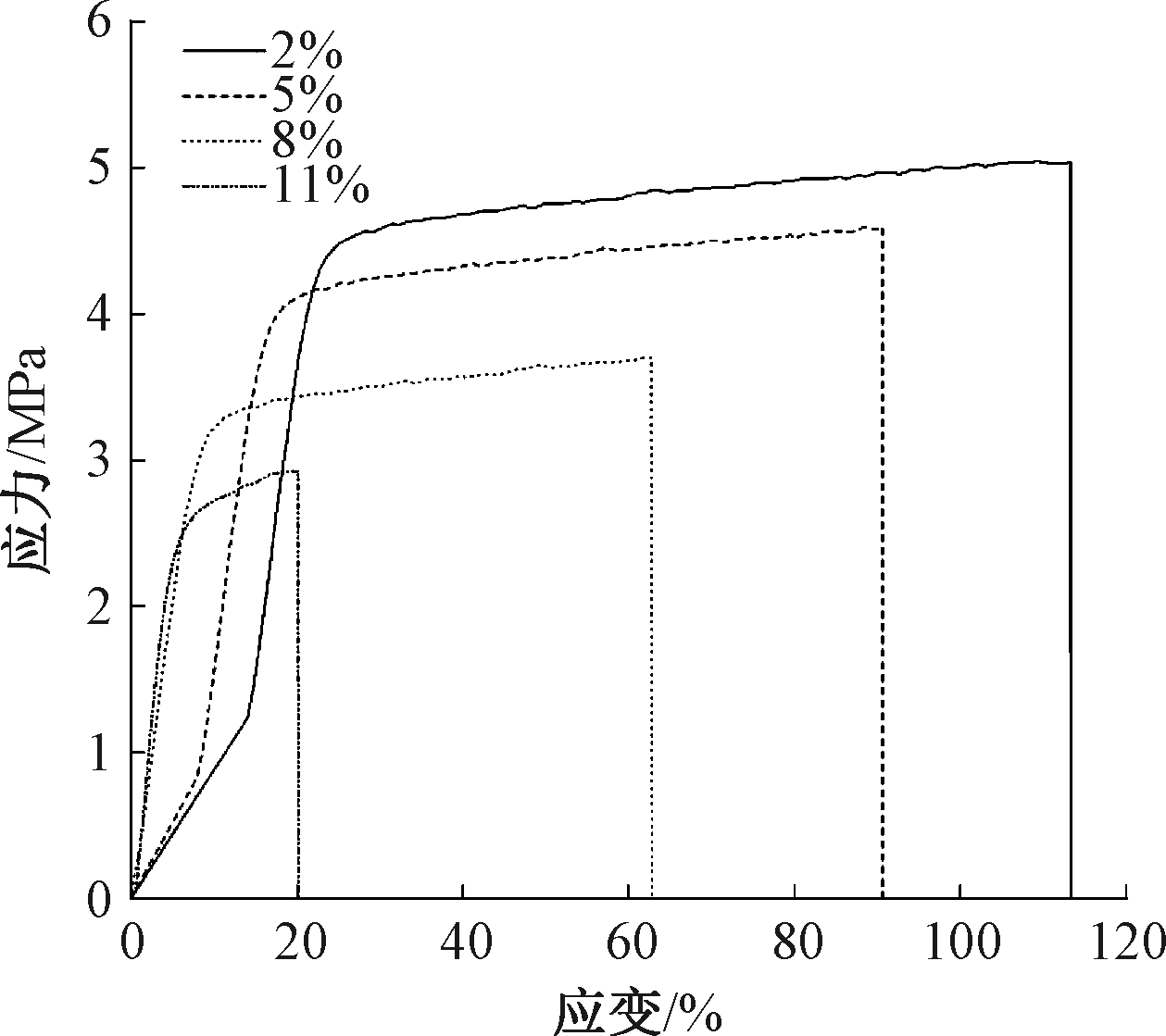
为解决传统防水透湿材料存在的防水性与透湿性难以兼顾、力学性能不足等问题,基于苯乙烯-乙烯-丁烯-苯乙烯(SEBS)的疏水性和可加工性,以及氟化聚酰亚胺(FPI)的高疏水性和耐化学性,采用一步静电纺丝技术制备了SEBS/FPI复合微纳米纤维膜。通过系统调控聚合物配比,研究了SEBS和FPI质量分数对复合纤维膜微观孔结构、表面润湿性能、透气性能、防水透湿性能及力学性能的影响规律。采用单因素优化策略,首先固定FPI质量分数为1%,系统考察SEBS质量分数对纤维膜性能的影响;在确定最优SEBS质量分数的基础上,进一步优化FPI质量分数,探究其对复合纤维膜综合性能的调控机制。结果表明:最优SEBS质量分数为12%,此时纤维膜接触角达132.5°,耐水压为21.8 kPa,透湿率为14.53 kg/(m2·d),实现了良好的防水性与透湿性能平衡。在此基础上,进一步提升FPI质量分数至5%时,纤维膜综合性能明显提升,接触角达132.9°,耐水压提高至53.4 kPa,透湿率为9.71 kg/(m2·d),拉伸断裂强度为4.6 MPa,断裂伸长率为90.6%,FPI的引入不仅有效提升了纤维膜的疏水性能,还通过调节孔结构优化了其防水性和透湿性。
中图分类号:
| [1] |
ZOU F D, LI G, WANG X H, et al. Dynamic hydrophobicity of superhydrophobic PTFE-SiO2 electrospun fibrous membranes[J]. Journal of Membrane Science, 2021, 619: 118810.
doi: 10.1016/j.memsci.2020.118810 |
| [2] |
ZHAO J, ZHU W X, WANG X F, et al. Fluorine-free waterborne coating for environmentally friendly, robustly water-resistant, and highly breathable fibrous textiles[J]. ACS Nano, 2020, 14(1): 1045-1054.
doi: 10.1021/acsnano.9b08595 pmid: 31877025 |
| [3] |
ZHAO J, HOU A H, ZHAO Z H, et al. Facile fabrication of environmentally friendly and mechanically robust transparent, waterproof, and breathable fibrous membranes[J]. Chemical Engineering Journal, 2025, 505: 159222.
doi: 10.1016/j.cej.2025.159222 |
| [4] | 郭爱珍, 凌秀珍. 防水透湿织物的工艺技术和发展方向[J]. 纺织学报, 1985, 6(6): 58-62, 4. |
| GUO Aizhen, LING Xiuzhen. The technology and development tendency of permeable water-proof fabrics[J]. Journal of Textile Research, 1985, 6(6): 58-62, 4. | |
| [5] |
ZHOU W, GONG X B, LI Y, et al. Environmentally friendly waterborne polyurethane nanofibrous membranes by emulsion electrospinning for waterproof and breathable textiles[J]. Chemical Engineering Journal, 2022, 427: 130925.
doi: 10.1016/j.cej.2021.130925 |
| [6] | 陈丽华. 不同种类防水透湿织物的性能及发展[J]. 纺织学报, 2012, 33(7): 149-156. |
| CHEN Lihua. Properties and development trends of different kinds of waterproof and moisture permeable fabrics[J]. Journal of Textile Research, 2012, 33(7): 149-156. | |
| [7] | 丁子寒, 初曦, 邹婷婷, 等. 防水透湿织物的研究进展[J]. 服装学报, 2019, 4(5): 383-387. |
| DING Zihan, CHU Xi, ZOU Tingting, et al. Research progress on waterproof and moisture permeable fabric[J]. Journal of Clothing Research, 2019, 4(5): 383-387. | |
| [8] | 生俊露. 静电纺纳米纤维防水透湿膜的加热/涂层改性及性能优化研究[D]. 上海: 东华大学, 2017: 12. |
| SHENG Junlu. Heating/coating modification and performance optimization of electrospun waterproof-breathable nanofibrous membranes[D]. Shanghai: Donghua University, 2017: 12. | |
| [9] | 张盼. 静电纺防水透湿材料的制备与性能研究[D]. 郑州: 中原工学院, 2022: 4. |
| ZHANG Pan. Preparation and properties of electrospinning waterproof and breathable nanofiber membranes[D]. Zhengzhou: Zhongyuan University of Technology, 2022: 4. | |
| [10] |
YU X, WU X H, SI Y, et al. Waterproof and breathable electrospun nanofibrous membranes[J]. Macromolecular Rapid Communications, 2019, 40(8): 1800931.
doi: 10.1002/marc.v40.8 |
| [11] |
ZHAO J, ZHAO Z H, HOU A H, et al. Facile fabrication of eco-friendly waterproof breathable nanofibrous membranes with asymmetric wettability via electrospray of waterborne polyurethane emulsion[J]. ACS Applied Nano Materials, 2024, 7(24): 28767-28777.
doi: 10.1021/acsanm.4c06100 |
| [12] |
GONG X B, YIN X, WANG F, et al. Electrospun nanofibrous membranes: a versatile medium for waterproof and breathable application[J]. Small, 2023, 19(2): 2205067.
doi: 10.1002/smll.v19.2 |
| [13] |
SHENG J L, LI Y, WANG X F, et al. Thermal inter-fiber adhesion of the polyacrylonitrile/fluorinated polyurethane nanofibrous membranes with enhanced waterproof-breathable performance[J]. Separation and Purification Technology, 2016, 158: 53-61.
doi: 10.1016/j.seppur.2015.11.046 |
| [14] |
GONG X B, JI Y, LIU X Y, et al. Biomimetic and durably superhydrophobic nanofibrous membranes for high-performance waterproof and breathable textiles[J]. Advanced Functional Materials, 2024, 34(26): 2316030.
doi: 10.1002/adfm.v34.26 |
| [15] | JIANG G S, LUO L Q, TAN L, et al. Microsphere-fiber interpenetrated superhydrophobic PVDF microporous membranes with improved waterproof and breathable performance[J]. ACS Applied Materials & Interfaces, 2018, 10(33): 28210-28218. |
| [16] |
DING M L, WANG Y, GONG X B, et al. Fluorine-free nanofiber/network membranes with interconnected tortuous channels for high-performance liquid-repellency and breathability[J]. ACS Nano, 2025, 19(5): 5539-5548.
doi: 10.1021/acsnano.4c14213 |
| [17] |
YE Q, LIU X Y, LI J L, et al. Surfactant-functionalized SEBS for fabrication of flexible electrodes[J]. Colloids and Surfaces A: Physicochemical and Engineering Aspects, 2025, 720: 137132.
doi: 10.1016/j.colsurfa.2025.137132 |
| [18] | 公聪聪, 贾杰, 李铭新, 等. 含氟聚酰亚胺材料的应用及研究进展[J]. 工程塑料应用, 2025, 53(3): 186-190. |
| GONG Congcong, JIA Jie, LI Mingxin, et al. Applications and research progress of fluorinated polyimide materials[J]. Engineering Plastics Application, 2025, 53(3): 186-190. | |
| [19] |
ZHANG R F, HUANG K, ZHU M, et al. Corrosion resistance of stretchable electrospun SEBS/PANi micro-nano fiber membrane[J]. European Polymer Journal, 2020, 123: 109394.
doi: 10.1016/j.eurpolymj.2019.109394 |
| [20] |
MAO X, CHEN Y C, SI Y, et al. Novel fluorinated polyurethane decorated electrospun silica nanofibrous membranes exhibiting robust waterproof and breathable performances[J]. RSC Advances, 2013, 3(20): 7562-7569.
doi: 10.1039/c3ra23326j |
| [21] | 林宇. 基于体系动态流变行为研究含氟助剂对超高分子量聚乙烯分子链的解缠结机制[D]. 福州: 福建师范大学, 2018: 27-28. |
| LIN Yu. Study on the disentanglement mechanism of UHMWPE molecular chain with fluorine-containing additive based on the dynamic rheological behavior of the system[D]. Fuzhou: Fujian Normal University, 2018: 27-28. | |
| [22] | 李智勇, 周惠敏, 夏鑫. 含氟聚氨酯/聚氨酯纳米纤维膜复合织物的制备及其防水透湿性能[J]. 纺织学报, 2016, 37(10): 83-88. |
| LI Zhiyong, ZHOU Huimin, XIA Xin. Preparation and waterproof and water-permeable properties of electrospun fluorinated polyurethanel polyurethane nanofiber membrane composite fabrics[J]. Journal of Textile Research, 2016, 37(10): 83-88. | |
| [23] | LI Y, ZHU Z G, YU J Y, et al. Carbon nanotubes enhanced fluorinated polyurethane macroporous membranes for waterproof and breathable application[J]. ACS Applied Materials & Interfaces, 2015, 7(24): 13538-13546. |
| [24] |
LAI S Q, SHI Y F, WU W L, et al. Highly soluble fluorinated polyimides with promising gas transport performance and optical transparency[J]. Polymer Chemistry, 2023, 14(3): 359-373.
doi: 10.1039/D2PY01144A |
| [25] |
LUO N, XU R L, YANG M, et al. Preparation and characterization of PVDF-glass fiber composite membrane reinforced by interfacial UV-grafting copolymerization[J]. Journal of Environmental Sciences, 2015, 38: 24-35.
doi: 10.1016/j.jes.2015.04.027 pmid: 26702965 |
| [26] |
XIA Y, HE L F, FENG J D, et al. Waterproof and moisture-permeable polyurethane nanofiber membrane with high strength, launderability, and durable antimicrobial properties[J]. Nanomaterials, 2022, 12(11): 1813.
doi: 10.3390/nano12111813 |
| [27] |
LI L S, XU Y, CHE J F, et al. Preparation, characterization and degradation kinetics of transparent fluorinated polyimides with low dielectric constants and excellent hydrophobic properties[J]. Polymer Bulletin, 2018, 75(12): 5777-5793.
doi: 10.1007/s00289-018-2352-8 |
| [1] | 孔艳辉, 张琳萍, 毛志平, 徐红. 甲基丙烯酰化明胶纤维膜的制备及其止血性能[J]. 纺织学报, 2026, 47(01): 1-10. |
| [2] | 赵婧雯, 袁香楠, 高晶, 王璐. 聚丙烯腈-普鲁士蓝/月桂酸/环丙沙星光热响应性抗菌敷料的制备及其性能[J]. 纺织学报, 2026, 47(01): 20-28. |
| [3] | 王世豪, 徐晓禹, 郑挺, 王金星, 姚德刚, 王俊, 叶翔宇, 田慧, 李婷, 朱斐超. 碳纤维非织造材料的研究应用及展望[J]. 纺织学报, 2026, 47(01): 240-249. |
| [4] | 凌磊, 陈凯, 高俊, 武丁胜, 汪邓兵, 张春, 凤权. 聚丙烯腈/共价有机框架复合纳米纤维膜的制备及其对Cr(Ⅵ)的吸附性能[J]. 纺织学报, 2026, 47(01): 54-62. |
| [5] | 刘轲, 王雨曦, 程盼, 朱丽萍, 夏明, 梅涛, 向阳, 周丰, 高飞, 王栋. 多孔磺化氢化苯乙烯-丁二烯嵌段共聚物纤维膜制备及其吸附性能[J]. 纺织学报, 2025, 46(12): 1-10. |
| [6] | 王小虎, 包安娜, 魏静雯, 赵晓曼, 韩潇, 洪剑寒. 基于静电纺丝-静电喷涂协同工艺的跨尺度传感纱一步法制备及其应用[J]. 纺织学报, 2025, 46(12): 101-109. |
| [7] | 厉宗洁, 李腾飞, 鲁一涵, 康卫民. 多功能耦合静电纺多级结构纳米纤维过滤材料研究进展[J]. 纺织学报, 2025, 46(12): 19-28. |
| [8] | 高俊, 凌磊, 陈缘, 武丁胜, 林韩蕾, 李振宇, 凤权. 氨基功能化聚丙烯腈纳米纤维膜的制备及其对Cr(Ⅵ)的吸附性能[J]. 纺织学报, 2025, 46(12): 57-65. |
| [9] | 张慧杰, 李登宇, 周轩, 李秀艳, 汪滨, 徐泉. 磺化聚醚醚酮基铁铬液流电池隔膜的制备及其性能[J]. 纺织学报, 2025, 46(12): 83-91. |
| [10] | 胡新阳, 王宏志. 聚偏氟乙烯-三氟乙烯共聚物摩擦纳米发电织物制备及其输出功率提升[J]. 纺织学报, 2025, 46(12): 92-100. |
| [11] | 梁治, 姬康瑞, 黎张成, 何钰, 王灿, 侯冲. 热致变色纤维膜的制备及其温度传感性能[J]. 纺织学报, 2025, 46(11): 1-8. |
| [12] | 舒祖菊, 袁自钰, 周斐, 黄秀文, 王权, 房显龙, 曹美雪. 载姜黄素核壳结构纳米纤维膜的制备及其缓释性能[J]. 纺织学报, 2025, 46(11): 26-33. |
| [13] | 王文淑, 王建刚, 李瀚宇, 王春红, 谭晓璇, 王慧泉. 烷基壳聚糖/聚乙烯醇纳米纤维膜的制备及其止血性能[J]. 纺织学报, 2025, 46(11): 52-60. |
| [14] | 张佃平, 陈琪, 徐登明, 王祚, 王昊. CuO 纳米纤维的制备及其在无酶葡萄糖传感器中的性能[J]. 纺织学报, 2025, 46(11): 61-68. |
| [15] | 郭梦瑶, 吴佳庆, 王迎. 全包覆结构聚氨酯膜条带/棉复合纱制备及其力学性能[J]. 纺织学报, 2025, 46(11): 69-76. |
|
||
 京公网安备11010502044800号