纺织学报 ›› 2026, Vol. 47 ›› Issue (01): 46-53.doi: 10.13475/j.fzxb.20250206501
陈克林1, 李卓1, 王晓歌1, 李成晋1, 胡建臣1,2( ), 张克勤1,2
CHEN Kelin1, LI Zhuo1, WANG Xiaoge1, LI Chengjin1, HU Jianchen1,2(), ZHANG Keqin1,2
摘要:
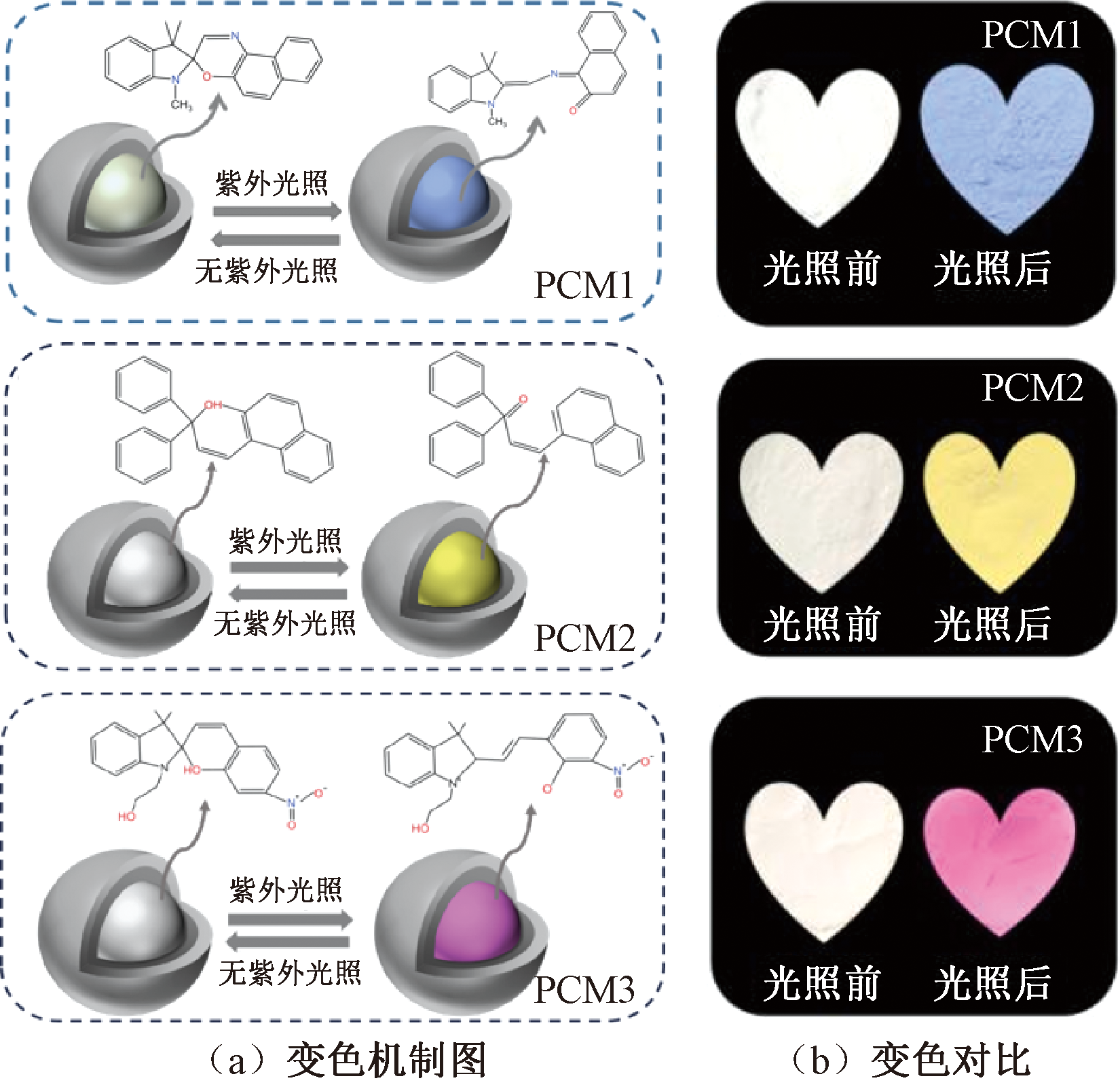
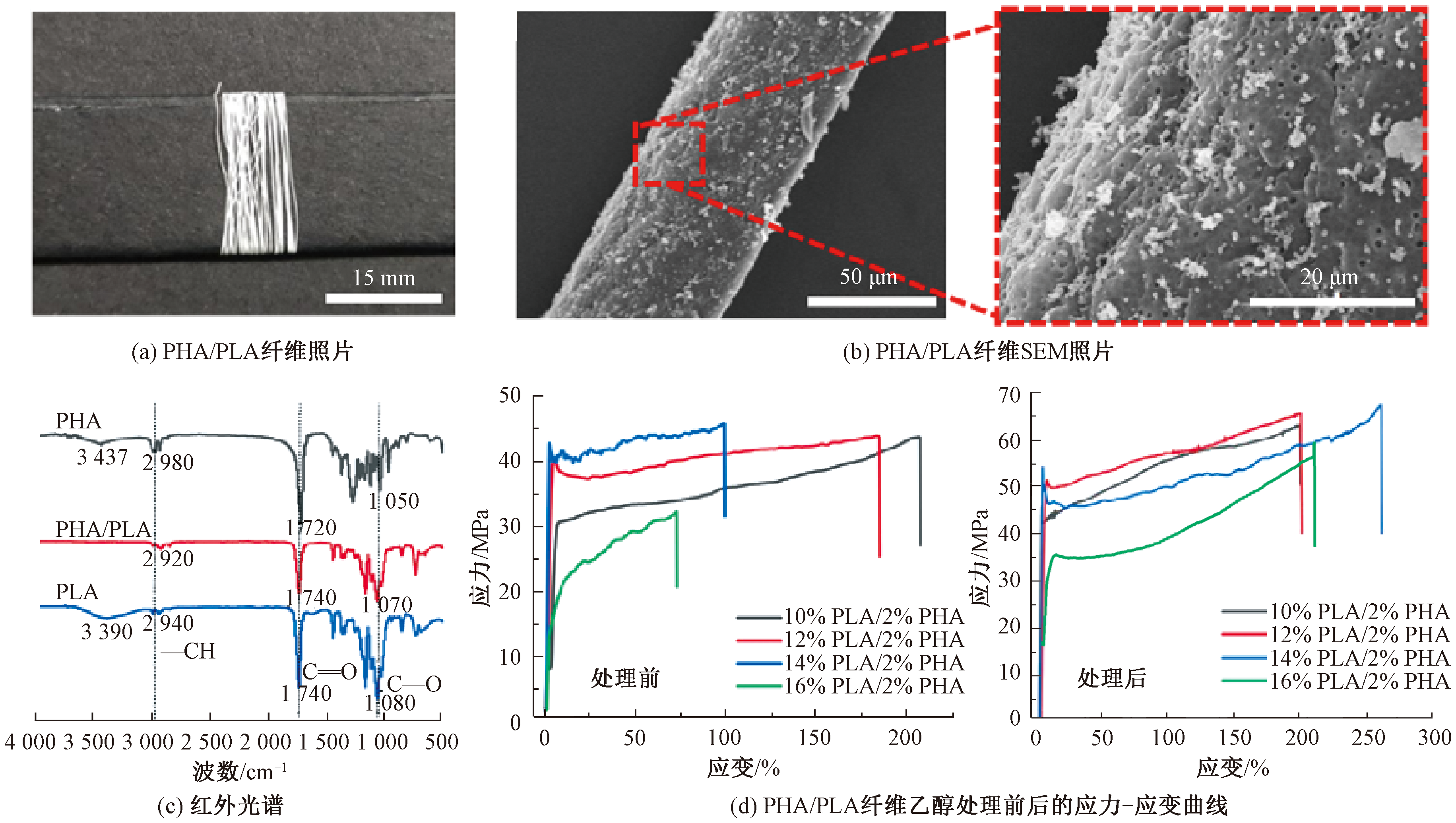
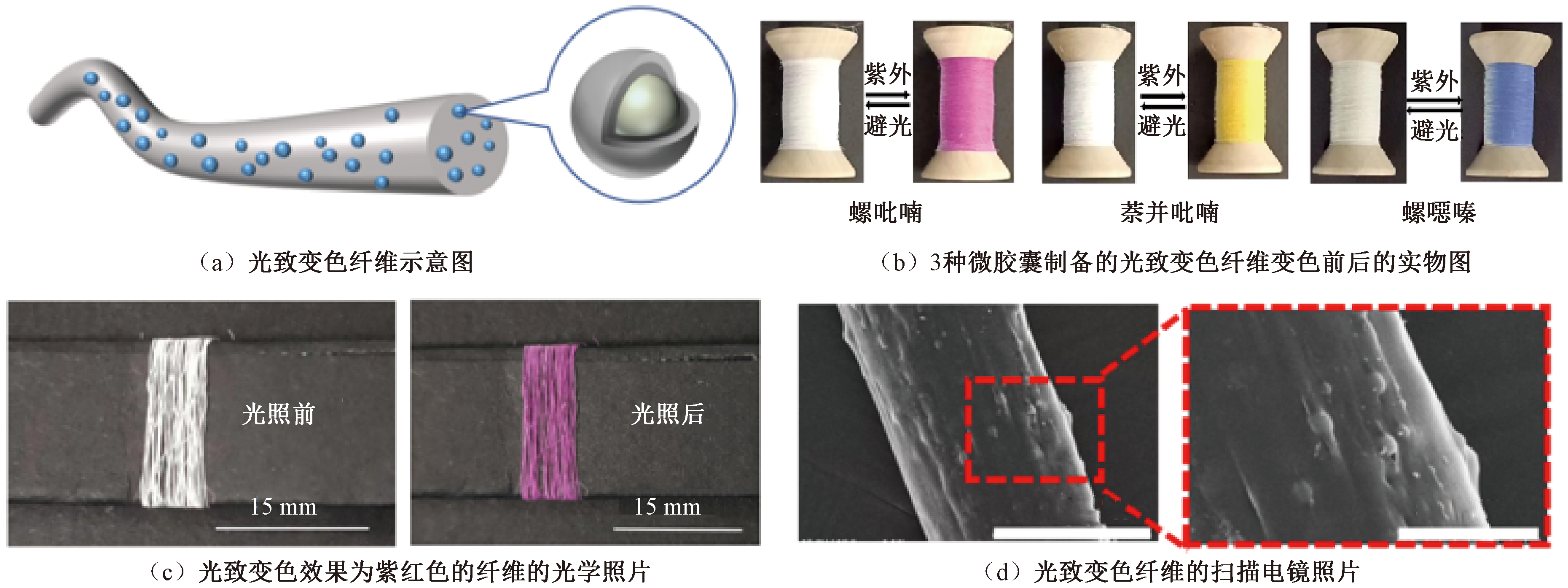
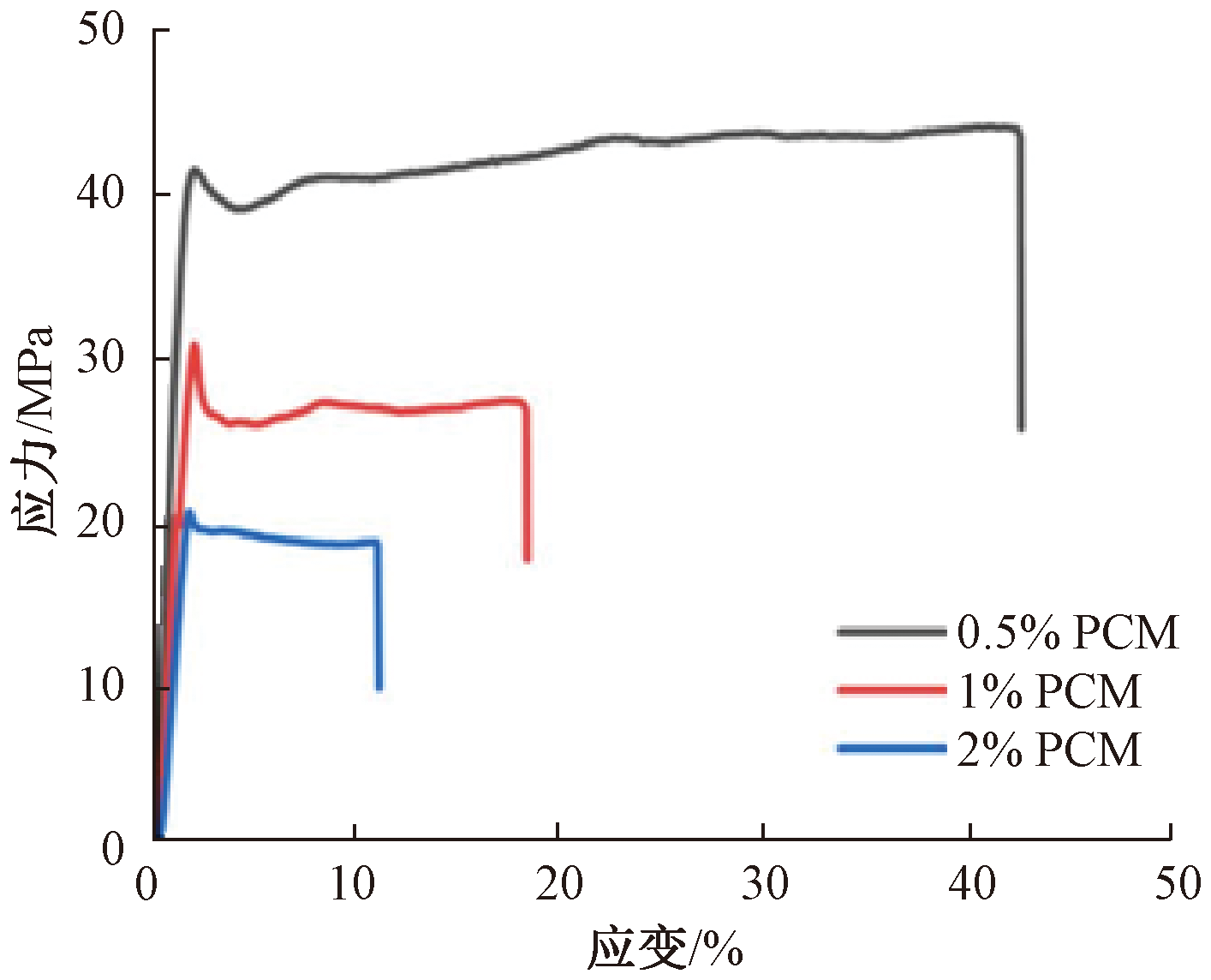
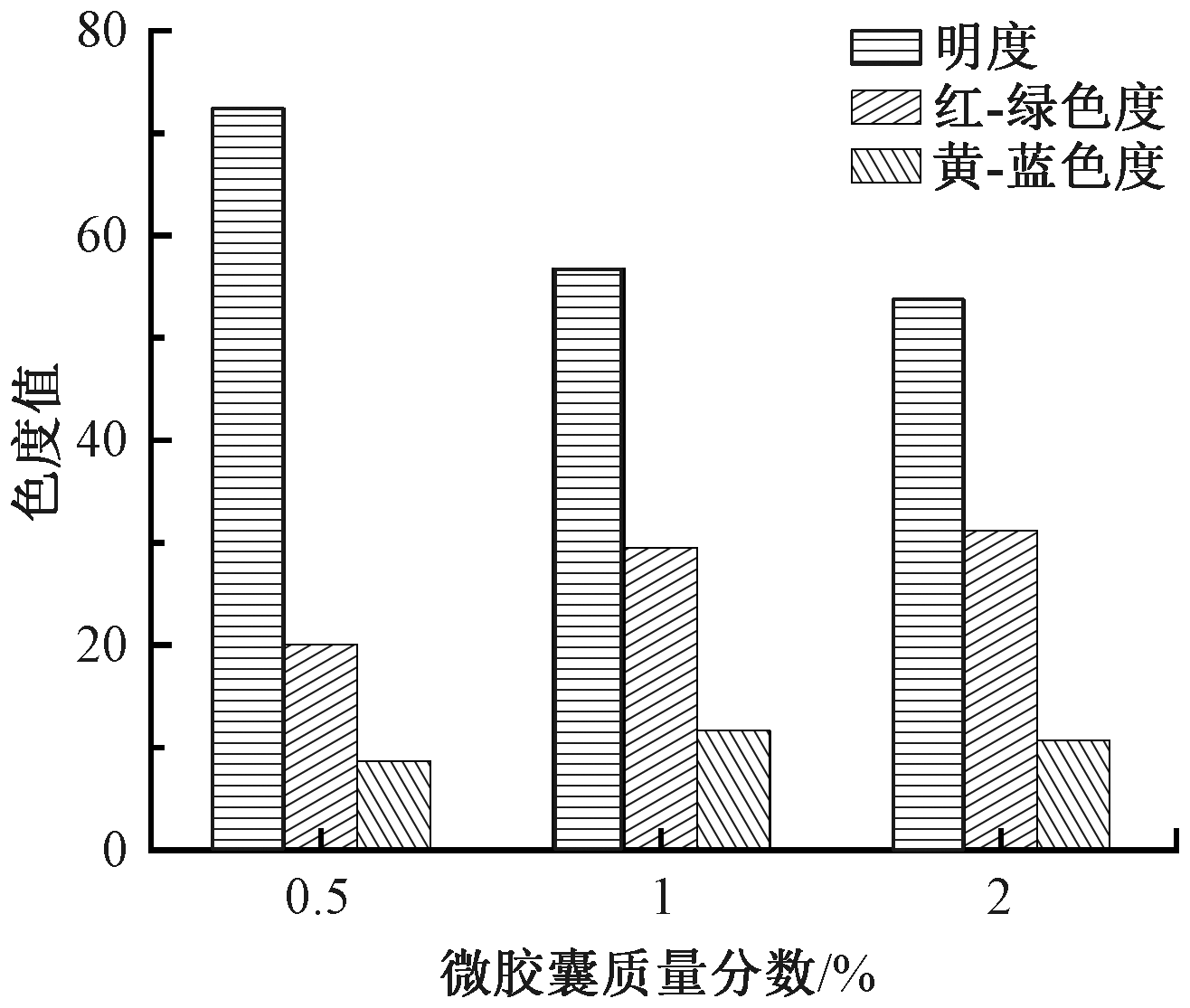
为解决当前光致变色纺织品存在的环保和高耗能的问题,并提高光致变色纺织品功能化,在开发兼顾环保、低能耗与光致变色功能的纺织品基材,以适配军民两用场景需求的条件下,合成了具有不同变色效应的光致变色微胶囊(PCMs),利用具有生态环保性的聚羟基脂肪酸酯(PHA)和聚乳酸(PLA)材料作为纺丝基材,将微胶囊加入到PHA/PLA纺丝液中物理共混,通过微流控湿法纺丝技术制备了功能化光致变色纤维。结果表明:通过优化纺丝参数,PHA和PLA质量分数分别为2%和14%时,制备得到的PHA/PLA纤维断裂强度可达50.68 MPa,断裂伸长率为97.42%;添加微胶囊后纤维的力学性能会受到一定程度的影响,但是仅需添加1%的微胶囊,纤维即可表现出明显光致变色性能。通过环保基材与低能耗纺丝技术的结合,成功制备出兼具优异力学性能与光致变色功能的纤维,既满足了军民两用领域对纺织品颜色调节的需求,又响应了环保与低能耗的行业发展要求,为光致变色纺织品的产业化应用提供了可行路径。
中图分类号:
| [1] | 邓晓珍. 光致变色纺织品设计及其在服饰产品中的应用[J]. 设计艺术研究, 2024, 14(1): 114-118. |
| DENG Xiaozhen. On the design and application of photochromic textile in clothing[J]. Design Research, 2024, 14(1): 114-118. | |
| [2] | 戴淑娇. 光致变色纺织品的制备及其发展趋势[J]. 轻纺工业与技术, 2014, 43(5): 24-26. |
| DAI Shujiao. Preparation and development trend of photochromic textiles[J]. Light and Textile Industry and Technology, 2014, 43(5): 24-26. | |
| [3] | 蔡弘华, 罗仲宽. 光致变色材料的发展现状及其在建筑上的应用前景[J]. 广东建材, 2007, 23(7): 22-23. |
| CAI Honghua, LUO Zhongkuan. The development status of photochromic materials and their application prospects in architecture[J]. Guangdong Building Materials, 2007, 23(7): 22-23. | |
| [4] | 刘小红, 陈海宏. 光致变色功能织物的制备及应用[J]. 现代纺织技术, 2012, 20(6): 58-60. |
| LIU Xiaohong, CHEN Haihong. The preparation and application of photochromic functional fabrics[J]. Advanced Textile Technology, 2012, 20(6): 58-60. | |
| [5] | 程沛闻, 刘茜, 孙晗晗. 光致变色纺织品制备技术的研究进展[J]. 东华大学学报(自然科学版), 2024, 50(4): 183-190. |
| CHENG Peiwen, LIU Qian, SUN Hanhan. Research progress in preparation technology of photochromic textiles[J]. Journal of Donghua University (Natural Science), 2024, 50(4): 183-190. | |
| [6] |
ASIF M, MUNEER T. Energy supply, its demand and security issues for developed and emerging econo-mies[J]. Renewable and Sustainable Energy Reviews, 2007, 11(7): 1388-1413.
doi: 10.1016/j.rser.2005.12.004 |
| [7] | 肖垚. 微流控湿法纺丝制备高强高韧再生丝素蛋白纤维及其应用研究[D]. 杭州: 浙江大学, 2024:10-20. |
| XIAO Yao. Preparation of high strength and high toughness by microfluidic and wet spinning[D]. Hangzhou: Zhejiang University, 2024:10-20. | |
| [8] | 陈国强. 微生物聚羟基脂肪酸酯的应用新进展[J]. 中国材料进展, 2012, 31(2): 7-15. |
| CHEN Guoqiang. Recent progress in application of microbial polyhydroxyalkanoates[J]. Materials China, 2012, 31(2): 7-15. | |
| [9] | 王增喜, 司徒卫, 陈亚精. PHA性能及其纤维制备工艺概述[J]. 化纤与纺织技术, 2019, 48(3): 18-22. |
| WANG Zengxi, SITU Wei, CHEN Yajing. Overview of pha performance and fiber preparation process[J]. Chemical Fiber & Textile Technology, 2019, 48(3): 18-22. | |
| [10] |
VANHEUSDEN C, VANMINSEL J, REDDY N, et al. Fabrication of poly(3-hydroxybutyrate-co-3-hydroxyhexanoate) fibers using centrifugal fiber spinning: structure, properties and application poten-tial[J]. Polymers, 2023, 15(5): 1181.
doi: 10.3390/polym15051181 |
| [11] | 冯雪为. PHA/PLA复合型生物质合成纤维在蚕丝面料中的应用研究[D]. 苏州: 苏州大学, 2017:6-12. |
| FENG Xuewei. Study on the application of PHA/PLA composite biomass synthetic fiber in silk fabrics[D]. Suzhou: Soochow University, 2017:6-12. | |
| [12] | 孙芳华, 朱树琦, 陈彦模, 等. 聚羟基丁酸-羟基戊酸共混干纺初生纤维的研究[J]. 合成纤维, 2010, 39(7): 18-23. |
| SUN Fanghua, ZHU Shuqi, CHEN Yanmo, et al. Morphology and mechanical properties of as-spun fiber prepared by dry spinning blended poly(hydroxybutyrate-co-hydroxyvalerate) with different hydroxyvalerate contents[J]. Synthetic Fiber in China, 2010, 39(7): 18-23. | |
| [13] | 傅晓童. 基于微流控纺丝技术的纤维结构及性能研究[D]. 无锡: 江南大学, 2024:25-30. |
| FU Xiaotong. Study on fiber structure and properties based on microfluidic spinning technology[D]. Wuxi: Jiangnan University, 2024:25-30. | |
| [14] | 冯长根, 王建营. 螺噁嗪光致变色反应机理研究进展[J]. 有机化学, 2006, 26(7): 1012-1023. |
| FENG Changgen, WANG Jianying. Progress in the photochromic mechanism of spirooxazine[J]. Chinese Journal of Organic Chemistry, 2006, 26(7): 1012-1023. | |
| [15] |
SOHAL M K, MAHAJAN A, GASSO S, et al. Rare earth-tuned oxygen vacancies in gadolinium-doped tin oxide for selective detection of volatile organic compounds[J]. Journal of Materials Science: Materials in Electronics, 2020, 31(11): 8446-8455.
doi: 10.1007/s10854-020-03379-7 |
| [16] |
WANG W S, YE M M, HE L, et al. Nanocrystalline TiO2-catalyzed photoreversible color switching[J]. Nano Letters, 2014, 14(3): 1681-1686.
doi: 10.1021/nl500378k |
| [17] | 郭洁芬, 赵喜玲, 曹喜云, 等. 光致变色材料的制备、性能及变色机理[J]. 化学工程师, 2021, 35(9): 57-60. |
| GUO Jiefen, ZHAO Xiling, CAO Xiyun, et al. Preparation, properties and photochromic mechanism of photochromic materials[J]. Chemical Engineer, 2021, 35(9): 57-60. | |
| [18] |
ISLAMOVA N I, CHEN X, FAN C J, et al. Photochromic copolymers containing 3-indolylfulgides/indolylfulgimides: synthesis and photochemical properties in toluene and as films[J]. Polymer Degradation and Stability, 2013, 98(9): 1662-1670.
pmid: 23935228 |
| [19] | 黄广诚. 含双活性官能团有机光致变色化合物螺噁嗪的合成及反应机理研究[D]. 长春: 长春工业大学, 2012:3-8. |
| HUANG Guangcheng. Synthesis and study on the reaction mechanism of organic spirooxa-zines photochromic compounds that contain double active function group[D]. Changchun: Changchun University of Technology, 2012:3-8. | |
| [20] |
RELINQUE J J, DE LEÓN A S, HERNÁNDEZ-SAZ J, et al. Development of surface-coated polylactic acid/polyhydroxyalkanoate (PLA/PHA) nanocomposites[J]. Polymers, 2019, 11(3): 400.
doi: 10.3390/polym11030400 |
| [21] |
王曙东. 三维多孔生物可降解聚合物人工食管支架的结构与力学性能[J]. 纺织学报, 2022, 43(12): 16-21.
doi: 10.13475/j.fzxb.20211106106 |
|
WANG Shudong. Structure and mechanical properties of three-dimensional porous biodegradable polymer artificial esophageal scaffold[J]. Journal of Textile Research, 2022, 43(12): 16-21.
doi: 10.13475/j.fzxb.20211106106 |
| [1] | 董振峰, 张安莹, 魏建斐, 朱志国, 王锐. 阻燃左旋聚乳酸/季戊四醇磷酸酯纤维及织物的制备与性能[J]. 纺织学报, 2026, 47(01): 63-71. |
| [2] | 孙玉发, 孙刚. 生物基与生物可降解口罩过滤材料的研究进展[J]. 纺织学报, 2025, 46(12): 29-38. |
| [3] | 刘琳, 夏菲菲, 徐晓禹, 赵柳涛, 叶翔宇, 俞森龙, 邵钰, 吴跃, 张兴宏, 朱斐超. 生物降解聚合物非织造材料的降解性能及标准体系研究进展[J]. 纺织学报, 2025, 46(10): 237-246. |
| [4] | 赵捷清, 王瑧, 秦孝天, 王成成, 张丽平. 模拟绿叶颜色变化的温致变色织物制备及其性能[J]. 纺织学报, 2025, 46(09): 19-26. |
| [5] | 侯颖慧, 刘肖燕, 柳东辰, 郝矿荣, 邹婷. 基于体外降解的输尿管支架管的多目标优化[J]. 纺织学报, 2025, 46(09): 154-162. |
| [6] | 张新宇, 金小培, 朱金唐, 崔华帅, 吴鹏飞, 崔宁, 史贤宁. 聚乳酸熔喷非织造布热尺寸稳定性提升方法[J]. 纺织学报, 2025, 46(08): 127-135. |
| [7] | 陈展毓, 俞森龙, 周家良, 朱丽萍, 周哲, 相恒学, 朱美芳. 有机膦酸改性聚乳酸织物的制备及其性能[J]. 纺织学报, 2025, 46(08): 154-163. |
| [8] | 林思伶, 刘赋瑶, 张成, 侯琳, 徐炎炎, 付冉迁, 樊威. 双向调温阻燃防静电纺织品的制备及其性能[J]. 纺织学报, 2025, 46(06): 38-44. |
| [9] | 谭文萍, 张硕, 张倩, 张寅, 刘润政, 黄晓卫, 明津法. 聚乳酸纤维气凝胶制备及其辐射制冷性能[J]. 纺织学报, 2025, 46(06): 63-72. |
| [10] | 时晓聪, 陈莉, 杜迅. 茜素-聚乳酸/胶原蛋白纳米纤维膜的制备及其氨气检测性能[J]. 纺织学报, 2025, 46(05): 143-150. |
| [11] | 张惠琴, 吴改红, 刘霞, 刘淑强, 赵恒, 刘涛. 生物可降解聚乳酸防护口罩的开发及性能评估[J]. 纺织学报, 2025, 46(03): 116-122. |
| [12] | 毛丽芬, 肖红, 毛庆辉, 麻伍军, 梁志结, 李敏. 双稳态温致变色印花织物的制备及其光谱兼容性能[J]. 纺织学报, 2025, 46(03): 141-150. |
| [13] | 乔思杰, 邢桐贺, 童爱心, 史芷丞, 潘恒, 刘可帅, 余豪, 陈凤翔. 不同聚乳酸材料的性能对比[J]. 纺织学报, 2025, 46(03): 27-33. |
| [14] | 赵珂, 张恒, 程文胜, 甄琪, 步青云, 崔景强. 类蒲叶结构聚乳酸熔喷非织造材料的制备及其性能[J]. 纺织学报, 2025, 46(02): 51-60. |
| [15] | 鲁辉, 蔡钦泽, 张国庆, 周岚, 刘国金, 邵敏. 多元色素光敏变色微胶囊的制备及其在织物中的变色性能[J]. 纺织学报, 2025, 46(01): 111-118. |
|
||
 京公网安备11010502044800号