纺织学报 ›› 2025, Vol. 46 ›› Issue (08): 127-135.doi: 10.13475/j.fzxb.20240805901
张新宇1,2, 金小培2, 朱金唐2, 崔华帅2, 吴鹏飞2, 崔宁2, 史贤宁2( )
)
ZHANG Xinyu1,2, JIN Xiaopei2, ZHU Jintang2, CUI Huashuai2, WU Pengfei2, CUI Ning2, SHI Xianning2()
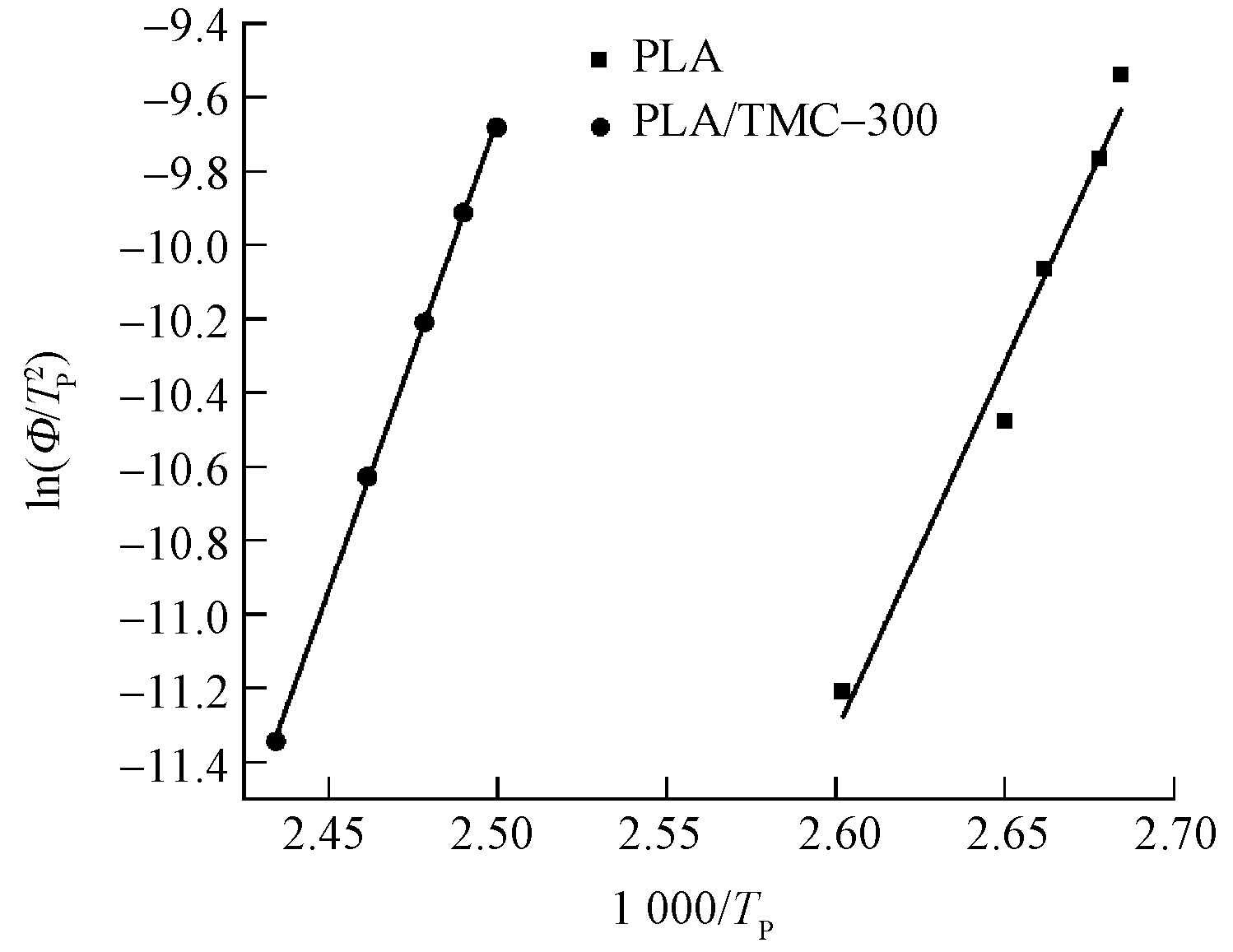
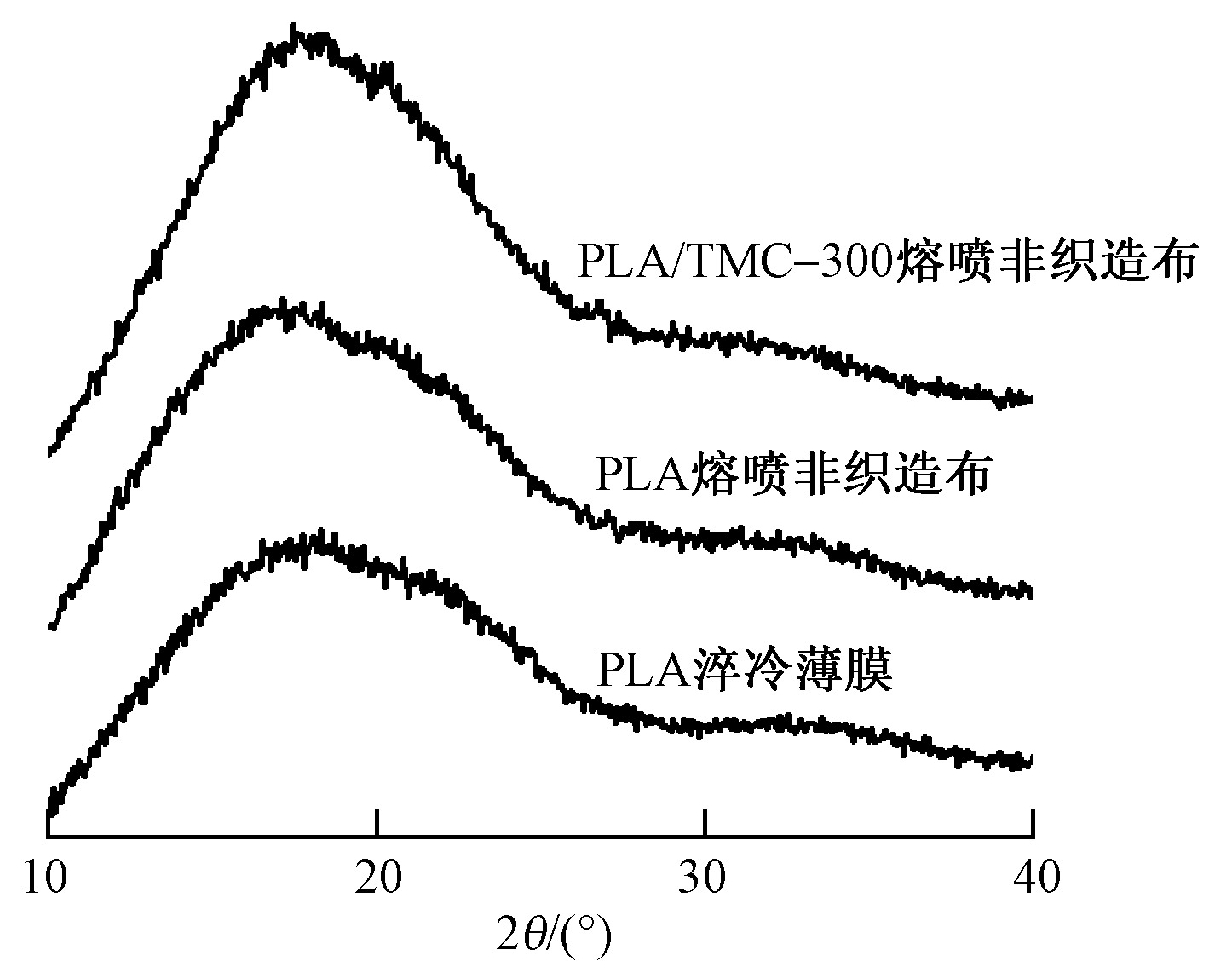
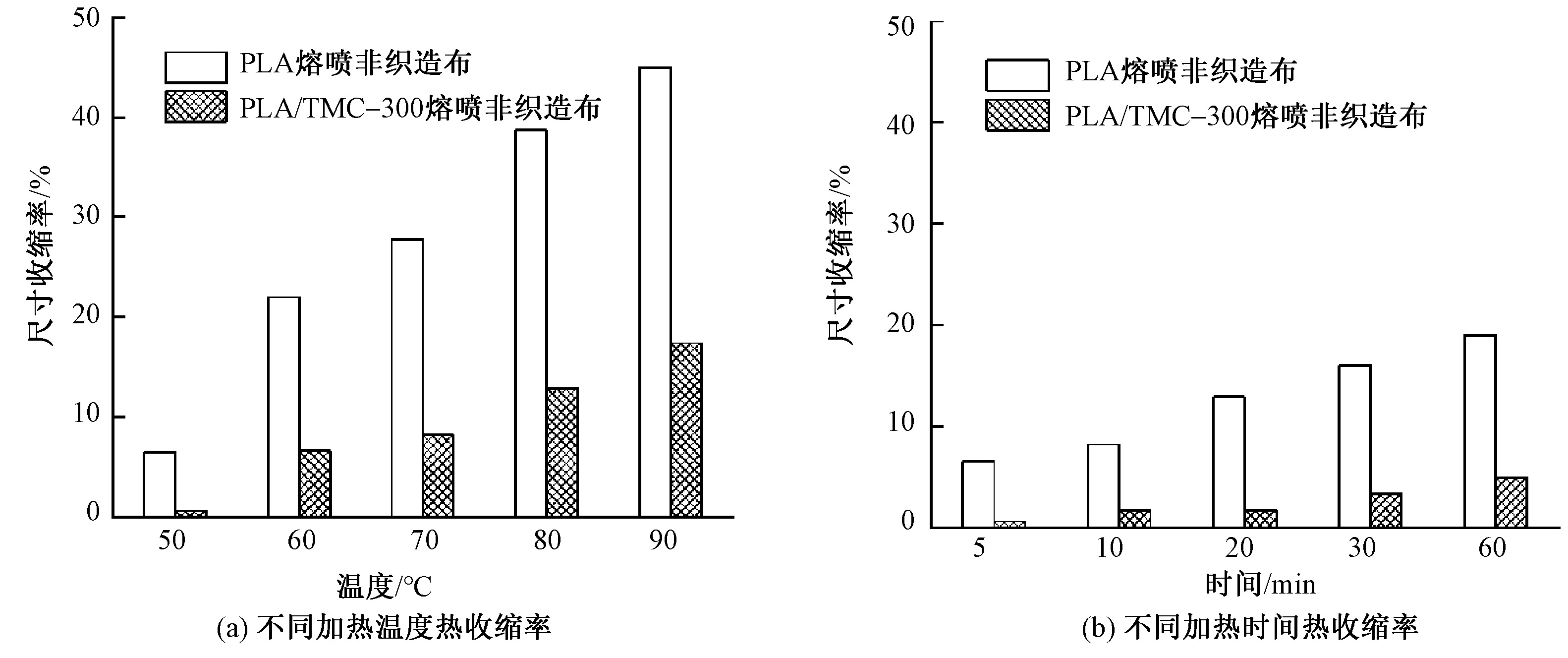
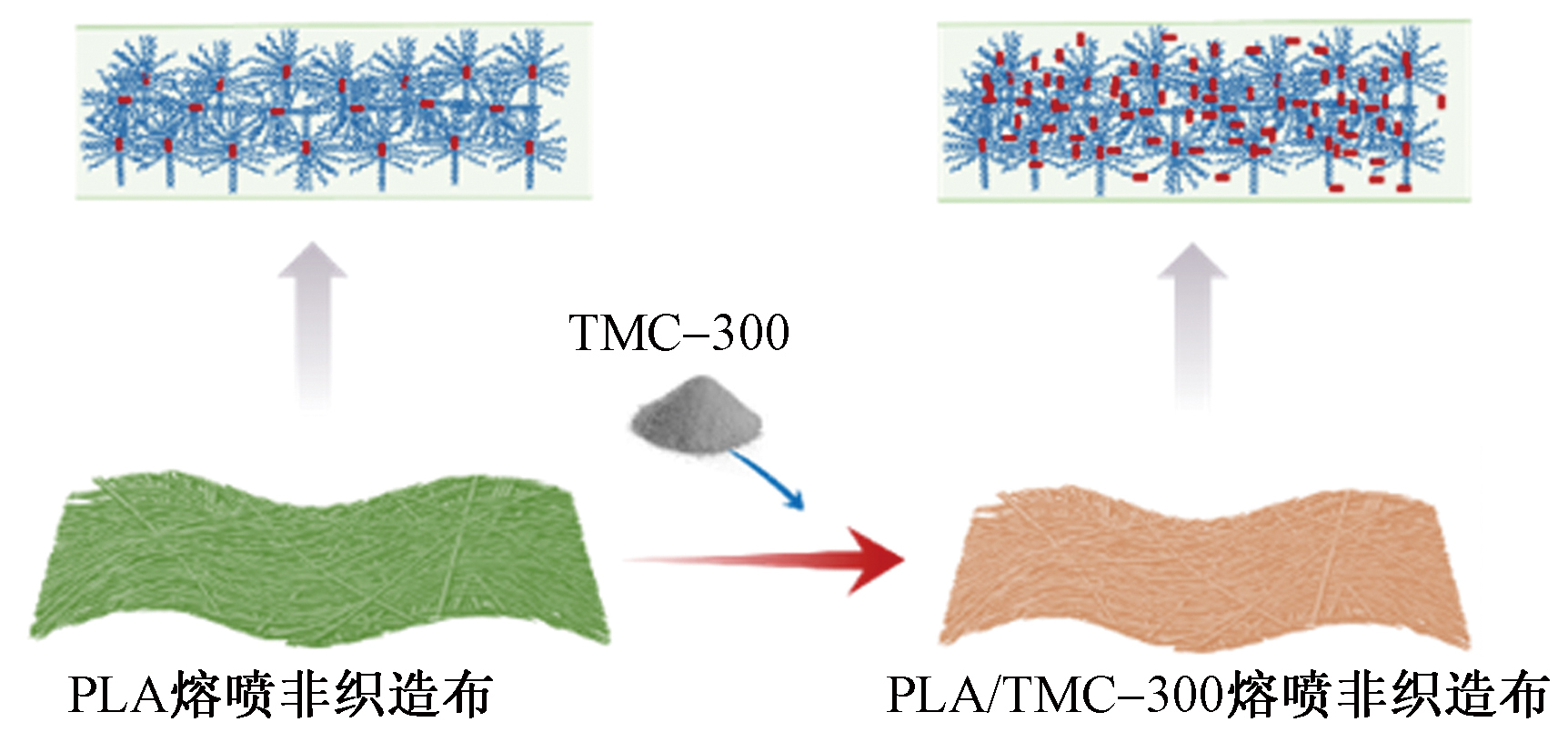
摘要: 口罩生产过程包含高温消毒工序,为解决聚乳酸(PLA)熔喷非织造布耐热性差、热收缩率大的问题,使用熔喷技术制备了PLA和PLA/癸二酸二苯甲酰肼(TMC-300)熔喷非织造布,分析了PLA熔喷非织造布热收缩后的结构变化和收缩原因,利用非等温结晶动力学研究了成核剂TMC-300对PLA结晶性能的影响,以及温度和时间对热收缩率的影响规律。结果表明:TMC-300可提高PLA结晶度和结晶速度,增加晶粒数量,从而增加物理交联点,限制高分子弛豫,无论是延长热处理时间还是提高热处理温度,TMC-300都能很好地提高PLA熔喷非织造布的尺寸稳定性;50 ℃环境下热处理1 h,PLA/TMC-300熔喷非织造布的面积收缩率为4.9%,长度收缩率仅为0.98%,完全可满足口罩的生产要求。
中图分类号:
| [1] | XU J, XIAO X, ZHANG W, et al. Air-filtering masks for respiratory protection from PM2.5 and pandemic pathogens[J]. One Earth, 2020, 3(5): 574-589. |
| [2] | ZHANG H, LIU J, ZHANG X, et al. Design of electret polypropylene melt blown air filtration material containing nucleating agent for effective PM2.5 cap-ture[J]. Royal Society of Chemistry, 2018, 8(15): 7932-7941. |
| [3] | CORREA H L, CORREA D G. Polymer applications for medical care in the COVID-19 pandemic crisis: will we still speak ill of these materials?[J]. Frontiers in Materials, 2020, 7: 283-284. |
| [4] | 魏聪, 周静, 魏鹏举, 等. 几种常见消毒方式对一次性使用医用口罩细菌过滤效率的影响及消毒效果的验证[J]. 医疗装备, 2020, 33(11): 13-15. |
| WEI Cong, ZHOU Jing, WEI Pengju, et al. Effects of several common disinfection methods on the bacterial filtration efficiency and disinfection effectiveness of disposable medical masks[J]. Medical Equipment, 2020, 33 (11): 13-15. | |
| [5] | ZHAO X, YU J, LIANG X, et al. Crystallization behaviors regulations and mechanical performances enhancement approaches of polylactic acid (PLA) biodegradable materials modified by organic nucleating agents[J]. International Journal of Biological Macromolecules, 2023. DOI: 10.1016/j.ijbiomac.2023.123581. |
| [6] | LUNT J. Large-scale production, properties and commercial applications of polylactic acid polymers[J]. Polymer Degradation and Stability, 1998, 59(1-3): 145-152. |
| [7] | 李昊晨, 张祥, 龙云瑞, 等. 聚乳酸耐热改性的研究进展[J]. 高分子通报, 2024, 37(4): 430-441. |
| LI Haochen, ZHANG Xiang, LONG Yunrui, et al. Research progress on heat-resistant modification of polylactic acid[J] Polymer Bulletin, 2024, 37 (4): 430-441. | |
| [8] | KAWAMOTO N, SAKAI A, HORIKOSHI T, et al. Nucleating agent for poly(L-lactic acid): An optimization of chemical structure of hydrazide compound for advanced nucleation ability[J]. Journal of Applied Polymer Science, 2007, 103(1): 198-203. |
| [9] | FENG Y, MA P, XU P, et al. The crystallization behavior of poly (lactic acid) with different types of nucleating agents[J]. International journal of biological macromolecules, 2018, 106: 955-962. |
| [10] | 薛白, 郭丹, 包建军. 成核剂TMC-300对聚乳酸耐热性能的影响[J]. 高分子材料科学与工程, 2014, 30(3): 59-63. |
| XUE Bai, GUO Dan, BAO Jianjun. Effect of nucleating agent TMC-300 on the heat resistance of polylactic acid[J]. Polymer Materials Science and Engi-neering, 2014, 30 (3): 59-63. | |
| [11] | HU W B. Polymer features in crystallization[J]. Chinese Journal of Polymer Science, 2022, 40(6): 545-555. |
| [12] | ZHANG X, ZHAO S, MOHAMED M G, et al. Crystallization behaviors of poly (ethylene terephthalate)(PET) with monosilane isobutyl-polyhedral oligomeric silsesquioxanes (POSS)[J]. Journal of Materials Science, 2020, 55: 14642-14655. |
| [13] | CHEN L, DOU Q. Influence of the combination of nucleating agent and plasticizer on the non-isothermal crystallization kinetics and activation energies of poly (lactic acid)[J]. Journal of Thermal Analysis and Calorimetry, 2020, 139: 1069-1090. |
| [14] | 储永竞, 邱志成, 李鑫, 等. 连续原位聚合黑色PET的结晶行为研究[J]. 合成纤维工业, 2022, 45(5):1-10. |
| CHU Yongjing, QIU Zhicheng, LI Xin, et al. Study on the crystallization behavior of continuous in situ polymerization of black PET[J]. Synthetic Fiber Industry, 2022, 45 (5): 1-10. | |
| [15] |
NAMPOOTHIRI K M, NAIR N R, JOHN R P. An overview of the recent developments in polylactide (PLA) research[J]. Bioresource Technology, 2010, 101(22): 8493-8501.
doi: 10.1016/j.biortech.2010.05.092 pmid: 20630747 |
| [16] | 李向阳, 郑文强, 毛晨曦, 等. 成核剂TMC-300对聚乳酸非等温结晶动力学的影响[J]. 塑料科技, 2013, 41 (10): 102-106. |
| LI Xiangyang, ZHENG Wenqiang, MAO Chenxi, et al. Effect of nucleating agent TMC-300 on the non isothermal crystallization kinetics of polylactic acid[J]. Plastics Technology, 2013, 41 (10): 102-106. | |
| [17] |
AURAS R, HARTE B, SELKE S. An overview of polylactides as packaging materials[J]. Macromolecular Bioscience, 2004, 4(9): 835-864.
pmid: 15468294 |
| [18] | 吕超, 罗书品, 郭文静. 基于力学性能和结晶行为探究不同成核剂对聚乳酸性能影响[J]. 复合材料学报, 2024, 41(6):3168-3181. |
| LÜ Chao, LUO Shupin, GUO Wenjing. Investigating the influence of different nucleating agents on the properties of polylactic acid based on mechanical properties and crystallization behavior[J]. Journal of Composite Materials, 2024, 41(6):3168-3181. | |
| [19] | DE SANTIS P, KOVACS A J. Molecular conformation of poly (S‐lactic acid)[J]. Biopolymers: Original Research on Biomolecules, 1968, 6(3): 299-306. |
| [20] | LIU Y, JIANG S, YAN W, et al. Crystallization 0morphology regulation on enhancing heat resistance of polylactic acid[J]. Polymers, 2020. DOI: 10.3390/polym12071563. |
| [21] | 张剑锋. 熔喷聚乳酸空气净化材料的微观结构与驻极体性能和过滤性能相关性研究[D]. 杭州: 杭州电子科技大学, 2020: 20-21. |
| ZHANG Jianfeng. Study on the correlation between microstructure, polarizability, and filtration performance of melt blown polylactic acid air purification mate-rials[D]. Hangzhou: Hangzhou University of Electronic Science and Technology, 2020: 20-21. |
| [1] | 张惠琴, 吴改红, 刘霞, 刘淑强, 赵恒, 刘涛. 生物可降解聚乳酸防护口罩的开发及性能评估[J]. 纺织学报, 2025, 46(03): 116-122. |
| [2] | 张晋, 张林军, 解云川, 王健, 贾寅峰, 路涛, 张志成. 防护口罩用改性长效聚(偏氟乙烯-三氟乙烯)压电纤维膜的制备及其性能[J]. 纺织学报, 2023, 44(07): 26-32. |
| [3] | 王洪杰, 姚岚, 王赫, 张仲. 医用口罩熔喷非织造布电极的制备及其电化学性能[J]. 纺织学报, 2022, 43(12): 22-28. |
| [4] | 张雅宁, 张辉, 宋悦悦, 李文明, 李雯君, 姚佳乐. 废弃口罩基ZIF-8/Ag/TiO2复合材料的制备及其光催化降解染料性能[J]. 纺织学报, 2022, 43(07): 111-120. |
| [5] | 徐晓彤, 江振林, 郑钦超, 朱科宇, 王朝生, 柯福佑. 导热结构对聚对苯二甲酸乙二醇酯非等温结晶行为的影响[J]. 纺织学报, 2022, 43(03): 44-49. |
| [6] | 潘宏杰, 杨小兵, 周川, 张守鑫, 常素芹, 罗宏森. 新型冠状病毒防护口罩过滤效率测试标准比对[J]. 纺织学报, 2021, 42(06): 97-105. |
| [7] | 赵博宇, 梁鑫花, 丛洪莲. 电脑横机编织三维全成形口罩结构建模与工艺实践[J]. 纺织学报, 2020, 41(12): 59-65. |
| [8] | 周惠林, 杨卫民, 李好义. 医用口罩过滤材料的研究进展[J]. 纺织学报, 2020, 41(08): 158-165. |
| [9] | 杨小兵, 程钧, 张守鑫, 姚红, 陆林, 丁松涛. 口罩过滤效率检测用颗粒物粒径的换算和标准比对[J]. 纺织学报, 2020, 41(08): 152-157. |
| [10] | 张星, 刘金鑫, 张海峰, 王玉晓, 靳向煜. 防护口罩用非织造滤料的制备技术与研究现状[J]. 纺织学报, 2020, 41(03): 168-174. |
| [11] | 陈广建 唐开亮 马士洲 张丽丽 冯新星. 新型长碳链聚酰胺1211的非等温结晶动力学[J]. 纺织学报, 2018, 39(12): 1-6. |
| [12] | 陈海珍. 纳米二氧化钛对聚酯纤维结晶性能的影响[J]. 纺织学报, 2010, 31(4): 25-29. |
| [13] | 廖谦;王依民;施胜华;朱卫彪. TLCP/PPS 原位成纤共混纤维的非等温结晶动力学[J]. 纺织学报, 2010, 31(3): 7-10. |
|
||
 京公网安备11010502044800号