Journal of Textile Research ›› 2025, Vol. 46 ›› Issue (10): 69-78.doi: 10.13475/j.fzxb.20250105101

• Textile Engineering • Previous Articles     Next Articles

Influence of colored-weft proportion on juxtaposed color mixing in triple-weft full-display compound weaves

XU Qing, HU Yili, YANG Zhuo, ZHOU Jiu()   

  1. Silk and Fashion Culture Research Center of Zhejiang Province, Zhejiang Sci-Tech University, Hangzhou, Zhejiang 310018, China
  • Received:2025-01-20 Revised:2025-04-15 Online:2025-10-15 Published:2025-10-15
  • Contact: ZHOU Jiu E-mail:zhoujiu34@126.com

Abstract:

Objective In order to reveal the characteristics of color mixing and the relationship between the structure and the juxtaposed color characteristics of compound full-color structure with triple-weft, a color card was constructed and woven to systematically compare and analyze the fabric effects of different color ratio combinations. The relationship between color characteristics of the triple-weft juxtaposed color mixing and ratio of chromatic weft was clarified, and a predictive method model was provided, as an effort to provide a theoretical basis for the structural design and accurate color rendering of compound full-color structure with triple-weft.

Method In this research, 16-end 3-step number sateen weave with the starting point of 1/8/14 were used as the basic organization to construct combination of three basic weaves with full-color weaves. The proportion of three groups of color developing weftwas controlled, reasonably design and weave the experimental weaving color card of red, yellow and blue color developing weft proportion combination, and explore the internal relationship between color developing weft proportion and color mixing characteristics. In addition, a fabric color mixing model was formed based on the rules, and the prediction method of fabric color mixing of compound full-color structure with triple-weft was defined, which was further verified by simulation.

Results According to the scanning diagram of the gradient color card and the color phase ring, it was clear that seven main colors in the color gamut of three weft juxtaposed mixed colors, which were the three groups of weft primary colors, intermediate colors mixed with primary colors in pairs, and compound colors mixed with three groups of weft, formed a color phase closed loop. When there was a large difference in the weft float length of the three weft colors the main color was determined by the longest weft float length; whereas when the weft float lengths of three weft colors were similar, three-weft mixed color was not black in theory, but a brown. Through simulation and prediction, it was verified that in compound full-color structure with triple-weft, the complex color of warp and three-color weft was not able to display saturated black and white at the same time, in which case a group of black(white) warp or weft had to be added. With help of simulation, the hue ring model was constructed by using color gamut and color development theory of the color mixing characteristics of three latitude parallel display structure under compound full-color structure with triple-weft, providing the color configuration basis for pattern design of compound full-color structure with triple-weft fabric.

Conclusion The results reveal that change of ratio of chromatic weft in any of the three groups of color developing weft will affect the color expression of juxtaposed color blending in compound full-color structure with triple-weft space and has the unique regularity of color blending in warp and weft interweaving structure. The results of this study provide further understanding of the color mixing model of compound full-color structure with triple-weft jacquard fabrics.

Key words: jacquard fabric, compound structure with triple-weft, all coloring effect, color mixing of space juxtaposition, colored-weft proportion

CLC Number: 

  • TS941.26

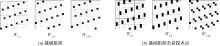
Fig.1

Basic weave (a) and full-color weave points (b)"

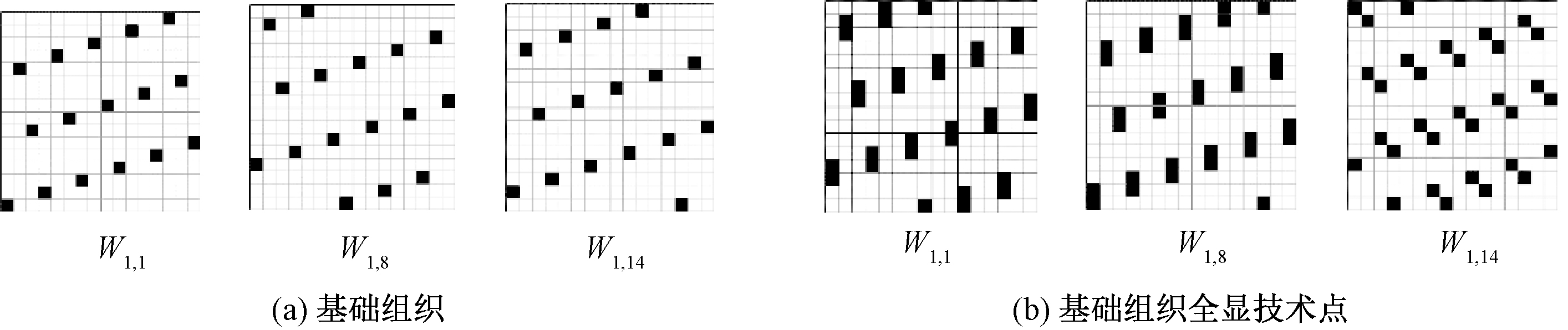
Fig.2

Combination of three basic weaves with full-color weaves. (a)Red (starting point W1,1); (b) Yellow (starting point is W1,8); (c) Blue (starting point is W1,14)"

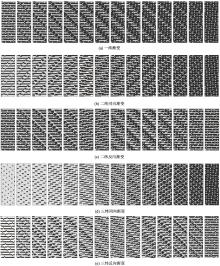
Fig.3

Diagram of structural changes. (a) One gradual change; (b) Two gradual changes in same direction; (c) Two gradual changes in opposite direction; (d) Three gradual changes in same direction; (e) Three gradual changes in opposite direction"

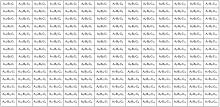
Tab.1

Organizational arrangement of one weft gradual change"

类别 A变,B、C不变 B变,A、C不变 C变,A、B不变
组织 A纬:A14-A1;B纬:B14;C纬:C14 A纬:A14;B纬:B14-B1;C纬:C14 A纬:A14;B纬:B14;C纬:C14-C1
显色 红显色 黄显色 蓝显色

Tab.2

Organizational arrangement of two weft gradual change"

类别 A不变
B、C反向变
B不变
A、C反向变
C不变
A、B反向变
A不变
B、C同向变
B不变
A、C同向变
C不变
A、B同向变
组织 A纬:A14
B纬:B1-B14
C纬:C14-C1
A纬:A14-A1
B纬:B14
C纬:C1-C14
A纬:A1-A14
B纬:B14-B1
C纬:C14
A纬:A14
B纬:B1-B14
C纬:C1-C14
A纬:A1-A14
B纬:B14
C纬:C1-C14
A纬:A1-A14
B纬:B1-B14
C纬:C14
显色 黄蓝显色 红蓝显色 红黄显色 黄蓝显色 红蓝显色 红黄显色

Tab.3

Organizational arrangement of three weft gradual change"

类别 A、B、C同向变 A反向变
B、C同向变
B反向变
A、C同向变
C反向变
A、B反向变
A、B同向变
C反向变
A、C同向变
B反向变
B、C同向变
A反向变
组织 A纬:A14-A1
B纬:B14-B1
C纬:C14-C1
A纬:A14-A1
B纬:B1-B14
C纬:C1-C14
A纬:A1-A14
B纬:B14-B1
C纬:C1-C14
A纬:A1-A14
B纬:B1-B14
C纬:C14-C1
A纬:A14-A1
B纬:B14-B1
C纬:C1-C14
A纬:A14-A1
B纬:B1-B14
C纬:C14-C1
A纬:A1-A14
B纬:B14-B1
C纬:C14-C1
显色 红黄蓝显色 红黄蓝显色 红黄蓝显色 红黄蓝显色 红黄蓝显色 红黄蓝显色 红黄蓝显色

Fig.4

Relationship diagram of organizational structure changes"

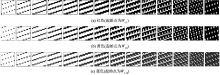
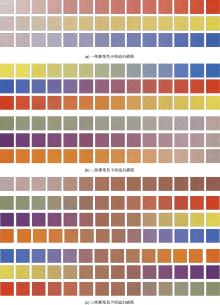
Fig.5

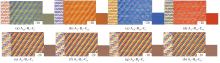
Scanned images of one weft gradual change (a), two weft gradual change (b) and three weft gradual change (c)"

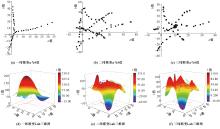
Fig.6

Lab value distribution plots of three foundational color card sets. (a) a/b values of one weft gradual change; (b) a/b values of two weft gradual change; (c) a/b values of three weft gradual change;(d) 3-D Lab plots of one weft gradual change;(e) 3-D Lab plots of two weft gradual change;(f) 3-D Lab plots of three weft gradual change"

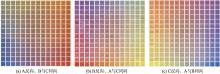
Fig.7

Scanned images of three gradient-blended woven color card sets. (a) A in same direction and BC in opposite direction; (b) B in same direction and AC in opposite direction; (c) C in same direction and AB in opposite direction"

Fig.8

Fabric color mixing model. (a) Hue ring ;(b) Gradual transition from primary color and intermediate color to deepest complex color; (c) Gradual transition from primary color and intermediate color to lightest complex color"

Fig.9

Diagram of organizational structure changes-fabric magnified scan image-fabric scan thumbnail"

Fig.10

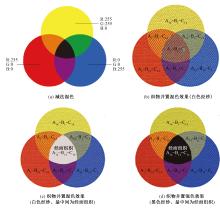
Effect diagram of fabric parallel juxtaposition color mixing. (a) Subtractive color mixing;(b) Fabric juxtaposition color mixing effect (white meridian);(c) Fabric juxtaposition color mixing effect (white meridian, with middle being meridian tissue); (d) Fabric juxtaposition color mixing effect (black meridian, with middle being meridian tissue)"

[1] 胡伊丽, 周赳. 三纬组合全显结构起始点位置设置对织物显色的影响[J]. 纺织学报, 2023, 44(4): 78-85.
HU Yili, ZHOU Jiu. Influence of starting point setting of triple-weft compound structure on woven fabric color display[J]. Journal of Textile Research, 2023, 44(4): 78-85.
[2] 周赳, 吴文正. 数码提花织物的组合全显色结构设计[J]. 纺织学报, 2007(6): 59-62,69.
ZHOU Jiu, NG Frankie. All-coloring compound construction of digital jacquard fabric[J]. Journal of Textile Research, 2007(6): 59-62,69.
[3] 章斐燕, 金亦佳, 李启正, 等. 空间并置混色色织物颜色预测方法的比较[J]. 丝绸, 2014, 51(10): 22-27.
ZHANG Feiyan, JIN Yijia, LI Qizheng, et al. Comparison of color prediction methods for spatially placed mixed color fabrics[J]. Journal of Silk, 2014, 51(10): 22-27.
[4] 温小丽. 异色经纬交织织物的混色效应研究[D]. 苏州: 苏州大学, 2010: 58-59.
WEN Xiaoli. Research on the color mixing effect of cross colored warp and weft interwoven fabrics[D]. Suzhou: Soochow University, 2010: 58-59.
[5] 陈子晗. 织物结构设计与织物色彩关系的研究与应用[D]. 上海: 东华大学, 2015: 23-24.
CHEN Zihan. Research and application of the relationship between fabric structure design and fabric color[D]. Shanghai: Donghua University, 2015: 23-24.
[6] 刘华. 色织物的色彩空间混合效应设计思考[J]. 江苏纺织, 2004(11): 49-50.
LIU Hua. Design thinking on color space mixing effect of colored fabrics[J]. Jiangsu Textile, 2004 (11): 49-50.
[7] 张爱丹, 周赳. 全显技术组织对三纬组合织物结构混色规律的影响[J]. 纺织学报, 2018, 39(10): 44-49.
doi: 10.13475/j.fzxb.20171010706
ZHANG Aidan, ZHOU Jiu. Influence of full-color weave on color mixing law of compound fabric structure with triple-weft[J]. Journal of Textile Research, 2018, 39 (10): 44-49.
doi: 10.13475/j.fzxb.20171010706
[8] KIM Ken RI, XIN John H, ZENG Lei. CMYK channel modification to optimize optical yarn color mixing effects for multicolored Jacquard artwork reproduction[J]. Textile Research Journal, 2022, 92(13/14): 2357-2367.
doi: 10.1177/00405175221079655
[9] ZHU Weijing, LI Qizheng, ZHANG Feiyan, et al. New color mixing model to predict mixed color values of yarn-dyed fabrics[J]. Journal of Fiber Science and Technology, 2020, 76(10): 335-342.
doi: 10.2115/fiberst.2020-0036
[10] 张爱丹. 奇数层组合全显织物结构的构成原理及其呈色规律研究[D]. 杭州: 浙江理工大学,2018: 38-45.
ZHANG Aidan. The construction principle and colour rendering law of the full-colour fabric structure with odd- layer weave combination[D]. Hangzhou: Zhejiang University of Technology, 2018: 38-45.
[11] ZHANG A D. Color rendering in single-layer jacquard fabrics using sateen shaded weave databases based on three transition directions[J]. Textile Research Journal, 2018, 88( 11)∶1290-1298.
doi: 10.1177/0040517517698989
[12] 陈荣圻. 三原色染料(一)[J]. 印染, 2002(4): 30-33.
CHEN Rongqi. Three primary color dyes (I)[J]. China Dyeing and Finishing, 2002(4): 30-33.
[13] 陈荣圻. 三原色染料(二)[J]. 印染, 2002(5): 34-38.
CHEN Rongqi. Three primary color dyes (II)[J]. China Dyeing and Finishing, 2002(5): 34-38.
[14] 王燕平. 基于纬向空间混色原理的提花织物设计方法[D]. 杭州: 浙江理工大学, 2008: 1-3.
WANG Yanping. Jacquard fabric design method based on the principle of latitudinal space color mixing[D]. Hangzhou: Zhejiang Sci-Tech University, 2008: 1-3.
[15] 储咏梅. 色彩的加法混色在纺织品设计中的应用[J]. 江苏丝绸, 2003, 32(1): 34-36.
CHU Yongmei, Kingdom and application of additive color mixing in textile design[J]. Jiangsu Silk, 2003, 32 (1): 34-36.
[16] YAO Leilei, ZHAO Guang. Discussion on the realization and application of expanded color gamut[J]. Printing Field, 2019(6): 36-39.
[1] ZHANG Aidan, WANG Qian. Color prediction method of triple-weft fabric with full-color compound structure [J]. Journal of Textile Research, 2025, 46(05): 151-158.
[2] ZHANG Meng, BAI Linlin, LI Xiaxin, ZHOU Jiu. Influence of stitching method on color rendering of double-face full-color jacquard fabric [J]. Journal of Textile Research, 2023, 44(12): 73-80.
[3] ZHANG Aidan, GUO Zhenni. Jacquard fabric design of special-structure dot patterns and its grayscale simulation characteristics [J]. Journal of Textile Research, 2023, 44(09): 68-74.
[4] ZHANG Aidan, GUO Zhenni, YE Jingjing. Design and color simulation evaluation of multi-color dot structured jacquard fabrics [J]. Journal of Textile Research, 2023, 44(07): 57-63.
[5] ZHOU Jiu, HU Yili. Design and application of equal float length on full-color weave in triple-weft jacquard fabric structures [J]. Journal of Textile Research, 2023, 44(06): 78-84.
[6] HU Yili, ZHOU Jiu. Influence of starting point setting of triple-weft compound structure on woven fabric color display [J]. Journal of Textile Research, 2023, 44(04): 78-85.
[7] ZHANG Meng, ZHOU Jiu. Design principle and method of double-layer full-color structure with central weft stitching [J]. Journal of Textile Research, 2022, 43(03): 83-88.
[8] ZHANG Aidan, GUO Zhenni, WANG Yangzi. Comparative research on color simulation optimization of jacquard fabric based on modularized compound full-color structure [J]. Journal of Textile Research, 2021, 42(10): 67-74.
[9] LU Shuangyi, ZHOU Jiu. Balanced interlacement characteristics of compound full-color jacquard structure with single warp and double wefts [J]. Journal of Textile Research, 2021, 42(09): 59-65.
[10] ZHENG Peixiao, JIANG Gaoming. Three-dimensional simulation of weft-knitted jacquard fabric based on WebGL [J]. Journal of Textile Research, 2021, 42(05): 59-65.
[11] PENG Xi, ZHOU Jiu. Characteristics and evolution of backed weave structure of brocade in ancient China [J]. Journal of Textile Research, 2020, 41(09): 67-75.
[12] ZHANG Aidan, ZHOU Jiu. Grayscale simulation characteristics of jacquard fabric with cluster-dotted structure [J]. Journal of Textile Research, 2020, 41(03): 62-67.
[13] ZHOU Jiu, LU Shuangyi. Design principal and practice of layered-combination mode for digital jacquard fabric [J]. Journal of Textile Research, 2020, 41(02): 58-63.
[14] LIANG Jialu, CONG Honglian, ZHANG Aijun. Technical design model of weft-knitted two-side jacquard fabric [J]. Journal of Textile Research, 2020, 41(01): 69-74.
[15] ZHANG Aidan, ZHOU Jiu. Design principle and method of texture effect in jacquard fabric based on full-color compound structure [J]. Journal of Textile Research, 2019, 40(05): 36-40.
Viewed
Full text


Abstract

Cited

  Shared   
  Discussed   
No Suggested Reading articles found!