Journal of Textile Research ›› 2025, Vol. 46 ›› Issue (10): 79-85.doi: 10.13475/j.fzxb.20250106101

• Textile Engineering • Previous Articles     Next Articles

3-D modeling of weft-knitted stereoscopic jacquard structure based on bump parameters

YU Guanying1,2, JIANG Gaoming3, FANG Shuaijun1,4, ZHENG Peixiao1,2()   

  1. 1. Key Laboratory of Clean Dyeing and Finishing Technology of Zhejiang Province, Shaoxing University, Shaoxing, Zhejiang 312000, China
    2. Shaoxing Key Laboratory of High Performance Fibers & Products, Shaoxing University, Shaoxing, Zhejiang 312000, China
    3. Engineering Research Center for Knitting Technology, Ministry of Education, Jiangnan University, Wuxi, Jiangsu 214122, China
    4. Shaoxing Sub-Center of National Engineering Research Center for Fiber-Based Composites, Shaoxing University, Shaoxing, Zhejiang 312000, China
  • Received:2025-01-24 Revised:2025-06-24 Online:2025-10-15 Published:2025-10-15
  • Contact: ZHENG Peixiao E-mail:zpx@usx.edu.cn

Abstract:

Objective Weft-knitted stereoscopic jacquard fabric is widely used in home textile such as mattress due to its excellent physical, mechanical, thermal, and moisture comfort properties. The study of bump structure is the foundation for computer simulation of fabrics and crucial for effectively predicting knitting results. The research on design methods and modeling techniques for jacquard fabricsattracted much attention, but the complex structure and challenges in simulating the three-dimensional (3-D) effects of weft-knitted stereoscopic jacquard fabrics pose serious difficulties for researchers, leaving limited references in the field of design and simulation technology for such fabrics. This study focuses on the design of four-color stereoscopic jacquard fabrics.

Method Using the control variable method, an experimental plan was designed to calculate key parameters including total convexity, projection length, front convexity, and back convexity. The investigation emphasized the influence of connection point spacing, weft-lining yarn fineness, and vertical density ratios between front and back sides on these parameters. Fitting surfaces and functions were generated by comprehensively analyzing these three influencing factors. A 3-D bump model was subsequently established based on the derived functions and patterns.

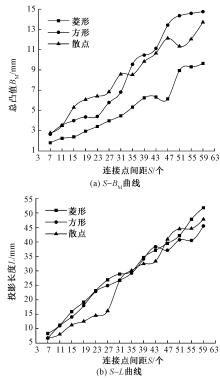
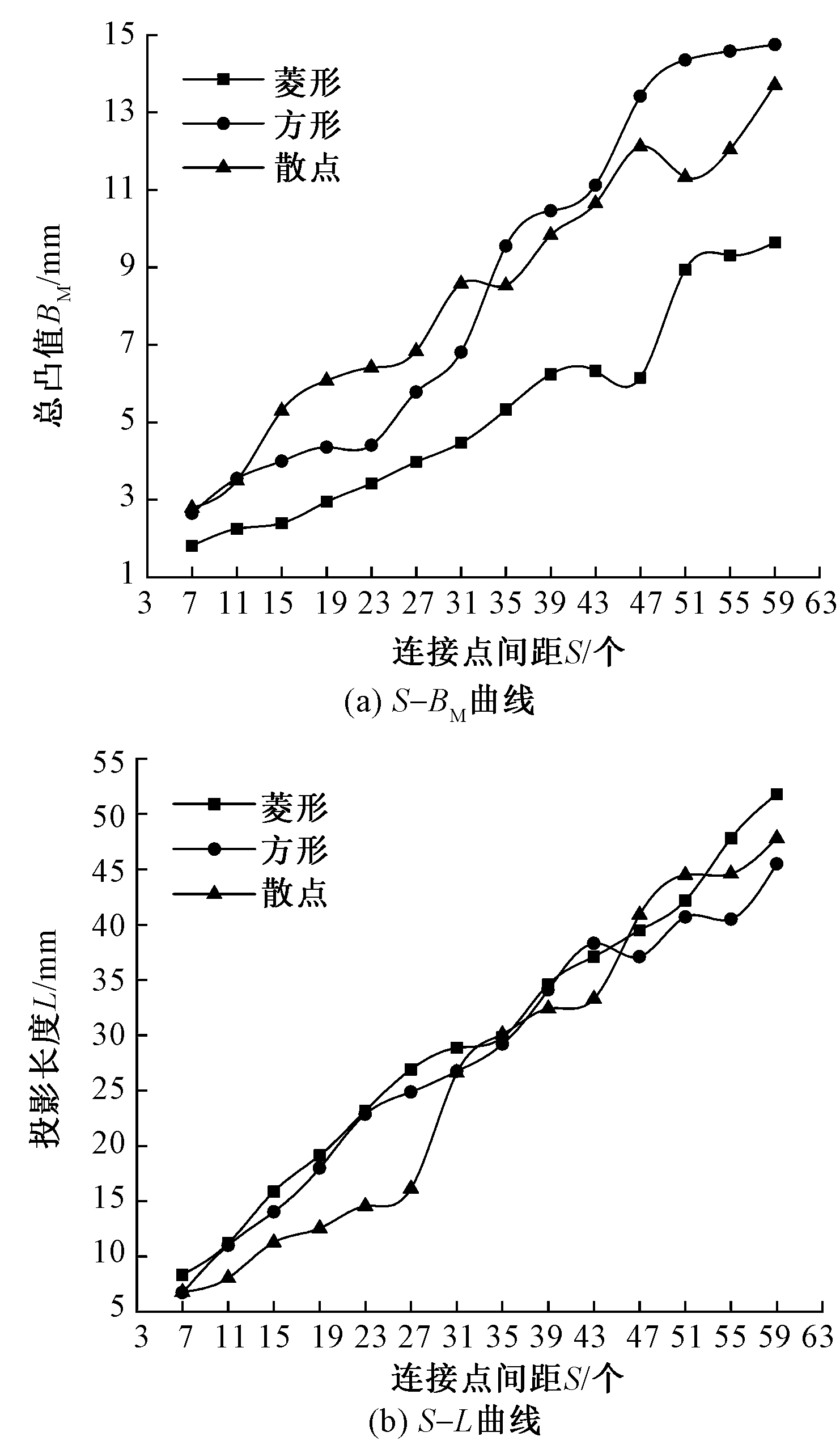
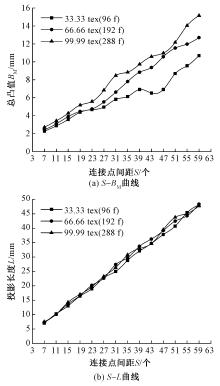
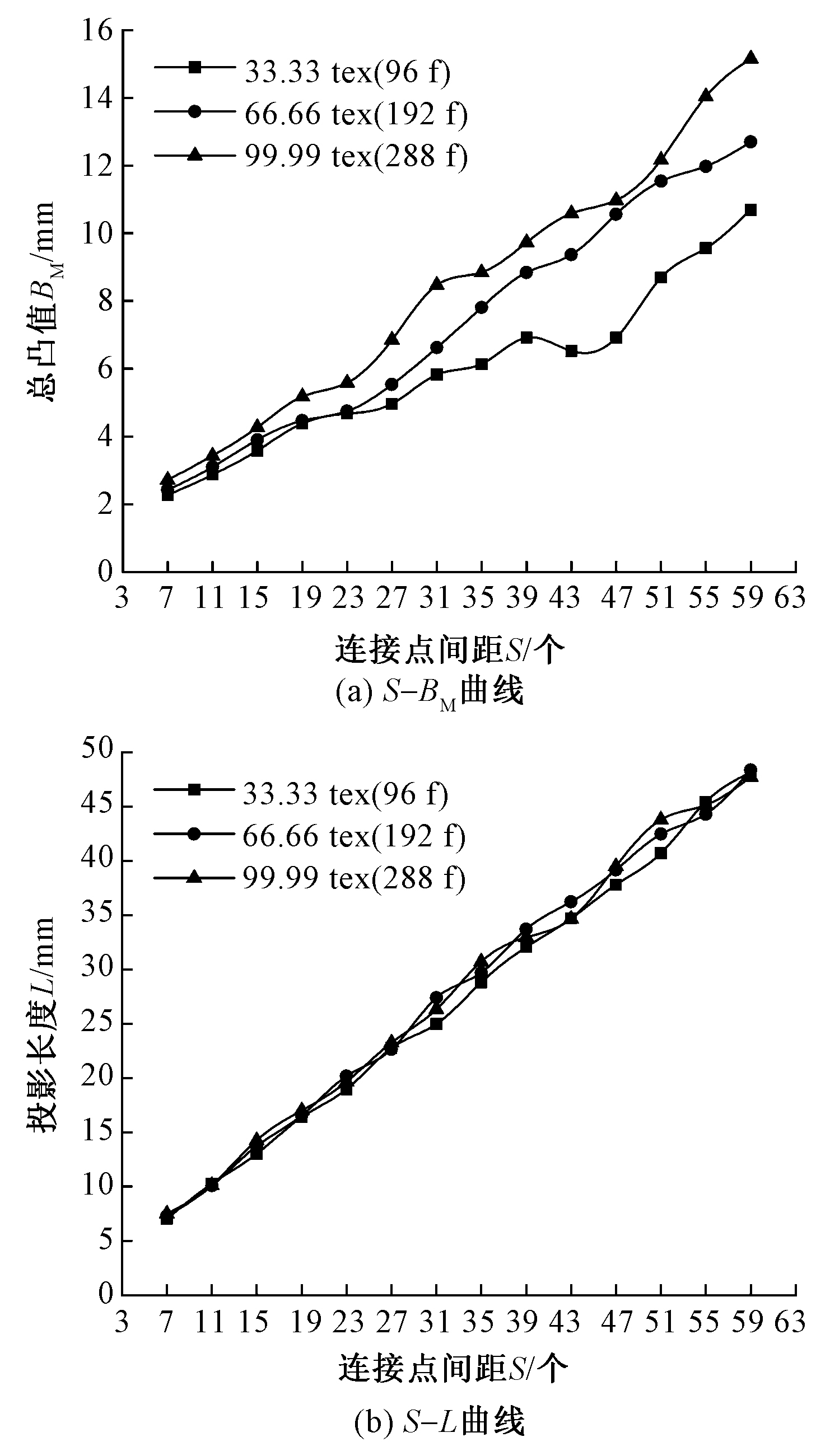
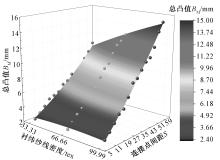
Results The progressive increase in convex values of different connection point shapes as the spacing between connection points gradually increases. Among these shapes, the overall growth trend of the diamond shape was relatively slow, because under the same spacing between connection points, the expandable space size of the weft-lining yarn exhibited the characteristics of scatter > square > diamond. The projection length of the surface was primarily determined by the spacing between the connection points. The projection length of different connection point shapes showed a relatively consistent growth trend with the increase in spacing and exhibied a linear relationship. The data results for different weft-lining fineness were plotted. The results indicated that under the same spacing between connection points, the thicker the lining yarn was the higher the overall trend of the convex value became. In the case of the same expandable space, a thicker lining yarn resulted in a higher content of lining yarn per unit volume. The interaction between the yarns caused them to bend and bulge in the middle of the unconstrained sections, thereby increasing the convex value. For the projection length, the differences among the three sets of results were relatively small, indicating that the influence of the fineness of the weft-lining yarn was minimal and could be neglected. When there was a difference in the longitudinal density between the front and back sides of the fabric, this difference would be projected onto the bump structure, resulting in an asymmetric bump structure, where the ratio of the front convex value to the back convex value was almost consistent with the longitudinal density ratio of the front and back sides. By comprehensively analyzing the influence of the connection point spacing and the fineness of the weft-lining yarns on the bump structure, and combining relevant data, a 3-D fitting surface was generated and the equation is presented.

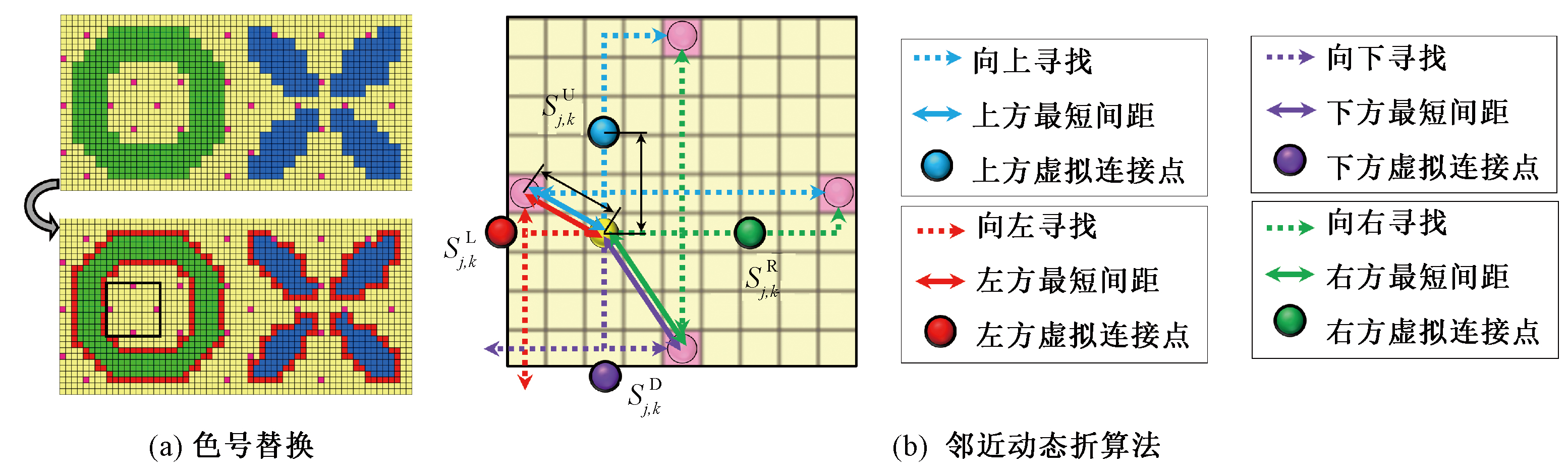
Conclusion Denser pattern connection areas reduce expandable space. Weft-lining yarn fineness directly affects structural filling volume, while longitudinal density ratios correspond to convexity ratios on both sides. This study calculates connection point spacing across pattern regions based on color information from pattern notations. By incorporating spacing and yarn fineness into the 3-D fitting surface function, front and back convexity values are derived. A 3-D bump model for weft-knitted stereoscopic jacquard fabric is developed using these data. This research elucidates the formation mechanism of such fabrics, establishes a theoretical foundation for fabric simulation, and provides methodological guidance for designing and simulating other bump-effect fabric structures.

Key words: weft-knitting, stereoscopic jacquard, bump parameter, bump structure, 3-D modeling

CLC Number: 

  • TS186.2

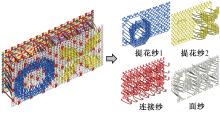
Fig.1

Diagram of connection structure between front and back of fabric"

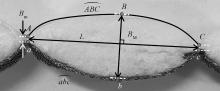
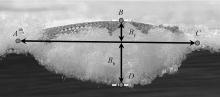
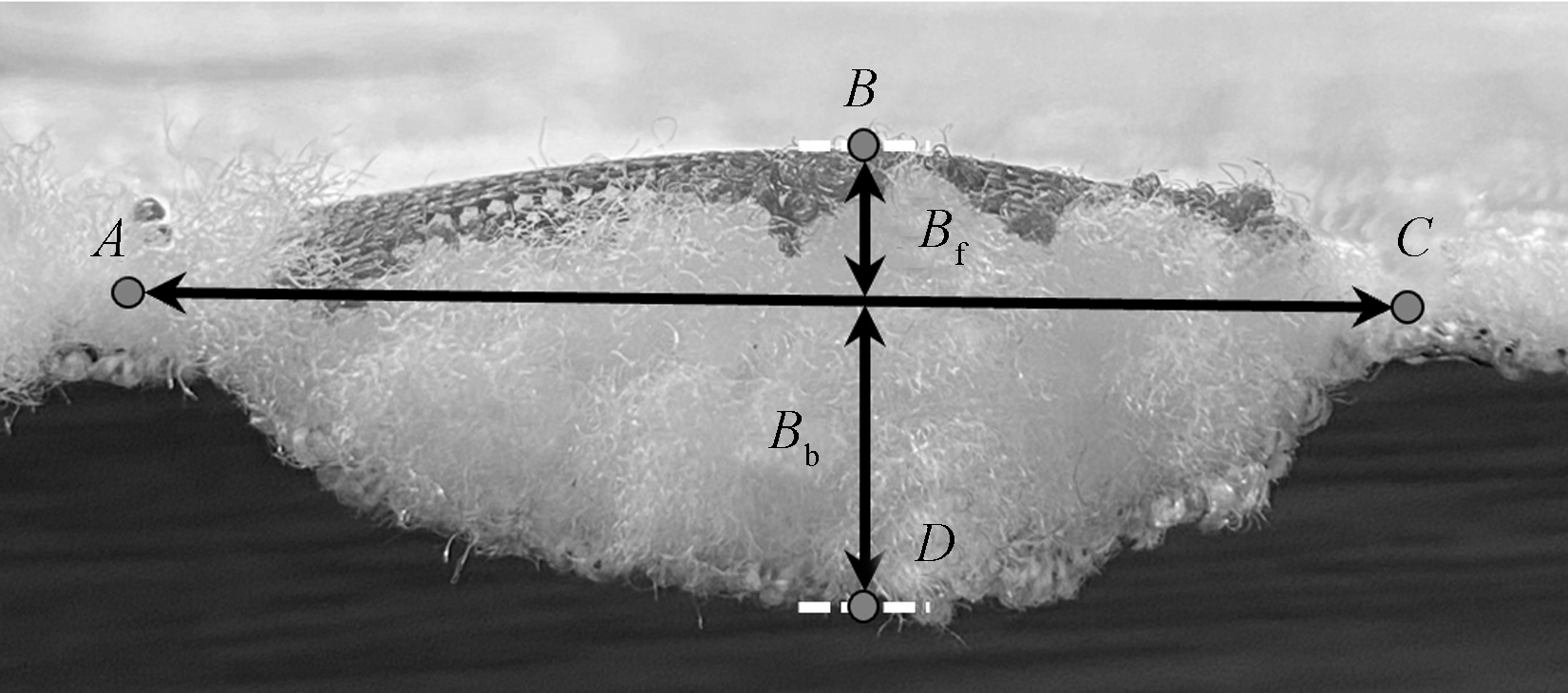
Fig.2

Diagram of bump parameter measurement"

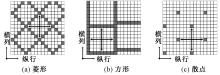
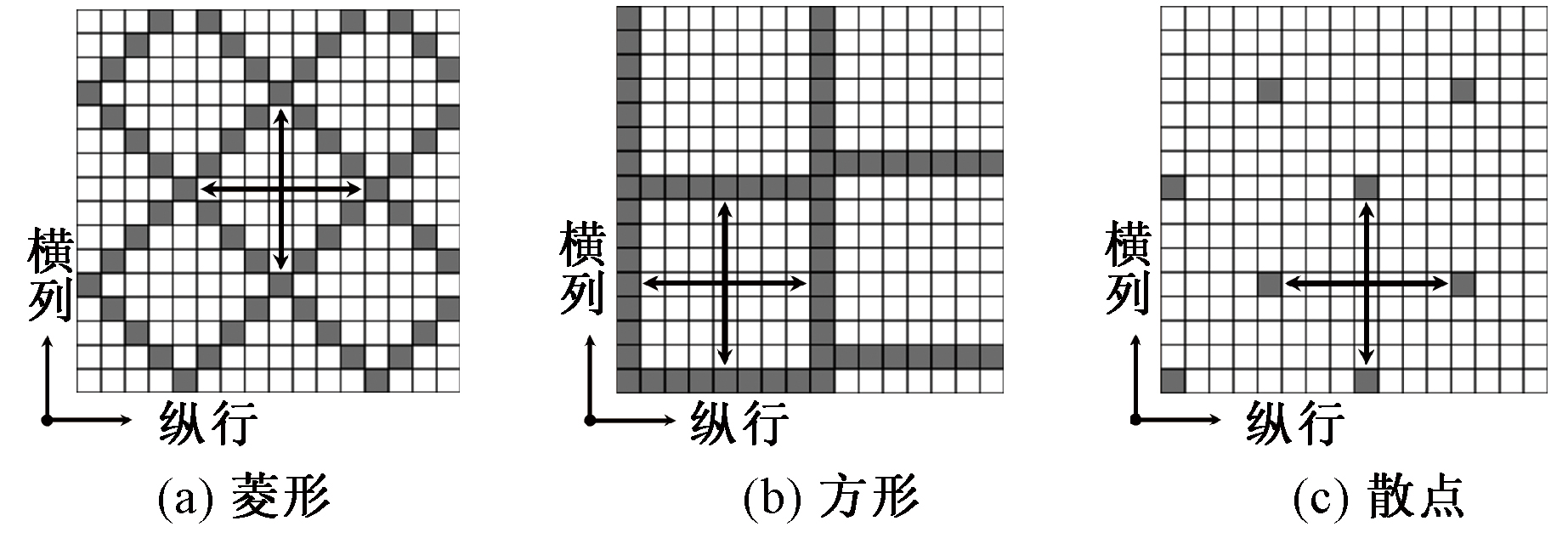
Fig.3

Diagram of 7×7 connection space. (a) Diamond; (b) Square; (c) Scatter"

Fig.4

Diagram of asymmetry bump structure"

Fig.5

Curve charts of influence of different connection patterns and spaces on bump effect. (a) S-BM curves; (b) S-L curves"

Fig.6

Curve charts of influence of weft-lining yarns with different linear density on bump effect. (a) S-BM curves; (b) S-L curves"

Tab.1

Bump data with different front-to-back densities"

组别 Cf/Cb Bf/mm Bb/mm Bf/Bb
1 1∶3 (0.33) 2.29 7.17 0.32
2 1∶1 (1.00) 4.74 4.84 0.98
3 2∶3 (0.67) 3.72 5.77 0.64
4 1∶1 (1.00) 4.71 4.84 0.97

Fig.7

3-D fitting surface"

Fig.8

Calculation of distance between current pattern grid and connection pattern grid. (a) Color code change; (b) Method of adjacent dynamic conversion"

[1] 金兰名, 蒋高明, 丛洪莲. 纬编提花绗缝织物凹凸曲面的测量及三维建模[J]. 纺织学报, 2016, 37(6): 148-154.
JIN Lanming, JIANG Gaoming, CONG Honglian. Determination and 3-D modeling of weft knitted jacquard quilted fabric with concave surface[J]. Journal of Textile Research, 2016, 37(6): 148-154.
[2] 赵博宇, 丛洪莲, 徐仲贤. 立体提花结构纬编服装面料的设计与开发[J]. 纺织导报, 2019, 913(12): 56-59.
ZHAO Boyu, CONG Honglian, XU Zhongxian. Design and development of weft-knitted garment fabric with 3d jacquard weave[J]. China Textile Leader, 2019, 913(12): 56-59.
[3] 郑培晓, 蒋高明. 基于WebGL的纬编提花织物三维仿真[J]. 纺织学报, 2021, 42(5): 59-65.
ZHENG Peixiao, JIANG Gaoming. Three-dimensional simulation of weft-knitted jacquard fabric based on WebGL[J]. Journal of Textile Research, 2021, 42(5): 59-65.
[4] 张静, 丛洪莲, 蒋高明. 纬编双面移圈织物多层弹簧-质点结构模型构建与实现[J]. 纺织学报, 2024, 45(1): 106-111.
ZHANG Jing, CONG Honglian, JIANG Gaoming. Construction and implementation of multilayer mass-spring structure model for weft-knitted two-side transfer fabric[J]. Journal of Textile Research, 2024, 45(1): 106-111.
[5] ZHENG P X, JIANG G M. Modeling and realization for visual simulation of circular knitting transfer-jacquard fabric[J]. Textile Research Journal, 2021, 91(19/20): 2225-2239.
doi: 10.1177/0040517521994497
[6] 徐巧, 丛洪莲, 金兰名, 等. 纬编提花床垫面料工艺参数研究[J]. 针织工业, 2016 (8): 22-25.
XU Qiao, CONG Honglian, JIN Lanming, et al. Study of the technological parameters of weft knitted jacquard mattress[J]. Knitting Industries, 2016 (8): 22-25.
[7] 徐巧, 丛洪莲, 张爱军, 等. 纬编针织物CAD设计模型的建立与实现[J]. 纺织学报, 2014, 35(3): 136-140, 144.
XU Qiao, CONG Honglian, ZHANG Aijun, et al. Establishment and implementation of weft-knitted fabric's design model in CAD system[J]. Journal of Textile Research, 2014, 35(3): 136-140, 144.
[8] JIN L M, JIANG G M. Research and implement of appearance simulation technology in multi-layered weft-knitted fabrics[J]. International Journal of Clothing Science and Technology, 2015, 27(4): 561-572.
doi: 10.1108/IJCST-07-2014-0084
[9] JIN L M, XU Q. Computer simulation and system realization of jacquard weft-knitted fabric[J]. Journal of Engineered Fibers and Fabrics, 2019, 14(4): 1-11.
[10] 梁佳璐, 丛洪莲, 张爱军. 纬编两面提花针织物的工艺设计模型[J]. 纺织学报, 2020, 41 (1): 69-74.
LIANG Jialu, CONG Honglian, ZHANG Aijun. Technical design model of weft-knitted two-side jacquard fabric[J]. Journal of Textile Research, 2020, 41 (1): 69-74.
[1] QIU Jun, LI Jijun. 3-D realistic modeling and parametric design of woven fabrics [J]. Journal of Textile Research, 2025, 46(10): 95-102.
[2] YAO Sihong, DONG Zhijia, JIANG Gaoming, WANG Ernan. Structure design and modeling of zero-cut warp knitted fully-formed lapel T-shirt [J]. Journal of Textile Research, 2024, 45(11): 178-184.
[3] YUE Xu, WANG Lei, SUN Fengxin, PAN Ruru, GAO Weidong. Finite element simulation of bending of plain woven fabrics based on ABAQUS [J]. Journal of Textile Research, 2024, 45(08): 165-172.
[4] DENG Kehui, WEI Yilin. Virtual restoration of ancient costumes based on 3-D costume modeling technology [J]. Journal of Textile Research, 2023, 44(04): 179-186.
[5] WANG Li, ZHANG Bingjie, WANG Jianping, LIU Li, YANG Yalan, YAO Xiaofeng, LI Qianwen, LU You. Development and performance evaluation of bionic knitted winter sports fabrics [J]. Journal of Textile Research, 2021, 42(05): 66-72.
[6] WANG Ting, GU Bingfei. 3-D modeling of neck-shoulder part based on human photos [J]. Journal of Textile Research, 2021, 42(01): 125-132.
[7] WANG Xu, CHU Changliu, NI Qingqing, LIU Xinhua. Three-dimensional modeling on single-layer woven fabric structure using MAXScript language [J]. Journal of Textile Research, 2019, 40(01): 159-165.
[8] . Computer simulation and system realization of 3-D weft knitted jacquard fabric [J]. JOURNAL OF TEXTILE RESEARCH, 2016, 37(07): 155-161.
[9] . Structures and electrical properties of weft-knitted flexible sensors [J]. JOURNAL OF TEXTILE RESEARCH, 2016, 37(06): 48-53.
Viewed
Full text


Abstract

Cited

  Shared   
  Discussed   
No Suggested Reading articles found!