Journal of Textile Research ›› 2025, Vol. 46 ›› Issue (08): 209-216.doi: 10.13475/j.fzxb.20241105201

• Apparel Engineering • Previous Articles     Next Articles

Pattern generation from 3-D scanned garments for virtual display

HU Anni1, WANG Jie1, YANG Wushi1, ZHONG Yueqi1,2()   

  1. 1. College of Textiles, Donghua University, Shanghai 201620, China
    2. Key Laboratory of Textiles Science & Technology, Ministry of Education, Donghua University, Shanghai 201620, China
  • Received:2024-11-25 Revised:2025-04-24 Online:2025-08-15 Published:2025-08-15
  • Contact: ZHONG Yueqi E-mail:zhyq@dhu.edu.cn

Abstract:

Objective In the process of performing virtual display-oriented reconstruction based on 3-D scanned garments, pattern generation is crucial for ensuring the accuracy of the 3-D reconstruction model, and it is influenced by the flattening and curve-fitting methods. Therefore, the selection of appropriate methods is pivotal in enhancing the accuracy of the generated 2-D patterns, which in turn enables the reconstruction of highly faithful 3-D garment models.

Method The study was focused on three types of garments, i.e., the suit jacket, trousers, and skirt. 2-D patterns were generated through a digital process, including scanning, cutting, flattening, and pattern modification. In the flattening process, the optimal flattening algorithm was selected based on the comparison of changes in length and area during the flattening process. Subsequently, comparative experiments were conducted to determine the most effective approach for curve optimization. Building upon these results, the geometric discrepancies between virtual reconstruction results and the original scanned garment results were analysed using 3-D reconstruction techniques.

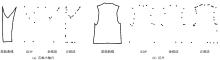
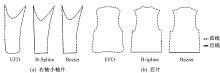
Results In the context of flattening methods, the pattern shapes obtained using least squares conformal mapping, boundary-first flattening, and garment flattening(GF) were found generally similar. To quantify the differences, the flattening error was assessed using two metrics, namely, the average relative area difference and the average relative edge length difference between the flattened pieces and the original 3-D surfaces. GF was found to be the superior choice, achieving the lowest average relative area difference and edge length difference values for the right sleeve under panel and the back panel of the suit jacket, indicating minimal flattening deformation. During the pattern optimization process, comparative experiments were conducted on feature point selection and curve-fitting methods. For feature point selection, the vector angle method (sine/cosine) and the Ramer-Douglas-Peucker(R-D-P) algorithm were compared, while for curve fitting, elliptic Fourier descriptors, B-spline curves, and Bezier curves were evaluated. The combination of the R-D-P algorithm and Bezier curves yielded optimal curve-fitting results. In the armhole area of the under panel of the right sleeve of the suit jacket, as well as the armhole and hemline areas of the back panel, the feature points extracted by the R-D-P algorithm were reasonably distributed and demonstrated higher accuracy in capturing curve characteristics, effectively reflecting the curve fluctuations. Additionally, Bezier curves achieved optimal smoothness in the armhole regions of the right sleeve under panel and back panel of the suit jacket. Based on the experimental results, GF was adopted as the flattening method, with feature points extracted using the R-D-P algorithm. Bezier curves were applied to fit pattern edge curves and reconstruct interrupted curves in the pattern symmetry processing, enabling the generation of suit jacket, trousers, and skirt patterns. In the evaluation of 3-D reconstructed model, the virtual reconstruction obtained using CLO3D was overlapped with the original scanned garment model to measure the average deviation of their contours. For simpler styles, such as the trousers and the skirt, the average error between the virtual fitting result and the original scan was approximately 0.3 cm. In contrast, for more structurally complex garments, such as the suit jacket, the average error was 0.774 cm. Overall, these results indicate that the 3-D reconstructed garment models achieve high accuracy.

Conclusion This paper presents a process for generating high-precision patterns from 3-D scanned garments for virtual display. The experimental results show that it can be successfully applied to the suit jacket, trousers, and skirt, and the reconstructed models obtained through virtual sewing of these patterns exhibited high accuracy, which validates the practical applicability of this approach. Hence, the effectiveness of the proposed method for 3-D garment flattening and 2-D curve optimization was confirmed. The 2D patterns generated through the proposed workflow, can accurately reconstruct garment appearance after undergoing physical engine simulation. This approach provides high-quality virtual garment models for diverse applications, including digital preservation of cultural heritage, film and costume production, and virtual fitting scenarios.

Key words: garment virtual display, 3-D scanning, pattern generation, surface flattening, curve optimization, clothing design

CLC Number: 

  • TS941.2

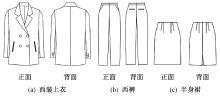
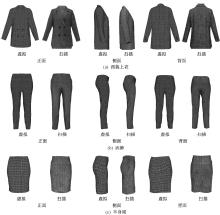
Fig.1

Apparel design sketch. (a) Suit jacket; (b) Trousers; (c)Skirt"

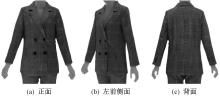
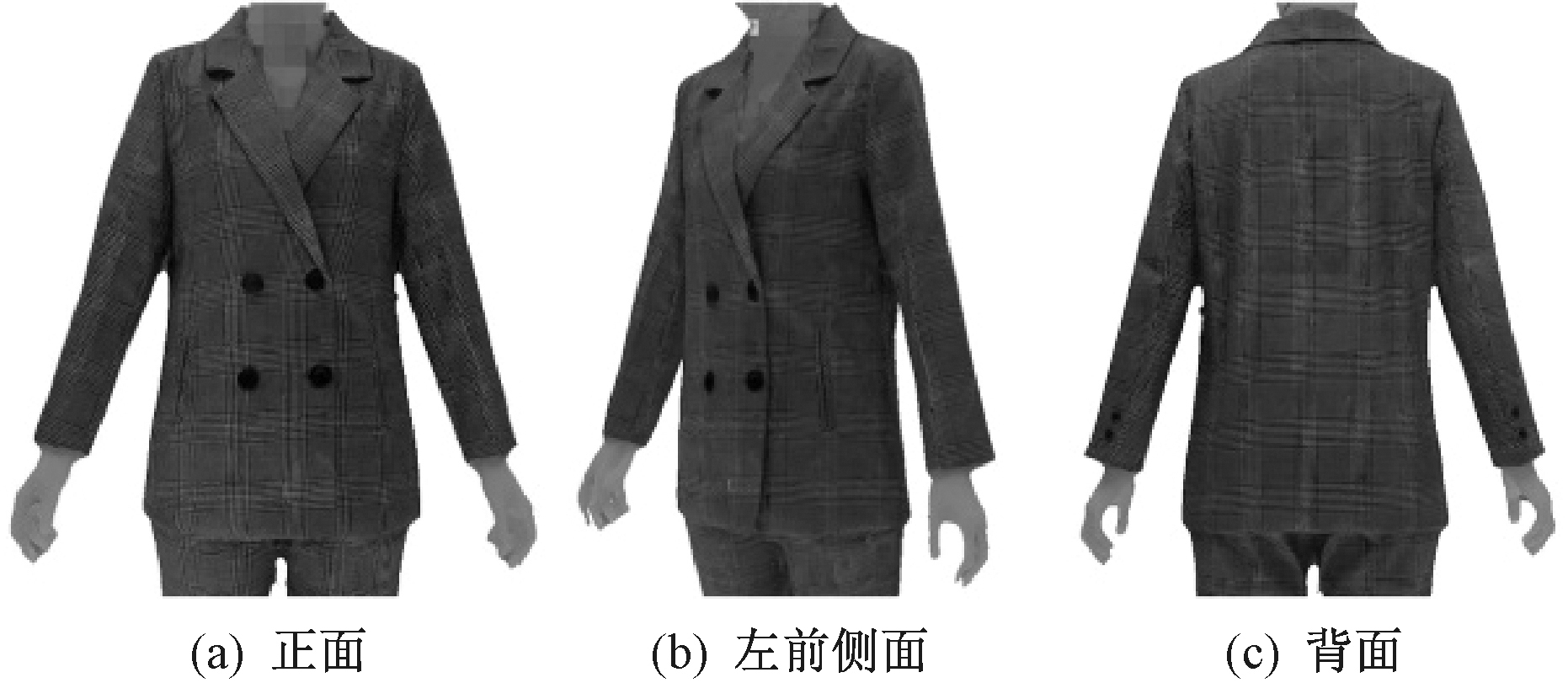
Fig.2

3-D garment scanning and reconstruction results. (a) Front view; (b) Left front side view; (c) Back view"

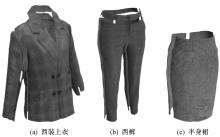
Fig.3

3-D garment patch. (a) Suit jacket; (b) Trousers; (c) Skirt"

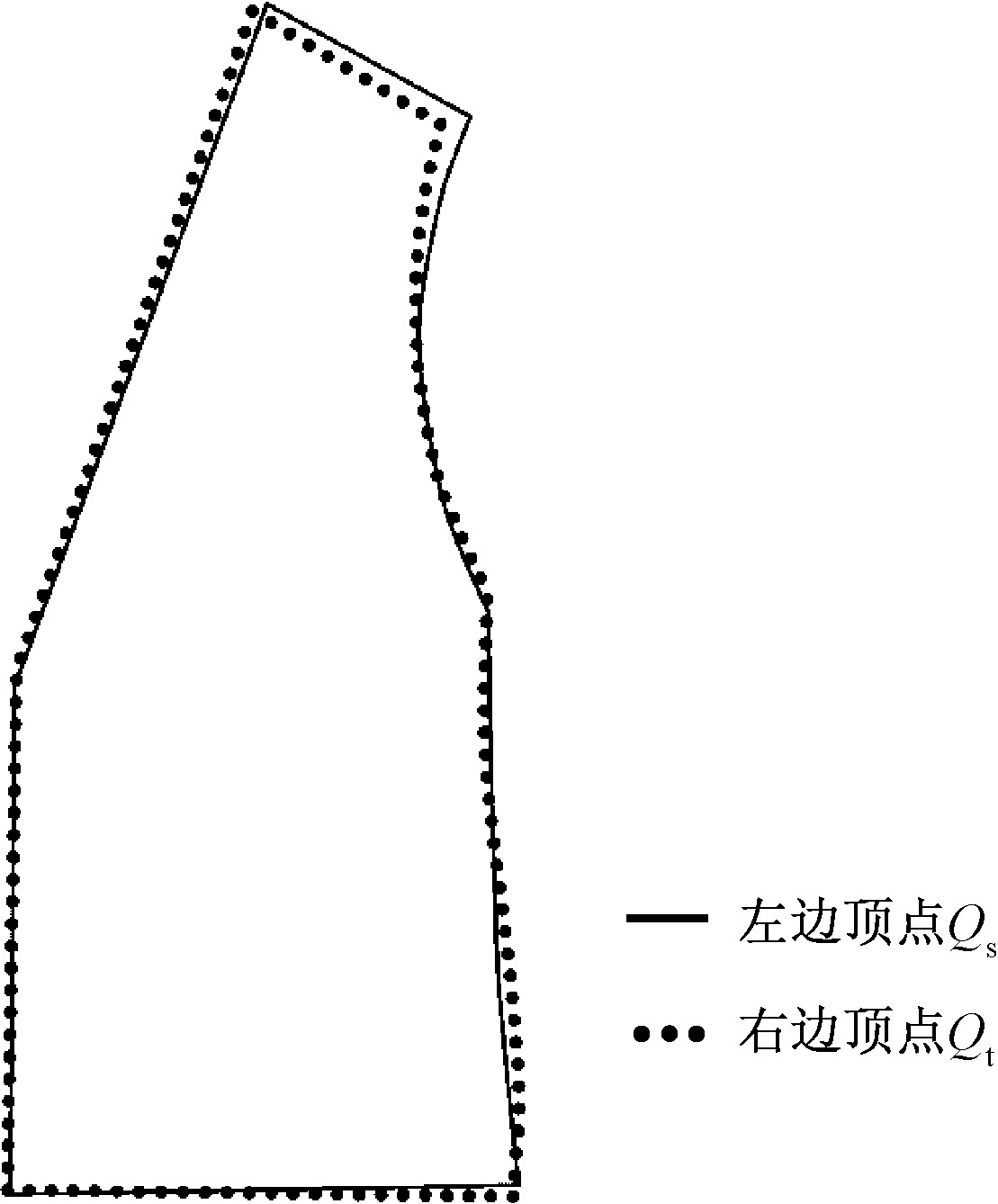
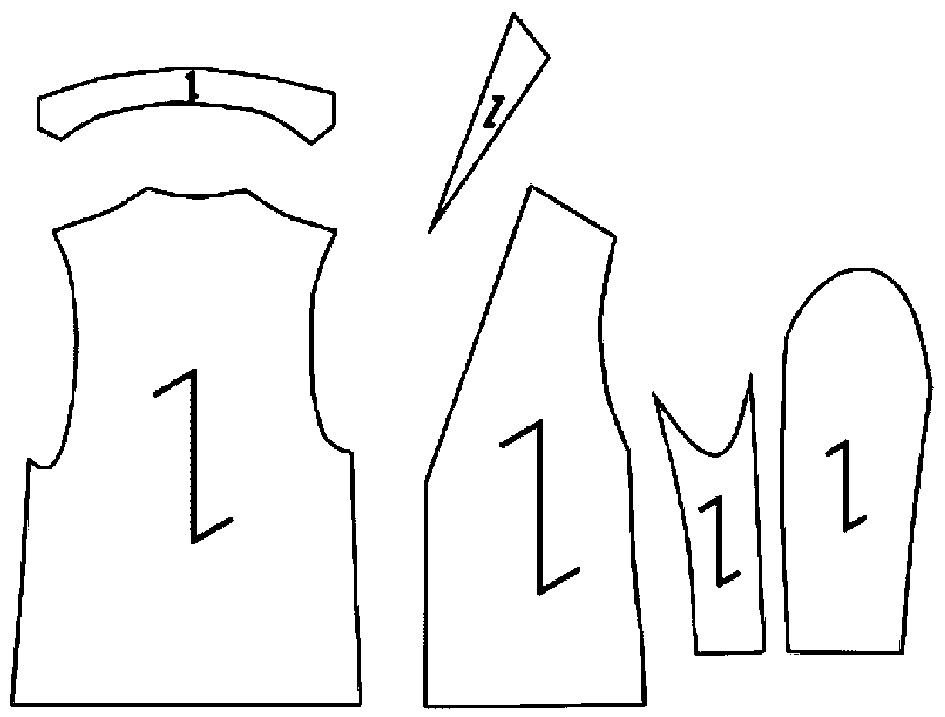
Fig.4

Left and right patterns (using the front panel of the suit jacket as an example)"

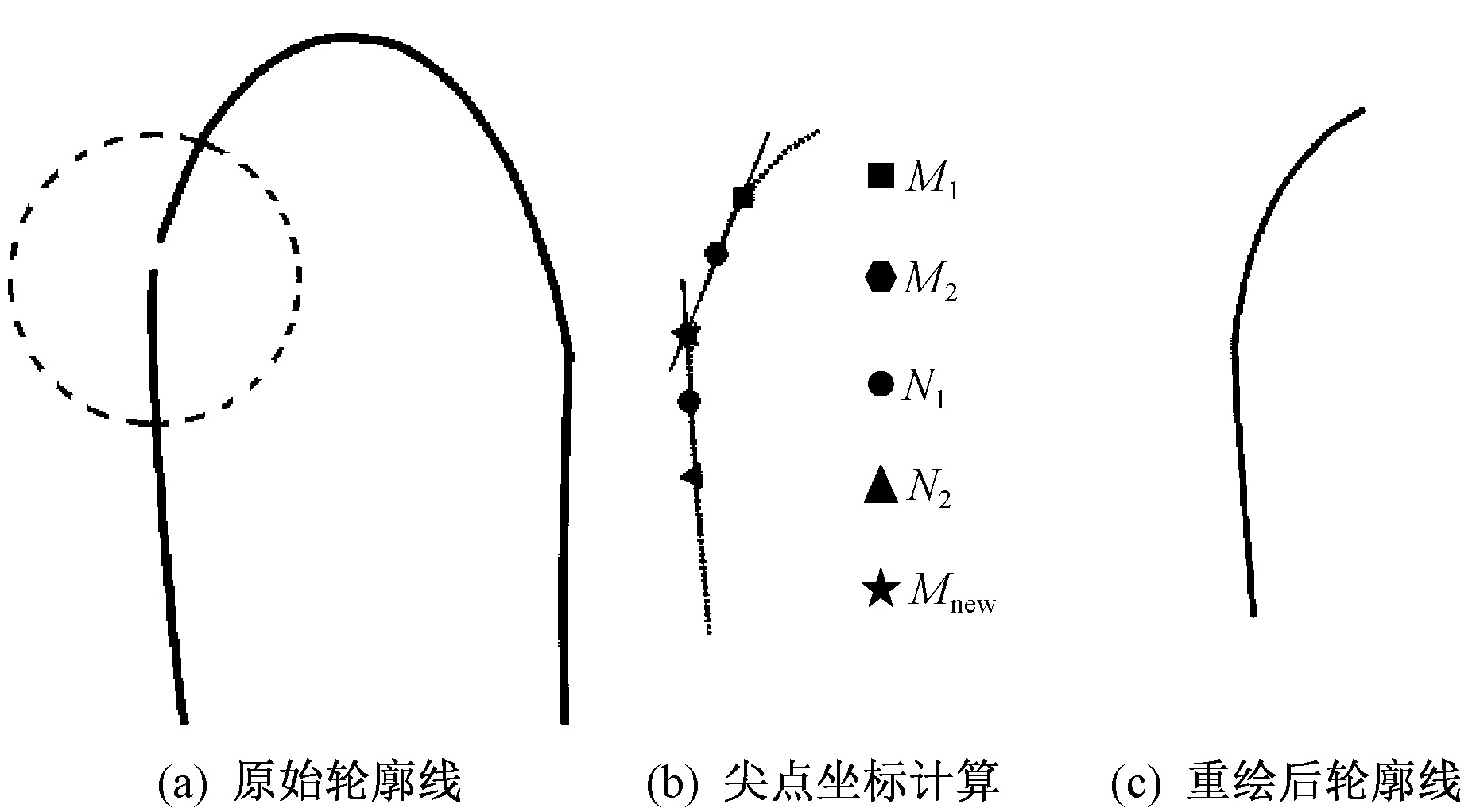
Fig.5

Cusp supplementation algorithm based on region remapping. (a) Original contour; (b) Cusp coordinate computation; (c) Refitted contour"

Tab.1

Flattening deformation error"

展平部位 LSCM BFF GF
E ¯ A E ¯ L E ¯ A E ¯ L E ¯ A E ¯ L
右袖小袖片 6.392 0 1.717 0 0.038 2 0.018 9 0.010 7 0.005 2
后片 0.979 1 0.406 5 0.034 3 0.017 1 0.011 4 0.005 9

Fig.6

Feature point extraction results. (a) Right sleeve under panel; (b) Back panel"

Fig.7

Curve fitting results. (a) Right sleeve under panel; (b) Back panel"

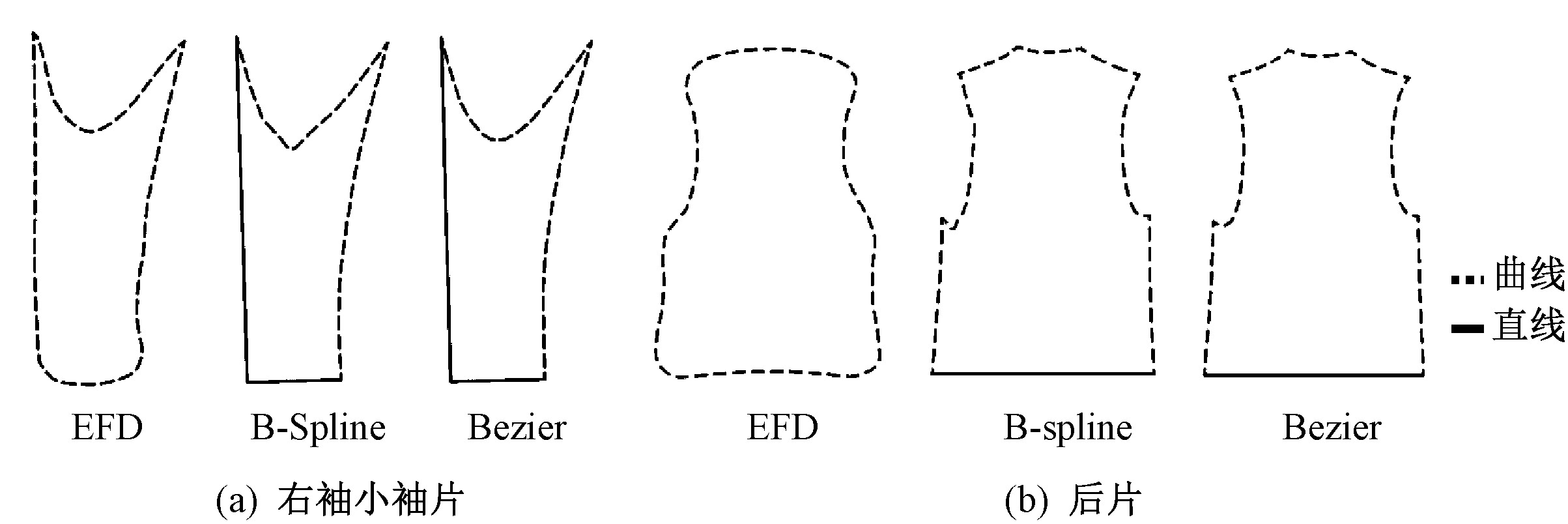
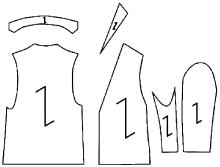
Fig.8

Pattern of suit jacket generated by method presented in this paper"

Fig.9

Comparison between virtual reconstruction results and original scanned garment results. (a) Suit jacket; (b) Trousers; (c) Skirt"

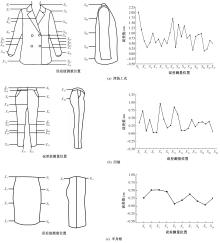
Fig.10

Error measurement locations and corresponding values. (a) Error measurement locations; (b) Error value"

Tab.2

Average error value and coefficient of variation"

西装上衣 西裤 半身裙
平均值/
cm
变异
系数
平均值/
cm
变异
系数
平均值/
cm
变异
系数
0.774 8 0.591 1 0.335 5 0.765 4 0.297 1 0.549 7

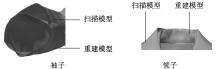
Fig.11

Local shape comparison of suit jacket"

[1] 高璐. 西方女性紧身胸衣形制演变与结构研究[D]. 上海: 东华大学, 2017:24-44.
GAO Lu. Research on the evolution and structure of western women's underwear[D]. Shanghai: Donghua University, 2017:24-44.
[2] 王朝晖, 曹姗姗, 吴雨曦, 等. 18世纪西方男士马裤的形制及结构研究[J]. 丝绸, 2019, 56(6): 89-96.
WANG Chaohui, CAO Shanshan, WU Yuxi, et al. Study on shape and construction of western male breeches in the 18th century[J]. Journal of Silk, 2019, 56(6): 89-96.
[3] 林聪瑾. 中国古代乐舞服饰形制及数字化复原研究[D]. 杭州: 浙江理工大学, 2020:40-56.
LIN Congjin. Research on the form and digital restoration of chinese ancient musical and dance costumes[D]. Hangzhou: Zhejiang Sci-Tech University, 2020:40-56.
[4] ZHANG D, LIU Y, WANG J, et al. An integrated method of 3D garment design[J]. The Journal of the Textile Institute, 2018, 109(12): 1595-1605.
[5] BANG S, KOROSTELEVA M, LEE S H. Estimating garment patterns from static scan data[J]. Computer Graphics Forum, 2021, 40(6): 273-287.
[6] MOSKVIN A, MOSKVINA M, KUZMICHEV V. Block pattern generation of the scanned historical gar-ments[J]. Technologia Tekstilnoj Promyslennosti, 2022, 400(4): 147-152.
[7] WU C. Towards linear-time incremental structure from motion[C]// 2013 International Conference on 3D Vision-3DV 2013. Seattle: IEEE, 2013: 127-134.
[8] SCHONBERGER J L, FRAHM J M. Structure-from-motion revisited[C]// Proceedings of the IEEE Conference on Computer Vision and Pattern Recognition. Las Vegas: IEEE, 2016: 4104-4113.
[9] FURUKAWA Y, HERNANDEZ C. Multi-view stereo: a tutorial[J]. Foundations and Trends® in Computer Graphics and Vision, 2015, 9(1/2): 1-148.
[10] LEVY B, PETITJEAN S, RAY N, et al. Least squares conformal maps for automatic texture atlas genera-tion[J]. ACM Transactions on Graphics (ToG), 2002, 21(3): 362-371.
[11] SAWHNEY R, CRANE K. Boundary first flatte-ning[J]. ACM Transactions on Graphics (ToG), 2017, 37(1): 1-14.
[12] PIETRONI N, DUMERY C, FALQUE R, et al. Computational pattern making from 3D garment models[J]. ACM Transactions on Graphics (ToG), 2022, 41(4): 157:1-157:14.
[13] 陈华伟, 袁小翠, 伍权, 等. 点云特征型面的边界曲线拟合及曲面裁剪算法[J]. 机械设计与制造, 2020(1): 5-8.
CHEN Huawei, YUAN Xiaocui, WU Quan, et al. Algorithm of boundary fitting and surface trimming for point feature surface[J]. Machinery Design & Manufacture, 2020 (1): 5-8.
[14] JOHN F H, ANDRIES V D, MORGAN M D F, et al. Computer graphics: principles and practice[M]. Boston: Addison-Wesley Professional, 2014: 595-606.
[1] YU Xiaokun, YI Ping, XIE Guanjing, CAI Lingxiao. Research on movement comfort of clothing sleeve based on human kinetic theory [J]. Journal of Textile Research, 2025, 46(06): 196-202.
[2] HUANG Xiaoyuan, HOU Jue, YANG Yang, LIU Zheng. Automatic generation of high-precision garment patterns based on improved deep learning model [J]. Journal of Textile Research, 2025, 46(02): 236-243.
[3] ZHOU Li, FAN Peihong, JIN Yuting, ZHANG Longlin, LI Xinrong. Digital design method of clothing reverse modeling [J]. Journal of Textile Research, 2023, 44(12): 138-144.
[4] YANG Yudie, LI Chengzhang, JIN Jian, ZHENG Jingjing. Design and evaluation of suspenders for fire-fighting protective clothing considering upper limb mobility [J]. Journal of Textile Research, 2023, 44(11): 183-189.
[5] REN Ze, ZHONG Anhua. Digital pattern making of underwear based on NURBS surface model of male waist, hip and crotch [J]. Journal of Textile Research, 2023, 44(08): 167-173.
[6] LAI Anqi, JIANG Gaoming, LI Bingxian. Three-dimensional simulation of whole garment with fancy structures [J]. Journal of Textile Research, 2023, 44(02): 103-110.
[7] LEI Ge, LI Xiaohui. Review of digital pattern-making technology in garment production [J]. Journal of Textile Research, 2022, 43(04): 203-209.
[8] WANG Shitan, WANG Xiuhua, WANG Yunyi. Determination and application of air gap parameters in coverall fit analysis [J]. Journal of Textile Research, 2021, 42(09): 137-143.
[9] TANG Qian, ZHANG Bingbing, ZHENG Xiaoyu. Design of wearable intelligent monitoring clothing for infants [J]. Journal of Textile Research, 2021, 42(08): 156-160.
[10] JIN Peng, XUE Zhebin, JIANG Runtian, LIU Danyu, ZHANG Chi. Design of smart protective clothing for blind people [J]. Journal of Textile Research, 2021, 42(08): 135-143.
[11] XU Zengbo, ZHANG Ling, ZHANG Yanhong, CHEN Guiqing. Research on clothing collar types based on complex network extraction and support vector machine classification [J]. Journal of Textile Research, 2021, 42(06): 146-152.
[12] LIU Haisang, JIANG Gaoming, DONG Zhijia. Simulation and virtual display for few-guide bar yarn dyed fabric based Web [J]. Journal of Textile Research, 2021, 42(02): 87-92.
[13] JI Yanbo, WANG Lingli, LIU Kaixuan. Custom design of cheongsam based on digital 3-D human model [J]. Journal of Textile Research, 2021, 42(01): 133-137.
[14] LI Liang, NI Junfang. Automatic generation algorithm for pattern processing codes of quilting machines [J]. Journal of Textile Research, 2020, 41(11): 162-167.
[15] ZHANG Heng. Design method of lapel collar structure based on structure model of lapel collar looseness [J]. Journal of Textile Research, 2020, 41(11): 128-135.
Viewed
Full text


Abstract

Cited

  Shared   
  Discussed   
No Suggested Reading articles found!