Journal of Textile Research ›› 2025, Vol. 46 ›› Issue (06): 143-150.doi: 10.13475/j.fzxb.20240706901

• Textile Engineering • Previous Articles     Next Articles

Textile manufacturing carbon emissions analysis method based on holographic process model

GAO Jun1, BAO Jinsong1(), ZHANG Dan2   

  1. 1. College of Mechanical Engineering, Donghua University, Shanghai 201620, China
    2. Department of Mechanical Engineering, The Hong Kong Polytechnic University, Hong Kong 999077, China
  • Received:2024-07-30 Revised:2025-03-12 Online:2025-06-15 Published:2025-07-02
  • Contact: BAO Jinsong E-mail:bao@dhu.edu.cn

Abstract:

Objective Textile manufacturing is reported to be the most energy-intensive in the entire lifecycle, and is associated to high energy consumption. However, existing methods to carbon emissions analysis in textile manufacturing focus on temporal dynamics while not adequately addressing the importance of critical factors like material circulation and energy usage. Therefore, it is essential to fully utilize neglected information in order to conduct a multi-perspective carbon emissions analysis of textile manufacturing.

Method To enable accurate carbon emissions analysis, this paper proposed a carbon emissions analysis method based on a holographic process model (HPM). The system boundary in the textile manufacturing was defined as the first step, followed by an analysis of the characteristics related to carbon emissions. A HPM based on the objective/centric petri net (OCPN) was constructed to simulate three different in the textile manufacturing of polyester-cotton blended fabrics.The constructed HPM was utilized to achieve a multi-perspective analysis of carbon emissions, and the feasibility of the method was verified using the polyester/cotton fabric production data from a textile enterprise.

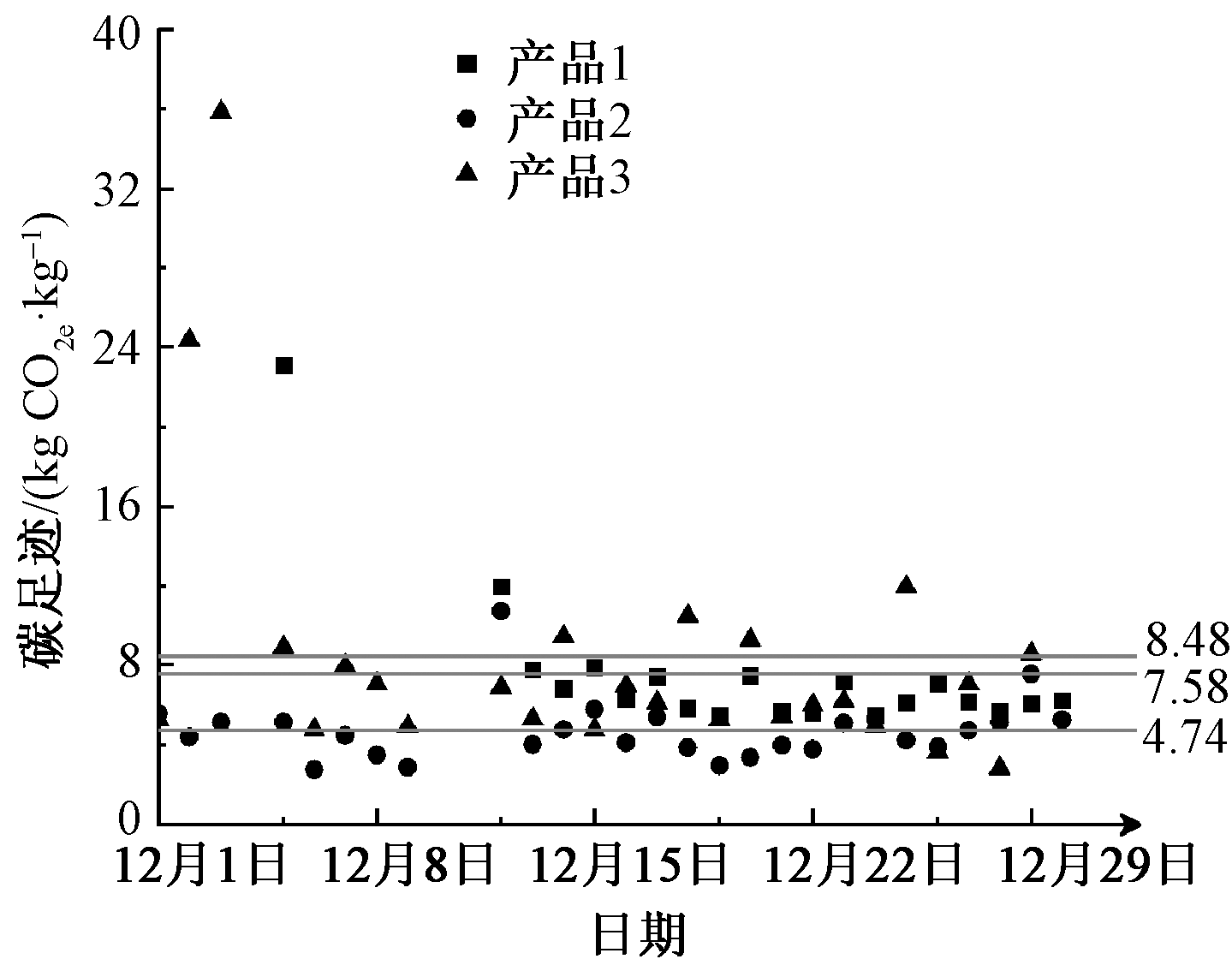
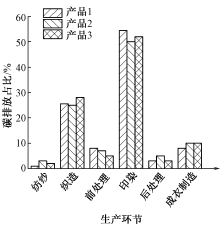
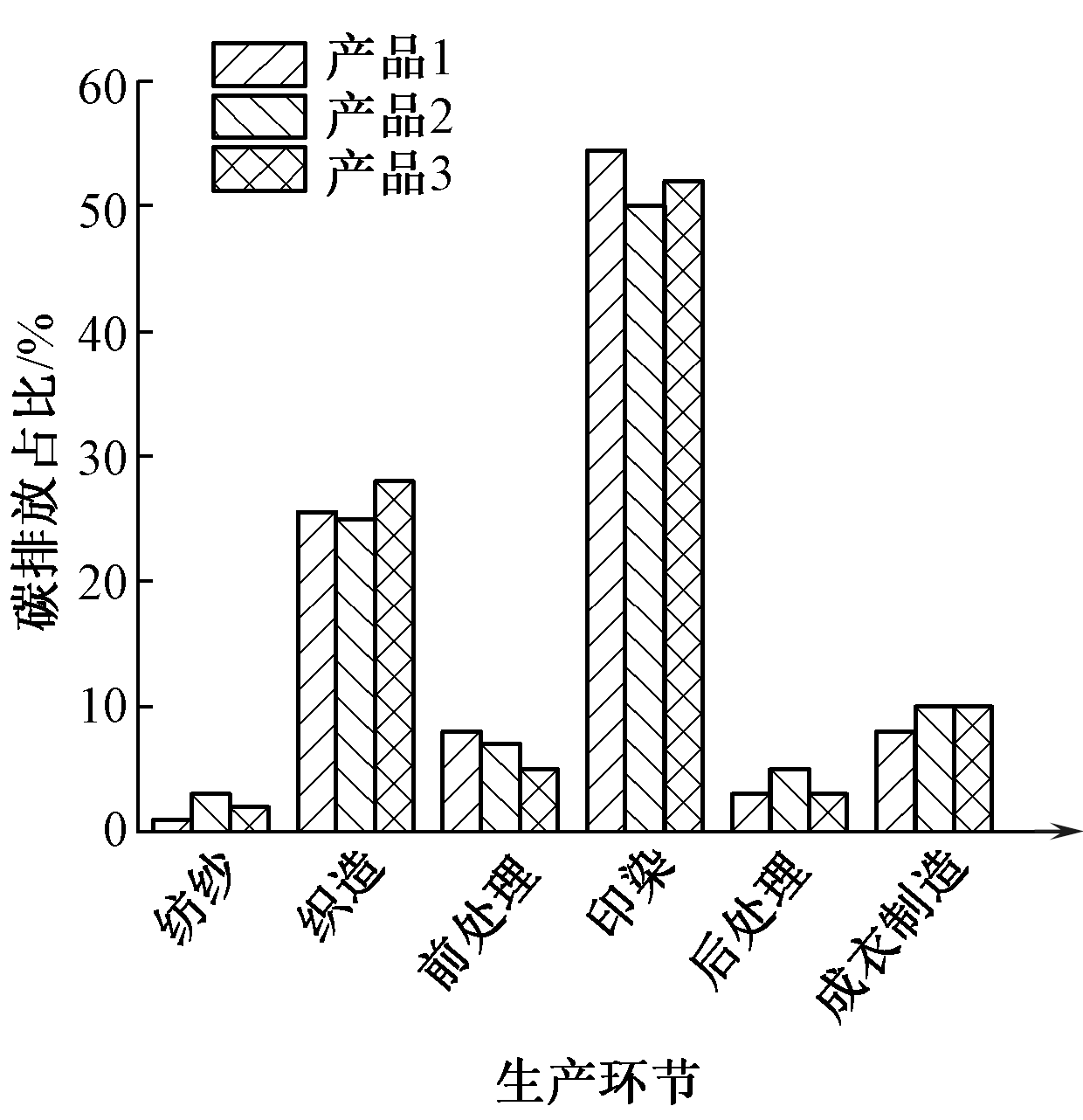
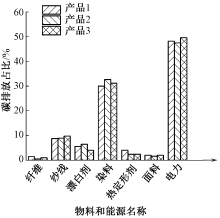
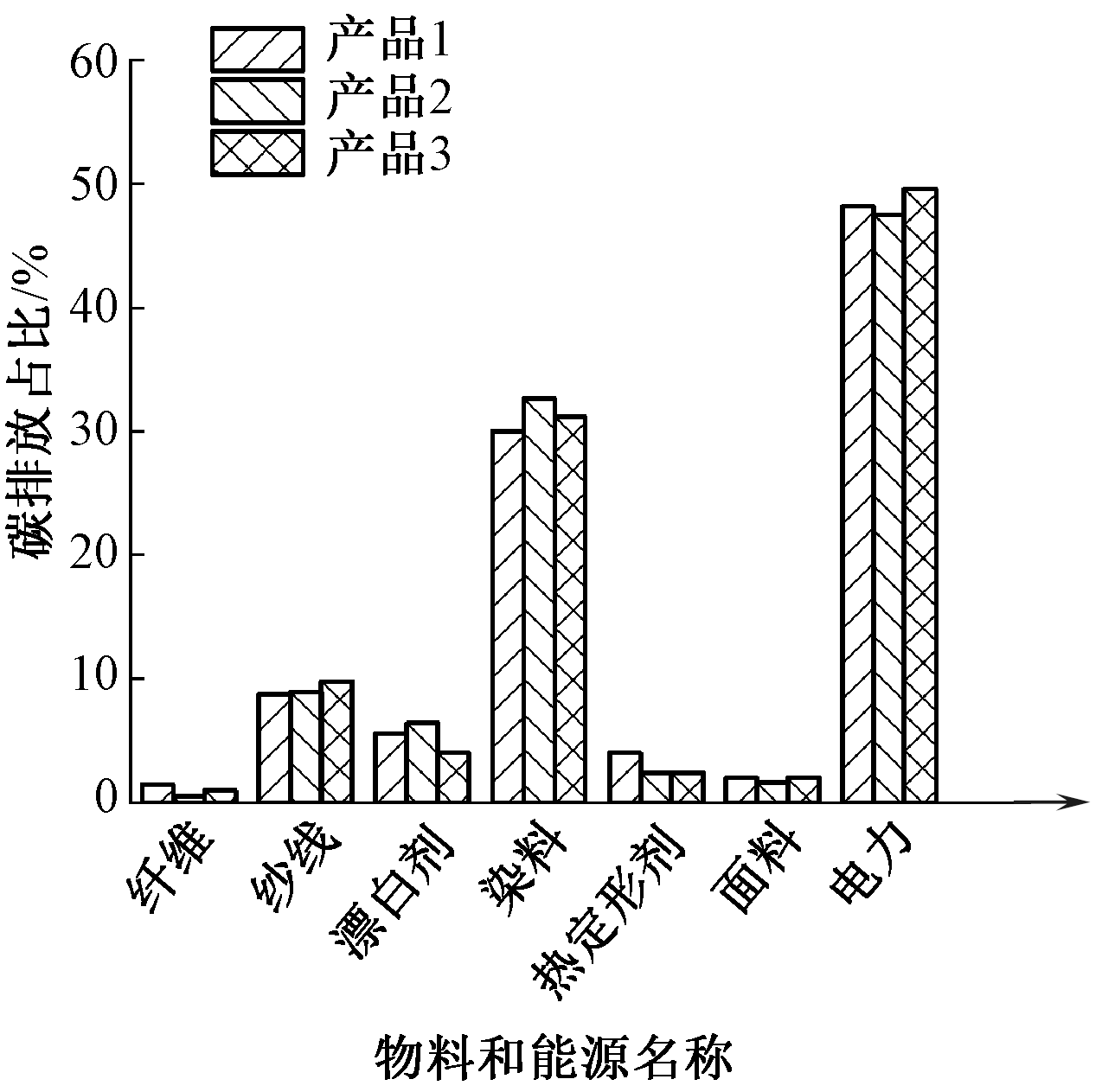
Results By extracting and processing textile manufacturing data, a thorough dataset for the HPM was compiled. Utilizing the OCPM mining tool, the HPM was constructed and used to simulate actual textile manufacturing. By using the established HPM, it was possible to carry out carbon emissions analysis from three perspectives, i.e., entire process, each procedure, and influencing factors. From the perspective of the entire process, product 2(a standard polyester/cotton blended fabric) showed the lowest average carbon footprint at 4.74 kg CO2e/kg, while product 3(a dark-colored polyester/cotton blended fabric) demonstrated the highest at 8.48 kg CO2e/kg, nearly double that of product 2. Product 1(a light-colored polyester/cotton blended fabric) showed an average carbon footprint of 7.58 kg CO2e/kg. From the perspective of each procedure, dyeing process was found to be the stage with the largest percentage of carbon emissions in the production of various fabrics. Carbon emissions from dyeing accounted for 50%-55% of the total energy consumption, with differences varying by product. From the perspective of influencing factors, the carbon emissions generated by the electricity consumed in fabric production showed the highest proportion, around 50%. After conducting an accurate carbon emissions analysis, a series of targeted clean production strategies were developed. Both product 1 and product 3 were fabrics in dark color, and the carbon emissions from the dyeing process accounted for a high proportion, nearly 55%. By implementing a single-step dyeing process for these two products, reducing the number of dyeing cycles, the carbon emissions were reduced by 20% while ensuring product quality. Compared to the traditional production process, the carbon emissions of product 1 decreased by 77 537.15 kg CO2e, and the carbon emissions of product 3 decreased by 62 724.42 kg CO2e. For product 2, a light-colored fabric, carbon emissions were decreased by streamlining unnecessary processes and reducing equipment downtime, which improved energy efficiency. The carbon emissions of product 2 decreased by 17 278.61 kg CO2e, representing a reduction rate of 10%.

Conclusion This paper proposed a carbon emission analysis method based on HPM. This method first defined the system boundary in the textile manufacturing and analyzed the characteristics of carbon emissions. Subsequently, HPM based on OCPN was constructed to simulate the textile manufacturing process. Furthermore, the constructed HPM has been utilized to achieve a multi-perspective analysis of carbon emissions. This method was applied to a textile enterprise, and the feasibility of the method was verified using production data of polyester/cotton fabrics from three different scenarios. The results show that HPM outperforms traditional process model based on petri net. And proposed method is conducive to an all-encompassing carbon emissions analysis in textile manufacturing, offering robust support for the eco-transition of textile enterprises. Future work will focus on expanding the application scope of the holographic process model to accommodate a wider variety of textile manufacturing processes.

Key words: textile manufacturing, carbon emission, holographic process model, sustainable development, green manufacturing, industrial intelligence

CLC Number: 

  • TP311.1

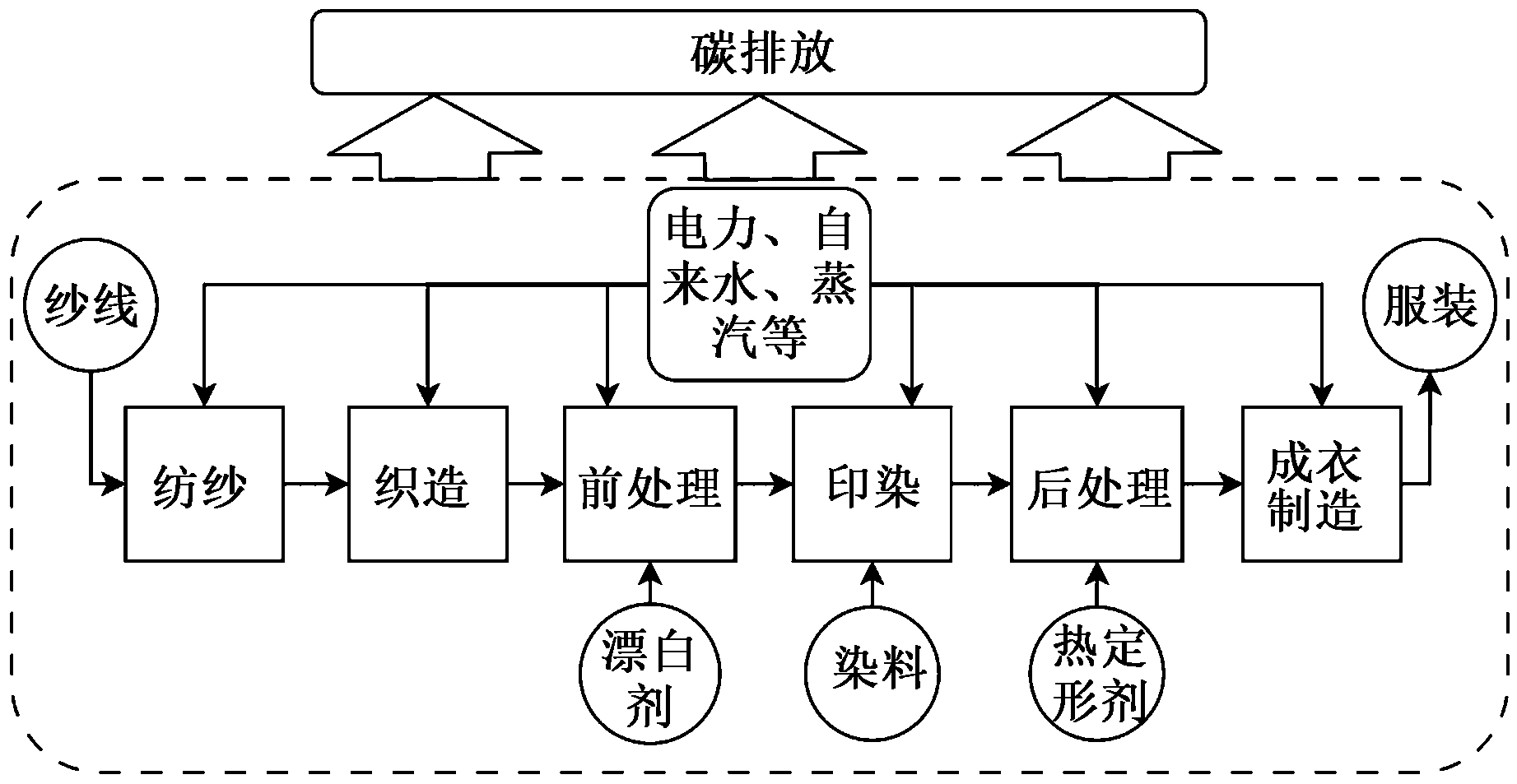
Fig.1

Textile manufacturing process"

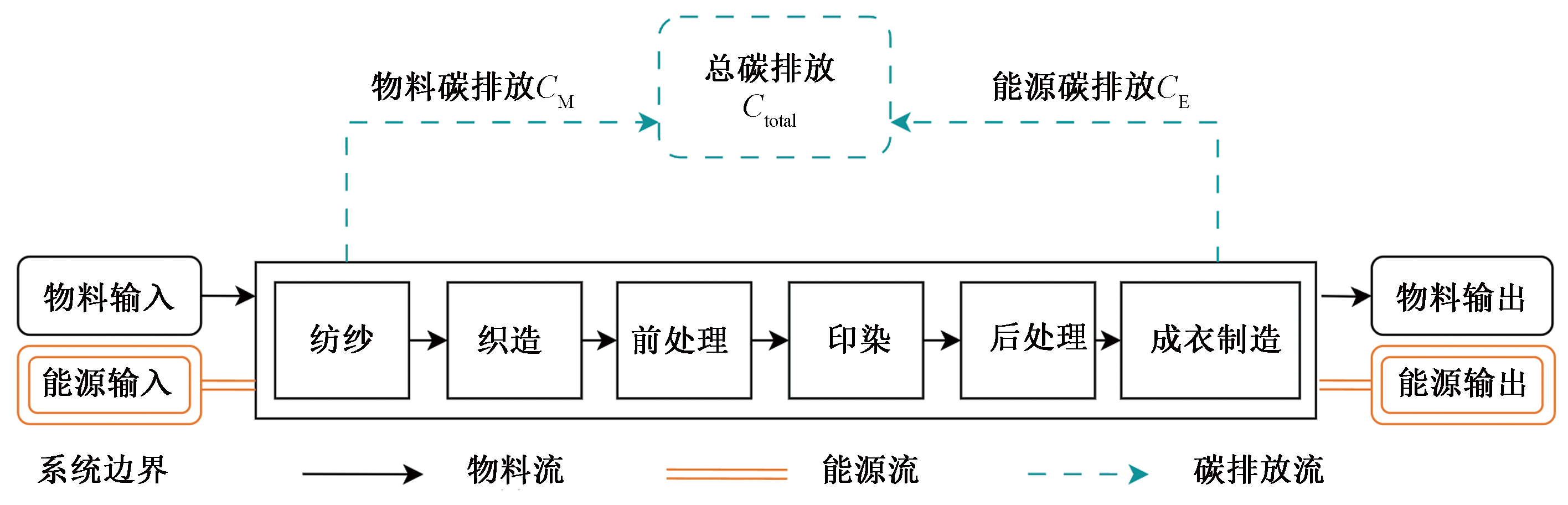
Fig.2

System boundary of textile manufacturing"

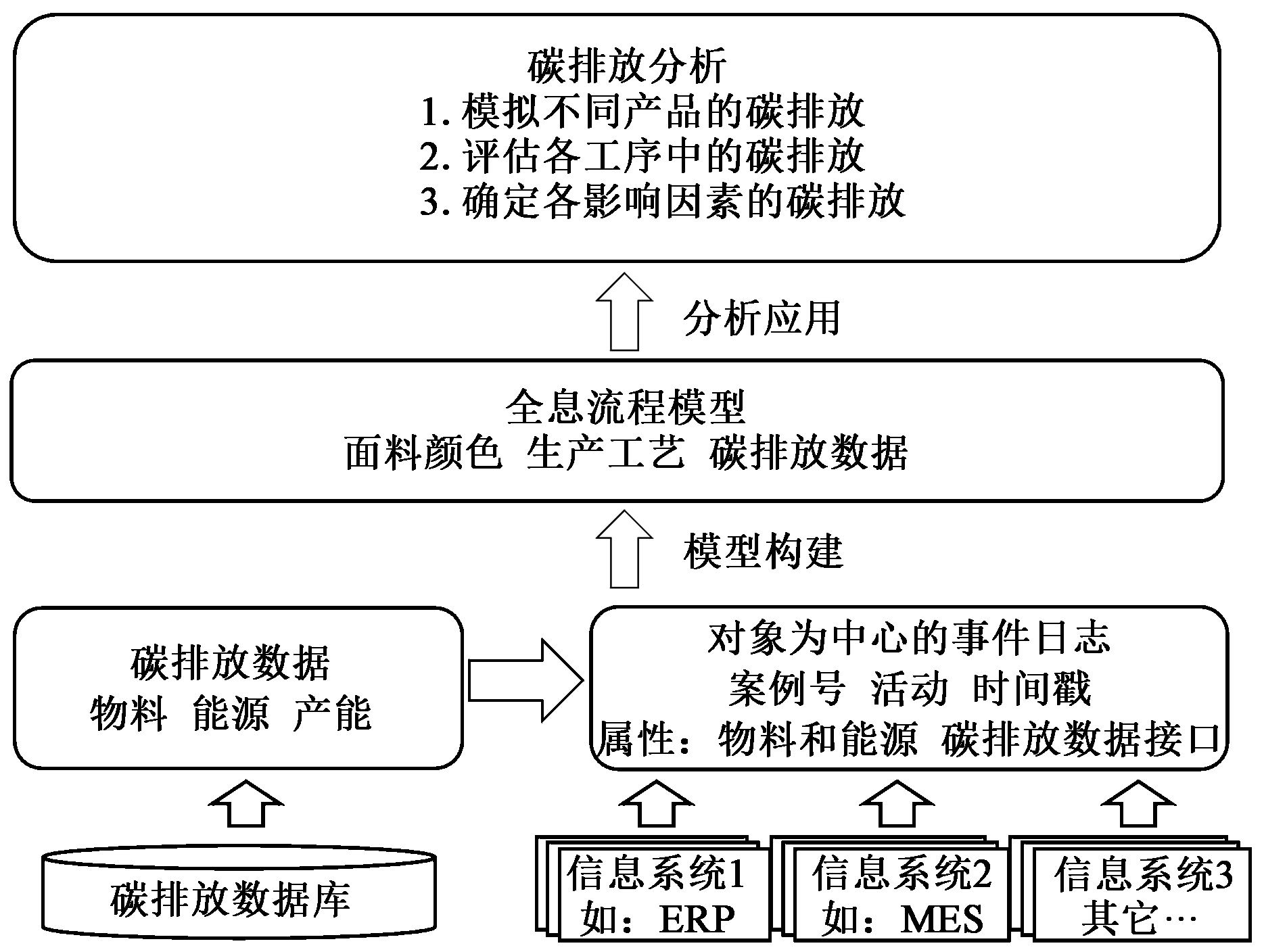
Fig.3

Framework of carbon emissions analysis method based on holographic process model"

Tab.1

Example of holographic process model data"

事件号 活动 物料 能源 产品 数据接口 时间戳
e1 Dyeing [‘dye’] [‘electricity’] [‘1’] {‘dye’:1 000’,‘electricity’:‘200 000’,
‘product’:‘100’,‘carbon emissions’:‘350 000’}
2022/6/2 10:25
e2 Dyeing [‘dye’] [‘electricity’] [‘2’] {‘dye’:’750’,‘electricity’:‘140 000’,
‘product’:‘80’,‘carbon emissions’:‘250 000’}
2022/6/2 11:43
e3 Weaving [‘yarn’] [‘electricity’] [‘2’] {‘yarn’:’10’,‘electricity’:‘450’,
‘product’:‘8’,‘carbon emissions’:‘6 000’}
2022/6/2 12:32
e91 Dyeing [‘dye’] [‘electricity’] [‘3’] {‘dye’:600’,‘electricity’:‘120 000’,
‘product’:‘70’,‘carbon emissions’:‘249 735’}
2022/6/3 10:15
e92 Spinning [‘fiber’] [‘electricity’] [‘1’] {‘fiber’:’10’,‘electricity’:‘200’,
‘product’:‘9’,‘carbon emissions’:‘3 000’}
2022/6/3 14:29
e93 Weaving [‘yarn’] [‘electricity’] [‘3’] {‘yarn’:’9’,‘electricity’:‘400’,
‘product’:’8’,‘carbon emissions’:‘5 000’}
2022/6/3 11:34

Fig.4

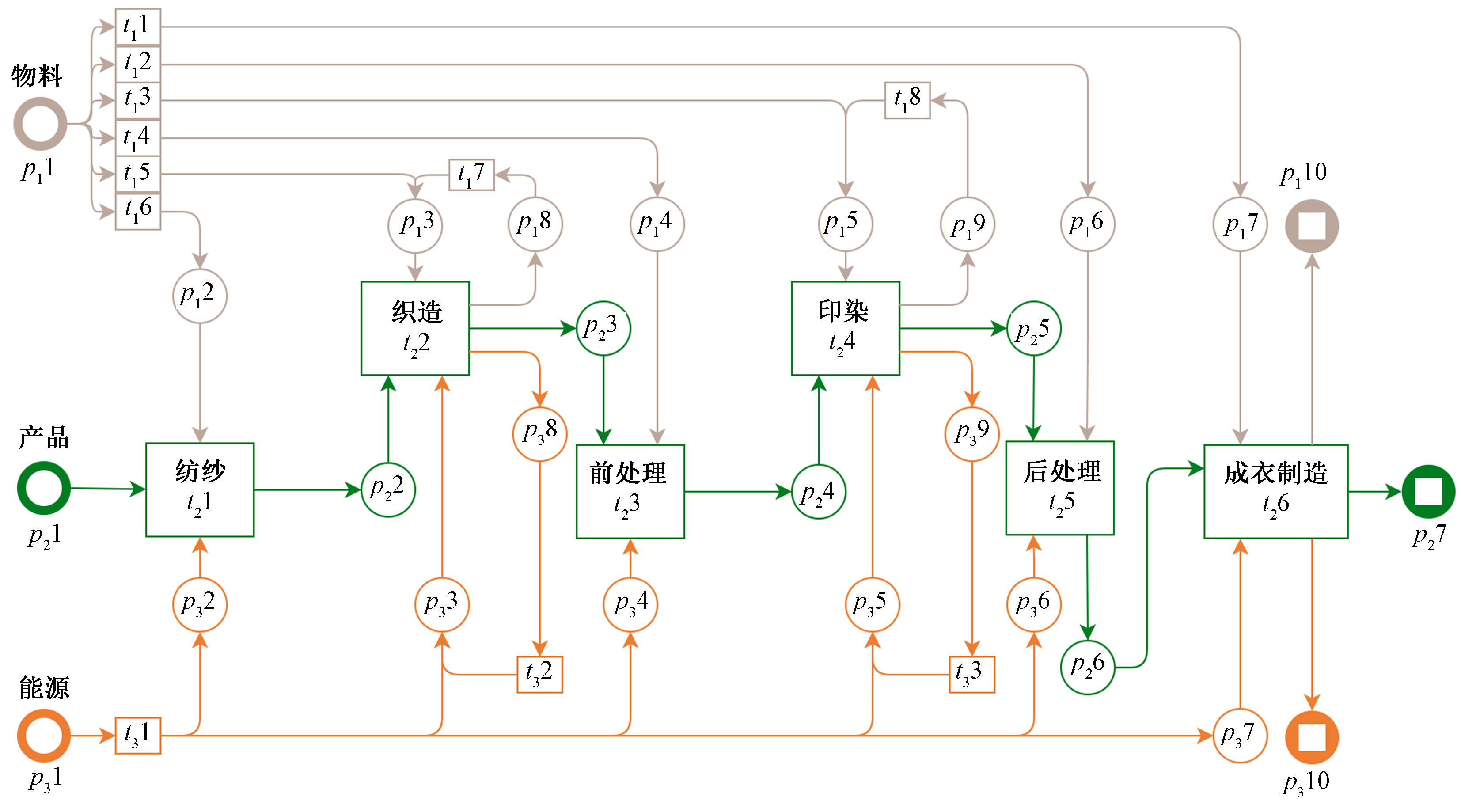
Holographic process model of textile manufacturing"

Tab.2

Carbon emissions equivalency factors for materials and energy across different products"

产品
类型
物料碳排放因子/
(kg CO2e·kg-1)
能源碳排放因子/
(kg CO2e·
(kW·h)-1)
纤维 纱线 漂白剂 染料 热定
形剂
面料 电力
产品1 0.12 0.84 2 5 2 0.2 0.81
产品2 0.018 0.35 1.36 1.5 2.95 0.08 0.81
产品3 0.08 0.85 2 3 3 0.18 0.81

Fig.5

Holographic process model mined with OCPM"

Fig.6

Carbon footprint of different products"

Fig.7

Proportion of carbon emissions in different production stages for each product"

Fig.8

Proportion of carbon emissions for different materials and energy in each product"

Tab.3

Comparison of carbon emissions before and after optimization"

产品
类型
碳排放/kg CO2e 下降比
例/%
优化前 优化后 下降量
产品1 387 685.77 310 148.62 77 537.15 20
产品2 172 786.14 155 507.53 17 278.61 10
产品3 313 622.11 250 897.69 62 724.42 20
[1] ZHANG J, QIAN X, FENG J. Review of carbon footprint assessment in textile industry[J]. Ecofeminism and Climate Change, 2020, 1(1): 51-56.
[2] 杜欢政, 刘建成, 陆莎. 双碳目标下纺织产业的绿色创新与发展[J]. 纺织学报, 2022, 43(9): 120-128.
DU Huanzheng, LIU Jiancheng, LU Sha. Green innovation and development of textile industry under dual carbon goals[J]. Journal of Textile Research, 2022, 43(9): 120-128.
[3] TEKIN P, ALICI H, DEMIRDELEN T. A life cycle analysis of a polyester-wool blended fabric and associated carbon emissions in the textile industry[J]. Energies, 2024. DOI: 10.3390/en17020312.
[4] YAN Y, WANG C, DING D, et al. Industrial carbon footprint of several typical Chinese textile fabrics[J]. Acta Ecologica Sinica, 2016, 36(3): 119-125.
[5] WANG C, WANG L, LIU X, et al. Carbon footprint of textile throughout its life cycle: a case study of Chinese polyester-cotton blended shirts[J]. Journal of Cleaner Production, 2015, 108: 464-475.
[6] 邵景峰, 马创涛, 王蕊超, 等. 基于碳排放核算的涤纶低弹丝生产工艺优化[J]. 纺织学报, 2019, 40(2):166-172.
SHAO Jingfeng, MA Chuangtao, WANG Ruichao, et al. Polyester drawn textured yarn production process optimization based on carbon emission accounting[J]. Journal of Textile Research, 2019, 40(2): 166-172.
[7] HE B, DUAN H, YANG W, et al. Decarbonizing polyamide textile production in China: footprints and mitigation pathways from life cycle perspective[J]. Resources, Conservation and Recycling, 2024. DOI: 10.1016/j.resconrec.2024.107705.
[8] PETERSON J L. Petri nets[J]. ACM Computing Surveys (CSUR), 1977, 9(3): 223-252.
[9] SHI J L, FAN S J, WANG Y J, et al. A quantitative analysis method of greenhouse gas emission for mechanical product remanufacturing based on Petri net[J]. Advances in Production Engineering & Management, 2018. DOI: 10.1016/j.resconrec.2024.107705.
[10] MENON R.Investigation of energy management and optimization using penalty based reinforcement learning algorithms for textile industry[C]//2020 international conference on innovative trends in information techno-logy (ICITIIT). Kottayam: IEEE, 2020: 1-8.
[11] VAN DER AALST W. Object-centric process mining: unraveling the fabric of real processes[J]. Mathematics, 2023. DOI: 10.1016/j.resconrec.2024.107705.
[12] VAN DER AALST W, BERTI A. Discovering object-centric Petri nets[J]. Fundamenta Informaticae, 2020, 175(1-4): 1-40.
[13] 吴涛, 李婕, 鲍劲松, 等. 羊毛混纺面料生产流程的碳图谱建模与应用[J]. 纺织学报, 2024, 45(9): 97-105.
WU Tao, LI Jie, BAO Jinsong, et al. Modeling of carbon footprints for producing wool blended fabrics and model applications[J]. Journal of Textile Research, 2024, 45(9): 97-105.
[14] LIU Z, SUN T, YU Y, et al. Near-real-time carbon emission accounting technology toward carbon neutra-lity[J]. Engineering, 2022, 14: 44-51.
[15] GHAHFAROKHI A F, PARK G, BERTI A, et al. OCEL: a standard for object-centric event logs[C]// European Conference on Advances in Databases and Information Systems. Cham: Springer International Publishing, 2021: 169-175.
[16] VAN DER AALST W. Object-centric process mining: an introduction[C]// International Colloquium on Theoretical Aspects of Computing. Cham: Springer International Publishing, 2021: 73-105.
[17] BERTI A, VAN Zelst S, SCHUSTER D. PM4Py: a process mining library for Python[J]. Software Impacts, 2023. DOI: 10.1016/j.simpa.2023.100556.
[18] ADAMS J N, PARK G, VAN DER AALST W. OCPA: a python library for object-centric process analysis[J]. Software Impacts, 2022. DOI: 10.1016/j.simpa.2022.100438.
[1] WU Tao, LI Jie, BAO Jinsong, WANG Xinhou, CUI Peng. Modeling of carbon footprints for producing wool blended fabrics and model applications [J]. Journal of Textile Research, 2024, 45(09): 97-105.
[2] ZHANG Jianlei, SHEN Pandeng, HE Lin, CHENG Longdi. Impact of heterogeneous environmental regulations on carbon emissions with China's textile and garment industry [J]. Journal of Textile Research, 2023, 44(10): 149-156.
[3] LIU Yu, XIE Ruyi, SONG Yawei, QI Yuanzhang, WANG Hui, FANG Kuanjun. One-bath pad dyeing technology for polyester/cotton fabric [J]. Journal of Textile Research, 2022, 43(05): 18-25.
[4] DING Qian, DENG Bingyao, LI Haoxuan. Research progress in all-fiber solar induced interface evaporation system to assist desalination with zero carbon emission [J]. Journal of Textile Research, 2022, 43(01): 36-42.
[5] SHAO Jingfeng, SHI Xiaomin. Multi-objective optimization of spinning process parameters based on nondominated sorting genetic algorithm II [J]. Journal of Textile Research, 2022, 43(01): 80-88.
[6] JI Bolin, WANG Bijia, MAO Zhiping. Key technologies supporting low-carbon emissions in dyeing and finishing of textiles [J]. Journal of Textile Research, 2022, 43(01): 113-121.
[7] SHAO Jingfeng, LI Ning, CAI Zaisheng. Parameters optimization on polyester drawn textured yarn based on fuzzy multi-criteria [J]. Journal of Textile Research, 2021, 42(01): 46-52.
[8] ZHANG Xujing, WANG Lichuan, CHEN Yan. Optimization of apparel material distribution route based on carbon emission [J]. Journal of Textile Research, 2020, 41(03): 143-147.
[9] SHAO Jingfeng, MA Chuangtao, WANG Ruichao, YUAN Yulou, WANG Xiyao, NIU Yifan. Polyester drawn textured yarn production process optimization based on carbon emission accounting [J]. Journal of Textile Research, 2019, 40(02): 166-172.
[10] . Evaluation of sustainable competitiveness of textile and costume indrstry based on analytic netword process theory [J]. Journal of Textile Research, 2018, 39(10): 162-167.
[11] . Big-data-driven framework for intelligent textile manufacturing [J]. JOURNAL OF TEXTILE RESEARCH, 2017, 38(10): 159-165.
[12] . Accounting of carbon emissions in garment production processes [J]. Journal of Textile Research, 2016, 37(4): 160-164.
[13] . Calculation model of carbon emissions in garment production processes [J]. Journal of Textile Research, 2016, 37(3): 156-159.
[14] YANG Zi-Ping, ZHANG Jian-Chun, ZHANG Hua, ZHANG Xiao-Xia, GAO Zhi-Qiang. Assessing of carbon footprint of hemp product according to PAS2050 [J]. JOURNAL OF TEXTILE RESEARCH, 2012, 33(8): 140-144.
Viewed
Full text


Abstract

Cited

  Shared   
  Discussed   
No Suggested Reading articles found!