



目前,抗菌纺织品所使用的抗菌剂主要分为三大类:其一为无机抗菌剂,有金属型和光催化型等[9],该类抗菌剂能破坏细菌的细胞壁和酶系统,进而导致细菌死亡,对革兰阳性菌、阴性菌均具有抑制作用,且不易产生耐药性[10]。其二为有机抗菌剂,主要涵盖季铵盐类[11]、卤化物类[12]和二苯醚类[13]等。其中季铵盐类是纺织品领域应用最多的有机抗菌剂,其作用机制为通过与细菌或霉菌的细胞膜上阴离子结合,或与巯基发生反应,破坏蛋白质和细胞膜的合成系统,从而抑制细菌或霉菌的繁殖[11]。其三为天然抗菌剂,主要包括壳聚糖[14]、鱼精蛋白[15]和罗汉柏油[16]等,大都从动、植物中提炼精制。壳聚糖是目前应用最广泛的天然抗菌剂,其分子上的正电荷可与蛋白质中的负电荷结合,使细菌和真菌失去活性[17]。
目前,现有抗菌剂应用均存在一定局限性。例如:银基抗菌纺织品在光照条件下易发生变色,且其缓释型抗菌机制会造成银离子持续溶出,对人体存在潜在安全风险[18];有机类抗菌剂耐热性较差[19],且易诱导细菌产生耐药性[20];天然抗菌剂则存在有效作用时间短、抗菌效率低等问题,往往需要达到一定用量才能显现出较强抗菌效果,且价格昂贵[21],因此,开发新型抗菌纤维及相关纺织品已成为研究人员的关注焦点。已有研究表明,用生物基材料聚3-羟基丁酸戊酸酯(PHBV)和聚乳酸(PLA)混合熔融纺丝制备的纤维,兼具高效抗菌能力与高安全性,其抗菌活性主要来源于有一定聚合度的PHBV低聚物(OPHB抗菌剂),符合高效、安全的抗菌应用需求[22]。
尽管如此,实现OPHB抗菌剂与纺织材料的高效复合仍面临诸多技术挑战。当前纺织品领域的传统抗菌技术主要分为2大类:第1类是纤维改性技术(原纱抗菌),即在纺丝阶段将抗菌剂整合至纤维内部。该方法需精确控制抗菌剂在纤维中的分散均匀性,若分布不均则会影响抑菌效果的一致性;此外,抗菌剂的引入相当于在纤维体系中添加杂质,易导致纤维强度下降,出现断裂、起球或结块等问题,经多次洗涤后,纤维耐磨性显著降低[23];第2类是后整理法,即在面料织造完成后,通过浸渍、涂层或印花工艺将抗菌剂固着于织物表面,该方法普遍存在耐洗性不足或易引发环境风险等弊端[24]。由此可见,要推动OPHB抗菌剂在纺织品领域的应用,需要开发适配性更强的加工技术。
基于此,本文以OPHB为抗菌剂,结合超临界流体制备抗菌纤维,从抗菌性能、耐洗性、力学性能和溶出性等方面进行研究,旨在开发出性能优异的抗菌纺织品,助力纺织行业迈向抗菌技术发展的新阶段。
1 试验部分
1.1 主要材料
聚3-羟基丁酸戊酸酯(PHBV)粉末,宁波天安生物材料有限公司;PHBV低聚物(OPHB)抗菌剂,南京源健生物科技有限公司;粘胶纤维(1.33 dtex×38 mm)、莫代尔纤维(1.0 dtex×39 mm),赛得利(中国)纤维有限公司;精梳棉网129A,潍坊昌昊纺织有限公司;涤纶纤维(1.2 dtex×38 mm),桐昆集团股份有限公司;Luria-Bertani(LB)液体培养基、Luria-Bertani(LB)固体培养基,赛默飞世尔科技(中国)有限公司;菌种选用革兰阳性菌中的金黄色葡萄球菌(ATCC6538)、革兰阴性菌中的大肠埃希菌(ATCC25922)和真菌代表性菌株白念珠菌(ATCC10231),均来自广州微生物保藏中心。
1.2 主要设备
Quantum-l400 MHz核磁共振波谱仪,武汉中科牛津波谱技术有限公司;TENSOR II傅里叶变换红外光谱仪,天津市金贝尔科技有限公司;GI54DWS立式高压蒸汽灭菌锅,美国Zealway公司;DW-86L486超低温保存箱、SC-279立式冷藏柜,中国海尔集团公司;IS-RDV1立式双层制冷摇床,美国精骐CRYSTAL公司;SW-CJ-1F超净工作台,苏净集团安泰公司;PL2C02电子天平,梅特勒-托利多公司;LHR-150F生化培养箱,上海天呈公司;GQ105-LD高速管式离心机,辽阳隆达制药机械公司;YJSW-29L超临界设备,南通科鑫超临界设备有限公司。
1.3 试样制备
OPHB抗菌纤维及其织物制备。采用超临界流体技术(SCF),选用二氧化碳作为介质,在反应釜内按设定比例投入OPHB抗菌剂和各类纤维原料;关闭反应釜后,对釜体施加特定温度和压力。当体系达到预设温度和压力条件时,二氧化碳进入超临界状态,使纤维表面发生溶胀;借助超临界二氧化碳流体优异的扩散性和溶解性,OPHB抗菌剂被携载并扩散至纤维表层。维持反应一定时间后,对反应釜释压降温,纤维表面收缩,超临界二氧化碳则汽化回收,OPHB抗菌剂被牢固固着于纤维浅表层,最终制得OPHB抗菌纤维。基于超临界流体技术和OPHB抗菌剂的OPHB抗菌纤维制备工艺流程如图1所示。
图1
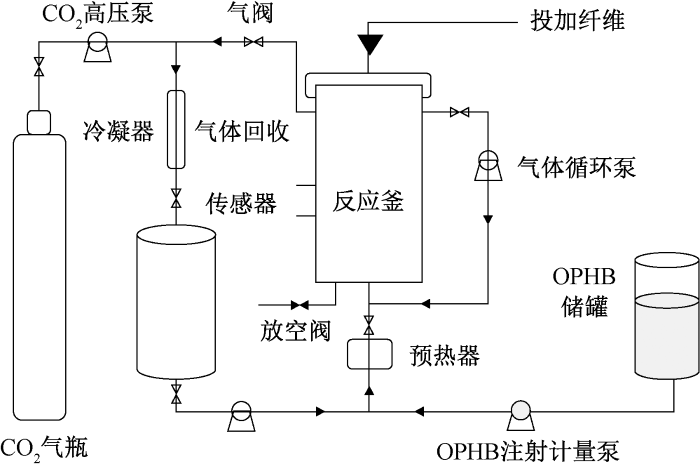
图1
制备OPHB抗菌纤维的工艺流程
Fig.1
Preparation process flow of OPHB antimicrobial fibers
试验选取棉(JC),粘胶(R),莫代尔(MD)和涤纶(T)4种纤维为基材,以大肠埃希菌为目标菌株,探究不同OPHB添加量(0.1%,0.5%,1%,3%和5%)对纤维抗菌性能的影响;综合抗菌效果与性价比,确定OPHB在纤维中的最佳添加量。基于该最佳添加量,进一步制备不同基材的系列OPHB抗菌纤维:棉(AJC)、粘胶(AR)、莫代尔(AMD)和涤纶(AT)。
将制得的抗菌纤维依次经常规纺纱、织造和染色(染黑色)工序,即可制备出抗菌织物:平纹棉织物(AJCT,180 g/m2)、平纹粘胶织物(ART,160 g/m2)、织物莫代尔平纹(AMDT,180 g/m2)和平纹涤纶织物(ATT,135 g/m2)。
1.4 测试与表征
1.4.1 PHBV和OPHB分子结构表征
采用核磁共振波谱仪和傅里叶变换红外光谱仪对PHBV和OPHB的化学结构和官能团进行表征。
1.4.2 OPHB最小抑菌浓度和安全性测试
最小抑菌浓度测试:参照卫生部2002年版《消毒技术规范》中2.1.8.3 最小抑菌浓度试验(琼脂稀释法)执行。
安全性测试:取0.5 mL OPHB,加入玉米油稀释混匀至质量分数为5%后进行测试。检测项目包括多次完整皮肤刺激试验、急性经口毒性试验、皮肤变态反应、小鼠骨髓嗜多染红细胞微核试验和体外细胞基因突变试验,对应的测试依据分别为2002年版《消毒技术规范》第二部分2.3.3、2.3.1、2.3.6、2.3.8.4,以及该规范的2.3.3中V79细胞基因突变试验方法。
1.4.3 纤维抗菌性及抗菌耐水洗性测试
参照GB/T 20944.3—2008 《纺织品 抗菌性能的评价 第3部分:振荡法》测试抗菌纤维及其织物对大肠埃希菌、金黄色葡萄球菌和白念珠菌的抗菌效果。
参照FZ/T 73023—2006《抗菌针织品》测试抗菌纤维及其织物的抗菌耐水洗性,对试样进行50次洗涤处理。
1.4.4 力学性能测试
参照GB/T 3923.1—2019《纺织品 织物拉伸性能 第1部分:断裂强力和断裂伸长率的测定(条样法)》测试试样的力学性能。
1.4.5 溶出性测试
参照FZ/T 73023—2006中附录E的方法测试抑菌圈宽度,测试前试样按照该标准附录C.4的简化洗涤程序完成1次洗涤处理。
2 结果与讨论
2.1 OPHB元素和官能团分析
图2示出OPHB和PHBV的红外光谱图及核磁氢谱图。OPHB红外光谱显示在3 600~3 200 cm-1区间出现明显的羟基特征吸收峰;同时,核磁氢谱显示,OPHB在化学位移为1.4和4.2处出现2组区别于PHBV的特征峰,归属于OPHB分子中甲基上的氢以及与羟基相邻碳原子上的氢。上述结果证实:OPHB是带有大量羟基基团的PHBV低聚物,表明OPHB抗菌剂确实来源于生物基材料PHBV,具备安全环保特性。
图2
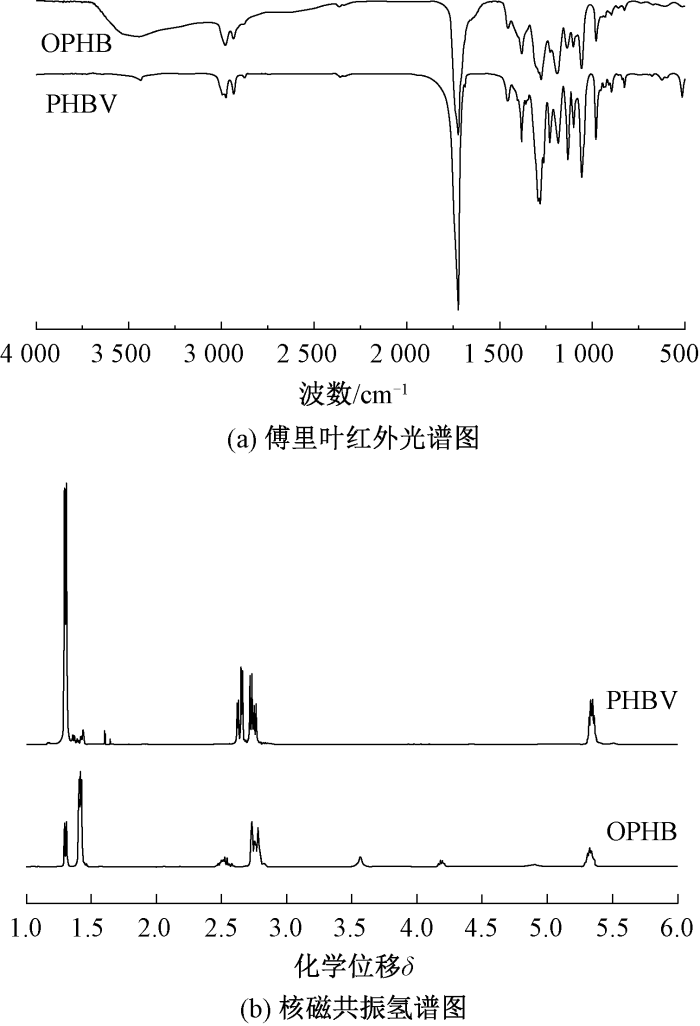
图2
PHBV和OPHB的化学组成分析
Fig.2
Chemical composition analysis of PHBV and OPHB. (a) Fourier transform infrared spectra; (b) Nuclear magnetic resonance hydrogen spectra
2.2 OPHB的最小抑菌浓度和安全性分析
OPHB抗菌剂对代表性菌株的最小抑菌浓度检测结果显示,其对大肠埃希菌和金黄色葡萄球菌的最小抑菌浓度均为5 000 mg/L。安全性检测结果进一步验证了该抗菌剂应用优势:1)急性经口毒性试验结果显示,OPHB属于实际无毒级别;2)多次完整皮肤刺激试验表明,其对皮肤无刺激性;3)皮肤变态反应试验表明,未出现皮肤变态反应;4)小鼠骨髓嗜多染红细胞微核试验结果为阴性;5)体外细胞基因突变试验结果也为阴性。
2.3 OPHB抗菌纤维性能分析
2.3.1 抗菌剂OPHB最佳添加比例分析
图3示出抗菌纤维抗菌效果与OPHB添加量的关系。实验结果表明:1)通过超临界流体技术,OPHB可与4种纤维材料实现良好结合;2)低添加量范围内,随着OPHB添加量的增加,抗菌纤维的抗菌效果显著提升;3)当OPHB添加量达到0.5%时,4种抗菌纤维除抗菌涤纶外对大肠埃希菌的抗菌效果基本达到饱和;抗菌涤纶的抗菌效果虽略低,但也接近90%;4)当OPHB添加量增加至1%时,4种抗菌纤维的抑菌率都已接近100%。
图3
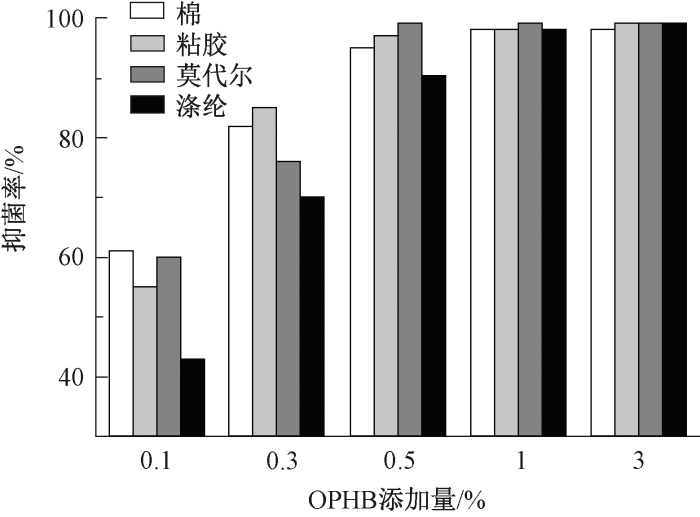
图3
4种纤维添加不同添加量OPHB对大肠埃希菌的抑菌率
Fig.3
Antimicrobial rates of four types of fibers with different contents of OPHB against E. coli
已知OPHB的最小抑菌浓度为5 000 mg/L,而当其仅以0.5%的含量添加到纤维中时,即可实现高效抗菌。这是因为通过超临界流体技术,OPHB被固着于纤维浅表层,其抗菌机制为接触杀菌而非释放抗菌成分,使得纤维表面的OPHB有效浓度远高于溶液体系中测得的最小抑菌浓度值。当继续增加OPHB含量时,抗菌效果不再显著提升。推测其原因为:1)通过超临界流体技术,结合到纤维上的OPHB,在添加量为0.5%时已接近纤维的最大负载量,在纤维表面达到了饱和覆盖[25];2)OPHB需与微生物细胞膜或特定作用靶点结合才能发挥抗菌作用。当添加量达到一定程度后,微生物这些结合位点均能被完全结合,增加OPHB添加量无法产生额外抗菌效果[26];3)高浓度OPHB可诱导细菌启动应激防御机制,如增强外排泵活性、改变细胞膜通透性或形成生物膜等,从而抵消额外抗菌剂的作用[27]。综上,选取OPHB在纤维中的最佳添加量为0.5%,既能保证优异的抗菌效果,又能控制生产成本。
2.3.2 抗菌性和抗菌耐水洗性分析
在确定OPHB的最佳添加量后,本文进一步探究OPHB抗菌纤维的抗菌性能和耐水洗性,测试结果如表1所示。由表可知,抗菌棉、抗菌粘胶、抗菌莫代尔和抗菌涤纶在清洗前对3种受试菌株均表现出优异抗菌活性,部分实验组的抑菌率接近100%,这一结果进一步验证了OPHB的高效抗菌特性,同时也验证了所选添加量的合理性。
表1 OPHB抗菌纤维的抗菌性和耐水洗抗菌性
Tab.1
| 样品 编号 | 对大肠埃希菌 抑菌率/% | 对金黄色葡萄球菌 抑菌率/% | 对白念珠菌 抑菌率/% | |||
|---|---|---|---|---|---|---|
| 水洗前 | 水洗后 | 水洗前 | 水洗后 | 水洗前 | 水洗后 | |
| AJC | 99 | 91 | 98 | 95 | 95 | 89 |
| 99 | 93 | 97 | 96 | 93 | 88 | |
| 99 | 92 | 99 | 94 | 94 | 90 | |
| AR | 95 | 90 | 94 | 92 | 99 | 92 |
| 93 | 93 | 96 | 92 | 93 | 93 | |
| 97 | 92 | 97 | 93 | 94 | 90 | |
| AMD | 96 | 93 | 96 | 95 | 97 | 92 |
| 94 | 90 | 98 | 93 | 92 | 92 | |
| 97 | 92 | 94 | 92 | 91 | 89 | |
| AT | 98 | 94 | 98 | 93 | 93 | 88 |
| 96 | 94 | 96 | 92 | 91 | 89 | |
| 97 | 95 | 98 | 95 | 93 | 92 | |
耐水洗性能不足是制约抗菌纺织品长期应用的技术瓶颈,即在多次标准洗涤条件下,纺织品的抗菌效果往往难以维持[24]。本文实验结果表明,4种抗菌纤维经过50次洗涤后,对大肠埃希菌、金黄色葡萄球菌和白念珠菌的抗菌效果均没有明显衰减。这表明借助超临界流体技术,负载OPHB的抗菌纤维具有优异的耐水洗性能和广阔的实际应用潜力。
2.3.3 力学性能分析
表2示出经过超临界流体技术负载OPHB的4种纤维加工前后的断裂强度和断裂伸长率。由表可知,抗菌处理前后4种纤维的力学性能指标基本保持不变。这一结果主要归因于以下3个方面:1)超临界流体技术可将OPHB固着于纤维浅表层,而不会渗入纤维内部结构;2)与采用传统母粒添加法向纤维内部引入纳米颗粒,进而改变纤维结构的方式不同,超临界流体技术不破坏纤维本体结构;3)超临界流体技术处理条件温和,不会对纤维结构造成损伤,因此,通过该技术制备的OPHB抗菌纤维,在后续纺纱、织造和染色等加工工序中,不易出现传统抗菌纤维常见的技术缺陷。
表2 OPHB抗菌纤维加工前后性能对比
Tab.2
| 样品 编号 | 线密度/dtex | 断裂强度/(cN·dtex-1) | 断裂伸长率/% | |||
|---|---|---|---|---|---|---|
| 加工前 | 加工后 | 加工前 | 加工后 | 加工前 | 加工后 | |
| AJC | 1.64±0.02 | 1.63±0.01 | 3.24±0.05 | 3.28±0.03 | 5.77±0.25 | 5.83±0.12 |
| AR | 1.34±0.02 | 1.32±0.01 | 2.86±0.02 | 2.86±0.02 | 18.47±0.15 | 18.63±0.23 |
| AMD | 1.15±0.01 | 1.12±0.01 | 4.04±0.09 | 4.10±0.02 | 13.57±0.04 | 13.43±0.21 |
| AT | 1.94±0.02 | 1.94±0.01 | 4.87±0.01 | 4.92±0.03 | 33.20±0.36 | 33.57±0.15 |
2.4 溶出性分析
按照FZ/T 73023—2006规定:抗菌织物洗涤1次后,若抑菌圈直径D>1 mm,判定为溶出型抗菌织物;若抑菌圈直径D<1 mm,则判定为非溶出型抗菌织物。表3示出4种抗菌纤维对3种受试菌株的抑菌圈直径测试数据。结果显示,除AJC实验组对金黄色葡萄球菌的抑菌圈直径为1 mm,其它所有实验组的抑菌圈直径均为0 mm。这表明采用超临界流体技术负载OPHB的纤维及其织物,可判定为非溶出型产品。与溶出型抗菌产品相比,非溶出型抗菌产品的抗菌成分不会随使用过程缓释逸出,从而避免了抗菌成分渗入人体皮肤深层或人体内部的潜在风险。由此可见,使用超临界流体技术复合OPHB制备的抗菌纤维及其织物具有更高的应用安全性。
表3 OPHB抗菌纤维溶出性测试结果
Tab.3
| 样品 编号 | 抑菌圈直径D/mm | ||
|---|---|---|---|
| 对大肠埃希菌 | 对金黄色葡萄球菌 | 对白念珠菌 | |
| AJC | 0 | 1 | 0 |
| AR | 0 | 0 | 0 |
| AMD | 0 | 0 | 0 |
| AT | 0 | 0 | 0 |
2.5 抗菌纺织品抗菌性及耐水洗性分析
综合上述研究结果可知,OPHB抗菌纤维具有优异的综合性能。但织物制造流程涵盖多道加工工序,尤其是染色环节,需在特定条件下添加化学染料,这一过程可能造成抗菌活性成分OPHB的流失。表4示出4种OPHB抗菌织物在水洗前后对3种代表性菌株的抗菌效果。实验结果表明,所有织物均表现出优异的抗菌活性。这说明采用常规织物生产工艺不会对经超临界流体技术处理的OPHB抗菌纤维的抗菌性能产生不良影响。
表4 OPHB抗菌织物抗菌性和耐水洗抗菌性
Tab.4
| 样品 编号 | 对大肠埃希菌 抑菌率/% | 对金黄色葡萄 球菌抑菌率/% | 对白念珠菌 抑菌率/% | |||
|---|---|---|---|---|---|---|
| 水洗前 | 水洗后 | 水洗前 | 水洗后 | 水洗前 | 水洗后 | |
| AJCT | 95 | 91 | 95 | 94 | 94 | 90 |
| 94 | 92 | 96 | 94 | 94 | 91 | |
| 94 | 92 | 98 | 95 | 95 | 88 | |
| ART | 94 | 92 | 96 | 93 | 98 | 90 |
| 94 | 91 | 96 | 91 | 97 | 93 | |
| 93 | 90 | 97 | 93 | 96 | 90 | |
| AMDT | 93 | 93 | 94 | 94 | 98 | 88 |
| 92 | 90 | 97 | 92 | 97 | 88 | |
| 94 | 93 | 98 | 95 | 92 | 89 | |
| ATT | 95 | 94 | 97 | 93 | 94 | 86 |
| 96 | 96 | 97 | 91 | 91 | 89 | |
| 96 | 91 | 98 | 90 | 91 | 88 | |
3 结论
本文通过超临界流体技术将聚3-羟基丁酸戊酸酯(PHBV)低聚物(OPHB)抗菌剂负载到棉、粘胶、莫代尔、涤纶4种纤维上,成功制备了新型抗菌纤维。对OPHB进行结构表征并对抗菌纤维及其织物进行综合性能测试,结果表明:1)OPHB作为源于PHBV的低聚物,兼具安全性与高效抗菌活性,在低浓度下即可发挥优异抗菌作用;2)超临界流体技术负载OPHB适用于多种纤维基材的抗菌处理,所制备的抗菌纤维不仅耐水洗性优良,可实现长效抗菌,且纤维力学性能与抗菌处理前基本保持一致;3)OPHB抗菌纤维属于非溶出型抗菌材料,对人体皮肤的潜在风险低,适用于贴身衣物等面料开发;4)经纺纱、织造和染色等加工工序后,由OPHB抗菌纤维制得的织物仍能保持优异的抗菌性能与耐水洗性。
参考文献
抗菌聚丙烯的制备及应用研究进展
[J].
Research progress in preparation and application of antimicrobial polypropylene
[J].
生物医用纺织材料及其器件研究进展
[J].说明了生物医用纺织纤维及其制品和材料、医用材料与生物体相互作用的基本特征以及生物医用纺织材料的研发特殊性。其次,以人工血管、支架管、抗菌缝合线、功能敷料、载药纺织品、纤维基传感器、防护服等为例,介绍了典型纺织基医疗器械研发现状和发展,包括临床需求、材料和结构的设计与制备技术及安全性和功能性评价技术。最后,提出了加速我国生物医用纺织材料及医疗器械研发的建议。
Research progress on biomedical textile materials and devices
[J].<p>This paper firstly introduces fibers and products of the biomedical textile material, the basic characteristics of the interaction with the organism and the particularity of the research and development on the biomedical textile material. Then, the status and development of devices which are made of textiles are presented in this paper, including the clinical demands, the design and manufacture technology of the materials and structures and the appraisement technology of the safety and function. Some representative devices are the vascular prosthesis, the stent, the anti-bacterial suture, the multi-functional dressing, the drug-loaded textile, the fiber-based sensor and the protective garment. Finally, the suggestion is put forward to accelerate the domestic development on biomedical textile materials and devices.</p>
Application of achillea millefolium as a natural antibacterial agent in finishing of textile
[J].DOI:10.1007/s12221-023-00309-2 [本文引用: 1]
Development of a poly(cation-π) antibacterial agent for thermal and moisture managing in PET fabrics
[J].DOI:10.1002/adfm.v35.23 URL [本文引用: 1]
纳米氢氧化镁对茶叶黑斑病原真菌活性的抑制效应研究
[J].
Study on the inhibition effect of nano-Mg (OH)2 to tea blackspot disease pathogenic fungi activity
[J].
纳米银抗菌卫生巾抗菌效果及安全性研究
[J].
Antibacterial effects and security for nano-silver antibacterial sanitary napkins
[J].
Recent antibacterial agents from biomass derivatives: characteristics and applications
[J].DOI:10.1016/j.jobab.2024.02.002 URL [本文引用: 1]
Discovery of novel antibacterial agent for the infected wound treatment: all-hydrocarbon stapling optimization of LL-37
[J].
DOI:10.7150/thno.87916
PMID:38323312
[本文引用: 1]

Antimicrobial peptide LL-37 has been recognized as a favorable alternative to antibiotics due to its broad antibacterial spectrum, low resistance development and diverse biological activities. However, its high manufactory cost, poor proteolytic stability, and unpredictable cytotoxicity seriously hindered its medical translation. To push the frontiers of its clinical application, all-hydrocarbon stapling strategy was exploited here for the structural modification of KR-12, the core and minimal fragment of LL-37. Based on a library of KR-12 derivatives that designed and synthesized to be stapled at positions of either or, structure to activity relationship was investigated. Among them, KR-12(Q, D) with the glutamine and aspartic acid residues stapled displayed increased helical content and positive charge. The reinforced α-helical conformation not only protected it from proteolytic hydrolysis but also improved its antibacterial efficacy via effective membrane perturbation and anti-inflammatory efficacy via compact LPS binding. Besides, the increased positive charge endowed it with an enhanced therapeutic index. On infected wound mouse model, it was demonstrated to eliminate bacteria and promote wound closure and regeneration effectively. Overall, the all-hydrocarbon stapling was proven to lay the foundation for the future development of antibacterial agents. KR-12(Q, D) could serve as a lead compound for the clinical treatment of bacterial infections.© The author(s).
无机抗菌织物的研究进展
[J].
DOI:10.13475/j.fzxb.20210309409
[本文引用: 1]
为深入了解无机抗菌剂的优缺点,制备性能更加优异的抗菌织物,对国内外相关研究进展进行了综述。分析了金属型和光催化型无机抗菌剂的抗菌机制,介绍了银系、铜系、锌系以及复合型的无机抗菌剂在纺织品领域的研究进展。指出:与其他类型的抗菌剂相比,无机抗菌剂具有广谱性强、不易使细菌产生耐药性等优点,但是在实际应用中也存在着一些问题,如银系抗菌剂价格昂贵;铜系抗菌剂颜色较深;锌系抗菌剂抗菌效果较弱等,通过与其他抗菌剂进行复合可以制备性能优异的复合抗菌织物,未来的研究方向应该是开发具有功能复合化、智能化、舒适性好等特性的多功能抗菌织物。
Research progress of inorganic antibacterial fabrics
[J].
DOI:10.13475/j.fzxb.20210309409
[本文引用: 1]
To gain an in-depth understanding of the advantages and disadvantages of inorganic antimicrobial agents and to prepare antimicrobial fabrics with improved performance, the relevant research progress was reviewed. The antimicrobial mechanisms of metal-based and photocatalytic inorganic antimicrobial agents were briefly introduced, and the research progress of silver-based, copper-based, zinc-based, and composite inorganic antimicrobial agents in the field of textiles was mainly introduced. Compared with other types of antimicrobial agents, inorganic antimicrobial agents have the advantages in strong broad-spectrum and are not easy to make bacteria resistant, but there are some problems in practical application, including silver antimicrobial agents being expensive, copper antimicrobial agents darker, zinc antimicrobial agents weaker and so on. By compounding with other antimicrobial agents, compound antimicrobial fabrics with excellent performance are possible to be achieved. The future research direction should be the development of multi-functional antibacterial fabrics with the characteristics of functional compounding, intelligence, and good comfort.
Antibacterial applications of elemental nanomaterials
[J].DOI:10.1016/j.cossms.2022.101043 URL [本文引用: 1]
Quaternary ammonium salts: insights into synthesis and new directions in antibacterial applications
[J].
DOI:10.1021/acs.bioconjchem.2c00598
PMID:36748912
[本文引用: 2]
The overuse of antibiotics has led to the emergence of a large number of antibiotic-resistant genes in bacteria, and increasing evidence indicates that a fungicide with an antibacterial mechanism different from that of antibiotics is needed. Quaternary ammonium salts (QASs) are a biparental substance with good antibacterial properties that kills bacteria through simple electrostatic adsorption and insertion into cell membranes/altering of cell membrane permeability. Therefore, the probability of bacteria developing drug resistance is greatly reduced. In this review, we focus on the synthesis and application of single-chain QASs, double-chain QASs, heterocyclic QASs, and gemini QASs (GQASs). Some possible structure-function relationships of QASs are also summarized. As such, we hope this review will provide insight for researchers to explore more applications of QASs in the field of antimicrobials with the aim of developing systems for clinical applications.
Harnessing multi-modal exciton migration in hybrid halide perovskite for photocatalytic amplification of nitric oxide and hydroxyl radicals toward bacterial killing and biofilm disruption
[J].DOI:10.1002/adfm.v34.28 URL [本文引用: 1]
Novel fungal diphenyl ether biosynthetic gene clusters encode a promiscuous oxidase for elevated antibacterial activities
[J].
DOI:10.1039/D4SC01435A
URL
[本文引用: 1]
\n This work describes a novel pathway for fungal diphenyl ether (DPE) biosynthesis, including a promiscuous hydroxylase whose substrate range is modulated by its\n C\n -terminus. DPEs may provide antibiotics against multidrug-resistant human pathogens.\n
新型纺织用生物基抗菌整理剂的研究进展
[J].
Research progress on new bio-antibacterial agents for textiles
[J].DOI:10.1177/004051757104100301 URL [本文引用: 1]
Fabrication of perm-inspired Janus polyester fabric via unilateral surface engineering for unidirectional water transport and antibacterial properties
[J].DOI:10.1016/j.cej.2024.158456 URL [本文引用: 1]
In vitro Na+/K+-ATPase inhibitory activity and antimicrobial activity of sesquiterpenes isolated from Thujopsis dolabrata
[J].DOI:10.1007/s12272-011-1218-5 URL [本文引用: 1]
Chitosan disrupts the barrier properties of the outer membrane of gram-negative bacteria
[J].DOI:10.1016/S0168-1605(01)00609-2 URL [本文引用: 1]
Synergistic effect of silver-nanodiamond composite as an efficient antibacterial agent against E. coli and S. aureus
[J].DOI:10.1016/j.heliyon.2024.e30500 URL [本文引用: 1]
海泡石负载离子液体制备高热稳定性抗菌剂
[J].
Preparation of high thermal-stable antibacterial material with sepiolite droped ionic liquid
[J].
Disinfection spreads antimicrobial resistance
[J].DOI:10.1126/science.abg4380 PMID:33510019 [本文引用: 1]
Antimicrobial peptides: opportunities and challenges in overcoming resistance
[J].DOI:10.1016/j.micres.2024.127822 URL [本文引用: 1]
A new antimicrobial agent: poly (3-hydroxybutyric acid) oligomer
[J].DOI:10.1002/mabi.v19.5 URL [本文引用: 1]
服装用无机抗菌剂改性PET纤维研究进展
[J].
Research progress on PET fiber modified with inorganic antibacterial agents for clothing
[J].
功能性纺织品研究进展
[J].
Research progress on functional textiles
[J].
Recent advances in antimicrobial treatments of textiles
[J].
DOI:10.1177/0040517507082332
URL
[本文引用: 1]
The growth of microbes on textiles during use and storage negatively affects the wearer as well as the textile itself. The detrimental effects can be controlled by durable antimicrobial finishing of the textile using broad-spectrum biocides or by incorporating the biocide into synthetic fibers during extrusion. Consumers' attitude towards hygiene and active lifestyle has created a rapidly increasing market for antimicrobial textiles, which in turn has stimulated intensive research and development. This article reviews the requirements for antimicrobial finishing, qualitative and quantitative evaluations of antimicrobial efficacy, the application methods of antimicrobial agents and some of the most recent developments in antimicrobial treatments of textiles using various active agents such as silver, quaternary ammonium salts, polyhexamethylene biguanide, triclosan, chitosan, dyes and regenerable N-halamine compounds and peroxyacids. Examples of commercial antimicrobial products are presented to illustrate the active agents used and their finishing methods.
Challenges of antibacterial discovery
[J].
DOI:10.1128/CMR.00030-10
PMID:21233508
[本文引用: 1]
The discovery of novel small-molecule antibacterial drugs has been stalled for many years. The purpose of this review is to underscore and illustrate those scientific problems unique to the discovery and optimization of novel antibacterial agents that have adversely affected the output of the effort. The major challenges fall into two areas: (i) proper target selection, particularly the necessity of pursuing molecular targets that are not prone to rapid resistance development, and (ii) improvement of chemical libraries to overcome limitations of diversity, especially that which is necessary to overcome barriers to bacterial entry and proclivity to be effluxed, especially in Gram-negative organisms. Failure to address these problems has led to a great deal of misdirected effort.
Combatting antibiotic-resistant bacteria using nanomaterials
[J].
DOI:10.1039/c7cs00748e
PMID:30462112
[本文引用: 1]
The dramatic increase in antimicrobial resistance for pathogenic bacteria constitutes a key threat to human health. The Centers for Disease Control and Prevention has recently stated that the world is on the verge of entering the "post-antibiotic era", one where more people will die from bacterial infections than from cancer. Recently, nanoparticles (NPs) have emerged as new tools that can be used to combat deadly bacterial infections. Nanoparticle-based strategies can overcome the barriers faced by traditional antimicrobials, including antibiotic resistance. In this tutorial review, we have highlighted multiple nanoparticle-based approaches to eliminate bacterial infections, providing crucial insight into the design of elements that play critical roles in creating antimicrobial nanotherapeutics. In particular, we have focused on the pivotal role played by NP-surface functionality in designing nanomaterials as self-therapeutic agents and delivery vehicles for antimicrobial cargo.

 京公网安备11010502044800号


