纺织学报 ›› 2025, Vol. 46 ›› Issue (06): 196-202.doi: 10.13475/j.fzxb.20240804701
于晓坤1,2, 易萍1, 谢冠婧1, 蔡凌霄1,2( )
)
YU Xiaokun1,2, YI Ping1, XIE Guanjing1, CAI Lingxiao1,2()
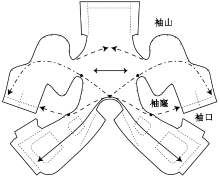
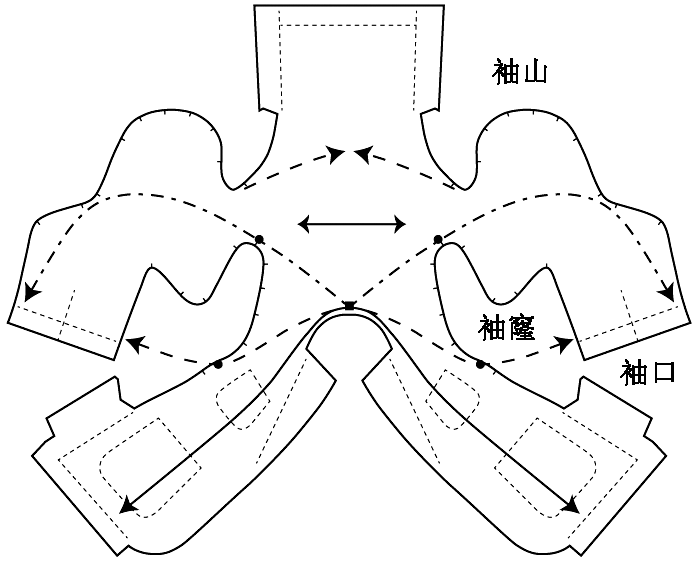
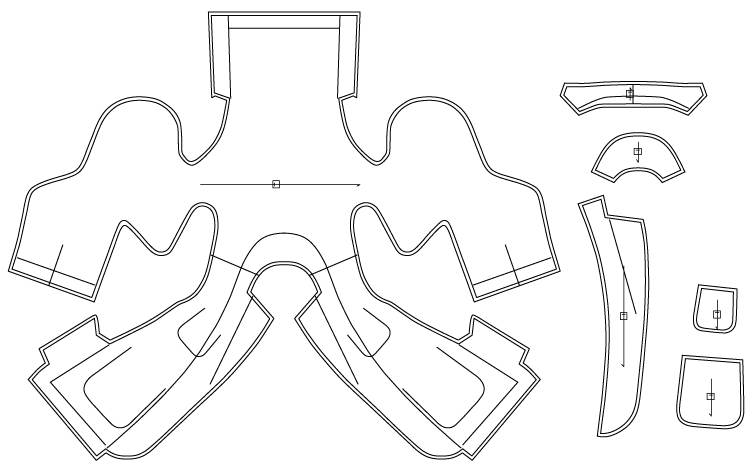
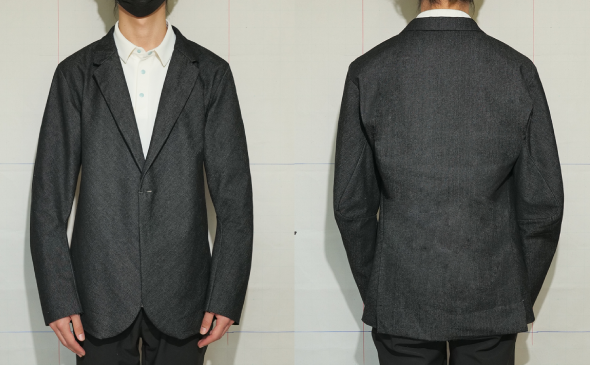
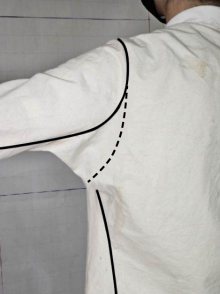
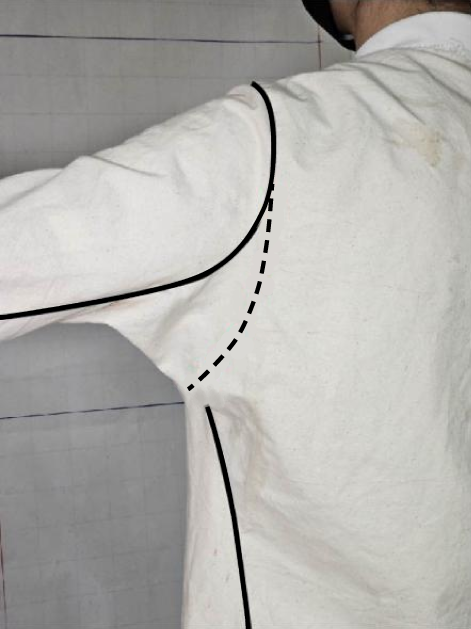
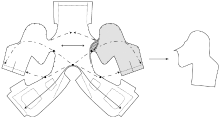
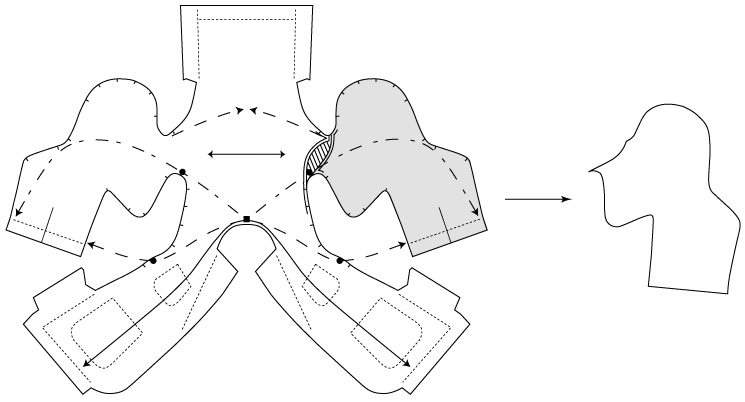
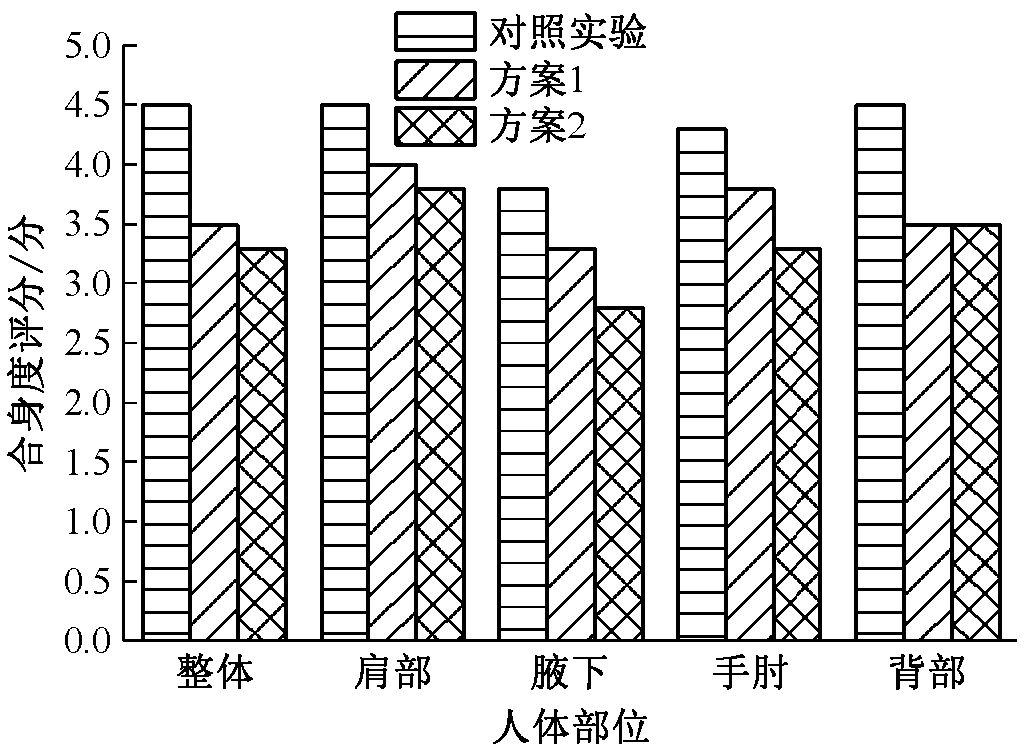
摘要: 为探究理查德·林韦斯特基于人体动力学的服装结构设计方法改善服装运动舒适性的原理和机制,还原采用该方法制作的休闲西服为对照实验样衣,通过分步结构调整实验,首先将衣袖从衣身分离得到非常规一片袖作为衣袖结构方案1,然后将非常规一片袖分割重组得到两片袖作为衣袖结构方案2;最后通过人体穿着实验得到受试者对3款衣袖的穿着合身度和运动舒适性评分,并对比分析其优劣及原因。结果表明:基于人体动力学的一片式休闲西服衣袖运动舒适性最好,其衣袖分割线顺应手臂的移动方向,为腋下和肘部提供了更适宜的活动松量;同时,斜向面料丝缕的设计使衣袖在腋下和肘部有更好的延展性。
中图分类号:
| [1] | 彭曼. 体育运动服装舒适性及运动功能性创新实践[J]. 棉纺织技术, 2022, 50(1): 88-89. |
| PENG Man. Innovative practices of comfort and sports functionality in sports clothing[J]. Cotton Textile Technology, 2022, 50(1): 88-89. | |
| [2] | 陈足娇. 极高海拔登山裤运动舒适性关键技术研究[D]. 重庆: 西南大学, 2023:3-4. |
| CHEN Zujiao. Research on key technology of comfort in high altitude hiking pants[D]. Chongqing: Southwest University, 2023:3-4. | |
| [3] | 程慧婕, 王燕珍. 跑步循环动作的手臂皮肤拉伸测量[J]. 现代纺织技术, 2021, 29(3): 57-64. |
| CHENG Huijie, WANG Yanzhen. Arm skin stretch measurements during running cycles[J]. Advanced Textile Technology, 2021, 29(3): 57-64. | |
| [4] | 刘婕羽, 赵欲晓. 基于下肢体表测试的针织女跑步裤结构优化[J]. 针织工业, 2018(1): 78-82. |
| LIU Jieyu, ZHAO Yuxiao. Structural optimization of knitted women's running pants based on lower body surface test[J]. Knitting Industries, 2018(1): 78-82. | |
| [5] | 李秀青, 刘需, 赵欲晓. 骑行运动中男子下肢体表尺寸变化规律[J]. 纺织学报, 2017, 38(8): 120-126. |
| LI Xiuqing, LIU Xu, ZHAO Yuxiao. The variation of male lower extremity body surface size during cycling[J]. Journal of Textile Research, 2017, 38(8): 120-126. | |
| [6] | 冯洋, 王永进. 基于足球运动的男子下肢体表皮肤形变的研究[J]. 北京服装学院学报(自然科学版), 2017, 37(2): 25-32. |
| FENG Yang, WANG Yongjin. Study on skin deformation of male lower extremity body surface based on football[J]. Journal of Beijing Institute of Fashion Technology(Natural Science Edition), 2017, 37(2): 25-32. | |
| [7] | 刘鹏林. 基于上肢带变化特征的软壳冲锋衣衣袖结构研究[D]. 北京: 北京服装学院, 2018:22-40. |
| LIU Penglin. Study on sleeve structure of soft-shell hardshell jacket based on changes of upper limb band[D]. Beijing: Beijing Institute of Fashion Techno-logy, 2018: 22-40. | |
| [8] | 周幸子, 王朝晖, 张龙琳, 等. 基于形态分析的男性户外登山服结构设计[J]. 丝绸, 2020, 57(7): 117-122. |
| ZHOU Xingzi, WANG Zhaohui, ZHANG Longlin, et al. Structural design of male outdoor climbing clothing based on morphological analysis[J]. Journal of Silk, 2020, 57(7): 117-122. | |
| [9] | 李琴. 气囊式防摔功能服设计研究[D]. 重庆: 西南大学, 2018:37-42. |
| LI Qin. Research on design of air-bag anti-fall functional suit[D]. Chongqing: Southwest University, 2018:37-42. | |
| [10] | LUO S H, WANG J P, YAO X F, et al. A novel method for determining skin deformation of lower limb in cycling[J]. Journal of The Textile Institute, 2017, 108(9): 1600-1608. |
| [11] | WANG W R, CONG H L, DONG Z J, et al. Digital design model for weft-knitted seamless yoga pants based on skin deformation[J]. Journal of Engineered Fibers and Fabrics, 2021(16):1-9. |
| [12] | 贾雪如, 薛文良, 魏嘉彬. 服装压力与运动舒适性的研究现状[J]. 国际纺织导报, 2020, 48(9): 48-53. |
| JIA Xueru, XUE Wenliang, WEI Jiabin. Research status of clothing pressure and sports comfort[J]. Melliand China, 2020, 48(9): 48-53. | |
| [13] | 袁围围, 孙超, 刘莉, 等. 自由式滑雪竞赛服面料优化及其压力舒适性评价[J]. 毛纺科技, 2022, 50(2): 8-14. |
| YUAN Weiwei, SUN Chao, LIU Li, et al. Fabric optimization and pressure comfort evaluation of freestyle skiing suit[J]. Wool Textile Journal, 2022, 50(2): 8-14. | |
| [14] | 耿文娟, 侯东昱. 基于面料机械压褶的医用防护服改进设计[J]. 西部皮革, 2023, 45(9): 105-107. |
| GENG Wenjuan, HOU Dongyu. Improved design of medical protective clothing based on fabric mechanical folding[J]. West Leather, 2023, 45(9): 105-107. | |
| [15] | 张沛钰. 基于运动舒适性的骑行服创新设计研究[D]. 大连: 大连工业大学, 2023:24-31. |
| ZHANG Peiyu. Research on the innovative design of riding clothing based on sports comfort[D]. Dalian: Dalian Polytechnic University, 2023:24-31. | |
| [16] | 赵薇, 周永凯, 张华. 基于3D试衣的作训服肩背运动舒适性结构设计[J]. 北京服装学院学报(自然科学版), 2017, 37(2): 40-48. |
| ZHAO Wei, ZHOU Yongkai, ZHANG Hua. Design of shoulder and back movement comfort structure of training clothing based on 3D fitting[J]. Journal of Beijing Institute of Fashion Technology(Natural Science Edition), 2017, 37(2): 40-48. | |
| [17] | LINDQVIST R. Kinetic garment construction-remarks on the foundations of pattern cutting[D]. Sweden: The Swedish School of Textiles, 2015:140-149. |
| [18] | 曾靖涵, 池泽俊, 孙银银, 等. 涤纶混纺面料抽褶裙褶皱造型评价与分析[J]. 天津纺织科技, 2024(2): 22-26. |
| ZENG Jinghan, CHI Zejun, SUN Yinyin, et al. Evaluation and analysis of pleated skirt shape of polyester blend fabric[J]. Tianjin Textile Science & Technology, 2024(2): 22-26. | |
| [19] | 孔媛, 劳稼玮. 面料性能对男士西服门襟造型的影响[J]. 现代纺织技术, 2024, 32(1): 100-107. |
| KONG Yuan, LAO Jiawei. The influence of fabric properties on the shape of men's suit front[J]. Advanced Textile Technology, 2024, 32(1): 100-107. |
| [1] | 吕迎蕊, 王朝晖, 叶勤文, 刘欢欢, 孙月鑫. 运动服装的设计方法及发展趋势[J]. 纺织学报, 2025, 46(03): 256-265. |
| [2] | 张昭华, 羊悦, 倪军, 张旭. 人体对干燥和含水织物的接触感知对比研究[J]. 纺织学报, 2024, 45(11): 193-198. |
| [3] | 周莉, 樊培宏, 金玉婷, 张龙琳, 李新荣. 服装逆向造型的数字化设计方法[J]. 纺织学报, 2023, 44(12): 138-144. |
| [4] | 杨钰蝶, 李承璋, 金剑, 郑晶晶. 基于上肢活动性的灭火防护服背带的设计与评价[J]. 纺织学报, 2023, 44(11): 183-189. |
| [5] | 刘咏梅, 刘思忆, 于晓坤, 薛惠心, 张向辉. 中国东部地区中老年女性体型特征与分类[J]. 纺织学报, 2023, 44(07): 184-191. |
| [6] | 陈佳, 杨聪聪, 刘军平, 何儒汉, 梁金星. 手绘草图到服装图像的跨域生成[J]. 纺织学报, 2023, 44(01): 171-178. |
| [7] | 王迪, 柯莹, 王宏付. Voronoi图形在参数化服装造型构建中的应用[J]. 纺织学报, 2021, 42(12): 131-137. |
| [8] | 金鹏, 薛哲彬, 江润恬, 刘丹宇, 张弛. 具有安全防护功能的智能盲人服设计[J]. 纺织学报, 2021, 42(08): 135-143. |
| [9] | 唐茜, 张冰冰, 郑笑雨. 婴幼儿可穿戴智能监测服装设计[J]. 纺织学报, 2021, 42(08): 156-160. |
| [10] | 徐增波, 张玲, 张艳红, 陈桂清. 基于复杂网络提取和支持向量机模型分类的服装领型研究[J]. 纺织学报, 2021, 42(06): 146-152. |
| [11] | 张恒. 基于翻领松量结构模型的翻折领结构设计方法[J]. 纺织学报, 2020, 41(11): 128-135. |
| [12] | 杨娟, 张远鹏. 服装设计知识图谱中的服装装饰工艺分类模型[J]. 纺织学报, 2020, 41(08): 95-100. |
| [13] | 刘佟. 基于人体曲面变化的服装几何空间设计[J]. 纺织学报, 2019, 40(11): 155-160. |
| [14] | 楚鑫鑫, 肖红, 范杰. 织物凉感等级的主客观评价及确定[J]. 纺织学报, 2019, 40(02): 105-113. |
| [15] | 陈雁. 服装设计与工程学科发展趋势与关键议题[J]. 纺织学报, 2019, 40(01): 182-188. |
|
||
 京公网安备11010502044800号