纺织学报 ›› 2025, Vol. 46 ›› Issue (10): 79-85.doi: 10.13475/j.fzxb.20250106101

• 纺织工程 • 上一篇    下一篇

基于凹凸参数的纬编立体提花结构三维建模

余官应1,2, 蒋高明3, 方帅军1,4, 郑培晓1,2()   

  1. 1.绍兴文理学院 浙江省清洁染整技术研究重点实验室, 浙江 绍兴 312000
    2.绍兴文理学院绍兴市高性能纤维及制品重点实验室, 浙江 绍兴 312000
    3.江南大学 针织技术教育部工程研究中心, 江苏 无锡 214122
    4.绍兴文理学院 纤维基复合材料国家工程研究中心绍兴分中心, 浙江 绍兴 312000
  • 收稿日期:2025-01-24 修回日期:2025-06-24 出版日期:2025-10-15 发布日期:2025-10-15
  • 通讯作者: 郑培晓(1996—),女,讲师,博士。主要研究方向为针织物结构设计与数字化针织技术。E-mail:zpx@usx.edu.cn
  • 作者简介:余官应(2006—),女,本科生。主要研究方向为针织物结构设计和产品开发。
  • 基金资助:
    国家自然科学基金项目(62407030);浙江省高等教育学会课题(KT2025105);国家级大学生创新训练项目(202510349038);教育部产学合作协同育人项目(220606090132428);绍兴文理学院大学生科研基金资助项目(绍学院团〔2024〕22 号)

3-D modeling of weft-knitted stereoscopic jacquard structure based on bump parameters

YU Guanying1,2, JIANG Gaoming3, FANG Shuaijun1,4, ZHENG Peixiao1,2()   

  1. 1. Key Laboratory of Clean Dyeing and Finishing Technology of Zhejiang Province, Shaoxing University, Shaoxing, Zhejiang 312000, China
    2. Shaoxing Key Laboratory of High Performance Fibers & Products, Shaoxing University, Shaoxing, Zhejiang 312000, China
    3. Engineering Research Center for Knitting Technology, Ministry of Education, Jiangnan University, Wuxi, Jiangsu 214122, China
    4. Shaoxing Sub-Center of National Engineering Research Center for Fiber-Based Composites, Shaoxing University, Shaoxing, Zhejiang 312000, China
  • Received:2025-01-24 Revised:2025-06-24 Published:2025-10-15 Online:2025-10-15

摘要:

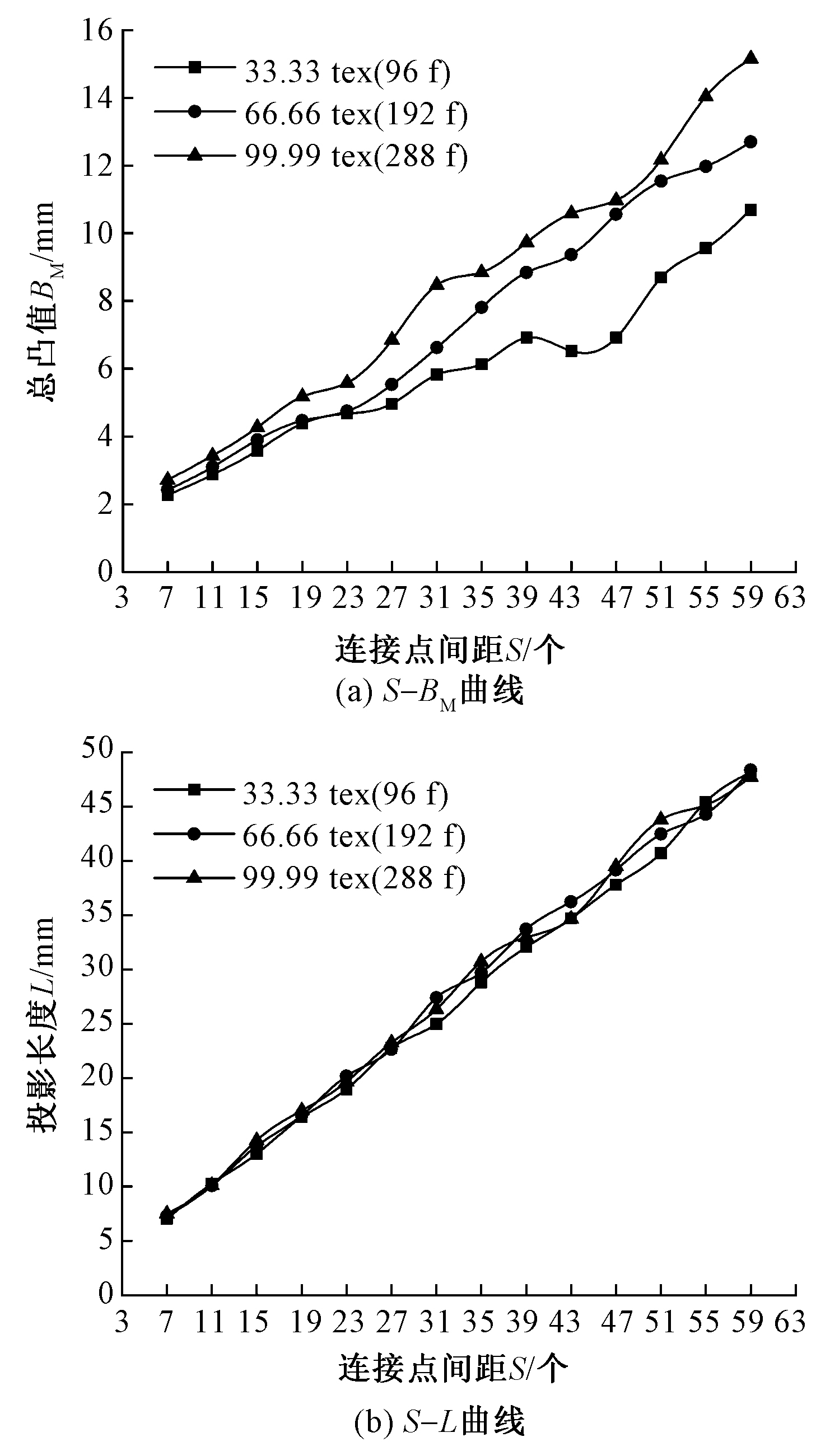
针对纬编立体提花织物空间结构复杂且模拟困难等问题,基于编织规律解析立体凹凸结构的形成机制并探究凹凸参数对三维结构的影响,从而建立织物三维凹凸结构几何模型。通过凹凸结构分析将连接点和花型边部均视作连接部位且形成凹陷,其它区域因中空结构和衬纬纱蓬松而形成凸起。基于控制变量法设计实验方案并测算总凸值、投影长度、正面凸值和反面凸值等重要参数,之后重点探究了连接点间距、衬纬纱线密度和正反面纵密对上述参数的影响。结合数据拟合曲线进行凹凸结构分析,结果表明:连接点间距越大,总凸值和投影长度均呈现增大趋势;衬纬纱越粗,总凸值逐渐增大;正反面纵密比值约等于正反面凸值之比。综合分析连接点间距和衬纬纱线密度对凹凸参数的影响规律并生成三维拟合曲面,计算花型各区域连接点间距后利用拟合函数计算正反面凸值,从而建立纬编立体提花织物三维凹凸结构模型,为后续仿真形变计算提供参考。

关键词: 纬编, 立体提花, 凹凸参数, 凹凸结构, 三维建模

Abstract:

Objective Weft-knitted stereoscopic jacquard fabric is widely used in home textile such as mattress due to its excellent physical, mechanical, thermal, and moisture comfort properties. The study of bump structure is the foundation for computer simulation of fabrics and crucial for effectively predicting knitting results. The research on design methods and modeling techniques for jacquard fabricsattracted much attention, but the complex structure and challenges in simulating the three-dimensional (3-D) effects of weft-knitted stereoscopic jacquard fabrics pose serious difficulties for researchers, leaving limited references in the field of design and simulation technology for such fabrics. This study focuses on the design of four-color stereoscopic jacquard fabrics.

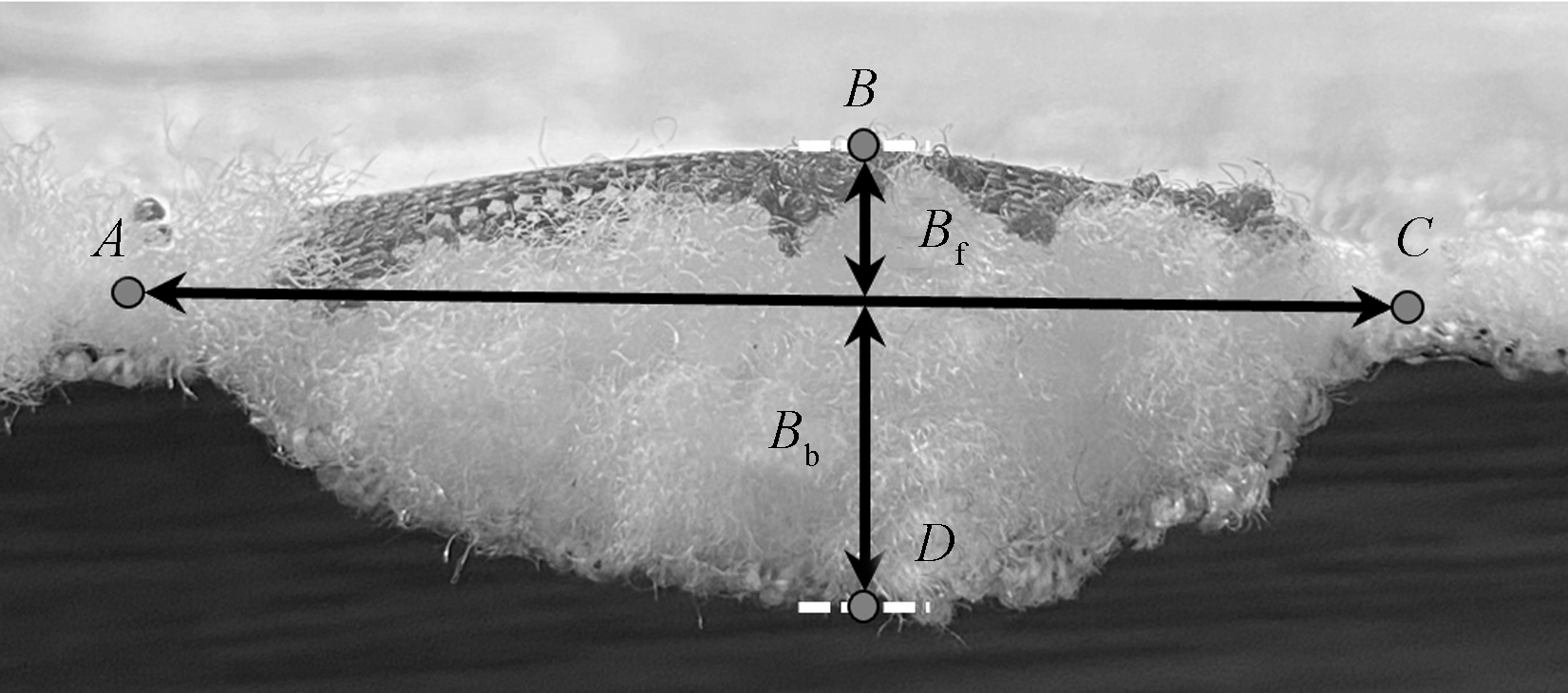
Method Using the control variable method, an experimental plan was designed to calculate key parameters including total convexity, projection length, front convexity, and back convexity. The investigation emphasized the influence of connection point spacing, weft-lining yarn fineness, and vertical density ratios between front and back sides on these parameters. Fitting surfaces and functions were generated by comprehensively analyzing these three influencing factors. A 3-D bump model was subsequently established based on the derived functions and patterns.

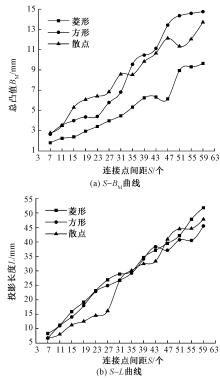
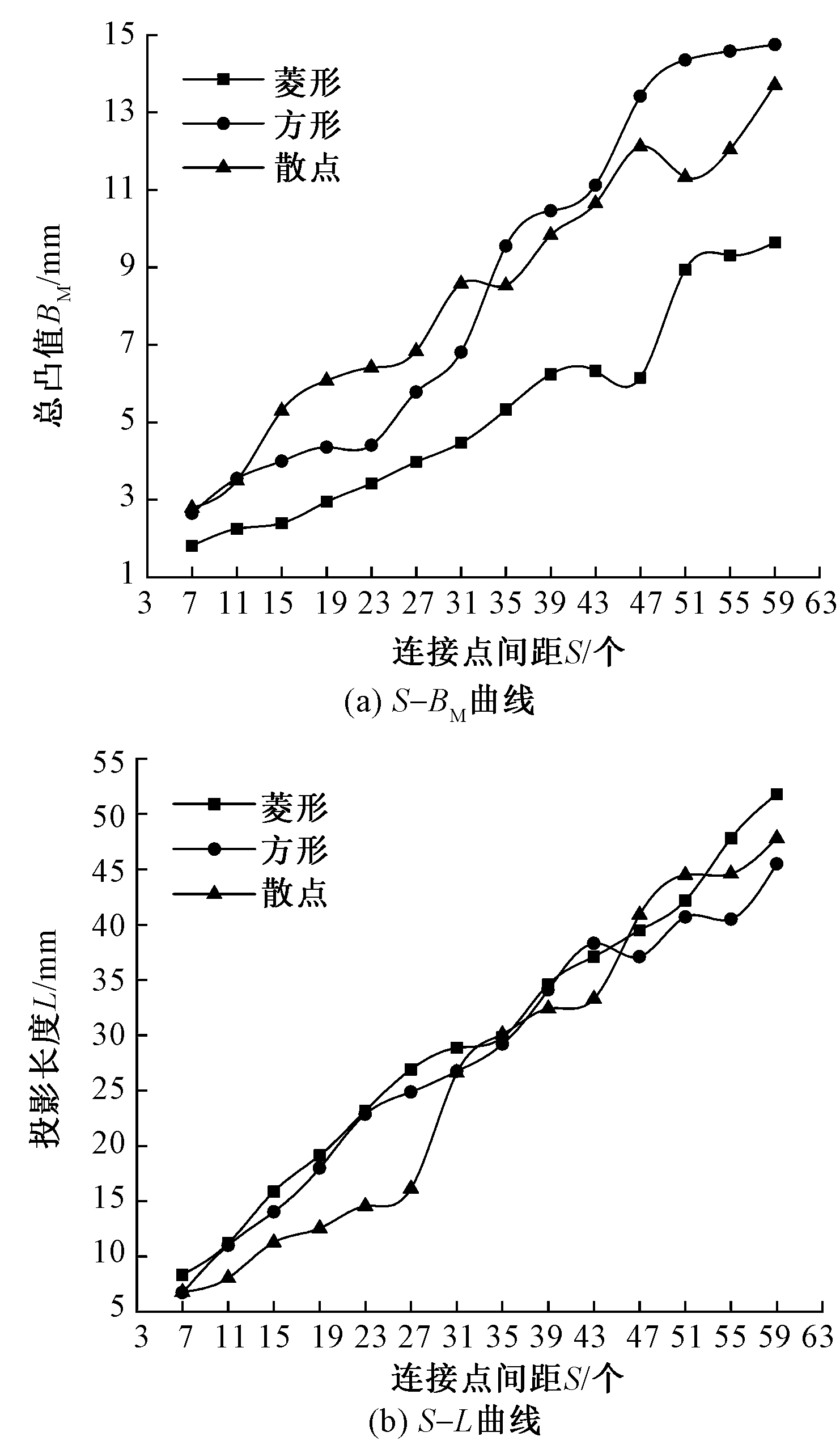
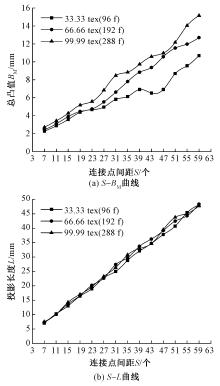
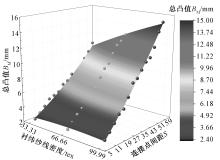
Results The progressive increase in convex values of different connection point shapes as the spacing between connection points gradually increases. Among these shapes, the overall growth trend of the diamond shape was relatively slow, because under the same spacing between connection points, the expandable space size of the weft-lining yarn exhibited the characteristics of scatter > square > diamond. The projection length of the surface was primarily determined by the spacing between the connection points. The projection length of different connection point shapes showed a relatively consistent growth trend with the increase in spacing and exhibied a linear relationship. The data results for different weft-lining fineness were plotted. The results indicated that under the same spacing between connection points, the thicker the lining yarn was the higher the overall trend of the convex value became. In the case of the same expandable space, a thicker lining yarn resulted in a higher content of lining yarn per unit volume. The interaction between the yarns caused them to bend and bulge in the middle of the unconstrained sections, thereby increasing the convex value. For the projection length, the differences among the three sets of results were relatively small, indicating that the influence of the fineness of the weft-lining yarn was minimal and could be neglected. When there was a difference in the longitudinal density between the front and back sides of the fabric, this difference would be projected onto the bump structure, resulting in an asymmetric bump structure, where the ratio of the front convex value to the back convex value was almost consistent with the longitudinal density ratio of the front and back sides. By comprehensively analyzing the influence of the connection point spacing and the fineness of the weft-lining yarns on the bump structure, and combining relevant data, a 3-D fitting surface was generated and the equation is presented.

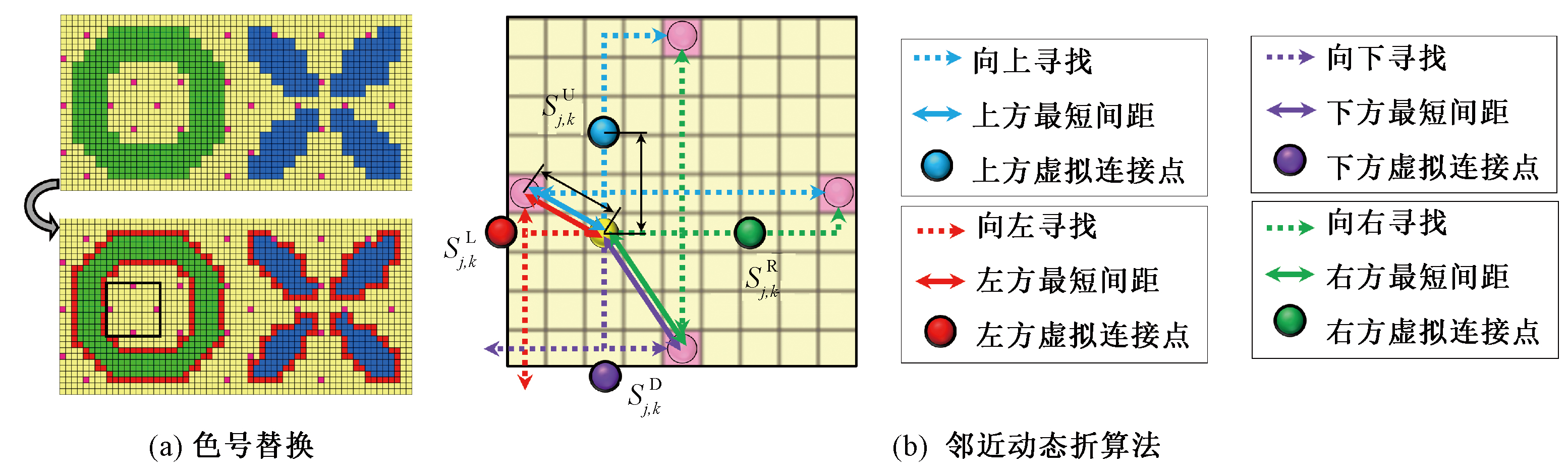
Conclusion Denser pattern connection areas reduce expandable space. Weft-lining yarn fineness directly affects structural filling volume, while longitudinal density ratios correspond to convexity ratios on both sides. This study calculates connection point spacing across pattern regions based on color information from pattern notations. By incorporating spacing and yarn fineness into the 3-D fitting surface function, front and back convexity values are derived. A 3-D bump model for weft-knitted stereoscopic jacquard fabric is developed using these data. This research elucidates the formation mechanism of such fabrics, establishes a theoretical foundation for fabric simulation, and provides methodological guidance for designing and simulating other bump-effect fabric structures.

Key words: weft-knitting, stereoscopic jacquard, bump parameter, bump structure, 3-D modeling

中图分类号: 

  • TS186.2

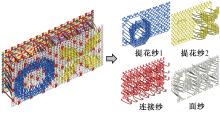
图1

织物正反面连接结构图"

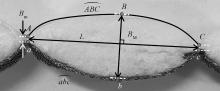
图2

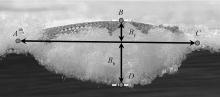
凹凸参数测量示意图"

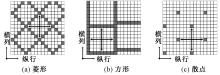
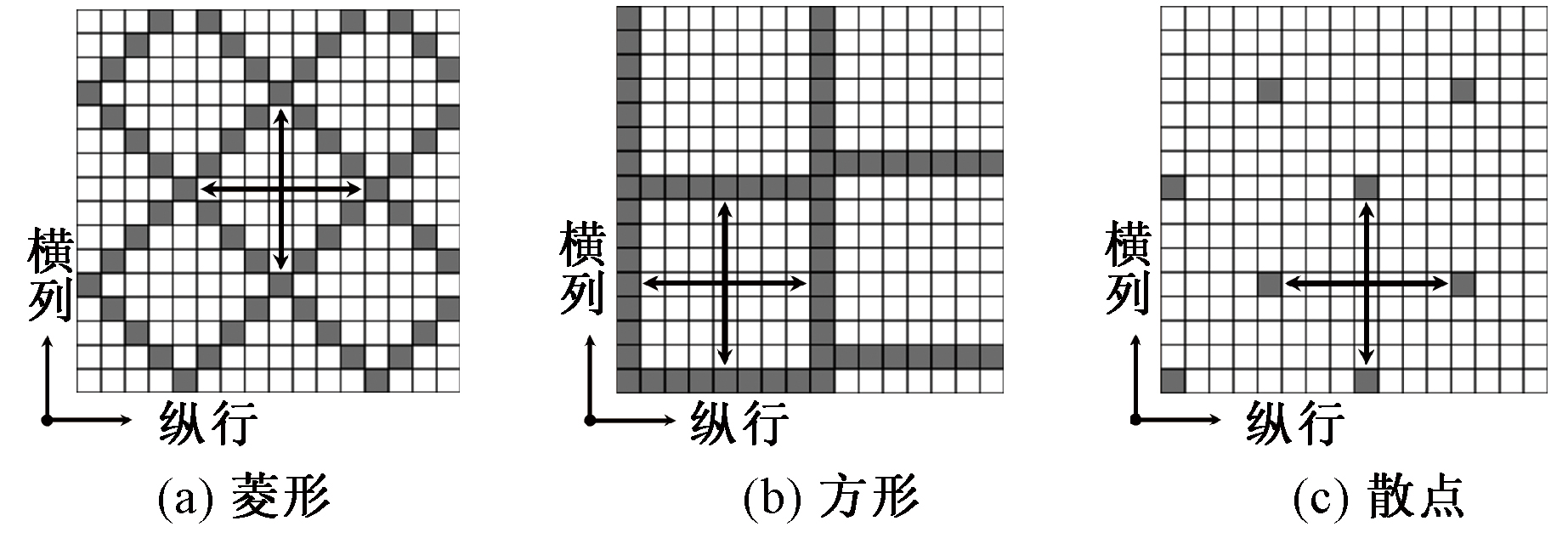
图3

7×7连接点间距示意图"

图4

不对称凹凸结构示意图"

图5

不同连接点图形与间距对凹凸结构的影响曲线"

图6

不同衬纬纱线密度对凹凸结构的影响曲线"

表1

不同正反面纵密的凹凸数据"

组别 Cf/Cb Bf/mm Bb/mm Bf/Bb
1 1∶3 (0.33) 2.29 7.17 0.32
2 1∶1 (1.00) 4.74 4.84 0.98
3 2∶3 (0.67) 3.72 5.77 0.64
4 1∶1 (1.00) 4.71 4.84 0.97

图7

三维拟合曲面"

图8

当前意匠格与连接点意匠格的间距计算"

[1] 金兰名, 蒋高明, 丛洪莲. 纬编提花绗缝织物凹凸曲面的测量及三维建模[J]. 纺织学报, 2016, 37(6): 148-154.
JIN Lanming, JIANG Gaoming, CONG Honglian. Determination and 3-D modeling of weft knitted jacquard quilted fabric with concave surface[J]. Journal of Textile Research, 2016, 37(6): 148-154.
[2] 赵博宇, 丛洪莲, 徐仲贤. 立体提花结构纬编服装面料的设计与开发[J]. 纺织导报, 2019, 913(12): 56-59.
ZHAO Boyu, CONG Honglian, XU Zhongxian. Design and development of weft-knitted garment fabric with 3d jacquard weave[J]. China Textile Leader, 2019, 913(12): 56-59.
[3] 郑培晓, 蒋高明. 基于WebGL的纬编提花织物三维仿真[J]. 纺织学报, 2021, 42(5): 59-65.
ZHENG Peixiao, JIANG Gaoming. Three-dimensional simulation of weft-knitted jacquard fabric based on WebGL[J]. Journal of Textile Research, 2021, 42(5): 59-65.
[4] 张静, 丛洪莲, 蒋高明. 纬编双面移圈织物多层弹簧-质点结构模型构建与实现[J]. 纺织学报, 2024, 45(1): 106-111.
ZHANG Jing, CONG Honglian, JIANG Gaoming. Construction and implementation of multilayer mass-spring structure model for weft-knitted two-side transfer fabric[J]. Journal of Textile Research, 2024, 45(1): 106-111.
[5] ZHENG P X, JIANG G M. Modeling and realization for visual simulation of circular knitting transfer-jacquard fabric[J]. Textile Research Journal, 2021, 91(19/20): 2225-2239.
doi: 10.1177/0040517521994497
[6] 徐巧, 丛洪莲, 金兰名, 等. 纬编提花床垫面料工艺参数研究[J]. 针织工业, 2016 (8): 22-25.
XU Qiao, CONG Honglian, JIN Lanming, et al. Study of the technological parameters of weft knitted jacquard mattress[J]. Knitting Industries, 2016 (8): 22-25.
[7] 徐巧, 丛洪莲, 张爱军, 等. 纬编针织物CAD设计模型的建立与实现[J]. 纺织学报, 2014, 35(3): 136-140, 144.
XU Qiao, CONG Honglian, ZHANG Aijun, et al. Establishment and implementation of weft-knitted fabric's design model in CAD system[J]. Journal of Textile Research, 2014, 35(3): 136-140, 144.
[8] JIN L M, JIANG G M. Research and implement of appearance simulation technology in multi-layered weft-knitted fabrics[J]. International Journal of Clothing Science and Technology, 2015, 27(4): 561-572.
doi: 10.1108/IJCST-07-2014-0084
[9] JIN L M, XU Q. Computer simulation and system realization of jacquard weft-knitted fabric[J]. Journal of Engineered Fibers and Fabrics, 2019, 14(4): 1-11.
[10] 梁佳璐, 丛洪莲, 张爱军. 纬编两面提花针织物的工艺设计模型[J]. 纺织学报, 2020, 41 (1): 69-74.
LIANG Jialu, CONG Honglian, ZHANG Aijun. Technical design model of weft-knitted two-side jacquard fabric[J]. Journal of Textile Research, 2020, 41 (1): 69-74.
[1] 邱俊, 李际军. 机织物的三维真实感建模与参数化设计[J]. 纺织学报, 2025, 46(10): 95-102.
[2] 张欣, 周康辉, 姜茜, 吴利伟. 基于虚拟纤维的纬编双轴向针织物模型构建及偏轴拉伸变形行为模拟[J]. 纺织学报, 2025, 46(09): 143-153.
[3] 顾文敏, 蒋高明, 赵俊杰, 李炳贤. 经纬编交织物数字化设计及其三维仿真[J]. 纺织学报, 2025, 46(07): 119-127.
[4] 朱梦慧, 葛美彤, 董智佳, 丛洪莲, 马丕波. 纬编双面羊毛/涤纶交织物的结构与热湿性能评价[J]. 纺织学报, 2025, 46(05): 179-185.
[5] 江文杰, 郭明瑞, 高卫东. 棉/涤纶短纤皮芯纱及其织物的力学性能[J]. 纺织学报, 2025, 46(03): 49-55.
[6] 穆秀萍, 蒋高明, 陈钰珊, 李炳贤. 纬编多针道织物数字化设计方法[J]. 纺织学报, 2024, 45(11): 106-113.
[7] 姚思宏, 董智佳, 蒋高明, 王二南. 零裁耗经编成形翻领T恤结构设计与建模[J]. 纺织学报, 2024, 45(11): 178-184.
[8] 韩炜, 邢晓梦, 张海宝, 姜茜, 刘天威, 卢佳浩, 闫志强, 巩继贤, 吴利伟. 基于粒子群算法对纬编针织物Johnson-Champoux-Allard模型参数反分析研究[J]. 纺织学报, 2024, 45(10): 103-112.
[9] 陈钰珊, 蒋高明, 李炳贤. 基于双扎口的纬编管状无缝织物三维仿真[J]. 纺织学报, 2024, 45(10): 95-102.
[10] 岳旭, 王蕾, 孙丰鑫, 潘如如, 高卫东. 基于ABAQUS的平纹织物同面对向弯曲有限元模拟[J]. 纺织学报, 2024, 45(08): 165-172.
[11] 赵雅杰, 丛洪莲, 丁玉琴, 董智佳. 基于组织模型的纬编面料透气性数字化预测[J]. 纺织学报, 2024, 45(06): 68-74.
[12] 方雪明, 董智佳, 丛洪莲, 丁玉琴. 单面纬编织物变化孔隙率结构设计与透气导湿性能评价[J]. 纺织学报, 2024, 45(05): 51-59.
[13] 胡旭东, 汤炜, 曾志发, 汝欣, 彭来湖, 李建强, 王博平. 基于轻量化卷积神经网络的纬编针织物组织结构分类[J]. 纺织学报, 2024, 45(05): 60-69.
[14] 冯亚, 孙颖, 崔艳超, 刘梁森, 张宏亮, 胡俊军, 居傲, 陈利. 含镍铬合金丝纬编电加热层复合材料的层间剪切性能[J]. 纺织学报, 2024, 45(04): 89-95.
[15] 常辰玉, 王雨薇, 原旭阳, 刘锋, 卢致文. 基于交织点改进弹簧-质点模型的纬编针织物动态变形模拟[J]. 纺织学报, 2024, 45(01): 99-105.
Viewed
Full text


Abstract

Cited

  Shared   
  Discussed   
No Suggested Reading articles found!