纺织学报 ›› 2025, Vol. 46 ›› Issue (04): 119-128.doi: 10.13475/j.fzxb.20240707101

• 染整工程 • 上一篇    下一篇

基于照相测色的纺织品色牢度评级方法

梁金星1,2,3, 李东盛1, 李壹帆1, 周景1, 罗航1, 陈佳1, 胡新荣1,2,3()   

  1. 1.武汉纺织大学 计算机与人工智能学院, 湖北 武汉 430200
    2.湖北省服装信息化工程技术研究中心,湖北 武汉 430200
    3.纺织行业智慧感知与计算重点实验室, 湖北 武汉 430200
  • 收稿日期:2024-07-31 修回日期:2024-12-26 出版日期:2025-04-15 发布日期:2025-06-11
  • 通讯作者: 胡新荣(1973—),女,教授,博士。主要研究方向为可视计算与数字纺织。E-mail:hxr@wtu.edu.cn
  • 作者简介:梁金星(1989—),男,副教授,博士。主要研究方向为图像处理。
  • 基金资助:
    国家自然科学基金青年基金项目(62305255);中国纺织工业联合会应用基础研究项目(J202209);湖北省服装信息化工程技术研究中心开放课题(2022HBCI03)

Color fastness grading of textiles based on color measurement of digital images

LIANG Jinxing1,2,3, LI Dongsheng1, LI Yifan1, ZHOU Jing1, LUO Hang1, CHEN Jia1, HU Xinrong1,2,3()   

  1. 1. School of Computer and Artificial Intelligence, Wuhan Textile University, Wuhan, Hubei 430200, China
    2. Engineering Research Center of Hubei Province for Clothing Information, Wuhan, Hubei 430200, China
    3. Key Laboratory of Intelligent Perception and Computing in Textile Industry, Wuhan, Hubei 430200, China
  • Received:2024-07-31 Revised:2024-12-26 Published:2025-04-15 Online:2025-06-11

摘要:

色牢度等级是评价纺织品在不同影响条件下保持颜色的能力,针对传统纺织品色牢度人工目视评级存在的繁琐性和不稳定性,以及基于分光光度计测色评级与视觉感知的不一致性,提出了一种基于照相测色的纺织品色牢度评级方法。首先以自主研发的照相测色系统为基础,通过光谱重建技术获得纺织品光谱数据,并利用色度学理论计算纺织品的颜色信息;然后以专家对样本对的色牢度评级结果为参考,利用BP神经网络构建样本对颜色差异与专家色牢度评级结果之间的关系模型;最后对于任意新给定的色牢度测试样本对,利用构建的关系模型完成其色牢度等级预测,并与专家评级结果进行比较。研究结果表明,BP神经网络方法对纺织品摩擦、皂洗和日晒样本的色牢度预测均方根误差分别为0.30、0.27 和0.41,色牢度预测的精度与修正后的色差转换法相当,且显著优于曲线拟合法。

关键词: 纺织品, 色牢度预测模型, 照相测色, 光谱重建, 色度学理论, 色牢度评级, BP神经网络

Abstract:

Objective Color fastness grades evaluate how well textiles maintain their colors under different conditions. Traditional visual ratings of textile color fastness can be inconsistent and often vary from the measurements obtained through spectrophotometers, which can lead to discrepancies with human visual perception. To address these challenges, a new image-based color measurement method has been proposed for assessing textile color fastness more accurately. This study aims to create a method for grading textile color fastness by using image-based color measurement technology and BP neural network. It also seeks to enhance the performance of the traditional color difference conversion method for better application in textile color fastness grading. The importance of this research lies in introducing a new technique for digital image-based color measurement, which involves using spectral reconstruction to calibrate the digital camera and colorimetry theory to calculate the color of textile samples. Additionally, the BP neural network is utilized to model the color information difference as input and expert grading results as output.

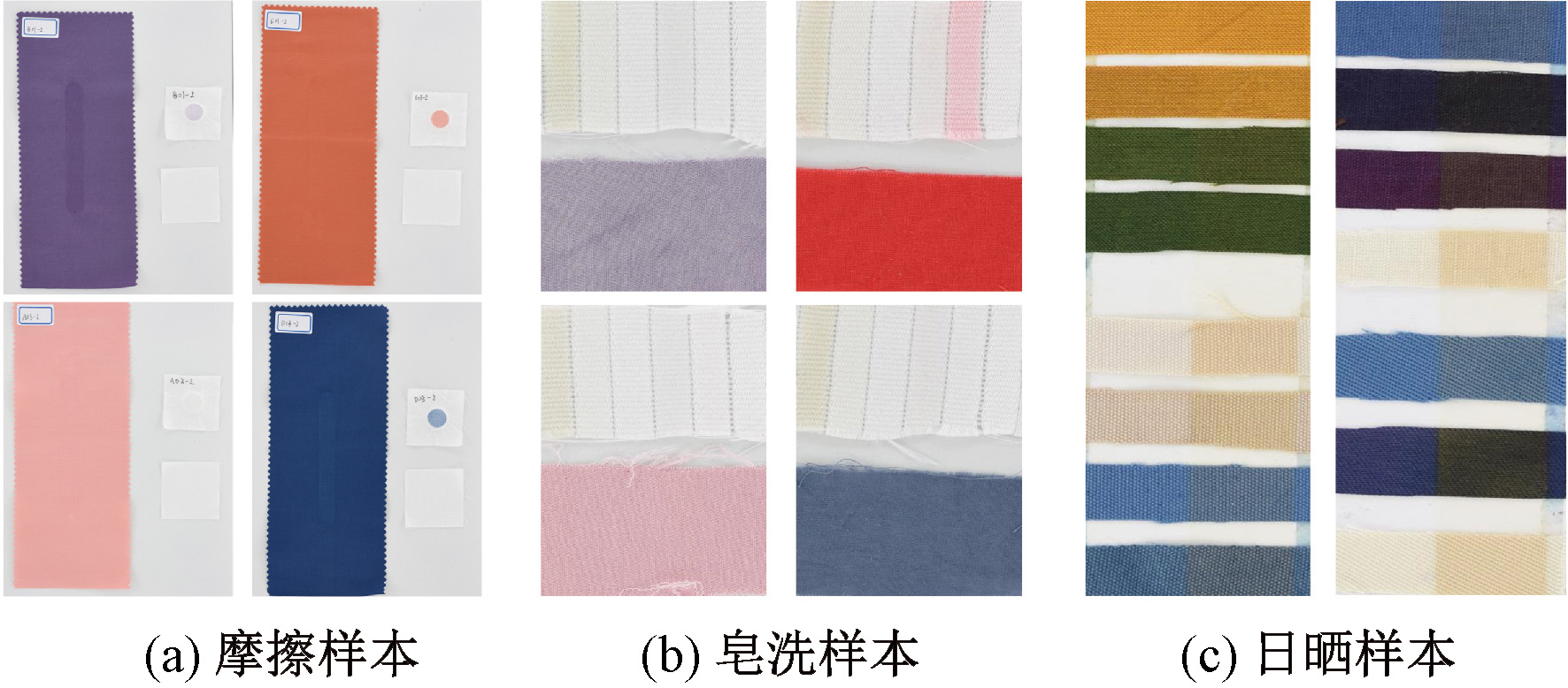
Method Firstly, three groups of color fastness tested samples were made according to the recommended standards, where a total of 341 sets of staining samples and 125 sets of discoloration samples were produced in the experiment. Among them, the staining samples included 155 sets of rubbing samples and 186 sets of washing samples, and 125 sets of discoloration samples were obtained through exposure experiments. After that, using the self-developed imaging-based color measurement system, the spectral reflectance of samples is obtained by spectral reconstruction technology, and the color information of the sample is then calculated by colorimetry theory under CIED65 illuminant and CIE1964 standard observer color matching functions. Then, through psychophysical experiments, color fastness grading experts were invited to grade all color fastness samples, and the expert grading results of all test samples were obtained. With the color fastness grading results from experts on sample pairs as references, the BP neural network was used to construct a relationship between the color difference of sample pairs and the color fastness grades of experts. Finally, for any new given test sample pair, the constructed BP network was used to predict color fastness grade and compare it with the expert grading results. At the same time, the traditional color difference conversion method for color fastness grading was also optimized by introducing correction strategies and models.

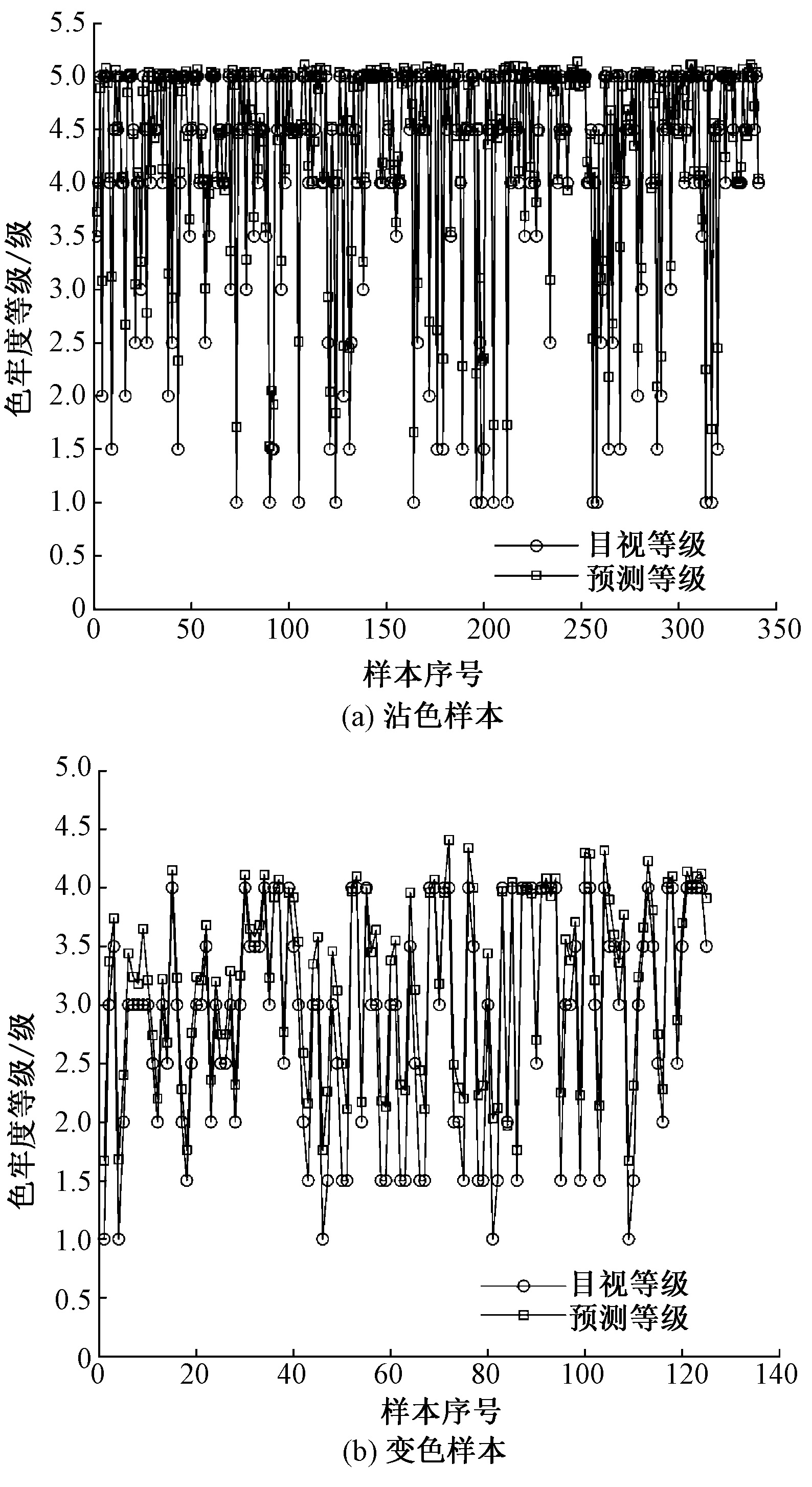
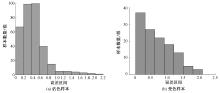
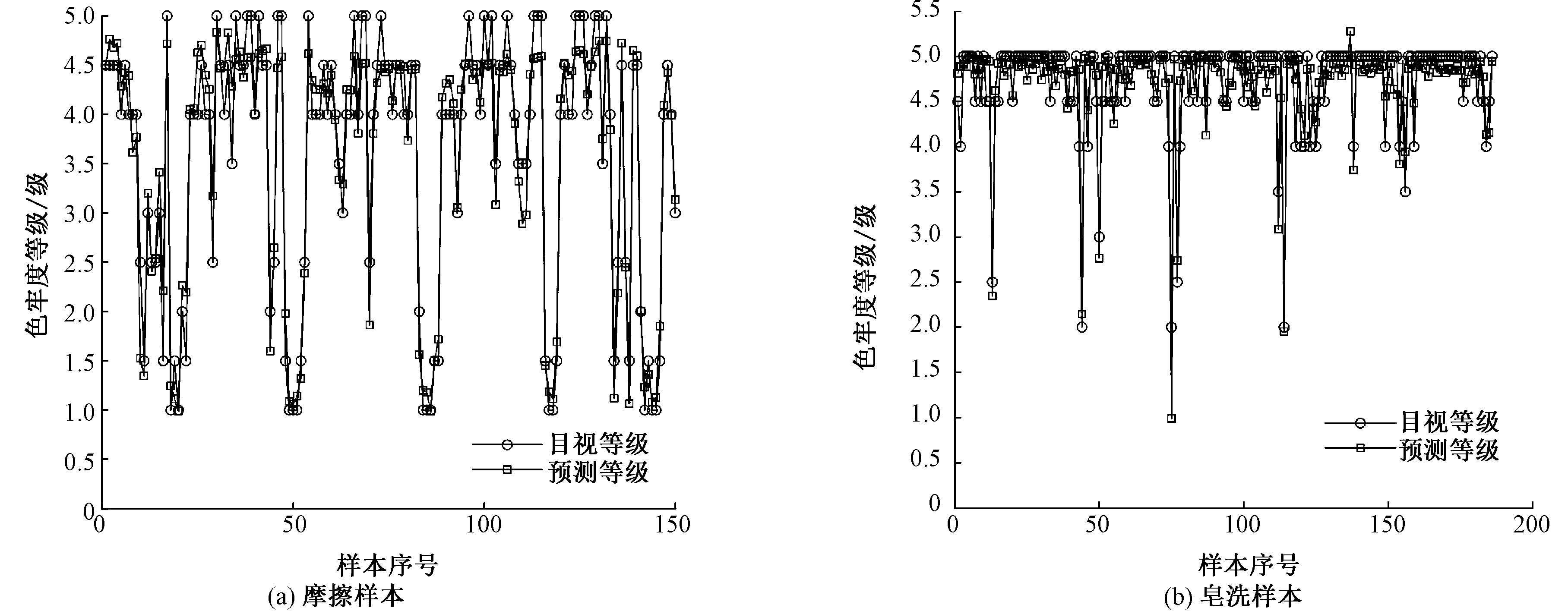
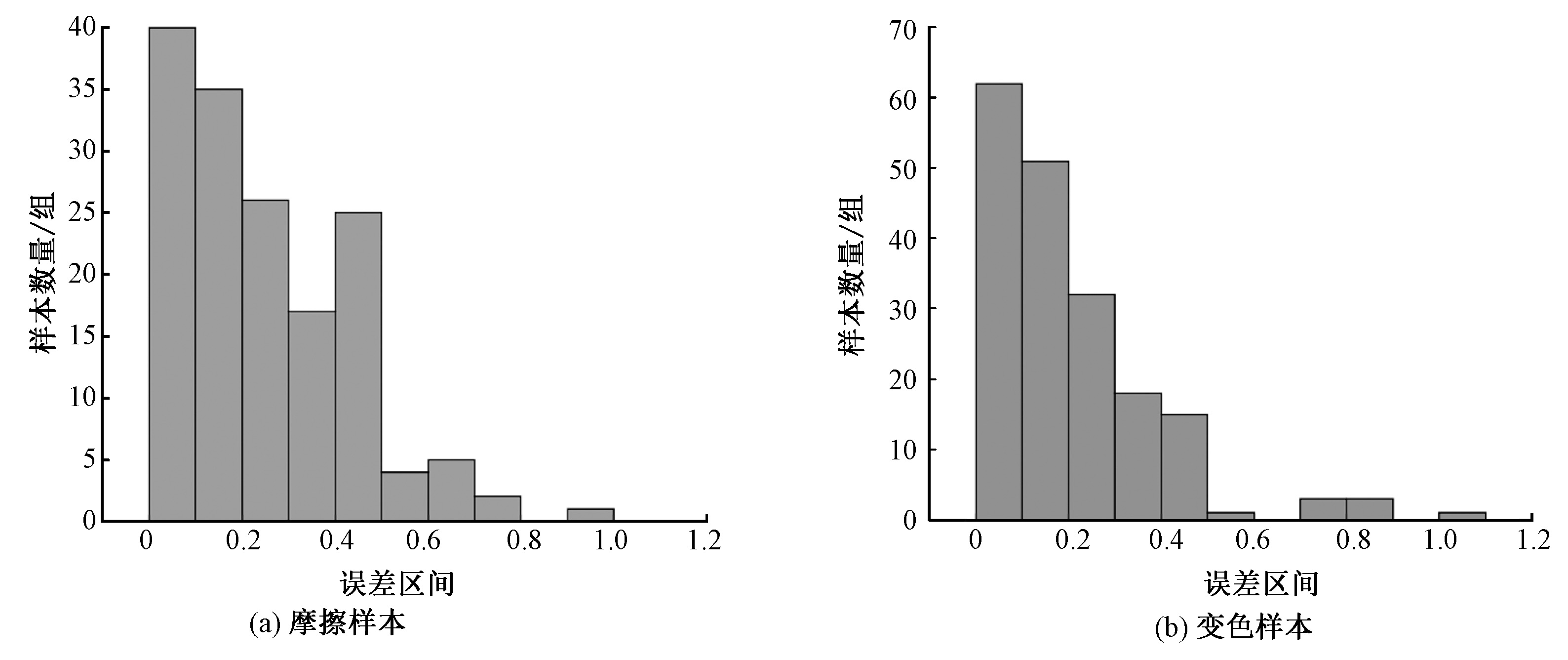
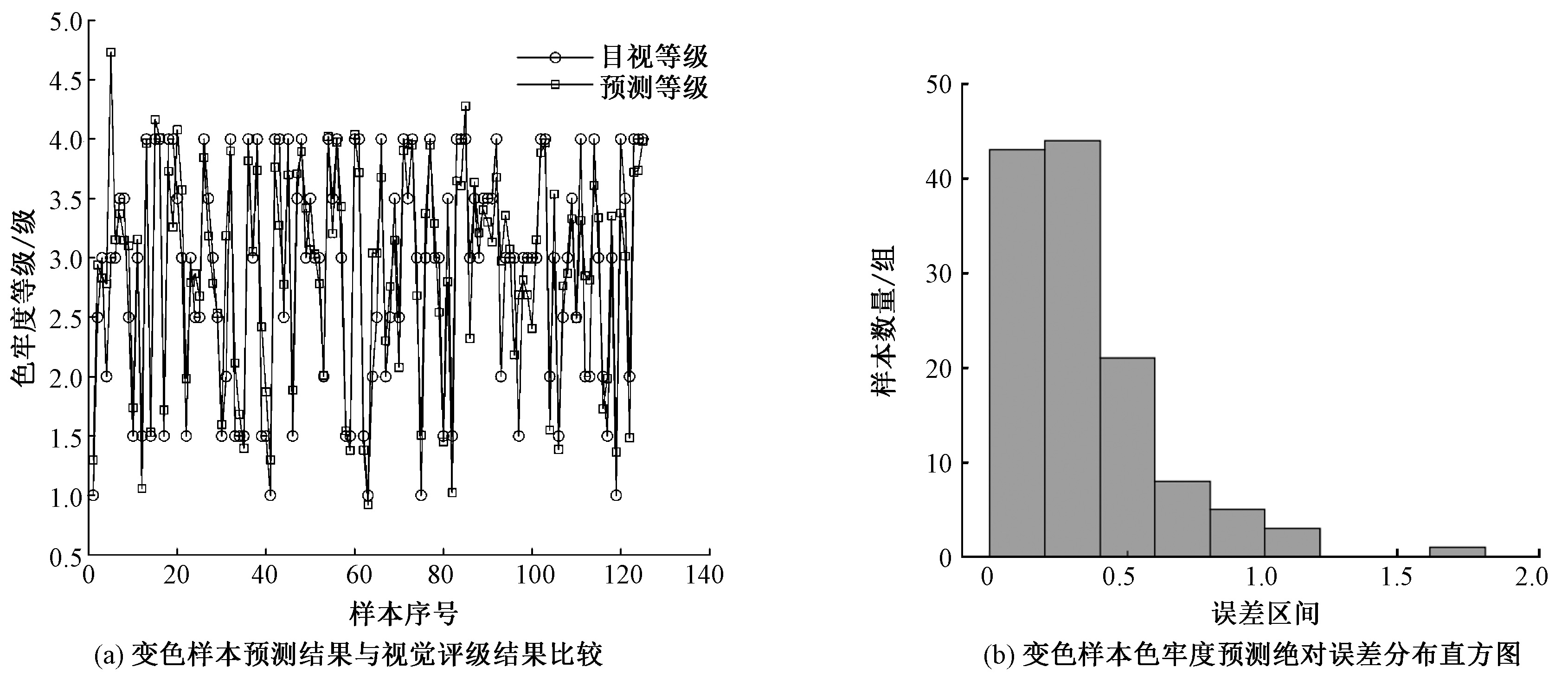
Results The experimental results showed that the prediction root mean square error(RMSE) of the BP neural network method for staining and discoloration samples were 0.38 and 0.41, respectively, which are significantly better than the curve fitting method and the color difference conversion method before correction. The prediction error of the color fastness of the staining samples was found slightly higher than that of the corrected color difference conversion method. In addition, the prediction RMSE of the BP neural network method for friction and soaping samples were 0.30 and 0.27, respectively, and the prediction error was lower than that of the corrected color difference conversion method. Overall, the prediction performance of the corrected color difference conversion method was significantly better than that before correction. The prediction effect of the BP neural network was consistent in general with that of the corrected color difference conversion method, and was significantly better than the curve fitting method.

Conclusion This study has led to the establishment of a color fastness prediction method based on the digital image-based color measurement technology and BP neural network. In addition, an optimization correction strategy is proposed to improve the performance of the color difference conversion method. The effectiveness of the proposed BP neural network method and the optimized color difference conversion method are proved through actual experiments. Compared with the spectrophotometer-based method, the new method is more practical and flexible. The research findings provide useful information for promoting the digital development of textile enterprises and have application value.

Key words: textile, color fastness prediction model, imaging-based color measurement, spectral reconstruction, colorimetry theory, color fastness grading, BP neural network

中图分类号: 

  • TS107

图1

部分色牢度代表样本"

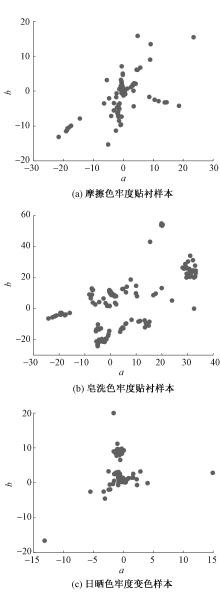
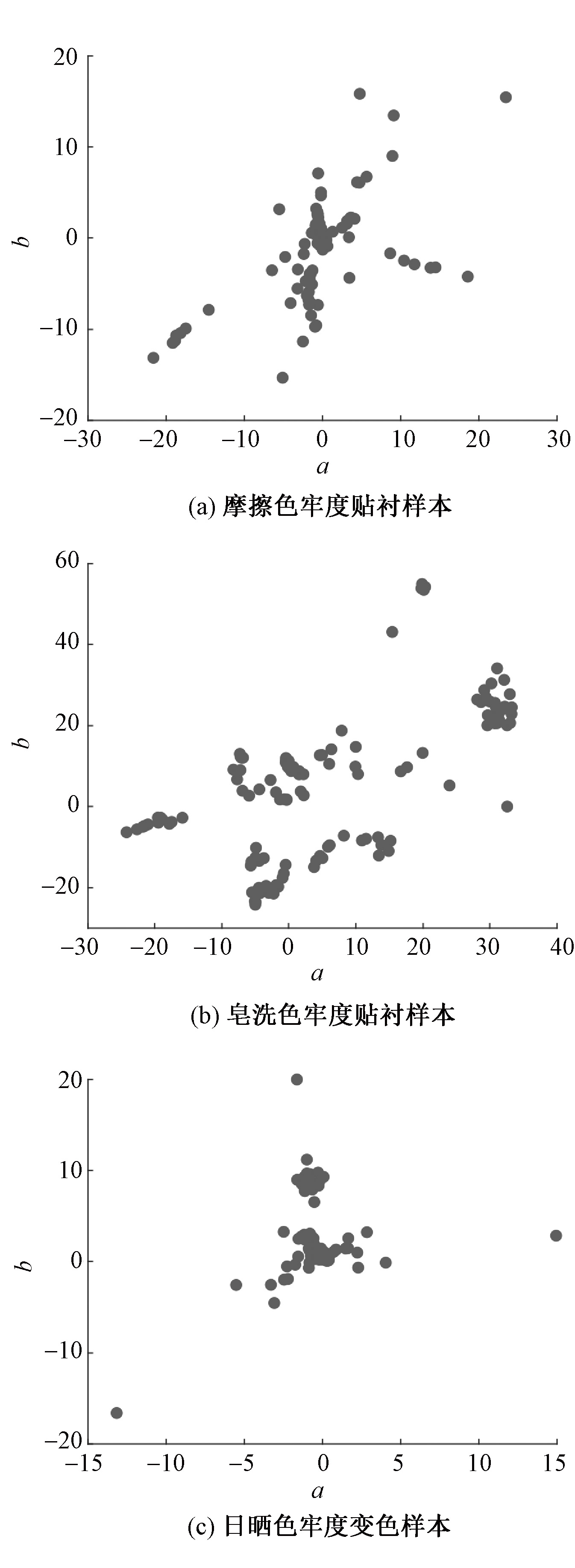
图2

各样本a-b色度平面分布图"

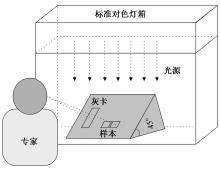
图3

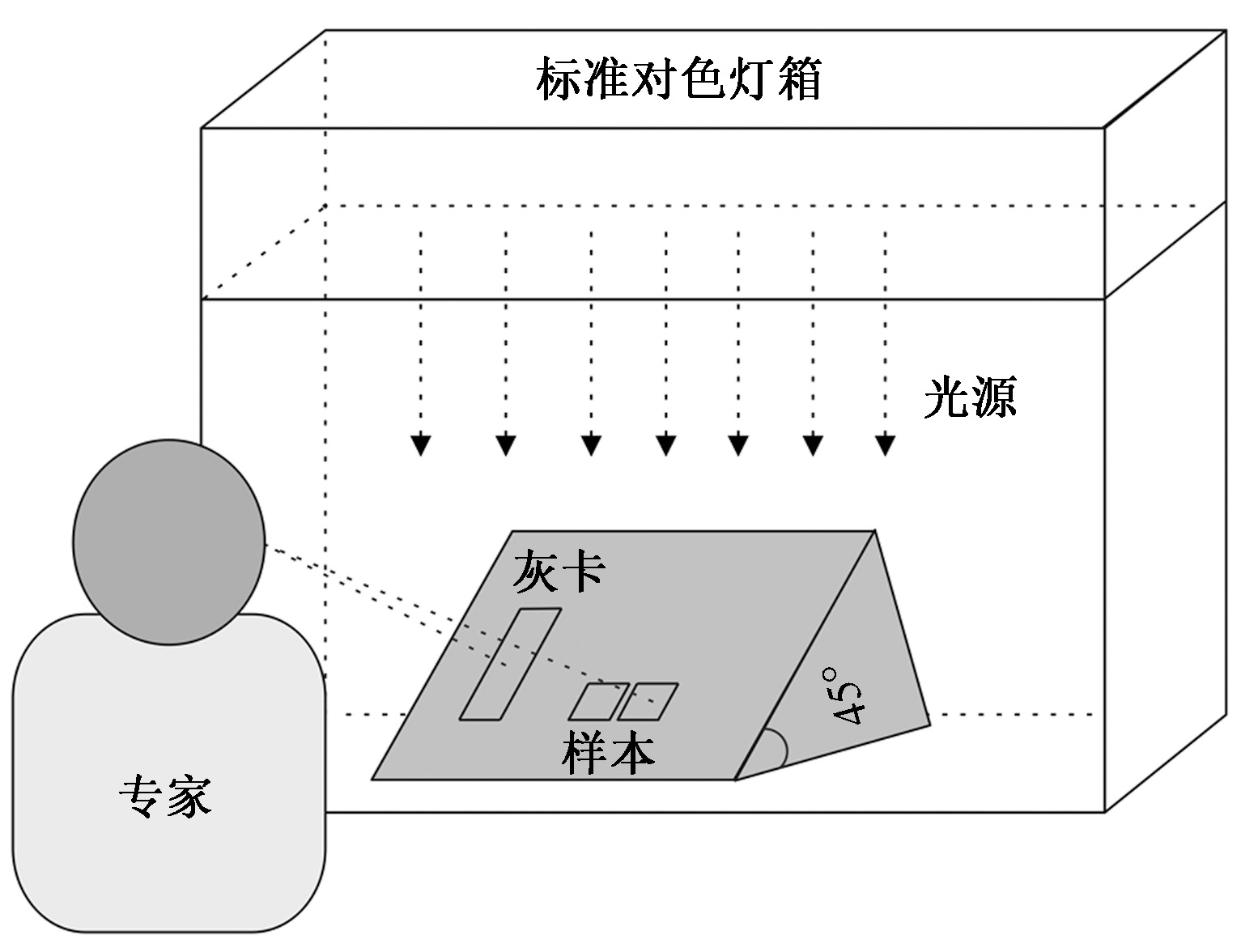
目视评级几何图示意图"

图4

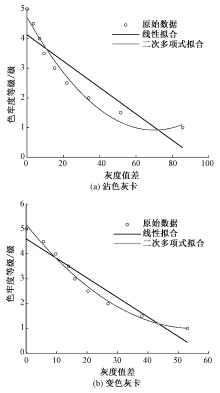
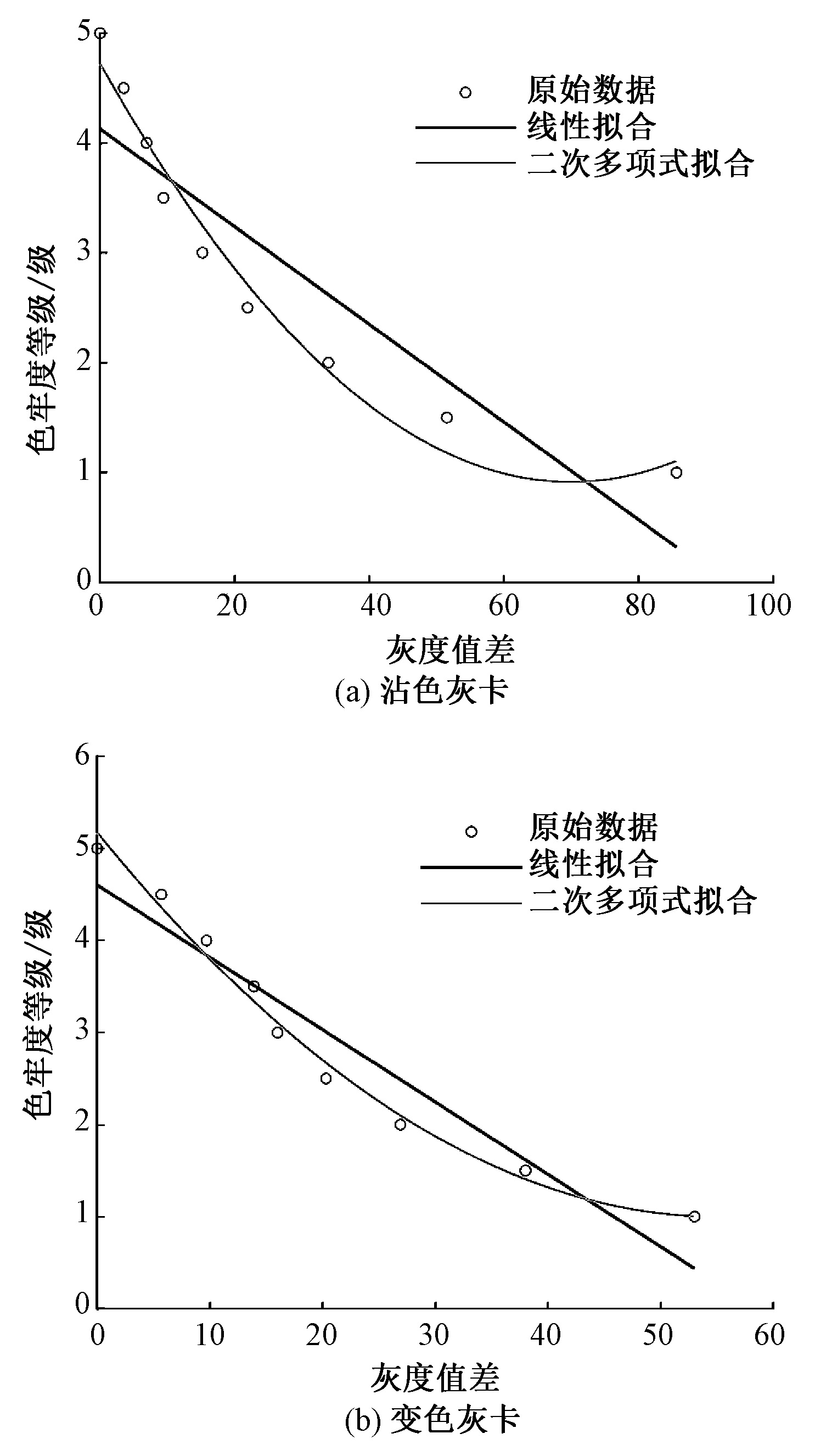
灰卡灰度值差与色牢度等级拟合曲线"

表1

颜色变量与色牢度等级的相关系数"

类别 颜色
变量ΔL
颜色
变量Δa
颜色
变量Δb
CIEDE2000
色差
色牢度
等级
颜色变量ΔL 1
颜色变量Δa 0.167** 1
颜色变量Δb -0.381** 0.136** 1
CIEDE2000色差 0.413** 0.785** 0.143** 1
色牢度等级 -0.198** -0.607** -0.241** -0.692** 1

图5

色差转换方法的色牢度预测结果与目视结果比较"

图6

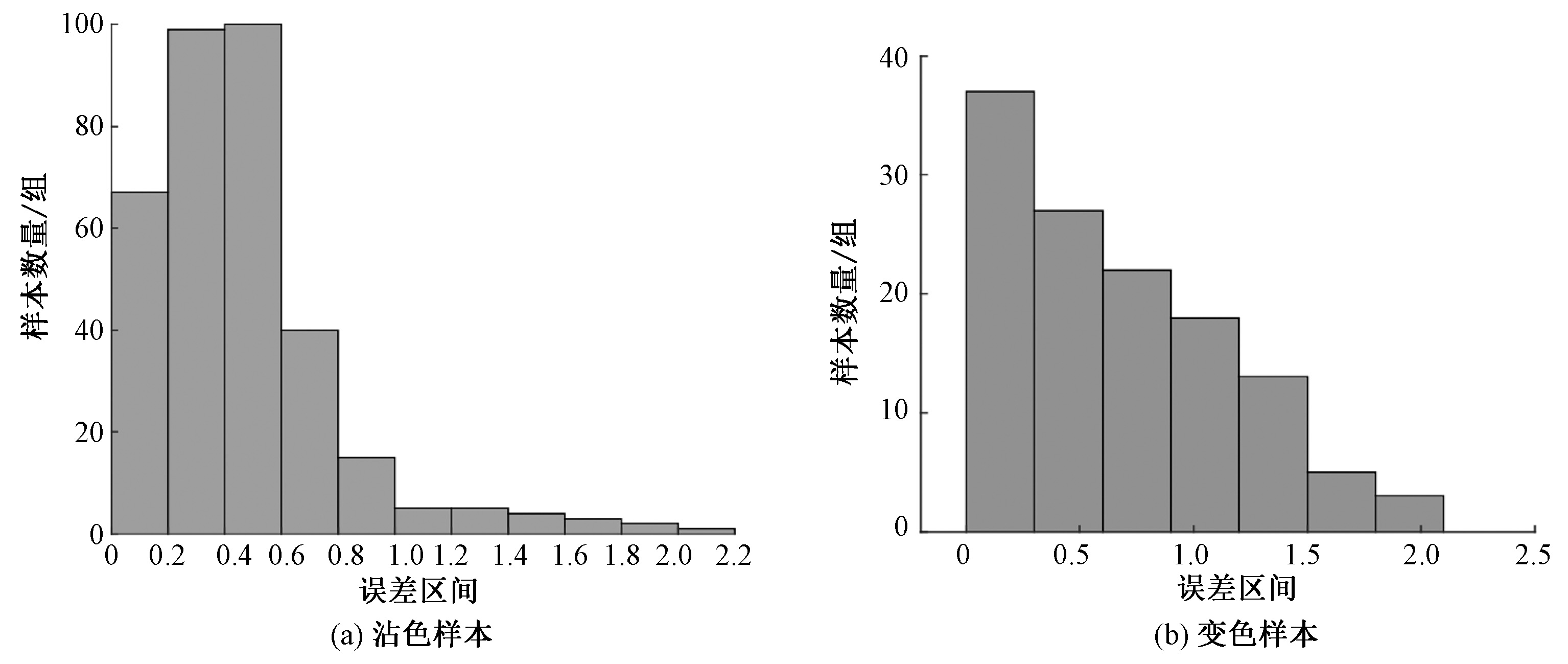
色差转换方法色牢度预测绝对误差直方图"

图7

曲线拟合方法的色牢度预测结果与目视结果比较"

图8

曲线拟合方法色牢度预测绝对误差直方图"

图9

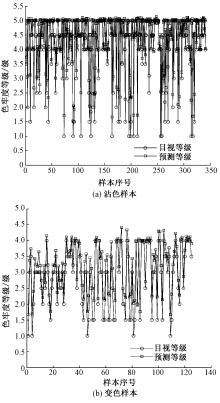
BP神经网络的沾色色牢度预测结果与目视结果比较"

图10

BP神经网络方法沾色色牢度预测绝对误差直方图"

图11

BP神经网络的变色色牢度预测结果与误差统计"

表2

3种方法的色牢度预测均方根误差"

色差转换方法 曲线拟合方法 BP神经网络方法
修正前 修正后 沾色 变色 沾色 沾色细分样本 变色
沾色 变色 沾色 变色 摩擦 皂洗
0.52 0.59 0.34 0.42 0.57 0.82 0.38 0.30 0.27 0.41

表3

3种方法对沾色样本预测绝对误差统计"

误差指标 色差转换
方法(修正)
曲线拟合
方法
BP神经网络方法
摩擦样本 皂洗样本
平均值 0.17 0.46 0.25 0.20
最大值 1.90 2.09 0.97 1.01
最小值 0.00 0.00 0.00 0.00
90%水平 0.54 0.80 0.49 0.41
标准差 0.29 0.34 0.19 0.18

表4

3种方法对变色样本预测绝对误差统计"

误差指标 色差转换
方法(修正)
曲线拟合
方法
BP神经
网络方法
平均值 0.34 0.67 0.34
最大值 1.03 1.92 1.73
最小值 0.01 0.00 0.01
90%水平 0.70 1.41 0.70
标准差 0.25 0.51 0.28
[1] 张欢欢, 唐颖, 周炜. 纺织品色牢度入门浅析[J]. 纺织检测与标准, 2022, 8(4):21-24,32.
ZHANG Huanhuan, TANG Ying, ZHOU Wei. Introduction on the color fastness of textiles[J]. Textile Testing and Standard, 2022, 8(4):21-24,32.
[2] 赵博研, 赵玉珠. 常见色牢度的检测方法与应用[J]. 天津纺织科技, 2018(2):17-20.
ZHAO Boyan, ZHAO Yuzhu. Common test methods of color fastness and application[J]. Tianjin Textile Science & Technology, 2018(2):17-20.
[3] POPA S, RADULESCU-GRAD M E, PERDIVARA A, et al. Aspects regarding color fastness and adsorption studies of a new azo-stilbene dye for acrylic resins[J]. Scientific Reports, 2021. DOI:10.1038/s41598-021-85452-7.
[4] 张芳. 纺织品色牢度检测技术及细节探讨[J]. 轻纺工业与技术, 2021, 50(1):48-49.
ZHANG Fang. The technique and details of textile color fastness detection[J]. Light and Textile Industry and Technology, 2021, 50(1):48-49.
[5] 裘柯槟, 陈维国, 周华. 用光谱成像技术与分光光度法测量织物颜色的比较分析[J]. 纺织学报, 2020, 41(11):73-80.
doi: 10.13475/j.fzxb.20191204208
QIU Kebin, CHEN Weiguo, ZHOU Hua. Comparison of spectral imaging and spectrophotometry in fabric color measurement[J]. Journal of Textile Research, 2020, 41(11):73-80.
doi: 10.13475/j.fzxb.20191204208
[6] 周泽亚, 张惠芳, 侯琪瑾, 等. 纺织品色牢度评级的研究进展及展望[J]. 纺织导报, 2023(3):98-100,102.
ZHOU Zeya, ZHANG Huifang, HOU Qijin, et al. Research progress and prospect of color fastness rating of textiles[J]. China Textile Leader, 2023(3):98-100,102.
[7] 王丽华. DigiEye数码测色系统在纺织品色牢度评级中的应用[J]. 染整技术, 2017, 39(9):54-56,60.
WANG Lihua. Application of DigiEye digital color measuring system in textiles color fastness evalua-tion[J]. Textile Dyeing and Finishing Journal, 2017, 39(9):54-56,60.
[8] 安亦锦. 基于深度学习的纺织品沾色色牢度评级方法研究[D]. 上海: 东华大学, 2023: 11-13.
AN Yijin. Research on the classification method of textile color fastness based on deep learning[D]. Shanghai: Donghua University, 2023: 11-13.
[9] YU X, WANG H. Support vector machine classification model for color fastness to ironing of vat dyes[J]. Textile Research Journal, 2021, 91(15/16): 1889-1899.
[10] 商大伟. 基于色度空间中同色异谱现象的色牢度测定原理研究[D]. 青岛: 青岛大学, 2008: 4-8.
SAHNG Dawei. The study of color fastness measurement principle based onphenomena of metameric colours in color space[D]. Qingdao: Qingdao University, 2008: 4-8.
[11] BERNS R S, TAPLIN L A, NEZAMABADI M, et al. Spectral imaging using a commercial color-filter array digital camera[C]// Proc. 14th Triennial Meeting. Hague: ICOM Committee for Conservation, 2005: 743-750.
[12] CONNAH D R, HARDEBERG J Y. Spectral recovery using polynomial models[C]// Color Imaging X: Processing, Hardcopy, and Applications. California:SPIE, 2005: 65-75.
[1] 黄春月, 黄鑫, 杜海娟, 徐文杰, 杨雪梅, 万科研, 李旭, 高杰. 钼氧簇复合物整理剂制备及其整理棉织物的防紫外线性能[J]. 纺织学报, 2025, 46(04): 138-145.
[2] 赵祥璐, 方寅春, 李伟. 超疏水自清洁结构色织物的制备及其性能[J]. 纺织学报, 2025, 46(04): 154-161.
[3] 符芬, 王钰涵, 丁凯, 赵帆, 李超靖, 王璐, 曾泳春, 王富军. 纤维素基止血材料的研究进展[J]. 纺织学报, 2025, 46(04): 226-234.
[4] 郭洁琰, 徐颖雯, 丁放, 任学宏. 卤胺抗菌剂及其改性纤维的应用研究进展[J]. 纺织学报, 2025, 46(04): 255-263.
[5] 毛丽芬, 肖红, 毛庆辉, 麻伍军, 梁志结, 李敏. 双稳态温致变色印花织物的制备及其光谱兼容性能[J]. 纺织学报, 2025, 46(03): 141-150.
[6] 廖昙倩, 李文雅, 杨晓宇, 赵静娜, 张骁骅. 碳纳米管/聚乙二醇复合相变纤维的制备及其热性能[J]. 纺织学报, 2025, 46(03): 9-16.
[7] 郭庆, 毛阳顺, 任亚杰, 刘济民, 王怀芳, 朱平. 基于漆酶一步催化法的羊毛织物原位染色及阻燃功能化[J]. 纺织学报, 2025, 46(02): 161-169.
[8] 张洁, 郭鑫源, 关晋平, 程献伟, 陈国强. 磷/氮阻燃剂原位沉积对棉织物的耐久阻燃改性[J]. 纺织学报, 2025, 46(02): 180-187.
[9] 宋婉萌, 王宝弘, 孙宇, 杨家祥, 刘云, 王玉忠. 兼具力学性能与高效阻燃性能粘胶织物的制备及其性能[J]. 纺织学报, 2025, 46(02): 188-196.
[10] 李鑫, 叶培培, 赵晓曼, 王鸿博, 杨国荣, 洪剑寒. 氧化铋-硅橡胶基X射线防护织物的制备及性能[J]. 纺织学报, 2025, 46(02): 227-235.
[11] 杨露, 孟家光, 陈雨青, 支超. 基于废旧纺织品的湿度响应纤维素/聚氨酯复合材料的制备及其性能[J]. 纺织学报, 2025, 46(02): 26-34.
[12] 梁雯宇, 季东晓, 覃小红. 微纳米纤维包芯纱制备及其电致发光性能[J]. 纺织学报, 2025, 46(01): 42-51.
[13] 朱琳, 王展鹏, 吴宝宅, 汪少朋, 刘一鸣, 代成娜, 陈标华. 废旧涤纶织物的溶剂萃取剥色及其对醇解的影响[J]. 纺织学报, 2025, 46(01): 103-110.
[14] 盛锡彬, 赵崧灵, 顾冰菲. 基于标准工时预测的衬衣部件模块生产编排优化[J]. 纺织学报, 2025, 46(01): 154-162.
[15] 张曼, 权英, 冯宇, 李甫, 张爱琴, 刘淑强. 纺织基可穿戴柔性应变传感器的研究进展[J]. 纺织学报, 2024, 45(12): 225-233.
Viewed
Full text


Abstract

Cited

  Shared   
  Discussed   
No Suggested Reading articles found!