纺织学报 ›› 2025, Vol. 46 ›› Issue (05): 186-194.doi: 10.13475/j.fzxb.20240801401

• 染整工程 • 上一篇    下一篇

丝光羊毛的芳伯胺化修饰及其室温重氮偶合染色

朱大全1, 崔志华1(), 高普2, 朱杰3, 张斌3, 朱跃文3, 陈维国4   

  1. 1.浙江理工大学 纺织科学与工程学院(国际丝绸学院), 浙江 杭州 310018
    2.嘉兴南湖学院, 浙江 嘉兴 314000
    3.浙江中鼎纺织股份有限公司, 浙江 嘉兴 314511
    4.浙江理工大学桐乡研究院有限公司, 浙江 嘉兴 314500
  • 收稿日期:2024-08-09 修回日期:2025-02-06 出版日期:2025-05-15 发布日期:2025-06-18
  • 通讯作者: 崔志华(1980—),男,副教授,博士。主要研究方向为蛋白质纤维化学修饰。E-mail:zhhcui@zstu.edu.cn
  • 作者简介:朱大全(1998—),男,硕士生。主要研究方向为蛋白质纤维染色。
  • 基金资助:
    中国纺织工业联合会应用基础研究项目(J202108);浙江省“尖兵”“领雁”研发攻关计划项目(2023C01096);中国纺织工业联合会科技指导性计划项目(2023028)

Aromatic primary amination modification of mercerized wool and its room temperature diazo coupling staining

ZHU Daquan1, CUI Zhihua1(), GAO Pu2, ZHU Jie3, ZHANG Bin3, ZHU Yuewen3, CHEN Weiguo4   

  1. 1. College of Textile Science and Engineering(International Institute of Silk), Zhejiang Sci-Tech University, Hangzhou, Zhejiang 310018, China
    2. Jiaxing Nanhu University, Jiaxing, Zhejiang 314000, China
    3. Zhejiang Zhongding Textile Co., Ltd., Jiaxing, Zhejiang 314511, China
    4. Zhejiang Sci-Tech University Tongxiang Research Institute, Jiaxing, Zhejiang 314500, China
  • Received:2024-08-09 Revised:2025-02-06 Published:2025-05-15 Online:2025-06-18

摘要:

为实现丝光羊毛的室温快速反应性染色,首先采用靛红酸酐对丝光羊毛进行芳伯胺化修饰;然后在室温条件下利用盐酸和亚硝酸钠体系对修饰后的羊毛进行重氮化处理,制备出重氮化羊毛;最后在弱碱性环境中通过重氮化羊毛与不同偶合组分的室温原位偶合反应,制得偶合显色羊毛织物。通过残液法测定靛红酸酐对丝光羊毛的反应修饰率,探究了重氮化羊毛在湿态和干态条件下的储存稳定性,并测试了偶合显色羊毛织物的耐水洗和耐摩擦色牢度。结果表明:靛红酸酐能够对羊毛蛋白质氨基酸残基上的氨基、亚氨基、羟基和巯基等基团实现芳伯胺化修饰;芳伯胺化羊毛在室温下与亚硝酸能够进行重氮化反应,使之具有高亲电活性,获得的重氮化羊毛在干态条件下表现出良好的稳定性;采用γ酸、H酸和对磺酸吡唑酮分别在室温条件下与重氮化羊毛快速偶合显色,染色丝光羊毛织物表现出优异的耐湿处理色牢度。

关键词: 羊毛, 靛红酸酐, 蛋白质残基化学修饰, 重氮-偶合反应, 染色

Abstract:

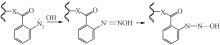
Objective Aiming at many deficiencies in wool dyeing technology, such as the complex conventional dyeing process, high energy consumption, and harsh reaction conditions, a new type of mercerized wool reactive dyeing technology is developed. First, isatoic anhydride is adopted to perform aromatic primary amination modification on mercerized wool. Then, azo pigments are generated in situ on mercerized wool through diazotization and coupling reactions, achieving rapid reactive dyeing at room temperature. The in-situ synthesis and covalent fixation of dye molecules in the fiber matrix have been successfully realized.
Method In a DMF-water mixed system, isatoic anhydride was adopted to aminate mercerized wool, resulting in aromatic aminated wool. The modification rate of isatoic anhydride on mercerized wool was determined by the residual method. At room temperature, a mixed solution of hydrochloric acid (HCl) and sodium nitrite (NaNO2) was adopted to diazotize the aromatic aminated wool. Further studies on the storage stability of diazotized wool under wet and dry conditions were conducted. Under room temperature and weak alkaline conditions, diazotized wool underwent coupling reactions with different coupling components, achieving coupling coloration and producing coupled colored woolen fabrics.
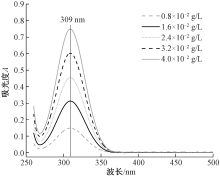
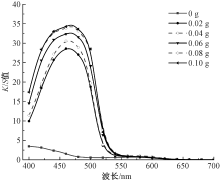
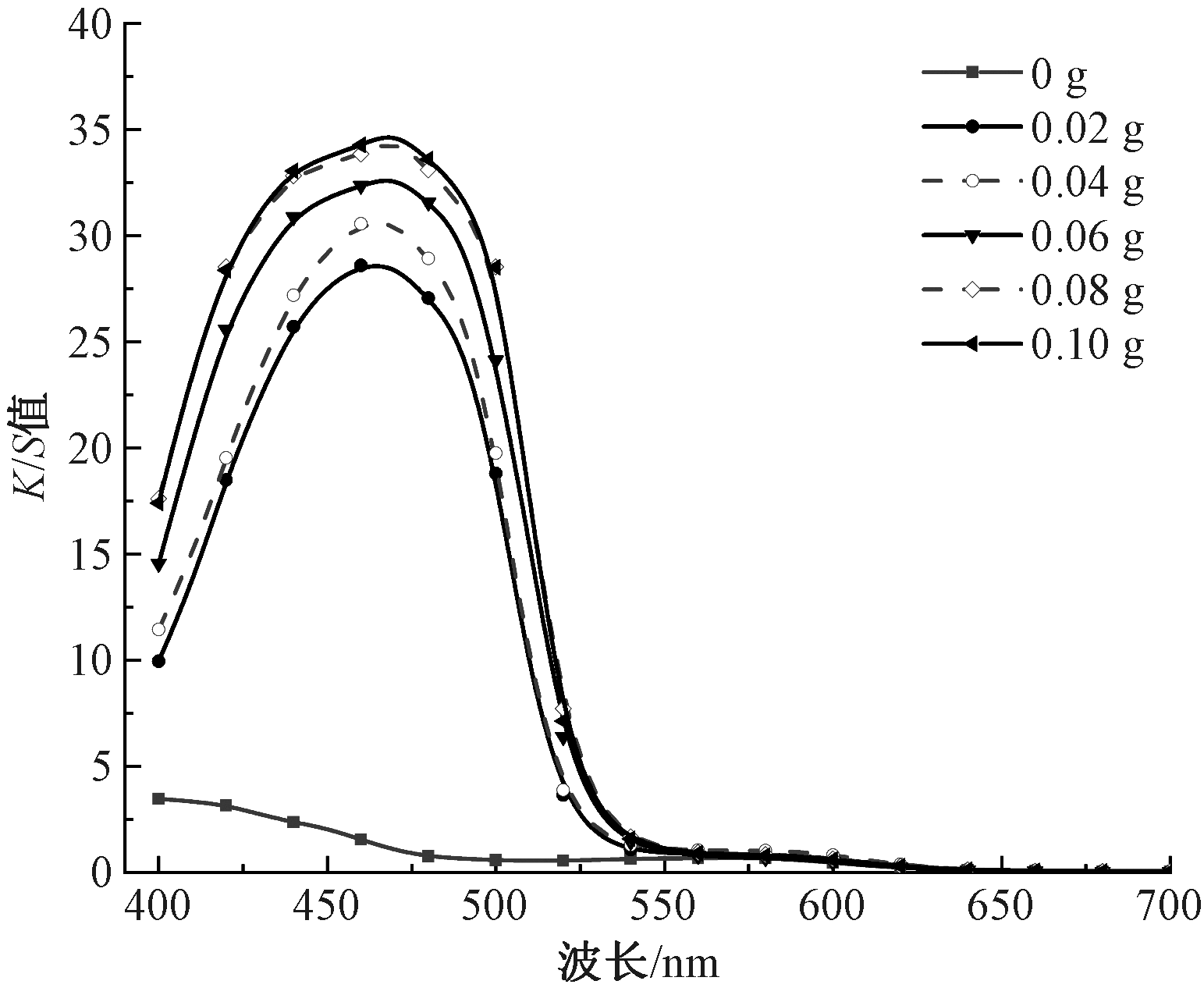
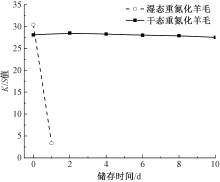
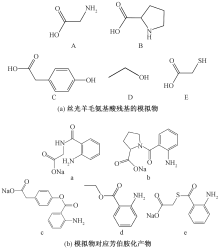
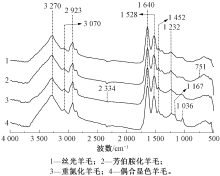
Results Mercerized wool was modified with aromatic primary amination, diazotization and coupled coloring modifications to achieve coloration. Diazotized wool reacted with different coupling components to produce different colors. Isatioc anhydride was completely hydrolyzed to o-aminobenzoic acid and the ultraviolet-visible absorption spectra of the hydrolyzed mixture was measured and the wavelength of its maximum absorbance was 309 nm. Using the standard working curve for hydrolysis of different concentrations of isatioc anhydride, the maximum consumption of isatoic anhydride modification on 1 g mercerized wool was found to be 0.022 5 g, and the reaction of diazotized wool with γ acid required 0.074 4 mmol γ acid. The K/S values of dry diazotized wool were basically unchanged after storage for different periods of time, indicating that the storage stability of dry diazotized wool was high. Fourier transform attenuated total reflection infrared spectroscopy characterization showed characteristic Infrared Spectroscopy peaks at different stages. Aromatic primary aminated wool showed an aryl ring adjacent disubstitution peak at 751 cm-1 on the aryl ring, diazotized wool had a diazonium salt stretching vibration peak at 2 334 cm-1, while the sulfonate characteristic peaks of coupled chromogenic wool were at 1 167 and 1 036 cm-1. The color fastness to soap washing and color fastness to rubbing of the coupled colored fabrics were evaluated and the results showed that the color fastness to soap washing of the coupled colored fabrics reached level 4 and the color fastness to rubbing was level 3-4.
Conclusion The following conclusions can be drawn. 1) The acylation of isatioc anhydride can achieve a good aromatic amination modification on mercerized wool, with electron-rich groups such as amino, imino, hydroxyl, and mercapto as potential modification sites. The modification conditions of 40 ℃ and pH 8 are relatively mild, and under these conditions, the maximum modification reaction amount of isatoic anhydride on mercerized wool is 0.022 5 g. 2) Aromatic aminated wool can undergo a rapid diazotization reaction with nitrite at room temperature, and the resulting diazotized wool has excellent dry storage stability, with the K/S value remaining essentially stable within 10 d after coupled dyeing, which is favorable for long-term storage and application. 3) Diazotized wool can rapidly couple and color with coupling components of different structures under room temperature and weakly alkaline conditions, resulting in dyed mercerized wool with deep color and excellent color fastness performance. The depth value reaches 30, the color fastness to soap washing reaches level 4, and the color fastness to rubbing is above level 3. This is an energy-saving and efficient new reactive dyeing method for wool.

Key words: wool, isatoic anhydride, chemical modification of protein residue, diazo-coupling reaction, dyeing

中图分类号: 

  • TS131.8

图1

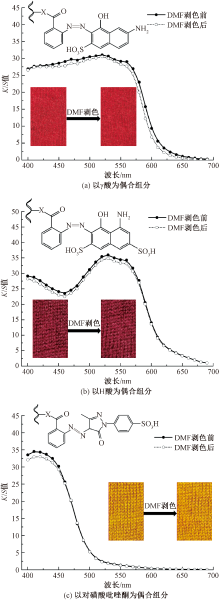
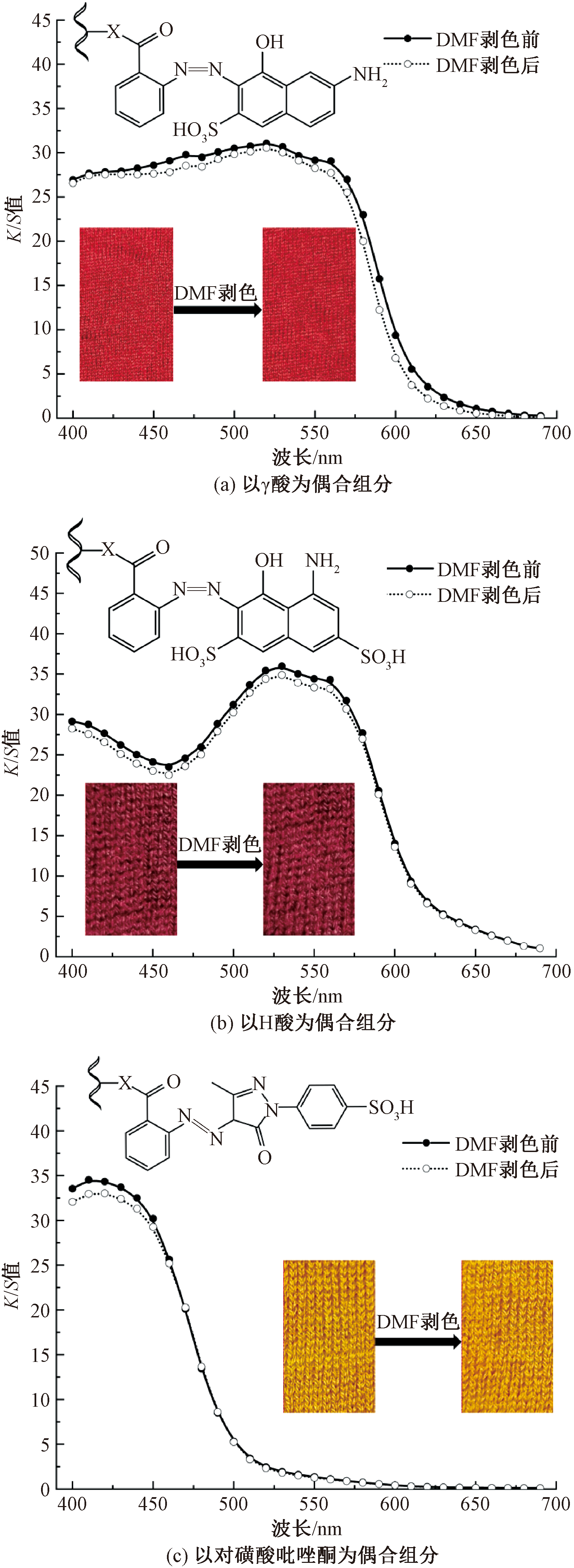
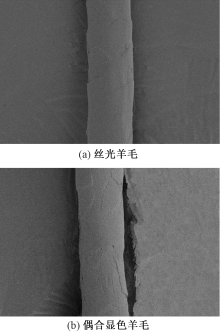
偶合显色羊毛经DMF高温剥色前后的K/S值曲线"

图2

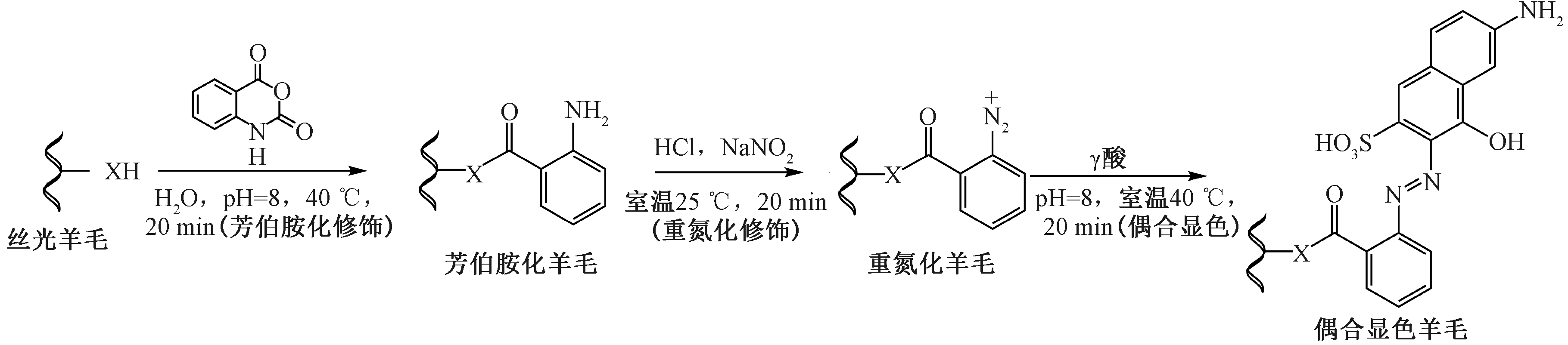
丝光羊毛的芳伯胺化修饰、重氮化及偶合显色的修饰机制 注:X代表NH,N,O,S。"

图3

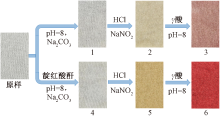
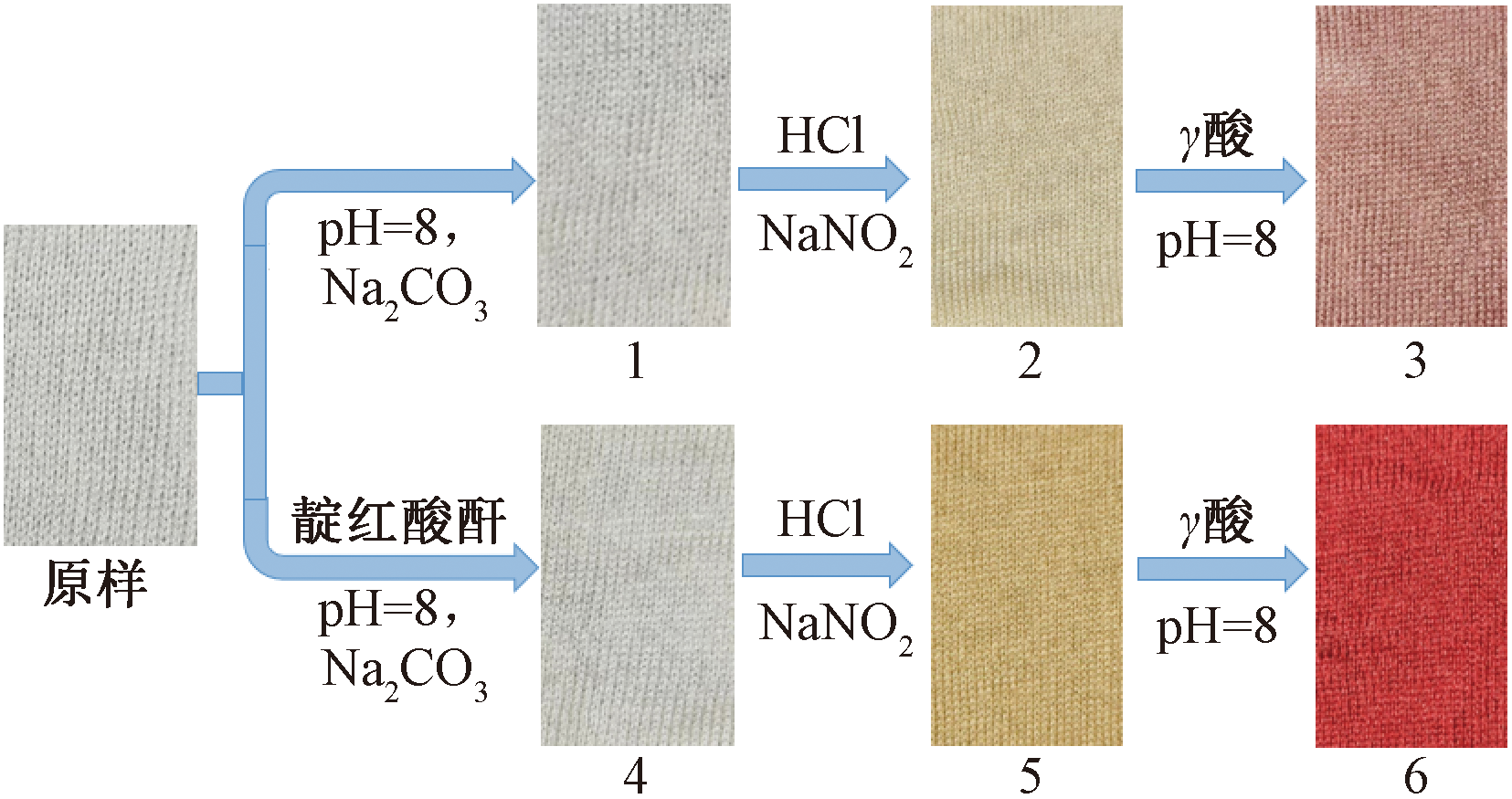
经过不同处理的丝光羊毛织物颜色变化 注:原样为丝光羊毛;1为碱液处理丝光羊毛;2为样品1浸泡亚硝酸钠溶液;3为样品2再浸泡γ酸溶液;4为芳 伯胺化羊毛;5为重氮化羊毛;6为偶合显色羊毛。"

图4

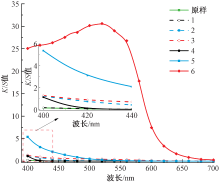
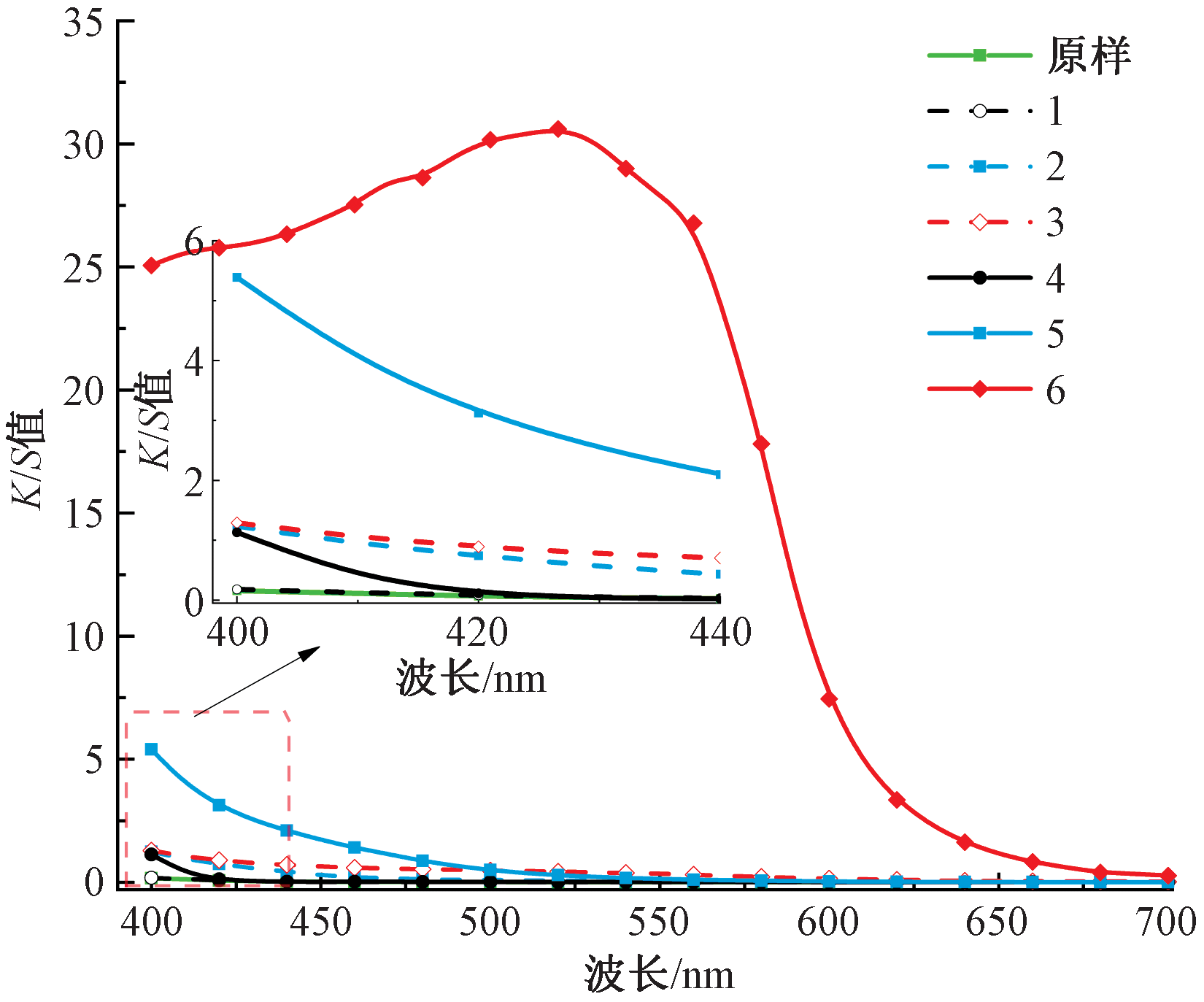
处理前后丝光羊毛的K/S值曲线"

图5

丝光羊毛酪氨酸残基的亚硝化反应"

图6

丝光羊毛脂肪族氨基的重氮化及其分解机制"

图7

不同浓度靛红酸酐水解混合产物的吸光度"

表1

靛红酸酐用量与修饰反应率的关系"

靛红酸酐
用量/g
吸光度
A
残留量/
g
修饰反应量/
(g·g-1羊毛)
修饰
反应率/%
0.02 0.166 0.011 0 0.009 0 45.0
0.04 0.362 0.024 0 0.016 0 40.0
0.06 0.596 0.039 5 0.020 5 34.2
0.08 0.872 0.057 8 0.022 2 27.8
0.10 1.169 0.077 5 0.022 5 22.5

图8

Ehrlich试剂显色的丝光羊毛及芳伯胺化羊毛的K/S值曲线"

图9

芳伯胺化羊毛与Ehrlich试剂显色机制"

图10

γ酸溶液偶合显色前后的吸光度"

图11

重氮化羊毛干湿态的稳定性"

图12

重氮化羊毛的重氮基转变机制"

表2

模拟物与靛红酸酐反应的ESI质谱数据"

模拟物 模拟对应芳伯
胺化产物
模拟产物理论
相对分子质量
质荷比
A a 216.051 239.077、455.244
B b 256.082 279.138、535.313
C c 293.066 316.184
D d 165.079 188.006
E e 233.012 256.043、489.101

图13

氨基酸残基的模拟物及其对应芳伯胺化产物"

图14

化学修饰丝光羊毛的红外光谱"

图15

丝光羊毛及其偶合显色羊毛SEM照片(×1 500)"

表3

染色羊毛织物的色牢度"

偶合
组分
最大
吸收
波长/nm
剥色后
最大
K/S
耐皂洗色牢度/级 耐摩擦色牢度/级
变色 沾色 湿
羊毛
γ酸 520 30.6 4~5 4~5 4 4 3~4
H酸 530 34.9 4~5 5 4~5 4~5 3~4
对磺酸
吡唑酮
410 33.0 5 5 5 4~5 4~5
[1] MURPHY A R, JOHN P S, KAPLAN D L. Modification of silk fibroin using diazonium coupling chemistry and the effects on hMSC proliferation and differentiation[J]. Biomaterials, 2008, 29(19): 2829-2838.
doi: 10.1016/j.biomaterials.2008.03.039 pmid: 18417206
[2] 肖金秋, 修景海, 吴祖望. SN型活性染料在羊毛上的染色性能研究[J]. 纺织学报, 2003, 24(5):60-62.
XIAO Jinqiu, XIU Jinghai, WU Zuwang. A study of the dyeing property of SN reactive dyes on wool[J]. Journal of Textile Research, 2003, 24(5): 60-62.
[3] 赵涛. 染整工艺与原理[M]. 2版. 北京: 中国纺织出版社, 2020: 92-95.
ZHAO Tao. Dyeing and finishing process and principle[M]. 2nd ed. Bejing: China Textile & Apparel Press, 2020: 92-95.
[4] 车环禹, 刘千禧, 于晓庆, 等. 水解活性染料在羊毛织物上的应用[J]. 毛纺科技, 2023, 51(1):45-50.
CHE Huanyu, LIU Qianxi, YU Xiaoqing, et al. Application of hydrolyzed reactive dyes on wool dyeing[J]. Wool Textile Journal, 2023, 51(1): 45-50.
[5] HU Y, WANG W, YU D. Functional modification of wool fabric by thiol-epoxy click chemistry[J]. Fibers and Polymers, 2016, 17(1): 30-35.
[6] ZHANG X Y, SUN Y F, QIU T, et al. An eco-friendly and low-temperature dyeing for wool fibres using dihydroxyacetone induced Maillard reaction[J]. Colloids and Surfaces A:Physicochemical and Engineering Aspects, 2023. DOI:10.1016/j.colsurfa.2023.132695.
[7] CHEN W G, WANG Z Q, CUI Z H, et al. Study on coloration of silk based on coupling reaction with a diazonium compound[J]. Fibers and Polymers, 2014, 15: 966-970.
[8] DEMIR A, ARIK B, OZDOGAN E, et al. The comparison of the effect of enzyme, peroxide, plasma and chitosan processes on wool fabrics and evaluation for antimicrobial activity[J]. Fibers and Polymers, 2010, 11(7): 989-995.
[9] BOOSTANI B, BIDOKI S M, FATTAHI S. Using an eco-friendly deep eutectic solvent for waterless anti-felting of wool fibers[J]. Journal of Cleaner Production, 2023. DOI:10.1016/j.jclepro.2022.135732.
[10] 陈丽萍, 陈维国, 崔志华, 等. 氯化改性羊毛的低温高效Mannich反应染色方法[J]. 毛纺科技, 2022, 50(3):30-35.
CHEN Liping, CHEN Weiguo, CUI Zhihua, et al. Low temperature reactive dyeing of chlorinated wool with acid dye based on Mannich reaction[J]. Wool Textile Journal, 2022, 50(3): 30-35.
[11] WADE R H, REEVES W A. Preparation and some properties of the anthranilate of cotton[J]. Textile Research Journal, 1964, 34(10): 836-839.
[12] HOOKER J M, ESSERS-KAHN A P, FRANCIS M B. Modification of aniline containing proteins using an oxidative coupling strategy[J]. Journal of the American Chemical Society, 2006, 428(49): 15558-15559.
[13] 唐培堃. 精细有机合成化学及工艺学[M]. 2版. 天津: 天津大学出版社, 2002:199-201.
TANG Peikun. Fine organic synthetic chemistry and technics[M]. 2nd ed. Tianjin: Tianjin University Press, 2002: 199-201.
[14] LI B, LI J Y, SHEN Y Q, et al. Development of environmentally friendly wool shrink-proof finishing technology based on L-cysteine/protease treatment solution system[J]. International Journal of Molecular Sciences, 2022. DOI:10.9930/ijms232113553.
[15] 李学崇, 陈维国, 崔志华, 等. 稳定性重氮色盐对蚕丝的低温偶合染色性能[J]. 丝绸, 2023, 60(11):10-17.
LI Xuechong, CHEN Weiguo, CUI Zhihua, et al. Low temperature coupling properties of stable diazoniumnium color salt on silk[J]. Journal of Silk, 2023, 60(11): 10-17.
[1] 朱梦慧, 葛美彤, 董智佳, 丛洪莲, 马丕波. 纬编双面羊毛/涤纶交织物的结构与热湿性能评价[J]. 纺织学报, 2025, 46(05): 179-185.
[2] 赵强强, 王韩星, 张奉轩, 何瑾馨, 周俊, 周兆昌, 董霞. 聚六亚甲基双胍盐酸盐改性对棉织物耐日晒色牢度的影响[J]. 纺织学报, 2025, 46(04): 109-118.
[3] 朱文硕, 薛元, 孙显强, 薛惊理, 金光. 基于七基色纤维的羊毛混色纱全色域配色[J]. 纺织学报, 2025, 46(04): 71-80.
[4] 李欢, 孟文俊, 张京, 姜哲, 卫艺敏, 周曼, 王强. 低共熔溶剂体系中的羊毛靛蓝染料染色[J]. 纺织学报, 2025, 46(03): 123-130.
[5] 殷连博, 李家炜, 段慧敏, 宋理想, 陈玉霜, 厉巽巽, 戚栋明. 液体分散染料染色废水的循环染色[J]. 纺织学报, 2025, 46(03): 131-140.
[6] 解晓康, 江华, 王也, 石璐璐. α-(三氟甲基)苯基重氮酯型染料与合成纤维的反应机制[J]. 纺织学报, 2025, 46(02): 145-152.
[7] 郭庆, 毛阳顺, 任亚杰, 刘济民, 王怀芳, 朱平. 基于漆酶一步催化法的羊毛织物原位染色及阻燃功能化[J]. 纺织学报, 2025, 46(02): 161-169.
[8] 史晶晶, 杨恩龙. 喂入提前量对棉/羊毛段彩纱结构及性能的影响[J]. 纺织学报, 2024, 45(12): 67-73.
[9] 韩画宇, 杨文龙, 王甫, 胡柳, 胡毅. 苯并[a]吩恶嗪基功能染料制备及其在改性涤纶织物上的应用[J]. 纺织学报, 2024, 45(10): 128-136.
[10] 王乐, 段志欣, 姚金波, 刘建勇, 卢建军. 基于底物激活的蛋白酶法羊毛地毯生态丝光处理[J]. 纺织学报, 2024, 45(09): 129-136.
[11] 吴涛, 李婕, 鲍劲松, 王新厚, 崔鹏. 羊毛混纺面料生产流程的碳图谱建模与应用[J]. 纺织学报, 2024, 45(09): 97-105.
[12] 史芷丞, 张玉, 于鸿, 马桂玲, 陈凤翔, 徐卫林. 仿生结构生色技术及其在纺织领域应用的研究进展[J]. 纺织学报, 2024, 45(08): 241-249.
[13] 董亚琳, 王黎明, 覃小红. 废弃羊毛角蛋白再生工艺及其高值化应用的研究进展[J]. 纺织学报, 2024, 45(07): 213-222.
[14] 黄连香, 王祥荣, 侯学妮, 钱琴芳. 茜草色素对生物基聚酰胺56的染色性能[J]. 纺织学报, 2024, 45(07): 94-103.
[15] 武守营, 黄启超, 张开封, 张琳萍, 钟毅, 徐红, 毛志平. 铁-三联吡啶配合物活化高碘酸盐体系构建及其对染色废水的催化降解机制[J]. 纺织学报, 2024, 45(06): 105-112.
Viewed
Full text


Abstract

Cited

  Shared   
  Discussed   
No Suggested Reading articles found!