纺织学报 ›› 2025, Vol. 46 ›› Issue (05): 179-185.doi: 10.13475/j.fzxb.20240406401

• 纺织工程 • 上一篇    下一篇

纬编双面羊毛/涤纶交织物的结构与热湿性能评价

朱梦慧, 葛美彤, 董智佳(), 丛洪莲, 马丕波   

  1. 江南大学 针织技术教育部工程研究中心, 江苏 无锡 214122
  • 收稿日期:2024-04-25 修回日期:2025-02-13 出版日期:2025-05-15 发布日期:2025-06-18
  • 通讯作者: 董智佳(1986—),女,副教授,博士。主要研究方向为针织全成形结构研发。E-mail: dongzj0921@163.com
  • 作者简介:朱梦慧(1998—),女,硕士生。主要研究方向为纬编功能织物结构设计。
  • 基金资助:
    国家自然科学基金项目(52373058);国家自然科学基金项目(61902150);中国纺织工业联合会应用基础研究项目(J202408)

Structure and heat-moisture properties evaluation of double-sided wool/polyester weft-knitted fabrics

ZHU Menghui, GE Meitong, DONG Zhijia(), CONG Honglian, MA Pibo   

  1. Engineering Research Center for Knitting Technology, Ministry of Education, Jiangnan University,Wuxi, Jiangsu 214122, China
  • Received:2024-04-25 Revised:2025-02-13 Published:2025-05-15 Online:2025-06-18

摘要:

为更好满足人们对贴身穿运动类功能服装的需求,以毛纱及涤纶长丝为原料,在纬编双面大圆机上开发了7款羊毛/涤纶双面针织物,通过改变织物中毛纱含量及线圈高度,使织物表面呈现不同尺寸的凹凸结构。通过透湿、透气、液态水分管理、保温率、蒸发速率、芯吸高度和抗菌试验,对织物进行性能测试与分析。结果表明:毛纱含量对织物的热湿性能影响显著;加入毛纱后可使织物既具有单向导湿功能,又兼具保暖性;调节线圈高度使织物正面呈凹凸效应,可增加实际散湿面积,利于快干;正面短线圈与正面长线圈及反面长线圈的高度比为1:2:4时,织物凹凸程度更明显;地纱线圈与胖花线圈1隔1间隔排列时,织物表面孔隙尺寸更大、分布更均匀,有利于透气。

关键词: 纬编双面织物, 羊毛/涤纶交织, 结构设计, 热湿舒适性

Abstract:

Objective People need functional and close-fitting sportswear to enhance the sporting experience in different sports scenes and for individual needs. After sweating, cotton garments are slow to dry, chemical fiber garments are prone to sticky feeling, and single knitting fabrics made of profiled fibers have the problem of sweat return. Therefore, wool yarns and polyester filaments are knitted to develop a series of continuous and self-generated single-side moisture-transported fabrics, aiming for functionality and wearing comfort.
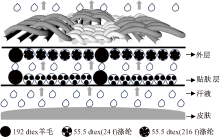
Method In order to prepare the single-sided moisture transported function of the fabrics, 55.5 dtex (24 f) polyester yarns and 55.5 dtex (216 f) superfine polyester yarns, having a big difference in filament linear density, were selected, and two innovative structures with different loop heights and spacings were designed by using the differential capillary effect. On this basis, 192 dtex wool yarns were further introduced and seven fabrics were developed with different wool contents. Because of the differences in loop heights and yarn diameters, the fabric surfaces showed different concave-convex effects.
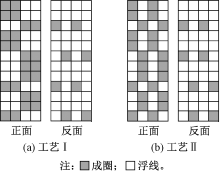
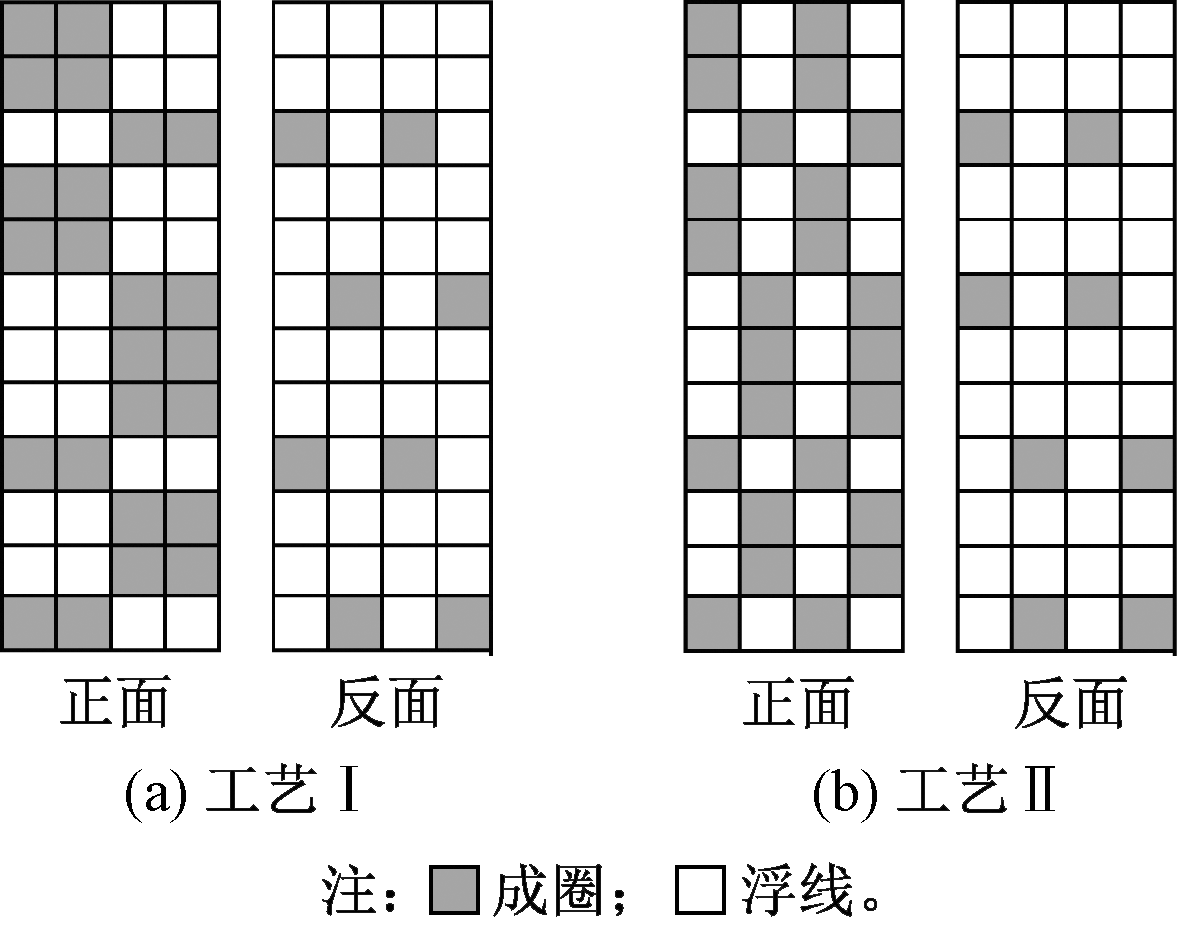
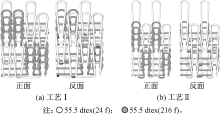
Results With the increase in wool content, the moisture permeability of the fabric was increased, however, excessive wool content was found to cause hygroscopic expansion of wool, hindering the transfer of moisture and reducing the moisture permeability of the fabric. Wool-free fabrics had good moisture permeability, which was related to the fabric's loose structure and uniform pore distribution. The fabrics blister loop of process Ⅰ were knitted 2 apart from ground yarn loop 2 and the reverse loops were the same size, while process Ⅱ fabrics were knitted 1 apart and the reverse loops were not the same size. Process Ⅱ had a looser structure compared to process Ⅰ, with a uniform distribution of pores on the fabric surface, thus the air permeability of process Ⅱ fabrics was higher than that of process Ⅰ fabrics. Because moisture was absorbed and retained by wool after contacting with the inner layer of the fabric and diffusion to the outer layer was reduced, the moisture conductance of fabrics containing wool on both the front and back sides decreased as the wool content increased. The wool yarns were located in the outer layer, and the inner polyester filaments formed a wetting gradient with the outer wool yarns, which is favorable for moisture conduction. Fabrics with polyester filaments on both the inside and outside had better moisture transportation than other fabrics. The evaporation rates of all fabrics met the standard requirements (>0.18 g/h). Among them, wool-free fabric and fabric with a strip-convex structure dried faster. While the fabric had a higher wool content and a small area of the concave-convex unit, the evaporation rate was low. The horizontal wicking height of all fabrics was greater than the longitudinal one, with excellent moisture transfer capability. Staphylococcus aureus was selected as the test strain and fabrics containing wool yarn without post-treatment were found to be bacteriostatic. According to the above test results, the fuzzy comprehensive evaluation of fabrics was carried out. The results showed that the best overall performance was achieved with the wool-containing fabric with a strip-convex structure in process Ⅰ.
Conclusion Double-knitting structures make it easier to achieve unidirectional moisture transfer. When the ratios of loop height (short front loop to long front loop to long reverse loop) is 1:2:4, the fabric structure is tight and the concave-convex effect is more obvious; when the ratios are 1:2:2 and 1:2:6, the fabric shrinkage decreases and the structure is loose. When knitting ground yarn loops and blister yarn loops in intervals of 1 to 1, the pores of the fabric are more and evenly distributed, which is conducive to the fabric's air and moisture permeability. The addition of wool improves the warmth properties of the fabric. Wool has strong moisture absorption and water retention capacity, in the fabric front and back involved in knitting, with the wool content increases, the fabric's unidirectional moisture conductivity decreases; only engaged in the front side of the knitting with the reverse polyester filament, a wetting gradient is formed, which is conducive to moisture conduction.The wool-containing fabric with a strip-convex structure has the best overall heat and moisture performance, indicating that the fabrics can be made functional and comfortable to wear through a reasonable selection of raw materials and the design of a concave-convex structure.

Key words: weft-knitted double-sided fabric, wool and polyester mixed, structural design, heat and moisture comfort performance

中图分类号: 

  • TS186.1

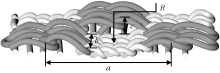
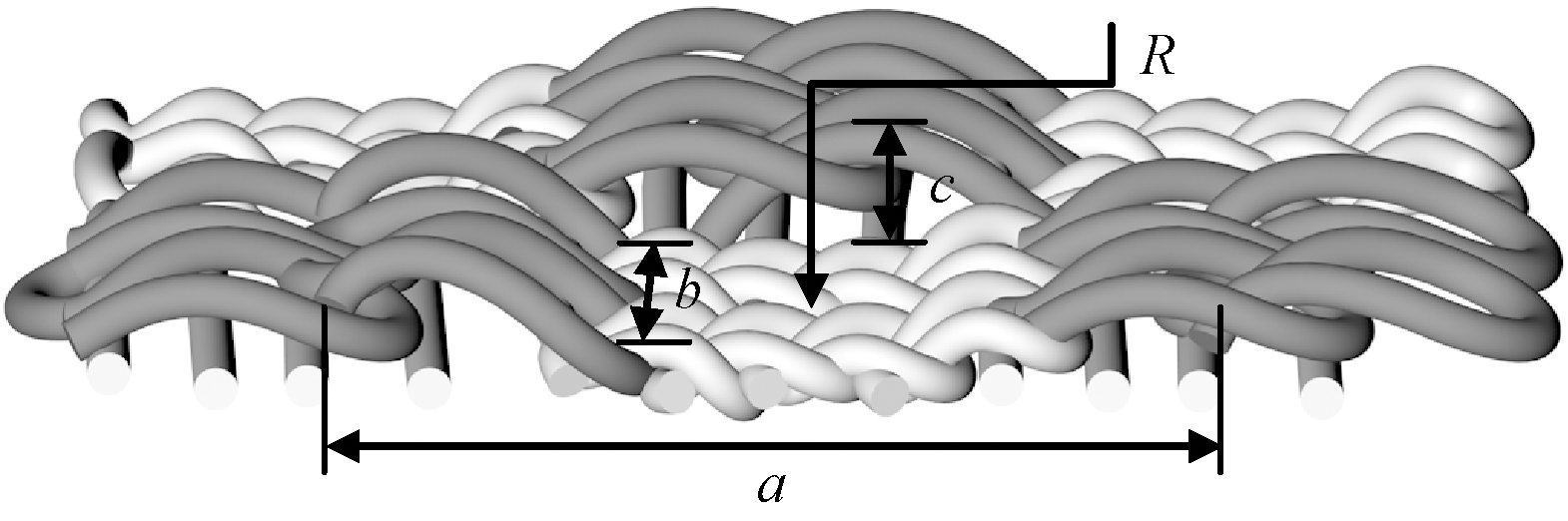
图1

织物表面凹坑"

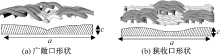
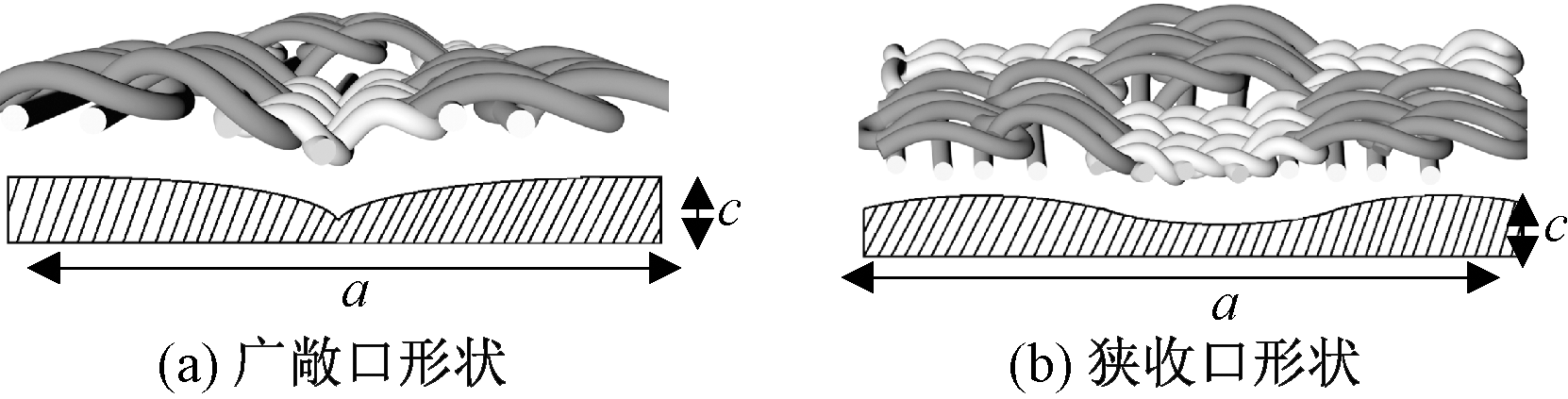
图2

凹坑张口形态"

图3

织物设计原理图"

图4

意匠图"

图5

线圈图"

图6

凹凸线圈单元归类"

表1

织物表面凹凸结构参数"

织物
编号
凹凸结构参数 凹凸结构
分布
孔隙率/
%
羊毛纱
穿入路数
a/mm b/mm


F1 2.34 2.15 点状 2.01 2、8
F2 2.08 1.88 点状 1.00 1、2、7、8
F3 2.27 2.03 条状 1.42 1、2
F4 2.14 1.99 块状 1.67 1


F5 2.26 2.18 条状 3.45 1
F6 2.37 2.14 点状 1.34 2、8
F7 2.44 2.24 9.27

表2

织物基本工艺参数"

织物编号 正面密度/(线圈·(5 cm)-1) 反面密度/(线圈·(5 cm)-1) 厚度/
mm
面密度/
(g·m-2)
纱线含量/%
横密 纵密 横密 纵密 192 dtex 55.5 dtex(24 f) 55.5 dtex(216 f)
工艺Ⅰ F1 80 155 85 50 0.858 150 32.21 39.61 28.18
F2 85 165 85 55 1.104 220 68.64 13.26 18.10
F3 85 165 85 55 0.886 171 43.78 26.38 29.84
F4 95 140 95 50 0.864 158 33.26 30.77 35.97
工艺Ⅱ F5 90 145 90 45 0.840 148 34.50 31.84 33.66
F6 85 155 85 55 0.744 135 29.62 43.49 26.89
F7 90 140 85 45 0.612 106 0 54.99 45.01

表3

不同织物热湿及抗菌性能对比测试结果"

织物编号 透湿率/
(g·(m2·d)-1)
透气率/
(mm·s-1)
单向传递
指数/%
保温率/
%
蒸发速率/
(g·h-1)
芯吸高度/cm 抑菌率/
%
横向 纵向
F1 3 816.25 1 449.9 431.96 19.31 0.30 16.57 11.70
F2 3 934.98 1 210.8 333.62 23.57 0.28 15.87 13.90 99.00
F3 4 472.08 1 293.4 484.10 23.84 0.45 15.10 12.43 96.69
F4 3 994.35 1 299.2 506.91 25.95 0.33 15.73 13.13
F5 4 231.08 1 471.4 434.96 22.85 0.42 15.93 13.70
F6 4 163.96 1 400.0 526.87 15.57 0.43 16.07 11.73 89.42
F7 4 549.82 1 619.4 593.87 15.68 0.44 19.23 14.83 0
[1] 郝习波, 李辉芹, 巩继贤, 等. 单向导湿功能纺织品的研究进展[J]. 纺织学报, 2015, 36(7):157-161,168.
HAO Xibo, LI Huiqin, GONG Jixian, et al. Review on unidirectional water transport functional fabrics[J]. Journal of Textiles Research, 2015, 36(7):157-161,168.
[2] 陈思, 程明丽. 双面针织物的开发与服用性能[J]. 上海纺织科技, 2020, 48(12):37-42.
CHEN Si, CHENG Mingli. Development and wearability of double-sided knitted fabrics[J]. Shanghai Textile Science and Technology, 2020, 48(12):37-42.
[3] 孙锋. 功能性羊毛复合针织面料研究[J]. 上海纺织科技, 2003 (1):34-35,5.
SUN Feng. Study on production of functional wool compound knitted fabric[J]. Shanghai Textile Science and Technology, 2003 (1):34-35,5.
[4] 张义男, 杨启东, 夏磊, 等. 羊毛与涤纶交织导湿快干针织面料的开发[J]. 针织工业, 2019 (1):1-3.
ZHANG Yinan, YANG Qidong, XIA Lei, et al. Development of wool and polyester interknitted fabric with moisture-transfer and quick drying[J]. Knitting Industries, 2019 (1):1-3.
[5] 范小怡, 马颜雪, 沈华, 等. 贴身穿羊毛混纺面料的热湿舒适性能对比[J]. 上海纺织科技, 2022, 50(1):48-51.
FAN Xiaoyi, MA Yanxue, SHEN Hua, et al. Comparative analysis of thermal and moisture comfort performance of close-fitting wool blended fabrics[J]. Shanghai Textile Science and Technology, 2022, 50(1):48-51.
[6] 雷敏, 李毓陵, 马颜雪, 等. 织物散湿性能的研究进展[J]. 纺织学报, 2020, 41(7):174-181.
LEI Min, LI Yuling, MA Yanxue, et al. Research progress of moisture evaporating performance of fabrics[J]. Journal of Textiles Research, 2020, 41(7):174-181.
[7] 丁玉琴, 董智佳, 丛洪莲, 等. 单向导湿纬编成形织物的结构设计及其性能[J]. 纺织学报, 2023, 44(11):83-89.
doi: 10.13475/j.fzxb.20220604901
DING Yuqin, DONG Zhijia, CONG Honglian, et al. Structural design and performance of unidirectional moisture-transfer weft-knitted forming fabrics[J]. Journal of Textiles Research, 2023, 44(11):83-89.
[8] 施楣梧, 陈运能, 姚穆. 织物湿传导理论和实际的研究:液态水在织物中的吸收、传输与蒸发的研究[J]. 西安工程大学学报, 2001, 15(2):15-23.
SHI Meiwu, CHEN Yunneng, YAO Mu. Theoretical and practical studies on wet conduction of fabrics: study on the absorption, transport and evaporation of liquid water in fabrics[J]. Journal of Northwest Institute of Textile Science and Technology, 2001, 15(2):15-23.
[9] 沈颖乐, 李新彤, 韩浩, 等. 羊毛针织运动面料的设计与开发[J]. 纺织科学与工程学报, 2019, 36(4):85-90.
SHEN Yingle, LI Xintong, HAN Hao, et al. Design and development of wool knitted sports fabrics[J]. Journal of Textile Science and Engineering, 2019, 36(4):85-90.
[10] 陈志华, 王江波, 吴晶, 等. 采用差别化羊毛纤维开发功能性运动面料[J]. 针织工业, 2023 (6):25-28.
CHEN Zhihua, WANG Jiangbo, WU Jing, et al. Development of differential wool functional fabric[J]. Knitting Industries, 2023 (6):25-28.
[11] 张炜栋, 黄旭. 羊毛在运动面料上的应用研究进展[J]. 针织工业, 2022(12):23-26.
ZHANG Weidong, HUANG Xu. Research progress in wool application in the sportswear[J]. Knitting Industries, 2022(12):23-26.
[12] 李淑静, 李小倩, 刘静芳, 等. 织物结构主成分及其透气透湿研究[J]. 丝绸, 2020, 57(5):16-19.
LI Shujing, LI Xiaoqian, LIU Jingfang, et al. Structural principal component and air/moisture permeability of fabric[J]. Journal of Silk, 2020, 57(5):16-19.
[13] 孙锋. 羊毛和丙纶复合针织面料热湿舒适性研究[J]. 纺织学报, 2002, 23(6):34-36,3.
SUN Feng. Study of the thermohydro-comfort durability for the compound knitted fabric from wool and microfil-polypropylene[J]. Journal of Textiles Research, 2002, 23(6):34-36,3.
[14] 王玥, 王春红, 徐磊, 等. 三维导湿结构环保针织面料开发与吸湿速干性能评价[J]. 纺织学报, 2022, 43(10):58-64.
doi: 10.13475/j.fzxb.20210907907
WANG Yue, WANG Chunhong, XU Lei, et al. Development of environmentally friendly knitted fabrics with 3-D moisture conductive structure and performance evaluation on moisture absorption and quick-drying[J]. Journal of Textiles Research, 2022, 43(10):58-64.
[1] 杨琪, 周晓钰, 季静, 戴宏钦. 化学防护服内湿度调节装置的设计与性能评价[J]. 纺织学报, 2025, 46(05): 262-269.
[2] 李润, 常梓洋, 张如范. 碳纳米管功能纤维的可控制备与性能调控研究进展[J]. 纺织学报, 2025, 46(05): 30-40.
[3] 陈枭, 赵继忠, 董凯. 基于接触起电效应的新型机电转化纤维性能提升策略[J]. 纺织学报, 2025, 46(05): 41-48.
[4] 张泽祺, 周涛, 周文琪, 范中尧, 杨佳蕾, 陈国印, 潘绍武, 朱美芳. 生理电信号监测用导电纤维及其研究进展[J]. 纺织学报, 2025, 46(05): 70-76.
[5] 王菁, 董智佳, 郑飞, 黄守东, 彭会涛, 吴光军, 马丕波. 横编全成形鞋体的结构设计与工艺实现[J]. 纺织学报, 2025, 46(04): 89-95.
[6] 巫晓雯, 方蕾妹, 江昆, 丛洪莲. 基于热湿舒适性的横编全成形运动内衣的分区设计[J]. 纺织学报, 2024, 45(12): 172-179.
[7] 郭琦, 吴宁, 孟影, 安达, 黄建龙, 陈利. 变厚度头锥体织物的工艺设计与验证[J]. 纺织学报, 2024, 45(12): 98-108.
[8] 姚思宏, 董智佳, 蒋高明, 王二南. 零裁耗经编成形翻领T恤结构设计与建模[J]. 纺织学报, 2024, 45(11): 178-184.
[9] 陈钰珊, 蒋高明, 李炳贤. 基于双扎口的纬编管状无缝织物三维仿真[J]. 纺织学报, 2024, 45(10): 95-102.
[10] 王遵钦, 刘东炎, 王晓旭, 张典堂. 机织角联锁变密度复合材料的面外压缩力学特性[J]. 纺织学报, 2024, 45(07): 63-71.
[11] 王一品, 李小辉. 服装褶皱形态的参数化表征方法[J]. 纺织学报, 2024, 45(06): 149-154.
[12] 王兆芳, 张辉, 丁波, 张淼. 文胸罩杯透湿率测定新方法[J]. 纺织学报, 2024, 45(01): 176-184.
[13] 姚晨曦, 万爱兰. 聚对苯二甲酸丁二醇酯/聚对苯二甲酸乙二醇酯纬编运动T恤面料的热湿舒适性[J]. 纺织学报, 2024, 45(01): 90-98.
[14] 董智佳, 郭燕雨秋, 刘海桑, 姚思宏. 经编全成形镂空紧身衣的结构设计与实现[J]. 纺织学报, 2023, 44(12): 130-137.
[15] 王兆芳, 丁波, 张辉, 陈思璘. 青年女性胸部出汗分布和出汗率的测定[J]. 纺织学报, 2023, 44(12): 145-152.
Viewed
Full text


Abstract

Cited

  Shared   
  Discussed   
No Suggested Reading articles found!