纺织学报 ›› 2025, Vol. 46 ›› Issue (07): 160-168.doi: 10.13475/j.fzxb.20241006401
陈廷彬, 蒋鑫, 毛海力, 王成成, 张丽平( )
)
CHEN Tingbin, JIANG Xin, MAO Haili, WANG Chengcheng, ZHANG Liping()
摘要:
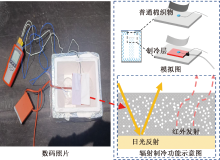
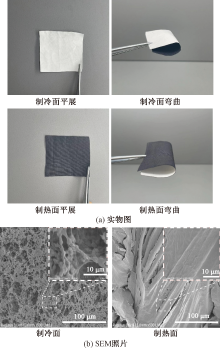
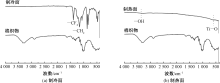
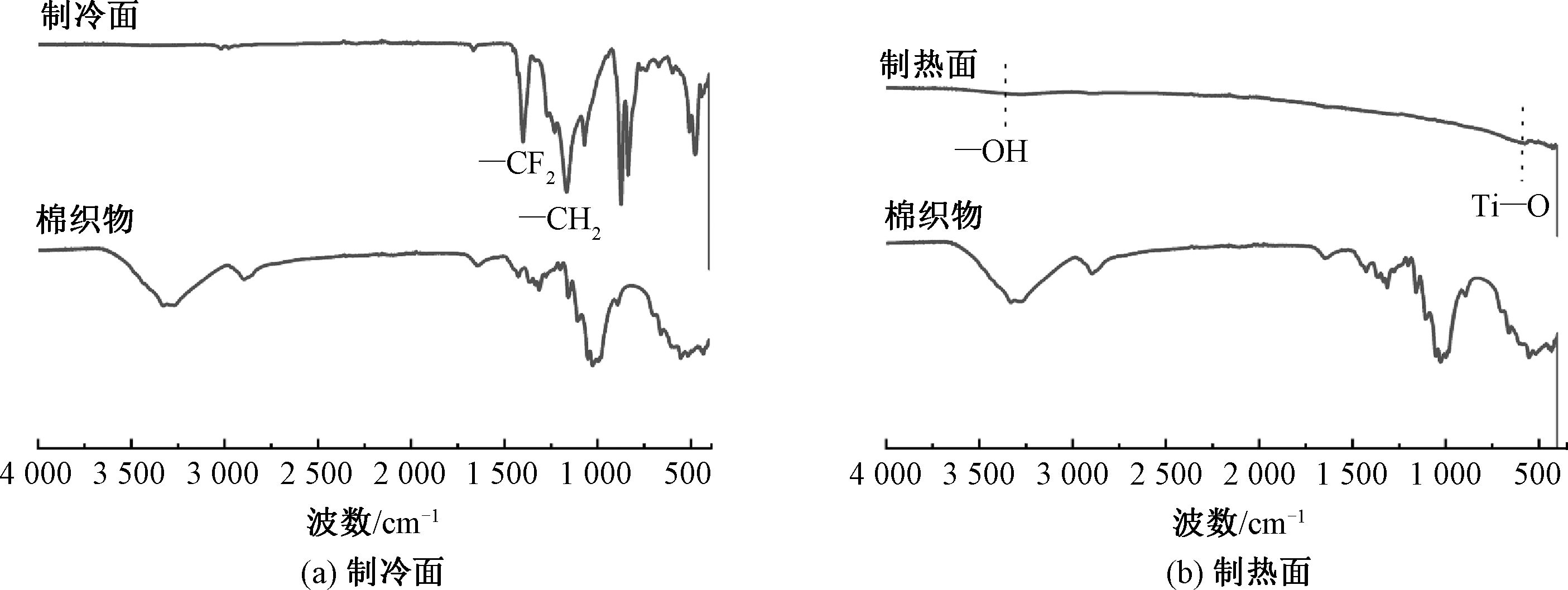
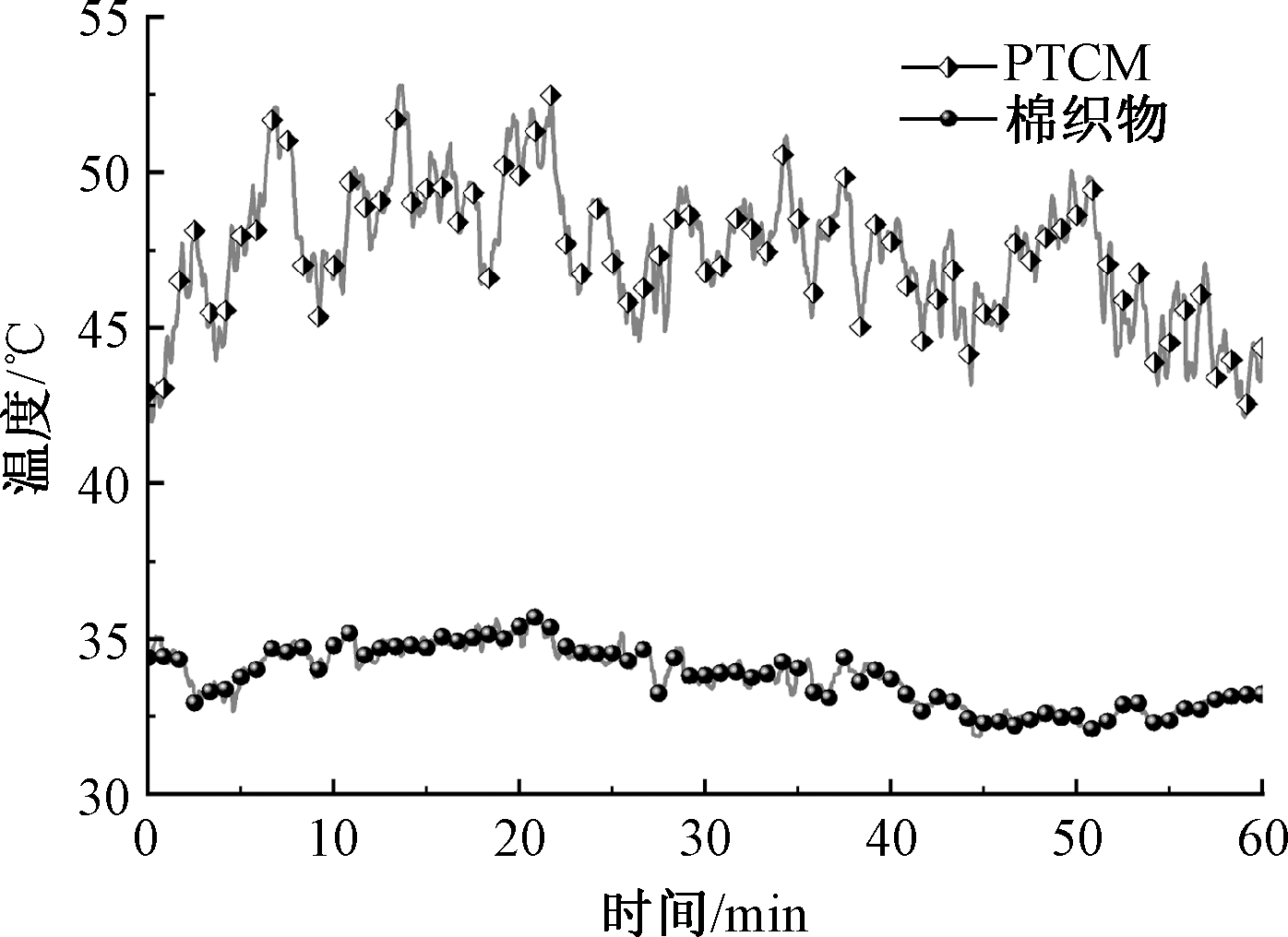
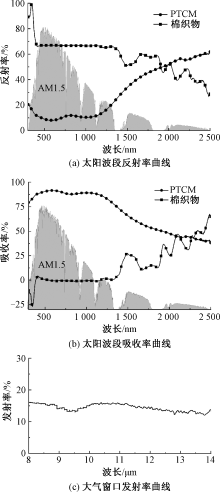
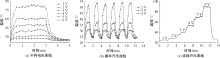
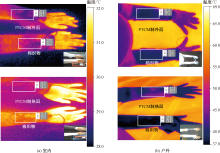
鉴于环境温度变化的动态性以及不可预测性,热管理纺织品单向的热调节方式难以全面适应人体不同时段对温度调节的复杂需求。针对该问题,将纳米二氧化钛(TiO2)微粒均匀分散于聚偏氟乙烯溶液中,采用涂层法涂覆于棉织物的一面,再将二维过渡金属碳化物/碳氮化物MXene(Ti3C2Tx)通过喷涂工艺整理到织物的另一面,制备了“三明治”结构的双模式热管理织物,研究并分析了双模式热管理织物的表观形貌、制冷和制热性能及其作用原理。结果表明:该双模式热管理织物在日光下照射1 h,制冷面平均降温3.9 ℃、制热面平均升温11.8 ℃,且在6 V电压驱动下自加热至80 ℃,能够满足人体在不同环境下的舒适度调控需求;在实际户外热红外成像测试中,晴天条件下,制冷面温度比棉织物低0.9 ℃,制热面温度比棉织物高5.1 ℃,证明了该双模式热管理织物在户外场景下集辐射制冷、辐射制热功能于一体,为实现全天候动态热舒适调控提供了更灵活、可持续的解决方案。
中图分类号:
| [1] | WU S F, WANG L W, ZHANG C, et al. Solar-driven dual-mode cascading cycle based on ammonia complexation reaction for flexible seasonal thermal management[J]. Chemical Engineering Journal, 2023. DOI:10.1016/j.cej.2022.139536. |
| [2] | WANG Y, SHOU D, SHANG S, et al. Development of ZrC/T-shaped zno whisker coated dual-mode Janus fabric for thermal management[J]. Solar Energy, 2022, 233: 196-203. |
| [3] |
李韩, 王海霞, 张旭, 等. 基于聚乙烯醇缩丁醛/聚乙二醇的同轴纳米纤维膜储热织物制备及其热管理性能[J]. 纺织学报, 2024, 45(11): 37-45.
doi: 10.13475/j.fzxb.20240101001 |
|
LI Han, WANG Haixia, ZHANG Xu, et al. Preparation and thermal management performance of a coaxial nanofiber membrane-based thermal storage fabric using polyvinyl butyral/polyethylene glycol[J]. Journal of Textile Research, 2024, 45(11): 37-45.
doi: 10.13475/j.fzxb.20240101001 |
|
| [4] |
HONG S, GU Y, SEO J, et al. Wearable thermoelectrics for personalized thermoregulation[J]. Science Advances, 2019, 5(5): 536-547.
doi: 10.1126/sciadv.aaw0536 pmid: 31114803 |
| [5] | HSU P, SONG A, CATRYSSE P, et al. Radiative human body cooling by nanoporous polyethylene textile[J]. Science, 2016, 353(6303): 1019-1023. |
| [6] |
LIU Z, LYU J, FANG D, et al. Nanofibrous kevlar aerogel threads for thermal insulation in harsh environments[J]. ACS Nano, 2019, 13(5): 5703-5711.
doi: 10.1021/acsnano.9b01094 pmid: 31042355 |
| [7] | YIN H, FAN C. Realization of an efficient radiative cooling emitter with double layer inorganic SiO2 and TiO2 metamaterial[J]. Results in Physics, 2023. DOI:10.1016/j.rinp.2023.106216. |
| [8] | LI X, PEOPLES J, YAO P, et al. Ultrawhite BaSO4 paints and films for remarkable daytime subambient radiative cooling[J]. ACS Applied Materials & Interfaces, 2021, 13(18): 21733-21739. |
| [9] | JIA H, ZHU J, DEBELI D K, et al. Solar thermal energy harvesting properties of spacer fabric composite used for transparent insulation materials[J]. Solar Energy Materials and Solar Cells, 2018, 174: 140-145. |
| [10] | BOUTGHATIN M, ASSAF S, PENNEC Y, et al. Impact of SiO2 particles in polyethylene textile membrane for indoor personal heating[J]. Nanomaterials, 2020. DOI:10.1016/j.rinp.2023.106216. |
| [11] | 朱振峰, 朱春奎, 刘辉, 等. 单分散TiO2微球合成与表征[J]. 功能材料, 2013, 44(23): 3478-3480. |
| ZHU Zhenfeng, ZHU Chunkui, LIU Hui, et al. Synthesis and characterization of monodisperse TiO2 microspheres[J]. Functional Materials, 2013, 44(23): 3478-3480. | |
| [12] |
严小飞, 方杰, 朱晨凯, 等. 二维材料MXene(Ti3C2Tz)的制备,性能及其在纺织领域中的应用[J]. 现代纺织技术, 2022, 30(2): 1-5.
doi: 10.19398/j.att.202105030 |
|
YAN Xiaofei, FANG Jie, ZHU Chenkai, et al. Preparation, properties, and applications of two-dimensional material MXene (Ti3C2Tz) in the textile field[J]. Advanced Textile Technology, 2022, 30(2): 1-5.
doi: 10.19398/j.att.202105030 |
|
| [13] | WU C W, UNNIKRISHNAN B, CHEN I W P, et al. Excellent oxidation resistive MXene aqueous ink for microsupercapacitor application[J]. Energy Storage Materials, 2020, 25: 563-571. |
| [14] | DAI B, LI X, XU T, et al. Radiative cooling and solar heating janus films for personal thermal manage-ment[J]. ACS Applied Materials & Interfaces, 2022, 14(16): 18877-18883. |
| [15] | 石梦科. 聚合物/MXene辐射加热/制冷复合材料的制备、结构与性能研究[D]. 郑州: 郑州大学, 2022:64-66. |
| SHI Mengke. Study on the preparation, structure, and properties of polymer/MXene radiative heating/cooling composites[D]. Zhengzhou: Zhengzhou University, 2022:64-66. | |
| [16] | AILI A, WEI Z Y, CHEN Y Z, et al. Selection of polymers with functional groups for daytime radiative cooling[J]. Materials Today Physics, 2019. DOI:10.1016/j.mtphys.2019.100127. |
| [17] | LI K, LI M, LIN C, et al. A janus textile capable of radiative subambient cooling and warming for multi-scenario personal thermal management[J]. Small (Weinheim an der Bergstrasse, Germany), 2023, 19(19): e2206149. |
| [18] | 王富强, 张鑫平, 汤智清, 等. 仿生型辐射制冷膜的可见-近红外双波段光谱辐射特性调控[J]. 中国石油大学学报(自然科学版), 2023, 47(4): 151-157. |
| WANG Fuqiang, ZHANG Xinping, TANG Zhiqing, et al. Regulation of dual-band spectral radiative characteristics in the visible and near-infrared regions of biomimetic radiative cooling films[J]. Journal of China University of Petroleum (Edition of Natural Science), 2023, 47(4): 151-157. | |
| [19] | 王梦晔, 孙岚, 吴奇, 等. Ti基TiO2纳米管阵列的改性及其光催化降解有机污染物[J]. 中国科学:化学, 2011, 41(4): 699-708. |
| WANG Mengye, SUN Lan, WU Qi, et al. Modification of Ti-based TiO2 nanotube arrays and their photocatalytic degradation of organic pollutants[J]. Science China: Chemistry, 2011, 41(4): 699-708. | |
| [20] | XU D, LI Z, LI L, et al. Insights into the photothermal conversion of 2D MXene nanomaterials: synthesis, mechanism, and applications[J]. Advanced Functional Materials, 2020. DOI:10.1002/adfm.202000712. |
| [21] | 申明明. MXene基红外低发射材料的制备、结构及高效辐射热管理性能研究[D]. 郑州: 郑州大学, 2022:21-22. |
| SHEN Mingming. Study on the preparation, structure, and high-efficiency radiative thermal management properties of MXene-based infrared low-emissivity materials[D]. Zhengzhou: Zhengzhou University, 2022:21-22. |
| [1] | 贾潞, 周苏秦, 郭龙灿, 刘淑强, 张瑜. 负载MXene的棉/氨纶导电包芯纱制备及其传感性能[J]. 纺织学报, 2025, 46(07): 96-102. |
| [2] | 谭文萍, 张硕, 张倩, 张寅, 刘润政, 黄晓卫, 明津法. 聚乳酸纤维气凝胶制备及其辐射制冷性能[J]. 纺织学报, 2025, 46(06): 63-72. |
| [3] | 孙洁, 郭羽晴, 屈芸, 张利平. 芳纶纳米纤维/MXene同轴纤维电极制备及其性能[J]. 纺织学报, 2025, 46(05): 125-134. |
| [4] | 于梦菲, 高文丽, 任婧, 曹雷涛, 彭若铉, 凌盛杰. 摩擦纳米发电机用皮芯结构纤维的制备及其性能[J]. 纺织学报, 2025, 46(05): 1-9. |
| [5] | 梁雯宇, 季东晓, 覃小红. 微纳米纤维包芯纱制备及其电致发光性能[J]. 纺织学报, 2025, 46(01): 42-51. |
| [6] | 李万新, 舒大武, 安芳芳, 韩博, 任支刚, 单巨川. 碳化钛与三价铁离子协同过硫酸钠对活性染料废水的降解[J]. 纺织学报, 2025, 46(01): 138-147. |
| [7] | 关玉, 王冬, 郭一凡, 付少海. MoS2/MXene阻燃气敏棉织物的制备及其性能[J]. 纺织学报, 2024, 45(12): 159-165. |
| [8] | 刘延波, 高鑫羽, 郝铭, 胡晓东, 杨波. 基于光热改性的复合纤维毡及其在高黏度油吸附中的应用[J]. 纺织学报, 2024, 45(11): 55-64. |
| [9] | 赵强, 刘正江, 高晓平, 张云婷, 张宏. 蒙脱土协同TiO2整理棉织物的功能性[J]. 纺织学报, 2024, 45(09): 121-128. |
| [10] | 李倩倩, 郭晓玲, 崔文豪, 许宇真, 王林峰. 汽车座椅用抗菌涤纶针织物制备及其性能[J]. 纺织学报, 2024, 45(06): 127-133. |
| [11] | 王建, 张蕊, 郑莹莹, 董正梅, 邹专勇. 二维过渡金属碳/氮化合物基柔性纺织压力传感器的研究进展[J]. 纺织学报, 2024, 45(06): 219-226. |
| [12] | 陆瑶瑶, 叶俊涛, 阮承祥, 娄瑾. 二氧化钛/多孔碳纳米纤维复合材料的制备及其光催化性能[J]. 纺织学报, 2024, 45(04): 67-75. |
| [13] | 李朝威, 成悦, 苏新, 陈鹏飞, 李大伟, 付译鋆. 聚偏氟乙烯纳米纤维的结构调控及其在生物医学领域应用研究进展[J]. 纺织学报, 2024, 45(04): 229-237. |
| [14] | 宋贝贝, 赵浩阅, 李欣宇, 屈展, 方剑. 载有MXene的钴氮掺杂碳纳米纤维在锂硫电池中的应用[J]. 纺织学报, 2024, 45(04): 24-32. |
| [15] | 陈荣轩, 孙辉, 于斌. N-TiO2/聚丙烯复合熔喷非织造材料的制备及其光催化性能[J]. 纺织学报, 2024, 45(03): 137-147. |
|
||
 京公网安备11010502044800号