纺织学报 ›› 2025, Vol. 46 ›› Issue (09): 66-73.doi: 10.13475/j.fzxb.20250205901
孙鹤情1,2, 赵聪颖1,2, 吴冰雪1,2, 张幼维1,2( )
)
SUN Heqing1,2, ZHAO Congying1,2, WU Bingxue1,2, ZHANG Youwei1,2()
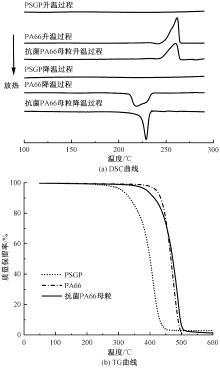
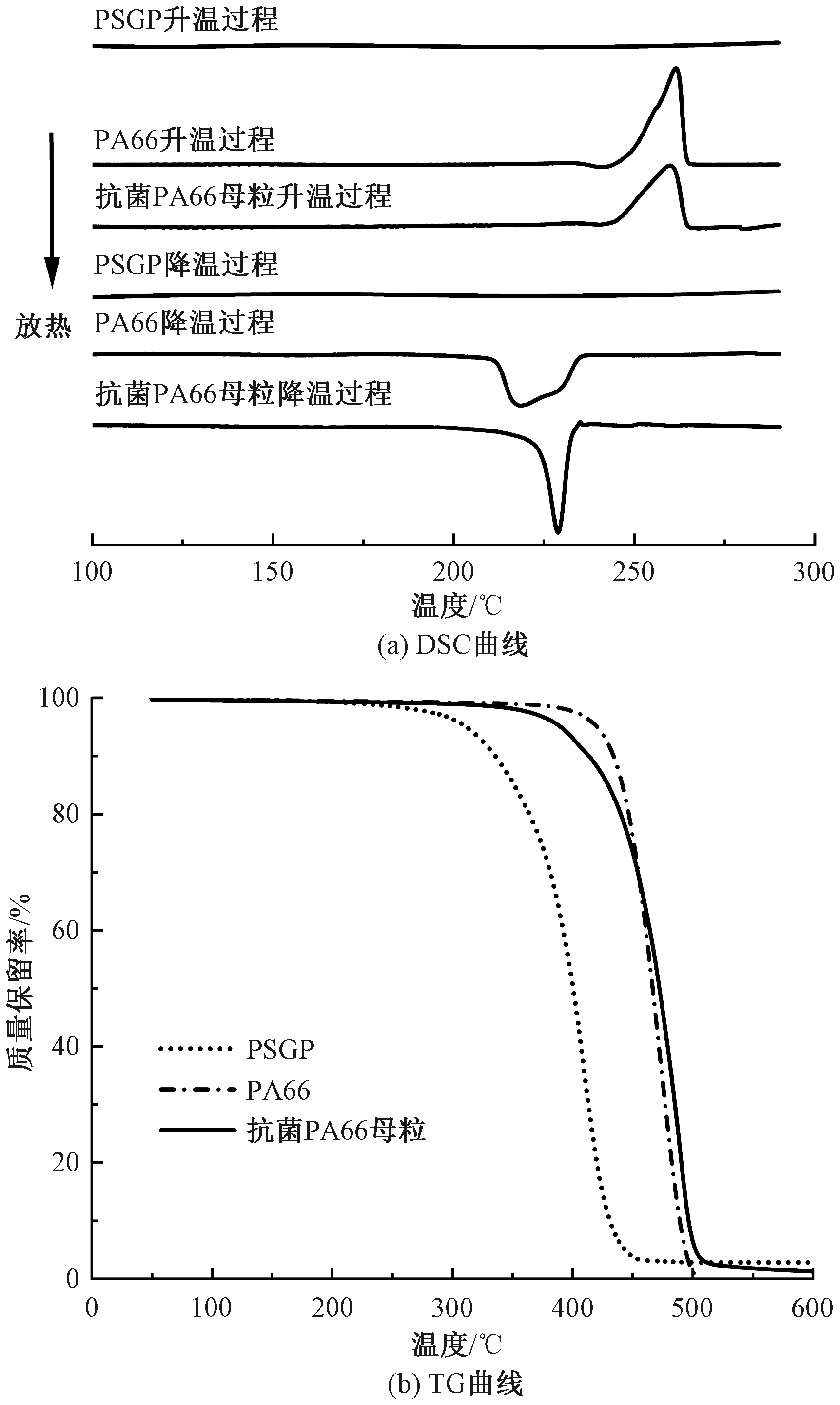
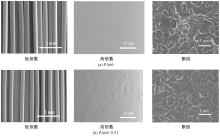
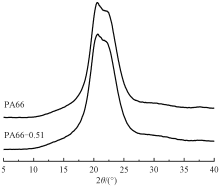
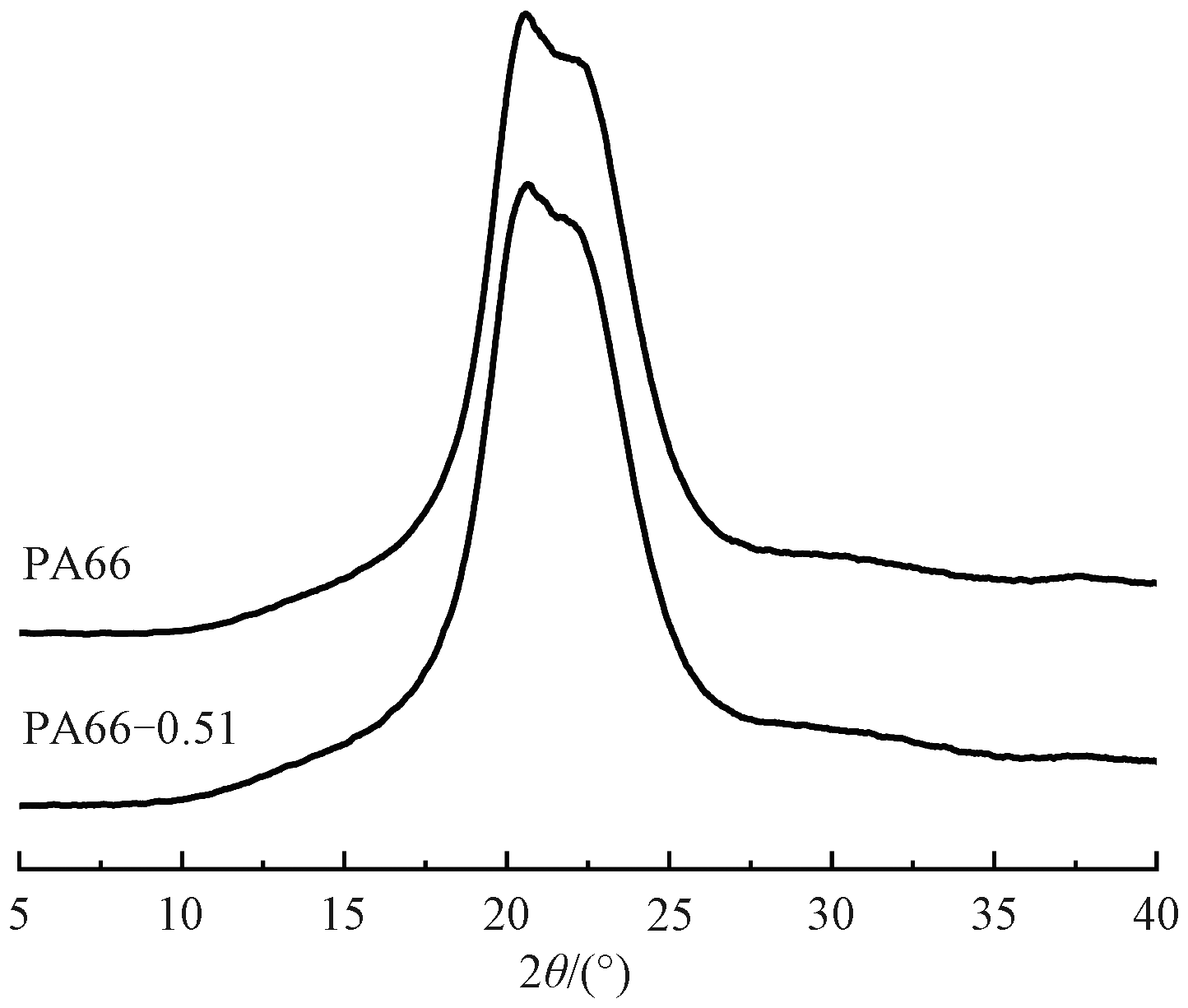
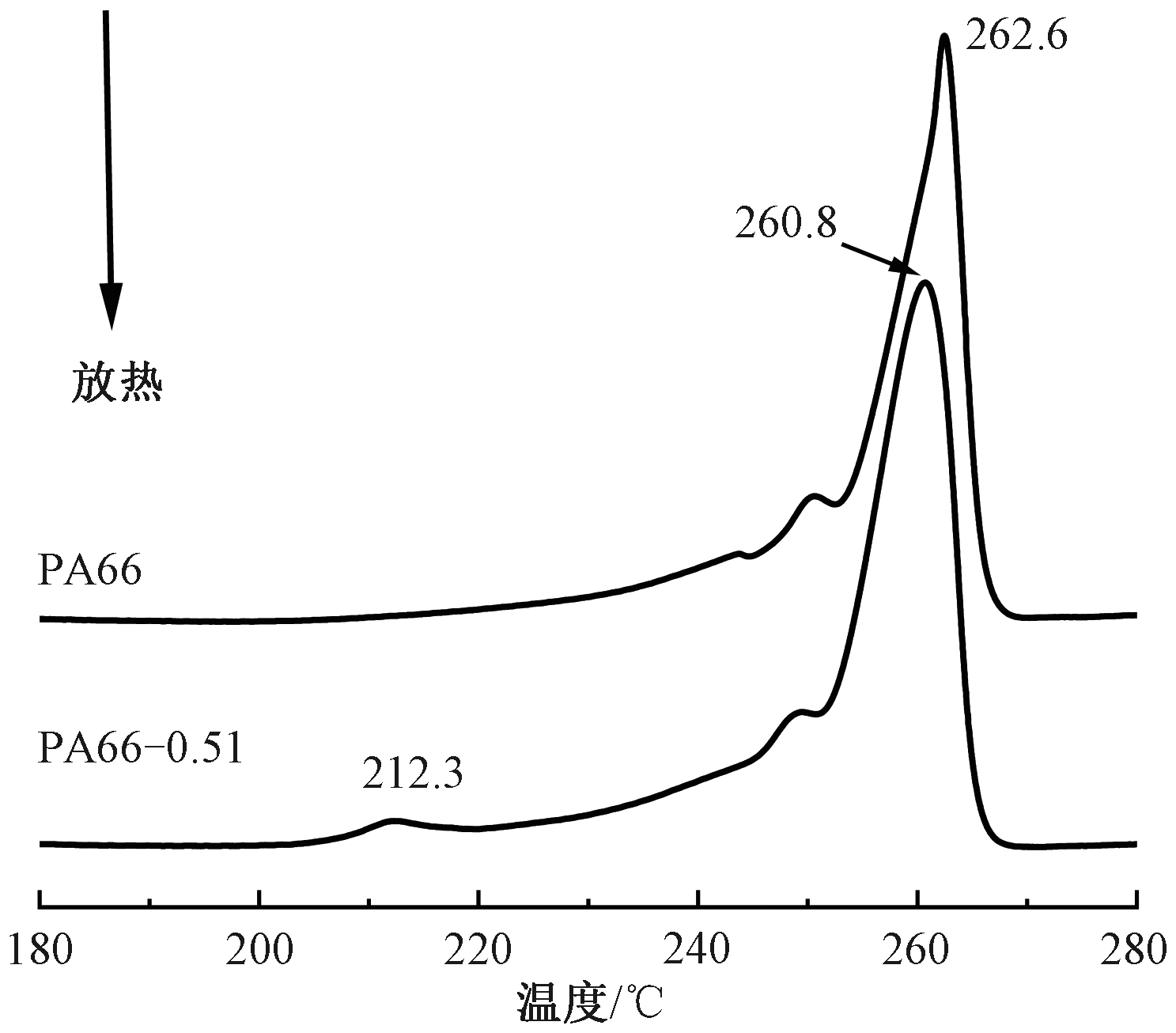
摘要: 为解决水溶性聚六亚甲基胍盐酸盐(PHMG)抗菌剂在纤维中易溶出、耐久性差的问题,选用多环氧聚苯乙烯对PHMG 进行改性制得胍盐共聚物,并与聚酰胺 66(PA66)共混挤出造粒制得抗菌 PA66 母粒,再经共混熔融纺丝制得长效型抗菌 PA66 纤维。借助傅里叶红外光谱仪、元素分析仪、差示扫描量热仪、热重分析仪、扫描电子显微镜、X 射线光电能谱仪等表征了抗菌 PA66 母粒的化学结构和热性能,抗菌 PA66 纤维的微观形貌、结晶结构、力学性能和抗菌性能,以及纤维断面的抗菌剂分布。结果表明:抗菌 PA66 母粒热稳定性良好,能满足熔融纺丝要求;抗菌剂在抗菌 PA66 纤维表面发生富集,PHMG 添加量为 0.33% 的抗菌 PA66 纤维对大肠埃希菌和金黄色葡萄球菌的抑菌率可达 99% 以上,PHMG 添加量为 0.45% 的抗菌纤维,洗涤 50 次后,对大肠埃希菌和金黄色葡萄球菌的抑菌率仍可达 95% 以上,且纤维的断裂强度达 5.19 cN/dtex,抗菌性能高效耐久。
中图分类号:
| [1] |
ZHANG J, GAO X, ZHANG X, et al. Polyamide 66 and amino-functionalized multi-walled carbon nanotube composites and their melt-spun fibers[J]. Journal of Materials Science, 2019, 54(16):11056-11068.
doi: 10.1007/s10853-019-03619-0 |
| [2] | 赵红艳, 房文鹏, 曾成, 等. 83dtex/24f 阻燃尼龙66纤维的制备及性能研究[J]. 合成纤维工业, 2024, 47(4):47-51. |
| ZHAO Hongyan, FANG Wenpeng, ZENG Cheng, et al. Preparation and performance study of 83dtex/24f flame-retardant nylon 66 fibre[J]. China Synthetic Fiber Industry, 2024, 47(4):47-51. | |
| [3] | 成天保, 刘中宾, 张申奥, 等. 尼龙66工业丝生产工艺及影响可纺性的因素[J]. 合成纤维, 2024, 53(4):16-18. |
| CHENG Tianbao, LIU Zhongbin, ZHANG Shenao, et al. Production process of nylon 66 industrial filament and factors affecting spinnability[J]. Synthetic Fiber in China, 2024, 53(4):16-18. | |
| [4] |
LIN J, WINKELMAN C, WORLEY S D, et al. Antimicrobial treatment of nylon[J]. Journal of Applied Polymer Science, 2001, 81(4):943-947.
doi: 10.1002/app.v81:4 |
| [5] |
ZHANG M, GAO Q, YANG C, et al. Preparation of antimicrobial MnO4-doped nylon-66 fibers with excellent laundering durability[J]. Applied Surface Science, 2017, 422:1067-1074.
doi: 10.1016/j.apsusc.2017.06.070 |
| [6] |
PANT H R, PANDEYA D R, NAM K T, et al. Photocatalytic and antibacterial properties of a TiO2/nylon-6 electrospun nanocomposite mat containing silver nanoparticles[J]. Journal of Hazardous Materials, 2011, 189(12):465-471.
doi: 10.1016/j.jhazmat.2011.02.062 |
| [7] |
DURAL-EREM A, OZCAN G, SKRIFVARS M. Antibacterial activity of PA6/ZnO nanocomposite fibers[J]. Textile Research Journal, 2011, 81(16):1638-1646.
doi: 10.1177/0040517511407380 |
| [8] | 郑晓頔, 盛平厚, 蒋佳岑, 等. 铜改性抗菌防螨聚酰胺6纤维的制备及其性能[J]. 纺织学报, 2024, 45(3):19-27. |
| ZHENG Xiaodi, SHENG Pinghou, JIANG Jiazen, et al. Preparation and properties of copper-modified antimicrobial and anti-mite polyamide 6 fibres[J]. Journal of Textile Research, 2024, 45(3):19-27. | |
| [9] |
DIZAJ S M, LOTFIPOUR F, BARZEGAR-JALALI M, et al. Antimicrobial activity of the metals and metal oxide nanoparticles[J]. Materials Science and Engineering:C, 2014, 44:278-284.
doi: 10.1016/j.msec.2014.08.031 |
| [10] | 项荣, 丁栋博, 范亮亮, 等. 氧化锌的抗菌机制及其安全性研究进展[J]. 中国组织工程研究, 2014, 18(3):470-475. |
| XIAN Rong, DING Dongbo, FAN Liangliang, et al. Progress of research on the antibacterial mechanism of zinc oxide and its safety[J]. Chinese Journal of Tissue Engineering Research, 2014, 18(3):470-475. | |
| [11] |
BHANDARI V, JOSE S, BADANAYAK P, et al. Antimicrobial finishing of metals, metal oxides, and metal composites on textiles: a systematic review[J]. Industrial & Engineering Chemistry Research, 2022, 61(1): 86-101.
doi: 10.1021/acs.iecr.1c04203 |
| [12] |
GUAN Y, XIAO H N, SULLIVAN H, et al. Antimicrobial-modified sulfite pulps prepared by in situ copolymerization[J]. Carbohydrate Polymers, 2007, 69(4):688-696.
doi: 10.1016/j.carbpol.2007.02.013 |
| [13] |
LIM N, GOH D, BUNCE C, et al. Comparison of polyhexamethylene biguanide and chlorhexidine as monotherapy agents in the treatment of acanthamoeba keratitis[J]. American Journal of Ophthalmology, 2008, 145(1):130-135.
pmid: 17996208 |
| [14] |
OULE M K, AZINWI R, BERNIER A M, et al. Poly hexamethylene guanidine hydrochloride-based disinfectant: a novel tool to fight meticillin-resistant Staphylococcus aureus and nosocomial infections[J]. Journal of Medical Microbiology, 2008, 57(12):1523-1528.
doi: 10.1099/jmm.0.2008/003350-0 |
| [15] |
MATHURIN Y K, KOFFI-NEVRY R, GUEHI S T, et al. Antimicrobial activities of polyhexamethylene guanidine hydrochloride-based disinfectant against fungi isolated from cocoa beans and reference strains of bacteria[J]. Journal of Food Protection, 2012, 75(6):1167-1171.
doi: 10.4315/0362-028X.JFP-11-361 pmid: 22691490 |
| [16] |
GILBERT P, MOORE L E. Cationic antiseptics:diversity of action under a common epithet[J]. Journal of Applied Microbiology, 2005, 99(4):703-715.
doi: 10.1111/jam.2005.99.issue-4 |
| [17] |
CARMONA-RIBEIRO A M, MELO CARRASCO L D. Cationic antimicrobial polymers and their assembl-ies[J]. International Journal of Molecular Sciences, 2013, 14(5):9906-9946.
doi: 10.3390/ijms14059906 |
| [18] |
AL-HITI M M A, GILBERT P. Changes in preservative sensitivity for the USP antimicrobial agents effectiveness test micro-organisms[J]. Journal of Applied Bacteriology, 1980, 49(1):119-126.
doi: 10.1111/jam.1980.49.issue-1 |
| [19] |
KIM S H, SEMENYA D, CASTAGNOLO D. Antimicrobial drugs bearing guanidine moieties:a review[J]. European Journal of Medicinal Chemistry, 2021, 216:113293.
doi: 10.1016/j.ejmech.2021.113293 |
| [20] |
WANG L, ZHOU B, DU Y, et al. Guanidine derivatives leverage the antibacterial performance of bio-based polyamide PA56 fibres[J]. Polymers, 2024, 16(19):2707.
doi: 10.3390/polym16192707 |
| [21] | 张瀚誉, 钱思琦, 朱瑞淑, 等. 抗菌生物基聚酰胺56及纤维的制备与性能研究[J]. 合成纤维, 2020, 49(12):1-7. |
| ZHANG Hanyu, QIAN Siqi, ZHU Ruishu, et al. Preparation and properties of antibacterial bio-based polyamide 56 and fibres[J]. Synthetic Fiber in China, 2020, 49(12):1-7. |
| [1] | 刘婷, 闫涛, 潘志娟. 香蕉茎秆纤维/抗菌纤维混纺纱的制备及其性能[J]. 纺织学报, 2024, 45(10): 48-54. |
| [2] | 郑晓頔, 盛平厚, 蒋佳岑, 李睿, 焦红娟, 邱志成. 铜改性抗菌防螨聚酰胺6纤维的制备及其性能[J]. 纺织学报, 2024, 45(03): 19-27. |
| [3] | 陈欢欢, 陈凯凯, 杨慕容, 薛昊龙, 高伟洪, 肖长发. 聚乳酸/百里酚抗菌纤维的制备与性能[J]. 纺织学报, 2023, 44(02): 34-43. |
| [4] | 曹聪聪, 汤龙世, 刘元军, 赵晓明. 无机抗菌织物的研究进展[J]. 纺织学报, 2022, 43(11): 203-211. |
| [5] | 南清清, 曾庆红, 袁竟轩, 王晓沁, 郑兆柱, 李刚. 抗菌功能纺织品的研究进展[J]. 纺织学报, 2022, 43(06): 197-205. |
| [6] | 黄效华, 周家良, 池姗, 刘彦明, 伏广伟, 胡泽旭, 相恒学, 朱美芳. 聚酯/二氧化硅/橙活性成分改性纤维的制备及其性能[J]. 纺织学报, 2021, 42(12): 21-27. |
| [7] | 姜兴茂, 刘奇, 郭琳. 二氧化硅包覆银铜纳米颗粒的结构及其抗菌性能[J]. 纺织学报, 2020, 41(11): 102-108. |
| [8] | 马跃, 郭静, 殷聚辉, 赵秒, 宫玉梅. 纤维素/氧化纤维素/南极磷虾蛋白复合抗菌纤维的制备与表征[J]. 纺织学报, 2020, 41(11): 34-40. |
| [9] | 高思梦, 王鸿博, 杜金梅, 王文聪. 甜菜碱聚合物的合成及其在棉织物抗菌整理中的应用[J]. 纺织学报, 2020, 41(02): 89-94. |
| [10] | 王岩, 王连军, 陈建芳. 含胍抗菌聚酯纤维的制备及其性能[J]. 纺织学报, 2019, 40(04): 26-31. |
| [11] | 王亚 黄菁菁 张如全 . 艾蒿油-壳聚糖抗菌微胶囊的制备及其应用[J]. 纺织学报, 2018, 39(10): 99-103. |
| [12] | 姚萍 江文 王江 黄金洪 周小华. 接枝壳寡糖抗菌粘胶纤维的制备及其抗菌性与染色效果[J]. 纺织学报, 2018, 39(04): 9-13. |
| [13] | 黄成 陈永邦 叶敬平 阎克路. 引发剂水相乳化工艺对卤胺类单体接枝聚酯抗菌性的影响[J]. 纺织学报, 2017, 38(06): 175-180. |
| [14] | 田艳红 王建坤 杨菊花 陈永裕 王键. 载铜离子抗菌剂的制备及其络合棉织物的性能[J]. 纺织学报, 2015, 36(12): 79-84. |
| [15] | 胡凤霞 杜兆芳 张健. 壳聚糖/Ag+复合抗菌剂整理莫代尔织物[J]. 纺织学报, 2014, 35(12): 80-0. |
|
||
 京公网安备11010502044800号