纺织学报 ›› 2026, Vol. 47 ›› Issue (03): 184-191.doi: 10.13475/j.fzxb.20250905801

• 安全防护材料 • 上一篇    下一篇

医用洗消方式对复合防护材料防护性能的影响

毛宝华1,2, 王美慧2, 郝新敏2, 李春红1, 梁高勇2()   

  1. 1 山东理工大学 鲁泰纺织服装学院, 山东 淄博 255000
    2 军事科学院 系统工程研究院, 北京 100010
  • 收稿日期:2025-09-16 修回日期:2026-01-27 出版日期:2026-03-15 发布日期:2026-03-15
  • 通讯作者: 梁高勇(1973—),男,正高级工程师,硕士。主要研究方向为纺织材料设计与加工等。E-mail:lianggaoyong@163.com
  • 作者简介:毛宝华(1999—),男,硕士。主要研究方向为新型防护材料加工。
  • 基金资助:
    国家重点研发计划项目(2022YFB3804205)

Influence of medical decontamination and sterilization methods on protective performance of composite protective materials

MAO Baohua1,2, WANG Meihui2, HAO Xinmin2, LI Chunhong1, LIANG Gaoyong2()   

  1. 1 Lutai School of Textile and Apparel, Shandong University of Technology, Zibo, Shandong 255000, China
    2 Systems Engineering Institute, Academy of Military Science, Beijing 100010, China
  • Received:2025-09-16 Revised:2026-01-27 Published:2026-03-15 Online:2026-03-15

摘要:

为探究不同洗消方式重复洗消对可重复使用防护织物的防护性能、舒适性能及力学性能的影响,选用自制锦纶层压复合织物及涤纶层压复合织物,设计高温湿热消毒(80 ℃)、蒸汽消毒灭菌、500 mg/L次氯酸钠消毒、2 000 mg/L次氯酸钠消毒4种方式进行重复洗消实验。结果表明:经25次高温湿热消毒、蒸汽消毒灭菌及次氯酸钠消毒方式重复洗消后,复合织物均未出现分层现象,其尺寸稳定性与透气性能无显著变化,过滤效率仍大于99.99%;锦纶复合织物的透湿率呈下降趋势,涤纶复合织物的透湿率上升;经不同洗消方式重复处理后,复合织物的静水压降低,抗渗水性能下降;其中次氯酸钠消毒方式重复洗消导致复合织物断裂强力损失最为显著,最大损失率达66.44%,远高于高温湿热消毒和蒸汽消毒灭菌方式。综合对比不同洗消方式处理对复合织物性能的影响,建议针对细菌繁殖体污染的低度危险感染织物,优先采用高温湿热消毒方式洗消;针对朊病毒病原体污染的高度危险特殊感染织物,推荐采用蒸汽消毒方式洗消。

关键词: 洗消方式, 防护织物, 层压复合织物, 防护性能, 高温消毒, 蒸汽消毒灭菌, 次氯酸钠消毒

Abstract:

Objective Domestic research on reusable decontamination primarily focuses on the relationship between fabric processing techniques and the number of reuse cycles. However, there remains a lack of systematic investigation into the influences of varying decontamination conditions on the reusability and decontamination resistance of protective fabrics. Further in-depth study on the synergistic influence of decontamination parameters, particularly decontamination conditions and frequency, is an important direction for future research. This study investigates how repeated application of different decontamination and sterilization methods would affect the decontamination and sterilization resistance of reusable protective fabrics, aiming to provide scientific references and a theoretical foundation for advancing research in this field. Additionally, this study supports the development of reusable non-surgical medical composite protective clothing that comprehensively ensures the safety of both patients and healthcare personnel.

Method Two self-developed materials, i.e., nylon-based laminated composite fabric and polyester-based laminated composite fabric, were selected for evaluation. Four decontamination and sterilization methods were designed for repeated treatment testing, which are high-temperature moist heat decontamination and sterilization (80 ℃), steam (121 ℃), 500 mg/L sodium hypochlorite solution decontamination and sterilization, and 2 000 mg/L sodium hypochlorite solution. Through analysis of protective performance, comfort-related properties, and mechanical characteristics after multiple washing and decontamination cycles, the durability and resistance of the composite fabrics were assessed. By comparing the impacts of repeated decontamination and sterilization using different methods on fabric performance, recommendations were provided for optimal decontamination strategies tailored to specific types of protective fabrics.

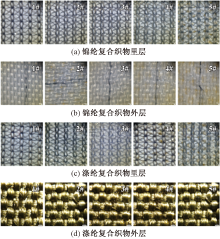
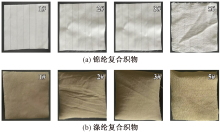
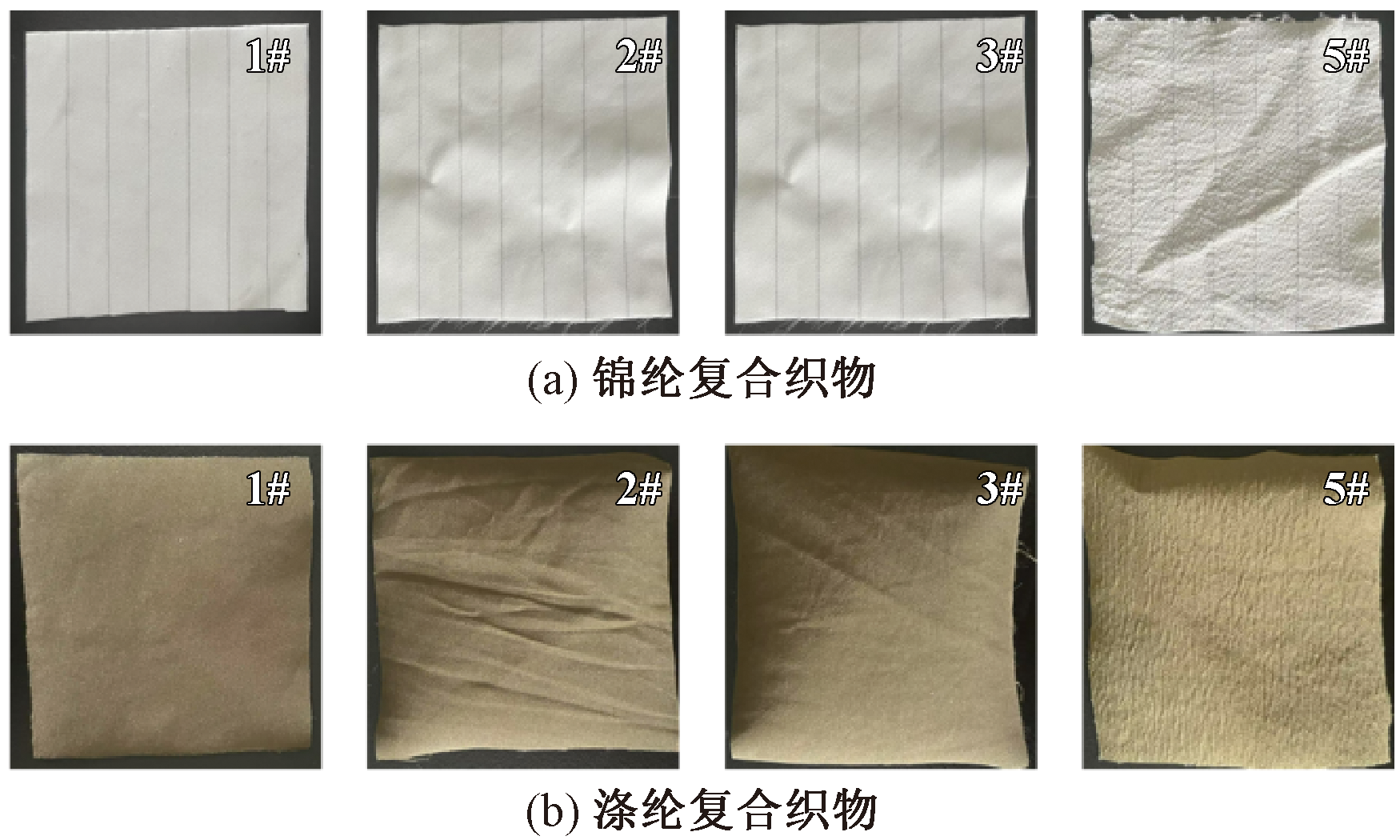
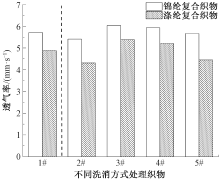
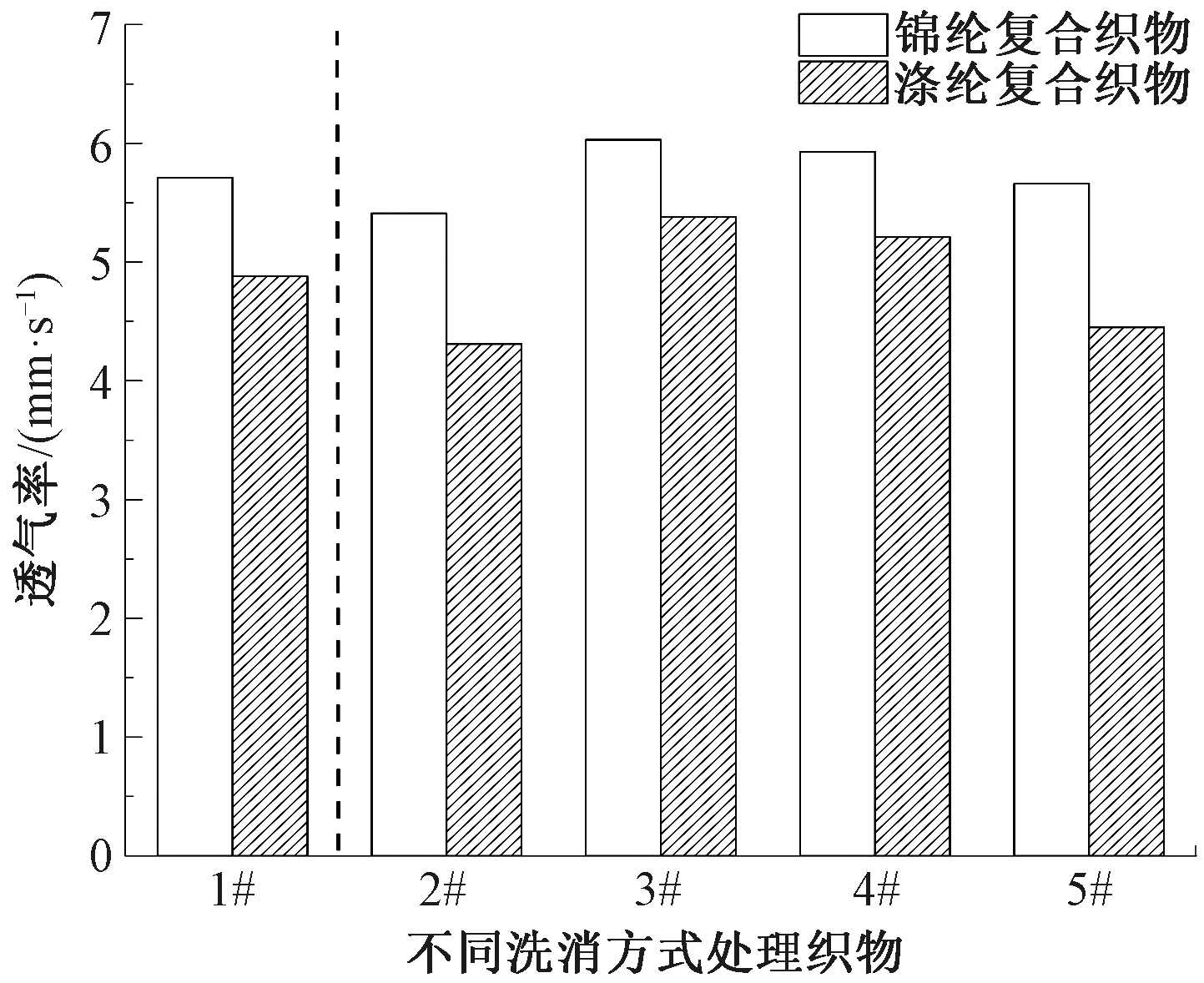
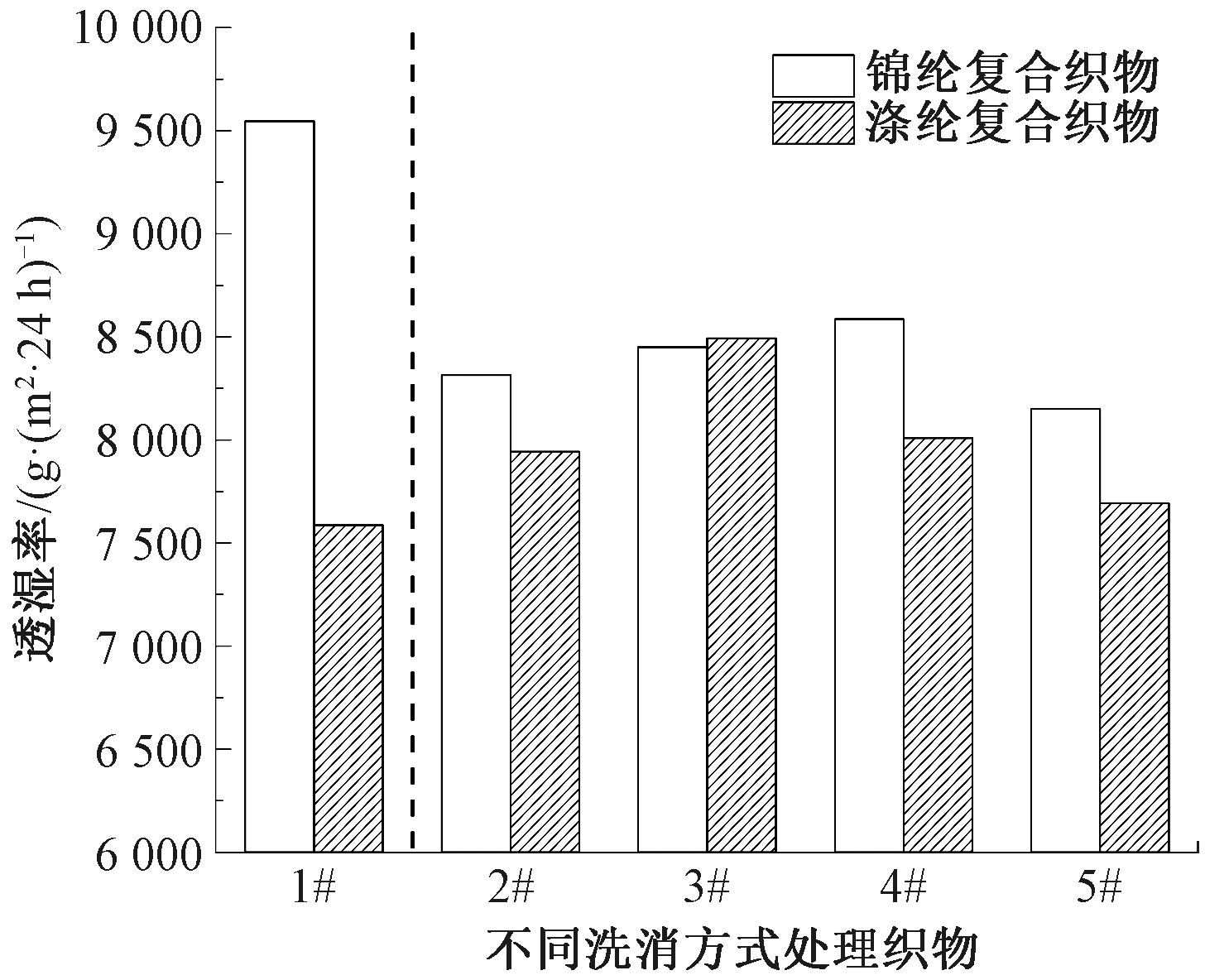
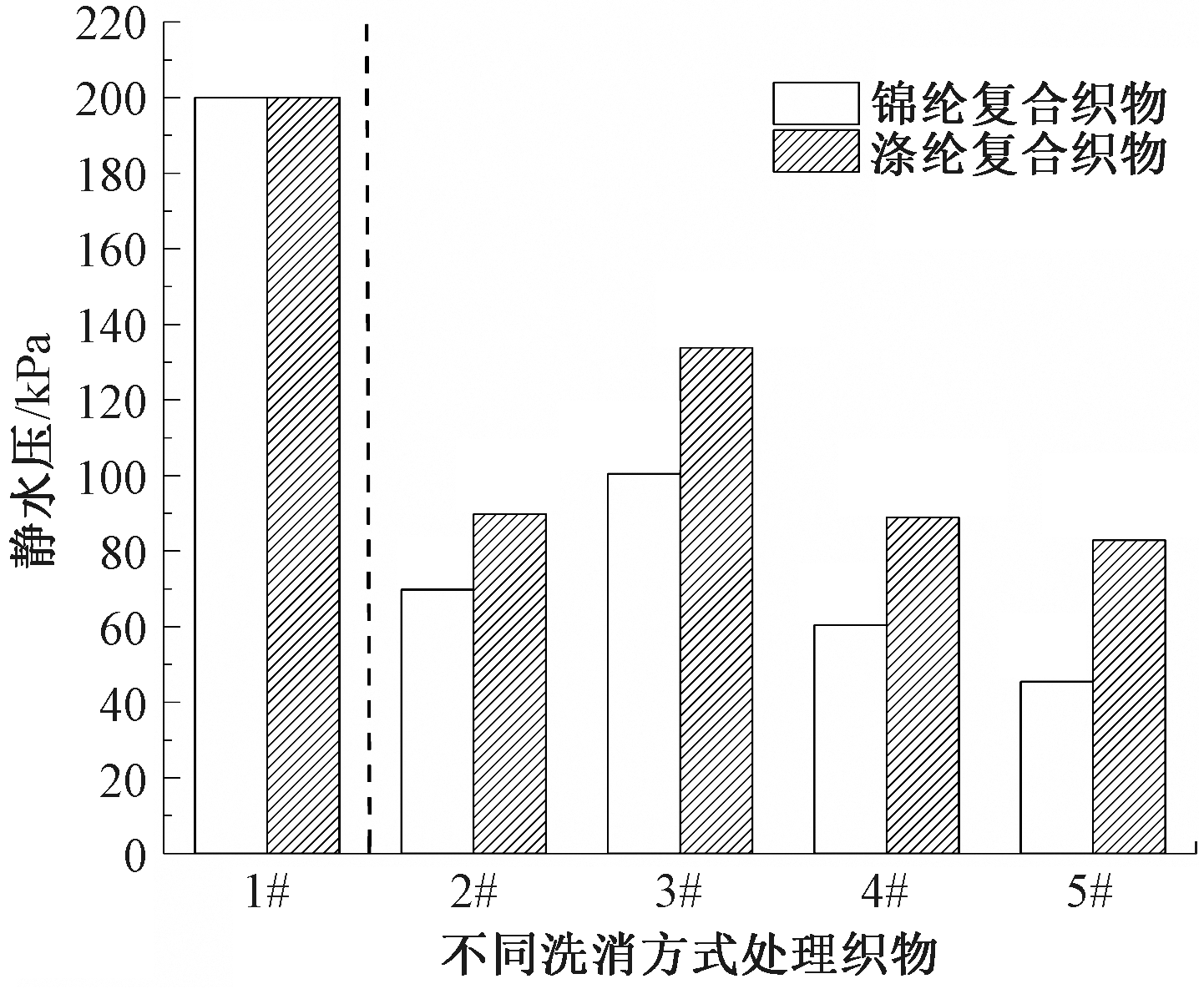
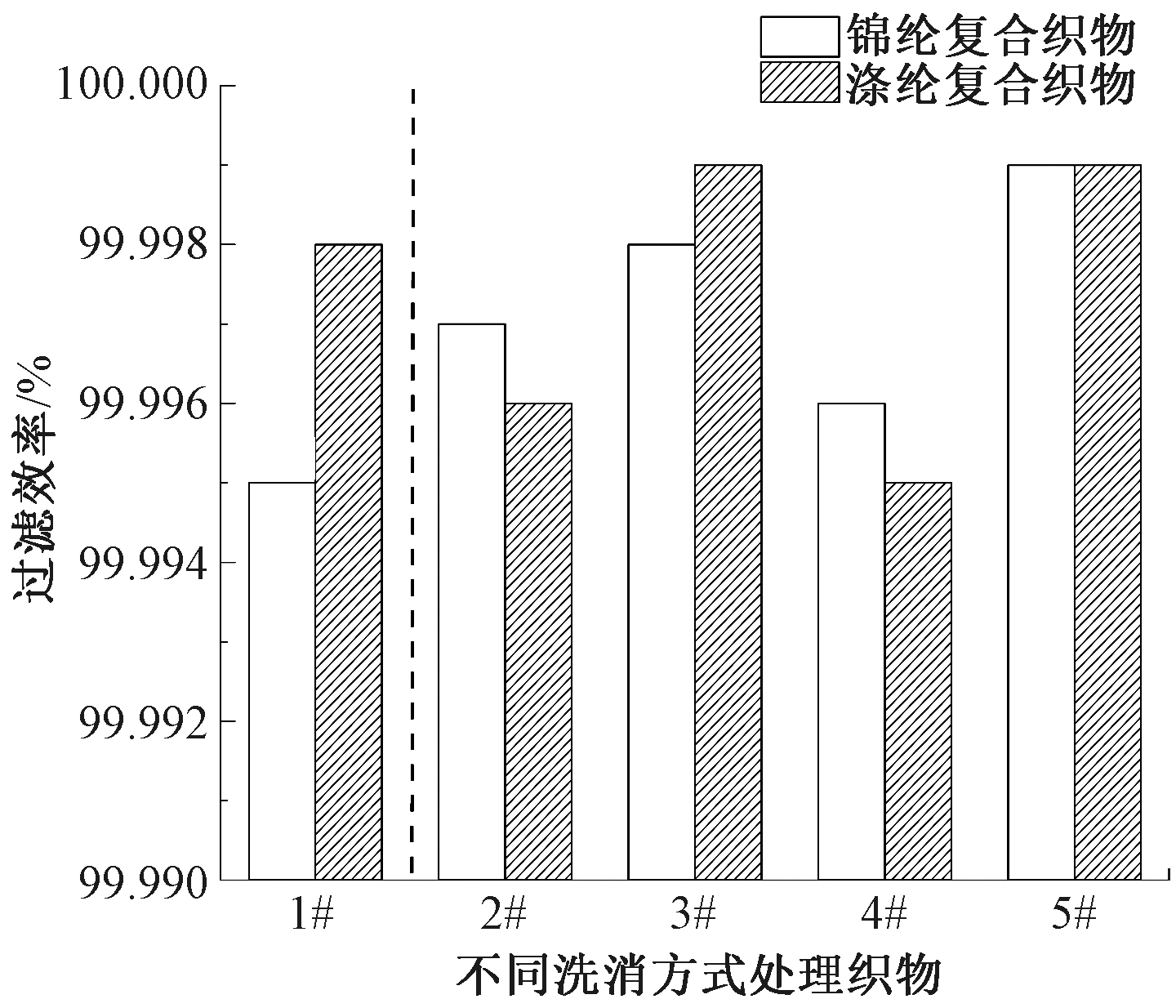
Results Following repeated decontamination and sterilization using different methods, the polyurethane (PUR) adhesive dots of the composite fabric exhibited a certain degree of bonding strength reduction due to exposure to water, disinfectants, and elevated temperatures. No significant changes were observed in the inner layer fabric, and no delamination occurred in the composite structure after decontamination and sterilization. For nylon laminated composite fabric, the outer fabric structure underwent displacement and deformation after multiple washing and decontamination and sterilization cycles, resulting in increased exposure of the polytetrafluoroethylene (PTFE) film and a consequent reduction in protection for the film layer. In contrast, the outer structure of polyester laminated composite fabric remained tight and stable after repeated treatments, effectively preserving the integrity of the PTFE film layer. After repeated decontamination and sterilization, both nylon and polyester composite fabrics showed varying degrees of change in protective performance, comfort properties, and mechanical characteristics. The test results are summarized as follows. For protective performance, no delamination was observed in the composite fabric after 25 cycles of high-temperature wet heat decontamination and sterilization (80 ℃), steam decontamination and sterilization at 121 ℃, and repeated washing with sodium hypochlorite. Dimensional stability remained largely unchanged and filtration efficiency remained above 99.99%. However, hydrostatic pressure demonstrated a decrease, indicating reduced resistance to liquid penetration. The solid-liquid contact angle of the fabric surface was diminished, although it remained above 90°after repeated treatments, confirming that the fabric retains its surface water-repellent functionality. In terms of comfort performance, air permeability showed no significant variation after repeated decontamination and sterilization. Moisture permeability of nylon-based composites exhibited a declining trend, whereas that of polyester-based composites increased slightly. Some curling or deformation may occur after high-temperature wet heat (80 ℃) and steam decontamination and sterilization treatments, but this can be corrected through ironing or similar post-processing methods. Fading caused by repeated sodium hypochlorite treatment was found irreversible. With regard to mechanical properties, repeated sodium hypochlorite decontamination and sterilization resulted in the most pronounced degradation of breaking strength, with a maximum reduction of 66.44%, significantly exceeding the 27.07% maximum loss observed under high-temperature wet heat and steam decontamination and sterilization conditions.

Conclusion After 25 cycles of repeated decontamination and sterilization via high-temperature moist heat decontamination and sterilization, steam decontamination and sterilization, and sodium hypochlorite decontamination and sterilization treatments, evaluations on dimensional stability, air permeability, filtration efficiency, moisture permeability, and hydrostatic pressure indicate that the composite fabrics could still meet relevant standards for protective apparel. Based on a comprehensive comparison of performance degradation across different decontamination and sterilization methods, it is recommended that for low-risk contamination involving bacterial vegetative cells, high-temperature moist heat decontamination and sterilization (80 ℃) be prioritized. For high-risk scenarios involving prion-contaminated materials, pressure steam decontamination and sterilization is strongly recommended.

Key words: decontamination and sterilization method, protective fabric, lamination composite fabric, protective performance, high-temperature decontamination and sterilization, steam decontamination and sterilization, sodium hypochlorite decontamination and sterilization

中图分类号: 

  • TS 156

图1

不同洗消方式对织物表面形貌的影响"

图2

不同洗消方式重复处理后复合织物的变化"

表1

不同洗消方式对织物尺寸的影响"

织物类型 尺寸/cm
1# 2# 3# 5#
锦纶复合织物 10×10 9.6×9.5 9.6×9.5 9.7×9.5
涤纶复合织物 10×10 9.7×9.6 9.7×9.7 9.6×9.4

表2

水接触角变化"

织物类型 水接触角/(°)
1# 2# 3# 5#
锦纶复合织物 127.7 112.1 107.0 106.4
涤纶复合织物 147.6 109.9 105.6 103.7

图3

洗消前后复合织物的透气率"

图4

洗消前后复合织物的透湿率"

图5

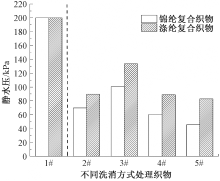
洗消前后复合织物的静水压"

图6

洗消前后复合织物的过滤效率"

表3

复合织物的力学性能"

织物
类型
织物
编号
断裂强力/N 断裂伸长率/%
经向 纬向 经向 纬向
锦纶复合
织物
1# 968.00 699.30 27.22 31.75
2# 885.30 510.00 33.15 35.07
3# 868.00 680.67 30.55 38.50
4# 760.00 268.00 23.77 27.67
5# 486.67 234.67 16.45 21.57
涤纶复合
织物
1# 748.00 320.00 41.01 17.14
2# 704.00 300.00 43.73 18.46
3# 712.00 318.00 45.87 17.20
4# 684.00 298.00 41.76 16.16
5# 634.00 290.00 37.54 15.66
[1] 陈诗萍, 陈旻, 魏岑, 等. 医用防护服的构效特点及其研发趋势[J]. 纺织学报, 2020, 41(8): 179-187.
CHEN Shiping, CHEN Min, WEI Cen, et al. Structure and functions of medical protective clothing and trend for research and development[J]. Journal of Textile Research, 2020, 41(8): 179-187.
[2] 闵小豹, 潘志娟. 国内外医用防护服结构与功能的比较与分析[J]. 纺织学报, 2020, 41(8): 172-178.
MIN Xiaobao, PAN Zhijuan. Comparison and analysis on structure and function of medical protective clothing[J]. Journal of Textile Research, 2020, 41(8): 172-178.
[3] 马晓远, 包伟. 防水透湿纳米纤维复合织物研究现状及发展趋势[J]. 纺织学报, 2025, 46(8):254-262.
MA Xiaoyuan, BAO Wei. Review and future perspectives of waterproof and moisture permeable nanofiber composite fabrics[J]. Journal of Textile Research, 2025, 46(8): 254-262.
[4] 侯玉. 基于穿着者需求的医用防护服设计[J]. 服装学报, 2020, 5(3): 238-243.
HOU Yu. Design of medical protective clothing based on the needs of wearers[J]. Journal of Clothing Research, 2020, 5(3): 238-243.
[5] 王青弘, 王迎, 郝新敏, 等. 静电纺聚酰胺纳米纤维复合织物制备工艺优化[J]. 纺织学报, 2023, 44(6):144-151.
WANG Qinghong, WANG Ying, HAO Xinmin, et al. Processing optimization of composite fabrics deposited with electrospinning polyamide nano-fibers[J]. Journal of Textile Research, 2023, 44(6): 144-151.
[6] 夏勇. 可重复使用生物防护复合面料的制备与性能研究[D]. 南通: 南通大学, 2023:2-10.
XIA Yong. Preparation and performance research of reusable biological protective composite fabric[D]. Nantong: Nantong University, 2023:2-10.
[7] 田琳琳. 纺织品消毒方法对其结构性能影响的研究[D]. 北京: 北京服装学院, 2019:3-10.
TIAN Linlin. Study on the influence of textile disinfection methods on its structure and properties[D]. Beijing: Beijing Institute of Clothing Technology, 2019:3-10.
[8] 陈毓姝, 唐虹. 可重复使用医用防护服研究[J]. 针织工业, 2023(2): 1-3.
CHEN Yushu, TANG Hong. Research progress of reusable medical protective clothing[J]. Knitting Industries, 2023(2): 1-3.
[9] 和超伟, 马咏梅, 吴鹏飞, 等. 可重复用医用防护服织物耐洗消灭菌性能研究[J]. 针织工业, 2024(8): 9-13.
HE Chaowei, MA Yongmei, WU Pengfei, et al. Study of the resistance to washing and bacteria of reusable medical protective clothing fabric[J]. Knitting Industries, 2024(8): 9-13.
[10] 陈毓姝, 唐虹, 张成蛟, 等. 可重复使用医用防护服面料的洗消性研究[J]. 棉纺织技术, 2023, 51(6): 12-16.
CHEN Yushu, TANG Hong, ZHANG Chengjiao, et al. Study on the decontamination resistance of reusable medical protective clothing fabric[J]. Cotton Textile Technology, 2023, 51(6): 12-16.
[11] 黄竻丹, 田琳琳, 张天骄, 等. 消毒方法对纺织品外观及性能的影响[J]. 北京服装学院学报, 2025, 45(2): 70-76.
HUANG Jindan, TIAN Linlin, ZHANG Tianjiao, et al. Influence of sterilization methods on the appearance and properties of textiles[J]. Journal of Beijing Institute of Clothing Technology, 2025, 45(2): 70-76.
[12] 柳洋, 夏兆鹏, 王亮, 等. 医用防护服的发展现状及趋势[J]. 纺织学报, 2021, 42(9): 195-202.
LIU Yang, XIA Zhaopeng, WANG Liang, et al. Development status and trend of antivirus medical protective clothing[J]. Journal of Textile Research, 2021, 42(9): 195-202.
[13] 安琪, 付译鋆, 张瑜, 等. 医用防护服用非织造材料的研究进展[J]. 纺织学报, 2020, 41(8): 188-196.
AN Qi, FU Yijun, ZHANG Yu, et al. Research progress of nonwovens for medical protective garment[J]. Journal of Textile Research, 2020, 41(8): 188-196.
[14] OWEN L, LAIRD K. The role of textiles as fomites in the healthcare environment: a review of the infection control risk[J]. PeerJ, 2020, 8: e9790.
[15] ABNEY S E, IJAZ M K, MCKINNEY J, et al. Laundry hygiene and odor control: state of the science[J]. Applied and Environmental Microbiology, 2021, 87(14): e03002-e03020.
[16] 夏远, 路雯桐, 汪盛, 等. 医用织物洗涤消毒产品浅析[J]. 中国洗涤用品工业, 2021(1): 54-60.
XIA Yuan, LU Wentong, WANG Sheng, et al. Analysis of medical fabric washing and disinfecting products[J]. China Cleaning Industry, 2021(1): 54-60.
[17] 孙正琪, 郭晓玲, 崔文豪, 等. 热处理对医用机织物性能的影响[J]. 纺织科学与工程学报, 2018, 35(4): 90-95, 115.
SUN Zhengqi, GUO Xiaoling, CUI Wenhao, et al. Impact of heat treatment on properties of medical woven fabrics[J]. Journal of Textile Science and Engineering, 2018, 35(4): 90-95, 115.
[18] 张建芳, 郑金聪, 郑丽华, 等. 氯己定溶液与含氯消毒剂对医用织物着色作用的探讨[J]. 中华医院感染学杂志, 2011, 21(23): 4997-4998.
ZHANG Jianfang, ZHENG Jincong, ZHENG Lihua, et al. Discussion about coloration effect of medical fabrics by chlorhexidine sodium and chloro-disinfectants[J]. Chinese Journal of Nosocomiology, 2011, 21(23): 4997-4998.
[19] 赵鑫磊, 赵红阳, 马法壮, 等. 织物中常用氧化漂白剂及其现状[J]. 中国洗涤用品工业, 2025(1): 19-23.
ZHAO Xinlei, ZHAO Hongyang, MA Fazhuang, et al. Common bleaching agents in fabrics and their current status[J]. China Cleaning Industry, 2025(1): 19-23.
[20] 徐丹丹, 郑云龙, 马坤, 等. 洗涤周期和柔顺剂对冲锋衣面料防水性能的影响[J]. 丝绸, 2025, 62(4): 65-72.
XU Dandan, ZHENG Yunlong, MA Kun, et al. Effects of washing cycles and fabric softeners on the water resistance of outdoor jacket fabrics[J]. Journal of Silk, 2025, 62(4): 65-72.
[21] 祝佳琼, 胡凯, 张婷, 等. 织物静水压性能测定及影响因素分析[J]. 纺织科学研究, 2025(S3): 55-58.
ZHU Jiaqiong, HU Kai, ZHANG Ting, et al. Determination of hydrostatic property of fabric and analysis of influencing factors[J]. Textile Science Research, 2025(S3): 55-58.
[1] 张金凤, 李嘉因, 苏云, 田苗, 李俊. 面向智能设计的消防服热防护性能研究进展[J]. 纺织学报, 2026, 47(03): 175-183.
[2] 荆建伟, 胡裕鹏, 马王菲, 袁子舜, 顾冰菲, 徐望. 防弹衣间隙量与防护效果的有限元分析[J]. 纺织学报, 2025, 46(04): 187-196.
[3] 钱江瑞, 刘文武, 李俊, 方以群, 徐佳骏. 防爆服装冲击防护性能测评技术研究进展[J]. 纺织学报, 2025, 46(01): 238-247.
[4] 杨光, 杨小兵, 栗丽, 姚之凤, 周川, 张明明. 新修定的化学防护服国家标准解析[J]. 纺织学报, 2024, 45(03): 163-168.
[5] 陈萌, 何瑞东, 程怡昕, 李纪伟, 宁新, 王娜. 磁控溅射银/锌改性聚苯乙烯/聚偏氟乙烯复合纤维膜的制备及其性能[J]. 纺织学报, 2023, 44(03): 19-27.
[6] 代璐, 胡泽旭, 王研, 周哲, 张帆, 朱美芳. 聚苯硫醚/石墨烯纳米复合纤维的燃烧和炭化行为[J]. 纺织学报, 2023, 44(01): 71-78.
[7] 郭静, 周倩雯, 何佳臻. 形变状态下热防护织物的蓄放热双重特性[J]. 纺织学报, 2022, 43(07): 67-74.
[8] 栗辰飞, 刘元军, 赵晓明. 生化防护服的研究进展[J]. 纺织学报, 2022, 43(07): 207-216.
[9] 朱晓荣, 何佳臻, 王敏. 相变材料在热防护服上的应用研究进展[J]. 纺织学报, 2022, 43(04): 194-202.
[10] 张文欢, 李俊. 低热辐射环境中消防服系统内热传递机制的研究进展[J]. 纺织学报, 2021, 42(10): 190-198.
[11] 王琦, 田苗, 苏云, 李俊, 余梦凡, 许霄. 开放/封闭空气层对阻燃织物热防护性能的影响[J]. 纺织学报, 2020, 41(12): 54-58.
[12] 孟晶, 高珊, 卢业虎. 石墨烯气凝胶复合防火面料防护性能的影响因素[J]. 纺织学报, 2020, 41(11): 116-121.
[13] 翟丽娜, 李俊, 杨允出. 热防护服装测评用传感器的发展及其研究现状[J]. 纺织学报, 2020, 41(10): 188-196.
[14] 何佳臻, 薛萧昱, 王敏, 李俊. 基于最大衰减因子模型的服装热防护性能预测[J]. 纺织学报, 2020, 41(06): 112-117.
[15] 吕凯敏, 戴宏钦. 化学防护服的研究进展[J]. 纺织学报, 2020, 41(05): 191-196.
Viewed
Full text


Abstract

Cited

  Shared   
  Discussed   
No Suggested Reading articles found!