纺织学报 ›› 2026, Vol. 47 ›› Issue (03): 44-51.doi: 10.13475/j.fzxb.20250900401
杨潇1,2, 章语墨1,2, 李彦1,2,3, 王璐1,2,3, 王富军1,2,3( )
)
YANG Xiao1,2, ZHANG Yumo1,2, LI Yan1,2,3, WANG Lu1,2,3, WANG Fujun1,2,3()
摘要:
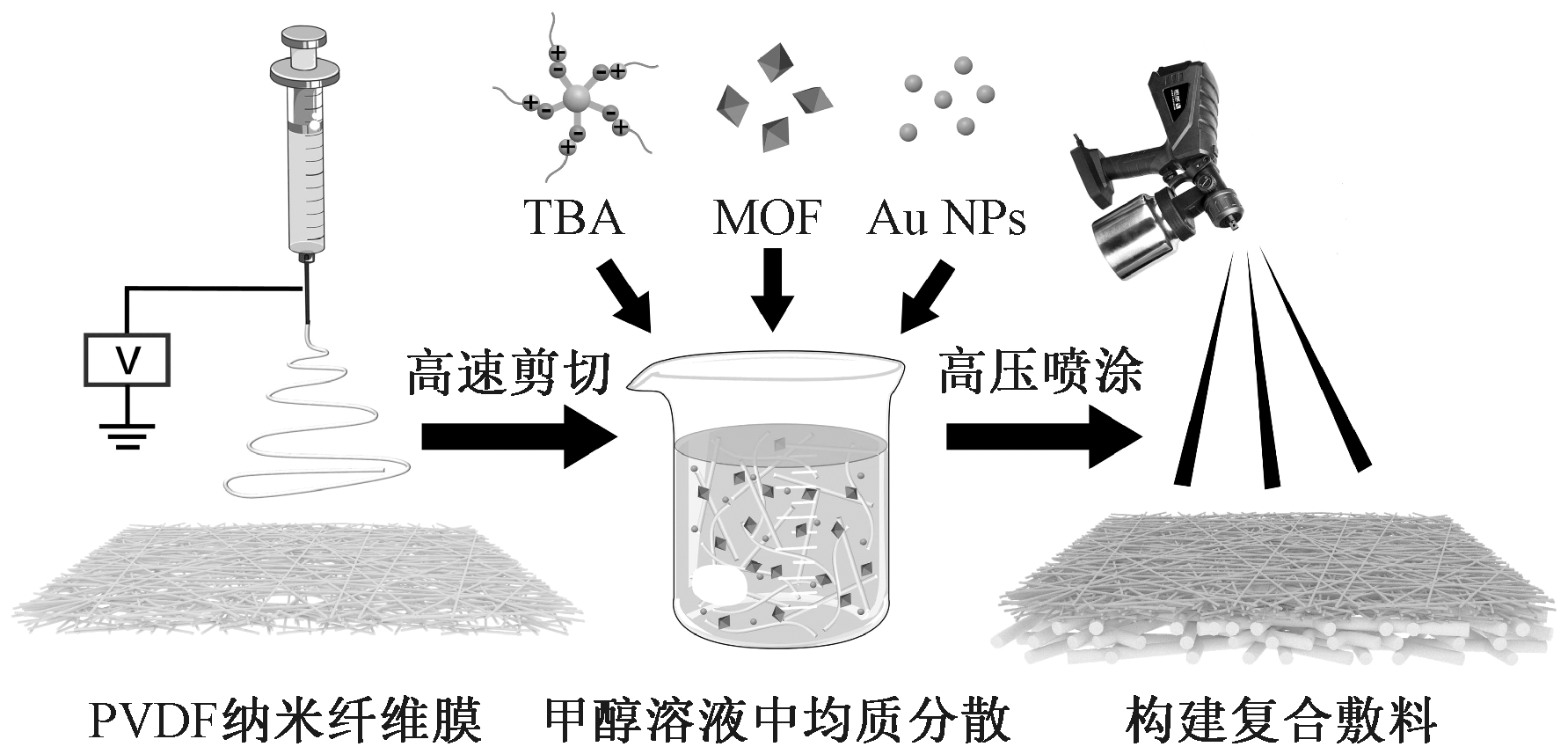
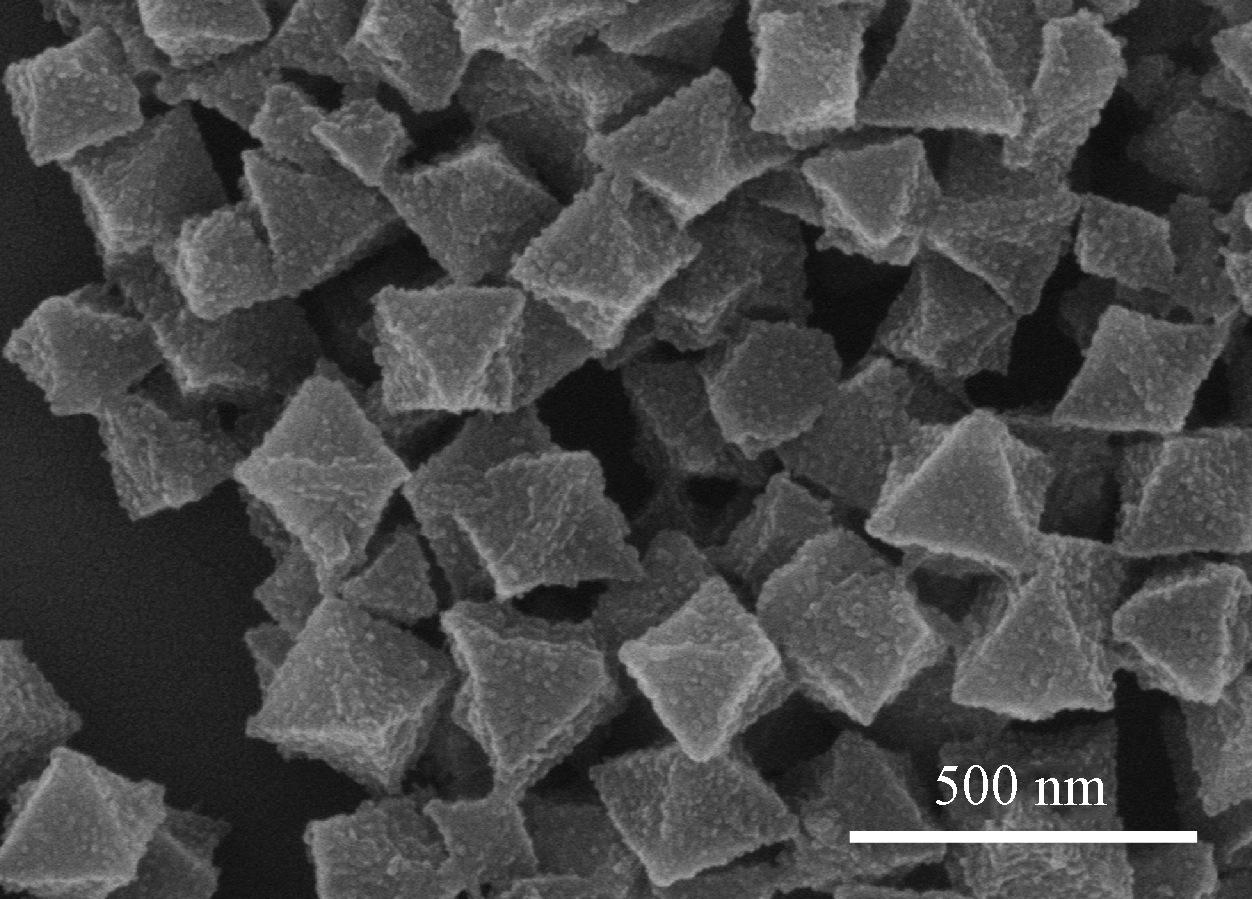
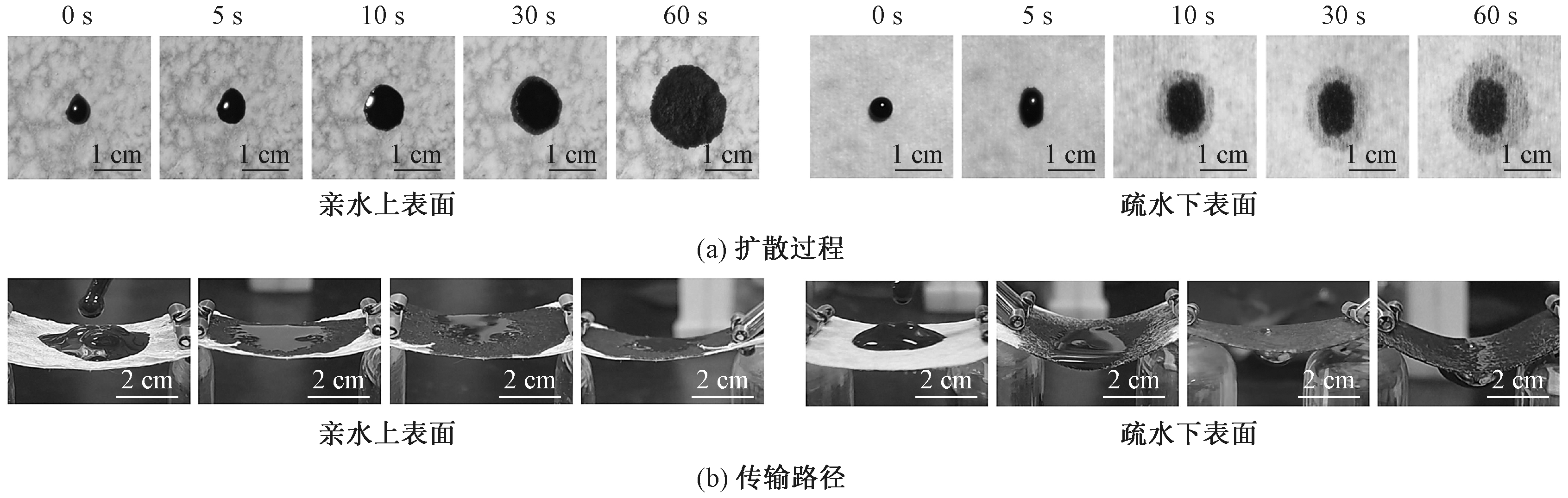
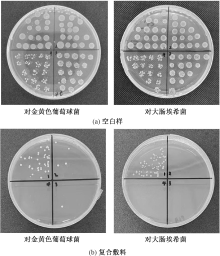
为解决糖尿病足溃疡(DFUs)创面高糖、渗出液多、呈碱性所导致的感染反复且难愈合的问题,构建了一种具有双酶级联抗菌活性的纳米短纤维复合敷料。该敷料以疏水聚丙烯(PP)非织造布为基底,上层为重构的亲水聚偏氟乙烯(PVDF)短纤维层,并以单宁酸基黏合剂(TBA)将金纳米颗粒(Au NPs)和Fe-MIL-88NH2纳米酶负载于纤维表面,通过模拟葡萄糖氧化酶和过氧化物酶的级联催化反应实现抗菌。结果表明:该复合敷料具有单向导湿功能,可将液体从疏水层单向泵送至亲水层而无反渗;其力学性能接近人体皮肤,能够贴合创面并提供支撑;在葡萄糖存在下,敷料可催化产生具有杀菌作用的羟基自由基(·OH),对金黄色葡萄球菌和大肠埃希菌的体外抑菌率均超过97%,对人成纤维细胞的存活率保持在84%以上,无明显细胞毒性。所制备敷料兼具非抗生素的高效抗菌活性和优异的渗液管理能力,将纳米酶级联催化反应与单向导湿功能相结合,具有良好的应用前景。
中图分类号:
| [1] |
CAI M, LIU Z, SUN X, et al. Advances in the development of medical dressings for the treatment of diabetic foot wounds[J]. Chemical Engineering Journal, 2024, 498: 155575.
doi: 10.1016/j.cej.2024.155575 |
| [2] |
LIU Z T, LIU J H, BAI Y T, et al. A bio-inspired Janus patch for treating abdominal wall defects[J]. Advanced Functional Materials, 2024, 34(41): 2315827.
doi: 10.1002/adfm.v34.41 |
| [3] |
LI Y, ZHANG Y, WANG Y X, et al. Regulating wound moisture for accelerated healing: a strategy for the continuous drainage of wound exudates by mimicking plant transpiration[J]. Chemical Engineering Journal, 2022, 429: 131964.
doi: 10.1016/j.cej.2021.131964 |
| [4] |
JO S M, KIM J, LEE J E, et al. Multimodal enzyme-carrying suprastructures for rapid and sensitive biocatalytic cascade reactions[J]. Advanced Science, 2022, 9(10): 2270065.
doi: 10.1002/advs.v9.10 |
| [5] |
NICOL M J, BRUBAKER T R, HONISH B J, et al. Antibacterial effects of low-temperature plasma generated by atmospheric-pressure plasma jet are mediated by reactive oxygen species[J]. Scientific Reports, 2020, 10: 3066.
doi: 10.1038/s41598-020-59652-6 |
| [6] |
GAO S S, LIN H, ZHANG H X, et al. Nanocatalytic tumor therapy by biomimetic dual inorganic nanozyme-catalyzed cascade reaction[J]. Advanced Science, 2019, 6(3): 1801733.
doi: 10.1002/advs.v6.3 |
| [7] |
CONG W S, MENG L, PAN Y J, et al. Mitochondrial-mimicking nanozyme-catalyzed cascade reactions for aging attenuation[J]. Nano Today, 2023, 48: 101757.
doi: 10.1016/j.nantod.2023.101757 |
| [8] |
FAROKHI M, MOTTAGHITALAB F, REIS R L, et al. Functionalized silk fibroin nanofibers as drug carriers: advantages and challenges[J]. Journal of Controlled Release, 2020, 321: 324-347.
doi: S0168-3659(20)30112-7 pmid: 32061791 |
| [9] |
SUDARJAT H, QIN C L, INGABIRE D, et al. Janus LAAM-loaded electrospun fibrous buccal films for treating opioid use disorder[J]. Biomaterials, 2025, 317: 123041.
doi: 10.1016/j.biomaterials.2024.123041 |
| [10] |
HE J X, ZHOU M J, WANG L D, et al. Electrospinning in situ synthesis of graphene-doped porous copper indium disulfide/carbon composite nanofibers for highly efficient counter electrode in dye-sensitized solar cells[J]. Electrochimica Acta, 2016, 215: 626-636.
doi: 10.1016/j.electacta.2016.08.101 |
| [11] |
LI D, ZHANG C, XIONG Q R, et al. Elongated magnetic nanorobots with multi-enzymatic cascades for active in vivo tumor targeting and enhanced chemodynamic therapy[J]. ACS Nano, 2025, 19(15): 15040-15054.
doi: 10.1021/acsnano.5c01566 pmid: 40223775 |
| [12] |
LIU X Z, CHEN M M, LUO J C, et al. Immol/Lunopolarization-regulated 3D printed-electrospun fibrous scaffolds for bone regeneration[J]. Biomaterials, 2021, 276: 121037.
doi: 10.1016/j.biomaterials.2021.121037 |
| [13] |
WANG Z G, WAN L S, LIU Z M, et al. Enzyme immobilization on electrospun polymer nanofibers: an overview[J]. Journal of Molecular Catalysis B: Enzymatic, 2009, 56(4): 189-195.
doi: 10.1016/j.molcatb.2008.05.005 |
| [14] |
LI Y, XU Z H, TANG L Q, et al. Nanofibers fortified with synergistic defense route: a potent wound dressing against drug-resistant bacterial infections[J]. Chemical Engineering Journal, 2023, 475: 146492.
doi: 10.1016/j.cej.2023.146492 |
| [15] |
LI Y Y, WANG D Q, WEN J, et al. Chemically grafted nanozyme composite cryogels to enhance antibacterial and biocompatible performance for bioliquid regulation and adaptive bacteria trapping[J]. ACS Nano, 2021, 15(12): 19672-19683.
doi: 10.1021/acsnano.1c06983 pmid: 34878257 |
| [16] |
LIU H, YIN H, YU X L, et al. Amino-functionalized MIL-88B as heterogeneous photo-Fenton catalysts for enhancing tris-(2-chloroisopropyl) phosphate (TCPP) degradation: dual excitation pathways accelerate the conversion of FeIII to FeII under visible light irradiation[J]. Journal of Hazardous Materials, 2022, 425: 127782.
doi: 10.1016/j.jhazmat.2021.127782 |
| [17] |
LIU L, SHI H C, YU H, et al. One-step hydrophobization of tannic acid for antibacterial coating on catheters to prevent catheter-associated infections[J]. Biomaterials Science, 2019, 7(12): 5035-5043.
doi: 10.1039/c9bm01223k pmid: 31535105 |
| [18] |
RUAN L X, YAO X N, CHANG Y F, et al. Properties and applications of the β phase poly(vinylidene fluoride)[J]. Polymers, 2018, 10(3): 228.
doi: 10.3390/polym10030228 |
| [19] |
SINHA M K, PURKAIT M K. Enhancement of hydrophilicity of poly(vinylidene fluoride-co-hexafluoropropylene) (PVDF-HFP) membrane using various alcohols as nonsolvent additives[J]. Desalination, 2014, 338: 106-114.
doi: 10.1016/j.desal.2014.02.002 |
| [20] | HOU X T, XIE T A, HAN M Y, et al. Research progress and future prospects in glucose oxidase-like activity of Au NPs[J]. Materials & Design, 2024, 239: 112780. |
| [21] | CHU B Y, QI T T, LIAO J F, et al. Colorimetric detection of cancer biomarker based on pH induced color change[J]. Sensors and Actuators B: Chemical, 2012, 166: 56-60. |
| [22] |
LI Y H, YOU X Y, SHI X Y. Enhanced chemiluminescence determination of hydrogen peroxide in milk sample using metal-organic framework Fe-MIL-88NH2 as peroxidase mimetic[J]. Food Analytical Methods, 2017, 10(3): 626-633.
doi: 10.1007/s12161-016-0617-0 |
| [23] |
ZHU C X, YANG H, CAO X W, et al. Decoupling of the confused complex in oxidation of 3, 3', 5, 5'-tetramethylbenzidine for the reliable chromogenic bioassay[J]. Analytical Chemistry, 2023, 95(44): 16407-16417.
doi: 10.1021/acs.analchem.3c03998 |
| [1] | 李成才, 朱登辉, 殷向, 朱海霖, 张华鹏, 刘国金, 郭玉海, 刘炳荣. 内密外疏微孔结构膨体聚四氟乙烯管式纤维膜的制备及人工血管应用[J]. 纺织学报, 2026, 47(03): 1-8. |
| [2] | 郭一铭, 喻爽, 赵帆, 王富军. 血管监测用纤维基压电传感器的构建及性能评价[J]. 纺织学报, 2026, 47(03): 118-128. |
| [3] | 陈泳良, 杨潇, 王朝荣, 黄俊鸿, 李彦, 王璐. 静电纺丝-恒应力退火协同构建的湿态稳定型聚乳酸/I型胶原肩袖补片[J]. 纺织学报, 2026, 47(03): 60-69. |
| [4] | 刘鹏碧, 任经岗, 张宽祥, 曹东阳, 刘熙, 郭昌盛. 植酸/苯扎氯铵一步共沉积涂层聚丙烯补片的制备及其抗菌性能[J]. 纺织学报, 2026, 47(03): 77-86. |
| [5] | 席立锋, 张爱军, 贾伟, 马丕波, 蒋高明. 体外膜肺氧合膜织物模型构建与编织损伤机制[J]. 纺织学报, 2026, 47(02): 162-171. |
| [6] | 单梦琪, 杨则琦, 王富军, 王璐, 毛吉富. 织物-凝胶复合心肌补片的制备及其性能[J]. 纺织学报, 2026, 47(02): 222-229. |
| [7] | 季巧, 于清源, 周爱晖, 马博谋, 徐进, 袁久刚. 细菌纤维素及其复合材料的应用研究进展[J]. 纺织学报, 2025, 46(12): 243-250. |
| [8] | 姚晓军, 徐恩婷, 杨雪媛, 房磊, 包伟, 房宽峻. 聚乙烯吡咯烷酮对聚对苯二甲酸乙二醇酯中空纤维膜结构与性能的调控[J]. 纺织学报, 2025, 46(12): 66-73. |
| [9] | 侯颖慧, 刘肖燕, 柳东辰, 郝矿荣, 邹婷. 基于体外降解的输尿管支架管的多目标优化[J]. 纺织学报, 2025, 46(09): 154-162. |
| [10] | 陈廷彬, 蒋鑫, 毛海力, 王成成, 张丽平. 双模式热管理功能性纺织品的制备及其性能[J]. 纺织学报, 2025, 46(07): 160-168. |
| [11] | 王惠婷, 陈宇鉴, 刘诗仪, 张显涛, 陆斌, 邹专勇, 王建, 张寅江. 海藻酸盐基非织造医用敷料的研究进展[J]. 纺织学报, 2025, 46(06): 240-249. |
| [12] | 于梦菲, 高文丽, 任婧, 曹雷涛, 彭若铉, 凌盛杰. 摩擦纳米发电机用皮芯结构纤维的制备及其性能[J]. 纺织学报, 2025, 46(05): 1-9. |
| [13] | 丁凯, 符芬, 张智翔, 杨语童, 李超婧, 赵帆, 王璐, 王富军. 按压排尿用针织人工膀胱的设计及其力学性能[J]. 纺织学报, 2025, 46(05): 169-178. |
| [14] | 符芬, 王钰涵, 丁凯, 赵帆, 李超靖, 王璐, 曾泳春, 王富军. 纤维素基止血材料的研究进展[J]. 纺织学报, 2025, 46(04): 226-234. |
| [15] | 梁雯宇, 季东晓, 覃小红. 微纳米纤维包芯纱制备及其电致发光性能[J]. 纺织学报, 2025, 46(01): 42-51. |
|
||
 京公网安备11010502044800号