纺织学报 ›› 2026, Vol. 47 ›› Issue (05): 141-150.doi: 10.13475/j.fzxb.20250805901
冼芯如, 严泽越, 贺佳佳, 闵胜男, 陈莹( ), 王雪妍
XIAN Xinru, YAN Zeyue, HE Jiajia, MIN Shengnan, CHEN Ying(), WANG Xueyan
摘要:
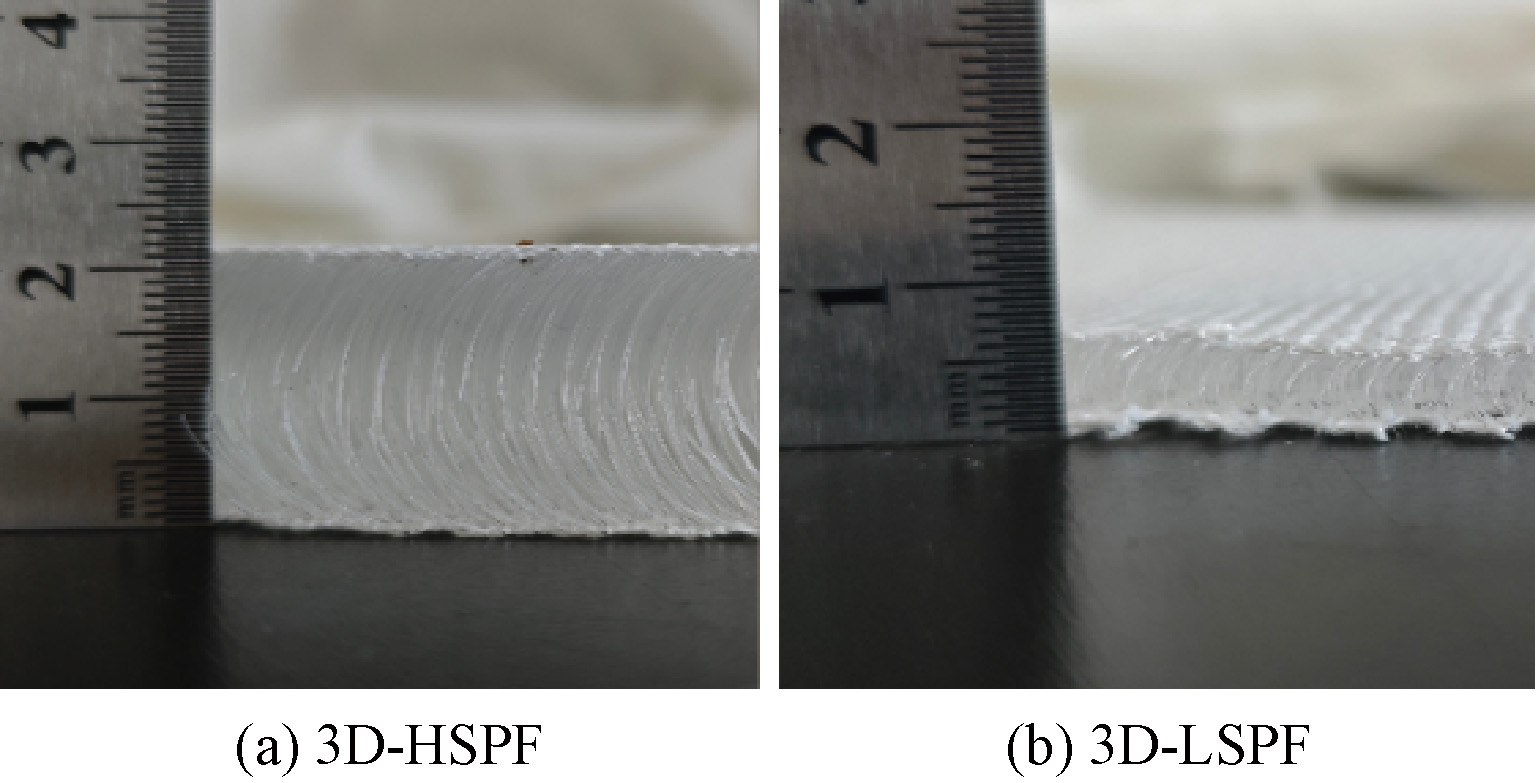
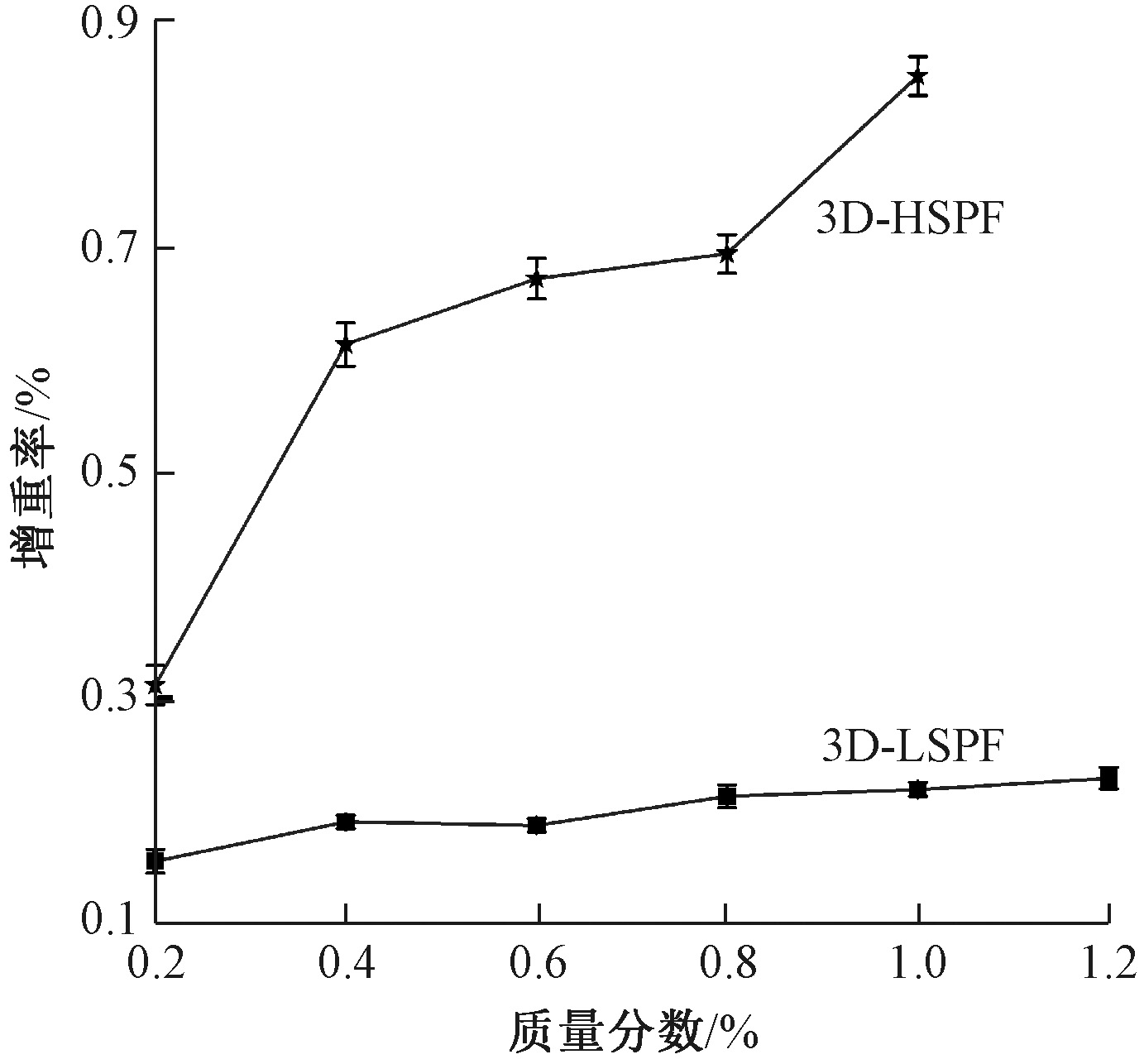
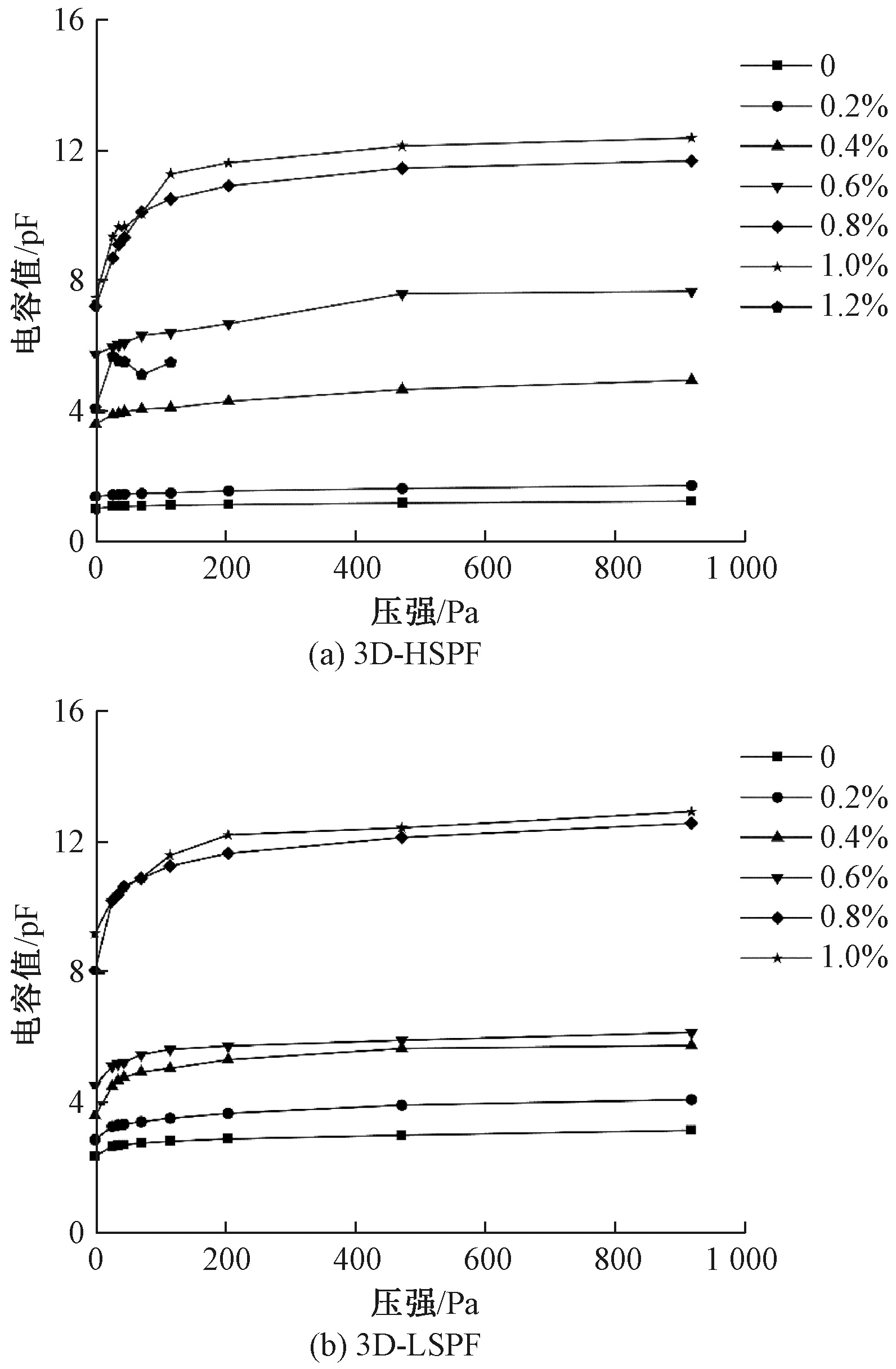
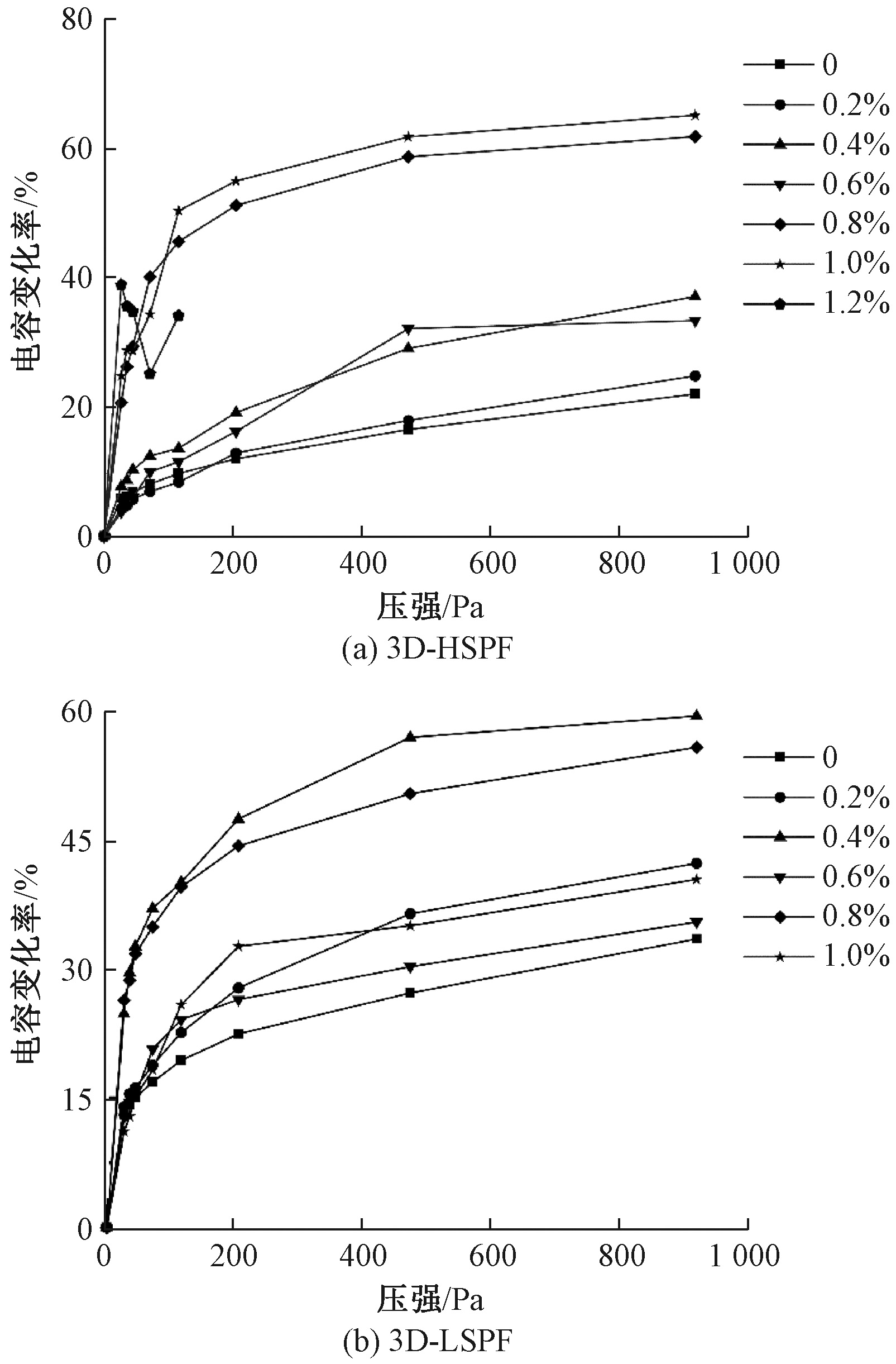
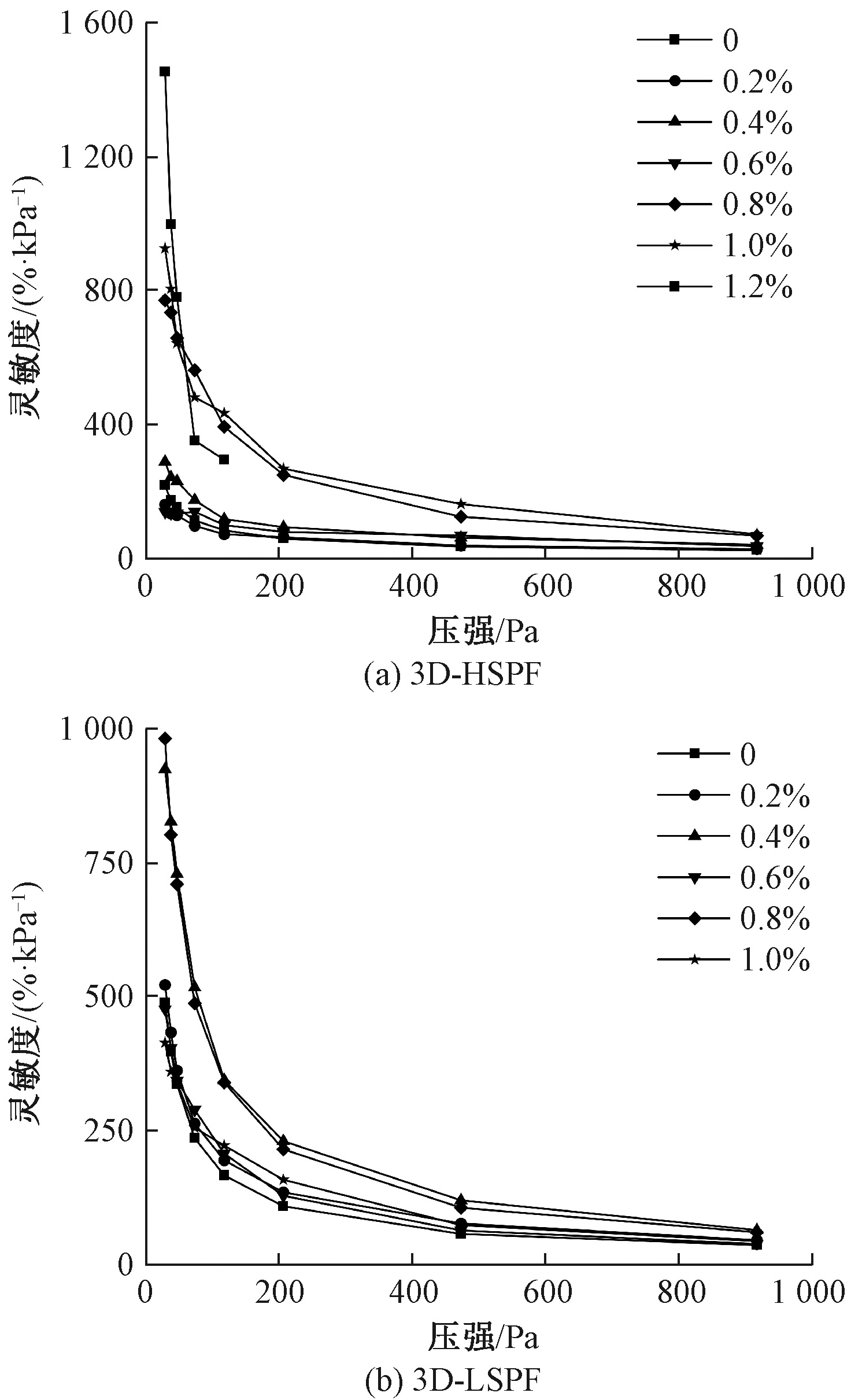
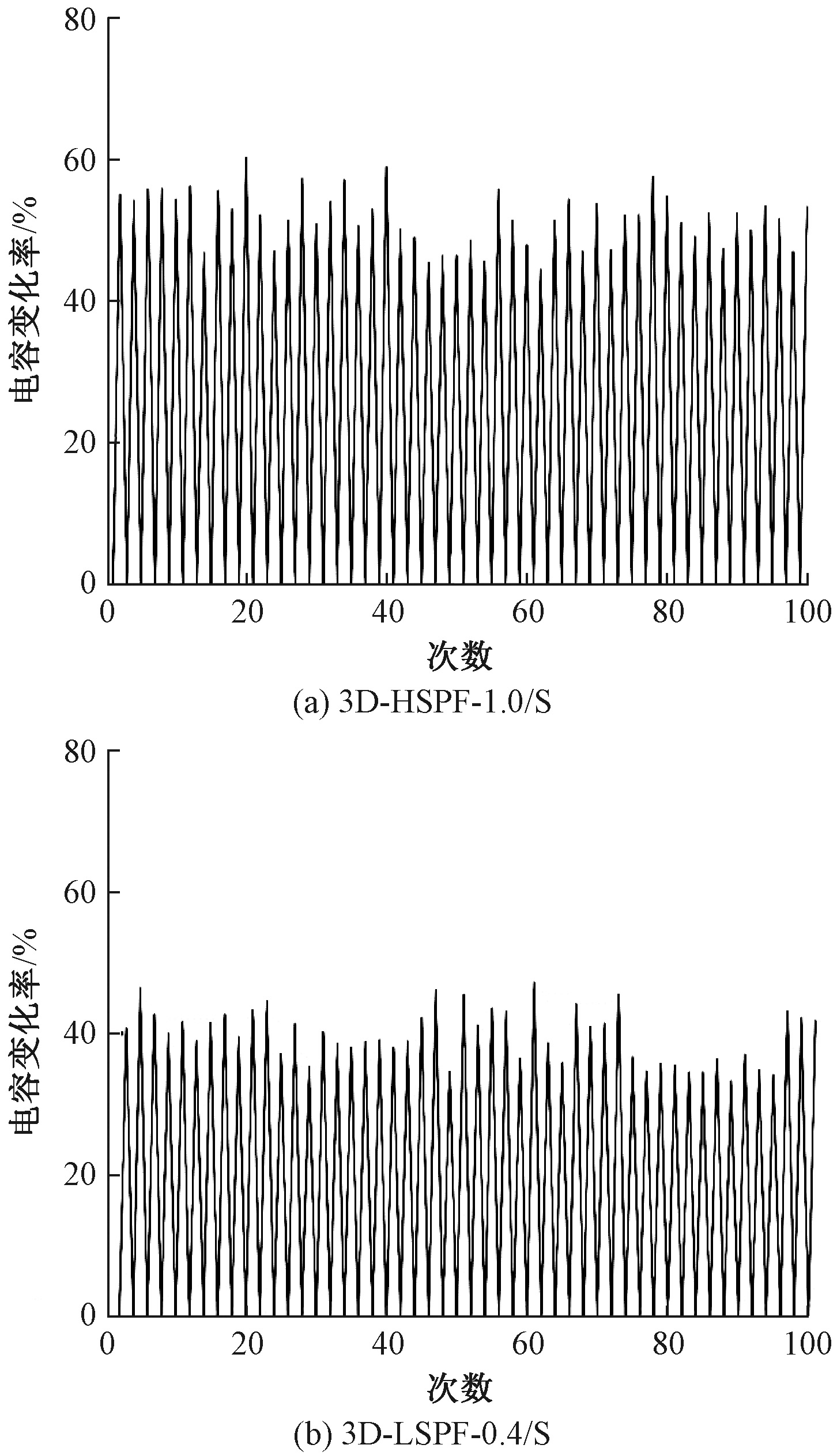
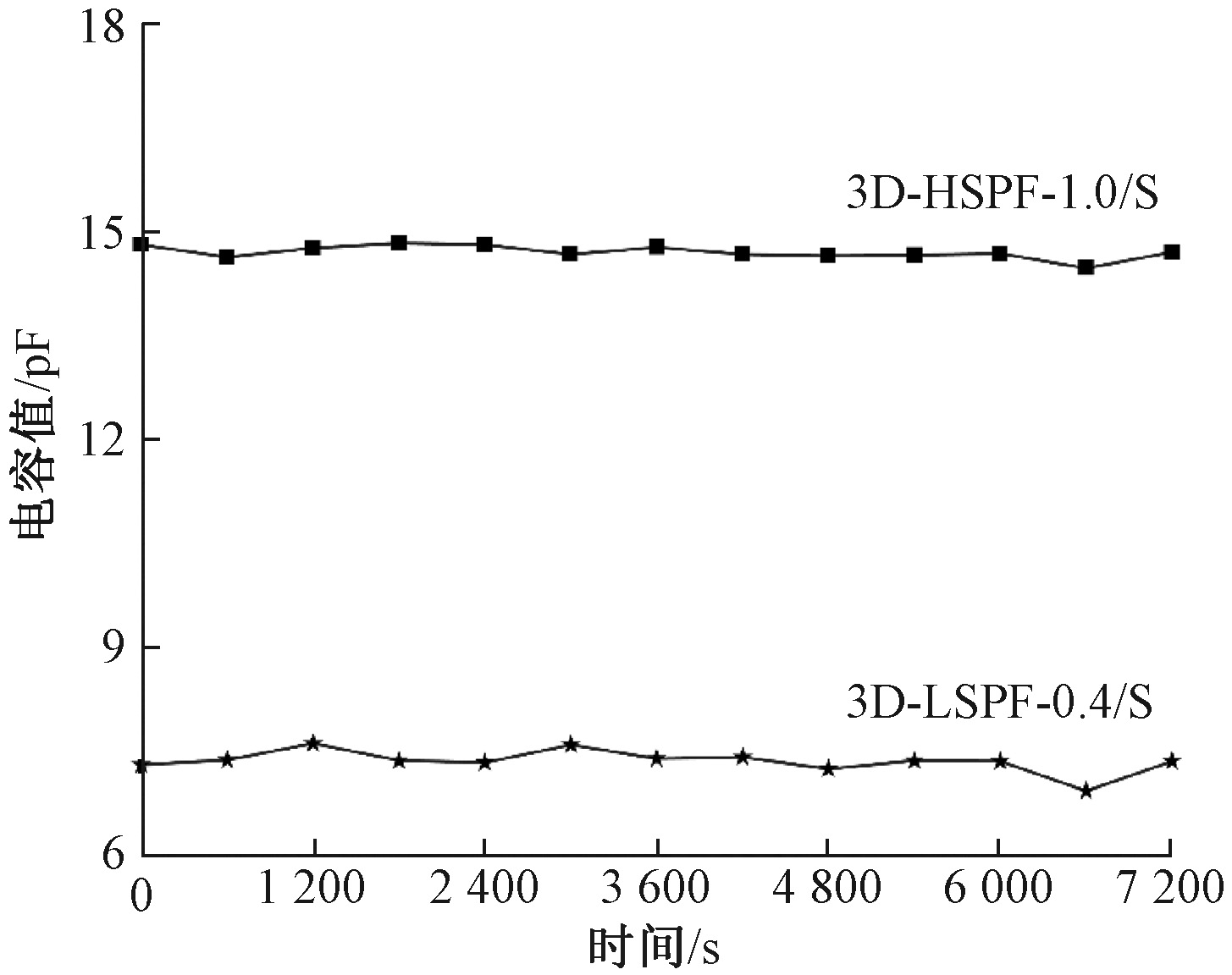
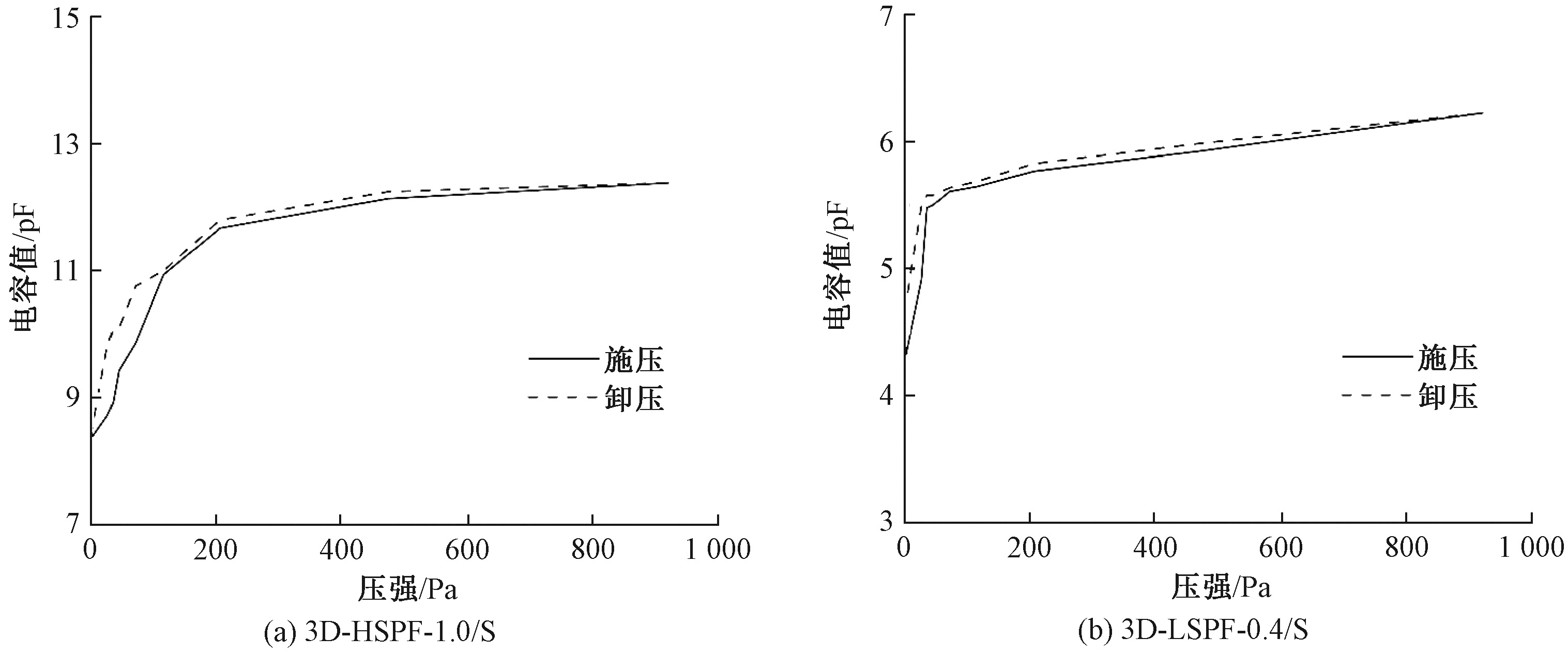
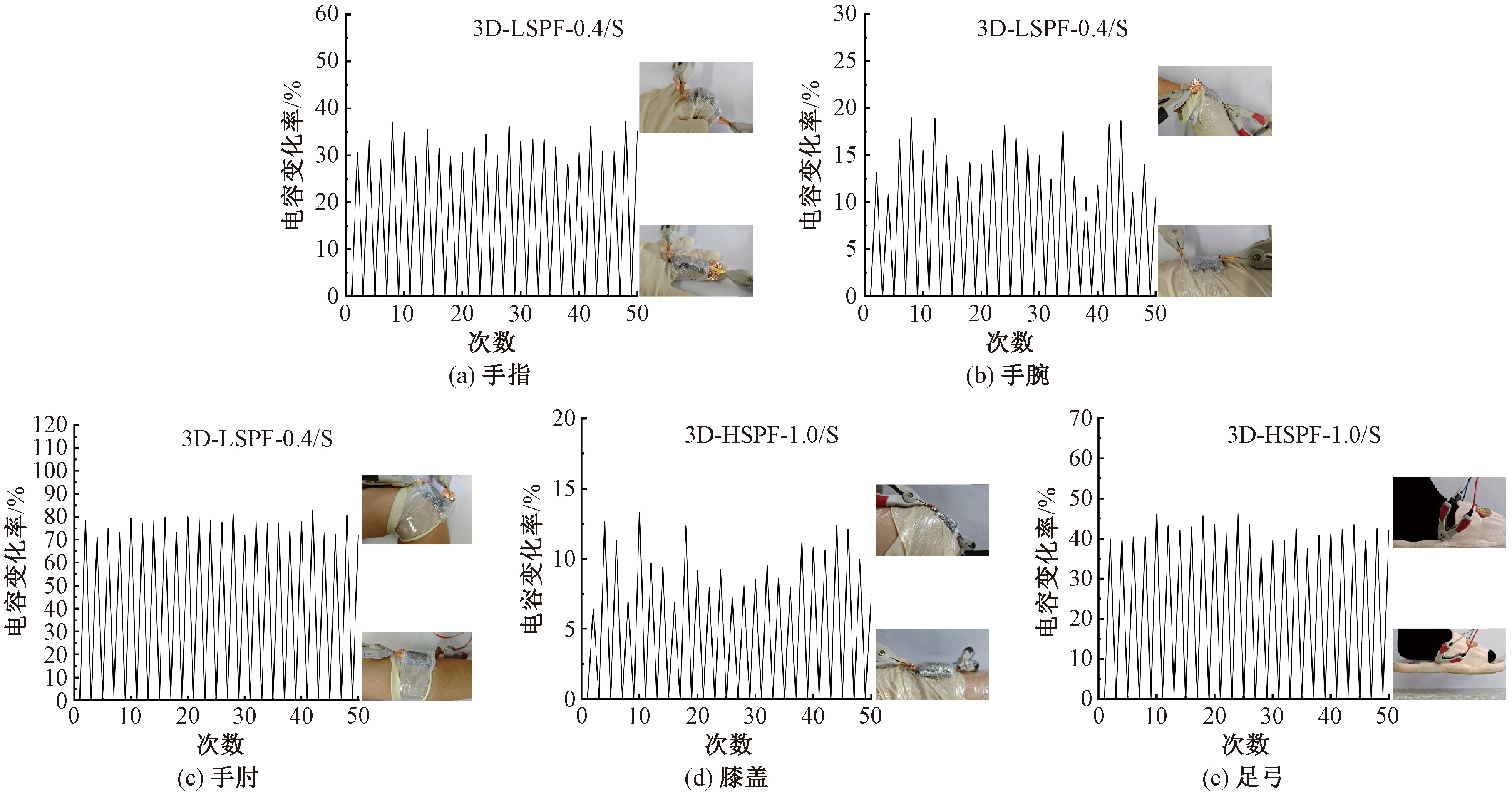
为解决现有织物基电容式传感器灵敏度偏低、难以满足人体运动健康监测精准需求的问题,推动其在人体运动状态监测领域的实际应用,以平纹镀银织物为电极层,三维高间隔涤纶织物(3D-HSPF)和三维低间隔涤纶织物(3D-LSPF)为介电层构建电容式传感器,并通过浸渍法在2种涤纶间隔织物表面制备不同质量分数单壁碳纳米管(SWCNT)掺杂的复合介电层。测试了涤纶间隔织物浸渍SWCNT后的增重率、表面微观形貌,分析了传感器电容-压力响应特性、电容变化率、灵敏度及相对介电常数,并对优选传感器的循环重复性、长期稳定性与响应迟滞性进行系统表征。结果表明:3D-HSPF在掺杂质量分数为1.0%的SWCNT(3D-HSPF-1.0/S)时,传感器灵敏度达927.36%/kPa,是原织物传感器的4.26倍,3D-LSPF在掺杂质量分数为0.4%的SWCNT(3D-LSPF-0.4/S)时,传感器灵敏度达925.85%/kPa,是原织物传感器的1.95倍,说明通过极低的SWCNT掺杂量可大幅提升电容传感器的灵敏度。3D-LSPF-0.4/S适用于手指、手腕、手肘等小关节运动监测,其中手肘运动的电容变化率均值最大,为76.87%;3D-HSPF-1.0/S适用于膝盖和足弓的运动监测,表明其在人体运动健康监测领域具有良好的应用前景。
中图分类号:
| [1] |
CHANG Y, QI X Y, WANG L L, et al. Recent advances in flexible multifunctional sensors[J]. Micromachines, 2023, 14(11): 2116.
doi: 10.3390/mi14112116 |
| [2] | 邵剑波, 岳欣琰, 陈雨, 等. 全针织结构多模态柔性电容传感器的构筑及其传感性能[J]. 纺织学报, 2026, 47(1): 123-131. |
| SHAO Jianbo, YUE Xinyan, CHEN Yu, et al. Construction and sensing performance of all knitted multi-modal flexible capacitive sensor[J]. Journal of Textile Research, 2026, 47(1): 123-131. | |
| [3] |
PENG H Y, WANG F F, LIN H X, et al. High-sensitive MWCNTs/CMC/PDMS flexible capacitive pressure sensor prepared through ice template method and its wearable applications[J]. Journal of Materials Science: Materials in Electronics, 2023, 34(16): 1288.
doi: 10.1007/s10854-023-10638-w |
| [4] | KANG B C, PARK S J, HA T J. Wearable pressure/touch sensors based on hybrid dielectric composites of zinc oxide nanowires/poly(dimethylsiloxane) and flexible electrodes of immobilized carbon nanotube random networks[J]. ACS Applied Materials & Interfaces, 2021, 13(35): 42014-42023. |
| [5] | 岳欣琰, 邵剑波, 王小虎, 等. 基于镀银锦纶/锦纶/水性聚氨酯复合纱的一维结构柔性电容传感器[J]. 纺织学报, 2025, 46(3): 82-89. |
|
YUE Xinyan, SHAO Jianbo, WANG Xiaohu, et al. One-dimensional structured flexible capacitive sensors based on silver coated polyamide fiber/polyamide fiber/waterborne polyurethane composite yarns[J]. Journal of Textile Research, 2025, 46(3): 82-89.
doi: 10.1177/004051757604600202 |
|
| [6] |
YE X R, TIAN M W, LI M, et al. All-fabric-based flexible capacitive sensors with pressure detection and non-contact instruction capability[J]. Coatings, 2022, 12(3): 302.
doi: 10.3390/coatings12030302 |
| [7] |
李露红, 罗天, 丛洪莲. 针织一体成形电容传感器设计及其性能[J]. 纺织学报, 2024, 45(10): 80-88.
doi: 10.13475/j.fzxb.20230506701 |
|
LI Luhong, LUO Tian, CONG Honglian. Design and performance of integrated capacitive sensor based on knitting[J]. Journal of Textile Research, 2024, 45(10): 80-88.
doi: 10.13475/j.fzxb.20230506701 |
|
| [8] |
LI X S, WANG Y M, HOU Y, et al. Graphene nanosheet/Cu nanowire composite aerogel with a thin PDMS coating for electrically conductive pressure sensing rubber[J]. Composites Part A: Applied Science and Manufacturing, 2021, 140: 106192.
doi: 10.1016/j.compositesa.2020.106192 |
| [9] |
LIPOMI D J, VOSGUERITCHIAN M, TEE B C, et al. Skin-like pressure and strain sensors based on transparent elastic films of carbon nanotubes[J]. Nature Nanotechnology, 2011, 6(12): 788-792.
doi: 10.1038/nnano.2011.184 pmid: 22020121 |
| [10] |
WANG P, SONG T, ABO-DIEF H M, et al. Effect of carbon nanotubes on the interface evolution and dielectric properties of polylactic acid/ethylene-vinyl acetate copolymer nanocomposites[J]. Advanced Composites and Hybrid Materials, 2022, 5(2): 1100-1110.
doi: 10.1007/s42114-022-00489-0 |
| [11] |
ZENG Y, TANG L, LI G J. Preparation and characterization of CNTs/CaCu3Ti4O12/silicone rubber composites with improved dielectric and mechanical properties[J]. Journal of Applied Polymer Science, 2023, 140(33): e54279.
doi: 10.1002/app.v140.33 |
| [12] |
ZHANG Y, YANG J L, HOU X Y, et al. Highly stable flexible pressure sensors with a quasi-homogeneous composition and interlinked interfaces[J]. Nature Communications, 2022, 13: 1317.
doi: 10.1038/s41467-022-29093-y pmid: 35273183 |
| [13] |
BANIHASHEMIAN S M, KAMYAB H, REZANIA S, et al. Optical characterization of NiO nanoparticle-decorated single-walled carbon nanotubes synthesized via ultrasonic-assisted sol-gel method[J]. Ceramics International, 2025, 51(23): 39468-39475.
doi: 10.1016/j.ceramint.2025.06.181 |
| [14] |
GUO Z X, MO L X, DING Y, et al. Printed and flexible capacitive pressure sensor with carbon nanotubes based composite dielectric layer[J]. Micromachines, 2019, 10(11): 715.
doi: 10.3390/mi10110715 |
| [1] | 代文居, 张天雨, 吴倩, 支超. 三维间隔织物/离子凝胶复合材料的光热电性能[J]. 纺织学报, 2026, 47(02): 181-187. |
| [2] | 张苗, 曹高涛, 俞丹, 王玉. 阻抗不对称型三维间隔织物的制备及其电磁屏蔽性能[J]. 纺织学报, 2026, 47(02): 239-246. |
| [3] | 邵剑波, 岳欣琰, 陈雨, 韩潇, 洪剑寒. 全针织结构多模态柔性电容传感器的构筑及其传感性能[J]. 纺织学报, 2026, 47(01): 123-131. |
| [4] | 顾戚惠, 阳知乾, 王海楼, 魏发云, 张伟. 机织间隔织物增强水泥基复合材料的制备及其力学性能[J]. 纺织学报, 2025, 46(10): 120-128. |
| [5] | 傅林, 钱建华, 单江音, 林灵, 卫梦蓉, 翁可欣, 吴晓睿. 银纳米线/聚氨酯纳米纤维膜柔性传感器制备及其性能[J]. 纺织学报, 2025, 46(09): 74-83. |
| [6] | 权英, 张爱琴, 张曼, 刘淑强, 张钰晶. 基于三维编织结构的柔性应变传感器制备及其性能[J]. 纺织学报, 2025, 46(08): 136-144. |
| [7] | 董子靖, 吴欣媛, 王瑞霞, 赵华祥, 钱利江, 应城唯, 孙润军. 壳聚糖改性的炭黑导电织物制备及其在人体运动监测中的应用[J]. 纺织学报, 2025, 46(04): 146-153. |
| [8] | 佘叶美, 彭阳阳, 王法猛, 潘如如. 基于经编间隔织物的柔性压力传感器制备及其性能[J]. 纺织学报, 2025, 46(03): 158-166. |
| [9] | 岳欣琰, 邵剑波, 王小虎, 韩潇, 赵晓曼, 洪剑寒. 基于镀银锦纶/锦纶/水性聚氨酯复合纱的一维结构柔性电容传感器[J]. 纺织学报, 2025, 46(03): 82-89. |
| [10] | 齐路漫, 孟家光, 余灵婕, 支超. 异形针织间隔结构界面太阳能蒸汽发生器的制备及其性能[J]. 纺织学报, 2025, 46(02): 122-129. |
| [11] | 史雅楠, 马颜雪, 樊平, 薛文良, 李毓陵. 织边结构弹性传感机织带的制备及其传感性能影响因素[J]. 纺织学报, 2024, 45(11): 114-120. |
| [12] | 李露红, 罗天, 丛洪莲. 针织一体成形电容传感器设计及其性能[J]. 纺织学报, 2024, 45(10): 80-88. |
| [13] | 张琦, 屠佳妮, 张燕婷, 丁宁宇, 郝佳姝, 彭诗语. 经编贾卡间隔鞋面材料提花层结构对其拉伸性能的影响[J]. 纺织学报, 2024, 45(08): 150-157. |
| [14] | 李久刚, 石玉菲, 刘可帅, 李文斌, 柯贵珍. 石英纱线/石英纤维毡三维织物的设计及其隔热性能[J]. 纺织学报, 2024, 45(06): 53-58. |
| [15] | 陈莹, 沈娜弟, 张露. 全纤维电容式传感器的结构设计及其性能[J]. 纺织学报, 2024, 45(05): 43-50. |
|
||
 京公网安备11010502044800号