纺织学报 ›› 2026, Vol. 47 ›› Issue (05): 151-160.doi: 10.13475/j.fzxb.20250900601
李宁, 岳程飞, 张如全( )
)
LI Ning, YUE Chengfei, ZHANG Ruquan()
摘要:
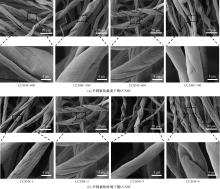
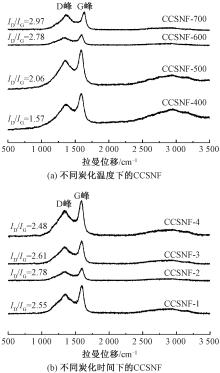
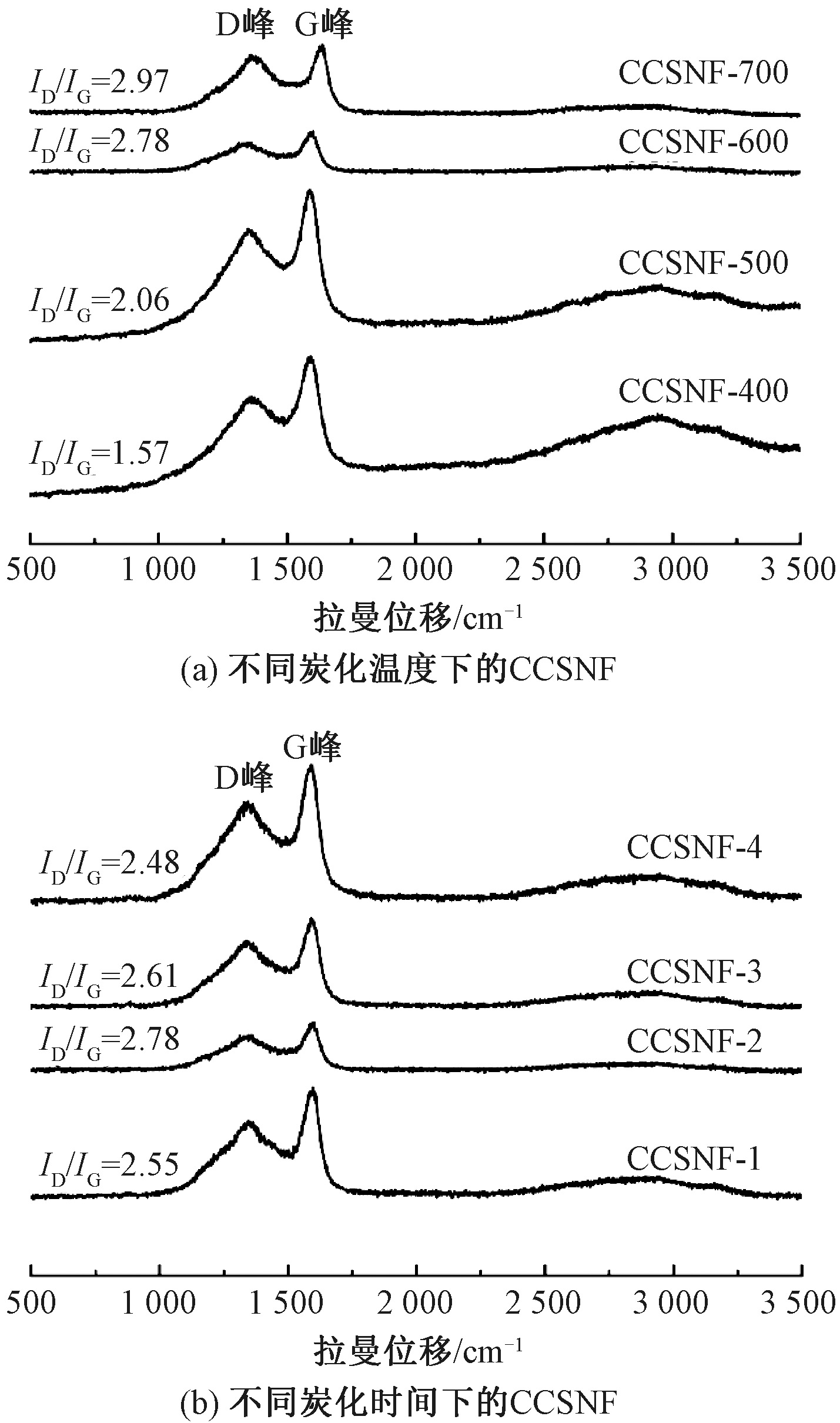
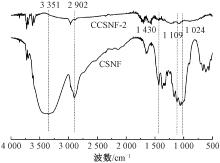
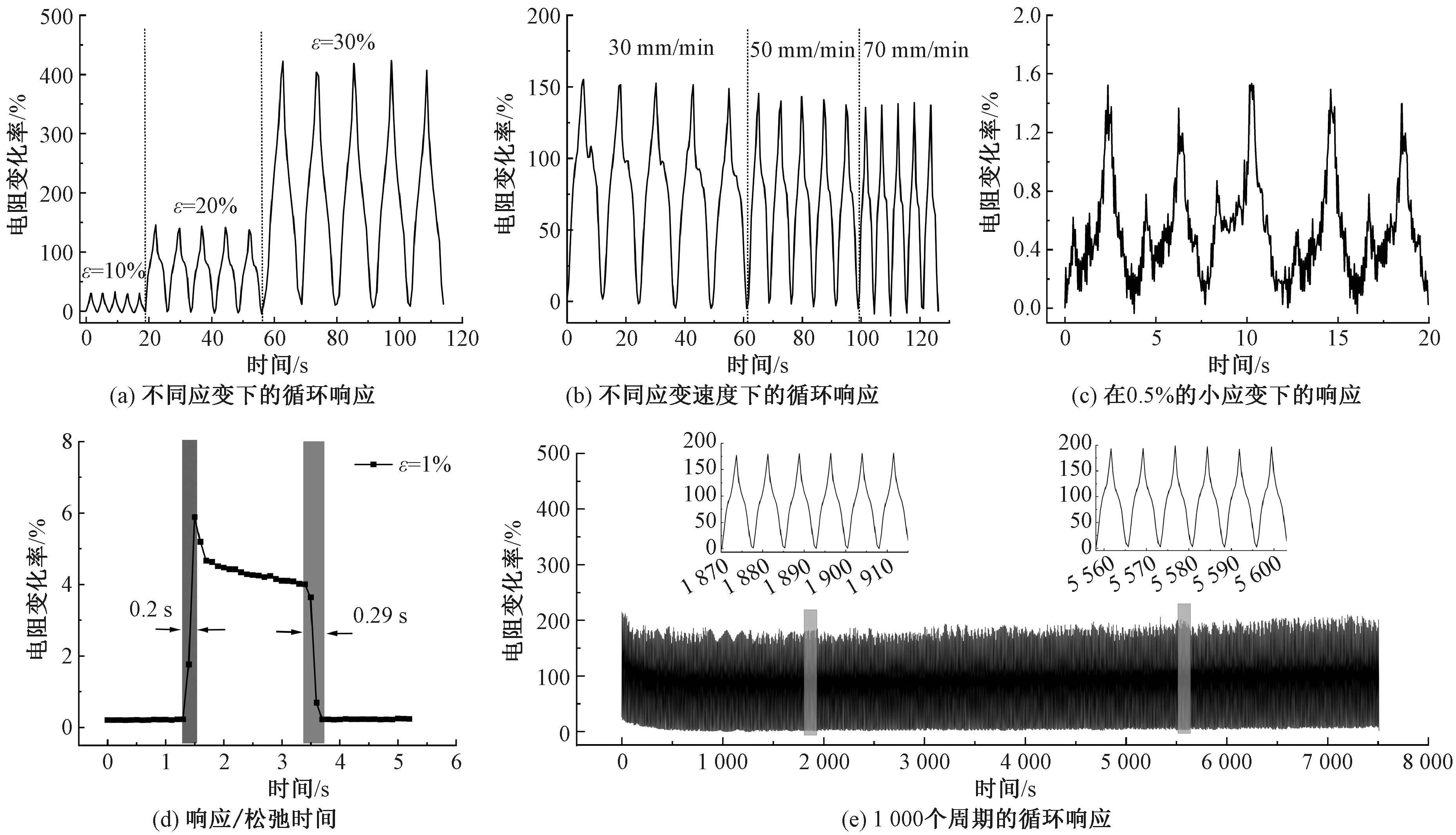
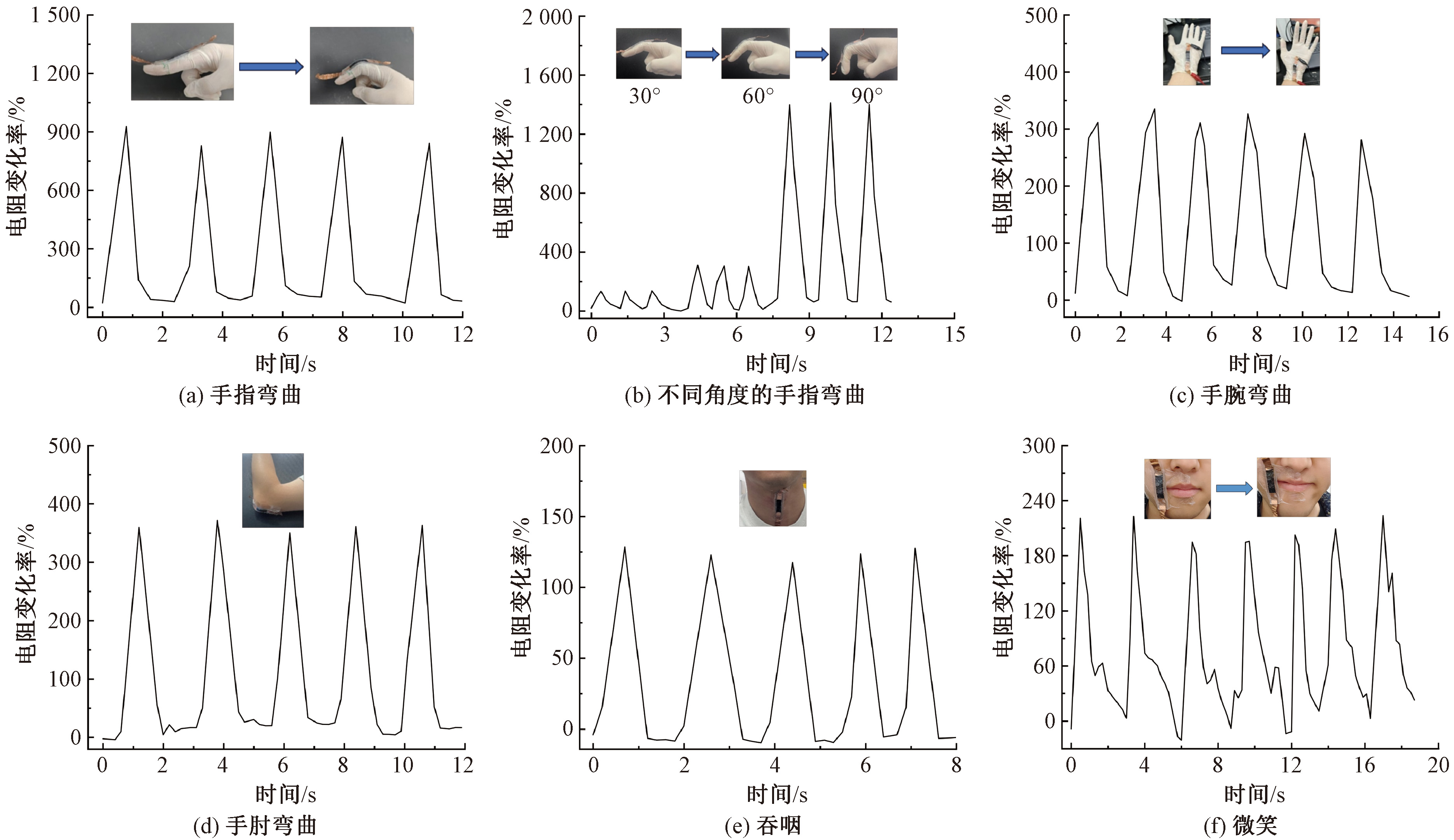
针对传统高性能聚合物前驱体在激光诱导石墨烯(LIG)制备柔性应变传感器中存在刚性高、难以满足可穿戴设备高拉伸性需求以及石墨烯向柔性基底转移时易发生断裂或脱落影响性能的问题,采用炭化网眼全棉水刺非织造布作为前驱体,通过LIG技术制备出一种高性能LIG应变传感器。借助傅里叶红外光谱仪、扫描电子显微镜、共聚焦显微拉曼光谱成像仪、四探针方阻测试仪以及万能拉伸试验机等对炭化全棉水刺非织造布(CCSNF)、LIG以及LIG应变传感器进行表征与分析。结果表明:以CCSNF为前驱体材料制备的LIG具有优异的导电性;基于该LIG组装的应变传感器的灵敏度可达612,应变范围为55%,可以检测0.5%的小应变,快速响应/松弛时间≤0.29 s,经过1 000个拉伸周期后,电阻信号仍具有较好的稳定性和可重复性。此外,该传感器可应用于情绪识别、信息加密、运动和康复监测方面,在人机交互、电子皮肤和医疗健康监测等领域中显示出巨大潜力。
中图分类号:
| [1] | FU Y F, LI Y Q, LIU Y F, et al. High-performance structural flexible strain sensors based on graphene-coated glass fabric/silicone composite[J]. ACS applied materials & interfaces, 2018, 10(41): 35503-35509. |
| [2] |
YAN T, WANG Z, PAN Z J. Flexible strain sensors fabricated using carbon-based nanomaterials: a review[J]. Current Opinion in Solid State and Materials Science, 2018, 22(6): 213-228.
doi: 10.1016/j.cossms.2018.11.001 |
| [3] |
MIAO J, FAN T. Flexible and stretchable transparent conductive graphene-based electrodes for emerging wearable electronics[J]. Carbon, 2023, 202: 495-527.
doi: 10.1016/j.carbon.2022.11.018 |
| [4] |
KABIRI Ameri S, HO R, JANG H, et al. Graphene electronic tattoo sensors[J]. ACS nano, 2017, 11(8): 7634-7641.
doi: 10.1021/acsnano.7b02182 pmid: 28719739 |
| [5] |
ZHOU S, ZHANG Y, CHEN J, et al. Wear and corrosion resistance of fluorocarbon/epoxy blended coatings nanofilled by mechanically peeled few-layer fluorinated graphene[J]. Journal of Materials Research and Technology, 2022, 20: 2369-2384.
doi: 10.1016/j.jmrt.2022.08.036 |
| [6] |
WANG J, FAN T, LU J, et al. Chemical vapor deposition growth behavior of graphene[J]. International Journal of Minerals, Metallurgy and Materials, 2022, 29(1): 136-143.
doi: 10.1007/s12613-021-2302-6 |
| [7] |
HAO X, CHEN Y, WANG Z, et al. Morphology and structure of epitaxial graphene grown on 6H-SiC (0001) substrates by modified argon-assisted epitaxial method[J]. Materials Letters, 2014, 115: 144-146.
doi: 10.1016/j.matlet.2013.10.087 |
| [8] |
CHYAN Y, YE R, LI Y, et al. Laser-induced graphene by multiple lasing: toward electronics on cloth, paper, and food[J]. ACS nano, 2018, 12(3): 2176-2183.
doi: 10.1021/acsnano.7b08539 pmid: 29436816 |
| [9] |
HUANG L, SU J, SONG Y, et al. Laser-induced graphene: En route to smart sensing[J]. Nano-micro letters, 2020, 12(1): 157.
doi: 10.1007/s40820-020-00496-0 pmid: 32835028 |
| [10] |
YE R, JAMES D K, TOUR J M. Laser-induced graphene[J]. Accounts of chemical research, 2018, 51(7): 1609-1620.
doi: 10.1021/acs.accounts.8b00084 pmid: 29924584 |
| [11] |
LI Z, LU L, XIE Y, et al. Preparation of laser‐induced graphene fabric from silk and its application examples for flexible sensor[J]. Advanced Engineering Materials, 2021, 23(9): 2100195.
doi: 10.1002/adem.v23.9 |
| [12] |
陆龙生, 王文涛, 谢颖熙, 等. 激光直写制造石墨烯基柔性电子器件的研究进展[J]. 机械工程学报, 2021, 57(21): 234-247.
doi: 10.3901/JME.2021.21.234 |
|
LU Longsheng, WANG Wentao, XIE Yingxi, et al. Research progress on laser direct writing manufacturing of graphene based flexible electronic devices[J]. Journal of Mechanical Engineering, 2021, 57(21): 234-247.
doi: 10.3901/JME.2021.21.234 |
|
| [13] | CHHETRY A, SHARIFUZZAMAN M, YOON H, et al. MoS2-decorated laser-induced graphene for a highly sensitive, hysteresis-free, and reliable piezoresistive strain sensor[J]. ACS applied materials & interfaces, 2019, 11(25): 22531-22542. |
| [14] | WANG W, LU L, LI Z, et al. Fingerprint-inspired strain sensor with balanced sensitivity and strain range using laser-induced graphene[J]. ACS applied materials & interfaces, 2021, 14(1): 1315-1325. |
| [15] | 郭秉臣. 非织造材料与工程学[M]. 北京: 中国纺织出版社, 2010: 84-102. |
| GUO Bingchen. Nonwoven materials and engineering[M]. Beijing: China Textile & Apparel Press, 2010: 84-102. | |
| [16] | 黄力雄. 基于激光诱导石墨烯的柔性传感器制备与应用研究[D]. 广州: 广东工业大学, 2021:23-35. |
| HUANG Lixiong. Research on the preparation and application of flexible sensors based on laser induced graphene[D]. Guangzhou: Guangdong University of Technology, 2021:23-35. | |
| [17] | WANG X, GU Y, XIONG Z, et al. Silk-molded flexible, ultrasensitive, and highly stable electronic skin for monitoring human physiological signals[J]. Advanced materials (Deerfield Beach, Fla.), 2013, 26(9): 1336-1342. |
| [18] | 倪海粟. 基于碳化棉织物的柔性加热元件和传感元件的研究[D]. 天津: 天津工业大学, 2021:17-20. |
| NI Haisu. Research on flexible heating and sensing elements based on carbonized cotton fabric[D]. Tianjin: Tiangong University, 2021:17-20. | |
| [19] |
ZHANG L, LI H, LAI X, et al. Carbonized cotton fabric-based multilayer piezoresistive pressure sensors[J]. Cellulose, 2019, 26: 5001-5014.
doi: 10.1007/s10570-019-02432-x |
| [20] |
LEWANDOWSKA A E, SOUTIS C, SAVAGE L, et al. Carbon fibres with ordered graphitic-like aggregate structures from a regenerated cellulose fibre precursor[J]. Composites Science and Technology, 2015, 116: 50-57.
doi: 10.1016/j.compscitech.2015.05.009 |
| [21] | 孙兵华. 激光诱导石墨烯基柔性传感器制备方法及其应用研究[D]. 长春: 吉林大学, 2024:31-41. |
| SUN Binghua. Preparation method and application research of laser induced graphene based flexible sensor[D]. Changchun: Jilin University, 2024:31-41. | |
| [22] |
LIN J, PENG Z, LIU Y, et al. Laser-induced porous graphene films from commercial polymers[J]. Nature communications, 2014, 5(1): 5714.
doi: 10.1038/ncomms6714 |
| [1] | 冼芯如, 严泽越, 贺佳佳, 闵胜男, 陈莹, 王雪妍. 掺杂单壁碳纳米管对间隔涤纶织物电容式传感器的影响[J]. 纺织学报, 2026, 47(05): 141-150. |
| [2] | 吴欣媛, 董子靖, 王瑞霞, 颜紫玥, 孙庭雯, 胡烨, 吴英楠, 孙润军. 聚氨酯/炭黑导电合股纱的制备及其应变传感性能[J]. 纺织学报, 2026, 47(04): 96-103. |
| [3] | 孙小芸, 岳程飞, 张如全. 基于激光诱导石墨烯的柔性温度传感器制备及其性能[J]. 纺织学报, 2026, 47(03): 129-138. |
| [4] | 彭阳阳, 孙丰鑫, 潘如如. 变结构纺织应变传感器的跨尺度构建与表征[J]. 纺织学报, 2026, 47(02): 111-118. |
| [5] | 沈钰茜, 唐虹, 赵敏. 基于导线材质变化的刺绣电极心电传感性能比较[J]. 纺织学报, 2026, 47(02): 135-143. |
| [6] | 邵剑波, 岳欣琰, 陈雨, 韩潇, 洪剑寒. 全针织结构多模态柔性电容传感器的构筑及其传感性能[J]. 纺织学报, 2026, 47(01): 123-131. |
| [7] | 张莹, 郭明靖, 王利君. 针织结构温度传感器设计及其着装传感性能[J]. 纺织学报, 2025, 46(12): 123-132. |
| [8] | 王梁宇, 高晓红, 于彩娇, 张雪婷, 杨旭礼. 还原氧化石墨烯/铜纳米颗粒导电棉织物的制备及其传感性能[J]. 纺织学报, 2025, 46(12): 181-187. |
| [9] | 梁治, 姬康瑞, 黎张成, 何钰, 王灿, 侯冲. 热致变色纤维膜的制备及其温度传感性能[J]. 纺织学报, 2025, 46(11): 1-8. |
| [10] | 权英, 张爱琴, 张曼, 刘淑强, 张钰晶. 基于三维编织结构的柔性应变传感器制备及其性能[J]. 纺织学报, 2025, 46(08): 136-144. |
| [11] | 张金芹, 李晶, 肖明, 毕曙光, 冉建华. 聚苯乙烯/还原氧化石墨烯微球传感电热织物的自组装法制备[J]. 纺织学报, 2025, 46(05): 202-213. |
| [12] | 董子靖, 吴欣媛, 王瑞霞, 赵华祥, 钱利江, 应城唯, 孙润军. 壳聚糖改性的炭黑导电织物制备及其在人体运动监测中的应用[J]. 纺织学报, 2025, 46(04): 146-153. |
| [13] | 佘叶美, 彭阳阳, 王法猛, 潘如如. 基于经编间隔织物的柔性压力传感器制备及其性能[J]. 纺织学报, 2025, 46(03): 158-166. |
| [14] | 岳欣琰, 邵剑波, 王小虎, 韩潇, 赵晓曼, 洪剑寒. 基于镀银锦纶/锦纶/水性聚氨酯复合纱的一维结构柔性电容传感器[J]. 纺织学报, 2025, 46(03): 82-89. |
| [15] | 范梦晶, 岳欣琰, 邵剑波, 陈雨, 洪剑寒, 韩潇. 基于静电纺纤维包芯纱的电容式扭转传感器构建及其传感性能[J]. 纺织学报, 2025, 46(02): 106-112. |
|
||
 京公网安备11010502044800号