纺织学报 ›› 2026, Vol. 47 ›› Issue (04): 96-103.doi: 10.13475/j.fzxb.20250401801
吴欣媛1,2, 董子靖1,2( ), 王瑞霞1,2, 颜紫玥1,2, 孙庭雯1,2, 胡烨1,2, 吴英楠1,2, 孙润军1,2
WU Xinyuan1,2, DONG Zijing1,2(), WANG Ruixia1,2, YAN Ziyue1,2, SUN Tingwen1,2, HU Ye1,2, WU Yingnan1,2, SUN Runjun1,2
摘要:
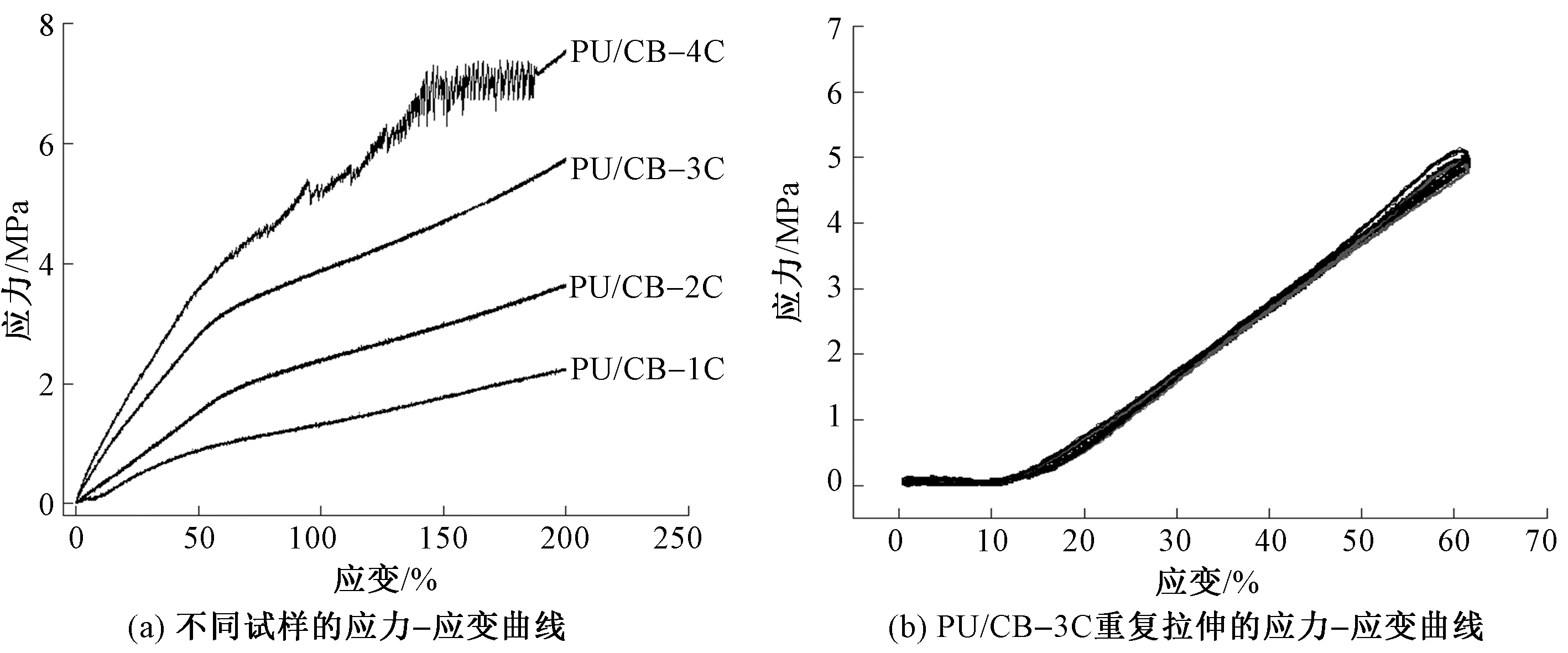
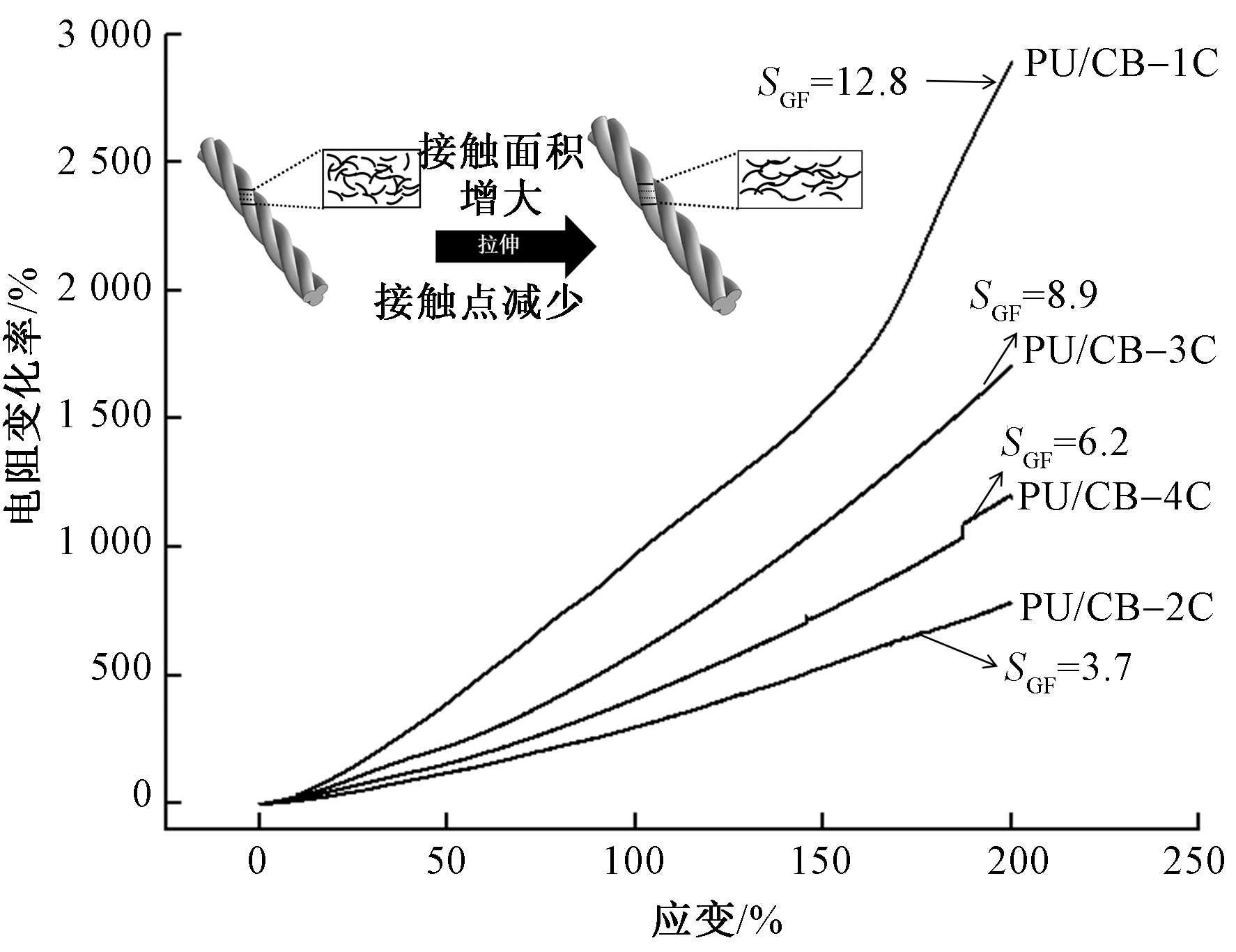
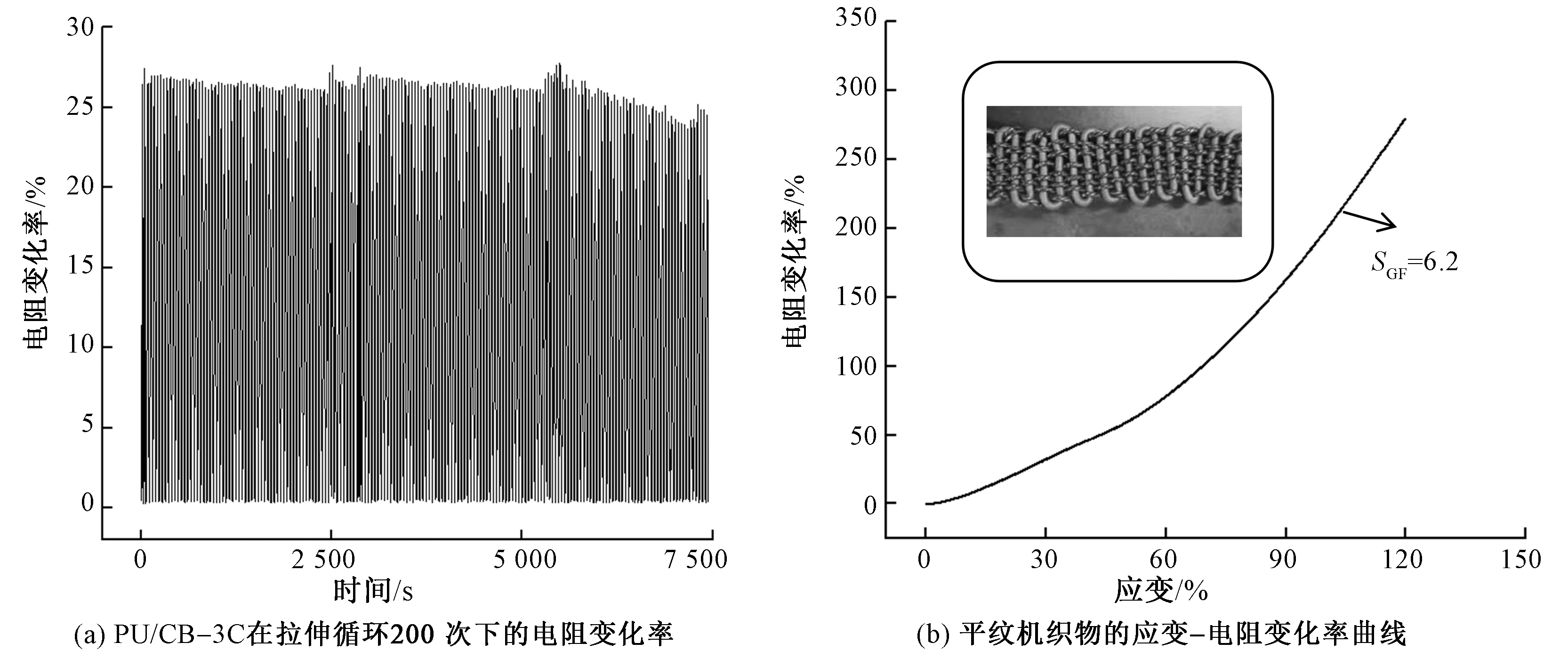
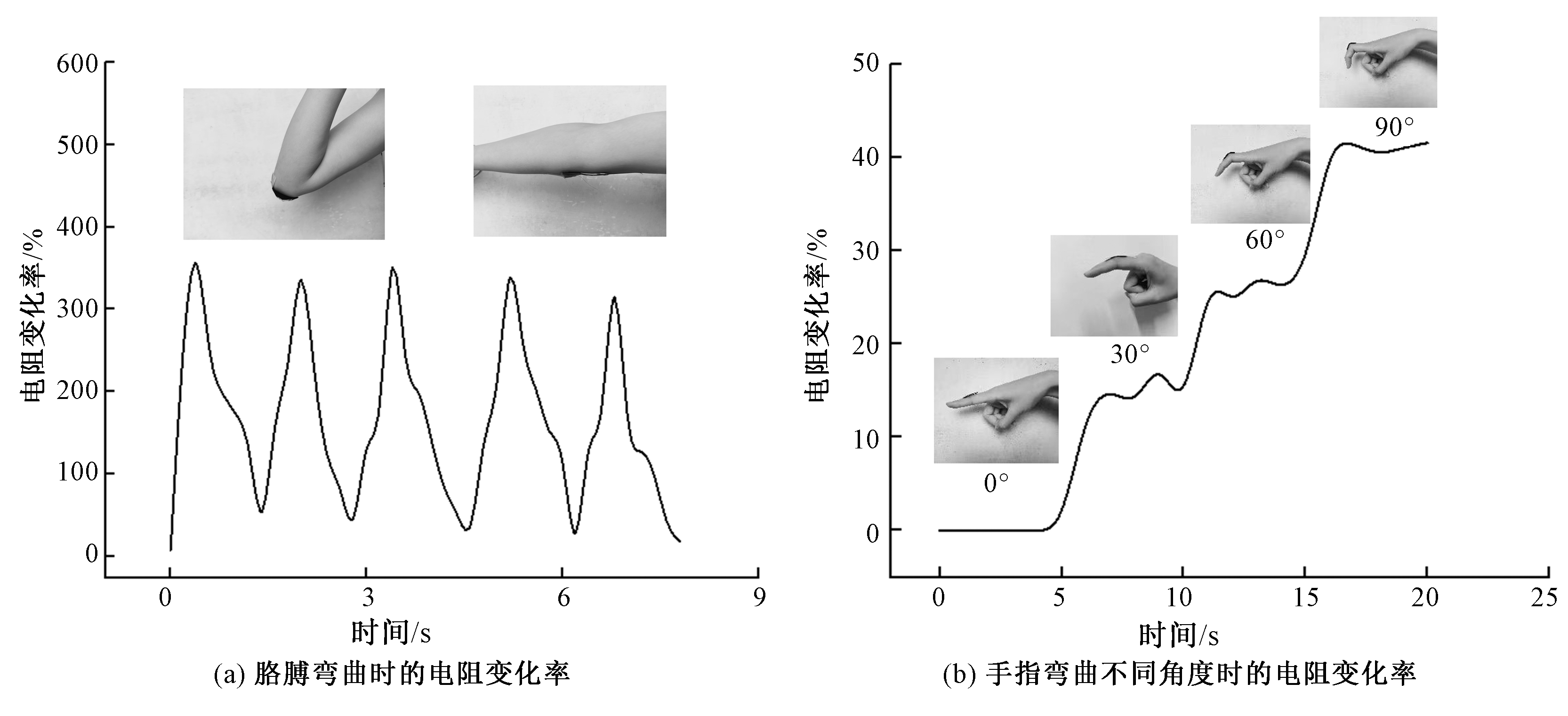
为探究导电纱线合股数对其应变传感性能的影响规律,并进一步评估其用于人体运动监测的有效性,同时考察其通过纺织编织工艺实现结构化的可行性,以聚氨酯为柔性基底、炭黑为导电基材,采用喷涂法构建复合型柔性应变传感材料,制备不同合股数的聚氨酯/炭黑导电纱线。借助扫描电子显微镜、光学显微镜和傅里叶红外光谱仪分析其表面形貌和结构,采用数字源表结合电子织物强力机测试试样的力学性能和传感性能。结果表明,当合股数为3股时,导电合股纱的传感性能达到最佳,电阻变化率为1 704%,灵敏度为 8.9,该导电合股纱具有良好的力学性能。将筛选出的协同最优三合股导电纱应用于人体运动检测,应用结果显示,制备出的合股导电纱线可监测人身体上多个部位的运动状态,且具有良好的重复性。采用该纱线,通过平纹机织工艺可实现柔性应变传感器的纺织结构化,编织织物在120%应变下电阻变化率达285%。
中图分类号:
| [1] |
GUAN M, LIU Y, DU H, et al. Durable, breathable, sweat-resistant, and degradable flexible sensors for human motion detection[J]. Chemical Engineering Journal, 2023, 462: 142151.
doi: 10.1016/j.cej.2023.142151 |
| [2] | 张蕊, 叶苏娴, 王建, 等. 全织物型离电式柔性压力传感器的制备及其性能[J]. 纺织学报, 2025, 46(2): 113-121. |
|
ZHANG Rui, YE Suxian, WANG Jian, et al. Preparation and performance of all-fabric iontronic flexible pressure sensor[J]. Journal of Textile Research, 2025, 46(2): 113-121.
doi: 10.1177/004051757604600206 |
|
| [3] |
MENG K Y, XIAO X, WEI W X, et al. Wearable pressure sensors for pulse wave monitoring[J]. Advanced Materials, 2022, 34(21): 2109357.
doi: 10.1002/adma.v34.21 |
| [4] |
PIPER A, ÖBERG MÅNSSON I, KHALILIAZAR S, et al. A disposable, wearable, flexible, stitched textile electrochemical biosensing platform[J]. Biosensors and Bioelectronics, 2021, 194: 113604.
doi: 10.1016/j.bios.2021.113604 |
| [5] |
ZHU M M, LOU M N, ABDALLA I, et al. Highly shape adaptive fiber based electronic skin for sensitive joint motion monitoring and tactile sensing[J]. Nano Energy, 2020, 69: 104429.
doi: 10.1016/j.nanoen.2019.104429 |
| [6] |
CATTOZZO MOR D, PLŠEK A B, ASOKAN P, et al. Facile fabrication of large-area biofunctionalized metallic nanostructures for high performance affinity plasmonic biosensors[J]. Advanced Materials Technologies, 2025, 10(16): e00356.
doi: 10.1002/admt.v10.16 |
| [7] | 孟兰, 杨春卿, 刘希臣, 等. 可穿戴柔性电子应变传感器进展及其应用研究[J]. 电子元件与材料, 2024, 43(1): 14-22. |
| MENG Lan, YANG Chunqing, LIU Xichen, et al. Progress and application of wearable flexible electronic strain sensors[J]. Electronic Components & Materials, 2024, 43(1): 14-22. | |
| [8] |
RIM Y S, BAE S H, CHEN H J, et al. Recent progress in materials and devices toward printable and flexible sensors[J]. Advanced Materials, 2016, 28(22): 4415-4440.
doi: 10.1002/adma.v28.22 |
| [9] | 吴景, 曾威, 邝美霞, 等. 细菌纤维素-ZnO/水性聚氨酯复合薄膜的制备与性能[J]. 复合材料学报, 2020, 37(12): 3026-3034. |
| WU Jing, ZENG Wei, KUANG Meixia, et al. Preparation and properties of bacterial cellulose-ZnO/waterborne polyurethane composite films[J]. Acta Materiae Compositae Sinica, 2020, 37(12): 3026-3034. | |
| [10] |
LI P, JIANG X C, SONG W M, et al. Green organic-inorganic coatings for flexible polyurethane foams: evaluation of the effects on flame retardancy, antibacterial activity, and ideal mechanical properties[J]. Journal of Cleaner Production, 2023, 411: 137265.
doi: 10.1016/j.jclepro.2023.137265 |
| [11] |
KANG S Y, JI Z X, TSENG L F, et al. Design and synthesis of waterborne polyurethanes[J]. Advanced Materials, 2018, 30(18): 1706237.
doi: 10.1002/adma.v30.18 |
| [12] | 卢成帅, 韩文佳, 张志良, 等. 水性聚氨酯基柔性传感材料的研究进展[J]. 复合材料学报, 2025, 42(1): 133-146. |
| LU Chengshuai, HAN Wenjia, ZHANG Zhiliang, et al. Research progress of waterborne polyurethane-based flexible sensing materials[J]. Acta Materiae Compositae Sinica, 2025, 42(1): 133-146. | |
| [13] | 张华, 龚天巡, 黄文, 等. 基于石墨烯复合材料的柔性应力传感器制备及力电特性[J]. 电子元件与材料, 2018, 37(9): 28-32. |
| ZHANG Hua, GONG Tianxun, HUANG Wen, et al. Preparation and application of flexible strain sensor based on graphene composites[J]. Electronic Components & Materials, 2018, 37(9): 28-32. | |
| [14] |
张曼, 权英, 冯宇, 等. 纺织基可穿戴柔性应变传感器的研究进展[J]. 纺织学报, 2024, 45(12): 225-233.
doi: 10.13475/j.fzxb.20231104702 |
|
ZHANG Man, QUAN Ying, FENG Yu, et al. Advances in textile-based wearable flexible strain sensors[J]. Journal of Textile Research, 2024, 45(12): 225-233.
doi: 10.13475/j.fzxb.20231104702 |
|
| [15] | 柏佳惠. 离子交联聚丙烯酰胺复合水凝胶的制备及传感性能研究[D]. 秦皇岛: 燕山大学, 2021: 25-30. |
| BAI Jiahui. Preparation of ion-crosslinking polyacrylamide composite hydrogels and study on their sensing properties[D]. Qinhuangdao: Yanshan University, 2021: 25-30. | |
| [16] |
LIU J, ZHANG J Z, ZHAO Z Y, et al. A negative-response strain sensor towards wearable microclimate changes for body area sensing networks[J]. Chemical Engineering Journal, 2023, 459: 141628.
doi: 10.1016/j.cej.2023.141628 |
| [17] | ZHANG X P, KE L W, ZHANG X M, et al. Breathable and wearable strain sensors based on synergistic conductive carbon nanotubes/cotton fabrics for multi-directional motion detection[J]. ACS Applied Materials & Interfaces, 2022, 14(22): 25753-25762. |
| [18] |
YANG K, CHENG H N, WANG B, et al. Highly durable and stretchable Ti3C2Tx/PPy-fabric-based strain sensor for human-motion detection[J]. Advanced Materials Technologies, 2022, 7(3): 2100675.
doi: 10.1002/admt.v7.3 |
| [19] |
YANG Y Y, NIU B, MA Y X, et al. Pressure and electromechanical behaviors of elastic pressure exerting and sensing fabrics for monitoring pressure of compression textiles[J]. Advanced Materials Technologies, 2023, 8(12): 2202057.
doi: 10.1002/admt.v8.12 |
| [1] | 冯晓莉, 宫钧耀, 夏良君, 徐卫林. 磁电式柔性传感器研究进展[J]. 纺织学报, 2026, 47(03): 107-117. |
| [2] | 郭一铭, 喻爽, 赵帆, 王富军. 血管监测用纤维基压电传感器的构建及性能评价[J]. 纺织学报, 2026, 47(03): 118-128. |
| [3] | 孙小芸, 岳程飞, 张如全. 基于激光诱导石墨烯的柔性温度传感器制备及其性能[J]. 纺织学报, 2026, 47(03): 129-138. |
| [4] | 何崟, 郭成, 梁文静, 温德华, 苏建军, 刘皓. 基于共轭纺镀银锦纶包芯纱线的多功能传感器[J]. 纺织学报, 2026, 47(03): 139-147. |
| [5] | 齐梦园, 肖国威, 杜金梅, 许长海, 杨红英. 水性聚氨酯/纳米二氧化硅改性玄武岩纤维织物制备及其性能[J]. 纺织学报, 2026, 47(02): 172-180. |
| [6] | 刘一鸣, 李琳, 杜鲜晶, 刘攀, 殷霞, 田明伟. 内螺旋结构弹性导电纱线的制备及其应变不敏感性能的调控[J]. 纺织学报, 2026, 47(01): 115-122. |
| [7] | 邵剑波, 岳欣琰, 陈雨, 韩潇, 洪剑寒. 全针织结构多模态柔性电容传感器的构筑及其传感性能[J]. 纺织学报, 2026, 47(01): 123-131. |
| [8] | 刘旭颖, 银倩琳, 王先成, 樊高晴, 戚栋明, 陈智杰. 二氧化碳基聚氨酯丙烯酸酯乳液制备及其胶膜性能[J]. 纺织学报, 2026, 47(01): 168-175. |
| [9] | 胡崴琳, 白洁, 刘丹, 白濛, 李娟, 李启正. 基于机器学习模型的电子纺织品研究进展[J]. 纺织学报, 2026, 47(01): 268-276. |
| [10] | 张莹, 郭明靖, 王利君. 针织结构温度传感器设计及其着装传感性能[J]. 纺织学报, 2025, 46(12): 123-132. |
| [11] | 沈昕怡, 李家炜, 邵宇, 郭丁滔, 何贵平, 赵磊, 戚栋明, YOUSSEF Yehya Abel-Gawad, KAFAFY Hany Hassan Ahmed Mohamed. 高色牢度反应性聚合物包覆炭黑直喷墨水制备及其印花性能[J]. 纺织学报, 2025, 46(12): 152-162. |
| [12] | 邓晶, 王蕊宁, 孙润军, 张亚娟, 郭海冰, 雷轲. 用于脉搏监测的海藻酸钠改性水性聚氨酯/液态金属导电传感纤维[J]. 纺织学报, 2025, 46(12): 74-82. |
| [13] | 刘飞, 刘璐, 郑智超, 刘俊宏, 吴德群, 蒋秋冉. 自黏型玉米醇溶蛋白基超细纤维膜的制备及其性能[J]. 纺织学报, 2025, 46(11): 34-42. |
| [14] | 郭梦瑶, 吴佳庆, 王迎. 全包覆结构聚氨酯膜条带/棉复合纱制备及其力学性能[J]. 纺织学报, 2025, 46(11): 69-76. |
| [15] | 郭艳文, 夏蕊, 黄晓梅, 陈红霞, 曹海建. 经纬向紧度比对三维浅交弯联机织复合材料拉伸性能的影响[J]. 纺织学报, 2025, 46(10): 103-110. |
|
||
 京公网安备11010502044800号