纺织学报 ›› 2026, Vol. 47 ›› Issue (05): 236-243.doi: 10.13475/j.fzxb.20250904901
王青, 赵世航( ), 刘甲怡, 吴加辉, 李西
WANG Qing, ZHAO Shihang(), LIU Jiayi, WU Jiahui, LI Xi
摘要:
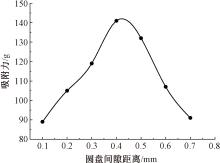
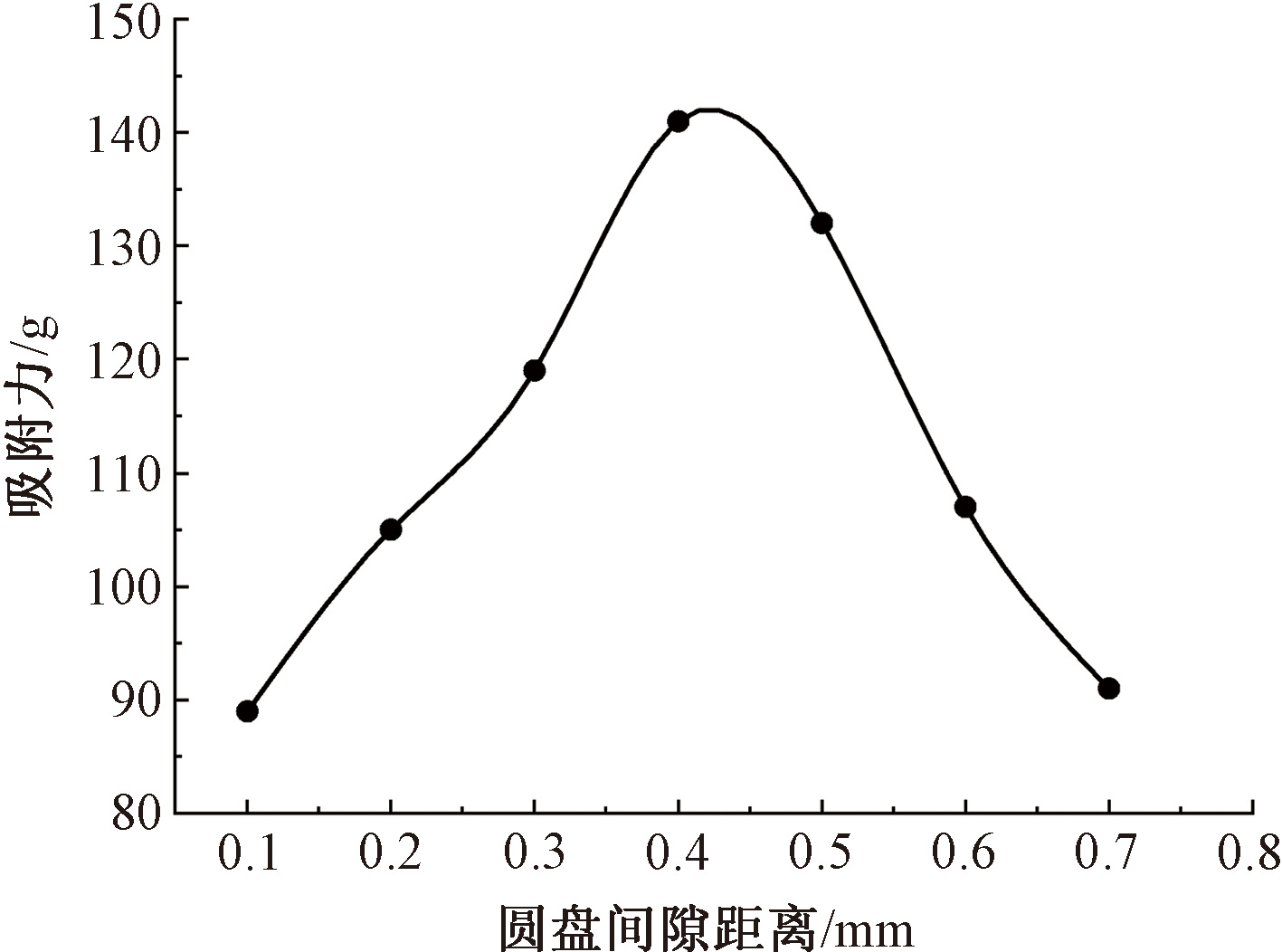
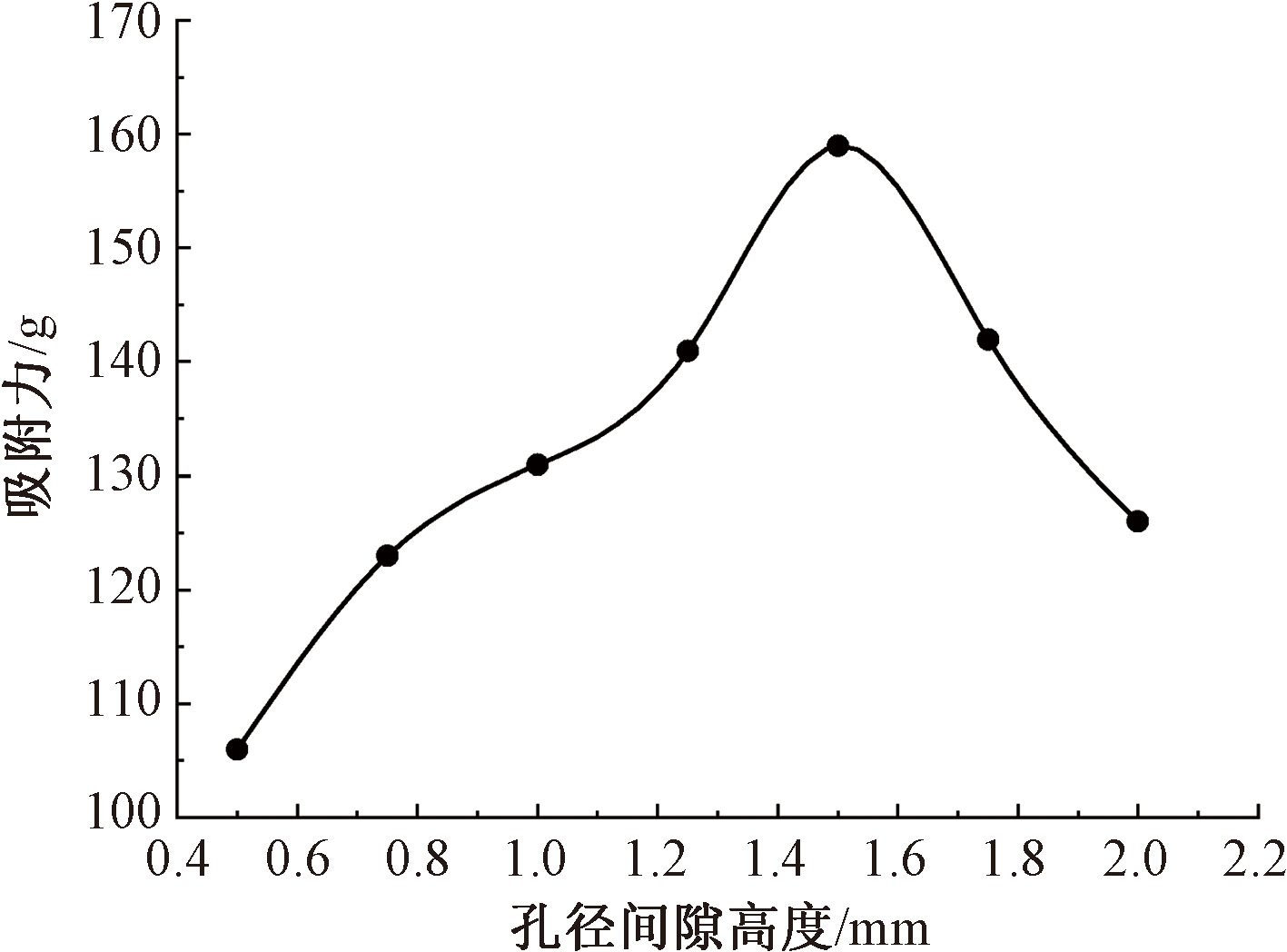
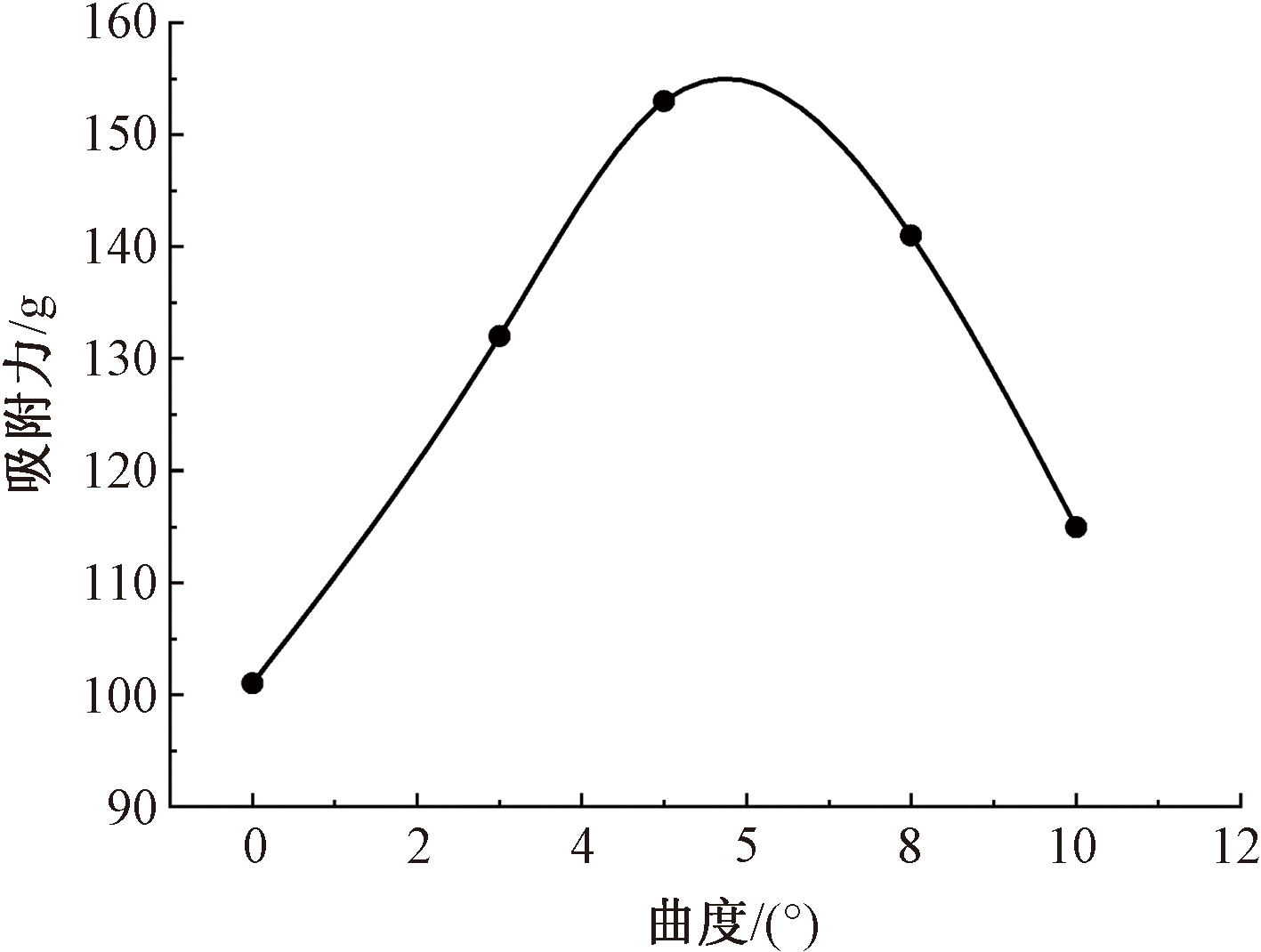
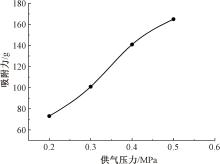
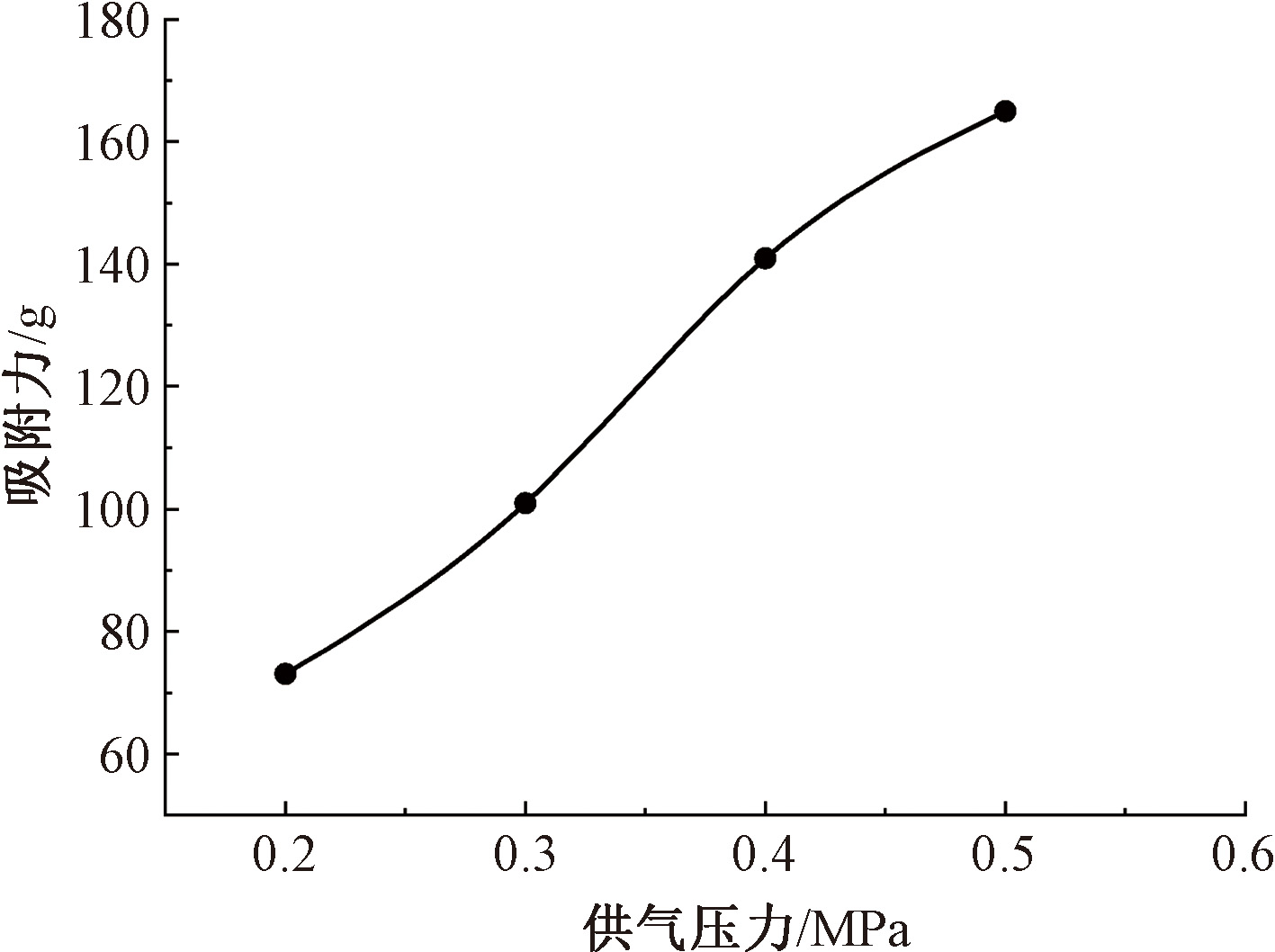
面料自动抓取与转移是服装生产智能化的核心环节。针对现有抓取技术存在易致面料损伤、适配性不足或电荷滞留与粉尘附着,难以实现对柔性面料的无损、稳定抓取等缺点,基于伯努利原理设计了非接触式气动吸盘。首先分析其工作原理并完成结构设计;然后,采用 Fluent 流体仿真软件,探究吸盘内部流场特性,进一步阐明吸附式抓取原理;随后,搭建吸附力测量平台,通过吸附力测量实验研究部分参数对吸附力的影响规律;最后,进行不同类型服装面料的吸附抓取实验验证。结果表明:非接触式气动吸盘在圆盘间隙距离为0.4 mm左右、孔径间隙高度为1.5 mm左右、底面曲度为5°左右时,产生的吸附力达到最大;供气压力与吸附力呈正相关,增大供气压力可有效提升吸附力。非接触式气动吸盘能够实现对多种服装面料的有效抓取和转移,且针对不同透气性、质量的面料,通过调节供气压力大小,可实现对其有效抓取。
中图分类号:
| [1] | 石磊, 王冬岩, 王恩双. 智能制造技术在机械制造行业中的应用与优化[J]. 模具制造, 2024, 24(10): 197-199. |
| SHI Lei, WANG Dongyan, WANG Enshuang. Application and optimization of intelligent manufacturing technology in the mechanical manufacturing industry[J]. Die & Mould Manufacture, 2024, 24(10): 197-199. | |
| [2] | 张楠, 何玉成, 王南. 操作机器人机械手爪的设计研究及应用[J]. 机械设计, 2013, 30(3): 17-20, 61. |
| ZHANG Nan, HE Yucheng, WANG Nan. Design study and application of manipulating robot gripper[J]. Journal of Machine Design, 2013, 30(3): 17-20, 61. | |
| [3] | 胡祯, 刘吉成. 自适应被抓取目标形状的柔性指端夹持器设计[J]. 机电信息, 2020(23): 112-113. |
| HU Zhen, LIU Jicheng. Design of flexible finger-end gripper with adaptive shape of grabbed object[J]. Mechanical and Electrical Information, 2020(23): 112-113. | |
| [4] | 梁正, 武广斌. 气动柔性五指机械手运动空间与抓取实验研究[J]. 吉林化工学院学报, 2021, 38(7): 85-90, 106. |
| LIANG Zheng, WU Guangbin. Experimental research on movement space and grasping of pneumatic flexible five-finger manipulator[J]. Journal of Jilin Institute of Chemical Technology, 2021, 38(7): 85-90, 106. | |
| [5] |
MORIYA Y, TANAKA D, YAMAZAKI K, et al. A method of picking up a folded fabric product by a single-armed robot[J]. ROBOMECH Journal, 2018, 5(1): 1.
doi: 10.1186/s40648-017-0098-y |
| [6] | 王浩. 基于磁敏橡胶的仿生柔性抓手优化设计与实验研究[D]. 重庆: 重庆邮电大学, 2020. |
| WANG Hao. Optimization design and experimental research of bionic flexible gripper based on magnetoactive rubber[D]. Chongqing: Chongqing University of Posts and Telecommunications, 2020. | |
| [7] | 刘兴德, 周海宇, 靳曦. L型板抓取柔性机械手的设计[J]. 吉林化工学院学报, 2021, 38(3): 13-15. |
| LIU Xingde, ZHOU Haiyu, JIN Xi. Design of flexible manipulator for L-plate grasping[J]. Journal of Jilin Institute of Chemical Technology, 2021, 38(3): 13-15. | |
| [8] | YAMAMOTO A, NAKASHIMA T, HIGUCHI T. Wall climbing mechanisms using electrostatic attraction generated by flexible electrodes[C]// 2007 International Symposium on Micro-NanoMechatronics and Human Science. New York: IEEE, 2008: 389-394. |
| [9] | BERENGUERES J, URAGO M, SAITO S, et al. Gecko inspired electrostatic chuck[C]// 2006 IEEE International Conference on Robotics and Biomimetics. New York: IEEE, 2007: 1018-1023. |
| [10] | 王黎明, 胡青春. 基于静电吸附原理的双履带爬壁机器人设计[J]. 机械设计, 2012, 29(4): 22-25. |
| WANG Liming, HU Qingchun. Design of a double track wall-climbing robot based on electrostatic adsorption mechanism[J]. Journal of Machine Design, 2012, 29(4): 22-25. | |
| [11] | 陈辉云. 基于静电吸附机理的机械抓手研究及设计[D]. 邯郸: 河北工程大学, 2018:3-10. |
| CHEN Huiyun. Research and design for mechanical gripper based on electrostatic adsorption mechanism[D]. Handan: Hebei University of Engineering, 2018:3-10. | |
| [12] |
FENG W Q, HU Y L, LI X R, et al. Robot end effector based on electrostatic adsorption for manipulating garment fabrics[J]. Textile Research Journal, 2022, 92(5/6): 691-705.
doi: 10.1177/00405175211041886 |
| [13] | 刘立东, 李新荣, 刘汉邦, 等. 基于纬编针织物特性的静电吸附力模型[J]. 纺织学报, 2021, 42(3): 161-168. |
|
LIU Lidong, LI Xinrong, LIU Hanbang, et al. Electrostatic adsorption model based on characteristics of weft knitted fabrics[J]. Journal of Textile Research, 2021, 42(3): 161-168.
doi: 10.1177/004051757204200306 |
|
| [14] | 阮晓东, 郭丽媛, 傅新, 等. 旋涡式非接触硅片夹持装置的流动计算及试验研究[J]. 机械工程学报, 2010, 46(16): 189-194. |
| RUAN Xiaodong, GUO Liyuan, FU Xin, et al. Simulation and experiment research on vortex non-contact wafer holder[J]. Journal of Mechanical Engineering, 2010, 46(16): 189-194. | |
| [15] | 邹明明. 气旋式非接触真空吸取技术的研究[D]. 南京: 南京理工大学, 2011:3-10. |
| ZOU Mingming. A study on cyclone-type non-contact vacuum suction technology[D]. Nanjing: Nanjing University of Science and Technology, 2011:3-10. | |
| [16] |
LI X, KAGAWA T. Development of a new noncontact gripper using swirl vanes[J]. Robotics and Computer-Integrated Manufacturing, 2013, 29(1): 63-70.
doi: 10.1016/j.rcim.2012.07.002 |
| [17] | 郭之雷. 具有切向喷嘴结构的气旋流发生器的关键参数的研究[D]. 杭州: 浙江大学, 2015:3-10. |
| GUO Zhilei. Research on key parameters of vortex generator with tangential-nozzle structure[D]. Hangzhou: Zhejiang University, 2015:3-10. | |
| [18] | 李剑锋. 气动旋涡流非接触夹持元件特性及搬运系统研究[D]. 宁波: 宁波大学, 2018. |
| LI Jianfeng. Research on characteristics of pneumatic vortex flow non-contact gripper and its application on handling system[D]. Ningbo: Ningbo University, 2018. | |
| [19] | 董继先. 气流负压式吸盘的理论分析及其在包装机械上的应用[J]. 包装与食品机械, 1990, 8(1): 1-5. |
| DONG Jixian. Theoretical analysis of negative pressure suction cup and its application in packaging machinery[J]. Packaging and Food Machinery, 1990, 8(1): 1-5. | |
| [20] |
DINI G, FANTONI G, FAILLI F. Grasping leather plies by Bernoulli grippers[J]. CIRP Annals, 2009, 58(1): 21-24.
doi: 10.1016/j.cirp.2009.03.076 |
| [21] |
SHI K G, LI X. Experimental and theoretical study of dynamic characteristics of Bernoulli gripper[J]. Precision Engineering, 2018, 52: 323-331.
doi: 10.1016/j.precisioneng.2018.01.006 |
| [22] |
LIU D, TEO C S, LIANG W Y, et al. Soft-acting, noncontact gripping method for ultrathin wafers using distributed bernoulli principle[J]. IEEE Transactions on Automation Science and Engineering, 2019, 16(2): 668-677.
doi: 10.1109/TASE.8856 |
| [23] |
SAVKIV V, MYKHAILYSHYN R, DUCHON F. Gasdynamic analysis of the Bernoulli grippers interaction with the surface of flat objects with displacement of the center of mass[J]. Vacuum, 2019, 159: 524-533.
doi: 10.1016/j.vacuum.2018.11.005 |
| [24] |
FLEISCHER J, FÖRSTER F, CRISPIERI N V. Intelligent gripper technology for the handling of carbon fiber material[J]. Production Engineering, 2014, 8(6): 691-700.
doi: 10.1007/s11740-014-0549-8 |
| [25] | 刘汉邦, 李新荣, 冯文倩, 等. 面向服装面料的柯恩达效应式非接触夹持器吸附性能[J]. 纺织学报, 2022, 43(2): 208-213. |
| LIU Hanbang, LI Xinrong, FENG Wenqian, et al. Grabbing performance of non-contact gripper based on Coanda effect for garment fabrics[J]. Journal of Textile Research, 2022, 43(2): 208-213. |
| [1] | 胡胜, 李文超, 赵小惠, 刘文慧. 异纤分拣机喷管结构优化对气流稳定性的影响[J]. 纺织学报, 2026, 47(05): 220-227. |
| [2] | 刘宜胜, 熊俊康, 戴宁, 胡旭东. 基于蚁群算法的纺纱车间多自动引导车协同路径规划[J]. 纺织学报, 2025, 46(10): 206-216. |
| [3] | 胡胜, 王紫悦, 张守京. 异纤分拣机输棉通道结构对气流稳定性的影响[J]. 纺织学报, 2024, 45(09): 194-203. |
| [4] | 孙戬, 姜博艺, 张守京, 胡胜. 异纤分拣机剔除喷管结构参数对其性能的影响[J]. 纺织学报, 2022, 43(10): 169-175. |
| [5] | 郑小虎, 刘正好, 陈峰, 刘志峰, 汪俊亮, 侯曦, 丁司懿. 环锭纺纱全流程机器人自动化生产关键技术[J]. 纺织学报, 2022, 43(09): 11-20. |
| [6] | 刘汉邦, 李新荣, 冯文倩, 吴柳波, 袁汝旺. 面向服装面料的柯恩达效应式非接触夹持器吸附性能[J]. 纺织学报, 2022, 43(02): 208-213. |
| [7] | 丁彩红, 李署程, 吴喜如. 自动化铲板的对刀运动分析及其参数设计[J]. 纺织学报, 2020, 41(09): 143-148. |
| [8] | 郑小虎, 鲍劲松, 马清文, 周衡, 张良山. 基于模拟退火遗传算法的纺纱车间调度系统[J]. 纺织学报, 2020, 41(06): 36-41. |
| [9] | 沈丹峰 张华安 叶国铭 王贯超. 基于灵活度考虑的棉花异纤分拣机器人结构参数优化设计[J]. 纺织学报, 2013, 34(2): 151-156. |
|
||
 京公网安备11010502044800号