纺织学报 ›› 2026, Vol. 47 ›› Issue (07): 228-238.doi: 10.13475/j.fzxb.20251002201

• 服装工程 • 上一篇    下一篇

基于YOLOv8关键点检测与尺寸驱动的T恤制版图自动生成方法

李廨晨1, 郑小虎1,2,3(), 胡俊1,2,3   

  1. 1 东华大学 信息与智能科学学院, 上海 201620
    2 纺织工业人工智能技术教育部工程研究中心, 上海 201620
    3 上海工业大数据与智能系统工程技术研究中心, 上海 201620
  • 收稿日期:2025-10-14 修回日期:2026-05-13 出版日期:2026-07-15 发布日期:2026-07-29
  • 通讯作者: 郑小虎(1983—),男,副教授,博士。主要研究方向为工业人工智能应用。E-mail: xhzheng@dhu.edu.cn
  • 作者简介:李廨晨(2001—),男,硕士。主要研究方向为生成式人工智能。
  • 基金资助:
    中央高校基本科研业务费专项资金资助项目(2232024G-14)

Automatic generation method for T-shirt pattern design based on YOLOv8 keypoint detection and size-driven approach

LI Xiechen1, ZHENG Xiaohu1,2,3(), HU Jun1,2,3   

  1. 1 School of Information and Intelligent Science, Donghua University, Shanghai 201620, China
    2 Engineering Research Center of Artificial Intelligence for Textile Industry, Ministry of Education, Shanghai 201620, China
    3 Shanghai Industrial Big Data and Intelligent Systems Engineering Technology Center, Shanghai 201620, China
  • Received:2025-10-14 Revised:2026-05-13 Published:2026-07-15 Online:2026-07-29

摘要:

为解决传统服装制版方法效率低下及现有基于AIGC的生成方法仅能输出图像、无法绑定工艺尺寸信息的问题,开发了一种能智能生成兼具视觉准确性和生产可用性的数字化服装制版图的方法,提出了一种融合YOLOv8关键点识别与参数化尺寸约束的两阶段制版图生成框架。首先,基于YOLOv8-pose模型并针对T恤制版图特点进行优化,实现对服装后片轮廓及内部结构关键点的精准定位。随后,通过骨架对齐与关键点映射、构建邻接矩阵量化拓扑关系,并最终基于参数化模板与动态贝塞尔曲线,在关键尺寸变量的驱动下生成数字化样板。结果表明,经优化的关键点定位准确率(KLA)达96.8%;所生成的T恤制版图在结构相似性(SSIM)和关键点连接符合率(CA)上分别达到0.85和96.2%,有效保证了轮廓的准确性与拓扑关系的合理性。针对特殊版型微调需求,系统设计了人机协同的交互接口,支持制版师通过双滑块机制对曲线形态与尺寸参数进行精细化调整,在保证86%样本无需干预即可直接投产的同时,为高准确度需求提供了高效的精修工具。该方法为服装智能制版的工程化落地提供了一种兼顾效率与可控性的可行方案。

关键词: 服装制版, 尺寸约束, 关键点检测, 参数化建模, 贝塞尔曲线

Abstract:

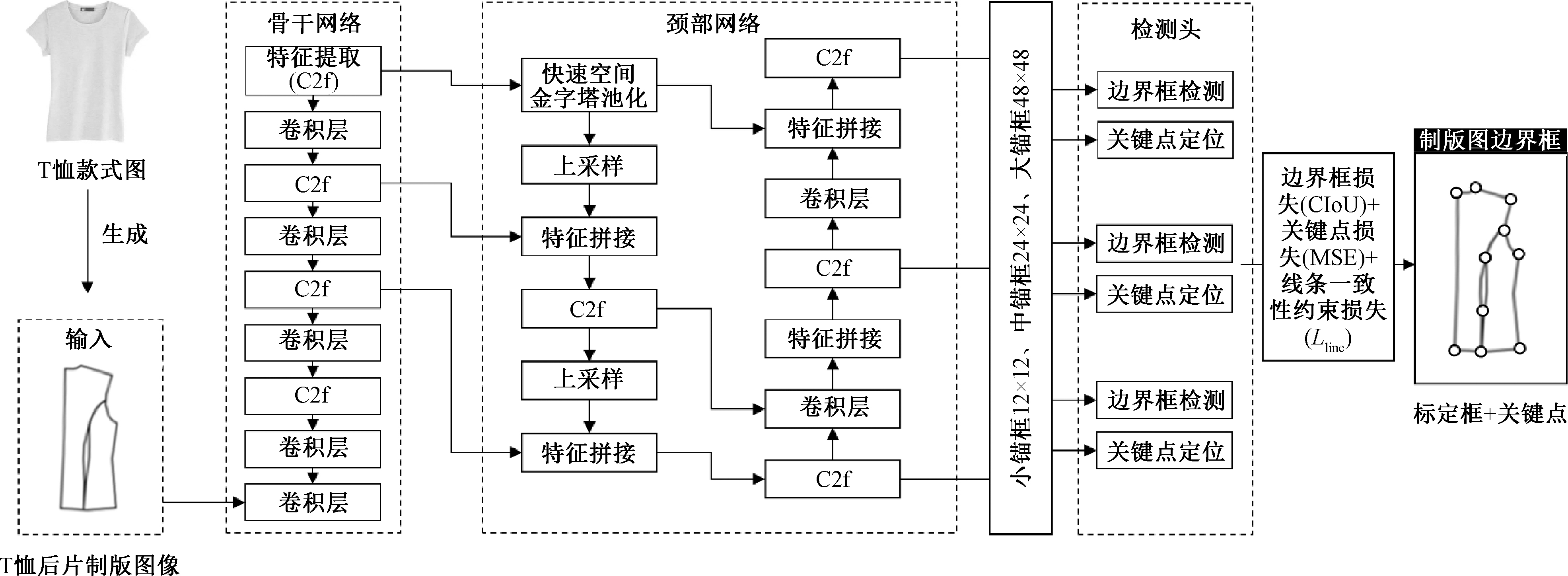
Objective In order to address the low efficiency in conventional clothing pattern making methods and the limitation of existing AIGC-based generation methods which only output images without binding process dimension information, this study aims to develop a method for automatically generating digital clothing patterns with both visual accuracy and production usability, so as to connect the design and subsequent production links (such as grading, marker making and cutting) in the clothing manufacturing process and provide a feasible solution for the engineering application of intelligent garment pattern making.

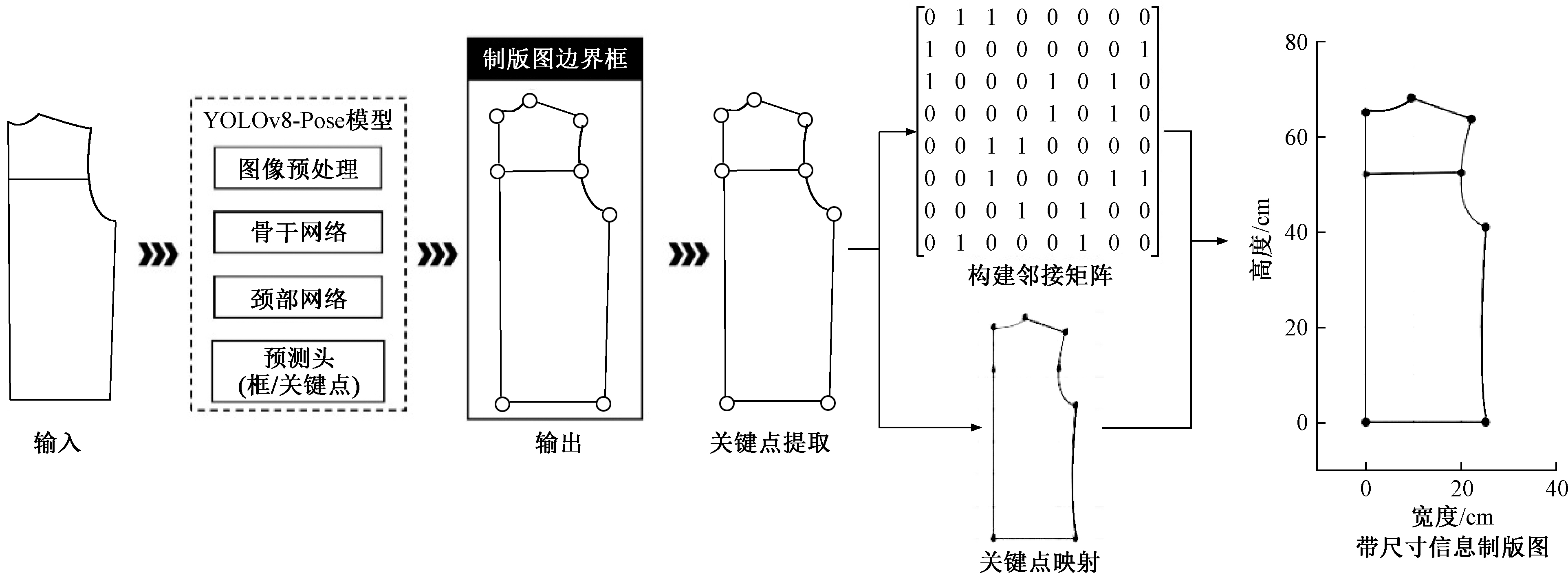
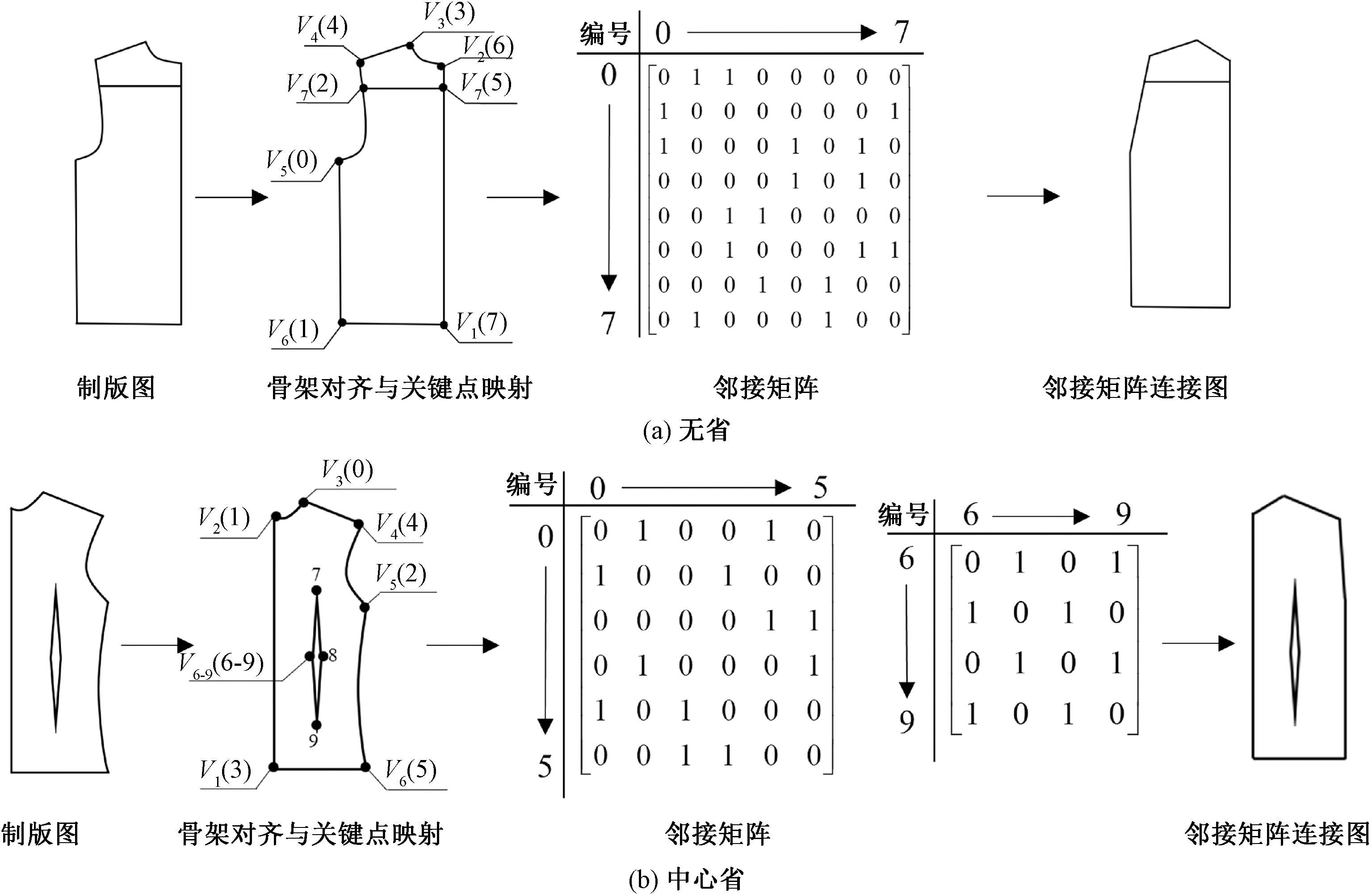
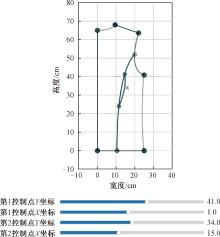
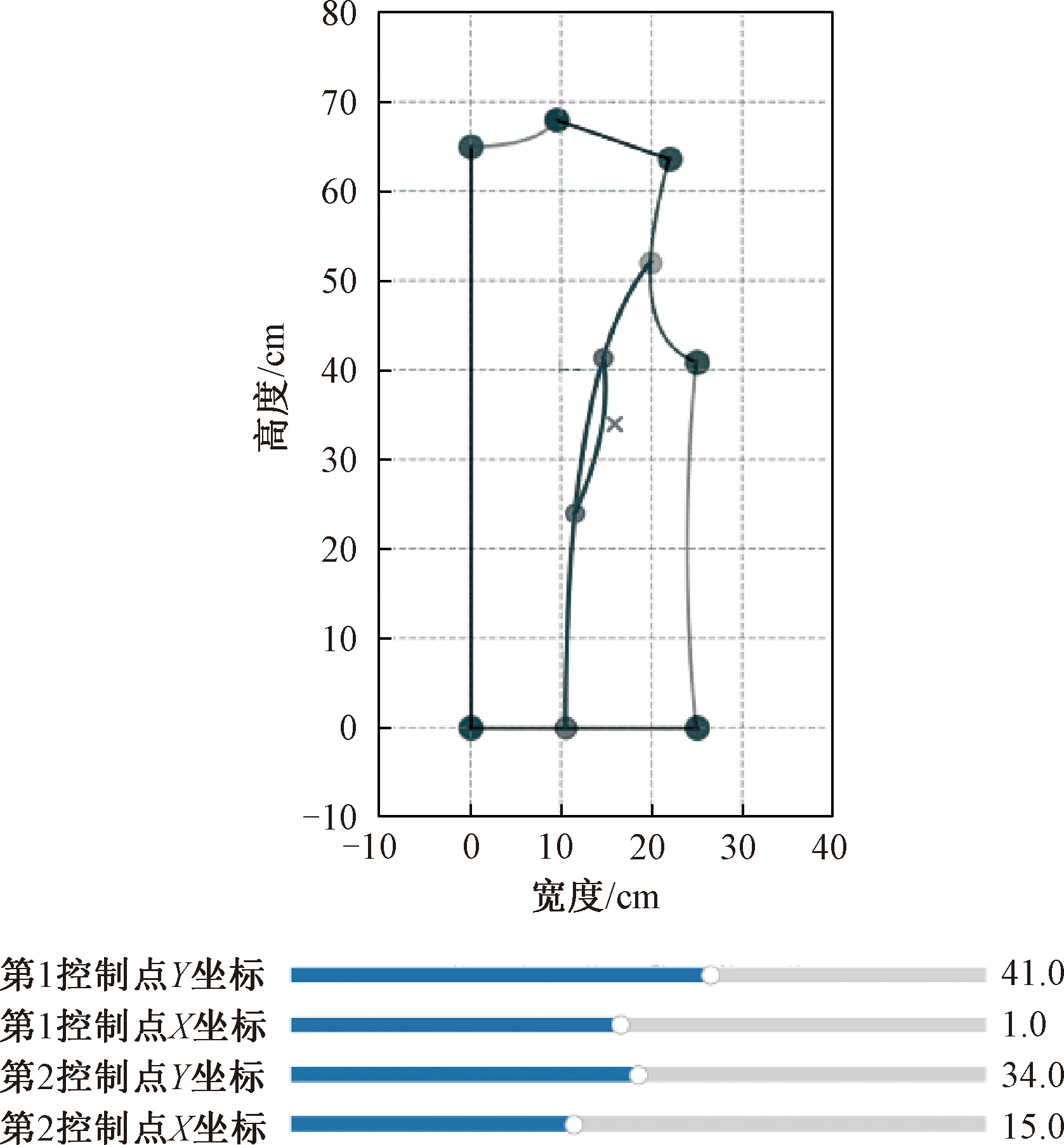
Method A two-stage pattern generation framework integrating YOLOv8 key-point recognition and parametric dimension constraints was proposed. First, based on the YOLOv8-pose model, optimizations were made according to the characteristics of T-shirt patterns: three groups of anchor boxes (small anchor box 12×12, medium anchor box 24×24, large anchor box 48×48) suitable for the scale of pattern were generated by re-clustering to replace the default anchor boxes. On the basis of the original bounding box loss (CIoU) + key-point loss (MSE), a line consistency constraint loss was added to force key-points to fit the structural lines of the pattern, so as to realize the accurate positioning of the contour and internal structural key-points of the clothing back sheet pattern. Then, a size-driven generation module was adopted to convert discrete key-points into structured patterns. Parametric basic templates were constructed based on clothing pattern making principles, and the coordinates of template vertices were dynamically calculated by input key size variables (such as garment length, half bust, shoulder width, collar width, sleeve length, cuff width). Skeleton alignment and key-point mapping were carried out (including bilateral filtering for denoising, Otsu threshold method for converting to binary images, morphological thinning for extracting skeleton, KD-tree nearest-neighbor search for adsorbing key-points to skeleton lines) to eliminate image noise and recognition deviation. Adjacency matrices were built to quantify topological relationships through connection validity judgment, subgraph division and adjacency matrix generation, so as to convert discrete key-points into structured connections. Finally, smooth contours were generated using quadratic Bezier curves, and a dual-slider interactive mechanism was introduced to realize the dynamic adjustment of size parameters and curve shapes.

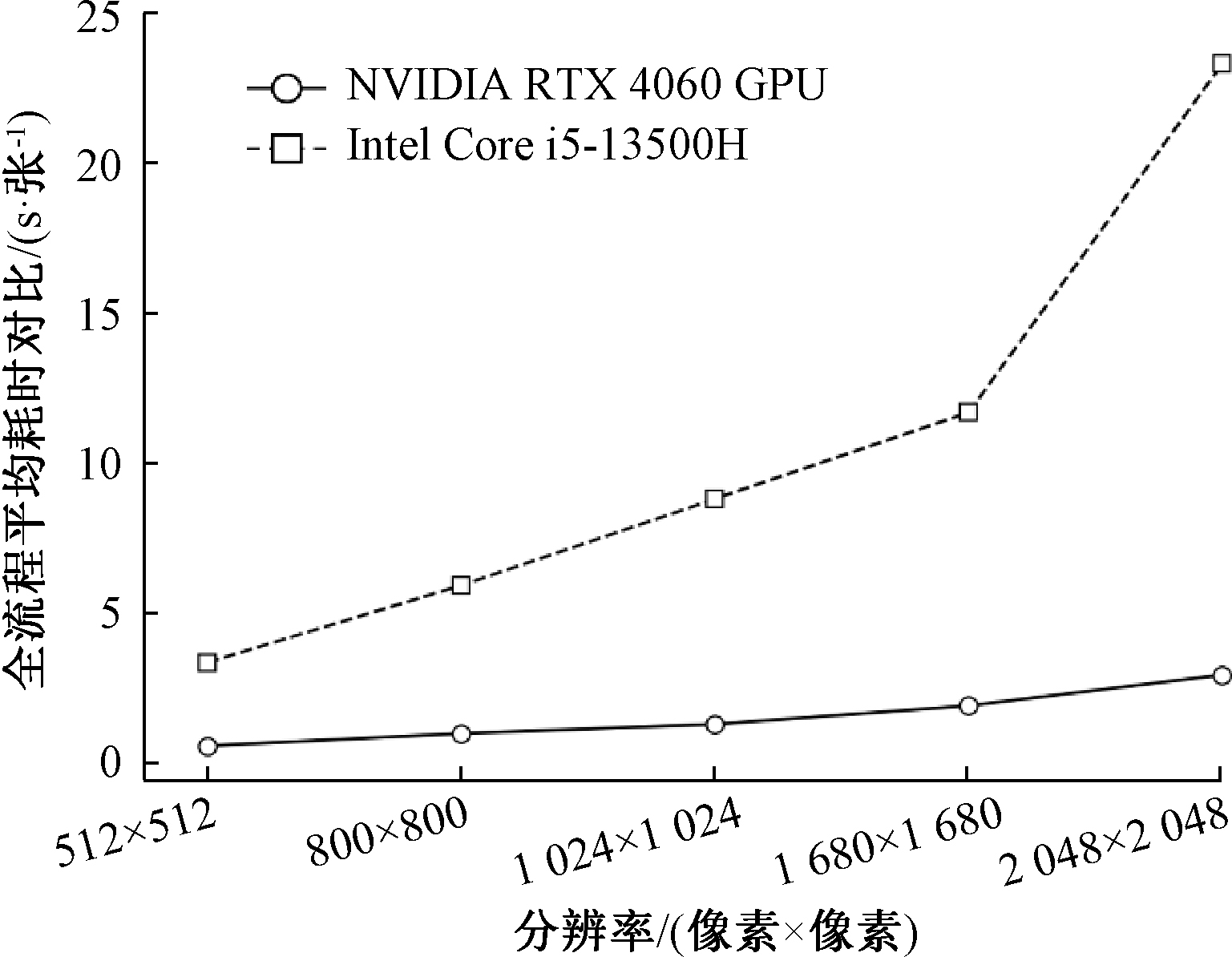
Results The experimental results showed that the optimized key-point detection model achieved a key-point localization accuracy (KLA) of 96.8%, which was significantly higher than the original YOLOv8-pose model with an mAP50 of 0.93. The generated T-shirt patterns had a structural similarity index (SSIM) of 0.85 and a key-point connection accuracy (CA) of 96.2%, which effectively ensured the accuracy of the contour and the rationality of the topological relationship. In terms of efficiency, the average time consumption of the entire processing flow was only 1.2 s per pattern (based on NVIDIA RTX 4060 GPU), which was much faster than the conventional manual CAD pattern making that usually takes tens of minutes per pattern. Compared with GAN-based methods (SSIM=0.76) and diffusion-based methods (SSIM=0.82) that only output static images, the output of this method was a parametric and editable digital pattern that could be directly connected to subsequent production links such as grading, marker making and cutting. In addition, through the developed dual-slider interactive interface, users could dynamically adjust size parameters and curve control points, and the system would update the pattern shape in real time, meeting the needs of fine-tuning the pattern in actual production.

Conclusion The proposed automatic generation method for T-shirt patterns integrating YOLOv8 key-point recognition and parametric dimension constraints, effectively solves the problems of low efficiency in traditional pattern making and the inability of existing AIGC methods to output results directly applicable to production. The optimized detection model realizes the accurate positioning of pattern key-points with an accuracy of 96.8%, and the introduction of adjacency matrices to construct topological relationships enables the generation of parametric digital patterns with reasonable structure and smooth contour under size driving. Experiments show that while maintaining high structural similarity and connection compliance rate, the output results of the proposed method can be directly connected to subsequent production links, realizing the effective connection from design to production. The core value of this study lies in providing an intelligent front-end solution for the conventional CAD parametric design process, significantly reducing the professional threshold and manual dependence. Although the current method still relies on predefined templates when dealing with garment categories with very different structures (which ensures the standardization and production usability of the output results), future research will focus on expanding the coverage of the template library and exploring template adaptive generation technology based on few-shot learning, so as to promote the development of intelligent garment pattern making systems towards more universal and efficient directions.

Key words: clothing pattern making, dimensional constraint, keypoint detection, parametric modeling, Bezier curves

中图分类号: 

  • TS941.26

图1

针对制版图优化的YOLOv8-Pose关键点检测框架"

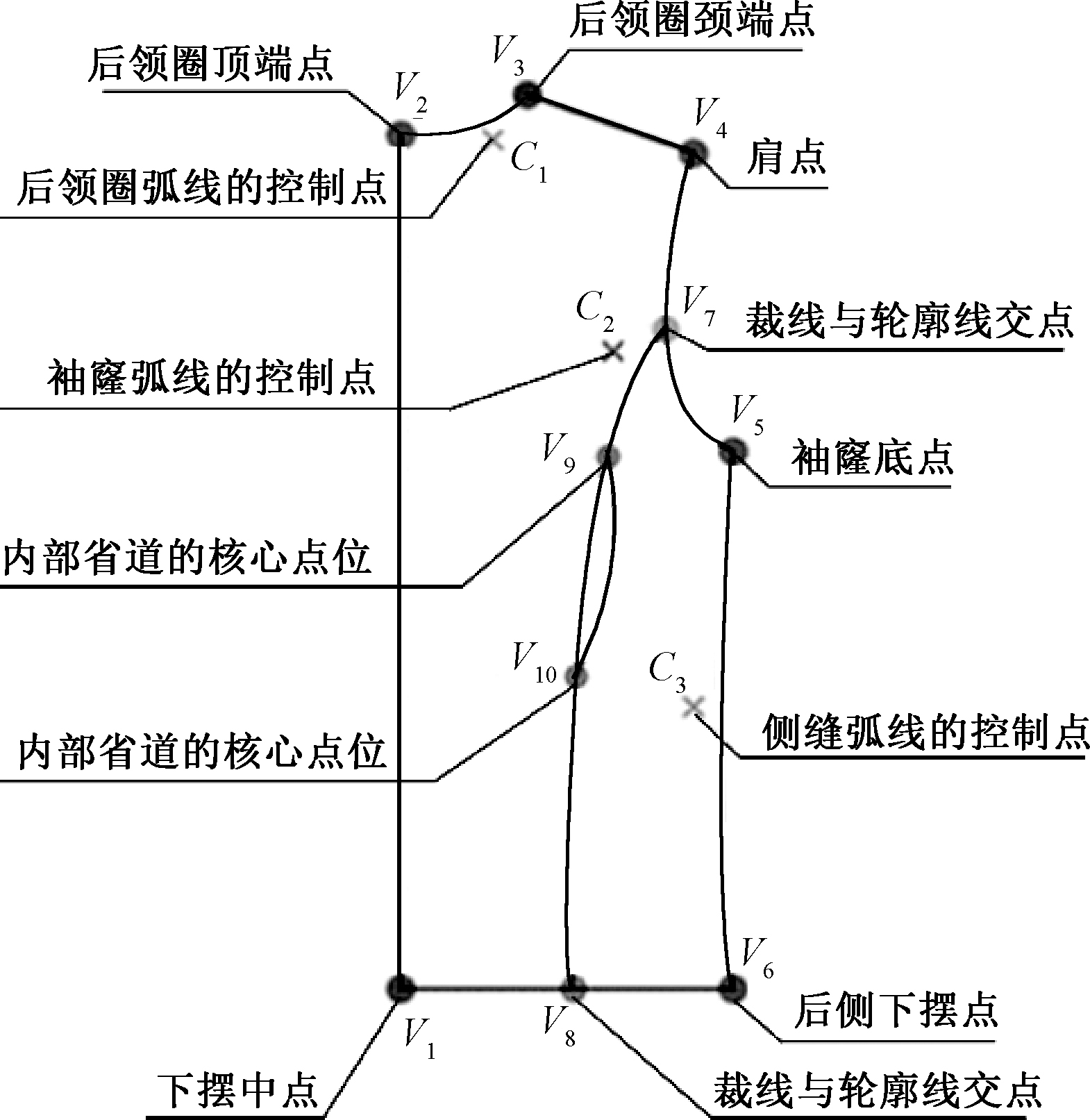
图2

服装后片关键点分布示意图"

图3

尺寸驱动制版图生成模块流程图"

图4

后片制版图拓扑关系"

图5

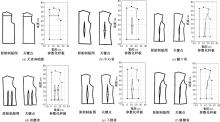
服装后片制版图生成关键环节结果展示"

表1

各方法生成图像质量对比"

方法 SSIM 输出格式 生成可用性
(是否含尺寸/可编辑)
CAD 0.93 参数化样板
基于GAN 0.76 图像
基于扩散 0.82 图像
本文方法 0.85 参数化样板

图6

尺寸与曲线形态动态调整交互界面及关键点连接示意图"

图7

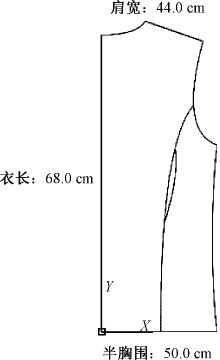
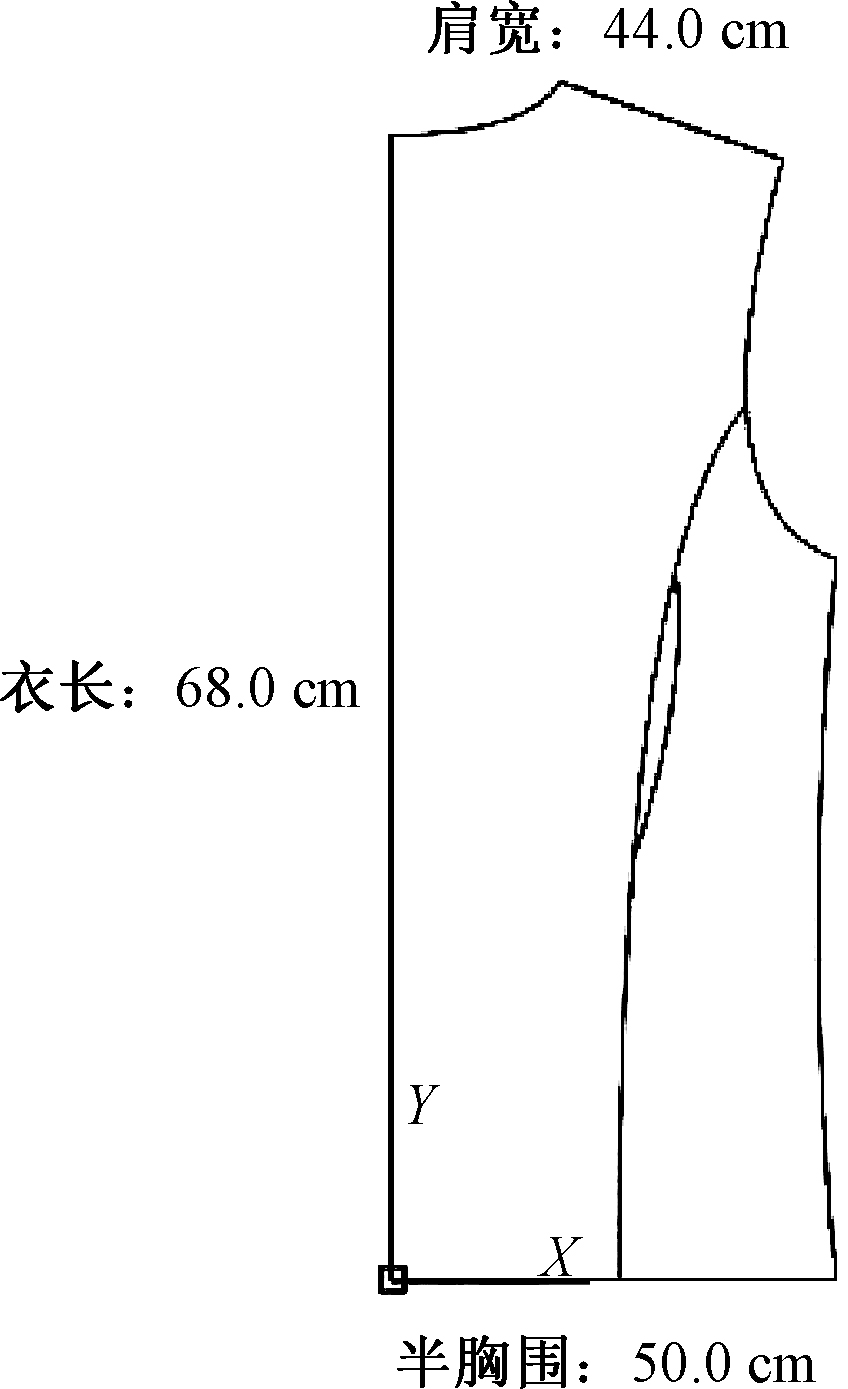
CAD软件实际生产图"

图8

不同分辨率下GPU与CPU处理耗时对比"

表2

各优化组件对关键点定位准确率的影响"

实验组 优化组件 关键点定位
准确率/%
相对基线
提升/%
A 93.00±0.25
B 仅锚框调整 95.15±0.18 +2.15
C 仅线条损失 94.72±0.22 +1.72
D 完整优化 96.80±0.15 +3.80
[1] 李涛, 杜磊, 黄振华, 等. 服装款式图识别与样板转换技术研究进展[J]. 纺织学报, 2020, 41(8): 145-151.
LI Tao, DU Lei, HUANG Zhenhua, et al. Review on pattern conversion technology based on garment flat recognition[J]. Journal of Textile Research, 2020, 41(8): 145-151.
[2] 黄小源, 侯珏, 杨阳, 等. 基于改进深度学习模型的高精度服装样板自动生成[J]. 纺织学报, 2025, 46(2): 236-243.
HUANG Xiaoyuan, HOU Jue, YANG Yang, et al. Automatic generation of high-precision garment patterns based on improved deep learning model[J]. Journal of Textile Research, 2025, 46(2): 236-243.
[3] KOROSTELEVA M, LEE S H. NeuralTailor: reconstructing sewing pattern structures from 3D point clouds of garments[J]. ACM Transactions on Graphics, 2022, 41(4): 1-16.
[4] 余承志, 徐增波, 鲍禹辰, 等. 基于关键点检测的服装尺寸测量方法[J]. 东华大学学报 (自然科学版), 2026, 52(2):154-163.
YU C Z, XU Z B, BAO Y C, et al. Clothing size measurement method based on keypoint detection[J]. Journal of Donghua University (Natural Science), 2026, 52(2):154-163.
[5] 李梦, 陈敏之. 基于YOLOv8的女裤结构特征识别方法[J]. 浙江理工大学学报(自然科学版), 2025, 53(4): 507-514.
LI Meng, CHEN Minzhi. A structural feature recognition method of women's pants based on YOLOv8[J]. Journal of Zhejiang Sci-Tech University (Natural Sciences), 2025, 53(4): 507-514.
[6] 付君健, 耿照俊, 孟令盼, 等. 基于图像处理的服装样板轮廓快速生成方法[J/OL]. 智能计算机与应用, 2025, 5(3):1-7 (2025-09-18)[2026-06-17].
FU Junjian, GENG Zhaojun, MENG Lingpan, et al. Image processing based fast generation method forgarment sample outline[J/OL]. Intelligent Computer and Applications, 2025, 5(3):1-7 (2025-09-18)[2026-06-17].
[7] 侯斐斐, 彭应昊, 董健, 等. 基于双重YOLOv8-pose模型的探地雷达双曲线关键点检测与目标定位[J]. 电子与信息学报, 2024, 46(11): 4305-4316.
HOU Feifei, PENG Yinghao, DONG Jian, et al. Ground penetrating radar hyperbolic keypoint detection and object localization based on dual YOLOv8-pose model[J]. Journal of Electronics & Information Technology, 2024, 46(11): 4305-4316.
[8] 胡志霖, 陈敏之. 基于深度学习的男装款式图制版要素识别[J]. 染整技术, 2024, 46(9): 66-72, 115.
HU Zhilin, CHEN Minzhi. Identification of pattern elements in men's fashion design sketches based on deep learning[J]. Textile Dyeing and Finishing Journal, 2024, 46(9): 66-72, 115.
[9] 张伶俐, 张皋鹏. 应用MatLab的服装纸样参数化平面制版[J]. 纺织学报, 2019, 40(1): 130-135.
ZHANG Lingli, ZHANG Gaopeng. Parametric flat pattern design for clothing based on MatLab[J]. Journal of Textile Research, 2019, 40(1): 130-135.
[10] SHEN W, ZHAO K, JIANG Y, et al. Object skeleton extraction in natural images by fusing scale-associated deep side outputs[C]// 2016 IEEE Conference on Computer Vision and Pattern Recognition (CVPR). New York: IEEE, 2016: 222-230.
[11] NORIS G, HORNUNG A, SUMNER R W, et al. Topology-driven vectorization of clean line drawings[J]. ACM Transactions on Graphics, 2013, 32(1): 1-11.
[12] 段欣瑜, 吴巧英. 基于MatLab的女裤参数化制版方法[J]. 浙江理工大学学报, 2024, 51(3): 220-228.
DUAN Xinyu, WU Qiaoying. Parameterized plate making method for women’s pants based on MatLab[J]. Journal of Zhejiang Institute of Science and Technology, 2024, 51(3): 220-228.
[1] 庹武, 刘琼洋, 李庆响, 陈谦, 范睿鸽, 李佩. 基于机器视觉与YOLO11n的女西裤尺寸自动测量[J]. 纺织学报, 2025, 46(12): 208-215.
[2] 陈晓真, 吴莹, 杨叶, 鲁礼豪. 基于三维虚拟模特转换的女士连体长裤参数化纸样生成[J]. 纺织学报, 2025, 46(07): 193-201.
[3] 施佳, 李梦珠, 肖伯祥. 竞速滑冰功能性服装技术研究进展[J]. 纺织学报, 2025, 46(06): 250-260.
[4] 纪梦琪, 何瑛, 马咏倩. 基于三维试衣的凸肚体男西裤样板的优化[J]. 纺织学报, 2025, 46(06): 187-195.
[5] 陶金之, 夏明, 王伟. 基于关键点检测的服装廓形识别[J]. 纺织学报, 2024, 45(06): 142-148.
[6] 刘蓉, 谢红. 基于服装结构特征识别的相似样板匹配技术[J]. 纺织学报, 2023, 44(10): 134-142.
[7] 任泽, 钟安华. 基于男性腰臀裆部NURBS曲面模型的内裤数字化制版[J]. 纺织学报, 2023, 44(08): 167-173.
[8] 周艳红, 江红霞, 陈玲. 基于AutoCAD参数化中式嫁衣样板的自动生成[J]. 纺织学报, 2022, 43(09): 175-181.
[9] 王旭, 杜增锋, 王翠娥, 倪庆清, 刘新华. 贯穿正交机织物结构的参数化三维建模[J]. 纺织学报, 2019, 40(11): 57-63.
[10] 叶勤文, 张皋鹏. 基于AutoCAD参数化的个性化服装纸样生成[J]. 纺织学报, 2019, 40(04): 103-110.
[11] 丛杉.;张渭源. 基于下装设计的人体建模[J]. 纺织学报, 2006, 27(9): 58-61.
Viewed
Full text


Abstract

Cited

  Shared   
  Discussed   
No Suggested Reading articles found!