纺织学报 ›› 2025, Vol. 46 ›› Issue (12): 208-215.doi: 10.13475/j.fzxb.20250705901
庹武1( ), 刘琼洋1, 李庆响1, 陈谦1, 范睿鸽1, 李佩2
TUO Wu1(), LIU Qiongyang1, LI Qingxiang1, CHEN Qian1, FAN Ruige1, LI Pei2
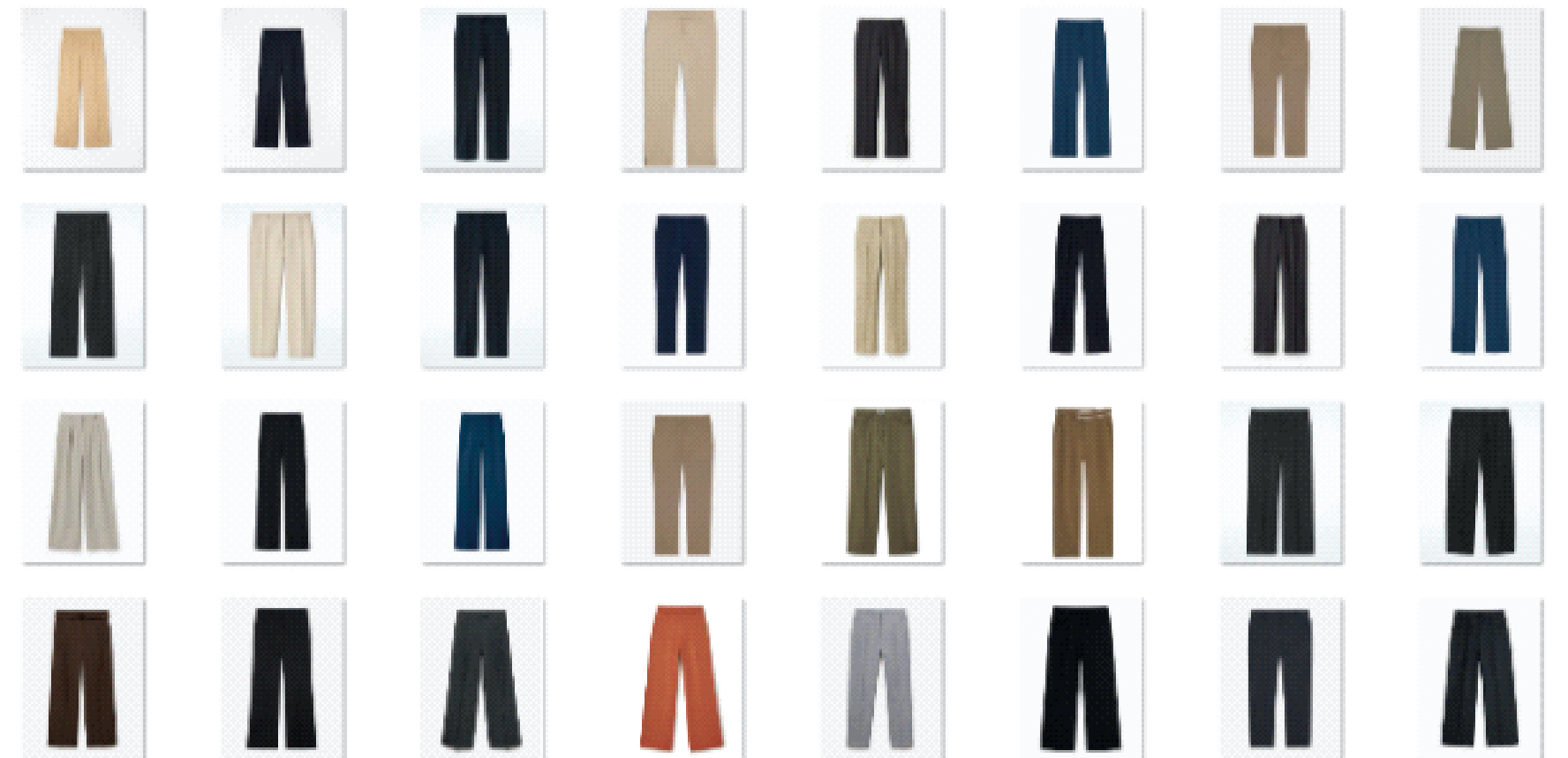
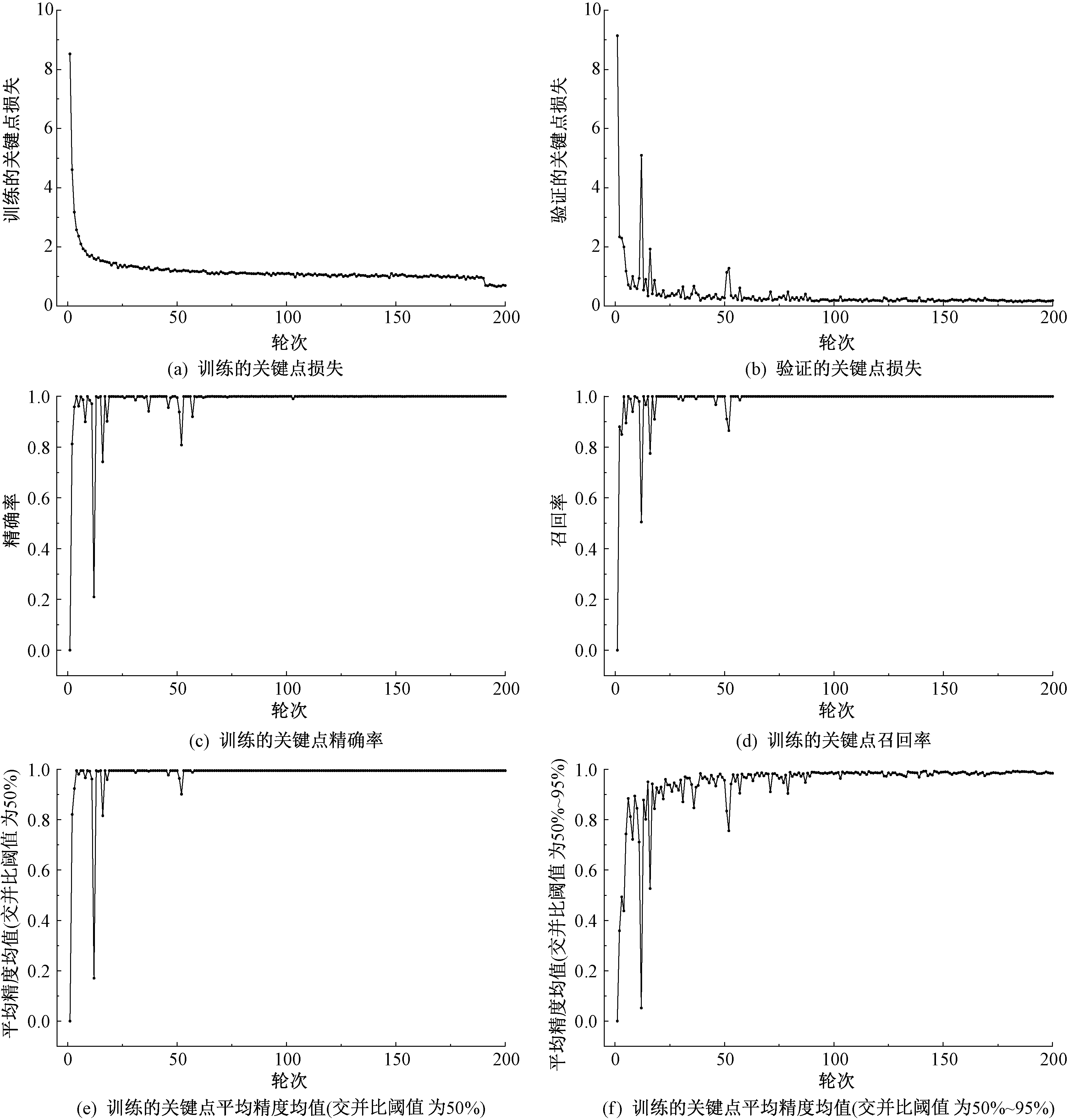
摘要: 针对服装行业尺寸测量效率低、主观性强以及精度不稳定等问题,提出了一种基于机器视觉与深度学习模型的女西裤尺寸自动测量方法。构建装置采集女西裤图像,并设计棋格标定板标定相机参数,计算出女西裤像素尺寸与物理尺寸之间的映射关系;收集女西裤样本图像,建立以女西裤平铺图像为标准的数据集;对数据集图像进行预处理及标注,将划分好的数据集投入YOLO11n-pose姿态估计模型检测女西裤8个关键点;结合张正友相机标定法求出的像素当量得到女西裤实际尺寸。结果表明:模型关键点检测的平均精度均值均达到99%以上,具备高精度的关键点检测能力;对腰围、臀围、脚口宽、直裆和裤长5项关键部位尺寸测量的平均相对误差在0.58%~0.82%之间,均符合行业标准要求,为实现服装质检的智能化提供了有效的技术路径与支撑。
中图分类号:
| [1] | 郭增荣. 面向服装电子商务的试衣机器人系统设计研究[D]. 杭州: 浙江大学, 2019: 1-4. |
| GUO Zengrong. Research and design of a fitting robot system for garment e-commerce[D]. Hangzhou: Zhejiang University, 2019: 1-4. | |
| [2] | 王晓菲, 王燕珍. 三维人体测量技术的发展现状及其应用[J]. 毛纺科技, 2021, 49(10): 106-111. |
| WANG Xiaofei, WANG Yanzhen. Development status and application of 3D anthropometric technology[J]. Wool Textile Journal, 2021, 49(10): 106-111. | |
| [3] | 董建明, 胡觉亮. 一种有效的服装尺寸自动测量方法[J]. 纺织学报, 2008, 29(5): 98-101. |
| DONG Jianming, HU Jueliang. An efficient method for automatic measurement of garment dimensions[J]. Journal of Textile Research, 2008, 29(5): 98-101. | |
| [4] | 李鹏飞, 郑明智, 景军锋. 基于机器视觉的服装尺寸在线测量系统[J]. 毛纺科技, 2017, 45(3): 42-47. |
| LI Pengfei, ZHENG Mingzhi, JING Junfeng. Measurement system of garment dimension based on machine vision[J]. Wool Textile Journal, 2017, 45(3): 42-47. | |
| [5] | 王生伟, 张侃健. 基于角点检测的服装尺寸在线测量技术[J]. 信息技术与信息化, 2018, 12: 73-75. |
| WANG Shengwei, ZHANG Kanjian. Online measurement technology for garment size based on image processing[J]. Information Technology and Informatization, 2018, 12: 73-75. | |
| [6] | 肖祎. 基于拍照的服装和人体尺寸测量系统设计与研发[D]. 杭州: 浙江大学, 2019: 16-37. |
| XIAO Yi. Design and development of a garment and human body measurement system based on photo-graphy[D]. Hangzhou: Zhejiang University, 2019: 16-37. | |
| [7] | LI C, XU Y, XIAO Y, et al. Automatic measurement of garment sizes using image recognition[C]// Graphics and Signal Processing. New York: Association for Computing Machinery, 2017: 30-34. |
| [8] |
SERRAT J, LUMBRERAS F, RUIZ I. Learning to measure for preshipment garment sizing[J]. Measurement, 2018, 130: 327-339.
doi: 10.1016/j.measurement.2018.08.019 |
| [9] | 王奕文. 古代汉服尺寸自动测量方法研究[D]. 杭州: 浙江理工大学, 2021: 23-50. |
| WANG Yiwen. Research on the automatic measurement method of ancient Hanfu size[D]. Hangzhou: Zhejiang Sci-Tech University, 2021: 23-50. | |
| [10] |
王奕文, 罗戎蕾, 康宇哲. 基于卷积神经网络的汉服关键尺寸自动测量[J]. 纺织学报, 2020, 41(12): 124-129.
doi: 10.13475/j.fzxb.20200505006 |
|
WANG Yiwen, LUO Ronglei, KANG Yuzhe. Automatic measurement of key dimensions for Han-style costumes based on use of convolutional neural network[J]. Journal of Textile Research, 2020, 41(12): 124-129.
doi: 10.13475/j.fzxb.20200505006 |
|
| [11] |
PAULAUSKAITE-TARASEVICIENE A, NOREIKA E, PURTOKAS R, et al. An intelligent solution for automatic garment measurement using image recognition technologies[J]. Applied Sciences, 2022, 12(9): 4470.
doi: 10.3390/app12094470 |
| [12] |
KIM S, MOON H, OH J, et al. Automatic measurements of garment sizes using computer vision deep learning models and point cloud data[J]. Applied Sciences, 2022, 12(10): 5286.
doi: 10.3390/app12105286 |
| [13] | 管昉立, 徐爱俊. 基于智能手机与机器视觉技术的立木胸径测量方法[J]. 浙江农林大学学报, 2018, 35(5): 892-899. |
| GUAN Fangli, XU Aijun. Tree DBH measurement method based on smartphone and machine vision technology[J]. Journal of Zhejiang A&F University, 2018, 35(5): 892-899. | |
| [14] | 庹武, 杜聪, 陈谦, 等. 基于计算机视觉与Canny算法的服装纸样轮廓提取[J]. 纺织学报, 2024, 45(5): 174-182. |
| TUO Wu, DU Cong, CHEN Qian, et al. Clothing pattern contour extraction based on computer vision and Canny algorithm[J]. Journal of Textile Research, 2024, 45(5): 174-182. | |
| [15] | 李惠敏. 多品种小规模服装缝制生产复杂性及其传递机制研究[D]. 长春: 吉林大学, 2023: 82-83. |
| LI Huimin. Research on fatigue resistance analysis and fatigue life prediction of hot rolling forming of straight face gear[D]. Changchun: Jilin University, 2023: 82-83. | |
| [16] | 申峻宇, 李东闻, 钟震宇, 等. 一种基于局部敏感哈希的文本数据去重算法及其实现[J]. 南开大学学报(自然科学版), 2023, 56(6): 29-35. |
| SHEN Junyu, LI Dongwen, ZHONG Zhenyu, et al. A text data deduplication algorithm based on locality-sensitive Hashing with implementation[J]. Journal of Nankai University(Natural Science), 2023, 56(6): 29-35. | |
| [17] |
SAGER C, JANIESCH C, ZSCHECH P. A survey of image labelling for computer vision applications[J]. Journal of Business Analytics, 2021, 4(2): 91-110.
doi: 10.1080/2573234X.2021.1908861 |
| [18] | 刘付渝杰, 宋俊儒, 罗睿, 等. 基于机器视觉的砌墙砖自动检测系统[J]. 中国测试, 2022, 48(S2): 150-157. |
| LIU Fuyujie, SONG Junru, LUO Rui, et al. Automatic inspection system for masonry wall bricks based on machine vision[J]. China Measurement & Test, 2022, 48(S2): 150-157. | |
| [19] |
ZHANG Z. A flexible new technique for camera calibration[J]. IEEE Transactions on Pattern Analysis and Machine Intelligence, 2000, 22(11): 1330-1334.
doi: 10.1109/34.888718 |
| [20] | 朱一鑫, 董帅, 陈凡秀, 等. 标定板位姿对相机标定精度的影响[J]. 实验力学, 2024, 39(6): 705-718. |
| ZHU Yixin, DONG Shuai, CHEN Fanxiu, et al. Influence of the position and posture of the calibration board on camera calibration[J]. Journal of Experimental Mechanics, 2024, 39(6): 705-718. | |
| [21] | 郝永平, 王永杰, 张嘉易, 等. 面向视觉测量的像素当量标定方法[J]. 纳米技术与精密工程, 2014, 12(5): 373-380. |
| HAO Yongping, WANG Yongjie, ZHANG Jiayi, et al. Pixel equivalent calibration method for vision measurement[J]. Nanotechnology and Precision Engineering, 2014, 12(5): 373-380. |
| [1] | 周青青, 常硕, 毛志平, 吴伟. 人工智能在纺织印染行业中的应用研究进展[J]. 纺织学报, 2025, 46(12): 260-269. |
| [2] | 余志才, 余晓娜, 丁笑君, 顾冰菲. 基于PointNet分类模型的织物三维悬垂模型匹配[J]. 纺织学报, 2025, 46(11): 111-117. |
| [3] | 吴威涛, 韩奥博, 牛奎, 贾建辉, 尹邦雄, 向忠. 基于高泛化性图像生成与分类算法的织物瑕疵检测系统设计[J]. 纺织学报, 2025, 46(10): 227-236. |
| [4] | 朱耀麟, 李政, 张强, 陈鑫, 陈锦妮, 张洪松. 基于近红外光谱和多特征网络的羊毛和羊绒定量检测[J]. 纺织学报, 2025, 46(09): 104-111. |
| [5] | 王青, 姜越夫, 赵恬恬, 赵世航, 刘甲怡. 基于深度学习的纱管位姿估计方法及抓取实验[J]. 纺织学报, 2025, 46(07): 217-226. |
| [6] | 任志墨, 张文昌, 李贞逸, 叶贺, 杨春柳, 张倩. 基于双目结构光的纺织圆柱件三维视觉定位方法[J]. 纺织学报, 2025, 46(07): 227-235. |
| [7] | 许纶有, 邹鲲, 吴浩男. 基于机器视觉的浆纱机经轴区断纱故障检测[J]. 纺织学报, 2025, 46(06): 231-239. |
| [8] | 顾孟尚, 张宁, 潘如如, 高卫东. 结合频域卷积模块的机织物图像疵点目标检测[J]. 纺织学报, 2025, 46(05): 159-168. |
| [9] | 李吉国, 景军锋, 程为, 王永波, 刘薇. 基于机器视觉的玻璃纤维纱团外观缺陷检测系统设计[J]. 纺织学报, 2025, 46(05): 243-251. |
| [10] | 白雨薇, 徐健, 朱耀麟, 丁展博, 刘晨雨. 基于改进YOLOv8的梳棉机棉网上棉结检测方法[J]. 纺织学报, 2025, 46(03): 56-63. |
| [11] | 黄小源, 侯珏, 杨阳, 刘正. 基于改进深度学习模型的高精度服装样板自动生成[J]. 纺织学报, 2025, 46(02): 236-243. |
| [12] | 蔡丽玲, 王梅, 邵一兵, 陈炜, 曹华卿, 季晓芬. 基于改进堆叠生成对抗网络的传统汉服智能定制推荐[J]. 纺织学报, 2024, 45(12): 180-188. |
| [13] | 任柯, 周衡书, 魏瑾瑜, 闫文君, 左言文. 基于机器视觉技术的百褶裙动态美感评价[J]. 纺织学报, 2024, 45(12): 189-198. |
| [14] | 刘燕萍, 郭佩瑶, 吴莹. 面向织物疵点检测的深度学习技术应用研究进展[J]. 纺织学报, 2024, 45(12): 234-242. |
| [15] | 任佳伟, 周其洪, 陈唱, 洪巍, 岑均豪. 基于机器视觉的交叉缠绕式筒子纱位姿检测方法[J]. 纺织学报, 2024, 45(11): 207-214. |
|
||
 京公网安备11010502044800号