纺织学报 ›› 2025, Vol. 46 ›› Issue (09): 1-8.doi: 10.13475/j.fzxb.20250304001
• 纺织科技新见解学术沙龙专栏:伪装与电磁屏蔽技术及应用 • 下一篇
吴晋瑶1, 钟毅1,2, 张琳萍1,2, 徐红1,2, 毛志平1,2( )
)
WU Jinyao1, ZHONG Yi1,2, ZHANG Linping1,2, XU Hong1,2, MAO Zhiping1,2()
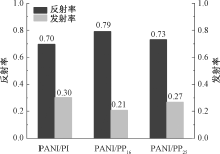
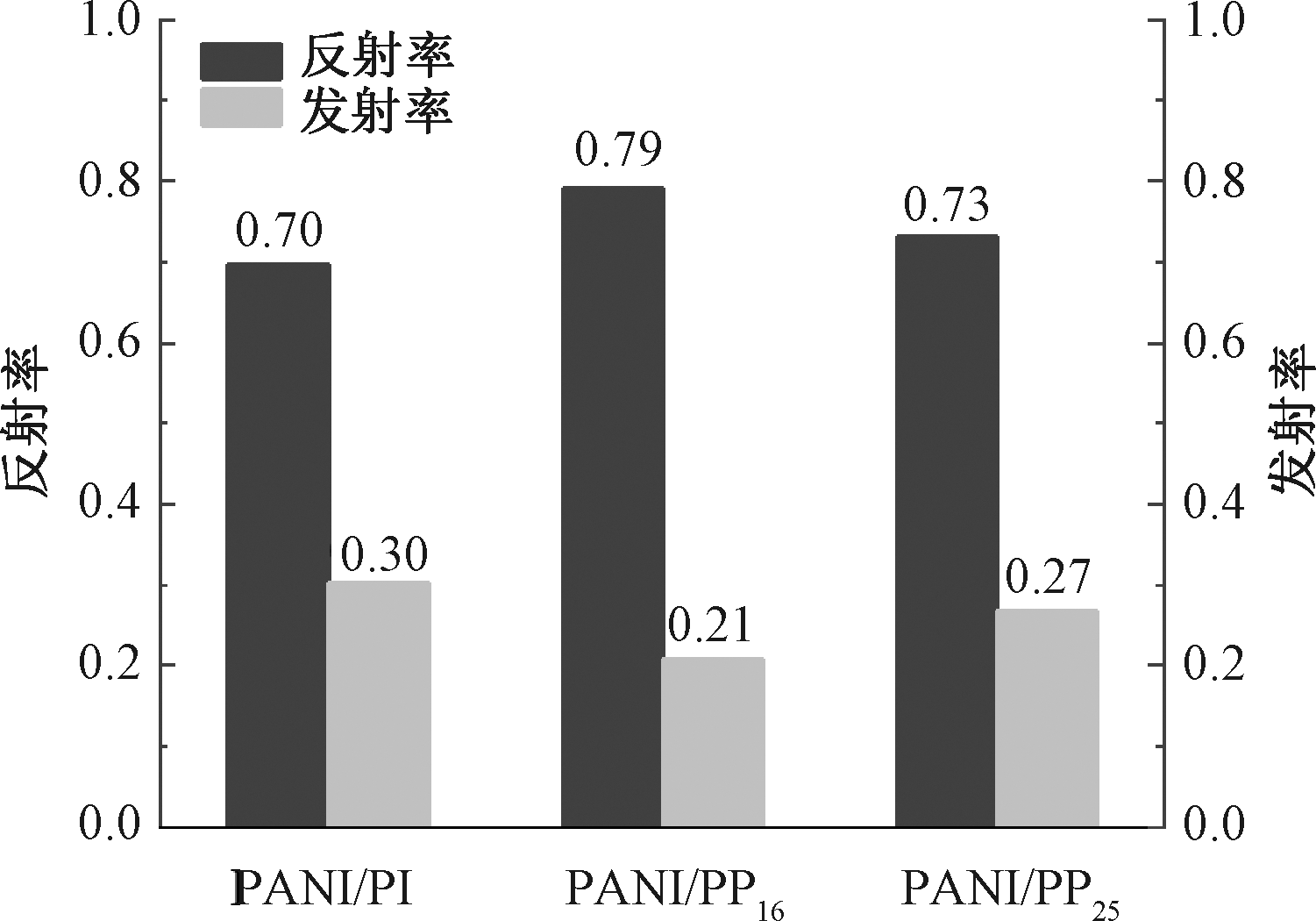
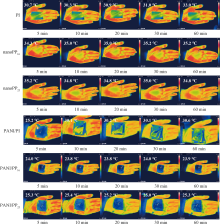
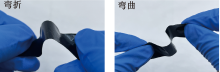
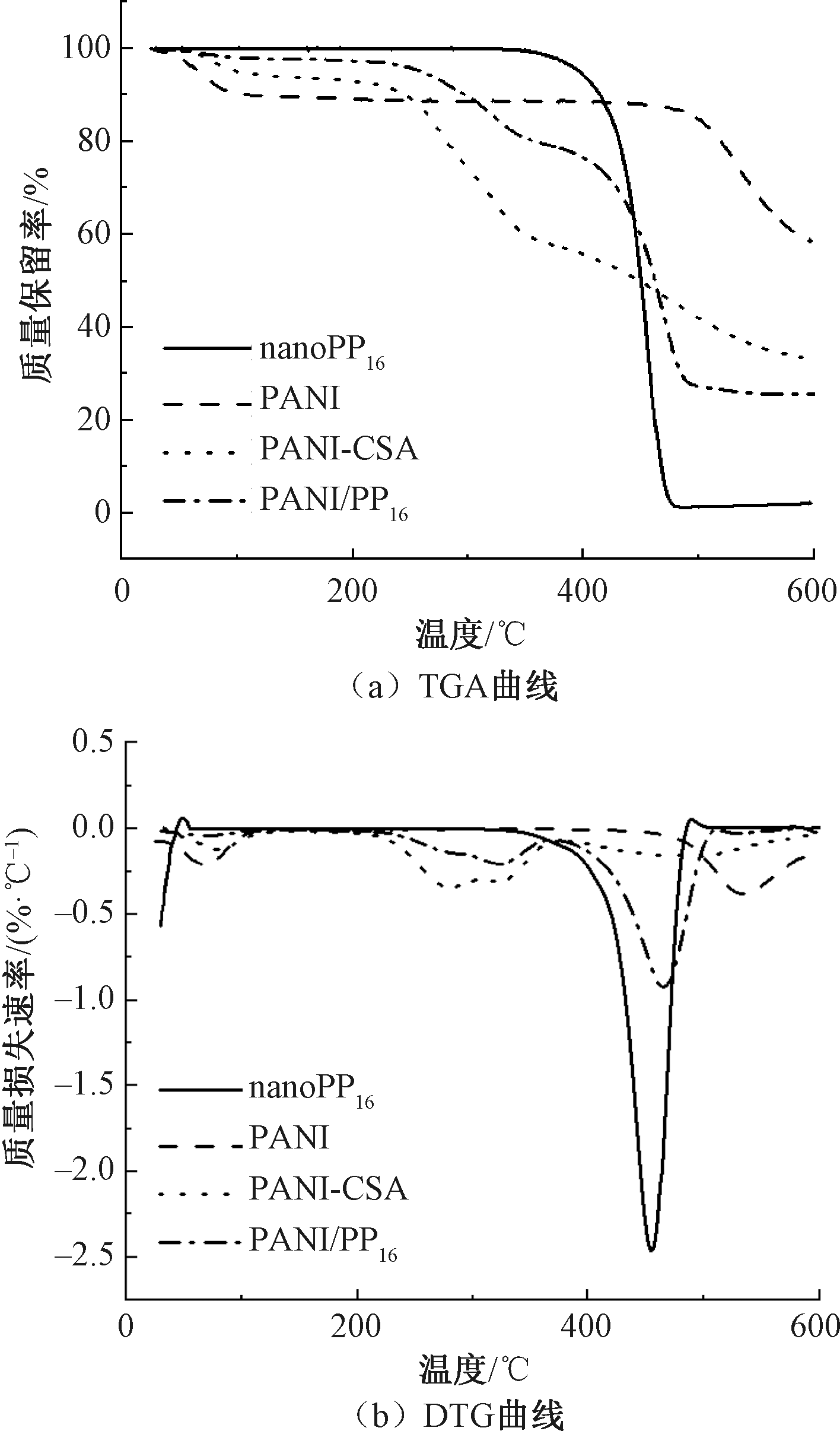
摘要: 为解决聚苯胺(PANI)直接成膜柔韧性差,易脆裂剥落以及使用高发射率的黏合剂影响材料红外隐身性能的问题,选取具有化学稳定性不同厚度的柔性纳米多孔聚丙烯薄膜(nanoPP)和柔性聚酰亚胺薄膜(PI)作为基材,通过简单的刮涂法将掺杂樟脑磺酸的聚苯胺涂料(PANI-CSA)均匀负载于薄膜表面,制得柔性红外隐身薄膜:涂覆聚苯胺的nanoPP(PANI/PP)和涂覆聚苯胺的PI(PANI/PI)。通过表征柔性薄膜的结构、力学性能、红外发射率及红外热成像,探究其红外隐身性能。结果表明:以厚度为16 μm的nanoPP(nanoPP16)为基材制得的PANI/PP16薄膜在8~14 μm中红外波段的发射率低至0.21,且具有良好的柔韧性;能够在60 min内保持优异的红外隐身效果,与人体保持9~10 ℃的辐射温差,使人体完全隐匿于环境中;热稳定性良好,可适用于240 ℃以下的红外隐身应用场景。
中图分类号:
| [1] |
WU Yue, TAN Shujuan, ZHAO Yue, et al. Broadband multispectral compatible absorbers for radar, infrared and visible stealth application[J]. Prog Mater Sci, 2023, 135(50):101088.
doi: 10.1016/j.pmatsci.2023.101088 |
| [2] | DING Zhonggen, LIU Feifei, HAN Yuge. Novel infrared camouflage technology based on electroc-hromism[J]. Therm Sci Eng Appl, 2022, 14(1):011004. |
| [3] |
HU Jiaheng, HU Yan, YE Yinghua, et al. Unique applications of carbon materials in infrared stealth: a review[J]. Chem Eng J, 2023, 452:139147.
doi: 10.1016/j.cej.2022.139147 |
| [4] | 时吉磊, 陈廷彬, 张丽平, 等. 低红外发射率控温热红外伪装材料的制备与性能[J]. 纺织学报, 2024, 45(6):32-38. |
| SHI Jilei, CHEN Tingbin, ZHANG Liping, et al. Preparation and properties of low infrared emissivity temperature-controlled thermal infrared camouflage materials[J]. Journal Textile Research, 2024, 45(6):32-38. | |
| [5] |
ZHOU Yang, JAMEEL Luqman Rather, YU Kun, et al. Research progress and recent advances in development and applications of infrared stealth materials: a comprehensive review[J]. Laser Photonics Rev, 2024, 18(12):2400530.
doi: 10.1002/lpor.v18.12 |
| [6] |
ZHUGE Fuwei, ZHENG Zhi, LUO Peng, et al. Nanostructured materials and architectures for advanced infrared photodetection[J]. Adv Mater Technol, 2017, 2(8):1700005.
doi: 10.1002/admt.v2.8 |
| [7] |
XU Miaomiao, CHEN Xiaomin, BU Xiongzhu, et al. Research on attitude measurement compensation technology under the influence of solar infrared radiation interference[J]. Infrared Phys Technol, 2022, 123:104142.
doi: 10.1016/j.infrared.2022.104142 |
| [8] |
FAN Xiachen, LI Shibo, ZHANG Weiwei, et al. Recent progress in two-dimensional nanomaterials of graphene and MXenes for thermal camouflage[J]. Ceram Int, 2023, 49(4):5559.
doi: 10.1016/j.ceramint.2022.12.034 |
| [9] | 张凯, 王波, 王贤名, 等. 红外隐身涂料的研究与进展[J]. 现代涂料与涂装, 2019, 68(12):26-30. |
| ZHANG Kai, WANG Bo, WANG Xianming, et al. Research and progress of infrared stealth coatings[J]. Modern Paint Finish, 2019, 68(12):26-30. | |
| [10] | 于海涛. 导电高分子材料在智能隐身技术中的应用[J]. 上海涂料, 2010, 48(2):26-29. |
| YU Haitao. The application of conductive polymer materials in the field of smart stealth technonogy[J]. Shanghai Coat, 2010, 48(2):26-29. | |
| [11] | 李春华, 齐暑华, 武鹏, 等. 高分子材料在红外隐身中的应用[J]. 国外塑料, 2005, 23(9):26-30. |
| LI Chunhua, QI Shuhua, WU Peng, et al. The application of polymer materials in infrared stealth[J]. World Plast, 2005, 23(9):26-30. | |
| [12] |
WU K H, CHEN P H, YANG C C, et al. Infrared stealth and anticorrosion performances of organically modified silicate-NiZn ferrite/polyaniline hybrid coatings[J]. J Polym Sci, A: Polym Chem, 2008, 46(3): 926-935.
doi: 10.1002/pola.v46:3 |
| [13] |
刘晓明, 任志宇, 王强, 等. 红外隐身超材料[J]. 材料工程, 2020, 48(6):1-11.
doi: 10.11868/j.issn.1001-4381.2019.001019 |
| LIU Xiaoming, REN Zhiyu, WANG Qiang, et al. Infrared stealth metamaterials[J]. Journal Materials Engeering, 2020, 48(6):1-11. | |
| [14] | 施冬梅, 赵文轸. 聚苯胺复合涂料红外与吸波性能研究[J]. 涂料工业, 2011, 41(11):1-5. |
| SHI Dongmei, ZHAO Wenzhen. Infrared and microwave absorbing properties of polyaniline composite coatings[J]. Paint & Coatings Industry, 2011, 41(11): 1-5. | |
| [15] | FENG Zhiting, LIU Yuanjun, ZHAO Xiaoming. Polyaniline/hollow glass beads/carbon fiber powder composite film for multifunctional military tarpau-lins[J]. Prog Org Coat, 2024, 19: 108601. |
| [16] |
HSU Pochun, SONG Alex Y, CUI Yi, et al. Radiative human body cooling by nanoporous polyethylene textile[J]. Science, 2016, 353(6303):1019.
pmid: 27701110 |
| [17] | 钱胜.一种低发射率聚苯胺复合织物及其制备方法:113389052[P]. 2022-10-14. |
| QIAN Sheng.A kind of low emissivity polyaniline composite fabric and its preparation method: 113389-052[P]. 2022-10-14. | |
| [18] | 赵烁. 红外隐身篷盖布的制备与性能研究[D]. 上海: 东华大学, 2023, 19-35. |
| ZHAO Shuo. Preparation and property study of infrared stealthy tent fabrics[D]. Shanghai: Donghua University, 2023:19-35. | |
| [19] |
LU Feifei, TAN Peiyu, HAN Yuge, et al. Variable infrared emittance mechanisms of electrochromic film based on poly(aniline) under various doping concentrations of camphorsulfonic acid[J]. Dyes Pigm, 2022, 200:110179.
doi: 10.1016/j.dyepig.2022.110179 |
| [1] | 娄辉清, 朱斐超, 李磊磊, 丁会龙, 普丹丹, 王相飞. 碳纳米管/Ni/聚苯胺纤维状超级电容器的制备及其电化学性能[J]. 纺织学报, 2022, 43(11): 35-40. |
| [2] | 王晨露, 马金星, 杨雅晴, 韩潇, 洪剑寒, 占海华, 杨施倩, 姚绍芳, 刘姜乔娜. 聚苯胺涂层经编织物的应变传感性能及其在呼吸监测中的应用[J]. 纺织学报, 2022, 43(08): 113-118. |
| [3] | 郭子娇, 李悦, 张瑞, 陆赞. 聚苯胺/Ti3C2Tx/碳纳米管复合纤维电极的制备及其性能[J]. 纺织学报, 2022, 43(02): 74-80. |
| [4] | 刘杰, 高志. 基于柔性薄膜传感器的服装压力检测仪研制[J]. 纺织学报, 2021, 42(12): 159-165. |
| [5] | 刘锁, 武丁胜, 李曼, 赵玲玲, 凤权. 水刺粘胶/聚苯胺复合纤维膜的制备及其吸附性能[J]. 纺织学报, 2021, 42(08): 122-127. |
| [6] | 周歆如, 周筱雅, 马咏健, 胡铖烨, 赵晓曼, 洪剑寒, 韩潇. 导电聚苯胺/聚氨酯泡沫的制备及其压力传感性能[J]. 纺织学报, 2021, 42(04): 62-68. |
| [7] | 胡铖烨, 缪润伍, 韩潇, 洪剑寒, GIL Ignacio. 聚乙烯醇对芳纶复合纱聚苯胺导电层耐久性影响[J]. 纺织学报, 2020, 41(04): 91-97. |
| [8] | 吴颖欣, 胡铖烨, 周筱雅, 韩潇, 洪剑寒, GIL Ignacio. 柔性可穿戴氨纶/聚苯胺/聚氨酯复合材料的应变传感性能[J]. 纺织学报, 2020, 41(04): 21-25. |
| [9] | 邹梨花, 徐珍珍, 孙妍妍, 王太冉, 邱夷平. 氧化石墨烯/聚苯胺功能膜对棉织物电磁屏蔽性能的影响[J]. 纺织学报, 2019, 40(08): 109-116. |
| [10] | 缪润伍, 金丽华, 魏祺煜, 韩潇, 洪剑寒. 多轴向导电芳纶增强复合材料及其电磁屏蔽性能[J]. 纺织学报, 2019, 40(02): 100-104. |
| [11] | 俞俭 逄增媛 魏取福. 聚苯胺/壳聚糖/羊毛复合织物导电性能及苯胺吸附分子模拟[J]. 纺织学报, 2018, 39(12): 95-100. |
| [12] | 韩潇 洪剑寒 惠林 史韩萍 金丽华. 导电涤纶纱连续制备工艺与性能[J]. 纺织学报, 2018, 39(02): 20-25. |
| [13] | 洪剑寒 韩潇 陈建广 彭蓓福 苏敏 惠林 梁广明. 聚对苯二甲酸丙二醇酯/聚苯胺复合导电纱的电学与力学性能[J]. 纺织学报, 2017, 38(02): 40-46. |
| [14] | 李兰倩 卢明 刘一萍 谭炼 赵振云 刘祖兰 . 聚苯胺/蚕丝复合织物的制备及其pH值响应性[J]. 纺织学报, 2016, 37(4): 91-95. |
| [15] | 洪剑寒 潘志娟 姚穆. 超高分子量聚乙烯/聚苯胺导电针织物的应变传感性能[J]. 纺织学报, 2016, 37(2): 73-78. |
|
||
 京公网安备11010502044800号