纺织学报 ›› 2026, Vol. 47 ›› Issue (04): 61-70.doi: 10.13475/j.fzxb.20250700401
霍雨辰1,2, 张帆2, 翟云云1( ), 刘海清2
HUO Yuchen1,2, ZHANG Fan2, ZHAI Yunyun1(), LIU Haiqing2
摘要:
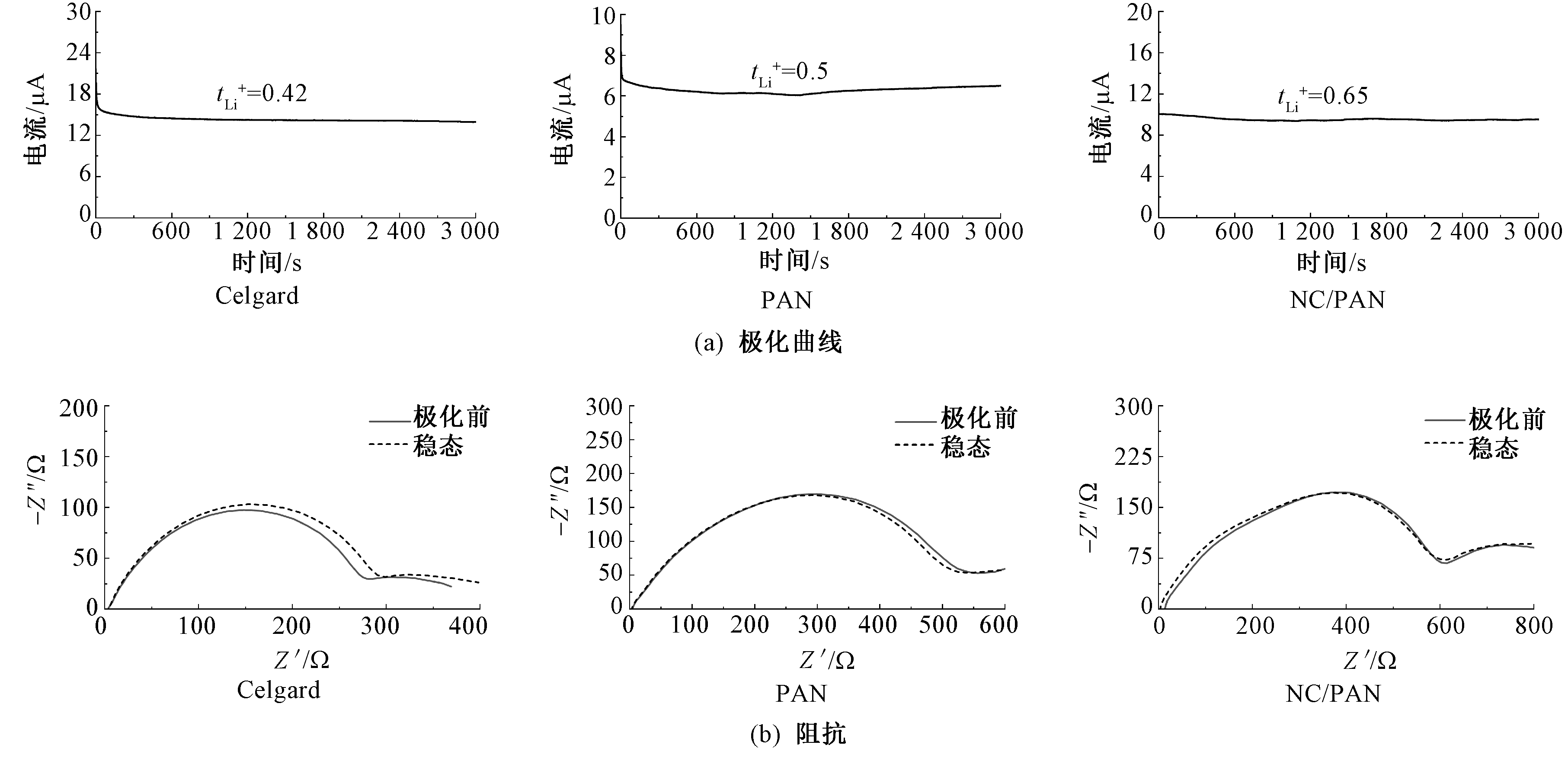
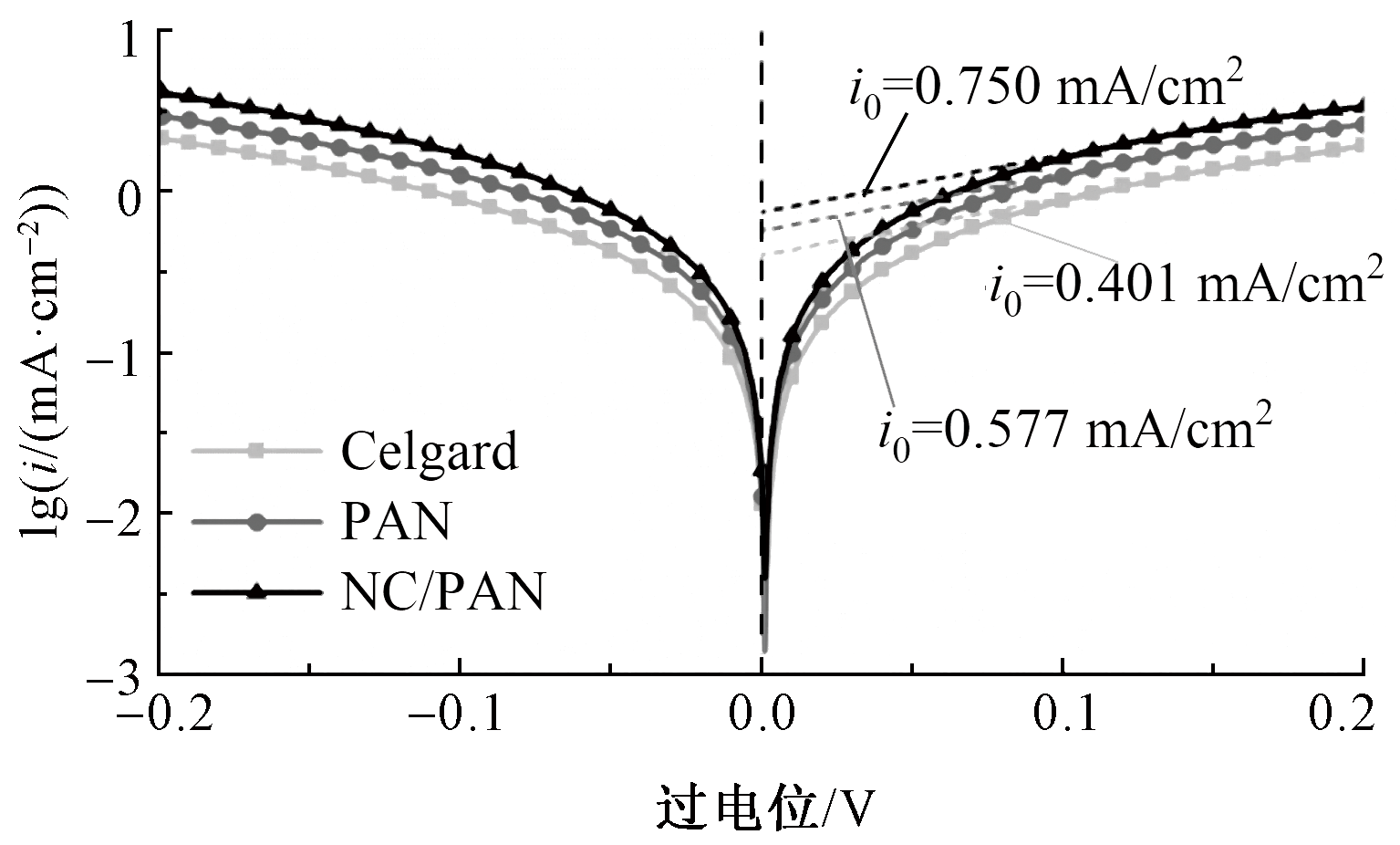
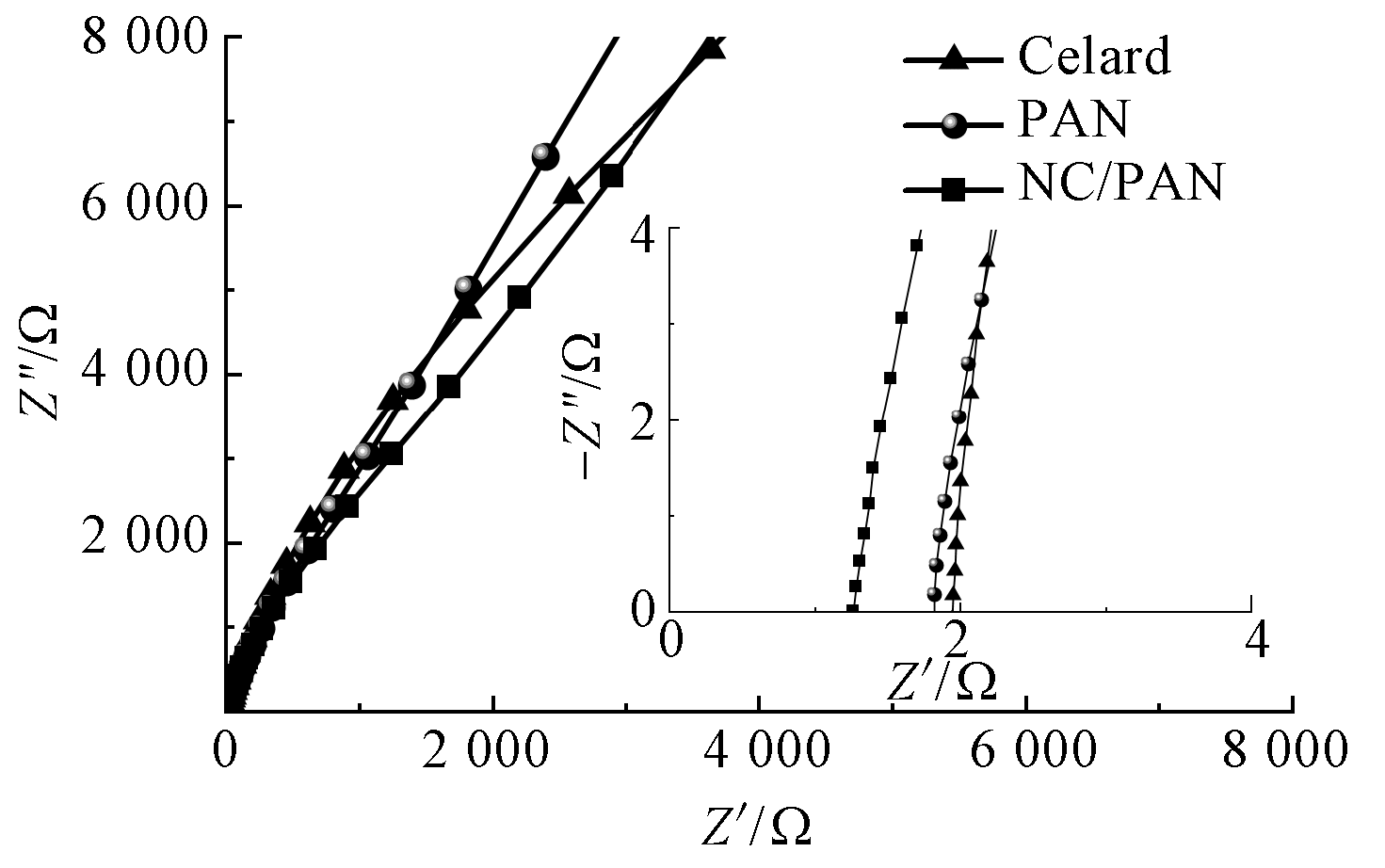
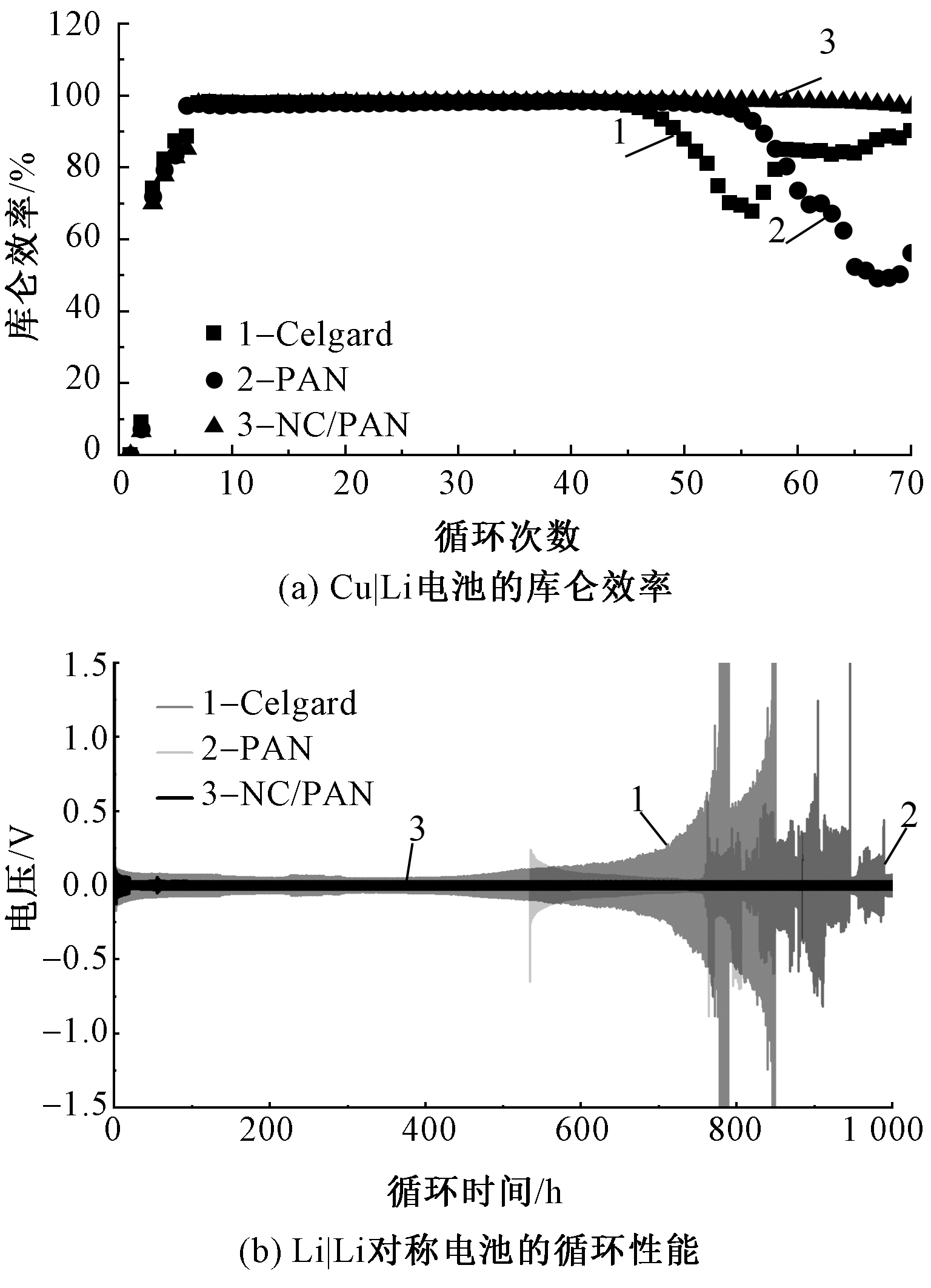
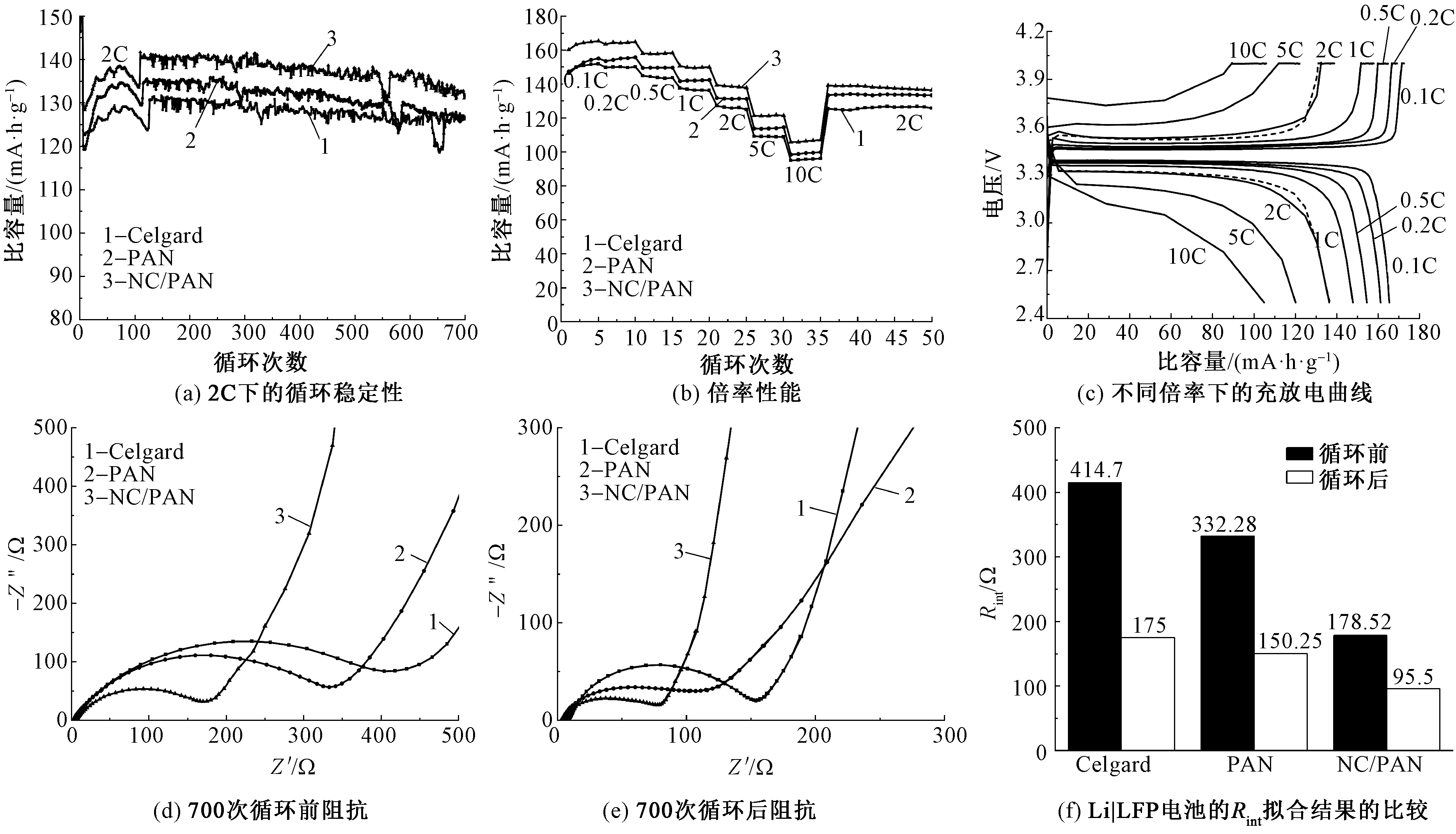
为解决商用聚烯烃隔膜在热稳定性、孔隙结构和电解液亲和性等方面的不足,采用化学-机械法制备了高结晶度纳米纤维素(NC),并将其负载于静电纺聚丙烯腈(PAN)隔膜表面,制得NC/PAN复合隔膜。该隔膜展现出显著改善的电解液润湿性、更高的离子电导率(1.89 mS/cm)和锂离子迁移数(0.65),以及更细且均匀的孔径分布。这些特性协同作用实现了对锂离子流的均匀调控,进而引导锂在负极表面均匀沉积。电化学测试结果表明:使用该隔膜的Li|Li对称电池可在1 mA/cm2电流密度下以22 mV超低电位稳定循环1 000 h,锂枝晶生长受到明显抑制;NC/PAN复合隔膜组装的LiFePO4|Li电池在2C倍率下经历700次循环后,容量保持率仍高于90%,性能优于商用隔膜。本研究证实,通过功能化隔膜设计调控离子传输是抑制锂枝晶、提升锂电池倍率性能和循环稳定性的有效途径。
中图分类号:
| [1] |
YUAN B T, WEN K C, CHEN D J, et al. Composite separators for robust high rate lithium ion batteries[J]. Advanced Functional Materials, 2021, 31(32): 2101420.
doi: 10.1002/adfm.v31.32 |
| [2] | CHEN Q Y, ZUO X X, LIANG H Y, et al. A heat-resistant poly(oxyphenylene benzimidazole)/ethyl cellulose blended polymer membrane for highly safe lithium-ion batteries[J]. ACS Applied Materials & Interfaces, 2020, 12(1): 637-645. |
| [3] |
LIU F F, ZHANG P F, ZHANG M X, et al. High-safety clay mineral separator based on multiple hydrogen bonds for lithium ion batteries[J]. Journal of Energy Storage, 2025, 114: 115683.
doi: 10.1016/j.est.2025.115683 |
| [4] |
DAI X K, ZHANG X M, WEN J W, et al. Research progress on high-temperature resistant polymer separators for lithium-ion batteries[J]. Energy Storage Materials, 2022, 51: 638-659.
doi: 10.1016/j.ensm.2022.07.011 |
| [5] |
CAI S Y, YE S Y, ZHANG M, et al. Cocross-linked nanofibrous separator with high ion transport capacity for lithium-ion batteries[J]. ACS Applied Nano Materials, 2024, 7(20): 24148-24159.
doi: 10.1021/acsanm.4c04853 |
| [6] |
HEIDARI A A, MAHDAVI H. Recent development of polyolefin-based microporous separators for Li-Ion batteries: a review[J]. The Chemical Record, 2020, 20(6): 570-595.
doi: 10.1002/tcr.201900054 pmid: 31833648 |
| [7] |
FANG Y, ZHANG Z X, LUO X G. A cellulose membrane-based separator structured with ZIF-67 via electrostatic interaction used for low-impedance lithium metal batteries[J]. Journal of Energy Storage, 2024, 98: 113135.
doi: 10.1016/j.est.2024.113135 |
| [8] | CHEN Y, MICKEL P, PEI H J, et al. Bioinspired separator with ion-selective nanochannels for lithium metal batteries[J]. ACS Applied Materials & Interfaces, 2023, 15(14): 18333-18342. |
| [9] |
CHEN Y L, LIU H C, LUO J P, et al. In situ aluminide armored polyimide nanofiber separators with ultrahigh strength and high wettability for advanced lithium-ion batteries[J]. Ceramics International, 2023, 49(19): 31953-31964.
doi: 10.1016/j.ceramint.2023.07.158 |
| [10] |
YU L H, JIN Y, LIN Y S. Ceramic coated polypropylene separators for lithium-ion batteries with improved safety: effects of high melting point organic binder[J]. RSC Advances, 2016, 6(46): 40002-40009.
doi: 10.1039/C6RA04522G |
| [11] | 贾姣, 郑作保, 吴昊, 等. 静电纺聚合物复合金属有机框架功能纳米纤维膜的研究进展[J]. 纺织学报, 2023, 44(6): 215-224. |
| JIA Jiao, ZHENG Zuobao, WU Hao, et al. Research progress in electrospinning functional nanofibers with metal-organic framework[J]. Journal of Textile Research, 2023, 44(6): 215-224. | |
| [12] |
VALVERDE A, GONÇALVES R, SILVA M M, et al. Metal-organic framework based PVDF separators for high rate cycling lithium-ion batteries[J]. ACS Applied Energy Materials, 2020, 3(12): 11907-11919.
doi: 10.1021/acsaem.0c02044 |
| [13] |
ZHOU C, HE Q, LI Z H, et al. A robust electrospun separator modified with in situ grown metal-organic frameworks for lithium-sulfur batteries[J]. Chemical Engineering Journal, 2020, 395: 124979.
doi: 10.1016/j.cej.2020.124979 |
| [14] | LI M N, ZHANG Z J, YIN Y T, et al. Novel polyimide separator prepared with two porogens for safe lithium-ion batteries[J]. ACS Applied Materials & Interfaces, 2020, 12(3): 3610-3616. |
| [15] | LI J P, GAO Y X, DUAN M Y, et al. Influence of the PET-PTFE separator pore structure on the performance of lithium metal batteries[J]. ACS Applied Materials & Interfaces, 2024, 16(27): 34902-34912. |
| [16] |
LV D, CHAI J C, WANG P, et al. Pure cellulose lithium-ion battery separator with tunable pore size and improved working stability by cellulose nanofibrils[J]. Carbohydrate Polymers, 2021, 251: 116975.
doi: 10.1016/j.carbpol.2020.116975 |
| [17] | 刘鑫, 王婵, 窦皓, 等. 废旧棉/纳米纤维素自增强复合纸的制备与性能[J]. 纺织学报, 2024, 45(6): 39-45. |
| LIU Xin, WANG Chan, DOU Hao, et al. Preparation and properties of waste cotton/cellulose nanofiber self-reinforcing composite paper[J]. Journal of Textile Research, 2024, 45(6): 39-45. | |
| [18] |
LV P F, LU X M, WANG L, et al. Nanocellulose-based functional materials: from chiral photonics to soft actuator and energy storage[J]. Advanced Functional Materials, 2021, 31(45): 2104991.
doi: 10.1002/adfm.v31.45 |
| [19] | HUANG D Y, WU M, WANG C, et al. Effect of partial dehydration on freeze-drying of aqueous nanocellulose suspension[J]. ACS Sustainable Chemistry & Engineering, 2020, 8(30): 11389-11395. |
| [20] |
CHENG C, YANG R D, WANG Y, et al. High porosity, excellent mechanical strength, interpenetrating network-reinforced double network regenerated cellulose separators for lithium-ion battery[J]. International Journal of Biological Macromolecules, 2024, 283: 137407.
doi: 10.1016/j.ijbiomac.2024.137407 |
| [21] |
YU H Y, YAN C F, LEI X X, et al. Novel approach to extract thermally stable cellulose nanospheres with high yield[J]. Materials Letters, 2014, 131: 12-15.
doi: 10.1016/j.matlet.2014.05.159 |
| [22] |
MAITI S, JAYARAMUDU J, DAS K, et al. Preparation and characterization of nano-cellulose with new shape from different precursor[J]. Carbohydrate Polymers, 2013, 98(1): 562-567.
doi: 10.1016/j.carbpol.2013.06.029 pmid: 23987382 |
| [1] | 陈黎, 邱虹, 王丽芳, 易珊, 唐一卡, 高洪国, 王美英, 刘丽芳. 季铵化改性纳米纤维素/聚乙烯醇气凝胶敷料的制备及其性能[J]. 纺织学报, 2026, 47(04): 26-33. |
| [2] | 易珊, 王丽芳, 陈黎, 邱虹, 唐一卡, 张国清, 王美英, 高艳春, 葛秀敏, 刘丽芳. 纳米纤维素基pH响应型抗菌抗氧化伤口敷料的制备及其性能[J]. 纺织学报, 2026, 47(03): 26-34. |
| [3] | 凌磊, 陈凯, 高俊, 武丁胜, 汪邓兵, 张春, 凤权. 聚丙烯腈/共价有机框架复合纳米纤维膜的制备及其对Cr(Ⅵ)的吸附性能[J]. 纺织学报, 2026, 47(01): 54-62. |
| [4] | 高俊, 凌磊, 陈缘, 武丁胜, 林韩蕾, 李振宇, 凤权. 氨基功能化聚丙烯腈纳米纤维膜的制备及其对Cr(Ⅵ)的吸附性能[J]. 纺织学报, 2025, 46(12): 57-65. |
| [5] | 毛泽, 高俊, 凌磊, 武丁胜, 陶云, 张春, 李申, 凤权. 聚丙烯腈/聚吡咯纳米纤维膜的制备及其对铬离子的吸附性能[J]. 纺织学报, 2025, 46(09): 57-65. |
| [6] | 时虎, 王赫, 王洪杰, 潘显苗. 多孔交联纳米纤维基超级电容器隔膜的设计[J]. 纺织学报, 2025, 46(08): 45-52. |
| [7] | 林玉婷, 许仕林, 胡毅. 多色彩热塑性聚氨酯/聚丙烯腈纳米纤维纱线的制备及其性能[J]. 纺织学报, 2025, 46(07): 78-86. |
| [8] | 贾陈诺瓦, 张勇, 朱威岩, 刘赛, 唐宁. 芯纱种类对聚丙烯腈纳米纤维导电包芯纱性能的影响[J]. 纺织学报, 2025, 46(07): 87-95. |
| [9] | 丁圆, 赵云霞, 靳高岭, 杨涛, 徐静, 柯福佑, 陈烨. 阻燃聚丙烯腈长丝织物的层层自组装法制备及其性能[J]. 纺织学报, 2025, 46(06): 168-177. |
| [10] | 余厚咏, 黄程玲, 陈毅, 高智英. 天然纤维素的多维结构演变及其功能材料研究进展[J]. 纺织学报, 2025, 46(06): 45-55. |
| [11] | 张嘉诚, 于影, 左雨欣, 顾志清, 汤腾飞, 陈洪立, 吕勇. 聚丙烯腈/二硫化钼纤维薄膜的挠曲电效应与扭转传感特性[J]. 纺织学报, 2025, 46(06): 80-87. |
| [12] | 李亿鸿, 蔡君怡, 诸葛晓洁, 吴东芮, 滕德英, 俞建勇, 丁彬, 李召岭. 羧基化纳米纤维素增强的柔性透明导电弹性体[J]. 纺织学报, 2025, 46(04): 11-19. |
| [13] | 赵超, 金欣, 王闻宇, 朱正涛. 自充电超级电容器用聚丙烯腈纳米纤维隔膜的制备及其性能[J]. 纺织学报, 2025, 46(02): 20-25. |
| [14] | 王浩然, 于影, 左雨欣, 顾志清, 卢海龙, 陈洪立, 柯俊. 聚乙烯亚胺/聚丙烯腈复合纤维薄膜的制备及其功能化应用[J]. 纺织学报, 2024, 45(09): 26-32. |
| [15] | 王永政, 黄林涛, 宋付权. 石油沥青/聚丙烯腈静电纺碳纳米纤维的制备工艺优化及其性能[J]. 纺织学报, 2024, 45(08): 107-115. |
|
||
 京公网安备11010502044800号