Journal of Textile Research ›› 2025, Vol. 46 ›› Issue (08): 62-70.doi: 10.13475/j.fzxb.20241105501

• Textile Engineering • Previous Articles     Next Articles

Method for tensile strength prediction of bast fibers

YUE Hang1, LU Chao2, WANG Chunhong1(), LI Hanyu3   

  1. 1. School of Textile Science and Engineering, Tiangong University, Tianjin 300387, China
    2. Tianjin Fire Science and Technology Research Institute of MEM, Tianjin 300381, China
    3. China Textile Academy, Beijing 100025, China
  • Received:2024-11-25 Revised:2025-03-06 Online:2025-08-15 Published:2025-08-15
  • Contact: WANG Chunhong E-mail:wangchunhong@tiangong.edu.cn

Abstract:

Objective In order to improve the efficiency of evaluating the mechanical properties of bast fibers, wet chemical analysis and single fiber strength testing methods were used to determine the chemical composition content and fiber strength of 27 kenaf and hemp fiber samples. The differences in chemical composition content and mechanical properties of these bast fibers were analyzed.

Method The feasibility of replacing the overall chemical composition with three main chemical components to achieve strength response of bast fiber was analyzed using principal component analysis and cluster analysis. The overall chemical composition and three main chemical components (cellulose, hemicellulose, and lignin) were used as independent variables, and support vector regression model was used to predict fiber strength. The prediction effect of bast fiber strength was evaluated.

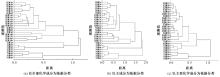
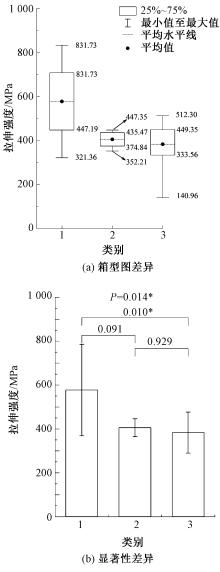
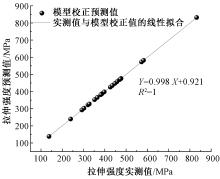
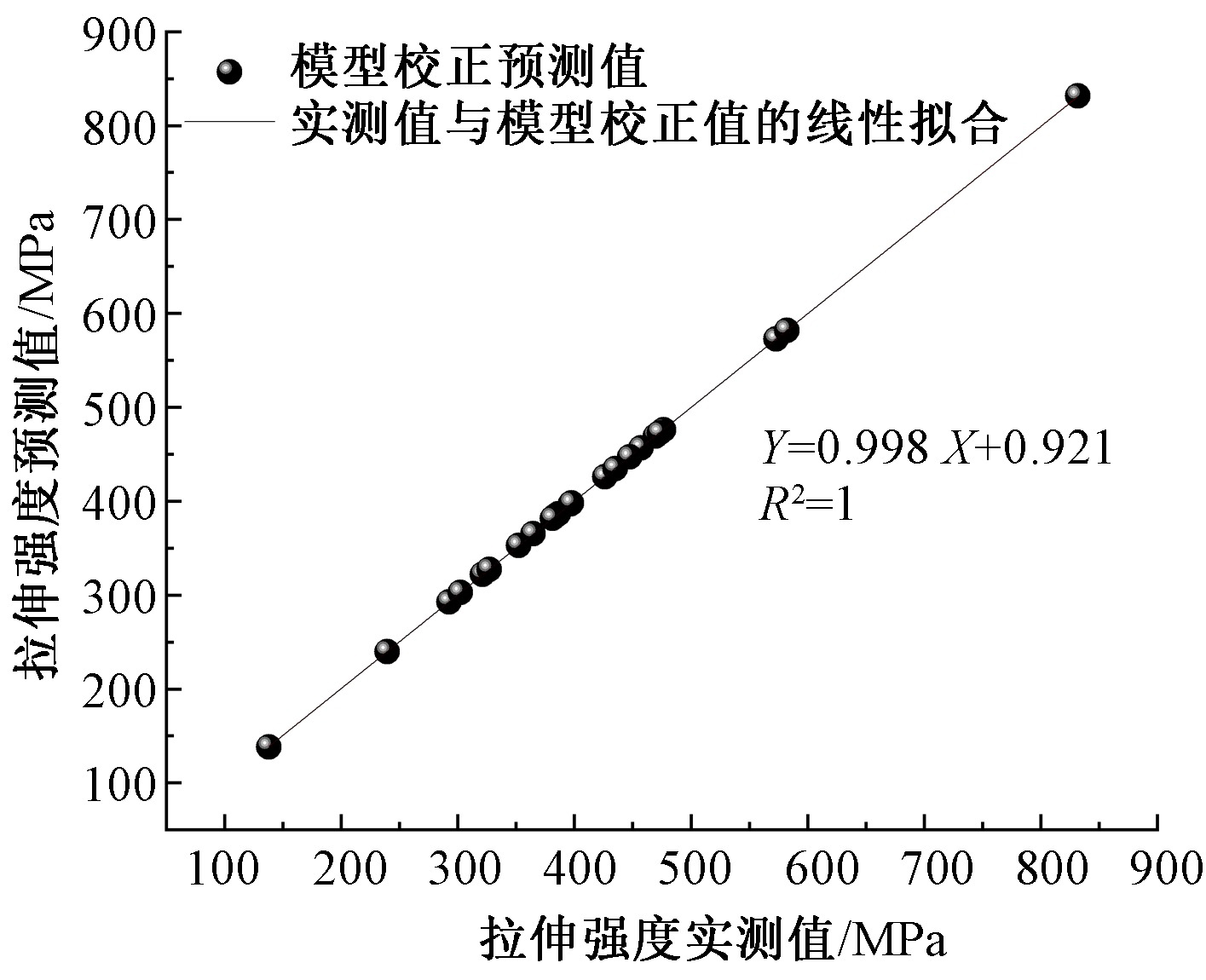
Results The results of principal component analysis showed that when the number of principal components was 3, the cumulative contribution rate of principal components reached 94.48%, which basically reflects the response of fiber chemical composition to fiber mechanical properties in the original population sample data. Cluster analysis was conducted on bast fiber samples using all chemical components, principal components, and the main chemical components of cellulose, hemicellulose, and lignin as indicators. After classification, significant differences were observed in the mean mechanical properties of each type of fiber. The consistency between the clustering results based on principal components and those based on all chemical components was 96.3%. The consistency between the clustering results obtained based on the main chemical components cellulose, hemicellulose, and lignin as indicators and the clustering results obtained based on the classification of all chemical components was 92.3%. A support vector regression model was constructed with the overall chemical composition and three main chemical components as input variables, and bast fiber strength as output variable. The model performed well in internal cross validation of the corrected sample set, with mean relative prediction errors of 1.78% and 2.19% for unknown bast fiber samples, respectively.

Conclusion The research results proved that cellulose, hemicellulose, and lignin as the three main chemical components, are able to replace all chemical components to reflect the mechanical properties of bast fibers. The use of the three main chemical components of bast fibers can replace the overall chemical composition to achieve the prediction of bast fiber tensile strength based on support vector regression model.

Key words: bast fiber, chemical component, tensile strength, prediction, evaluation of fiber mechanical property, kenaf fiber, hemp fiber

CLC Number: 

  • TS121

Tab.1

Bast fiber samples information"

麻纤维
编号
产地 生长周
期/月
土壤类型
大麻1# 中国黑龙江省 3 砂质壤土
大麻2# 中国黑龙江省 3 砂质壤土
大麻3# 中国黑龙江省 3 砂质壤土
大麻4# 中国黑龙江省 3 砂质壤土
大麻5# 中国黑龙江省 3 砂质壤土
大麻6# 中国黑龙江省 3 砂质壤土
大麻7# 中国黑龙江省 3 砂质壤土
大麻8# 中国黑龙江省 3 砂质壤土
红麻1# 马来西亚玻璃市州 3 沙质黏土
红麻2# 马来西亚彭亨州 3 沙质黏土
红麻3# 马来西亚玻璃市州 4 沙质黏土
红麻4# 马来西亚彭亨州 4 沙质黏土
红麻5# 马来西亚柔佛州 3 沙质黏土
红麻6# 马来西亚柔佛州 4 沙质黏土
红麻7# 马来西亚丁加奴州 3 沙土
红麻8# 马来西亚丁加奴州 3 沙质黏土
红麻9# 马来西亚丁加奴州 4 沙土
红麻10# 马来西亚丁加奴州 4 沙质黏土
红麻11# 马来西亚吉兰丹州 3 黏土
红麻12# 马来西亚吉兰丹州 3 沙质黏土
红麻13# 马来西亚吉兰丹州 4 黏土
红麻14# 马来西亚吉兰丹州 4 沙质黏土
红麻15# 马来西亚吉兰丹州 4 沙质黏土
红麻16# 马来西亚吉兰丹州 4 沙质黏土
红麻17# 马来西亚吉兰丹州 4 沙质黏土
红麻18# 马来西亚吉兰丹州 4 沙质黏土
红麻19# 马来西亚吉兰丹州 4 沙质黏土

Tab.2

Indicators for 27 batches of bast fiber samples"

麻纤维
编号
各成分含量/% 纤维
强度/
MPa
纤维
半纤
维素
木质
果胶 脂蜡
水溶
大麻1# 61.22 16.48 10.11 2.77 2.75 6.68 473.23
大麻2# 81.86 3.31 10.51 0.43 1.31 2.59 423.59
大麻3# 85.38 2.45 8.49 0.18 0.83 2.66 447.35
大麻4# 86.05 1.92 8.46 0.04 1.19 2.33 352.21
大麻5# 72.70 13.79 5.33 3.21 2.28 2.69 573.02
大麻6# 73.54 12.77 5.59 3.28 2.33 2.49 831.73
大麻7# 76.40 11.26 4.24 3.41 2.38 2.30 582.28
大麻8# 91.66 2.18 2.71 0.45 0.72 2.28 397.46
红麻1# 66.77 12.89 18.29 0.04 0.48 1.48 292.42
红麻2# 69.80 10.92 17.67 0.04 0.55 1.02 386.30
红麻3# 66.75 12.68 17.49 0.78 1.51 0.79 137.87
红麻4# 69.04 11.85 15.85 0.20 1.27 1.79 364.68
红麻5# 68.82 12.65 17.44 0.06 0.50 0.53 404.77
红麻6# 70.11 12.71 15.25 0.00 0.71 1.22 376.52
红麻7# 68.08 12.25 17.62 0.00 1.38 0.67 321.42
红麻8# 78.89 10.75 8.68 0.00 0.45 1.24 302.17
红麻9# 69.01 13.73 13.11 1.30 0.89 1.95 383.65
红麻10# 71.30 12.56 14.23 0.74 0.69 0.48 469.60
红麻11# 68.76 15.53 14.43 0.32 0.35 0.61 426.18
红麻12# 71.67 15.31 11.54 0.24 0.36 0.89 476.52
红麻13# 72.07 13.18 13.53 0.11 0.53 0.57 457.31
红麻14# 66.55 11.65 16.09 0.09 2.53 3.10 435.21
红麻15# 70.81 13.37 14.51 0.00 0.58 0.73 239.34
红麻16# 67.92 15.70 14.34 0.00 0.52 1.53 396.69
红麻17# 62.34 12.19 18.78 1.66 2.46 2.58 327.03
红麻18# 62.42 12.66 16.97 1.36 2.16 4.43 417.01
红麻19# 63.11 14.45 17.33 1.11 1.73 2.26 381.33

Tab.3

Content variability data of 27 batches of bast fiber samples"

成分 极大值/% 极小值/% 均值/% 标准差/% CV值/%
纤维素 91.6 61.22 71.60 7.74 10.82
半纤维素 16.48 1.92 11.53 4.11 35.65
木质素 18.78 2.71 12.91 4.91 38.02
果胶 3.41 0.00 0.84 1.12 133.57
脂蜡质 2.75 0.35 1.27 1.08 85.17
水溶物 6.68 0.48 1.92 1.55 80.58

Tab.4

Single factor ANOVA of influence of bast fiber batch on chemical composition of bast fiber and tensile strength of fiber"

麻纤维
指标
离均差
平方和
自由
均方
统计
显著水
平值
显著
纤维素 2942.88 26.00 113.19 12.94 1.72×10⁻⁹ **
半纤维素 876.50 26.00 33.71 50.19 7.87×10⁻¹⁷ **
木质素 1164.00 26.00 44.77 10.70 1.54×10⁻⁸ **
纤维强度 6.66×10⁶ 26.00 2.56×10⁵ 5.36 2.08×10⁻¹⁵ **

Tab.5

Main component factors and contribution of bastfiber component"

成分 特征值 贡献率/% 累积贡献率/%
1 2.783 46.390 46.390
2 2.013 33.551 79.940
3 0.872 14.535 94.475
4 0.246 4.102 98.577
5 0.085 1.423 100.000
6 5.115×10⁻⁸ 8.525×10⁻⁷ 100.000

Tab.6

Load matrix of six chemical components of bast fiber"

化学成分含量指标 第1主成分 第2主成分 第3主成分
X1(纤维素含量) -0.910 0.407 0.061
X2(半纤维素含量) 0.708 -0.377 -0.577
X3(木质素含量) 0.518 -0.766 0.347
X4(果胶含量) 0.436 0.766 -0.427
X5(脂蜡质含量) 0.779 0.427 0.307
X6(水溶物含量) 0.623 0.590 0.371

Tab.7

Score coefficient matrix of principal component factors"

化学成分含
量指标
因子得分系数
F1 F2 F3
X1 -0.545 0.287 0.065
X2 0.424 -0.266 -0.618
X3 0.310 -0.540 0.372
X4 0.261 0.540 -0.457
X5 0.467 0.301 0.329
X6 0.373 0.416 0.397

Fig.1

Classification results of 27 batches of bast fiber. (a) Classification based on all chemical components; (b) Classification based on principal components; (c) Classification based on main chemical components"

Tab.8

Classification results of 27 batches of bast fiber"

分类依据 类群编号 样品编号
全部化学成分 第1类 红麻1#~19#
第2类 大麻1#,大麻5#~7#
第3类 大麻2#~4#,大麻8#
主成分
F1F2F3
第1类 红麻1#~19#,大麻1#
第2类 大麻5#~7#
第3类 大麻2#~4#,大麻8#
主要化学成分
纤维素、半纤
维素、木质素
第1类 红麻1#~7#,红麻9#~19#,大麻1#
第2类 大麻5#~7#,红麻8#
第3类 大麻2#~4#,大麻8#

Fig.2

Comparison of differences between categories. (a)Box plot; (b) Statistical significance"

Fig.3

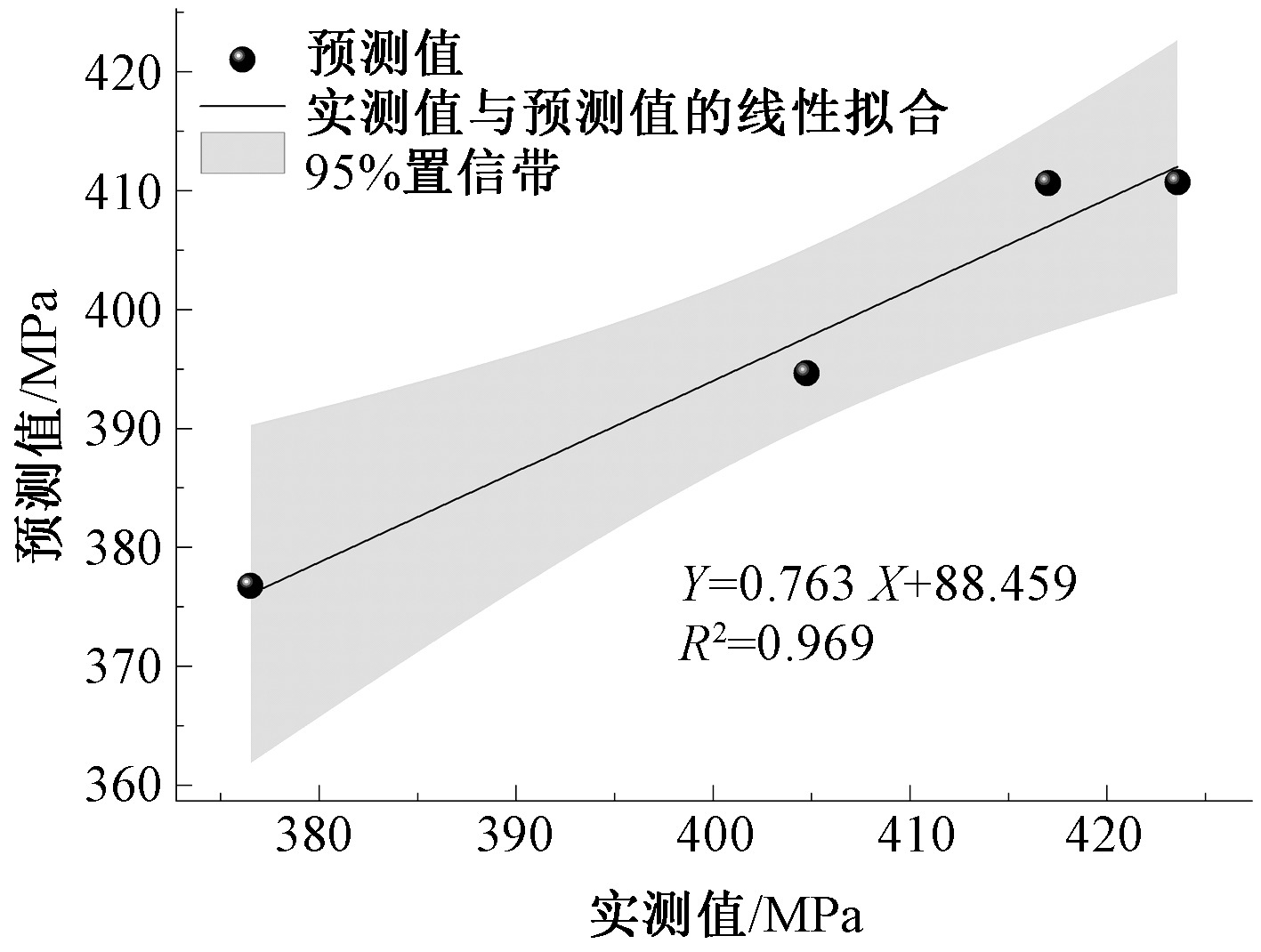
Regression results of model with corrected strength data of bast fiber"

Fig.4

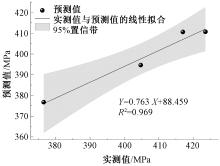
Prediction results of bast fiber strength based on full component"

Tab.9

Regression results of prediction data of bast fiber strength brought into model based on fall component"

预测试样
编号
不同成分含量/% 单纤维拉伸强度
纤维素 半纤维素 木质素 果胶 脂蜡质 水溶物 测试值/MPa 预测值/MPa 相对误差/%
1 68.82 12.65 17.44 0.06 0.50 0.53 404.77 394.65 2.50
2 70.11 12.71 15.25 0.00 0.71 1.22 376.52 376.77 0.068
3 62.42 12.66 16.97 1.36 2.16 4.43 417.01 410.64 1.53
4 81.86 3.31 10.51 0.43 1.31 2.59 423.59 410.71 3.04

Fig.5

Regression results of model with corrected strength data of bast fiber based on main component"

Fig.6

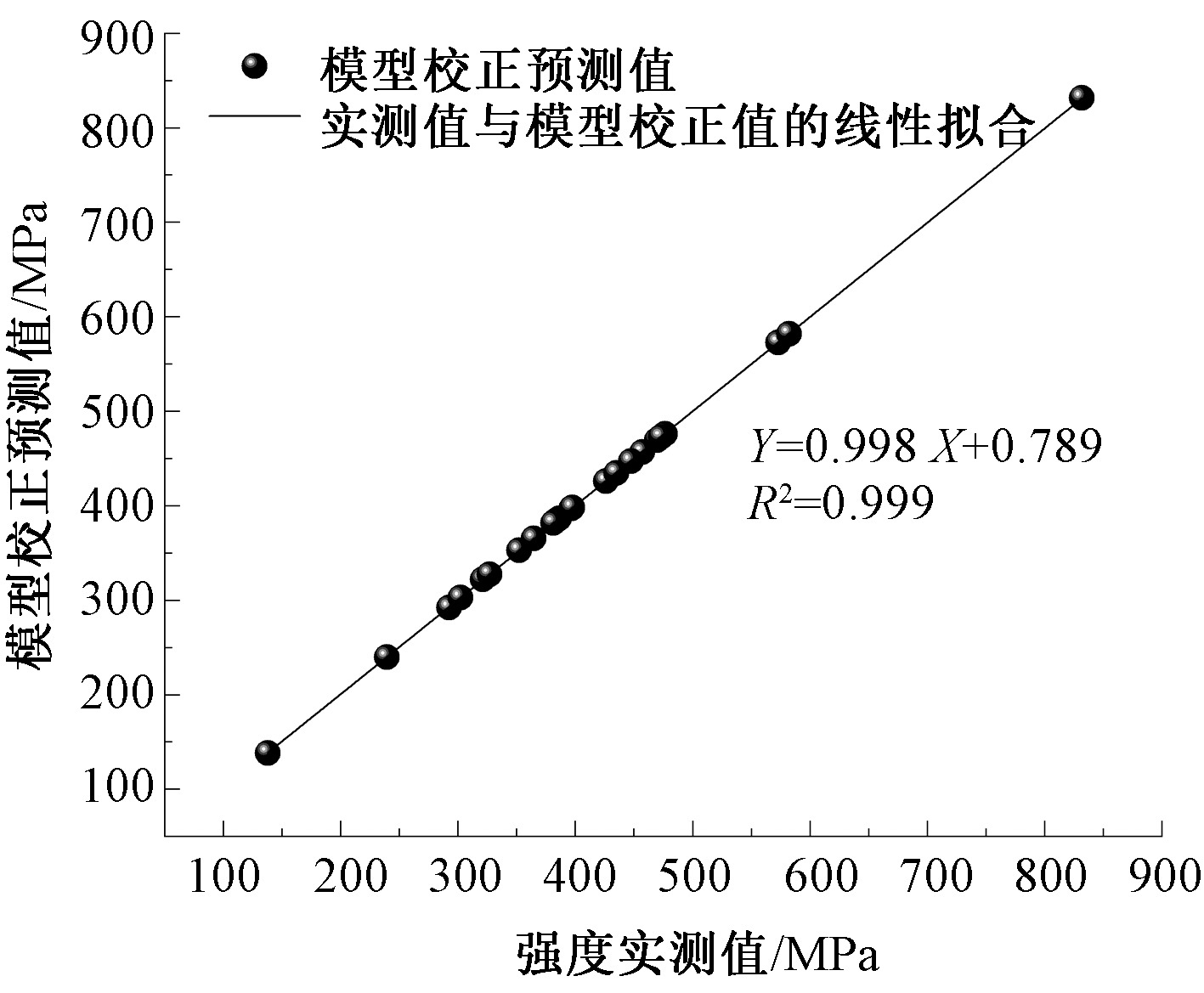
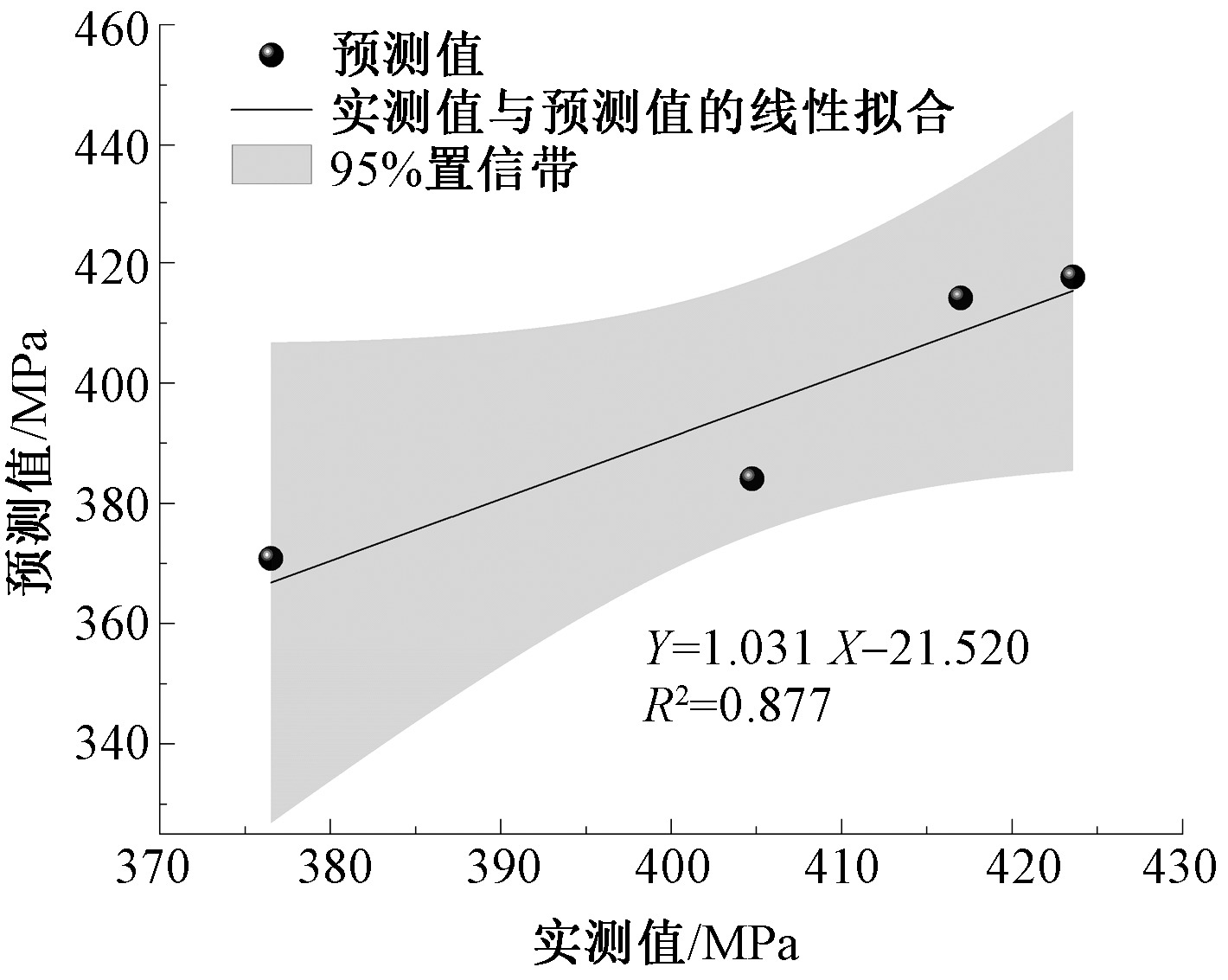
Prediction results of bast fiber strength based on main component"

Tab.10

Regression results of prediction data of bast fiber strength brought into model based on main component"

预测试
样编号
主要成分含量/% 强度/MPa 预测误
差/%
纤维
半纤
维素
木质
测试值 预测值
1 68.82 12.65 17.44 404.77 384.05 5.12
2 70.11 12.71 15.25 376.52 370.75 1.53
3 62.42 12.66 16.97 417.01 414.14 0.69
4 81.86 3.31 10.51 423.59 417.64 1.41
[1] ZHU S Y, XIE J X, SUN Q Q, et al. Recent advances on bast fiber composites: engineering innovations, applications and perspectives[J]. Composites Part B: Engineering, 2024. DOI:10.1016/j.compositesb.2024.111738.
[2] LIU M, MEYER A S, FERNANDO D, et al. Effect of pectin and hemicellulose removal from hemp fibres on the mechanical properties of unidirectional hemp/epoxy composites[J]. Composites Part A: Applied Science and Manufacturing, 2016, 90: 724-735.
[3] PISUPATI A, WILLAERT L, GOETHALS F, et al. Variety and growing condition effect on the yield and tensile strength of flax fibers[J]. Industrial Crops and Products, 2021. DOI:10.1016/J.INDCROP.2021.113736.
[4] 喻春明, 张彦红, 朱爱国, 等. 苎麻种质资源纤维结晶度变异及其主要品质性状的关联性研究[J]. 中国麻业科学, 2011, 33(5):223-231,239.
YU Chunming, ZHANG Yanhong, ZHU Aiguo, et al. Association study of the fiber crystallinity variation and its main quality traits in ramie germplasm resources[J]. Plant Fiber Sciences in China, 2011, 33 (5): 223-231,239.
[5] 管丽媛, 王钟, 祁宁, 等. 基于近红外光谱技术的亚麻纤维化学成分含量快速测定[J]. 分析测试学报, 2020, 39(6): 795-799.
GUAN Liyuan, WANG Zhong, QI Ning, et al. Rapid determination of chemical composition content of flax fiber based on near-infrared spectroscopy technology[J]. Journal of Instrumental Analysis, 2020, 39(6): 795-799.
[6] LU C, WANG C H, LI C H, et al. Structural and mechanical properties of hemp fibers: effect of progressive removal of hemicellulose and lignin[J]. Journal of Natural Fibers, 2022, 19(16): 13985-13994.
[7] BEROUAL M, TRACHE D, MEHELLI O, et al. Effect of the delignification process on the physicochemical properties and thermal stability of microcrystalline cellulose extracted from date palm fronds[J]. Waste Biomass Valorization, 2021, 12(5): 2779-2793.
[8] SEN M K, HERMANS P H. The structure of the jute fibre: part II: the role of the lignin-hemicellulose complex and other noncellulosic constituents[J]. Journal of the Royal Netherlands Chemical Society-Recueil, 2010, 68: 1079-1105.
[9] WANG C H, BAI S Y, YUE X M, et al. Relationship between chemicalcomposition, crystallinity, orientation and tensile strength of kenaf fiber[J]. Fibers and Polymers, 2016, 17(11): 1757-1764.
[10] 童元建, 禹凡, 王宇, 等. 碳纤维拉伸模量准确测试研究[J]. 高科技纤维与应用, 2014, 39(3): 21-24,31.
TONG Yuanjian, YU Fan, WANG Yu, et al. Research on accurate testing of tensile modulus of carbon fiber[J]. High Tech Fibers and Applications, 2014, 39(3): 21-24,31.
[11] 白肃跃, 洋麻纤维化学成分对其力学性能的调控机理探究[D]. 天津: 天津工业大学, 2017: 23-33.
BAI Suyue. Exploration of the regulatory mechanism of chemical composition of jute fiber on its mechanical properties[D].Tianjin: Tiangong University, 2017: 23-33.
[12] AMIANDAMHEN S O, MEINCKEN M, TYHODA L. Natural fibre modification and its influence on fibre-matrix interfacial properties in biocomposite materials[J]. Fibers and Polymers, 2020, 21(4): 677-689.
[13] SAHU P, GUPTA M K. A review on the properties of natural fibres and its bio-composites: effect of alkali treatment[J]. Journal of Materials: Design and Applications, 2020, 234(1): 198-217.
[14] JARIWALA H, JAIN P. A review on mechanical behavior of natural fiber reinforced polymer composites and its applications[J]. Journal of Reinforced Plastics and Composites, 2019, 38(10): 441-453.
[15] XIE N M. Explanations about grey information and framework of grey system modeling[J]. Grey Systems, 2017, 7(2): 179-193.
[1] SONG Wei, LI Xinrong, FENG Wenqian, LI Xingxing, WEI Cong. New prediction method for lower body circumferences for young male individuals [J]. Journal of Textile Research, 2025, 46(07): 177-185.
[2] ZHANG Aidan, WANG Qian. Color prediction method of triple-weft fabric with full-color compound structure [J]. Journal of Textile Research, 2025, 46(05): 151-158.
[3] LIANG Jinxing, LI Dongsheng, LI Yifan, ZHOU Jing, LUO Hang, CHEN Jia, HU Xinrong. Color fastness grading of textiles based on color measurement of digital images [J]. Journal of Textile Research, 2025, 46(04): 119-128.
[4] SONG Wanmeng, WANG Baohong, SUN Yu, YANG Jiaxiang, LIU Yun, WANG Yuzhong. Preparation and performance of flame-retardant viscose fabrics with both mechanical and efficient flame-retardant properties [J]. Journal of Textile Research, 2025, 46(02): 188-196.
[5] SHENG Xibin, ZHAO Songling, GU Bingfei. Production scheduling optimization of shirt component module based on standard man-hour prediction [J]. Journal of Textile Research, 2025, 46(01): 154-162.
[6] SHI Chu, LI Jun, WANG Yunyi. Research progress on smart footwear for monitoring temperature in diabetic foot [J]. Journal of Textile Research, 2024, 45(07): 240-247.
[7] SUN Changmin, DAI Ning, SHEN Chunya, XU Kaixin, CHEN Wei, HU Xudong, YUAN Yanhong, CHEN Zuhong. Fabric quality prediction technology based on K-nearest neighbor algorithm improved particle swarm optimization-back propagation algorithm [J]. Journal of Textile Research, 2024, 45(07): 72-77.
[8] ZHAO Yajie, CONG Honglian, DING Yuqin, DONG Zhijia. Digitization prediction of air permeability of weft knitted fabrics based on stitch model [J]. Journal of Textile Research, 2024, 45(06): 68-74.
[9] ZHU Yuanyuan, DAN Rui, JIN Jiaqin, LEI Yuteng, YU Miao. Simulation prediction of lower limb clothing pressure using ANSYS [J]. Journal of Textile Research, 2024, 45(03): 148-155.
[10] NAN Jingjing, DU Mingjuan, MENG Jiaguang, YU Lingjie, ZHI Chao. Effect of seawater aging on performance of filled-microperforated plate-like underwater sound absorption materials and durability prediction [J]. Journal of Textile Research, 2024, 45(02): 85-92.
[11] ZHAO Ziyu, YANG Tong, ZHANG Fa, MA Pibo. Failure damage mode analysis and experimental study of large-size carbon fibers C-beam under bending shear coupling load [J]. Journal of Textile Research, 2024, 45(02): 93-100.
[12] CHENG Ziqi, LU Yehu, XU Jingxian. Heat transfer simulation and parametric design of electric heating textile system [J]. Journal of Textile Research, 2024, 45(02): 206-213.
[13] YANG Liu, LI Yujia, YU Yan, MA Lei, ZHANG Ruiyun. Color prediction of fiber-colored fabrics based on Neugebauer equation [J]. Journal of Textile Research, 2024, 45(01): 83-89.
[14] DONG Zhijia, GUO Yanyuqiu, LIU Haisang, YAO Sihong. Structural design and realization of warp-knitted fully formed hollow maillot [J]. Journal of Textile Research, 2023, 44(12): 130-137.
[15] LI Qiyang, JI Chengchang, CHI Xinfu, SUN Yize. Braiding strategy and yarn trajectory prediction of large size special-shaped structure mandrel [J]. Journal of Textile Research, 2023, 44(10): 188-195.
Viewed
Full text


Abstract

Cited

  Shared   
  Discussed   
No Suggested Reading articles found!