Journal of Textile Research ›› 2025, Vol. 46 ›› Issue (04): 119-128.doi: 10.13475/j.fzxb.20240707101

• Dyeing and Finishing Engineering • Previous Articles     Next Articles

Color fastness grading of textiles based on color measurement of digital images

LIANG Jinxing1,2,3, LI Dongsheng1, LI Yifan1, ZHOU Jing1, LUO Hang1, CHEN Jia1, HU Xinrong1,2,3()   

  1. 1. School of Computer and Artificial Intelligence, Wuhan Textile University, Wuhan, Hubei 430200, China
    2. Engineering Research Center of Hubei Province for Clothing Information, Wuhan, Hubei 430200, China
    3. Key Laboratory of Intelligent Perception and Computing in Textile Industry, Wuhan, Hubei 430200, China
  • Received:2024-07-31 Revised:2024-12-26 Online:2025-04-15 Published:2025-06-11
  • Contact: HU Xinrong E-mail:hxr@wtu.edu.cn

Abstract:

Objective Color fastness grades evaluate how well textiles maintain their colors under different conditions. Traditional visual ratings of textile color fastness can be inconsistent and often vary from the measurements obtained through spectrophotometers, which can lead to discrepancies with human visual perception. To address these challenges, a new image-based color measurement method has been proposed for assessing textile color fastness more accurately. This study aims to create a method for grading textile color fastness by using image-based color measurement technology and BP neural network. It also seeks to enhance the performance of the traditional color difference conversion method for better application in textile color fastness grading. The importance of this research lies in introducing a new technique for digital image-based color measurement, which involves using spectral reconstruction to calibrate the digital camera and colorimetry theory to calculate the color of textile samples. Additionally, the BP neural network is utilized to model the color information difference as input and expert grading results as output.

Method Firstly, three groups of color fastness tested samples were made according to the recommended standards, where a total of 341 sets of staining samples and 125 sets of discoloration samples were produced in the experiment. Among them, the staining samples included 155 sets of rubbing samples and 186 sets of washing samples, and 125 sets of discoloration samples were obtained through exposure experiments. After that, using the self-developed imaging-based color measurement system, the spectral reflectance of samples is obtained by spectral reconstruction technology, and the color information of the sample is then calculated by colorimetry theory under CIED65 illuminant and CIE1964 standard observer color matching functions. Then, through psychophysical experiments, color fastness grading experts were invited to grade all color fastness samples, and the expert grading results of all test samples were obtained. With the color fastness grading results from experts on sample pairs as references, the BP neural network was used to construct a relationship between the color difference of sample pairs and the color fastness grades of experts. Finally, for any new given test sample pair, the constructed BP network was used to predict color fastness grade and compare it with the expert grading results. At the same time, the traditional color difference conversion method for color fastness grading was also optimized by introducing correction strategies and models.

Results The experimental results showed that the prediction root mean square error(RMSE) of the BP neural network method for staining and discoloration samples were 0.38 and 0.41, respectively, which are significantly better than the curve fitting method and the color difference conversion method before correction. The prediction error of the color fastness of the staining samples was found slightly higher than that of the corrected color difference conversion method. In addition, the prediction RMSE of the BP neural network method for friction and soaping samples were 0.30 and 0.27, respectively, and the prediction error was lower than that of the corrected color difference conversion method. Overall, the prediction performance of the corrected color difference conversion method was significantly better than that before correction. The prediction effect of the BP neural network was consistent in general with that of the corrected color difference conversion method, and was significantly better than the curve fitting method.

Conclusion This study has led to the establishment of a color fastness prediction method based on the digital image-based color measurement technology and BP neural network. In addition, an optimization correction strategy is proposed to improve the performance of the color difference conversion method. The effectiveness of the proposed BP neural network method and the optimized color difference conversion method are proved through actual experiments. Compared with the spectrophotometer-based method, the new method is more practical and flexible. The research findings provide useful information for promoting the digital development of textile enterprises and have application value.

Key words: textile, color fastness prediction model, imaging-based color measurement, spectral reconstruction, colorimetry theory, color fastness grading, BP neural network

CLC Number: 

  • TS107

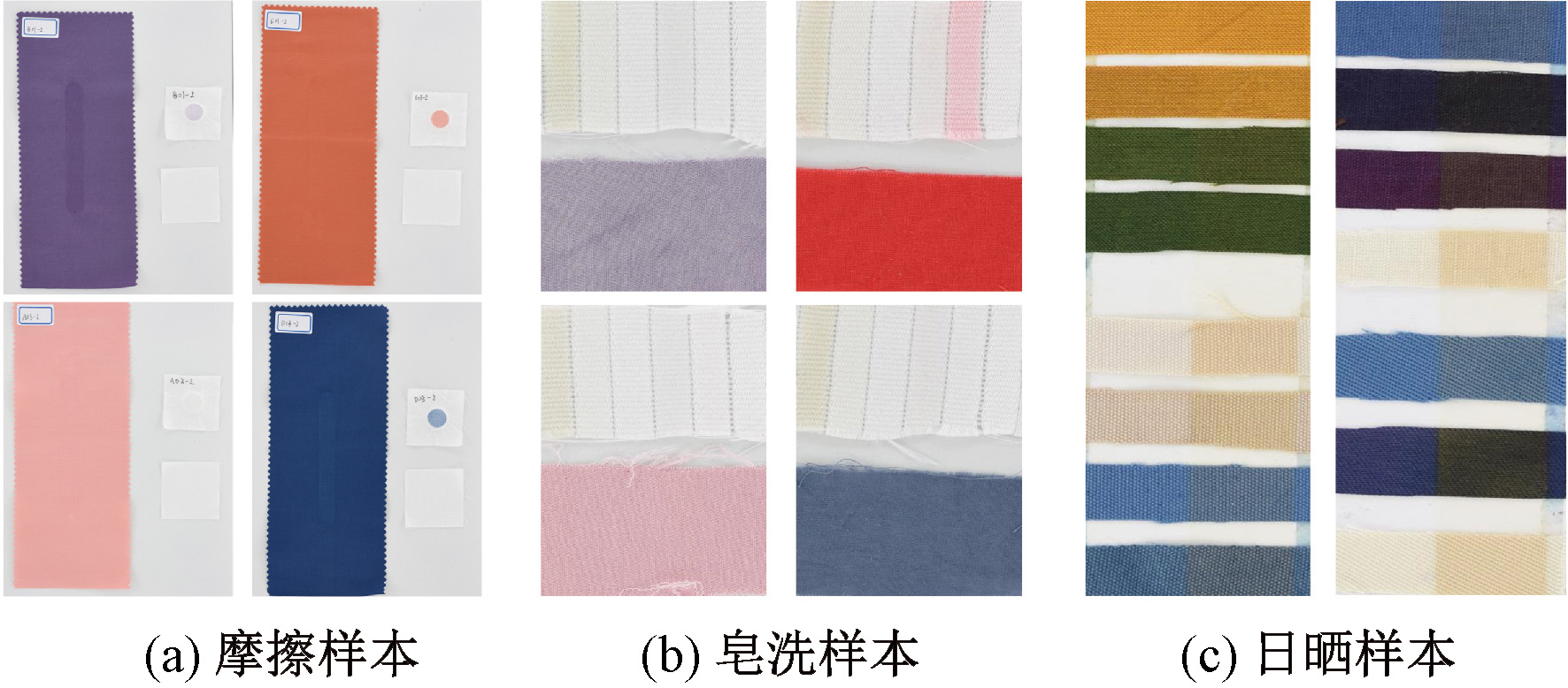
Fig.1

Some color fastness samples. (a) Rubbing sample; (b) Washing sample; (c) Sunlight sample"

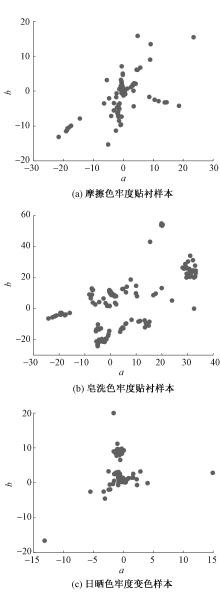
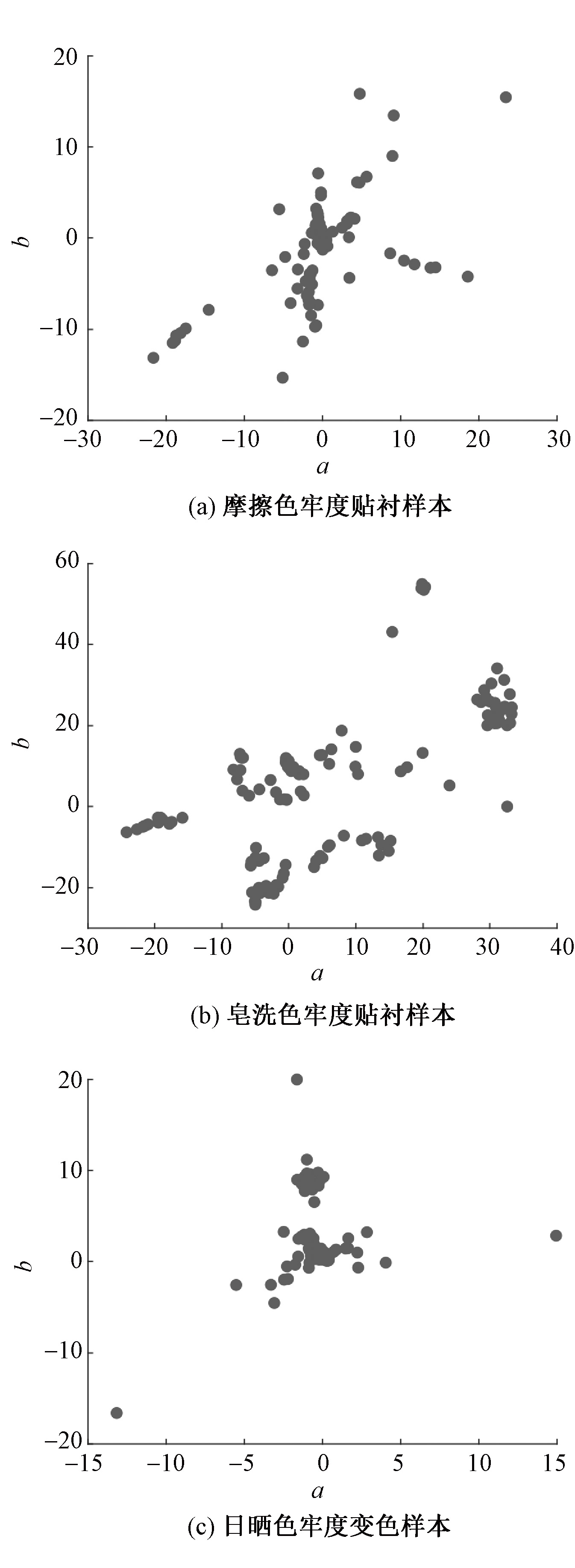
Fig.2

Colorimetric distribution of each sample in a-b plane. (a) Rubbing fastness sample; (b) Sample of color fastness to soaping; (c) Sample of color fastness to sunlight"

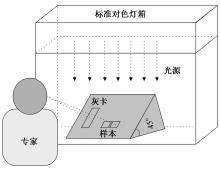
Fig.3

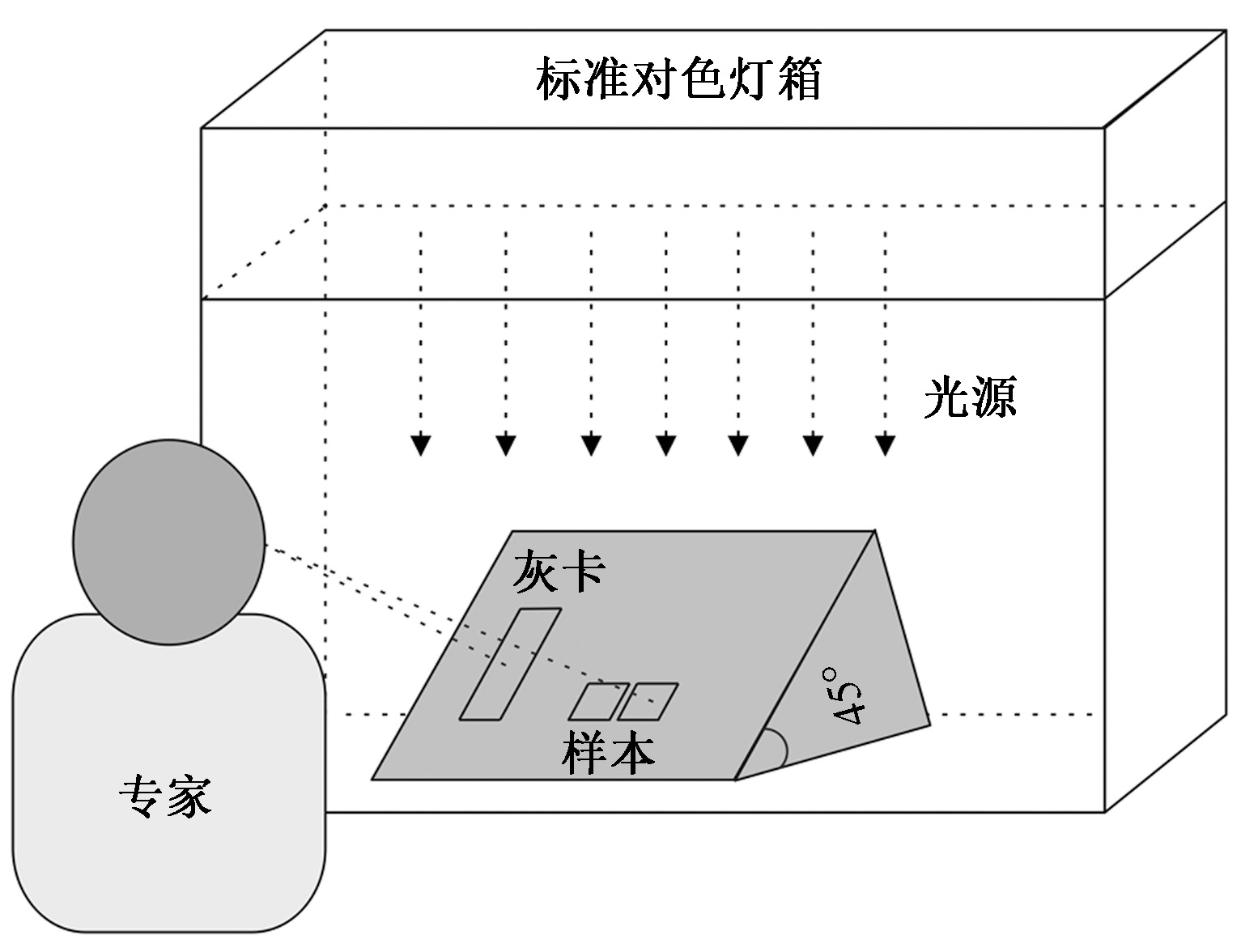
Schematic of visual rating on color fastness"

Fig.4

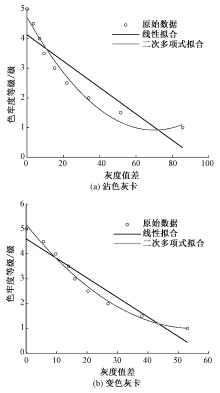
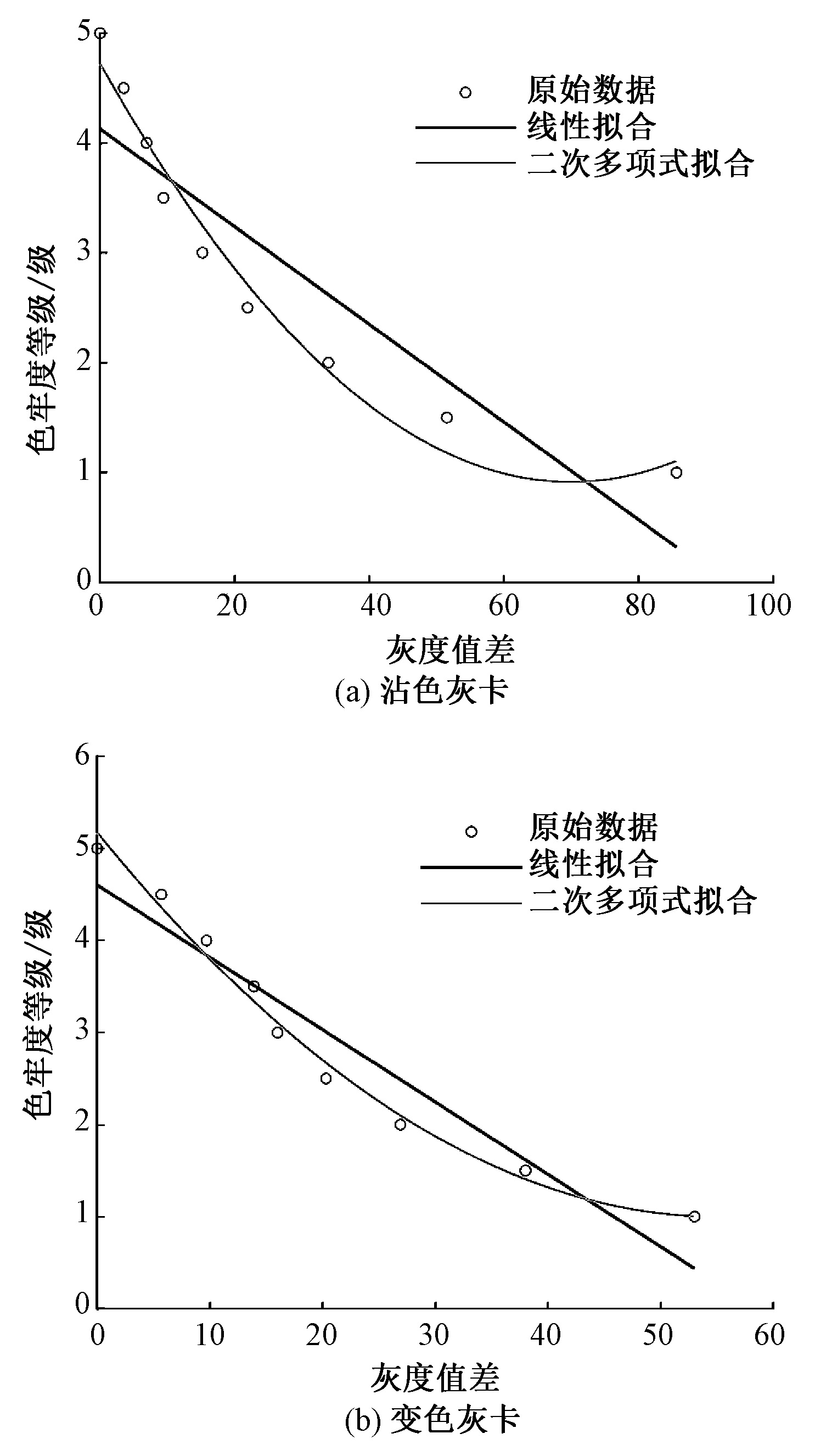
Fitting results of gray value difference and color fastness. (a) Stained gray card; (b) Discolored gray card"

Tab.1

Correlation coefficient between color variables and color-fastness grades"

类别 颜色
变量ΔL
颜色
变量Δa
颜色
变量Δb
CIEDE2000
色差
色牢度
等级
颜色变量ΔL 1
颜色变量Δa 0.167** 1
颜色变量Δb -0.381** 0.136** 1
CIEDE2000色差 0.413** 0.785** 0.143** 1
色牢度等级 -0.198** -0.607** -0.241** -0.692** 1

Fig.5

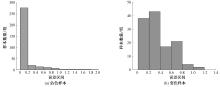
Comparison of color fastness prediction using color difference conversion method and visual inspection results. (a) Stained samples; (b) Discolored samples"

Fig.6

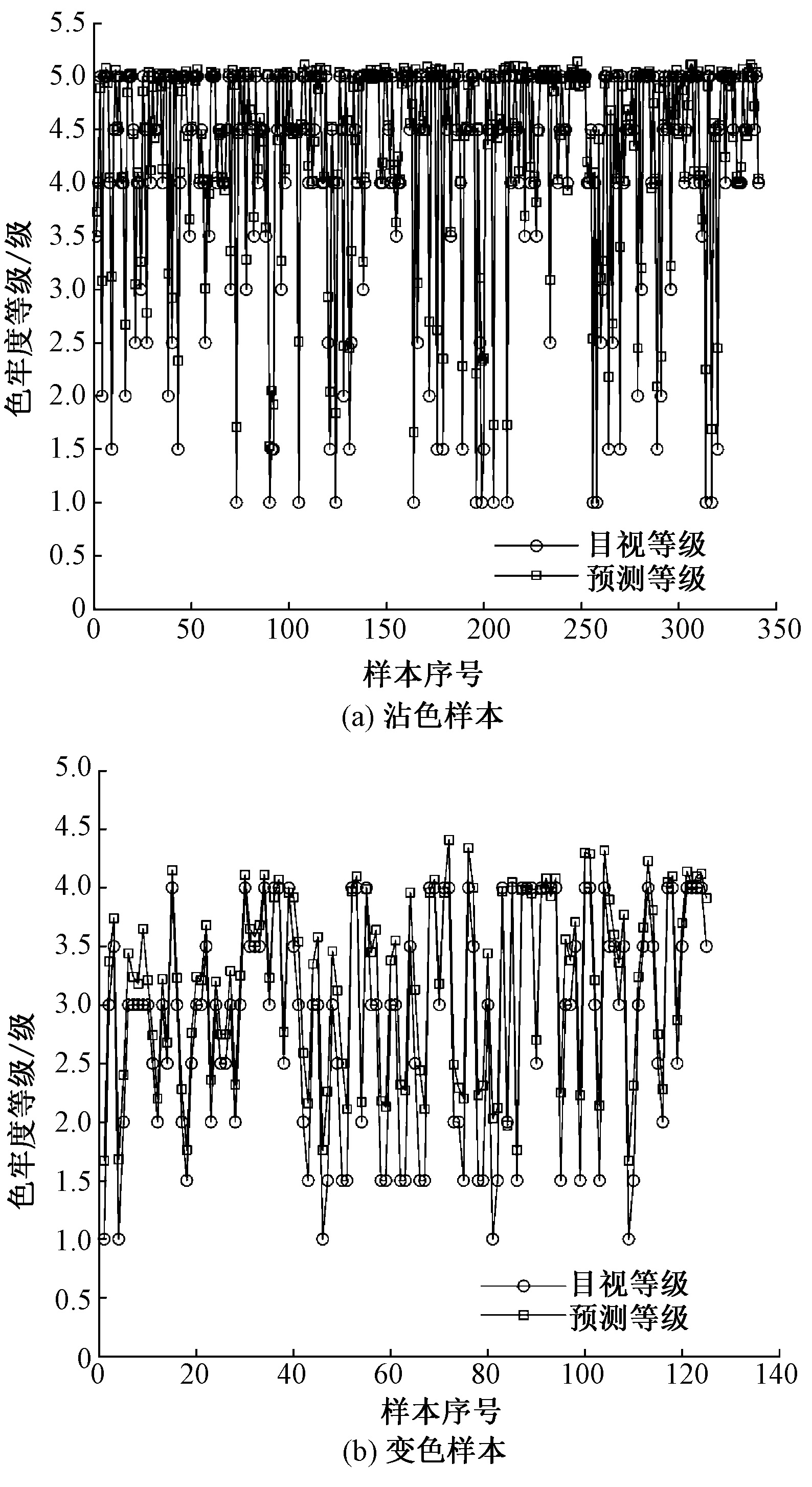
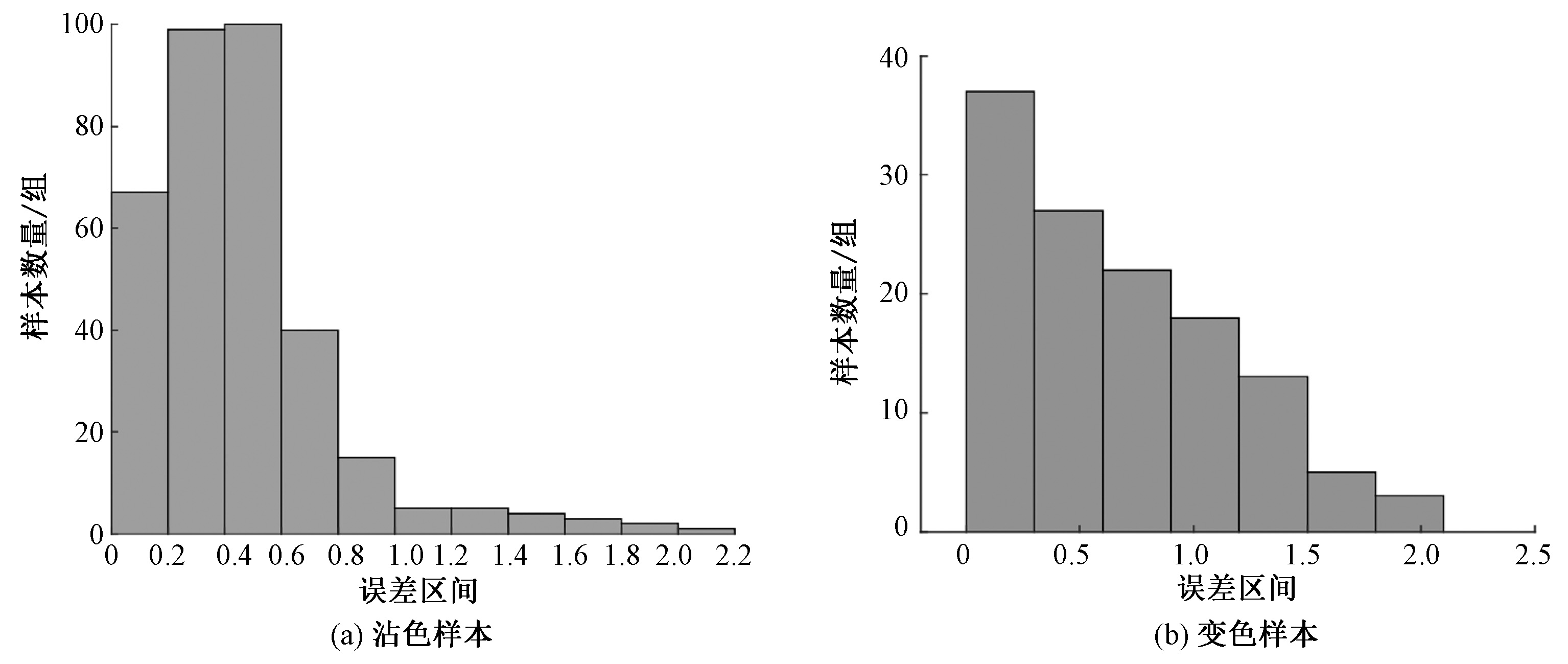
Histogram of absolute error of color fastness prediction using color difference conversion method. (a) Stained samples; (b) Discolored samples"

Fig.7

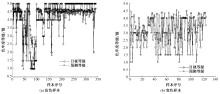
Comparison of color fastness prediction using curve fitting method and visual inspection results. (a) Stained samples; (b) Discolored samples"

Fig.8

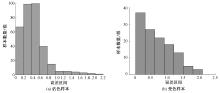
Histogram of absolute error of color fastness prediction using curve fitting method. (a) Stained samples; (b) Discolored samples"

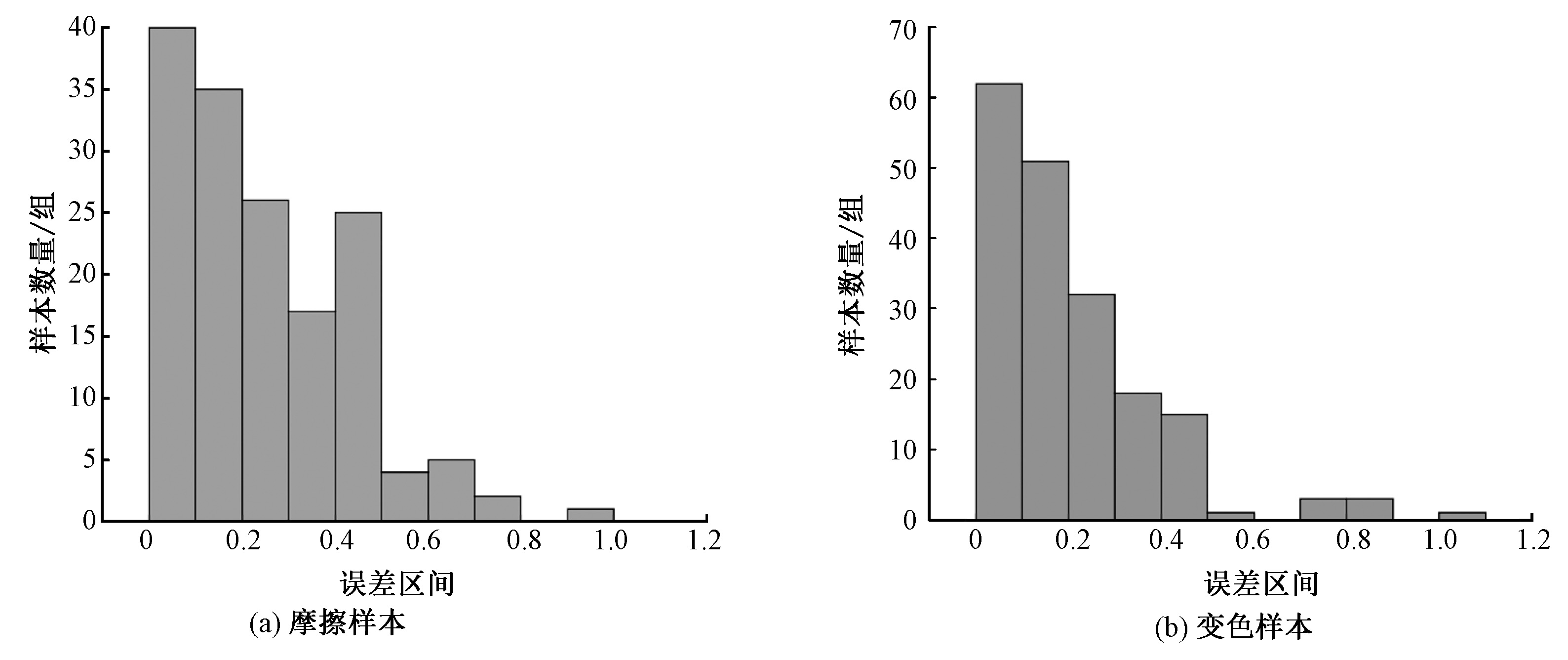
Fig.9

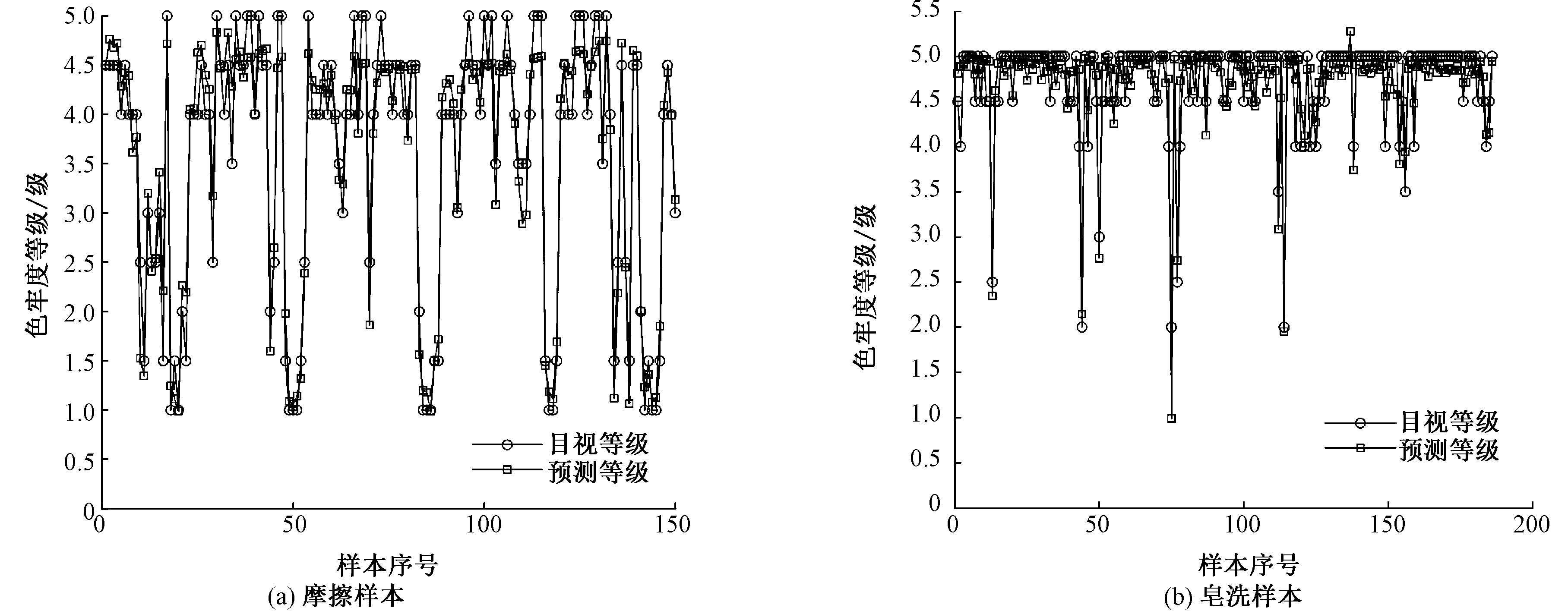
Comparison of stained color fastness prediction using BP neural network and visual inspection results. (a) Rubbed samples; (b) Washing samples"

Fig.10

Histogram of absolute error of stained color fastness prediction using BP neural network. (a) Rubbed samples;(b) Washing samples"

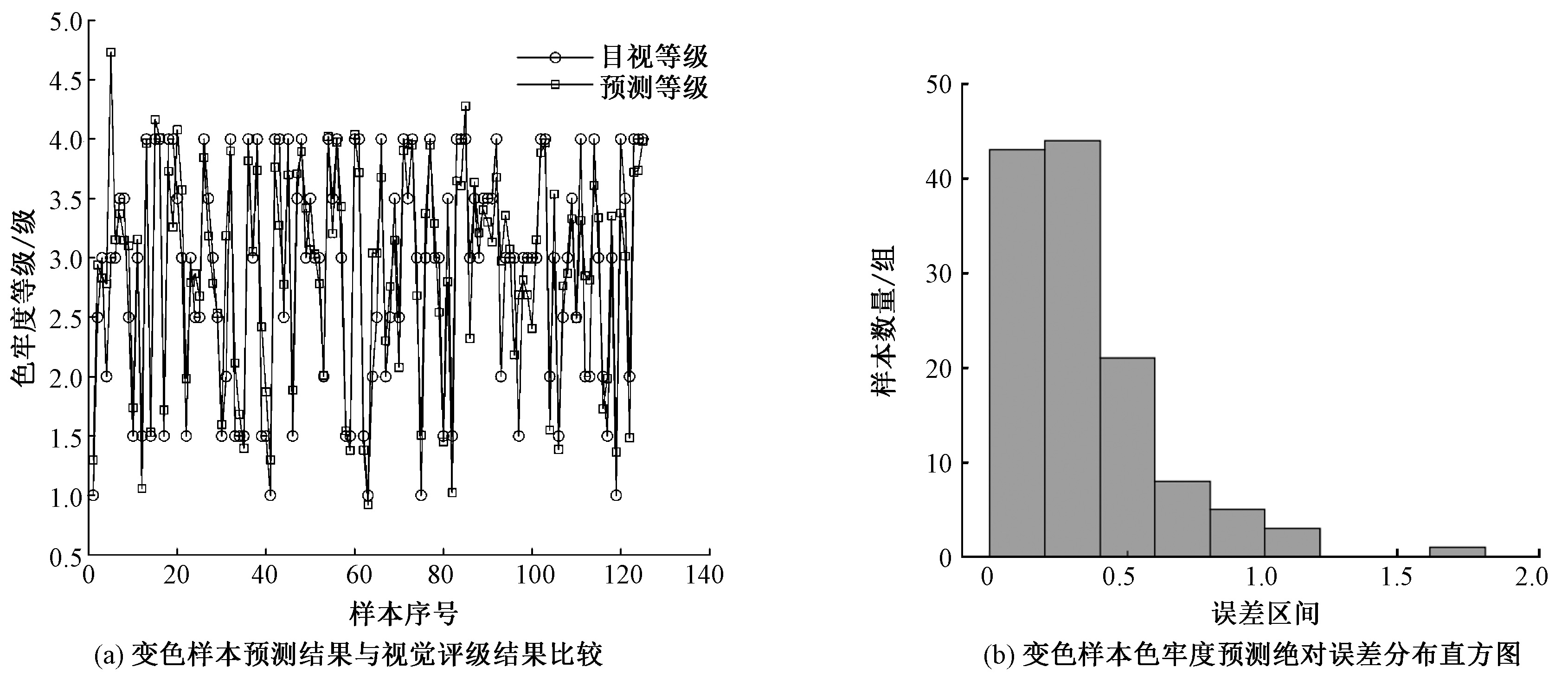
Fig.11

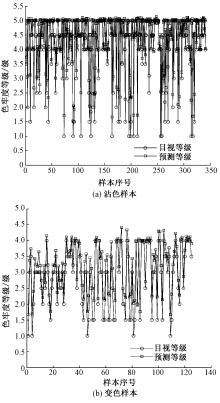
Comparison of discolored color fastness prediction using BP neural network and visual inspection results. (a) Prediction result of discolored samples; (b) Absolute prediction error statistic of discolored samples"

Tab.2

Root-mean-square error of three methods for color fastness prediction"

色差转换方法 曲线拟合方法 BP神经网络方法
修正前 修正后 沾色 变色 沾色 沾色细分样本 变色
沾色 变色 沾色 变色 摩擦 皂洗
0.52 0.59 0.34 0.42 0.57 0.82 0.38 0.30 0.27 0.41

Tab.3

Absolute prediction error statistics of stained samples using three different methods"

误差指标 色差转换
方法(修正)
曲线拟合
方法
BP神经网络方法
摩擦样本 皂洗样本
平均值 0.17 0.46 0.25 0.20
最大值 1.90 2.09 0.97 1.01
最小值 0.00 0.00 0.00 0.00
90%水平 0.54 0.80 0.49 0.41
标准差 0.29 0.34 0.19 0.18

Tab.4

Absolute prediction error statistics of discolored samples using three different methods"

误差指标 色差转换
方法(修正)
曲线拟合
方法
BP神经
网络方法
平均值 0.34 0.67 0.34
最大值 1.03 1.92 1.73
最小值 0.01 0.00 0.01
90%水平 0.70 1.41 0.70
标准差 0.25 0.51 0.28
[1] 张欢欢, 唐颖, 周炜. 纺织品色牢度入门浅析[J]. 纺织检测与标准, 2022, 8(4):21-24,32.
ZHANG Huanhuan, TANG Ying, ZHOU Wei. Introduction on the color fastness of textiles[J]. Textile Testing and Standard, 2022, 8(4):21-24,32.
[2] 赵博研, 赵玉珠. 常见色牢度的检测方法与应用[J]. 天津纺织科技, 2018(2):17-20.
ZHAO Boyan, ZHAO Yuzhu. Common test methods of color fastness and application[J]. Tianjin Textile Science & Technology, 2018(2):17-20.
[3] POPA S, RADULESCU-GRAD M E, PERDIVARA A, et al. Aspects regarding color fastness and adsorption studies of a new azo-stilbene dye for acrylic resins[J]. Scientific Reports, 2021. DOI:10.1038/s41598-021-85452-7.
[4] 张芳. 纺织品色牢度检测技术及细节探讨[J]. 轻纺工业与技术, 2021, 50(1):48-49.
ZHANG Fang. The technique and details of textile color fastness detection[J]. Light and Textile Industry and Technology, 2021, 50(1):48-49.
[5] 裘柯槟, 陈维国, 周华. 用光谱成像技术与分光光度法测量织物颜色的比较分析[J]. 纺织学报, 2020, 41(11):73-80.
doi: 10.13475/j.fzxb.20191204208
QIU Kebin, CHEN Weiguo, ZHOU Hua. Comparison of spectral imaging and spectrophotometry in fabric color measurement[J]. Journal of Textile Research, 2020, 41(11):73-80.
doi: 10.13475/j.fzxb.20191204208
[6] 周泽亚, 张惠芳, 侯琪瑾, 等. 纺织品色牢度评级的研究进展及展望[J]. 纺织导报, 2023(3):98-100,102.
ZHOU Zeya, ZHANG Huifang, HOU Qijin, et al. Research progress and prospect of color fastness rating of textiles[J]. China Textile Leader, 2023(3):98-100,102.
[7] 王丽华. DigiEye数码测色系统在纺织品色牢度评级中的应用[J]. 染整技术, 2017, 39(9):54-56,60.
WANG Lihua. Application of DigiEye digital color measuring system in textiles color fastness evalua-tion[J]. Textile Dyeing and Finishing Journal, 2017, 39(9):54-56,60.
[8] 安亦锦. 基于深度学习的纺织品沾色色牢度评级方法研究[D]. 上海: 东华大学, 2023: 11-13.
AN Yijin. Research on the classification method of textile color fastness based on deep learning[D]. Shanghai: Donghua University, 2023: 11-13.
[9] YU X, WANG H. Support vector machine classification model for color fastness to ironing of vat dyes[J]. Textile Research Journal, 2021, 91(15/16): 1889-1899.
[10] 商大伟. 基于色度空间中同色异谱现象的色牢度测定原理研究[D]. 青岛: 青岛大学, 2008: 4-8.
SAHNG Dawei. The study of color fastness measurement principle based onphenomena of metameric colours in color space[D]. Qingdao: Qingdao University, 2008: 4-8.
[11] BERNS R S, TAPLIN L A, NEZAMABADI M, et al. Spectral imaging using a commercial color-filter array digital camera[C]// Proc. 14th Triennial Meeting. Hague: ICOM Committee for Conservation, 2005: 743-750.
[12] CONNAH D R, HARDEBERG J Y. Spectral recovery using polynomial models[C]// Color Imaging X: Processing, Hardcopy, and Applications. California:SPIE, 2005: 65-75.
[1] ZHAO Xianglu, FANG Yinchun, LI Wei. Preparation and properties of superhydrophobic self-cleaning structural color fabrics [J]. Journal of Textile Research, 2025, 46(04): 154-161.
[2] FU Fen, WANG Yuhan, DING Kai, ZHAO Fan, LI Chaojing, WANG Lu, ZENG Yongchun, WANG Fujun. Research progress in cellulose-based hemostatic materials [J]. Journal of Textile Research, 2025, 46(04): 226-234.
[3] GUO Jieyan, XU Yingwen, DING Fang, REN Xuehong. Research progress in the applications of N-halamine antibacterial agents and their modified fibers [J]. Journal of Textile Research, 2025, 46(04): 255-263.
[4] HUANG Chunyue, HUANG Xin, DU Haijuan, XU Wenjie, YANG Xuemei, WAN Keyan, LI Xu, GAO Jie. Preparation of octamolybdates complex finishing agents and their ultraviolet protection property for finishing cotton fabrics [J]. Journal of Textile Research, 2025, 46(04): 138-145.
[5] LIAO Tanqian, LI Wenya, YANG Xiaoyu, ZHAO Jingna, ZHANG Xiaohua. Preparation and thermal properties of carbon nanotube/polyethylene glycol composite phase change fiber [J]. Journal of Textile Research, 2025, 46(03): 9-16.
[6] MAO Lifen, XIAO Hong, MAO Qinghui, MA Wujun, LIANG Zhijie, LI Min. Preparation and spectral compatibility of bistable thermochromic printed fabrics [J]. Journal of Textile Research, 2025, 46(03): 141-150.
[7] GUO Qing, MAO Yangshun, REN Yajie, LIU Jimin, WANG Huaifang, ZHU Ping. Simultaneous in-situ dyeing and flame retardant functionalization of wool fabrics based on laccase catalysis [J]. Journal of Textile Research, 2025, 46(02): 161-169.
[8] ZHANG Jie, GUO Xinyuan, GUAN Jinping, CHENG Xianwei, CHEN Guoqiang. Modification of cotton fabric by in-situ deposition of phosphorus/nitrogen flame retardants for durable flame retardancy [J]. Journal of Textile Research, 2025, 46(02): 180-187.
[9] SONG Wanmeng, WANG Baohong, SUN Yu, YANG Jiaxiang, LIU Yun, WANG Yuzhong. Preparation and performance of flame-retardant viscose fabrics with both mechanical and efficient flame-retardant properties [J]. Journal of Textile Research, 2025, 46(02): 188-196.
[10] YUAN Huabin, WANG Yifeng, WANG Jiapeng, XIANG Yongxuan, CHEN Guoqiang, XING Tieling. Modification of cotton fabrics by behenic acid and ZIF-8 for superhydrophobic and anti-icing performance [J]. Journal of Textile Research, 2025, 46(02): 197-206.
[11] LI Xin, YE Peipei, ZHAO Xiaoman, WANG Hongbo, YANG Guorong, HONG Jianhan. Preparation and properties of bismuth oxide-silicone rubber-based X-ray protective fabrics [J]. Journal of Textile Research, 2025, 46(02): 227-235.
[12] YANG Lu, MENG Jiaguang, CHEN Yuqing, ZHI Chao. Preparation and properties of humidity-responsive cellulose/polyurethane composites based on waste textiles [J]. Journal of Textile Research, 2025, 46(02): 26-34.
[13] LIANG Wenyu, JI Dongxiao, QIN Xiaohong. Preparation of micro-nanofiber core-spun yarn and its electroluminescent properties [J]. Journal of Textile Research, 2025, 46(01): 42-51.
[14] SHENG Xibin, ZHAO Songling, GU Bingfei. Production scheduling optimization of shirt component module based on standard man-hour prediction [J]. Journal of Textile Research, 2025, 46(01): 154-162.
[15] LIU Wei, TIAN Zhenchuan, SHEN Zhaoyang, MEI Run. Research process in metal-organic frameworks used in functional modification of fiber/fabrics [J]. Journal of Textile Research, 2024, 45(12): 215-224.
Viewed
Full text


Abstract

Cited

  Shared   
  Discussed   
No Suggested Reading articles found!