Journal of Textile Research ›› 2026, Vol. 47 ›› Issue (04): 189-197.doi: 10.13475/j.fzxb.20250905901

• Apparel Engineering • Previous Articles     Next Articles

Correlation between structural balance and clothing pressure distribution of women's wear

DU Jinsong1,2(), NIE Jiale1   

  1. 1 College of Fashion and Design, Donghua University, Shanghai 200051, China
    2 School of Textiles and Apparel, Xinjiang University, Urumqi, Xinjiang 830046, China
  • Received:2025-09-16 Revised:2026-03-11 Online:2026-04-15 Published:2026-04-15

Abstract:

Objective Pattern structure adjustment in women's garment development mainly relies on empirical judgment and lacks objective quantitative criteria. This study aims to address these issues by establishing a pattern structure evaluation method based on garment pressure data obtained from virtual fitting. The objective is to clarify the relationships among pattern parameters, body parameters, and garment pressure distribution, and to examine the feasibility of using pressure indicators to predict pattern adjustment quantities for objective pattern modification.

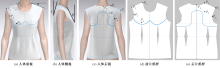
Method Virtual fitting experiments were conducted using the CLO3D system with a standard female mannequin. Pattern structural parameters, including bust circumference and shoulder slope angle, as well as mannequin body parameters such as bust girth, shoulder slope, and neck root girth, were systematically varied to investigate their effects on garment pressure distribution. A series of control, single-variable, coordinated, and cross-variable experiments were designed to analyze the individual and combined influences of structural and body parameters. Garment pressure data were collected at seven predefined pressure measurement points: neck side point (P1), shoulder endpoint (P2), front armpit point (P3), bust point (P4), back neck point (P5), back armpit point (P6), and scapular prominence point (P7). A total of 171 experimental datasets were obtained. Based on these data, a multilayer perceptron (MLP) was constructed to model the nonlinear relationships between pattern parameters, body measurements, and garment pressure. The trained model was further used to predict pattern adjustment quantities, and its performance was evaluated using error metrics.

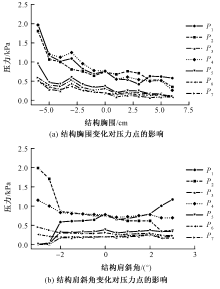
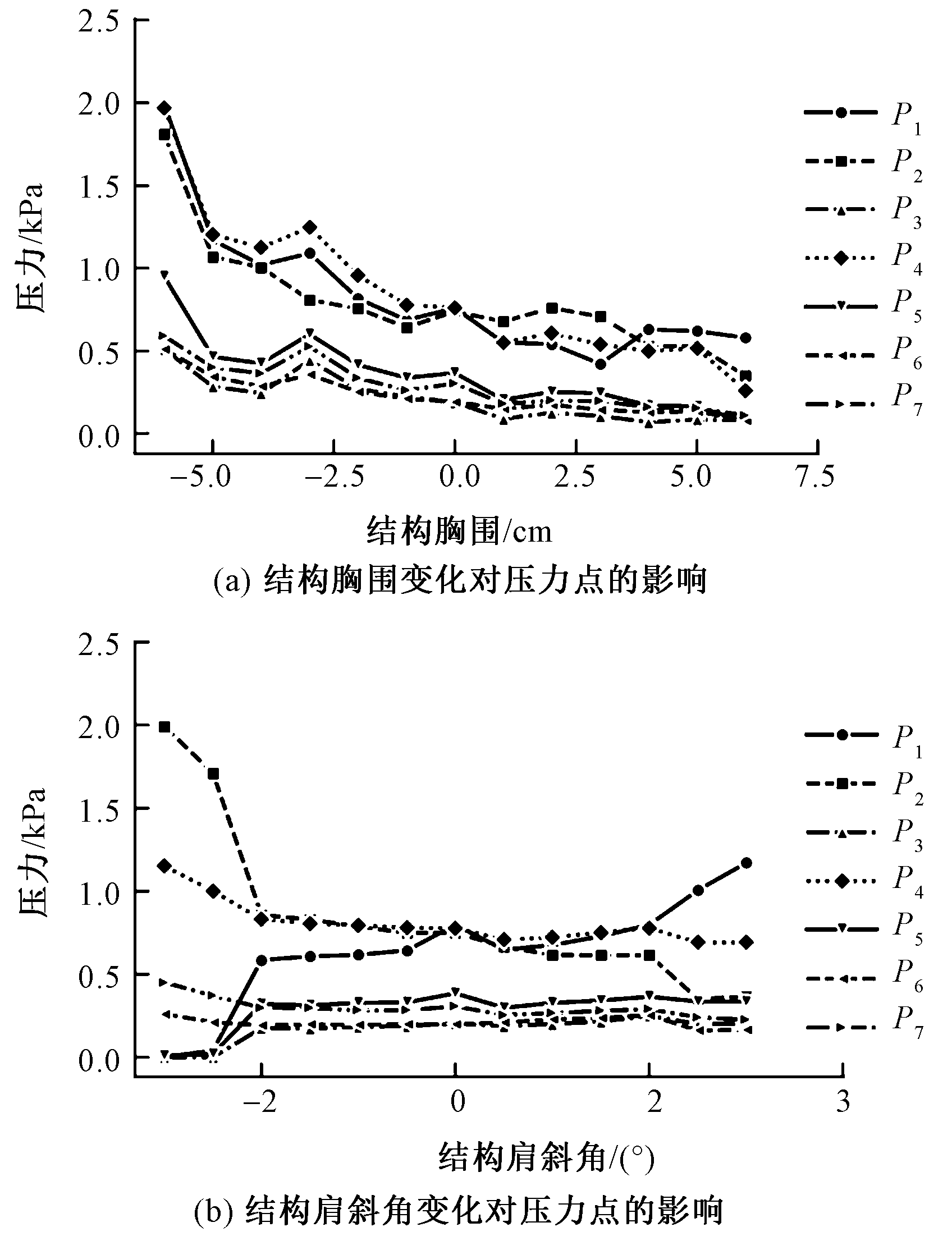
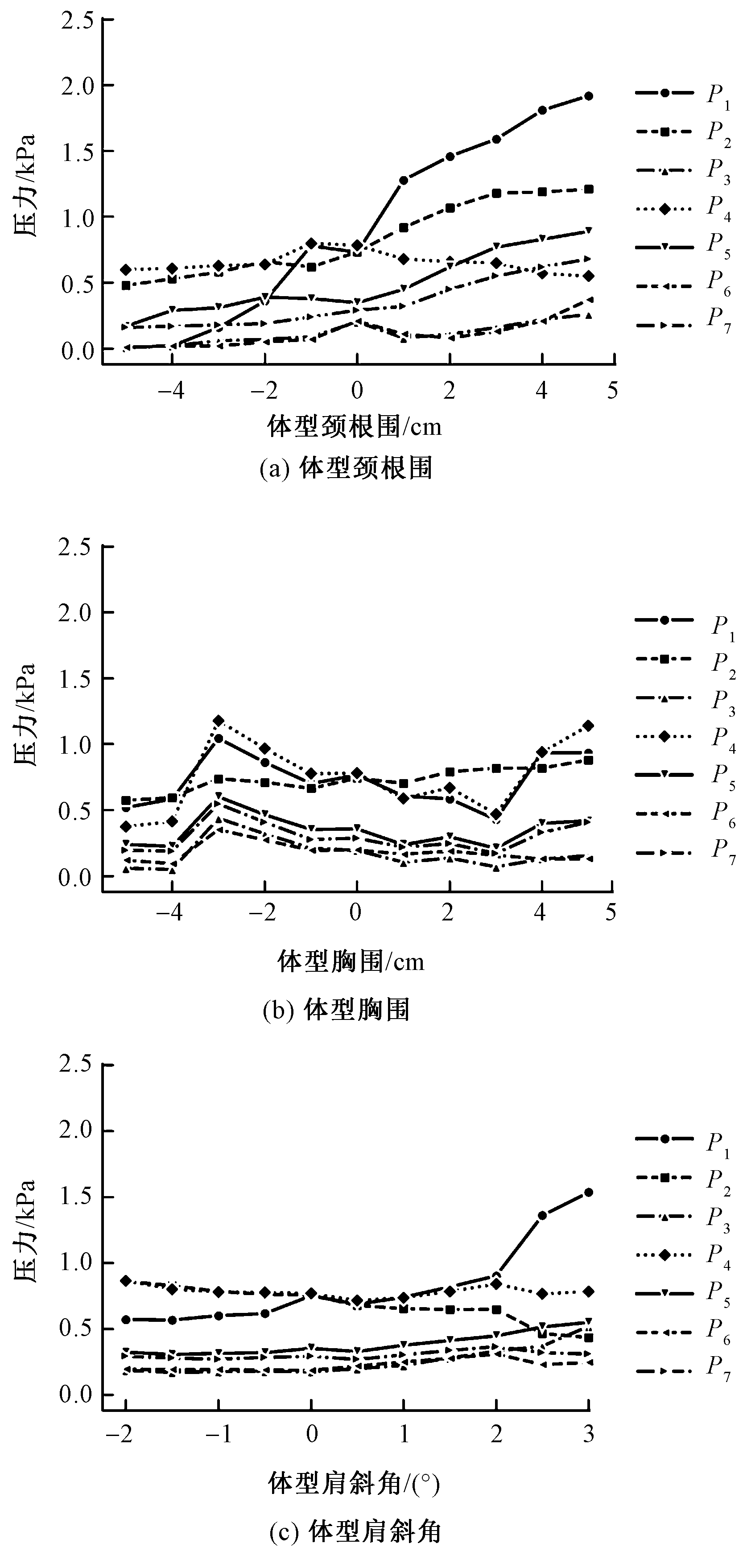
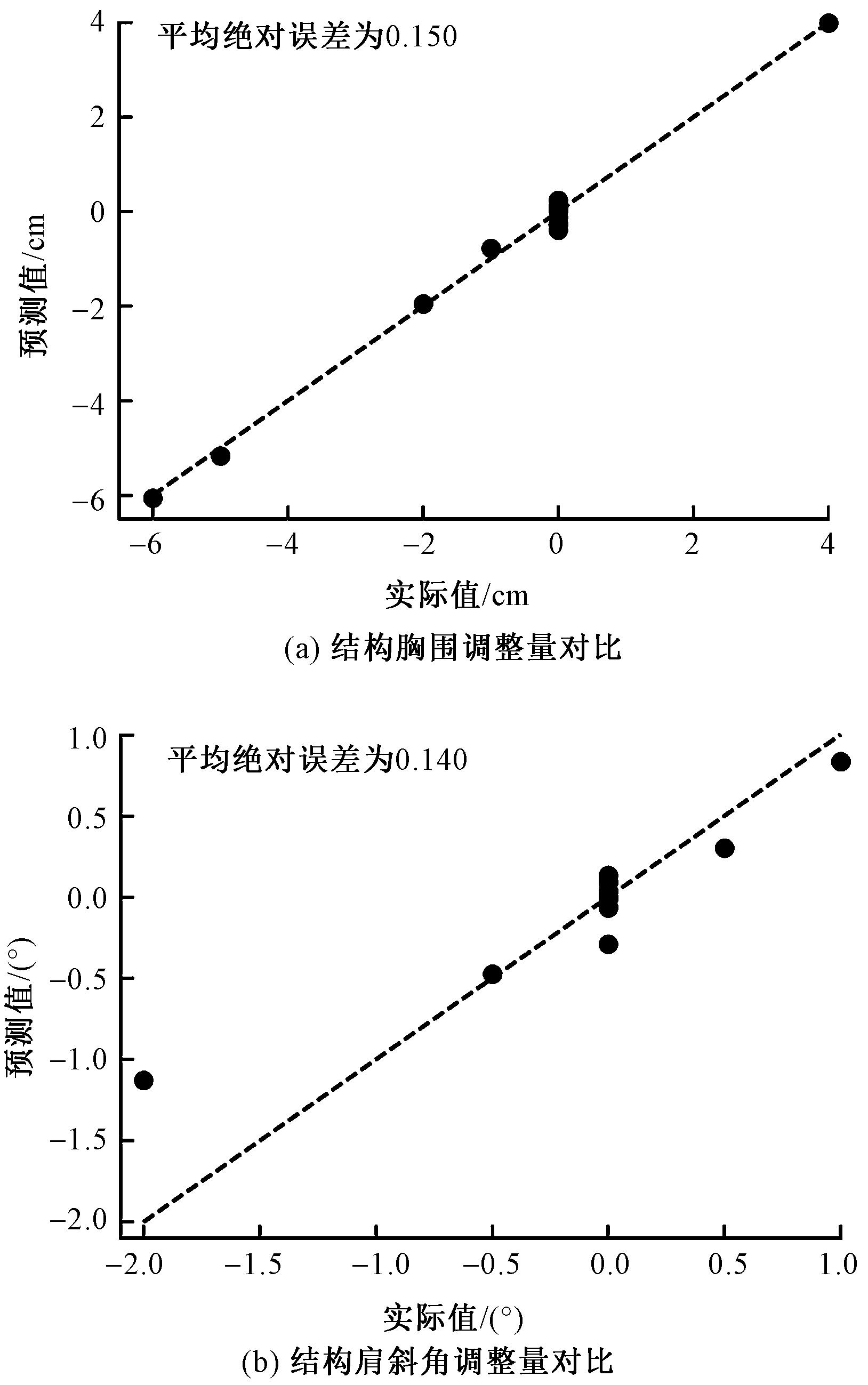
Results The results showed that increasing pattern bust circumference led to a consistent decrease in garment pressure values across all seven measurement points. The correlation coefficients between pattern bust circumference and garment pressure were found to range from -0.50 to -0.21, indicating that bust adjustment produces directionally consistent pressure changes across multiple anatomical regions. Among the measurement points, pressure responses at the neck and shoulder-related locations showed higher sensitivity to bust variation than those at posterior torso regions. Feature importance analysis revealed that neck root girth had the strongest influence on the prediction of pattern bust adjustment, with the highest importance value (2.027). This result indicates that variations in neck root girth correspond more closely to required bust-related structural modification than other body parameters considered in this study. Shoulder slope mainly affected pressure redistribution in the upper torso and shoulder regions, while its influence on lower torso pressure distribution remained limited. The MLP model achieved stable predictive performance for pattern adjustment quantities. The mean absolute error for predicting pattern bust circumference adjustment was 0.15 cm, and the mean absolute error for shoulder slope angle adjustment was 0.14°. These error levels remained consistent across different experimental groups, including single-variable and coordinated adjustment experiments, indicating stable prediction performance under varying parameter combinations. Analysis of prediction residuals indicated no systematic bias related to pressure magnitude or measurement location. Further verification experiments were conducted to assess the reliability of the proposed approach. Subsequent physical garment pressure tests using an airbag-type contact pressure measurement system confirmed that, after structural modification, measured pressure values at all locations fell within corresponding comfort threshold ranges. The deviation between virtual and physical pressure measurements remained within an acceptable range.

Conclusion Results indicate that garment pressure data obtained through virtual fitting can quantitatively describe the relationship between women's garment pattern structure and pressure distribution. The research confirms that pattern structural parameters, particularly bust circumference and shoulder slope, are closely associated with pressure responses at key anatomical locations, while mannequin neck root girth plays an important role in determining required bust-related pattern adjustments. The MLP model provides stable predictions of pattern adjustment quantities within the experimental parameter range, and verification through physical pressure testing confirms consistency between virtual and real garment pressure distributions.

From a practical perspective, the proposed method offers an objective reference for pattern structure modification during virtual sample development, reducing reliance on empirical judgment. Future work may extend this approach to a wider range of garment types, body shapes, and dynamic postures, and further integrate pressure-based evaluation with digital pattern design systems, supporting data-driven garment development and structural optimization.

Key words: neural network, clothing pressure distribution, garment pattern structure, virtual fitting, garment fit

CLC Number: 

  • TS941.71

Fig.1

Distribution of garment pressure threshold. (a) Front view of body; (b) Side view of body; (c) Back view of body; (d) Front pattern piece; (e) Back pattern piece"

Tab.1

Coordinates of clothing pressure measurement points"

测量点 横坐标 纵坐标
颈侧点P1 k-0.2 L+k/3+B/80
肩端点P2 0.13B+
17+2sin18°
mcos18°
前腋点P3 0.13B+5.8 L-(0.1h+8-B/80-
k/3-B/40-2)/2
胸点P4 0.1B+0.5 L+k/3+B/80-(0.1h+8)
后颈点P5 0 L
后腋点P6 0.13B+17 L-$\frac{0.1h+8-B/80-k/3}{5}$×2
肩胛突出点P7 0.13B+12 L-$\frac{0.1h+8-B/80-k/3}{5}$×2

Tab.2

Virtual experiment design"

实验类型 实验序号 纸样结构 人台体型
对照实验 实验1 纸样胸部参数 纸样肩部参数 人台胸部参数 人台肩部参数 人台颈部参数
单一变量分析 实验2 纸样胸部参数
实验3 纸样肩部参数
实验4 人台胸部参数
实验5 人台肩部参数
实验6 人台颈部参数
协同变量分析 实验7 同步对应调整纸样与人台胸部参数
实验8 同步对应调整纸样与人台肩部参数
交叉变量分析 实验9 调整纸样胸围参数和纸样肩部参数
实验10 调整人台胸部参数和人台肩部参数

Tab.3

Thresholds of clothing pressure at measurement points"

测量点 名称 相对阈值/kPa 备注
P1 颈侧点 0.60~0.66 变化影响小
P2 肩端点 0.65~0.71 对肩斜角变化敏感
P3 前腋点 0.09~0.13 极低压区
P4 胸点 0.63~0.72 对胸围变化敏感
P5 后颈点 0.63~0.68 稳定性强
P6 后腋点 0.18~0.25 对肩斜变化敏感
P7 肩胛突点 0.18~0.25 与肩斜变化反向

Tab.4

Correlation coefficients between experimental variables and garment pressure at each measurement point"

参数 P1 P2 P3 P4 P5 P6 P7
结构胸围 -0.35 -0.21 -0.38 -0.50 -0.40 -0.45 -0.41
结构肩斜角 0.18 -0.33 0.10 -0.08 0.07 0.06 -0.07
体型颈根围 0.40 0.20 0.10 -0.01 0.26 0.20 0.27
体型胸围 -0.15 0.10 -0.29 -0.18 -0.22 -0.25 -0.26
体型肩斜 0.26 -0.19 0.24 -0.02 0.16 0.22 0.08

Fig.2

Effect of structural bust variation(a) and structural shoulder slope angle variation(b) on pressure measurement points"

Fig.3

Effect of neck base circumference(a), bust circumference(b) and shoulder slope(c) variation on pressure measurement points"

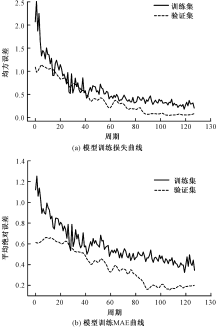
Fig.4

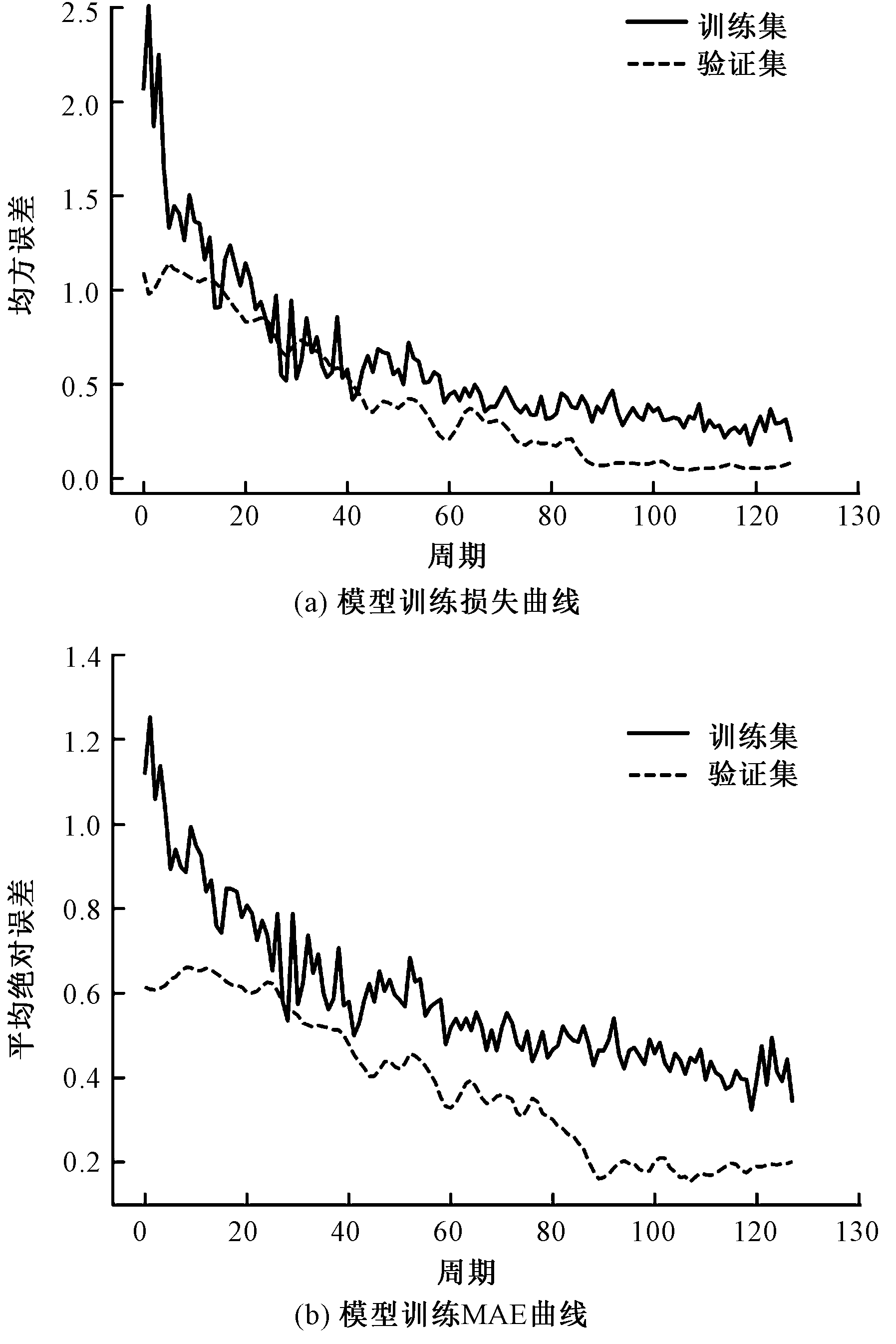
Model training loss and MAE curves. (a) Model training loss curve; (b) Model training MAE curve"

Fig.5

Comparison of model-predicted vs. actual values. (a) Comparison of structural bust adjustment values; (b) Comparison of structural shoulder slope angle adjustment values"

Fig.6

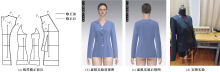
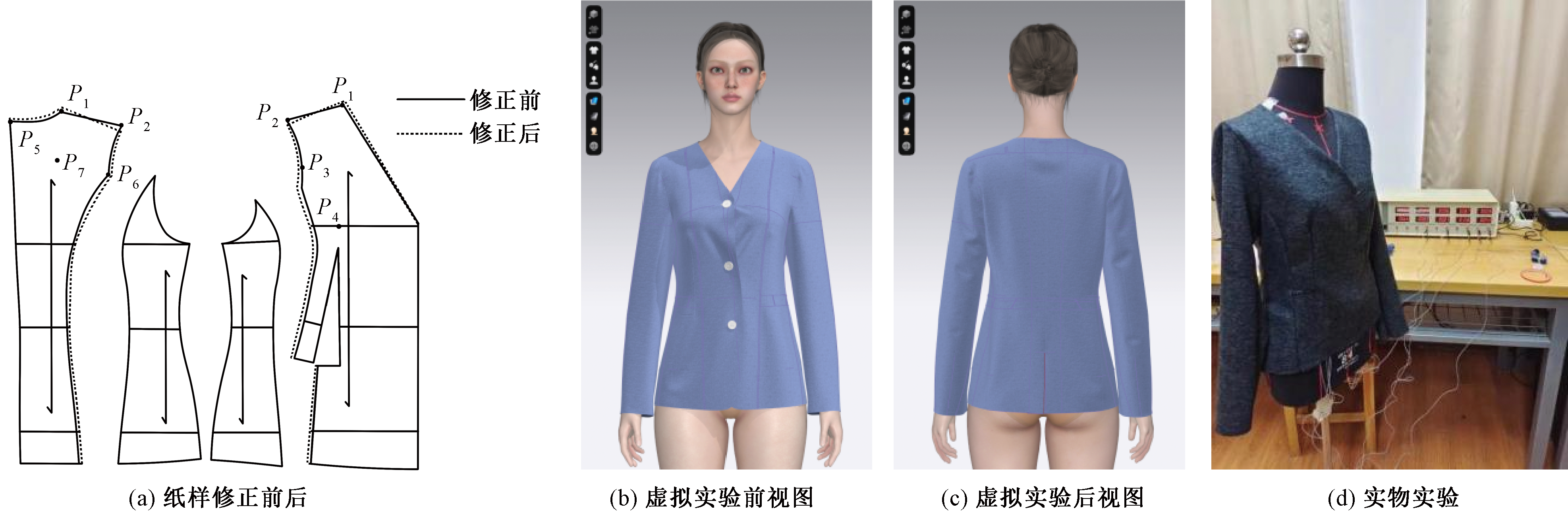
Garment pressure measurement: pattern vs. physical and virtual prototypes. (a) Pattern before and after modification; (b) Front view of virtual experiment; (c) Post-adjustment virtual experiment result; (d) Physical experiment"

Tab.5

Virtual prototype garment pressure prediction error"

测量
修正前
虚拟测
量值/
kPa
X调整
量/cm
Y调整
量/cm
修正后
实物测
量值/
kPa
修正后
虚拟测
量值/
kPa
舒适性
阈值/
kPa
P1 0.61 -0.03 +0.10 0.65 0.63 1.6
P2 0.75 +0.22 -0.10 0.67 0.65 1.6
P3 0.11 +0.18 -0.04 0.12 0.11 1.3
P4 0.98 +0.28 +0.22 0.69 0.66 2.1
P5 0.64 -0.02 -0.01 0.66 0.64 1.1
P6 0.21 +0.12 -0.08 0.19 0.24 1.3
P7 0.28 +0.15 -0.14 0.2 0.23 1.6
[1] 卢华山, 阎玉秀, 李梦园, 等. 跑步运动中服装压对女子下肢肌肉疲劳的影响[J]. 纺织学报, 2017, 38(7): 118-123.
LU Huashan, YAN Yuxiu, LI Mengyuan, et al. Influence of clothing pressure on female lower limb muscle fatigue during running sports[J]. Journal of Textile Research, 2017, 38(7): 118-123.
doi: 10.1177/004051756803800202
[2] 尹玲, 翁睿, 陆鑫, 等. 基于人体着装压和表面肌电信号的骑行裤功效分析[J]. 毛纺科技, 2025, 53(3): 22-30.
YIN Ling, WENG Rui, LU Xin, et al. Efficacy analysis of cycling pants based on clothing pressure and surface electromyography analysis[J]. Wool Textile Journal, 2025, 53(3): 22-30.
[3] 梅雪蕊, 郭瑞良. 基于短道速滑紧身服的CLO 3D虚拟服装压力评价研究[J]. 北京服装学院学报(自然科学版), 2023, 43(4): 29-36.
MEI Xuerui, GUO Ruiliang. Study on pressure evaluation of CLO 3D virtual clothing pressure based on short track speed skating bodysuit[J]. Journal of Beijing Institute of Fashion Technology (Natural Science Edition), 2023, 43(4): 29-36.
[4] JARIYAPUNYA N, MUSILOVA B, GERSAK J, et al. The influence of stretch fabric mechanical properties on clothing pressure[J]. Vlakna a Textil, 2017, 24(2):43-48.
[5] 何崟, 邓凌, 林美霞, 等. 冬季运动智能柔性人台关键技术开发[J]. 纺织学报, 2024, 45(2): 221-230.
HE Yin, DENG Ling, LIN Meixia, et al. Key technology development of intelligent and flexible mannequin for winter sports[J]. Journal of Textile Research, 2024, 45(2): 221-230.
[6] 谢红, 张林蔚, 沈云萍. 基于人体臂部的连续动态服装压力预测模型及准确性表征方法[J]. 纺织学报, 2024, 45(7): 150-158.
XIE Hong, ZHANG Linwei, SHEN Yunping. Continuous dynamic clothing pressure prediction model based on human armand accuracy characterization method[J]. Journal of Textile Research, 2024, 45(7): 150-158.
[7] 李玉芬, 朱卫华. 服装压对瑜伽运动中女子上身肌肉疲劳的影响[J]. 毛纺科技, 2021, 49(6): 52-57.
LI Yufen, ZHU Weihua. Influence of fitting yoga clothing pressure on the upper body comfort of women[J]. Wool Textile Journal, 2021, 49(6): 52-57.
[8] LIU K X, ZENG X Y, BRUNIAUX P, et al. Fit evaluation of virtual garment try-on by learning from digital pressure data[J]. Knowledge-Based Systems, 2017, 133: 174-182.
doi: 10.1016/j.knosys.2017.07.007
[9] WANG Z J, WANG J P, ZENG X Y, et al. Prediction of garment fit level in 3D virtual environment based on artificial neural networks[J]. Textile Research Journal, 2021, 91(15/16): 1713-1731.
doi: 10.1177/0040517520987520
[10] ZHAO X Q, FAN K, SHI X, et al. Virtual fit evaluation of pants using the Adaptive Network Fuzzy Inference System[J]. Textile Research Journal, 2021, 91(23/24): 2786-2794.
doi: 10.1177/00405175211020515
[11] 周捷, 马秋瑞. BP神经网络在塑身内衣压力预测中的应用[J]. 纺织学报, 2019, 40(4): 111-116, 121.
ZHOU Jie, MA Qiurui. Application of BP neural network in prediction of shapewear pressure[J]. Journal of Textile Research, 2019, 40(4): 111-116, 121.
[12] TAN X X, WANG C H, HE Y, et al. Intelligent assessment of pressure in women's loungewear based on machine learning algorithms[J]. Textile Research Journal, 2026, 96(1/2): 89-103.
doi: 10.1177/00405175251313521
[13] KIM H Y, OH K W. Cycling knee brace design analysis using 3D virtual clothing program to assess clothing pressure distribution and variance[J]. Fashion and Textiles, 2023, 10(1): 36.
doi: 10.1186/s40691-023-00354-8
[14] KIM J, CHAE Y. Analysis of clothing pressure based on material of virtually-fitted swimsuits and wearer body type and movement using 3D fashion design software[J]. PLoS One, 2025, 20(11): e0334782.
doi: 10.1371/journal.pone.0334782
[15] 王永荣, 罗胜利, 廖银琳, 等. 女性服装压力舒适阈限的测试与研究[J]. 纺织学报, 2018, 39(3): 132-136.
WANG Yongrong, LUO Shengli, LIAO Yinlin, et al. Test and study of pressure comfort threshold of female's garment[J]. Journal of Textile Research, 2018, 39(3): 132-136.
[1] LI Yutong, YU Shijia, HAN Shuguang. Multi-view 3-D human body reconstruction [J]. Journal of Textile Research, 2026, 47(04): 215-224.
[2] YUAN Shuqing, LIANG Xue, SHI Yunlong, QIAN Xiaoming, SANG Huiying, XIE Yijun, QIU Mengshi, MAO Qinfang. Analysis and optimization of women's yoga casual pants focusing on pressure distribution [J]. Journal of Textile Research, 2026, 47(03): 263-271.
[3] LIU Yixin, WAN Meiyi, ZHANG Ning, PAN Ruru. Feature fusion approach for fabric image retrieval under complex scenarios [J]. Journal of Textile Research, 2026, 47(02): 188-194.
[4] YIN Qiaolin, NI Shenyijia, ZHENG Qi, HE Ying. Construction and application of comprehensive dress evaluation model based on body shape characteristics [J]. Journal of Textile Research, 2025, 46(12): 198-207.
[5] DENG Yuntao, TAN Yanjun, ZHANG Hongsong, YAN Yu, YU Qiuyu, LIN Fengxi, WANG Yixin, AN Lele. Nival system for fabric pilling grade evaluation [J]. Journal of Textile Research, 2025, 46(11): 102-110.
[6] TAO Chen, HONG Xinghua, YIN Meifen. Virtual skin modeling for clothing pressure simulation [J]. Journal of Textile Research, 2025, 46(10): 197-205.
[7] ZHU Yaolin, LI Zheng, ZHANG Qiang, CHEN Xin, CHEN Jinni, ZHANG Hongsong. Quantitative detection of wool and cashmere based on near infrared spectroscopy and multi-feature network [J]. Journal of Textile Research, 2025, 46(09): 104-111.
[8] ZHENG Xiaohu, DU Siqi, LIU Yongqing, WANG Jian, CHEN Feng. Cotton yarn quality prediction based on one-dimensional convolutional neural network [J]. Journal of Textile Research, 2025, 46(09): 120-127.
[9] ZHANG Xiaoting, ZHAO Pengyu, PAN Ruru, GAO Weidong. Plaid fabric image retrieval method based on deep feature fusion [J]. Journal of Textile Research, 2025, 46(08): 89-95.
[10] JI Mengqi, HE Ying, MA Yongqian. Optimization of trousers patterns for men with protruding abdomen based on three-dimensional fitting [J]. Journal of Textile Research, 2025, 46(06): 187-195.
[11] GU Mengshang, ZHANG Ning, PAN Ruru, GAO Weidong. Object detection of weaving fabric defects using frequency-domain convolution modules [J]. Journal of Textile Research, 2025, 46(05): 159-168.
[12] LIANG Jinxing, LI Dongsheng, LI Yifan, ZHOU Jing, LUO Hang, CHEN Jia, HU Xinrong. Color fastness grading of textiles based on color measurement of digital images [J]. Journal of Textile Research, 2025, 46(04): 119-128.
[13] JING Jianwei, HU Yupeng, MA Wangfei, YUAN Zishun, GU Bingfei, XU Wang. Finite element analysis on influence of air gap on ballistic performance of body armor [J]. Journal of Textile Research, 2025, 46(04): 187-196.
[14] WANG Luojun, PENG Laihu, XIONG Xuyi, LI Yang, HU Xudong. Hyper basis function-based adaptive inverse non-singular method for constant-tension yarn transport [J]. Journal of Textile Research, 2025, 46(02): 92-99.
[15] SHENG Xibin, ZHAO Songling, GU Bingfei. Production scheduling optimization of shirt component module based on standard man-hour prediction [J]. Journal of Textile Research, 2025, 46(01): 154-162.
Viewed
Full text


Abstract

Cited

  Shared   
  Discussed   
No Suggested Reading articles found!