Journal of Textile Research ›› 2025, Vol. 46 ›› Issue (05): 227-235.doi: 10.13475/j.fzxb.20241005301

• Apparel Engineering • Previous Articles     Next Articles

Modular design of knitted protective jackets based on functional partitioning

CONG Honglian(), FANG Leimei, JIANG Fei, LI Huijian, YU Xuliang   

  1. Engineering Research Center for Knitting Technology, Ministry of Education, Jiangnan University,Wuxi, Jiangsu 214122, China
  • Received:2024-10-29 Revised:2025-01-16 Online:2025-05-15 Published:2025-06-18

Abstract:

Objective The current demand for cut- and rubbing-resistant flexible protective clothing is becoming increasingly diverse and complex.The majority of protective clothing currently available on the market is designed solely to provide only physical protection, which is single in function and fails to align with the design concept of modular protection for different parts of the human body. This research proposes a modularized design method for flat-bed knitted protective jacket based on functional partitioning, which is derived from the principles of ergonomic theory and the flat-bed knitting process.
Methods The functional partition design scheme was initially delineated in a systematic manner. Subsequently, the method for developing the modularized design model of functional partitioning was elucidated in comprehensive detail, encompassing three fundamental aspects, which are the functional partitioning principle, the functional partitioning logic, and the functional zoning template. Finally, the design was validated through the analysis of a knitted female protective jacket, which was knitted on a STOLL CMS ADF computerized flat knitting machine.
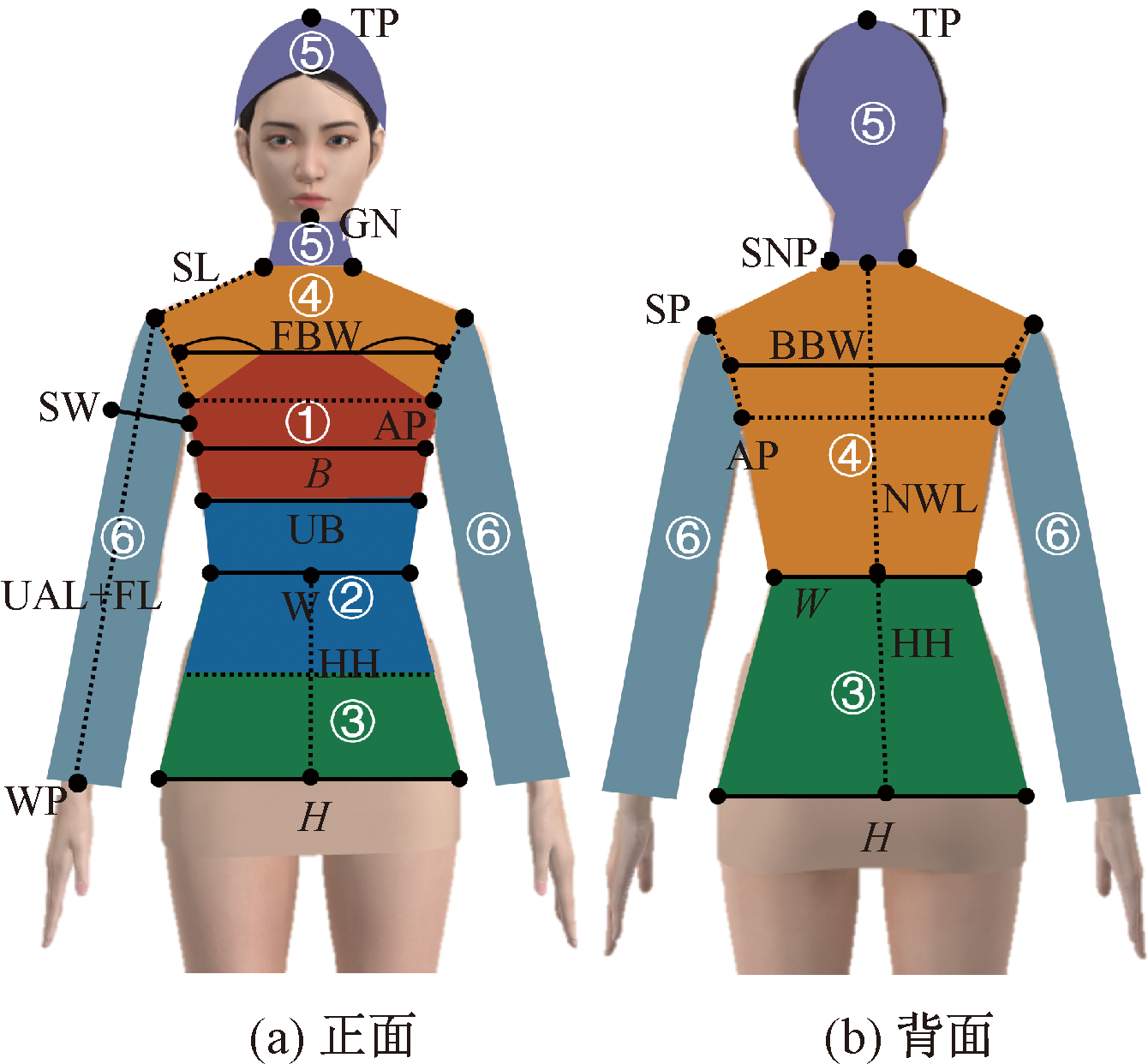
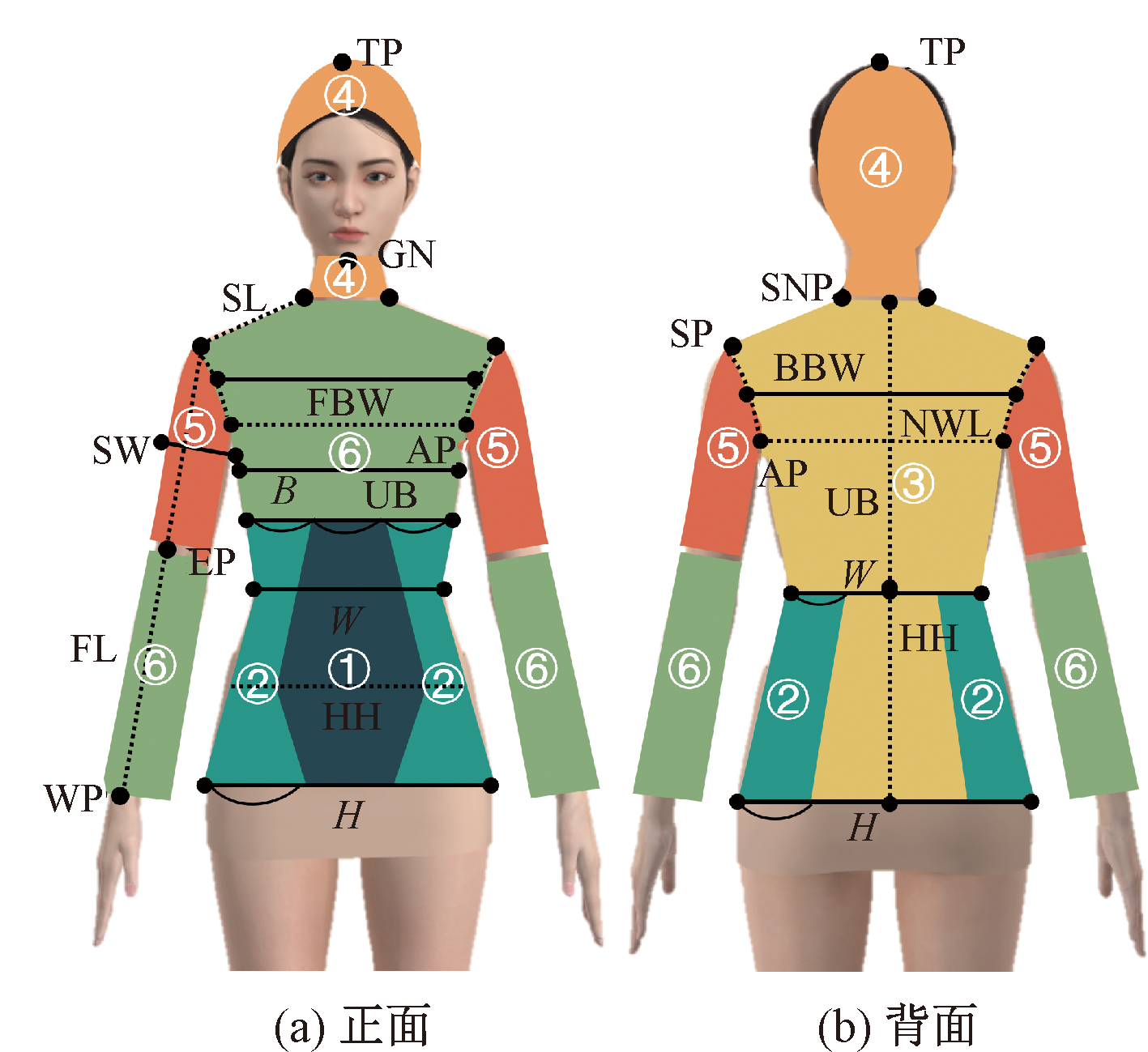
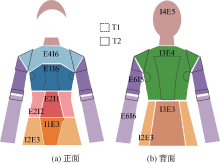
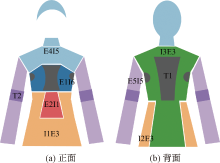
Results The modularization design process is shown, which started with the demand analysis of the garment. The functional partitioning logic was formulated according to the functional partitioning principle; the functional partitioning template was generated, and the modularization design verification and application were carried out. It shows the combination of anthropometric datum and datum line to determine the module division size and location. It demonstrates that the outer layer of protection was zoned into the following levels: chest, abdomen, waist, back, head, and upper limbs. The functional partitioning levels of the inner layer of protection, from highest to lowest, are abdomen, back, head, shoulder, upper arm, forearm, and chest. The logic for addressing conflicts in merging functional zones is as follows: pariritization rules are established to ensure that the outer layer of protection takes precedence over the inner layer, while accommodating the pariritization of different body parts based on their specific requirements. The functional partitioning template must be dynamically adjusted, encompassing adjustments to the number of zones (with consideration given to merging when fewer than 13 zones are present) and the inclusion of special functions such as high mobility and high permeathability, tailored to meet specific needs. Applying this principle, a protective jacket functional partitioning model was constructed.
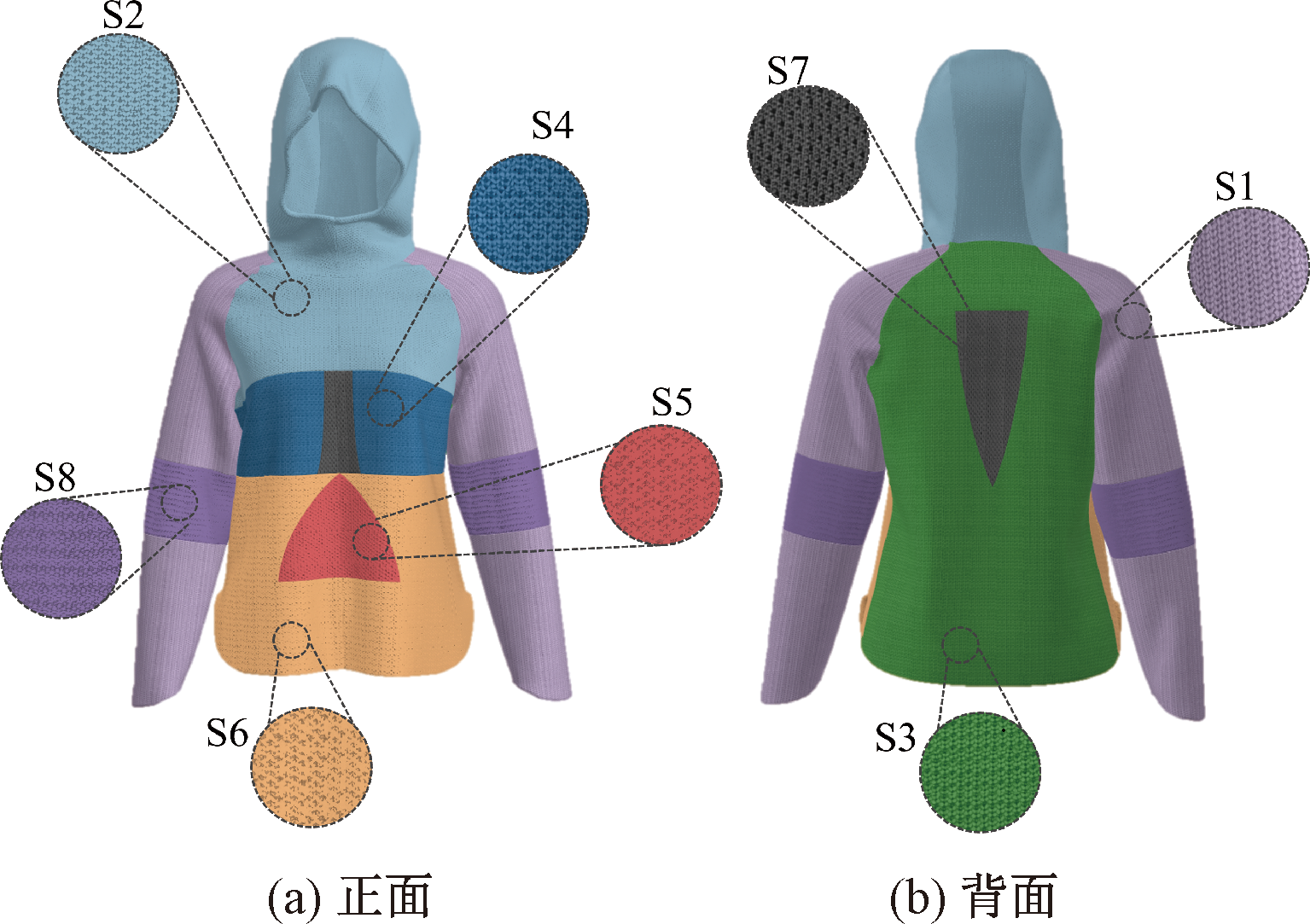
Conclusion This study proposes modular design of knitted protective apparel, with a focus on the integration of ergonomic theory and the consideration of the diversity characteristics inherent to cross knitting organizations. The modular design comprises three components: functional partitioning principle, logic, and template, achieving synergy and balance of body functions through the division and integration of functional modules. The objective is to develop a comprehensive understanding of the protective function, which serves as the primary foundation for the design process. A horizontal knit protective jacket for women serves as an exemplar for verification. The results demonstrate that the application of the modular design method of functional partitioning has yielded a functional partitioning model of a protective jacket comprising eight zones. Based on this model, three-dimensional body data is combined with a two-dimensional flat paper pattern, which is then converted into stitch and row counts for machine knitting, ultimately being shaped through knitting technology. The connection of different zoned modules is achieved through the application of high-efficiency fiber product thermo-compression molding technology (utilizing an ultrasonic device for heating during the molding process, followed by the use of a hobbing knife to cut the fabric interface) or the needle augmentation/stacking process (necessitating additional stitches when the lower module has fewer stitches than the upper module, and stacking stitches when the lower module has more stitches). Finally, digital display technology is employed, which verified the integration of the modular design concept of functional partitioning in terms of functionality and comfort. This study presents a realization scheme for the development of protective clothing with functional partitioning, with the objective of creating an advanced protective clothing system that can effectively respond to a range of protection needs while also ensuring the comfort and adaptability of the wearer.

Key words: flat-bed knitting technique, protective clothing, functional partitioning, modular design, ergonomics

CLC Number: 

  • TS186.3

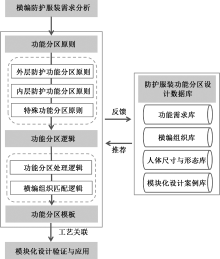
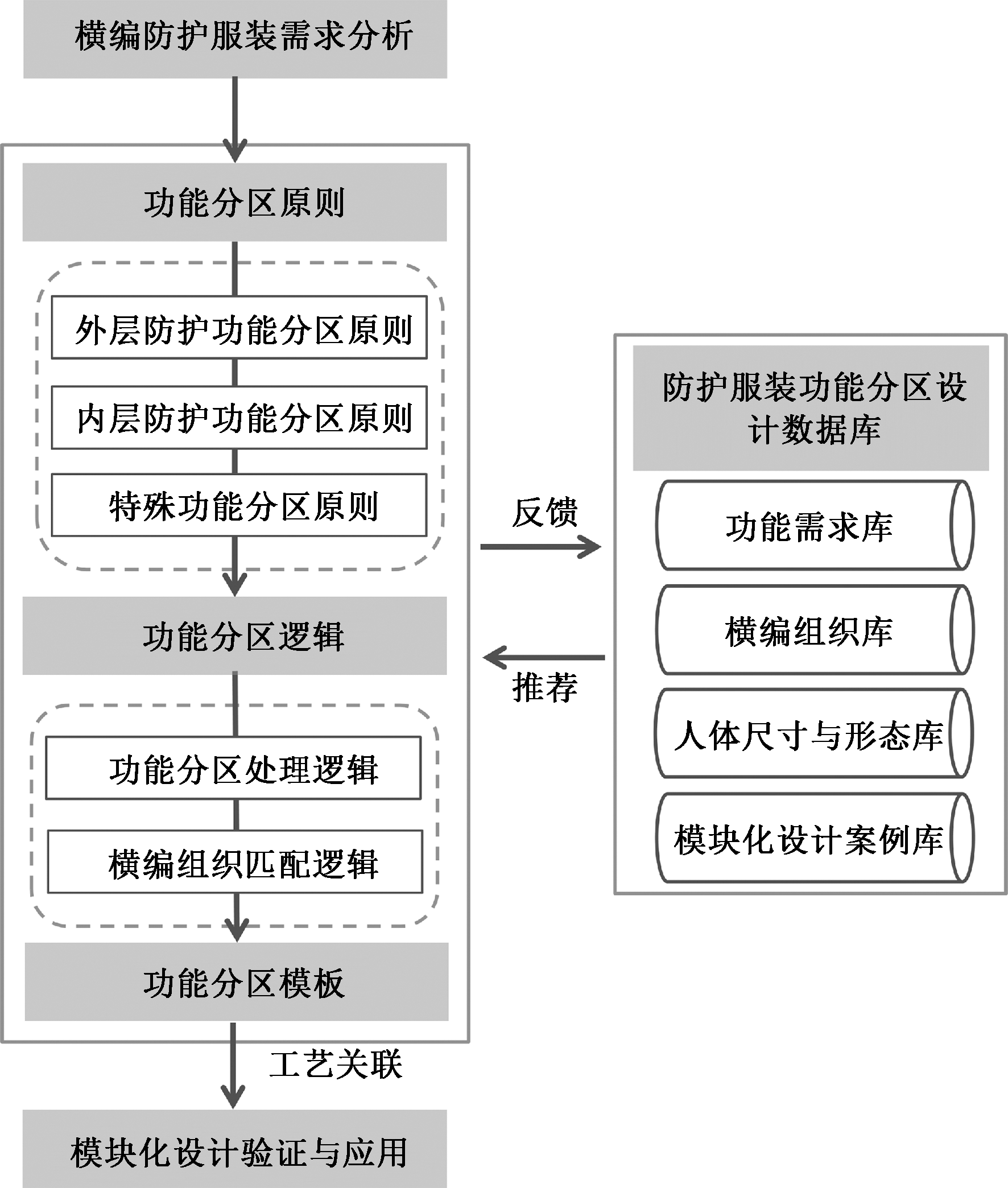
Fig.1

Structural framework for modular design based on functional partitioning"

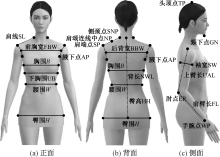
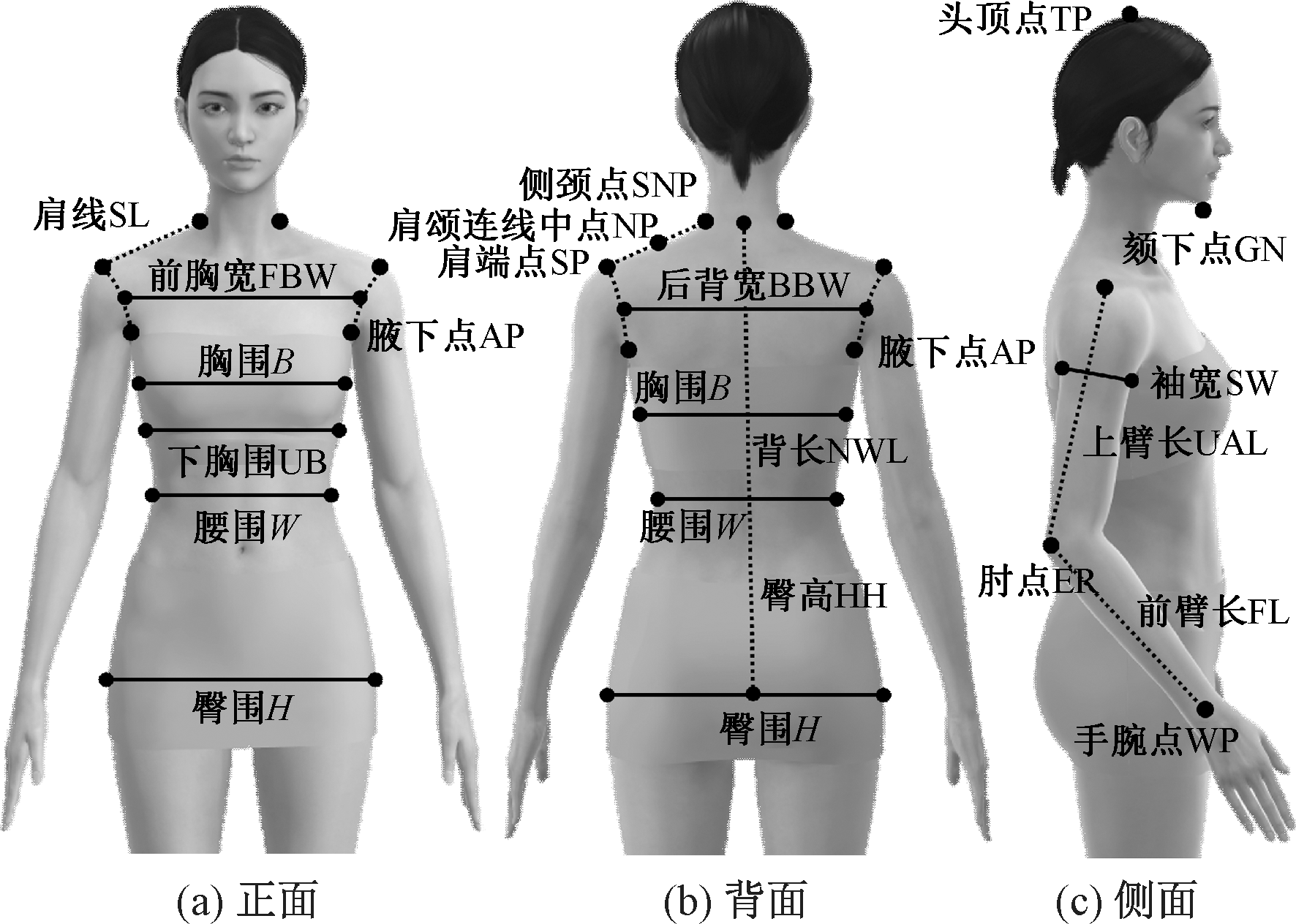
Fig.2

Upper body reference points and related measurement areas. (a) Front; (b) Back ;(c) Sides"

Fig.3

Functional partitioning for outer protection. (a) Front; (b) Back"

Fig.4

Functional partitioning for inner protection. (a) Front; (b) Back"

Fig.5

Special functional partitioning. (a) Front; (b) Back"

Fig.6

Functional partitioning model. (a) Front; (b) Back"

Fig.7

Protective jacket functional partitioning model. (a) Front; (b) Back"

Tab.1

Fabric basic parameters"

编号 分区编号 横密/
(纵行·(5 cm)-1)
纵密/
(横列·(5 cm)-1)
耐切割
载荷/N
切割
等级
保温率/
%
透气率/
(mm·s-1)
排汗性
等级/级
S1 E5I5 36 56 19.0 A4 38.7 130.5 3
S2 E4I5 36 66 18.4 A4 42.3 137.2 4
S3 I3E3 36 76 25.3 A5 41.4 133.6 4
S4 E1I6 36 72 27.7 A5 40.6 140.2 3
S5 E2I1 42 68 22.7 A5 53.6 146.3 3
S6 I1E3 44 80 19.1 A4 51.1 125.8 4
S7 T1 44 74 22.0 A5 36.4 324.3 4
S8 T2 42 68 21.0 A4 43.6 165.7 3

Fig.8

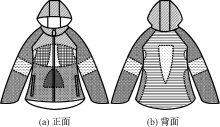
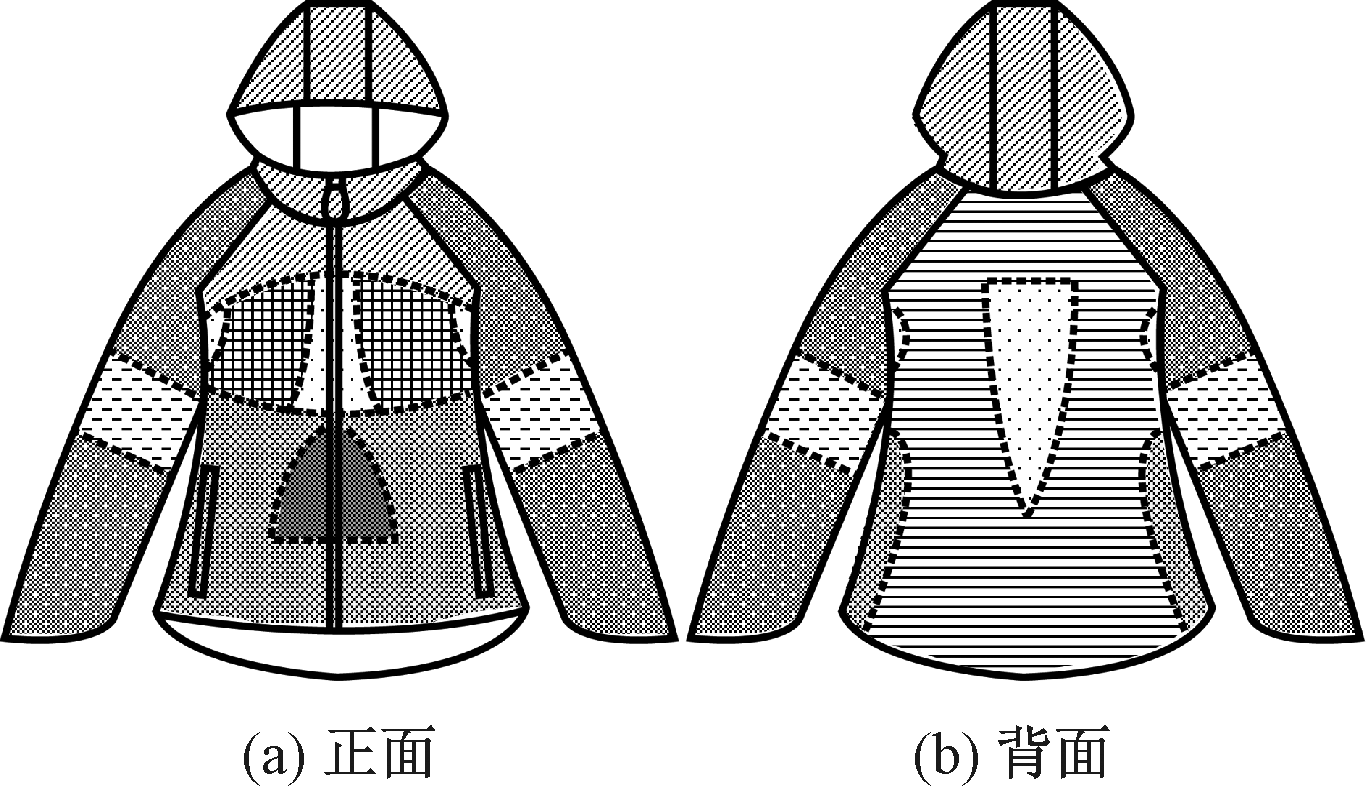
Protective jacket styles. (a) Front; (b) Back"

Fig.9

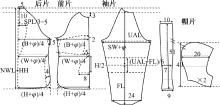
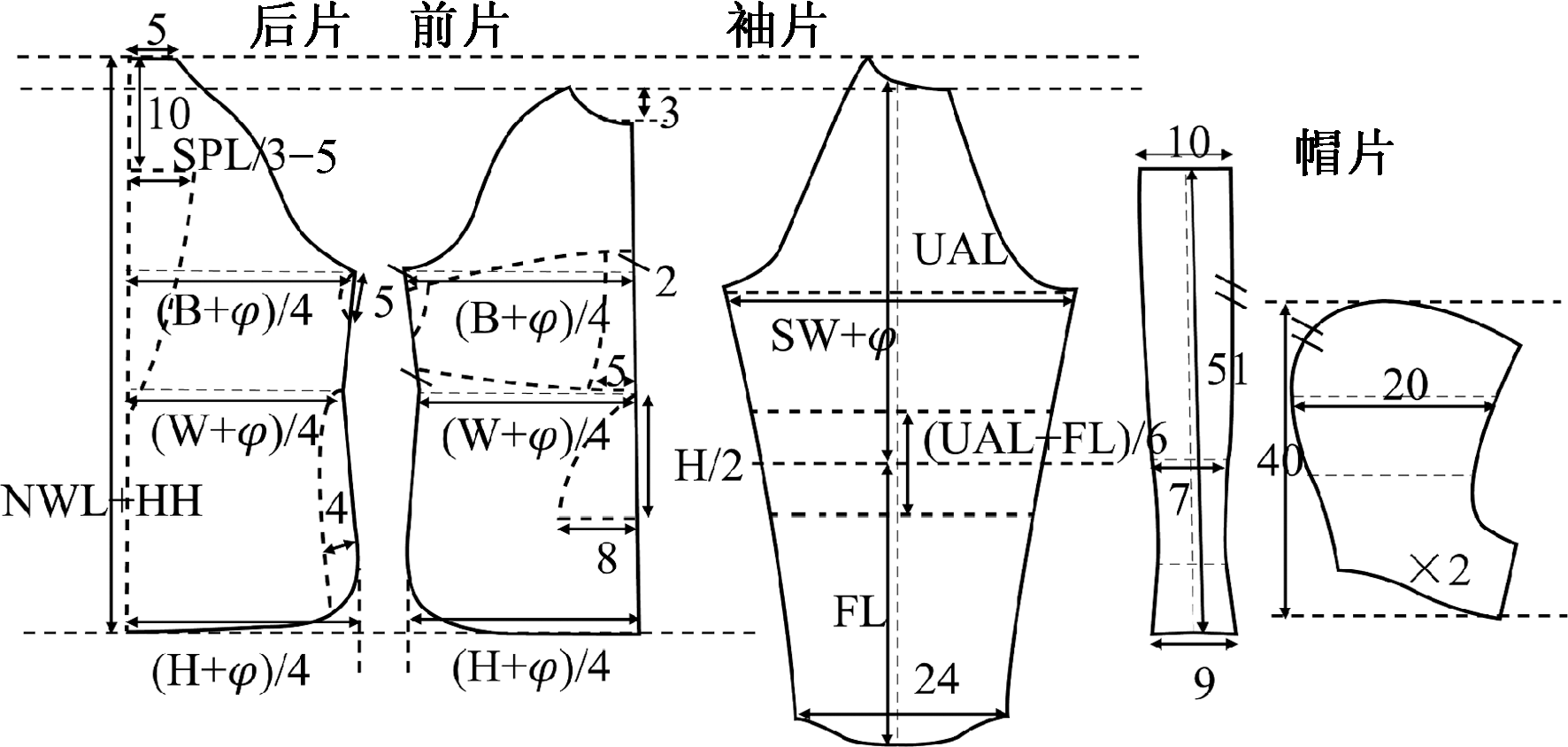
Protective jacket pattern"

Fig.10

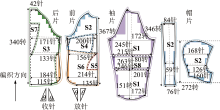
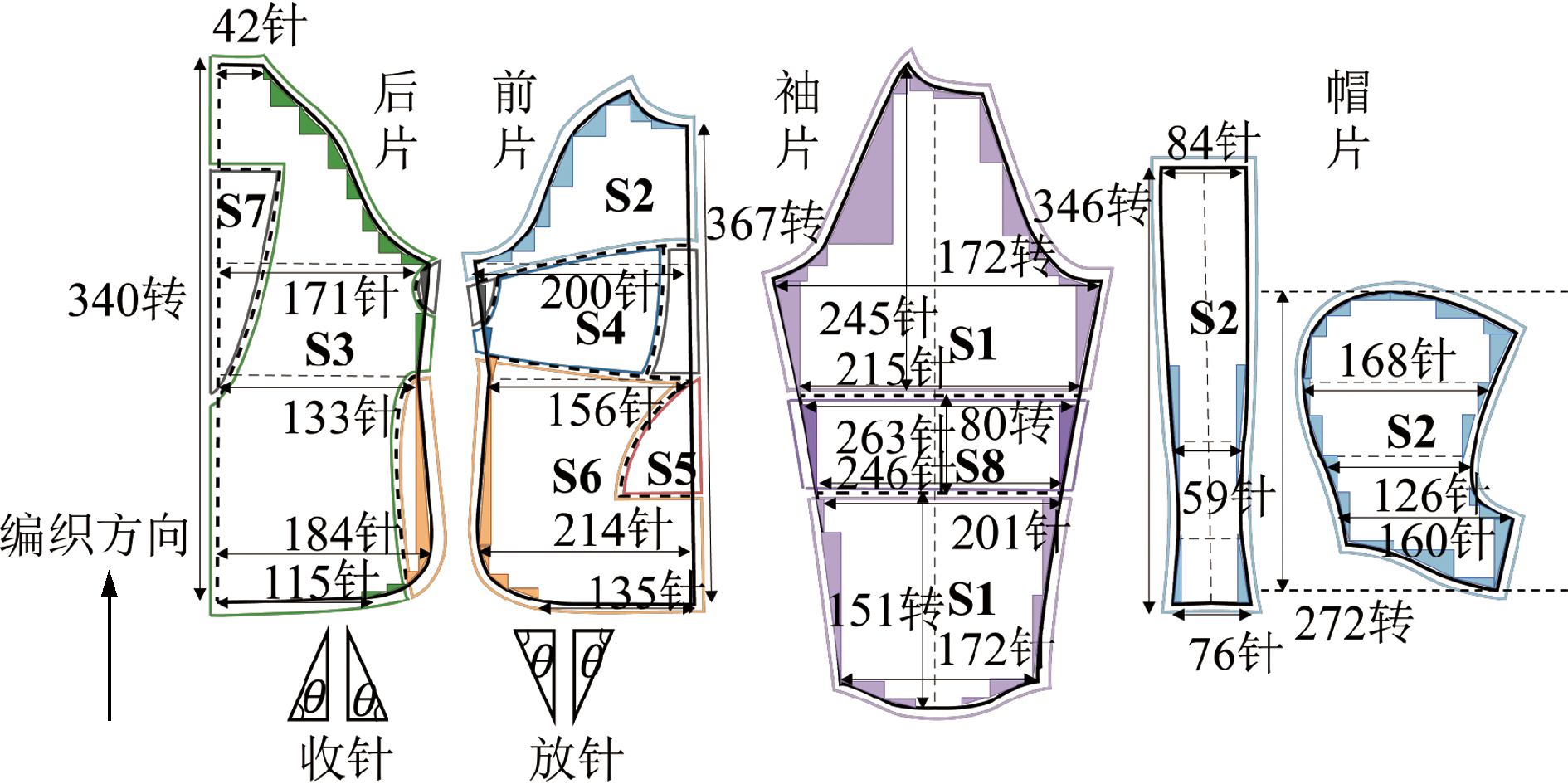
Protective knitting process"

Fig.11

Schematic diagram of process of adding/stacking needles at module connections"

Fig.12

Protective jacket physical effect picture. (a) Front; (b) Back"

[1] LIU Q, CHEN F, DONG T, et al. Large-scale fabrication of snake-skin-inspired protective composite textiles[J]. Advanced Fiber Materials, 2024, 6: 978-992.
[2] MIKUCIONIENE D, HALAVSKA L, BOBROVA S, et al. Ultra-strong knits for personal protective equip-ment[J]. Applied Sciences, 2020, 10(18): 6197.
[3] 张冰洁, 王莉, 傅维杰, 等. 滑雪内衣差异化需求多维度分析[J]. 纺织学报, 2021, 42(8): 161-166.
ZHANG Bingjie, WANG Li, FU Weijie, et al. Multi-dimensional analysis of differentiation demands for ski underwear[J]. Journal of Textile Research, 2021, 42(8): 161-166.
[4] 张冰洁, 沈津竹, 王建萍, 等. 无缝男式滑雪内衣躯干部位的分区设计[J]. 针织工业, 2023,(11):59-62.
ZHANG Bingjie, SHEN Jinzhu, WANG Jianping, et al. Men's seamless ski underwear torso zoning design[J]. Knitting Industries, 2023, (11): 59-62.
[5] 何咏诗, 张初阳, 宋武. 基于人因工学的户外登山服研究[J]. 设计, 2023, 36(15): 124-127.
HE Yongshi, ZHANG Chuyang, SONG Wu. Research on intelligent wearable outdoor mountaineering wear based onergonomics[J]. Design, 2023, 36(15): 124-127.
[6] 闫亦农. 基于"互联网+"的蒙古族服装个性化定制模块化设计[J]. 毛纺科技, 2023, 51(3): 66-73.
YAN Yinong. Mongolian personalized custom clothing modular design by "Internet +"[J]. Wool Textile Journal, 2023, 51(3): 66-73.
[7] 王淏鋆, 王传春. 轻户外服装的模块化设计研究[J]. 西部皮革, 2023, 45(3): 106-110.
WANG Haoyun, WANG Chuanchun. Research on modular design of light outdoor clothing[J]. Westleather, 2023, 45(3): 106-110.
[8] 周海媚, 徐燕妮, 张旭靖, 等. 服装款式模块化设计方法[J]. 纺织学报, 2015, 36(8): 104-109.
ZHOU Haimei, XU Yanni, ZHANG Xujing, et al. Modularized design method of garment style[J]. Journal of Textile Research, 2015, 36(8): 104-109.
[9] SU T, YU X, CONG H. Design and development of ultra-high molecular weight polyethylene seamless sportswear[J]. The Journal of The Textile Institute, 2023, 41:1-12.
[10] 徐佩, 阎玉秀. 基于热湿舒适性的女子贴身内衣分区设计[J]. 浙江理工大学学报, 2012, 29(3): 352-356.
XU Pei, YAN Yuxiu. Sectional design of female underwear based on heat-moisture comfort[J]. Journal of Zhejiang Sci-Tech University, 2012, 29(3): 352-356.
[11] 刘博, 丛洪莲. 四针床全成形休闲西服的工艺设计与成形原理[J]. 纺织学报, 2020, 41(4): 129-134.
LIU Bo, CONG Honglian. Process design and knitting principle of one-piece casual suits based on four-needle-bed flat knitting machine[J]. Journal of Textile Research, 22020, 41(4): 129-134.
[12] 巫晓雯, 詹必钦, 丛洪莲, 等. 针织全成形服装工艺转换模型构建与应用[J]. 丝绸, 2022, 59(11): 82-88.
WU Xiaowen, ZHAN Biqin, CONG Honglian, et al. Construction and application of a process conversion model for fully-formed knitted garments[J]. Journal of Silk, 2022, 59(11): 82-88.
[1] SHA Sha, DAI Jiali, CHU Guowei, FU Kangyi, LIU Yating, DENG Zhongmin. Structural design and implementation of whole garment rehabilitation training pants [J]. Journal of Textile Research, 2025, 46(04): 171-178.
[2] WANG Jun, YIN Xiaoyu, ZHOU Xiaoqi, WANG Siyuan. Design of smart garment for posture correction [J]. Journal of Textile Research, 2025, 46(04): 179-186.
[3] MA Shuai, ZHANG Xilin, HUANG Kuan, WANG Wei, QU Jue. Classification of body shape characteristics of Chinese male pilots [J]. Journal of Textile Research, 2025, 46(01): 163-169.
[4] YANG Guang, YANG Xiaobing, LI Li, YAO Zhifeng, ZHOU Chuan, ZHANG Mingming. Analysis of newly revised national standard for chemical protective clothing [J]. Journal of Textile Research, 2024, 45(03): 163-168.
[5] YANG Yudie, LI Chengzhang, JIN Jian, ZHENG Jingjing. Design and evaluation of suspenders for fire-fighting protective clothing considering upper limb mobility [J]. Journal of Textile Research, 2023, 44(11): 183-189.
[6] WANG Yutao, CONG Honglian, GU Hongyang. Structural design and thermal-moist comfort of weft knitted knee pads [J]. Journal of Textile Research, 2023, 44(10): 68-74.
[7] ZHU Xiaorong, HE Jiazhen, XIANG Youhui, WANG Min. Research progress in dual performance in heat-storage protection and heat-release hazard of thermal protective clothing [J]. Journal of Textile Research, 2023, 44(01): 228-237.
[8] XIA Yong, ZHAO Ying, XU Liyun, XU Sijun, YAO Lirong, GAO Qiang. Preparation and properties of antibacterial and anti-contamination biological protective materials [J]. Journal of Textile Research, 2023, 44(01): 64-70.
[9] DAI Yanyang, WANG Shitan, WANG Yunyi, LI Jun. Research progress in mobility performance of protective clothing based on sports biomechanics [J]. Journal of Textile Research, 2022, 43(11): 212-218.
[10] LI Chenfei, LIU Yuanjun, ZHAO Xiaoming. Research progress of biochemical protective clothing [J]. Journal of Textile Research, 2022, 43(07): 207-216.
[11] MA Liang, LI Jun. Application progress in cold protective clothing based on multiple intelligent technologies [J]. Journal of Textile Research, 2022, 43(06): 206-214.
[12] ZHU Xiaorong, HE Jiazhen, WANG Min. Application research progress in phase change materials for thermal protective clothing [J]. Journal of Textile Research, 2022, 43(04): 194-202.
[13] ZHANG Wenhuan, LI Jun. Research progress in heat transfer mechanism of firefighter protective clothing under low-level radiant heat exposures [J]. Journal of Textile Research, 2021, 42(10): 190-198.
[14] YU Zhicai, LIU Jinru, HE Hualing, MA Shengnan, JIANG Huiyu. Research and application progress in fire retardant fabric based on polymeric hydrogel [J]. Journal of Textile Research, 2021, 42(09): 180-186.
[15] JIANG Lulu, DENG Meng, WANG Yunyi, LI Jun. Research progress on application of aerogel materials in firefighting clothing [J]. Journal of Textile Research, 2021, 42(09): 187-194.
Viewed
Full text


Abstract

Cited

  Shared   
  Discussed   
No Suggested Reading articles found!