Journal of Textile Research ›› 2025, Vol. 46 ›› Issue (10): 197-205.doi: 10.13475/j.fzxb.20240705701

• Apparel Engineering • Previous Articles     Next Articles

Virtual skin modeling for clothing pressure simulation

TAO Chen1, HONG Xinghua2, YIN Meifen3()   

  1. 1. Caiyuanpei College of Art & Design, Shaoxing University, Shaoxing, Zhejiang 312000, China
    2. College of Textile Science and Engineering, Zhejiang Sci-Tech University, Hangzhou, Zhejiang 310018, China
    3. Zhejiang Academy of Science and Technology for Inspection & Quarantine, Hangzhou, Zhejiang 311202, China
  • Received:2024-07-26 Revised:2025-04-18 Online:2025-10-15 Published:2025-10-15
  • Contact: YIN Meifen E-mail:ymf@zaiq.org.cn

Abstract:

Objective Virtual fitting attracts much research attention for clothing digitalization. Existing studies regard the human body as rigid in body representation, adopt a one-way repulsion model in the contact mechanism, and implement a simple process of pushing the clothing away from the human body when dealing with contact. These studies focus on improving the visual effect of virtual fitting, while the clothing pressure simulation and pressure comfort evaluation are ignored. This study represents an annovation attempt to replace the existing one-way contact mechanism, and proposes a virtual skin model, which fully reflects the deformation of human skin and the mutual effect between clothing and the body, which is designed for perceiving the pressure transmitted from clothing to the body, thus providing a method for the prediction of pressure comfort in the scenario of virtual fitting.

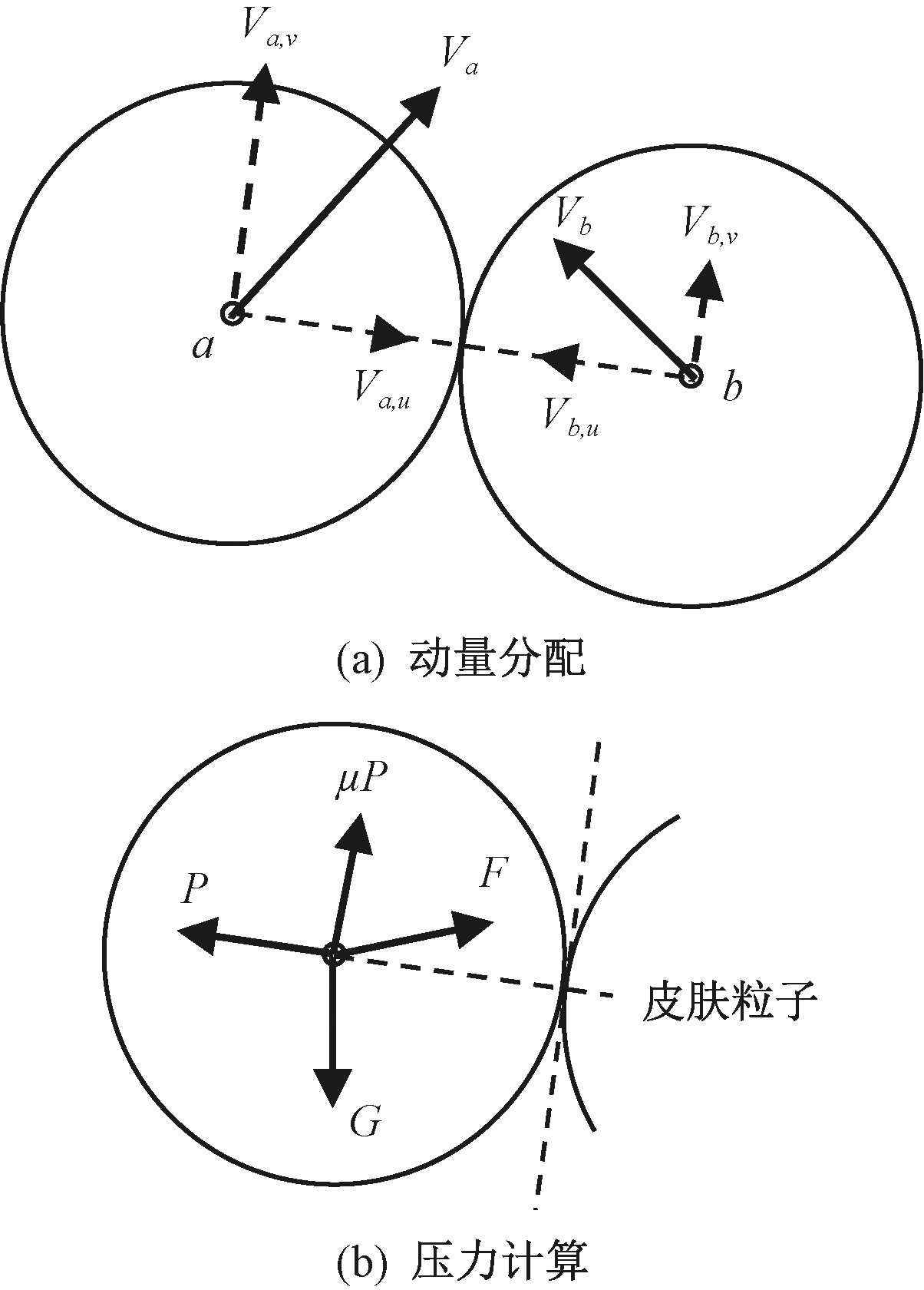
Methods The skin with mechanical properties was constructed by volume constraint and shape constraint, and the variability of skin shape was controlled by the shape preserving factor, thus regulating the degree of skin firmness or relaxation. The particle spring system was used to construct the fabric model in order to facilitate skin contact and interaction, and the mapping between the spring coefficient and the real fabric mechanical properties was established. The contact behavior of particles was conducted by momentum reallocation, and the spatial displacement of particles was calculated by the integral of particle velocity on the time slices, so as to complete the contact deformation on both skin and clothing. By calculating the force of particles in the contact process, the real-time clothing pressure on human skin was obtained, and thus the clothing pressure in virtual space was simulated and evaluated.

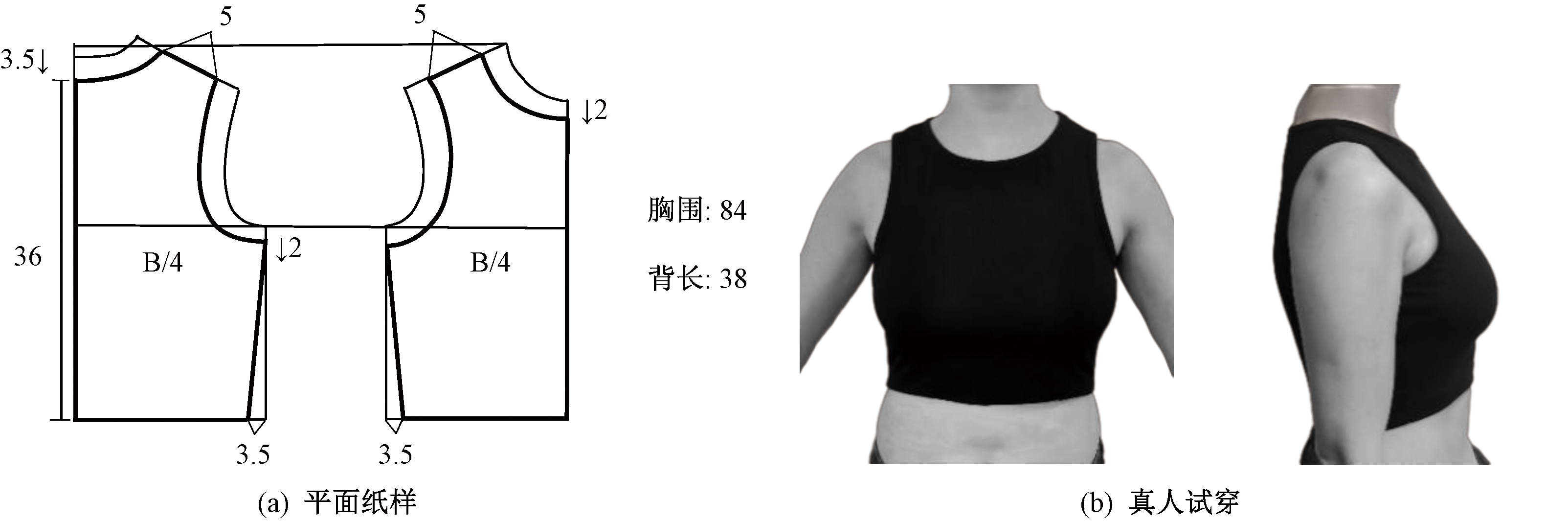
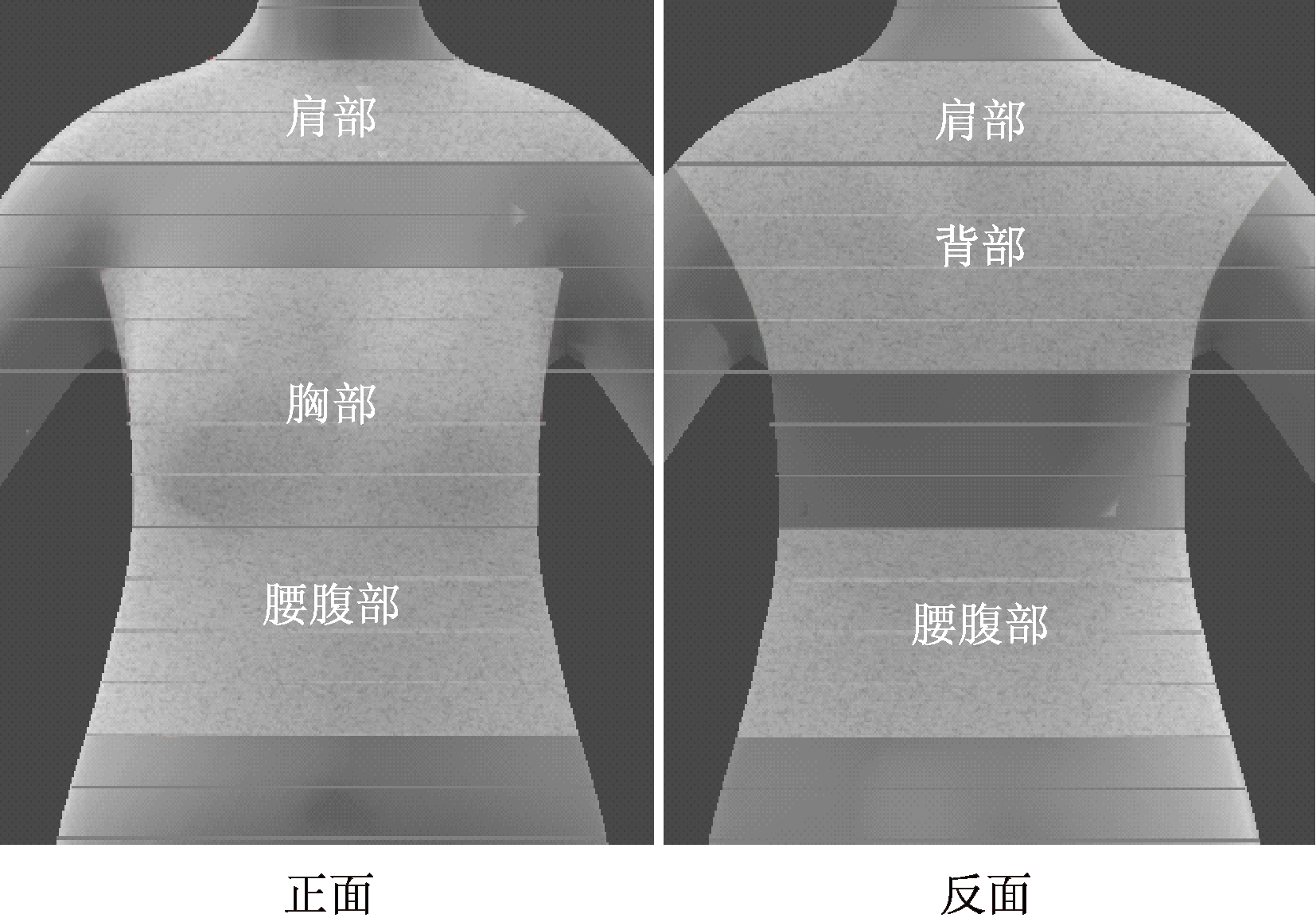
Results The elastic coefficient of the fabric model was obtained from the tensile test of the real fabric, so that the mapping between the virtual fabric and the real fabric was established. The virtual fabric was tailored and sewn to produce virtual clothing. A live body model was scanned, and the skin was generated from the resulting body surface mesh. The virtual clothing was placed on the human body with the skin layer, and the interaction between skin and clothing was simulated with respect to the contact algorithm so as to calculate the clothing pressure. The pressure was mainly concentrated in the chest, shoulders, back and side waist, which is consistent with the intuitive experience. The pressure sensors were attached on the body skin, and the real pressure on the spots of the chest, shoulder, back and side waist was collected and compared with the simulated pressure. With the increased value of shape preserving factor α, the virtual pressure at each spot increased gradually, first approaching the real pressure value and then gradually deviating from it. The overall error of simulated pressure decreased first and then increased as the α value increased, and the shape preserving factor α=0.5 corresponding to the minimum error of 17.8% was regarded as the descriptive parameter for the personality of the subject's skin. The minimum errors of simulated pressure on the chest, shoulder, back and side waist points appeared at α=0.28, 0.81, 0.66 and 0.45 respectively, which was consistent with the fact that the skin flexibility of the chest is the largest, followed by the waist, the back and the shoulder successively. The skin was divided into four regions surrounding chest, shoulder, back and waist. The shape preserving factor in each region was set to the value corresponding to the minimum pressure error of the spot to form the so-called mixed shape preserving factors, and the virtual pressure was calculated and compared with the case in which the single preserving factor takes effect. The results show that the minimum error was 17.72% with single preserving factor and 8.92% when using mixed preserving factors. It is proved that using mixed preserving factors to describe body skin can effectively reduce the error and improve the precision of simulation by considering the difference of various parts of body skin.

Conclusion The skin model proposed in this study can simulate the contact and interaction between human body and clothing, and fetch the clothing pressure on the skin in real time, so as to provide theory and methods for high-level virtual fitting and comfort evaluation. The mechanical behavior of human skin is simulated by volume constraint and shape constraint, with the latter being manipulated by the shape preserving factors, and thus the expression of skin firmness or relaxation is achieved. In the particle space, the contact behavior of particles is conducted by the momentum reallocation rule, and the change of spatial position after contact is achieved by the integral of particle velocity, so as to introduce the contact deformation of skin and clothing. By calculating the force of clothing particles in the contact process, the clothing pressure on human body is obtained. In the verification experiment, the virtual skin is constructed from the real human body mesh, and the virtual fabric is built with the real fabric as the prototype. The measured real clothing pressure is compared with the simulated pressure, and the mixed shape preserving factor is employed to reflect the difference of the skin in different parts of human body, leading to a reduced error of 8.92%.

Key words: clothing engineering, virtual skin model, virtual clothing, clothing pressure, virtual fitting, skin flexibility

CLC Number: 

  • TP391.41

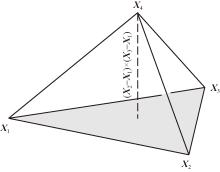
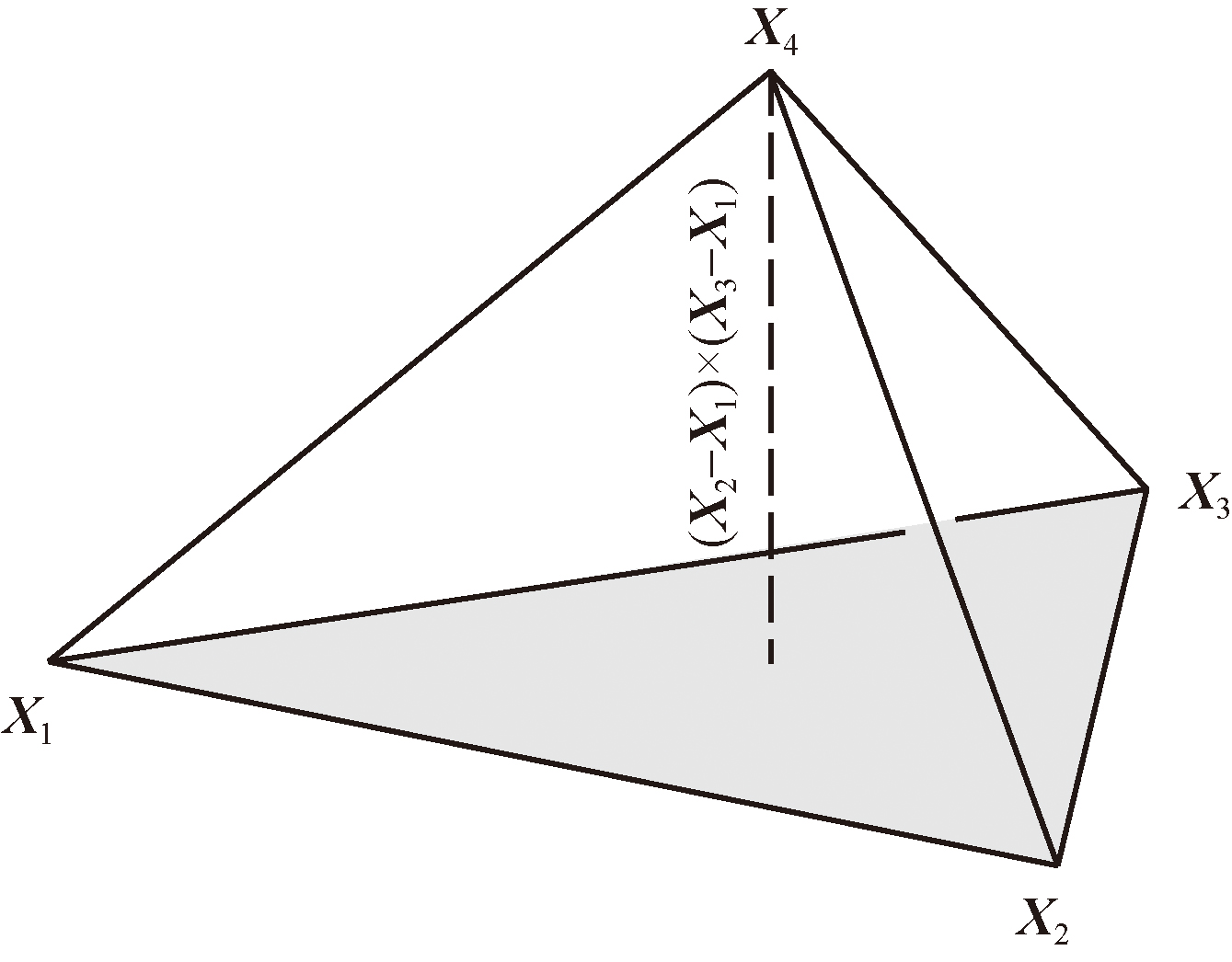
Fig.1

Tetrahedral unit for skin"

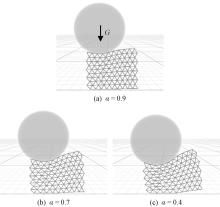
Fig.2

Skin unit aggregate under pressure"

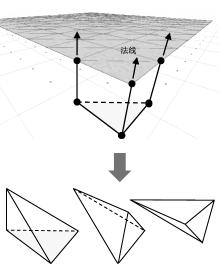
Fig.3

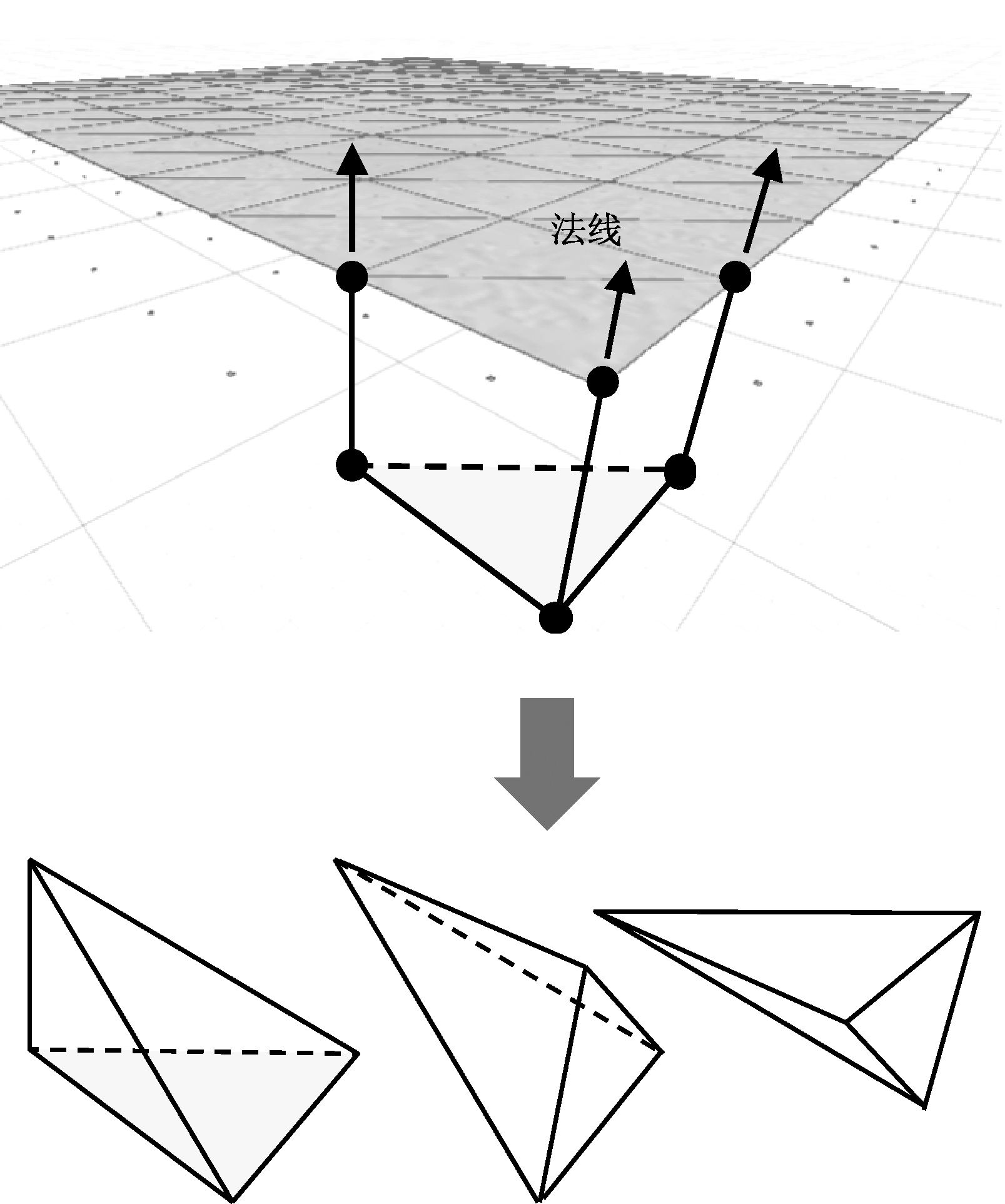
Backward expansion and prismatic segmentation"

Fig.4

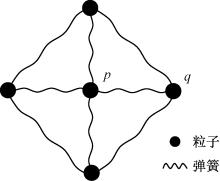
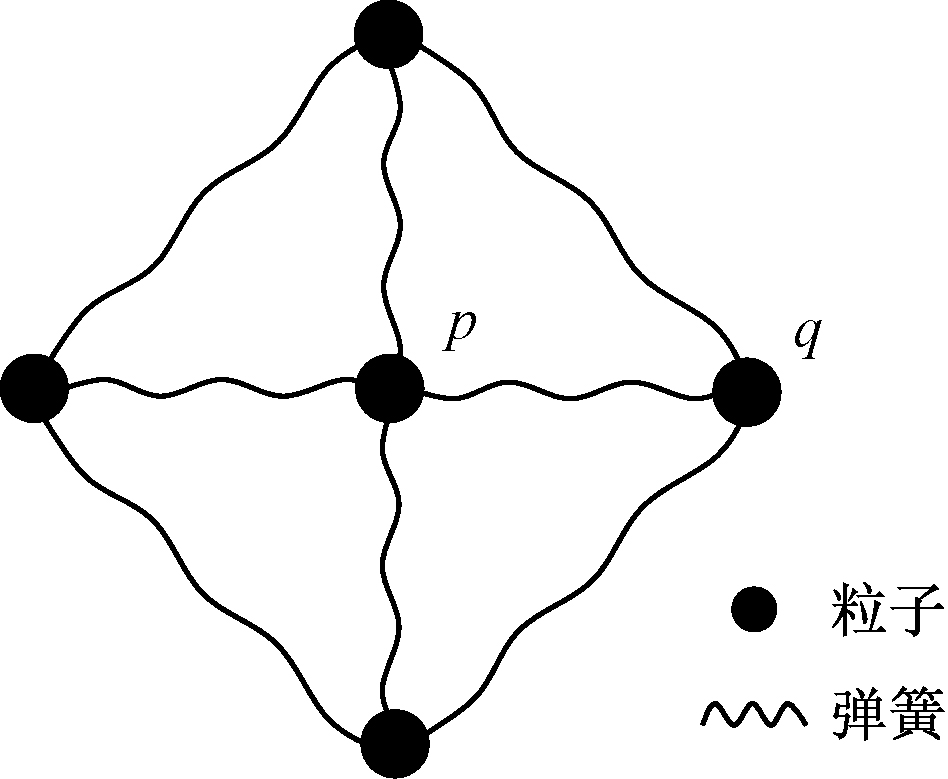
Particle spring model"

Fig.5

Virtual fabric and its tensile manifestion"

Fig.6

Contact mechanism. (a) Momentum reallocation; (b) Pressure computation"

Tab.1

Fabric mechanical performance"

伸长/
cm
横向应
力/cN
纵向应
力/cN
横向回复
率/%
纵向回复
率/%
0.00 0 0 100 100
0.50 2 3 100 100
1.00 5 9 99 100
1.50 12 19 99 99
2.00 23 34 99 99
2.50 34 48 99 98
3.00 41 59 98 98
3.50 46 68 97 97
4.00 50 74 96 96

Tab.2

Friction between fabric and skin"

法向负荷/cN 摩擦力/cN
50 11.83
100 18.28
150 29.97
200 36.78
250 43.76
300 55.62
350 67.32
400 74.82
450 80.75

Fig.7

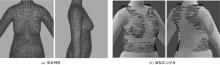
Clothes making and fitting. (a) Clothes pattern; (b) Live fitting"

Fig.8

Virtual fitting and pressure manifestion. (a) Body surface mesh; (b) Virtual pressure distribution"

Fig.9

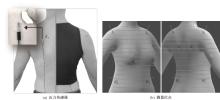
Clothing pressure measurement. (a) Pressure sensor; (b) Measure points"

Tab.3

Comparison between simulated pressure and real pressure"

保形
因子
压力/cN 误差/
%
B S K W
0.1 15.18 ↓ 10.17 ↓ 6.30 ↓ 4.55 ↓ 31.04
0.2 15.93 ↓ 10.86 ↓ 6.72 ↓ 4.73 ↓ 27.22
0.3 22.76 ↑ 11.85 ↓ 7.31 ↓ 5.02 ↓ 22.41
0.4 23.00 ↑ 12.80 ↓ 7.78 ↓ 5.25 ↓ 19.10
0.5 23.68 ↑ 13.50 ↓ 8.19 ↓ 5.26 ↓ 17.80
0.6 24.74 ↑ 14.24 ↓ 8.51 ↓ 7.94 ↑ 18.01
0.7 25.85 ↑ 14.85 ↓ 10.31 ↑ 8.24 ↑ 19.58
0.8 26.97 ↑ 15.17 ↓ 10.83 ↑ 8.59 ↑ 23.23
0.9 27.88 ↑ 18.42 ↑ 11.66 ↑ 8.91 ↑ 28.67
1.0 28.47 ↑ 19.25 ↑ 12.32 ↑ 9.12 ↑ 33.20

Fig.10

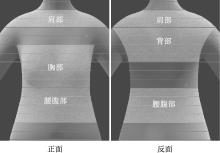
Regions of skin"

Tab.4

Comparison between single preserving factor and mixed preserving factor"

保形因子 压力/cN 误差/
%
B S K W
α=0.53 23.99 13.73 8.30 7.77 17.72
混合α 21.66 15.02 9.19 7.38 8.92
[1] PUMAROLA A, SANCHEZ J, CHOI G P, et al. 3D people: modeling the geometry of dressed humans[C]// Proceedings of the International Conference on Computer Vision. Seoul: IEEE Press, 2019: 2242-2251.
[2] WAN Yan, WANG Yue, YAO Li. Research of virtual try-on technology based on two-dimensional image[C]// Computer Graphics International Conference. Berlin:Springer Press, 2023: 373-384.
[3] LIN Ling, ZHANG Mingmin, PAN Zhigeng, et al. Image-based detection and response of continuous fast collision between cloth and human body[J]. Journal of Software, 2015, 26(S2): 1-7.
[4] ZANG Hui, LIU Zhen, CHAI Yanjie. Real-time collision detection method for fluid and cloth[J]. Journal of Computer-Aided Design & Computer Graphics, 2018, 30(4): 602-610.
[5] BAI Linlin, TAO Chen, CHEN Junhong, et al. Modeling of virtual clothing and its contact with the human body[J]. AUTEX Research Journal, 2024. DOI: 10.1515/aut-2023-0039.
[6] JIANG Liguo, YE Juntao, SUN Liming, et al. Transferring and fitting fixed-sized garments onto bodies of various dimensions and postures[J]. Computer-Aided Design, 2019, 106(1): 30-42.
doi: 10.1016/j.cad.2018.08.002
[7] MOUHOU A, SAAIDI A, YAKHLEF M, et al, 3D garment positioning using Hermite radial basis func-tions[J]. Virtual Reality, 2022, 26(1): 295-322.
doi: 10.1007/s10055-021-00566-7
[8] XIAO Boxiang, HU Zhiyuan, LIU Zhengdong, et al. A dynamic virtual try-on simulation framework for speed skating suits[J]. The Journal of The Textile Institute, 2024, 115(5): 713-723.
doi: 10.1080/00405000.2023.2201549
[9] 赖安琪, 蒋高明, 李炳贤. 全成形毛衫花式结构三维仿真[J]. 纺织学报, 2023, 44(2): 103-110.
LAI Anqi, JIANG Gaoming, LI Bingxian. Three-dimensiomal simulation of whole gament with fancystructures[J]. Journal of Textile Research, 2023, 44(2): 103-110.
[10] 沈毅, 齐红衢. 织物悬垂形态的模拟仿真[J]. 纺织学报, 2010, 31(10): 34-39.
SHEN Yi, QI Hongqu. Simulation of fabric drapingshape[J]. Journal of Textile Research, 2010, 31(10): 34-39.
[11] KY S Z E, XH LIU. Fabric drape simulation by solid-shell finite element method[J]. Finite Elements in Analysis and Design, 2007, 43(11): 819-838.
doi: 10.1016/j.finel.2007.05.007
[12] HAN Mingu, CHANG Seunghwan. Draping simulations of carbon/epoxy fabric prepregs using a non-orthogonal constitutive model considering bending behavior[J]. Composites Part A(Applied Science and Manufacturing), 2021. DOI: 10.1016/j.compositesa.2021.106483.
[13] YIN Chen, WANG Q Jane, ZHANG Mengqi. Accurate simulation of draped fabric sheets with nonlinear modeling[J]. Textile Research Journal, 2021, 92(3/4): 539-560.
doi: 10.1177/00405175211039573
[14] VAJIHA M, PAYVANDY P. Introducing and optimizing a novel mesh for simulating knitted fabric[J]. The Journal of the Textile Institute, 2018, 109(2): 202-218.
doi: 10.1080/00405000.2017.1335446
[15] 曹竞哲, 陶晨, 白琳琳. 基于变形网格的织物悬垂形态模拟[J]. 纺织学报, 2024, 45(6): 59-67.
CAO Jingzhe, TAO Chen, BAI Linlin. Fabric drape profile simulation based on a deformable mesh[J]. Journal of Textile Research, 2024, 45(6): 59-67.
[16] ROBERT B, RONALD F, JOHN A. Robust treatment of collisions, contact and friction for cloth anima-tion[C]// Proceedings of the 29th Annual Conference on Computer Graphics and Interactive Techniques. Texas: ACM Press, 2002: 594-603.
[17] ANDREW S, JONATHAN S, GEOFFREY I, et al. Robust high-resolution cloth using parallelism, history-based collisions, and accurate friction[J]. IEEE Transactions on Visualization and Computer Graphics, 2008, 15(2): 339-350.
doi: 10.1109/TVCG.2008.79
[18] CHEN Zhili, FENG Renguo, WANG Huamin. Modeling friction and air effects between cloth and deformable bodies[J]. ACM Transactions on Graphics, 2013, 32(4): 1-8.
[19] TANG Min, WANG Tongtong, LIU Zhongyuan, et al. I-Cloth: incremental collision handling for GPU-based interactive cloth simulation[J]. ACM Transactions on Graphics, 2018, 37(6): 1-10.
[20] MÜLLER M, HEIDELBERGER B, HENNIX M, et al. Position based dynamics[J]. Journal of Visual Communication and Image Representation, 2007, 18(2): 109-118.
doi: 10.1016/j.jvcir.2007.01.005
[1] JI Mengqi, HE Ying, MA Yongqian. Optimization of trousers patterns for men with protruding abdomen based on three-dimensional fitting [J]. Journal of Textile Research, 2025, 46(06): 187-195.
[2] JING Jianwei, HU Yupeng, MA Wangfei, YUAN Zishun, GU Bingfei, XU Wang. Finite element analysis on influence of air gap on ballistic performance of body armor [J]. Journal of Textile Research, 2025, 46(04): 187-196.
[3] SHA Sha, DAI Jiali, CHU Guowei, FU Kangyi, LIU Yating, DENG Zhongmin. Structural design and implementation of whole garment rehabilitation training pants [J]. Journal of Textile Research, 2025, 46(04): 171-178.
[4] XIE Hong, ZHANG Linwei, SHEN Yunping. Continuous dynamic clothing pressure prediction model based on human arm and accuracy characterization method [J]. Journal of Textile Research, 2024, 45(07): 150-158.
[5] WANG Yipin, LI Xiaohui. Parametric characterization method of clothing fold morphology [J]. Journal of Textile Research, 2024, 45(06): 149-154.
[6] ZHU Yuanyuan, DAN Rui, JIN Jiaqin, LEI Yuteng, YU Miao. Simulation prediction of lower limb clothing pressure using ANSYS [J]. Journal of Textile Research, 2024, 45(03): 148-155.
[7] YE Qinwen, WANG Zhaohui, HUANG Rong, LIU Huanhuan, WAN Sibang. Application of virtual garment transfer in garment customization [J]. Journal of Textile Research, 2023, 44(06): 183-190.
[8] LIU Yuye, WANG Ping. High-precision intelligent algorithm for virtual fitting based on texture feature learning [J]. Journal of Textile Research, 2023, 44(05): 177-183.
[9] LU Hong, SONG Jiayi, LI Yuanyuan, TENG Junfeng. Pattern design of inner rotation styles based on fitted two-piece sleeve [J]. Journal of Textile Research, 2022, 43(08): 140-146.
[10] WANG Chunru, YUAN Yue, CAO Xiaomeng, FAN Yilin, ZHONG Anhua. Influence of structural parameters of stand collar on clothing styling [J]. Journal of Textile Research, 2022, 43(03): 153-159.
[11] LIU Jie, GAO Zhi. Development of clothing pressure detector based on flexible film sensor [J]. Journal of Textile Research, 2021, 42(12): 159-165.
[12] WANG Ting, GU Bingfei. 3-D modeling of neck-shoulder part based on human photos [J]. Journal of Textile Research, 2021, 42(01): 125-132.
[13] CHEN Mi, YE Qinwen, ZHANG Gaopeng. Construction of parametric structure model for bias-cut skirt pattern [J]. Journal of Textile Research, 2020, 41(07): 135-140.
[14] XU Qian, CHEN Minzhi. Garment grain balance evaluation system based on deep learning [J]. Journal of Textile Research, 2019, 40(10): 191-195.
[15] CHENG Ningbo, WU Zhiming, KE Sicheng. Influence of clothing pressure on muscle fatigue during men's cycling [J]. Journal of Textile Research, 2019, 40(08): 130-135.
Viewed
Full text


Abstract

Cited

  Shared   
  Discussed   
No Suggested Reading articles found!