Journal of Textile Research ›› 2025, Vol. 46 ›› Issue (04): 207-214.doi: 10.13475/j.fzxb.20240106401

• Machinery & Equipment • Previous Articles     Next Articles

Analysis and optimization of transmission clearance between horn gear and carrier base of rotary circular braiding machine

DU Chengjie1,2,3,4(), HONG Jianhan1,2,3,4, ZHANG Kun1,2,3,4, LIANG Kuan5, XIE Guoyan6, LIANG Xianjun5   

  1. 1. College of Textile and Apparel, Shaoxing University, Shaoxing, Zhejiang 312000, China
    2. Key Laboratory of Clean Dyeing and Finishing Technology of Zhejiang Province, Shaoxing, Zhejiang 312000, China
    3. Shaoxing Key Laboratory of High Performance Fibers & Products, Shaoxing University, Shaoxing, Zhejiang 312000, China
    4. Zhejiang Sub-Center of National Carbon Fiber Engineering Technology Research Center, Shaoxing University, Shaoxing, Zhejiang 312000, China
    5. Zhejiang Benfa Technology Co., Ltd., Shaoxing, Zhejiang 312000, China
    6. Zhejiang Dongjin New Material Co., Ltd., Shaoxing, Zhejiang 312000, China
  • Received:2024-01-31 Revised:2024-12-26 Online:2025-04-15 Published:2025-06-11

Abstract:

Objective Rotary circular braiding machine is one of the most popular equipment for the preparation of high performance fiber composite preforms. This research reduces the braiding machine transmission clearance through structural optimization in order to improve the smoothness of the equipment, and to ensure the high quality development of the composite material industry.

Method In this paper, a combination of theoretical calculation, simulation analysis, and experimental verification was used to study the transmission clearance of rotary circular braiding machine. Firstly, linear algebra theory was used to construct a general mathematical model of the transmission clearance between coplanar/non-coplanar horn gears and carrier bases respectively. The mathematical model was then substituted into MatLab software to calculate the theoretical results. Secondly, a finite element model of the transmission clearance of the non-coplanar horn gear was established in ABAQUS software. Finally, the experimental result of transmission clearance was obtained using indirect measurements.

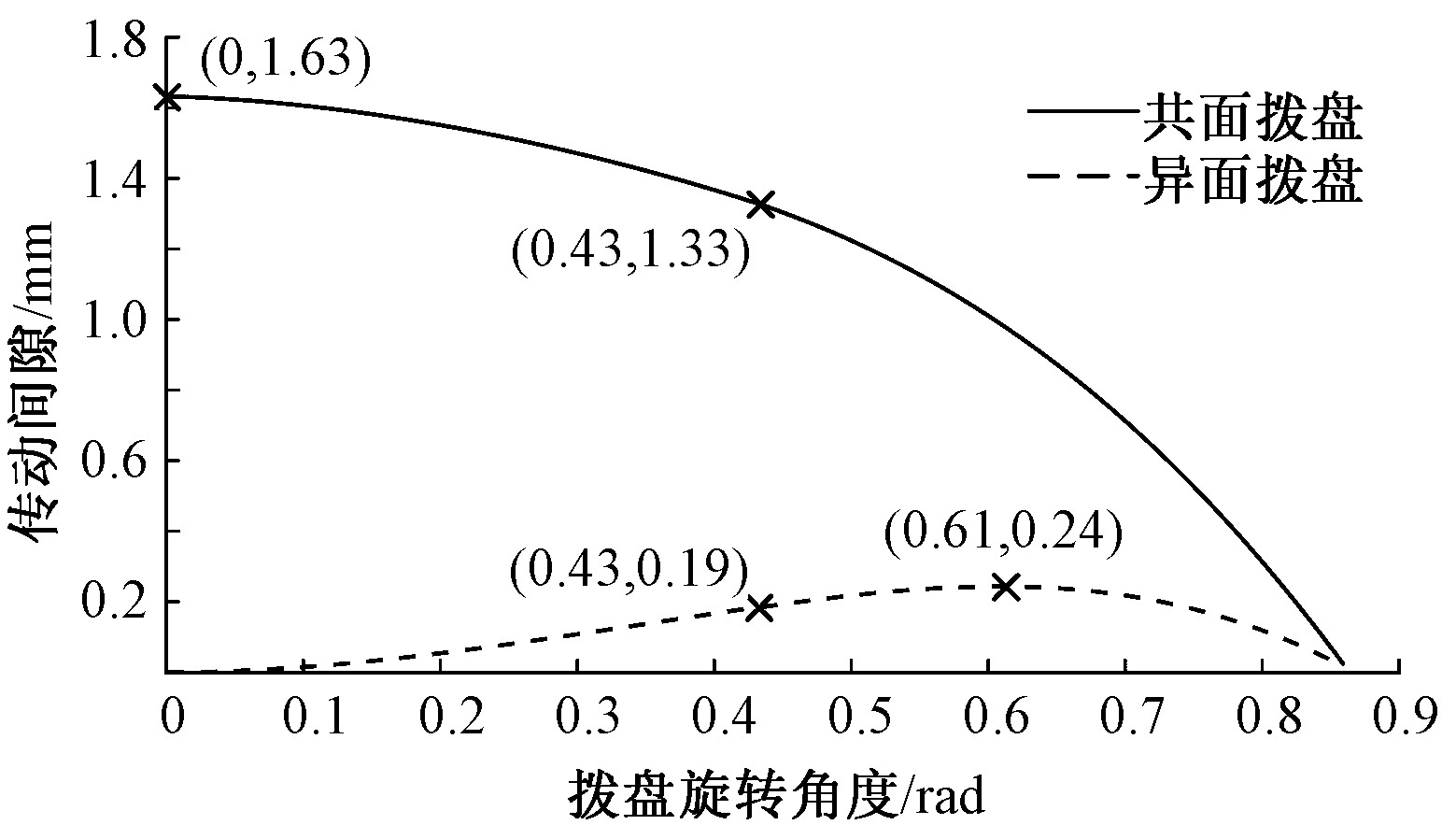
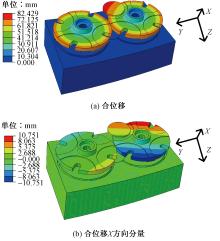
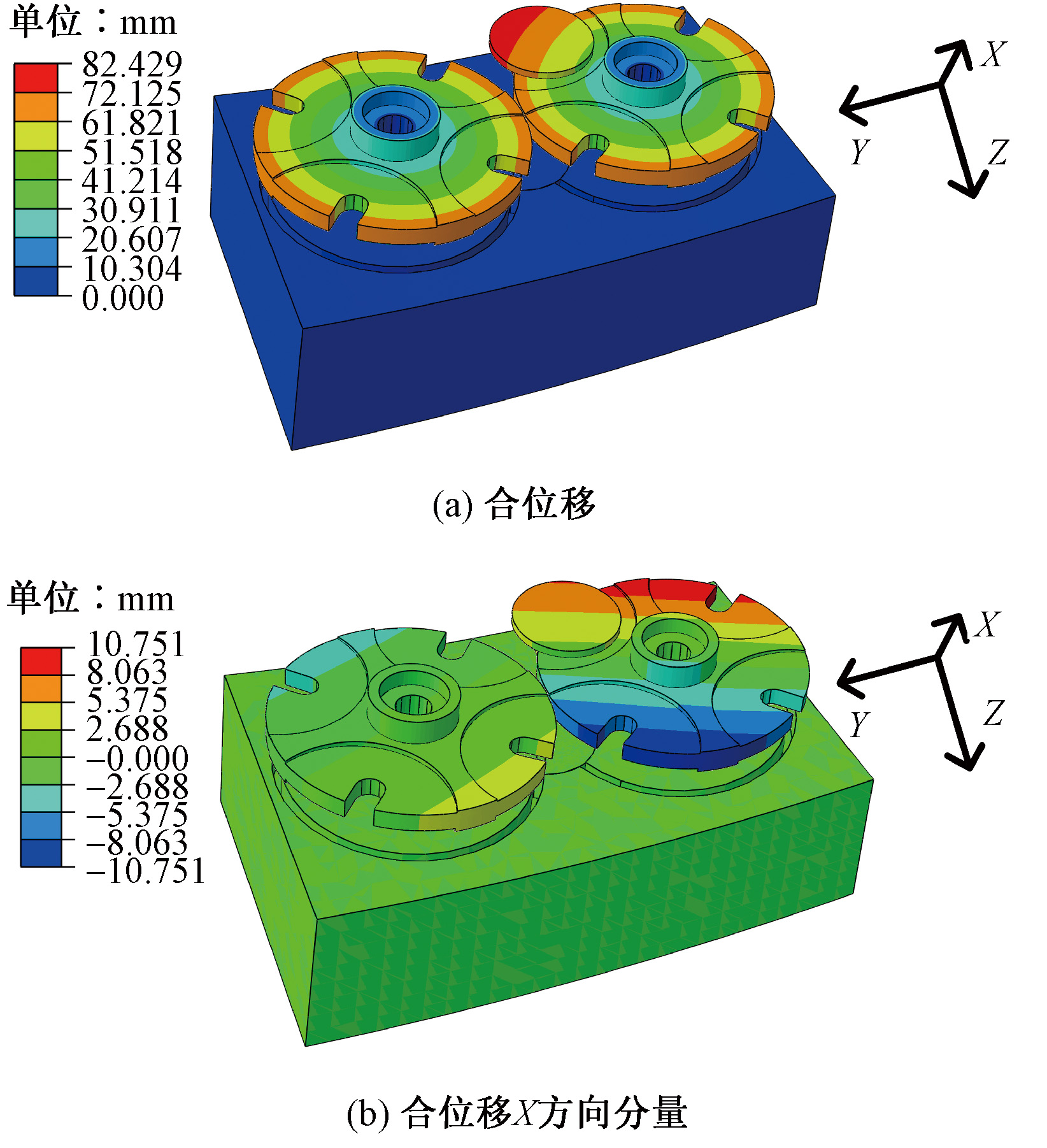
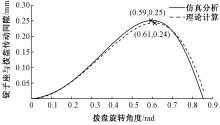
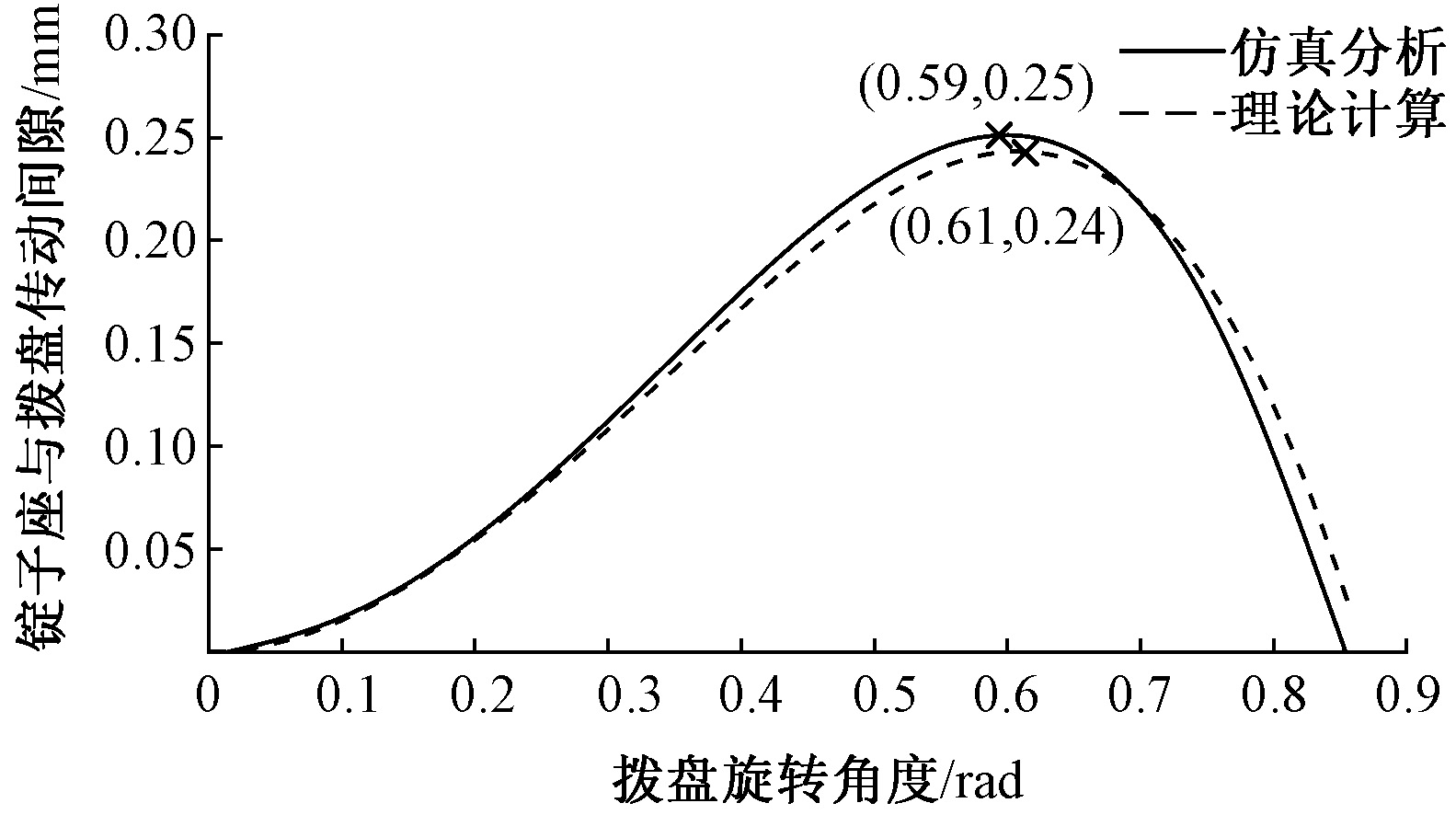
Results Theoretical values of coplanar/non-coplanar horn gear transmission clearance were obtained by substituting circular braiding machine parameters into the mathematical model. According to the theoretical results, it can be seen that during the period from the initial position of the carrier exchange to the complete separation of the carrier seat and the left horn gear, the transmission clearance of the coplanar horn gear has been larger than that of the non-coplanar horn gear. The transmission clearance of coplanar horn gear decreases monotonically with a maximum value of 1.63 mm, which occurs at the initial position, while the transmission clearance of non-coplanar horn gear increases and then decreases with a maximum value of 0.24 mm, which occurs at the arc stage in the carrier exchange. Theoretical model initially demonstrated that the non-coplanar horn gear can significantly reduce transmission clearance. All the data of the carrier base upper surface center and lower surface center in the X-direction component of the combined displacement was extracted, and the difference between the two was the simulation result of the transmission clearance between the non-coplanar horn gear and the carrier base. It can be seen that the maximum value of transmission clearance was 0.25 mm, which was 4.17% different from the maximum value of 0.24 mm obtained by theoretical calculation, and the two curves basically match, proving that the theoretical model was accurate and reliable. Further, the experimental result showed that the maximum value of the transmission clearance between the non-coplanar horn gear and the carrier base was 0.27 mm. The good quality of the preform braided by the braiding machine using non-coplanar horn gears proved that the theoretical model had a certain degree of accuracy and that the non-coplanar horn gear could reduce the clearance and improve the quality of braiding.

Conclusion This research analyzed the mechanism of transmission clearance generated by rotary circular braiding machine with commercially available coplanar horn gears, on the basis of which a non-coplanar horn gear is designed to reduce the transmission clearance. The mathematical models of transmission clearance between coplanar/non-coplanar horn gear and carrier seat were established respectively by using linear algebra theory, and through numerical analysis, it can be seen that the transmission clearance of coplanar horn gear has been larger than that of non-coplanar horn gear throughout the carrier exchange. Through the combination of simulation analysis and experimental verification, the maximum value of the transmission clearance of the non-coplanar horn gear was 0.25 mm and 0.27 mm, respectively, which have small errors with the theoretical calculation, verifying the accuracy of the theoretical model, and proved that the use of the non-coplanar horn gear on the circular braiding machine can effectively reduce the transmission clearance and improve the braiding quality.

Key words: rotary circular braiding machine, transmission clearance, horn gear, carrier seat, simulation, weave quality

CLC Number: 

  • TS103.1

Fig.1

Reasons for transmission clearance of rotary circular braiding machine. (a)Rotary circular braiding machine; (b)Defects of the preform; (c)Transmission clearances for coplanar/noncoplanar horn gears"

Fig.2

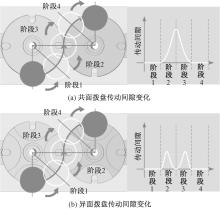
Analysis of transmission clearance variation in rotary circular braiding machine. (a)Transmission clearance variation of coplanar horn gears; (b)Transmission clearance variation of noncoplanar horn gears"

Fig.3

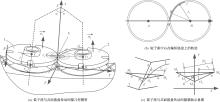
Analysis diagram of transmission clearance between carrier seat and coplanar horn gear. (a)Geometric model of transmission clearance between carrier seat and coplanar horn gear; (b)Trajectory of carrier seat center on braided chassis;(c)Auxiliary diagram of transmission clearance between carrier seat and coplanar horn gear"

Fig.4

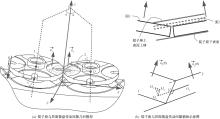
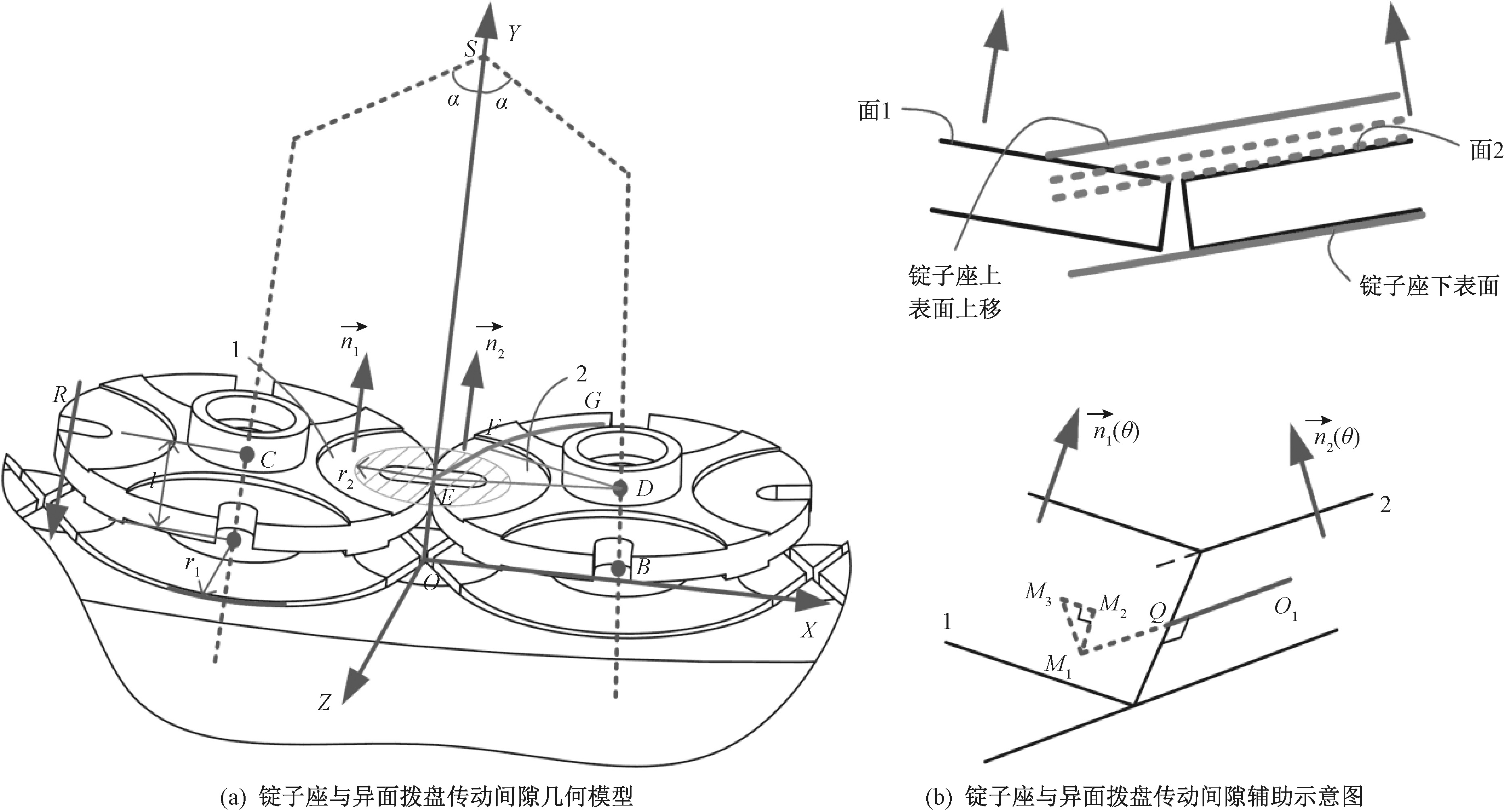
Analysis diagram of transmission clearance between carrier seat and noncoplanar horn gear. (a)Geometric model of transmission clearance between carrier seat and noncoplanar horn gear;(b)Auxiliary diagram of transmission clearance between carrier seat and noncoplanar horn gear"

Tab.1

Circular braiding machine parameters"

编织底
盘半径
R/mm
相邻拨盘
中心线夹角
2α/rad
拨盘上表面
与编织底盘
距离l/mm
轨道中心
线半径
r1/mm
锭子座
半径
r2/mm
1 550 π/60 32 73 32

Fig.5

Numerical analysis results of transmission clearance between carrier seat and horn gears"

Fig.6

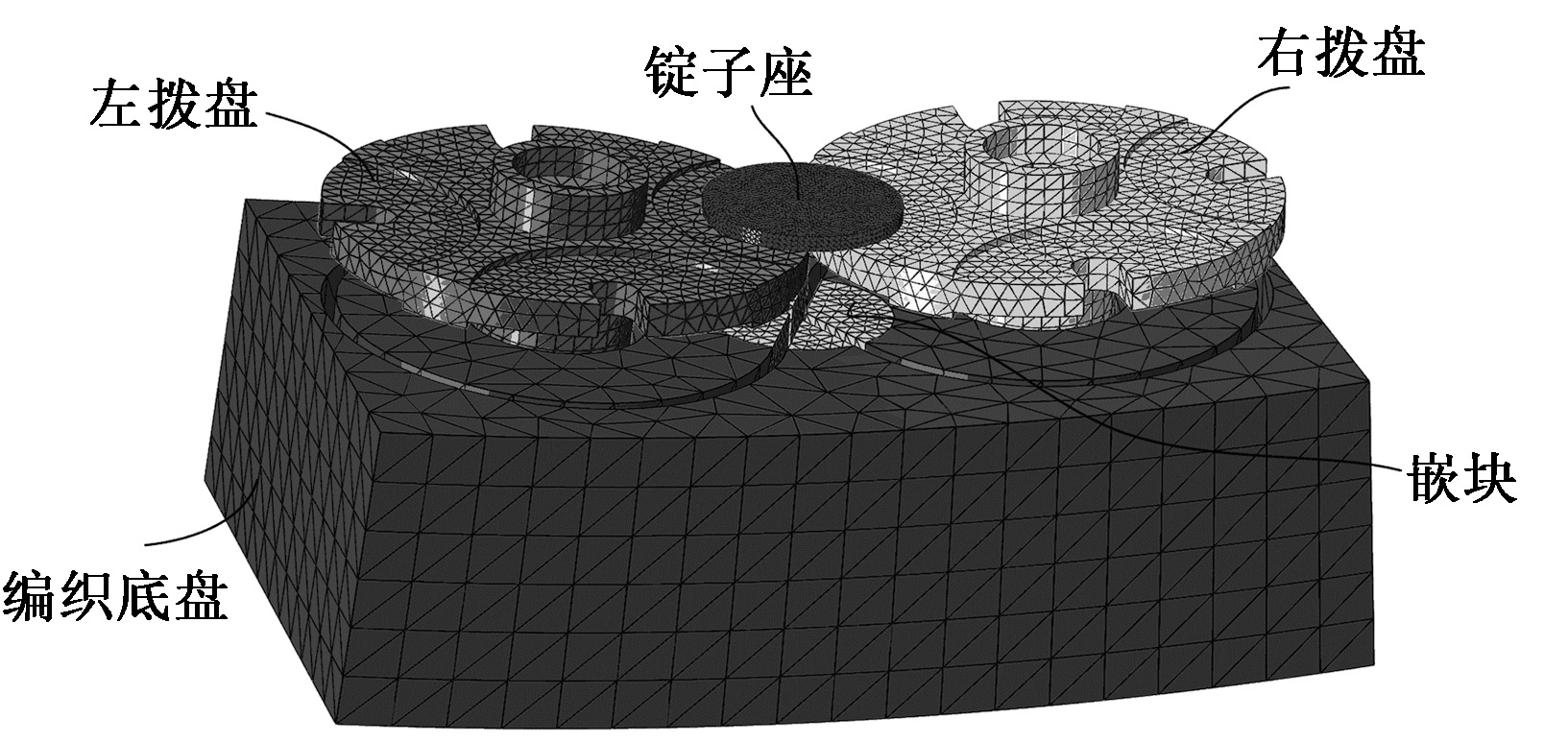
Finite element model of transmission clearance between carrier seat and horn gears"

Fig.7

Displacement nephogram of each component.(a)Resultant displacement; (b)X-direction component of resultant displacement"

Fig.8

Theoretical and simulation comparison of transmission clearance"

Fig.9

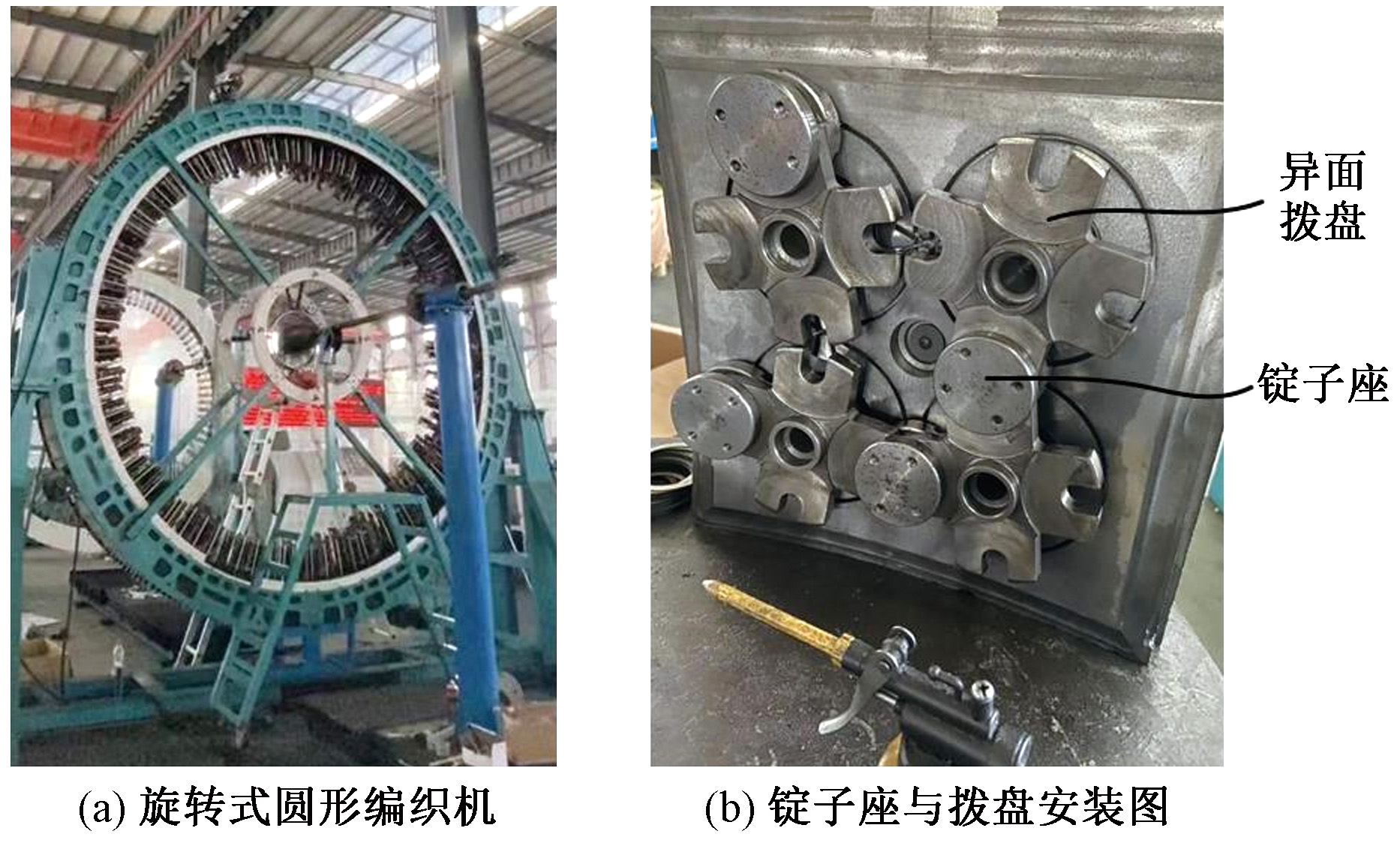
Experimental test of transmission clearance between horn gear and carrier base. (a)Circular braiding machine; (b)Carrier base and horn gear installation diagram"

Tab.2

Groove width of the carrier base"

编号 1 2 3 4 5
槽宽/mm 12.17 12.19 12.21 12.23 12.25
编号 6 7 8 9 10
槽宽/mm 12.27 12.29 12.31 12.33 12.35

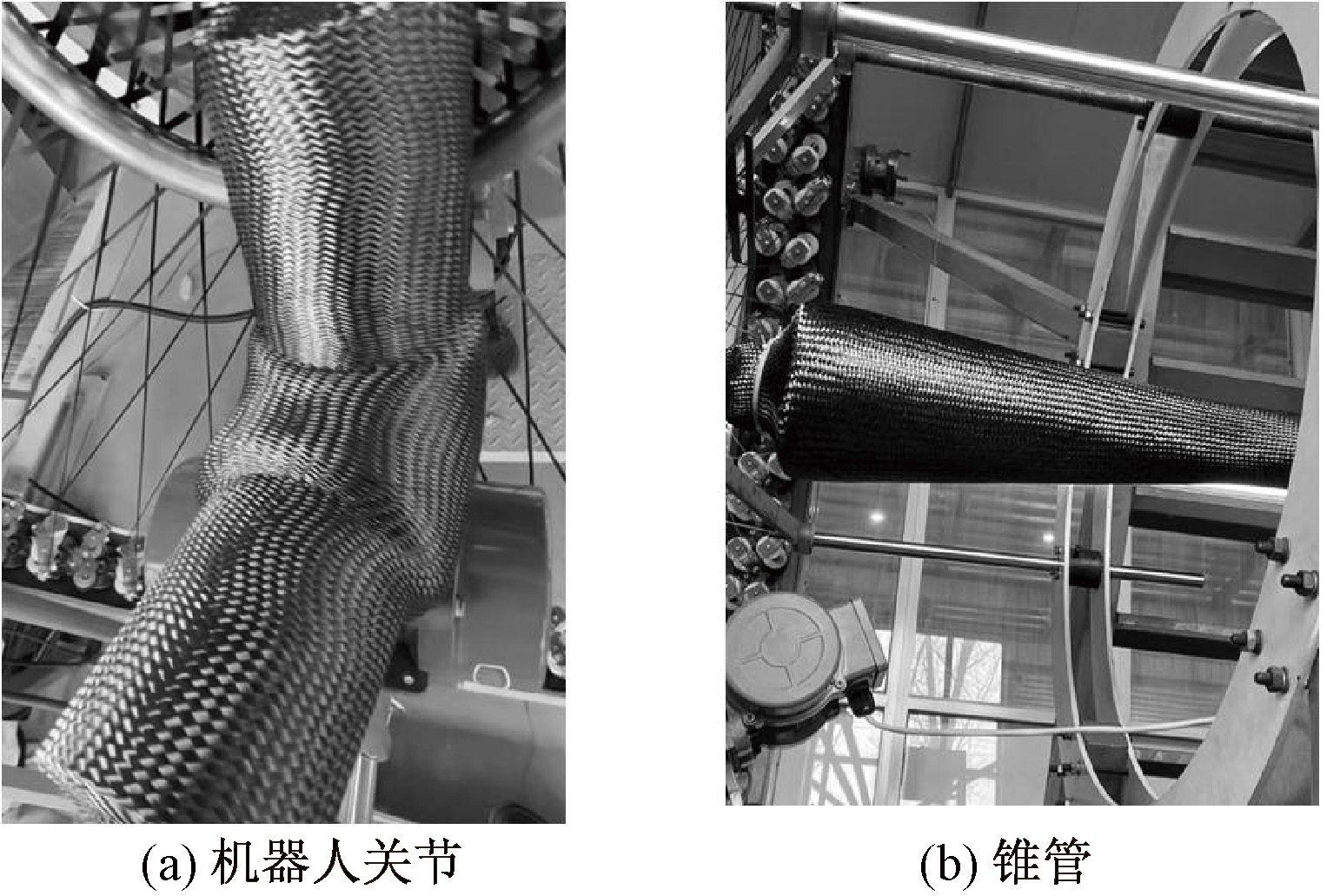
Fig.10

Preforms.(a)Robot joint;(b)Conical tube"

[1] 单忠德, 周征西, 孙正, 等. 航空航天先进复合材料三维预制体成形技术与装备研究[J]. 机械工程学报, 2023, 59(20): 64-79.
doi: 10.3901/JME.2023.20.064
SHAN Zhongde, ZHOU Zhengxi, SUN Zheng, et al. Research of 3D advanced aerospace composite preforms forming technology and equipment[J]. Journal of Mechanical Engineering, 2023, 59(20): 64-79.
doi: 10.3901/JME.2023.20.064
[2] LI Qianqian, ZHANG Honghua, MOSLEH Y, et al. Development and analysis of a three-dimensional braided honeycomb structure[J]. Textile Research Journal, 2022, 93(9/10): 2078-2094.
[3] KYOSEV Y. Numerical modelling of 3D braiding machine with variable paths of the carriers[J]. Applied Composite Materials, 2018, 25(4): 773-783.
[4] DU Chengjie, MENG Zhuo, SUN Yize, et al. Optimal design of the horn gear for rotary three-dimensional braiding machine[J]. Journal of the Textile Institute, 2020, 111(11): 1596-1602.
doi: 10.1080/00405000.2020.1716530
[5] 马文锁, 陈凯, 丁磊. 五月柱圆管编织机锭子运动学分析及其轨迹优化[J]. 机械设计与制造, 2017(3): 43-47.
MA Wensuo, CHEN Kai, DING Lei. Kinematics analysis and trajectory optimization of the carrier in the circular maypole braider[J]. Machinery Design & Manufacture, 2017(3): 43-47.
[6] 扈昕瞳, 张玉井, 孟婥, 等. 编织锭子放线速度对纱线张力调控的建模与影响[J]. 纺织学报, 2017, 38(6): 111-117.
HU Xintong, ZHANG Yujing, MENG Zhuo, et al. Modeling and influence about speed of released-yarn in braiding spindles on yarn tension[J]. Journal of Textile Research, 2017, 38(6): 111-117.
[7] MA Guangli, BRANSCOMB D J, BEALE D G. Modeling of the tensioning system on a braiding machine carrier[J]. Mechanism and Machine Theory, 2012, 47: 46-61.
[8] 张玉井, 孟婥, 苏刘元, 等. 立体编织机机头工况设计与声振耦合仿真[J]. 纺织学报, 2017, 38(2): 170-176.
ZHANG Yujing, MENG Zhuo, SU Liuyuan, et al. Vibro-acoustic coupling simulation of 3-D circular braiding machine's head section under different working conditions[J]. Journal of Textile Research, 2017, 38(2): 170-176.
[9] ZHANG Yujing, MENG Zhuo, DU Chengjie, et al. Dynamical analysis of carrier-track contact model in a braiding machine[J]. Tehnicki Vjesnik-techniacal Gazette, 2022, 29(2): 528-535.
[10] 刘宜胜, 徐海亮, 吴镇宇, 等. 三维编织机运动仿真分析及其轨道优化设计[J]. 纺织学报, 2017, 38(4): 134-139.
LIU Yisheng, XU Hailiang, WU Zhenyu, et al. Motion simulation analysis and track optimal design for three-dimensional braiding machine[J]. Journal of Textile Research, 2017, 38(4): 134-139.
[1] CHEN Xinwei, GU Bingfei, TIAN Jiali, ZHOU Sifan, LIU Yuxi, LIU Jinling, YICK Kit-lun, SUN Yue. Optimization design method for sports bra using CAD/CAE technology [J]. Journal of Textile Research, 2025, 46(04): 162-170.
[2] ZHANG Jiushang, YANG Tao, ZHOU Yufeng, TIAN Xiufeng, SONG Liang, LIU Chang, LIU Jian, DU Yu. Research on tension control system of multi-warp beam let-off mechanism of 3-D fabric loom [J]. Journal of Textile Research, 2025, 46(04): 197-206.
[3] SHANG Jingyu, JIANG Gaoming, CHEN Yushan, LIU Haisang, LI Bingxian. Design and 3-D simulation of jacquard leno fabrics [J]. Journal of Textile Research, 2025, 46(04): 81-88.
[4] LIANG Jinxing, LI Dongsheng, HAN Kaifang, HU Xinrong, PENG Jiajia, LI Lijun. Dynamic deformation simulation of weft knitted fabrics based on physical constraints [J]. Journal of Textile Research, 2025, 46(03): 109-115.
[5] DING Caihong, HE Shaoxu. Design of hexagonal three-dimensional braiding technology for tubular fabrics [J]. Journal of Textile Research, 2025, 46(03): 216-224.
[6] LI Ling, SHI Qianqian, TIAN Shun, WANG Jun. Influence of fiber channel symmetry on dual-feed-opening rotor spinning flow field and yarn characteristics [J]. Journal of Textile Research, 2025, 46(02): 69-77.
[7] MA Yunjiao, WANG Lei, PAN Ruru. Three-dimensional simulation of yarn core based on two planer mirrors [J]. Journal of Textile Research, 2025, 46(02): 86-91.
[8] ZHANG Dingtiao, WANG Qianru, QIU Fang, LI Fengyan. Simulation of flow field and fiber straightening in reconstructed fiber transport channel in rotor spinning [J]. Journal of Textile Research, 2025, 46(02): 100-105.
[9] LUO Qiaoling, FU Shaohai, WANG Dong, WANG Meihui, GUO Yafei, HAO Xinmin. Dyeing of bio-based polyamide 56 with weak acidic dyes for green vegetation imitation [J]. Journal of Textile Research, 2025, 46(02): 130-137.
[10] HUANG Xiaoyuan, WANG Qingyun, HOU Jue, YANG Yang, LIU Zheng. Skill proficiency based simulation optimization of garment assembly line and its application [J]. Journal of Textile Research, 2025, 46(01): 169-178.
[11] SHEN Min, OUYANG Can, XIONG Xiaoshuang, WANG Zhen, YANG Xuezheng, LÜ Yongfa, YU Lianqing. Prediction of fluctuation amplitude of weft yarns based on jet transient velocity variational modal decomposition [J]. Journal of Textile Research, 2025, 46(01): 187-196.
[12] SONG Kaili, GUO Mingrui, GAO Weidong. Numerical simulation and experimental investigation of lattice-apron compact spinning with airflow-guiding device [J]. Journal of Textile Research, 2025, 46(01): 34-41.
[13] LI Huimin, LIU Shuqiang, DU Linlin, ZHANG Man, WU Gaihong. Parametric modeling of basalt/polyimide three-dimensional spacer woven fabric and numerical simulation of heat transfer in high temperature environment [J]. Journal of Textile Research, 2025, 46(01): 87-94.
[14] CHEN Shichang, CAO Junhua, CHEN Wenxing. Process simulation of falling film liquid-state polymerization of polyester [J]. Journal of Textile Research, 2025, 46(01): 16-24.
[15] XI Chuanzhi, WANG Jiayuan, WANG Yongzhi, CHEN Ge, PEI Zeguang. Numerical simulation of airflow field in nozzle of vortex spinning with low energy consumption and spinning experimentation [J]. Journal of Textile Research, 2024, 45(12): 206-214.
Viewed
Full text


Abstract

Cited

  Shared   
  Discussed   
No Suggested Reading articles found!