纺织学报 ›› 2025, Vol. 46 ›› Issue (03): 34-40.doi: 10.13475/j.fzxb.20240303101

• 纤维材料 • 上一篇    下一篇

Lyocell纤维直接成网工艺优化与性能分析

张帆, 程春祖(), 郭翠彬, 张东, 程敏, 李婷, 徐纪刚   

  1. 中国纺织科学研究院有限公司 生物基纤维材料全国重点实验室, 北京 100025
  • 收稿日期:2024-03-13 修回日期:2024-08-28 出版日期:2025-03-15 发布日期:2025-03-15
  • 通讯作者: 程春祖(1984—),男,正高级工程师。主要研究方向为生物基与高性能纤维材料。E-mail:chengchunzu@cta.gt.cn
  • 作者简介:张帆(1994—),女,硕士。主要研究方向为生物基与高性能纤维材料。

Optimization and performance analysis of Lyocell fiber direct web formation process

ZHANG Fan, CHENG Chunzu(), GUO Cuibin, ZHANG Dong, CHENG Min, LI Ting, XU Jigang   

  1. State Key Laboratory of Bio-Based Fiber Materials, China Textile Academy, Beijing 100025, China
  • Received:2024-03-13 Revised:2024-08-28 Published:2025-03-15 Online:2025-03-15

摘要:

针对Lyocell纤维直接成网技术,深入分析了液流牵伸装置的结构参数,包括加速流道的入口、出口宽度以及底板宽度,探究了这些参数对液流速度的影响。通过优化这些结构参数,显著提升了液流速度,使其达到217 m/min,为Lyocell纤维的快速牵伸提供了技术基础。进一步探讨了液流牵伸工艺参数对非织造材料性能的影响。此外,研究了液流牵伸工艺参数如液流速度、N-甲基吗啉-N-氧化物(NMMO)浓度和液流温度对非织造材料的结晶度、断裂强力、吸液率、透气率和柔软度的影响。通过实验确定了最优工艺参数,制备出的非织造材料具有以下特性:纵向断裂强度为35~40 N,横向断裂强度为18~25 N,吸液率为1 100%~1 200%,透气率为4 600~4 900 mm/s,干态纵向柔软度为240~280 mN,干态横向柔软度为60~70 mN,湿态纵向柔软度为80~100 mN,湿态横向柔软度为49~56 mN。

关键词: 纤维素溶液, Lyocell纤维, 直接成网, 液流牵伸, 吸湿透气性, 柔软度

Abstract:

Objective Lyocell fiber direct web formation is an innovative method of preparing nonwoven materials by drafting a cellulose solution through a liquid stream and directly webbing the filaments by a dry-spray wet method using air gap cooling. It has the advantages of short preparation process, low investment in equipment and small footprint. The prepared non-woven material has high strength, good softness, good moisture absorption and air permeability, and low flaking rate, and can be applied in the fields of beauty mask, medical gauze, high-end wiping paper, and tea bags.

Method In this research, the liquid flow rate of the liquid flow drafting device under different structural parameters was investigated, and the crystallinity, breaking strength, liquid absorption rate, permeability and softness of the materials prepared under different liquid flow rates, different liquid flow NMMO concentrations and temperatures were studied comparatively, so as to determine the optimal structural parameters of the device and the liquid flow process parameters.

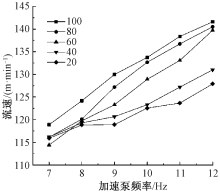
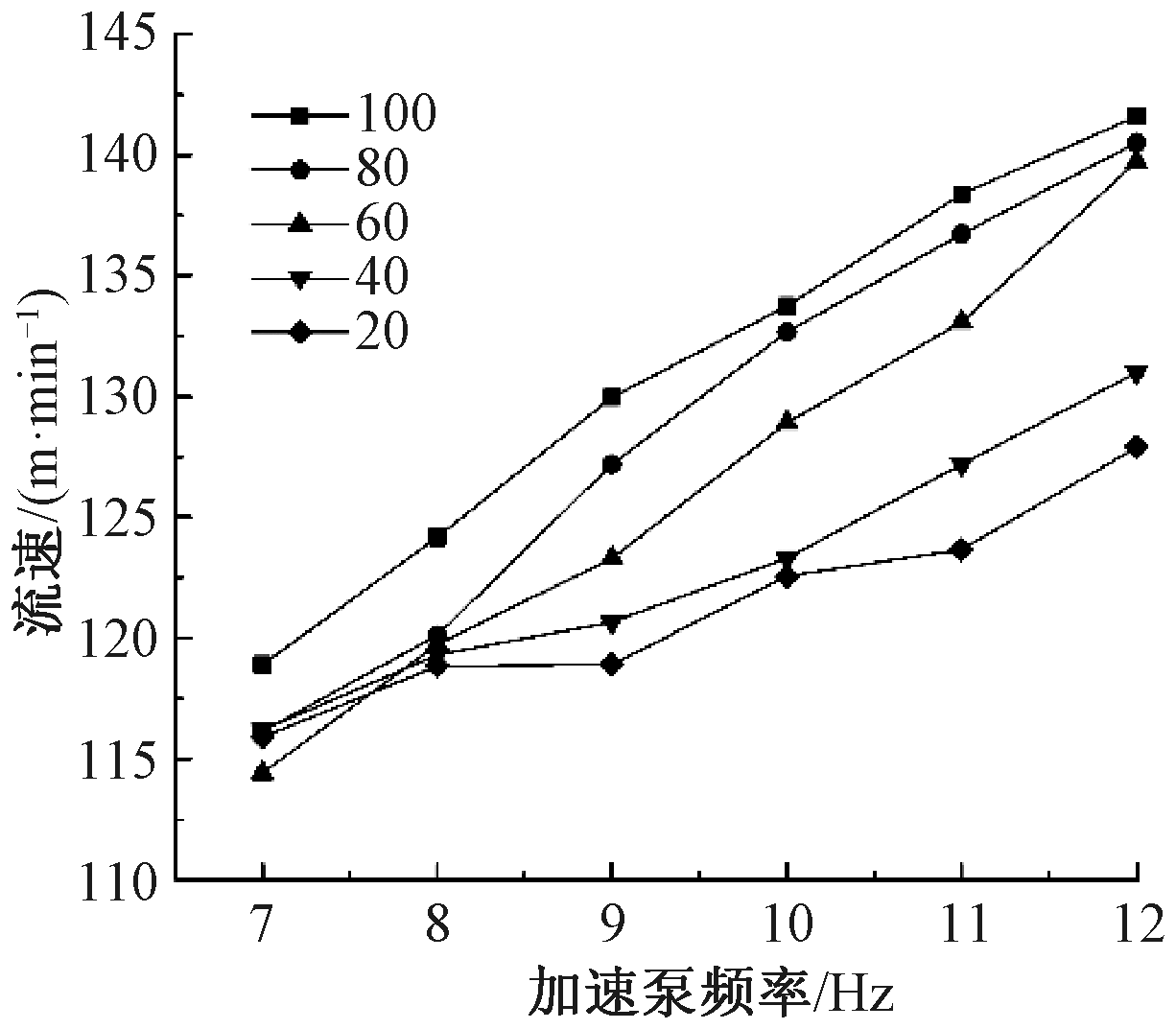
Results In the case of constant accelerating fluid flow rate, the total fluid rate increased with the increase of the ratio of the accelerating runner inlet and outlet widths (d0/d1). However, if d0/d1 value is too large, the accelerating fluid flow outlet pressure would be too large, which is prone to cause the non-uniformity of the fluid velocity. As the width of the bottom plate increased, the liquid flow velocity was decreased, and the width of the bottom plate was preferably 3-4 mm. As the liquid flow rate increased, the diameter of the fiber gradually became finer, and the finest was 9 μm in diameter, and the crystallinity and orientation of the fiber gradually increased with the increase of the liquid flow rate. The longitudinal and transversal breaking strengths of the nonwoven materials showed a tendency to increase with the increase of the liquid flow velocity. With the increase of the liquid flow rate, the liquid absorption rate and air permeability of the nonwoven materials demonstrated a decrease, and the softness of the nonwoven materials in both dry and wet states was deteriorated. With the increase of the concentration of NMMO, the crystallinity of the nonwoven materials was increased, and with the increase of the liquid flow temperature, the crystallinity of the nonwoven materials was decreased. The longitudinal and transverse breaking strength of the nonwoven materials was increased as the concentration of NMMO in the liquid flow increased, and the longitudinal and transverse breaking strength of the nonwoven materials was decreased as the temperature of the liquid flow increased. As the concentration of NMMO in the liquid flow increased, the softness of the nonwoven material was deteriorated, and as the temperature of the liquid flow increased, the softness of the nonwoven material was improved. Under the optimal process parameters, the prepared material had the longitudinal breaking strength of 35-40 N, transverse breaking strength of 18-25 N, liquid absorption rate of 1 100%-1 200%, air permeability of 4 600-4 900 mm/s, and dry state longitudinal softness 240-280 mN, dry state transverse softness 60-70 mN, wet state longitudinal softness 80-100 mN, and wet state transverse softness 49-56 mN.

Conclusion By optimizing the ratio of the inlet and outlet widths of the accelerating runner and the width of the base plate, the flow rate is maximized, resulting in improved fiber drafting. An increase in flow rate leads to a reduction in fiber diameter and an increase in crystallinity, which in turn enhances the longitudinal and transverse breaking strength of the nonwoven material. An increase in the liquid flow rate also leads to a decrease in the liquid absorption rate and air permeability of the material, and a deterioration in softness. As the concentration of liquid rate NMMO increases, the crystallinity and breaking strength of the material increase, and the softness decreases; while the increase of liquid rate temperature leads to the decrease of crystallinity, the decrease of breaking strength, and the improvement of softness. By precisely controlling the structural and process parameters of the liquid flow drafting device, the properties of Lyocell nonwoven materials can be effectively regulated, and nonwoven materials with high strength, good moisture absorption and air permeability, and suitable softness can be prepared. Future research can further explore the specific requirements of material properties in different application scenarios and achieve more refined process control and product customization.

Key words: cellulose solution, Lyocell fiber, direct web formation, fluid flow drafting, moisture absorption and permeability, softness

中图分类号: 

  • TS174

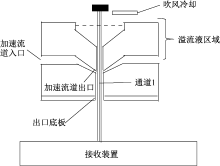
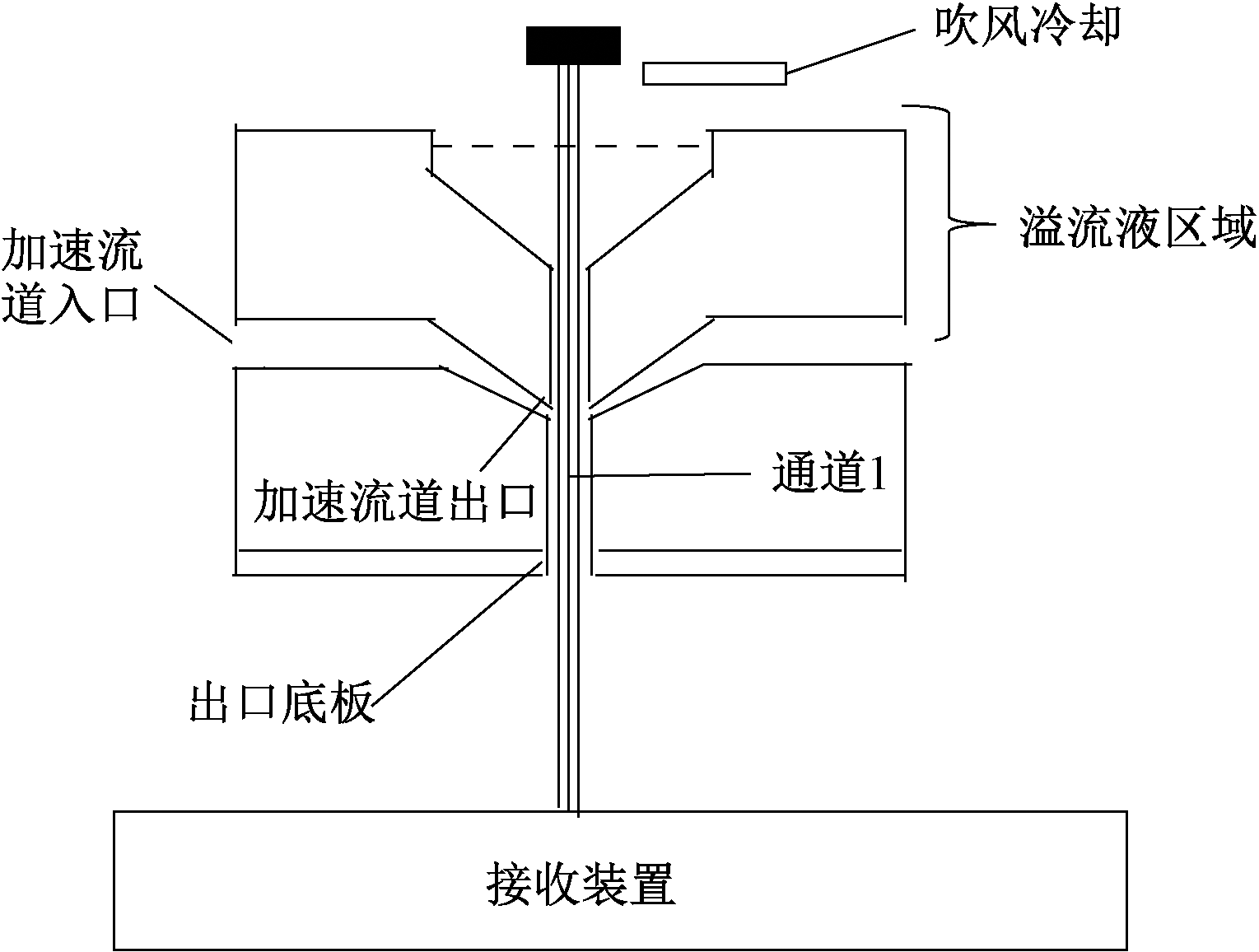
图1

液流牵伸装置结构示意图"

表1

不同液流速度下牵伸工艺参数"

试样
编号
液流速度/
(m·min-1)
液流NMMO
质量分数/%
液流
温度/℃
1# 134 20 20
2# 153 20 20
3# 167 20 20
4# 186 20 20
5# 217 20 20
6# 167 5 20
7# 153 15 20
8# 153 25 20
9# 153 20 5
10# 153 20 10
11# 153 20 30

图2

加速流道入口和出口宽度的比值对液流速度影响规律"

表2

不同液流速度下纤维的性能"

试样编号 纤维直径/μm 结晶度/% Δn(双折射率)
1# 15.0 60.20 0.072 9
2# 12.0 61.09 0.073 2
3# 11.5 61.73 0.074 7
4# 10.8 62.25 0.076 5
5# 9.0 62.97 0.077 7

表3

不同液流速度下非织造材料的拉伸性能"

试样
编号
纵向断裂
强力/N
纵向断裂
伸长率/%
横向断裂
强力/N
横向断裂
伸长率/%
1# 35.24 36.94 18.32 85.02
2# 40.96 31.93 24.74 78.22
3# 42.35 26.94 26.32 69.80
4# 44.38 20.44 28.86 59.48
5# 48.92 15.67 31.67 51.78

表4

不同液流速度下非织造材料的吸液率和透气率"

试样编号 孔隙率/% 吸液率/% 透气率/(mm·s-1)
1# 91.5 1 162 4 863
2# 90.9 1 137 4 618
3# 88.9 1 095 4 496
4# 86.4 1 047 4 178
5# 85.2 1 006 3 986

表5

不同液流速度下非织造材料的柔软度"

试样编号 干态柔软度/mN 湿态柔软度/mN
纵向 横向 纵向 横向
1# 245.4 62.8 83.3 49.1
2# 276.5 70.3 96.6 55.8
3# 300.7 77.7 104.3 60.2
4# 325.0 84.2 110.3 63.9
5# 342.3 98.7 122.5 66.2

表6

不同液流NMMO质量分数和温度下非织造材料的拉伸性能"

试样
编号
纵向断裂
强力/N
纵向断裂
伸长率/%
横向断裂
强力/N
横向断裂
伸长率/%
3# 42.35 26.94 26.32 69.80
6# 32.76 39.17 19.27 86.41
7# 36.42 35.37 23.88 80.56
8# 47.51 22.45 28.84 60.73
9# 53.00 21.57 34.73 58.44
10# 48.00 19.72 30.68 62.14
11# 37.00 32.66 22.75 77.45

表7

不同液流NMMO质量分数和温度下非织造材料的柔软度"

试样编号 干态柔软度/mN 湿态柔软度/mN
纵向 横向 纵向 横向
3# 300.7 77.7 104.3 60.2
6# 254.3 73.8 88.5 53.2
7# 269.4 67.4 97.5 57.1
8# 320.5 81.6 112.7 65.9
9# 354.8 83.7 126.8 78.3
10# 330.2 81.1 117.4 70.5
11# 267.9 72.5 85.3 55.3
[1] 张寅江, 王荣武, 靳向煜, 等. 湿法水刺可分散材料的结构与性能及其发展趋势[J]. 纺织学报, 2018, 39(6): 167-174.
ZHANG Yinjiang, WANG Rongwu, JIN Xiangyu, et al. Structure and properties of wet spunlace dispersible materials and their development trend[J]. Journal of Textile Research, 2018, 39(6): 167-174.
[2] 王乐军, 刘怡宁, 房迪, 等. Lyocell纤维的国内外研发现状与发展方向[J]. 纺织学报, 2017, 38(4): 165-167.
WANG Lejun, LIU Yining, FANG Di, et al. Status and development research of Lyocell fiber at home and abroad[J]. Journal of Textile Research, 2017, 38(4): 165-167.
[3] 何建龙, 张帆, 郭翠彬, 等. Lyocell长丝非织造材料的制备及性能[J]. 合成纤维, 2022, 51(1): 24-28.
HE Jianlong, ZHANG Fan, GUO Cuibin, et al. Preparation and properties of lyocell filament nonwovens[J]. Synthetic Fiber in China, 2022, 51(1): 24-28.
[4] 李顺希, 徐圣俊, 杨革生, 等. Lyocell熔喷非织造布纤网结构及纤维直径的研究[J]. 纤维素科学与技术, 2013, 21(3): 48-55.
LI Shunxi, XU Shengjun, YANG Gesheng, et al. Study on the web structure and fiber diameter of Lyocell melt-blown nonwovens[J]. Journal of Cellulose Science and Technology, 2013, 21(3): 48-55.
[5] 沈慧敏. 面膜基布性能指标及评价方法研究[D]. 天津: 天津工业大学, 2021: 40.
SHEN Huimin. Research on performance index and evaluation method of mask base cloth[D]. Tianjin: Tiangong University, 2021: 40.
[6] 赵明良, 任晓川, 邢明杰, 等. 面膜用非织造布的结构与性能[J]. 国际纺织导报, 2023, 51(1):23-26.
ZHAO Mingliang, REN Xiaochuan, XING Mingjie, et al. The structure and properties of nonwovens for facial mask[J]. Melliand China, 2023, 51(1): 23-26.
[7] 柯真霞, 余灵婕, 朱梦秋, 等. 非织造布内部结构重建及其性能模拟的研究进展[J]. 合成纤维, 2023, 52(3): 36-42.
KE Zhenxia, YU Lingjie, ZHU Mengqiu, et al. Research progressin internal structure reconstruction and performance simulation of nonwovens[J]. Synthetic Fiber in China, 2023, 52(3): 36-42.
[8] YILMAZ K B, SABUNCUOGLU B, YILDIRIM B. A brief review on the mechanical behavior of nonwoven fabrics[J]. Journal of Engineered Fibers and Fabrics, 2020. DOI: 1558925020970197.
[9] BOROJENI I A, GAJEWSKI G, RIAHI R A. Application of electrospun nonwoven fibers in air filters[J]. Fibers, 2022, 10(2): 15.
[10] 刘璐. 非织造空气过滤材料的优化设计:纤维形态的影响[D]. 天津: 天津工业大学, 2021:40.
LIU Lu. Optimal design of nonwoven air filtration materials: influence of fiber morphology[D]. Tianjin: Tiangong University, 2021:40.
[1] 姚一婷, 敖利民, 张展望, 苏友朋. 针织呢绒织物绒面性质的测试方法[J]. 纺织学报, 2025, 46(03): 100-108.
[2] 黄伟, 张嘉煜, 张东, 程春祖, 李婷, 吴伟. Lyocell纤维性能表征及其对比分析[J]. 纺织学报, 2023, 44(03): 42-48.
[3] 李婷, 李文瑞, 张晨曦, 迟克栋, 张明明, 刘海辉, 黄庆. 高速纺丝工艺下Lyocell纤维结构对其原纤化的影响[J]. 纺织学报, 2023, 44(02): 11-18.
[4] 黄伟, 张嘉煜, 庄小雄, 张东, 李婷, 程春祖, 徐纪刚. 油剂处理工艺对Lyocell纤维性能的影响[J]. 纺织学报, 2022, 43(02): 105-109.
[5] 潘忆乐, 钱丽颖, 徐纪刚, 何北海, 李军荣. Lyocell纤维纺丝浆粕溶解性的影响因素分析[J]. 纺织学报, 2021, 42(10): 27-33.
[6] 靳宏, 张玥, 张玉梅, 王华平. 基于分子模拟预判Lyocell纤维原液着色体系中溶剂的稳定性[J]. 纺织学报, 2021, 42(10): 1-7.
[7] 林生根, 刘晓辉, 苏晓伟, 何聚, 任元林. 新型植酸基阻燃剂改性Lyocell纤维与织物的制备及其性能[J]. 纺织学报, 2021, 42(07): 25-30.
[8] 黄伟, 程春祖, 张嘉煜, 张晨曦, 程敏, 徐纪刚, 刘云崇. 高原纤化Lyocell纤维的制备及其性能[J]. 纺织学报, 2021, 42(06): 41-45.
[9] 元伟, 姚勇波, 张玉梅, 王华平. 制备Lyocell纤维用纤维素浆粕的碱性酶处理工艺[J]. 纺织学报, 2020, 41(07): 1-8.
[10] 王乐军 刘怡宁 房迪 李增俊 吕佳滨. Lyocell纤维的国内外研发现状与发展方向[J]. 纺织学报, 2017, 38(04): 164-170.
[11] 孙伟泽 张丽平 李敏 杜长森 王春霞 付少海. 炭黑/Lyocell纤维素膜的制备及其性能[J]. 纺织学报, 2017, 38(03): 28-32.
[12] 王君;王荣武;吴雄英;谢火胜. 不同纺织品中Lyocell纤维纵向图像特征差异[J]. 纺织学报, 2010, 31(5): 19-23.
[13] 闫红芹. 纤维素/离子液体溶液流变行为的研究[J]. 纺织学报, 2009, 30(12): 9-12.
[14] 田耀鑫;杨革生;魏孟媛;邵惠丽. 超高相对分子质量纤维素对Lyocell纺丝性能的影响[J]. 纺织学报, 2008, 29(9): 5-9.
[15] 王亚;卢雨正;高卫东. 织物柔软度的等级划分[J]. 纺织学报, 2008, 29(11): 44-47.
Viewed
Full text


Abstract

Cited

  Shared   
  Discussed   
No Suggested Reading articles found!