纺织学报 ›› 2025, Vol. 46 ›› Issue (04): 171-178.doi: 10.13475/j.fzxb.20240904701

• 服装工程 • 上一篇    下一篇

全成形康复训练裤的结构设计与实现

沙莎1, 戴佳丽2, 褚国伟3, 付康怡2, 刘雅婷4(), 邓中民5   

  1. 1.武汉纺织大学 设计创新与纤维科学研究院, 湖北 武汉 430073
    2.武汉纺织大学 服装学院,湖北 武汉 430073
    3.圣东尼(上海)针织机器有限公司, 上海 200000
    4.武汉纺织大学 外国语学院, 湖北 武汉 430073
    5.武汉纺织大学 纺织新材料与先进加工全国重点实验室, 湖北 武汉 430073
  • 收稿日期:2024-09-24 修回日期:2024-12-26 出版日期:2025-04-15 发布日期:2025-06-11
  • 通讯作者: 刘雅婷(1981—),女,讲师。主要研究方向为纺织品设计。E-mail:sendohlyt@163.com
  • 作者简介:沙莎(1987—),女,教授,博士。主要研究方向为为针织数字化设计。
  • 基金资助:
    湖北省高等学校哲学社会科学研究重大项目(22ZD083);教育部人文社会科学项目(24A10495025);武汉纺织大学校基金特别专项项目(20240410)

Structural design and implementation of whole garment rehabilitation training pants

SHA Sha1, DAI Jiali2, CHU Guowei3, FU Kangyi2, LIU Yating4(), DENG Zhongmin5   

  1. 1. Institute of Design Innovation and Fiber Science, Wuhan Textile University, Wuhan, Hubei 430073, China
    2. School of Fashion, Wuhan Textile University, Wuhan, Hubei 430073, China
    3. SANTONI (Shanghai) Knitting Machinery Co., Ltd., Shanghai 200000, China
    4. School of Foreign Languages, Wuhan Tertile University, Wuhan, Hubei 430073, China
    5. State Key Laboratory of New Textile Materials and Advanced Processing, Wuhan Textile University, Wuhan, Hubei 430073, China
  • Received:2024-09-24 Revised:2024-12-26 Published:2025-04-15 Online:2025-06-11

摘要:

为满足下肢功能障碍人群的康复训练需求,稳定肌肉与关节、缓解肌肉疲劳并提升康复训练效果,设计一款全成形康复训练裤。首先,分析人体下肢特征及康复训练活动的肌肉动态,对人体下肢结构与主要肌群进行分区设计;然后,使用全成形针织技术,选用锦纶与氨纶作为纱线材料,通过不同花型组织结构进行分区施压,实现了具有下肢康复训练功能的全成形康复训练裤;之后,对康复训练裤进行静态与动态的压力测试。实验结果表明,训练裤能够适应康复训练中不同动作和压力的需求,且处于舒适的压力范围。此外,主观舒适性测试也验证了该训练裤具有较强舒适性、稳定性,具备良好的缓解肌肉疲劳功能。本文设计的全成形康复训练裤不仅为下肢功能障碍患者提供了一种新型的康复训练服装,也为其它康复训练产品提供了新的设计思路与方法。

关键词: 全成形, 针织技术, 功能分区, 肌肉疲劳, 康复训练, 服装压

Abstract:

Objective Rehabilitation training is an essential therapeutic component for patients with lower limb dysfunction and a crucial means of promoting the recovery of mobility. To study and analyze the characteristics of human lower limb rehabilitation training, and finally achieve the effect of stabilizing muscles and joints and alleviating muscle fatigue. Aiming to enhance muscle stabilization and improve training outcomes during rehabilitation, whole garment rehabilitation training pants specifically designed for lower limb rehabilitation were studied and developed.

Method Compression applied by clothing on the surface of the human body has been reported to alleviate muscle fatigue and to stabilize joints. An analysis of human body characteristics and muscle dynamics during rehabilitation activities was conducted to determine the functional requirements for the design of the training pants. According to the different needs of the lower limb area, the targeted design was carried out, and different knitting structures were used to achieve the needs of stabilizing muscles and joints. Utilizing the whole garment technology, the rehabilitation training pants were designed using the TOP2 FAST machine from SANTONI (Shanghai) and were made of nylon and spandex fibers.

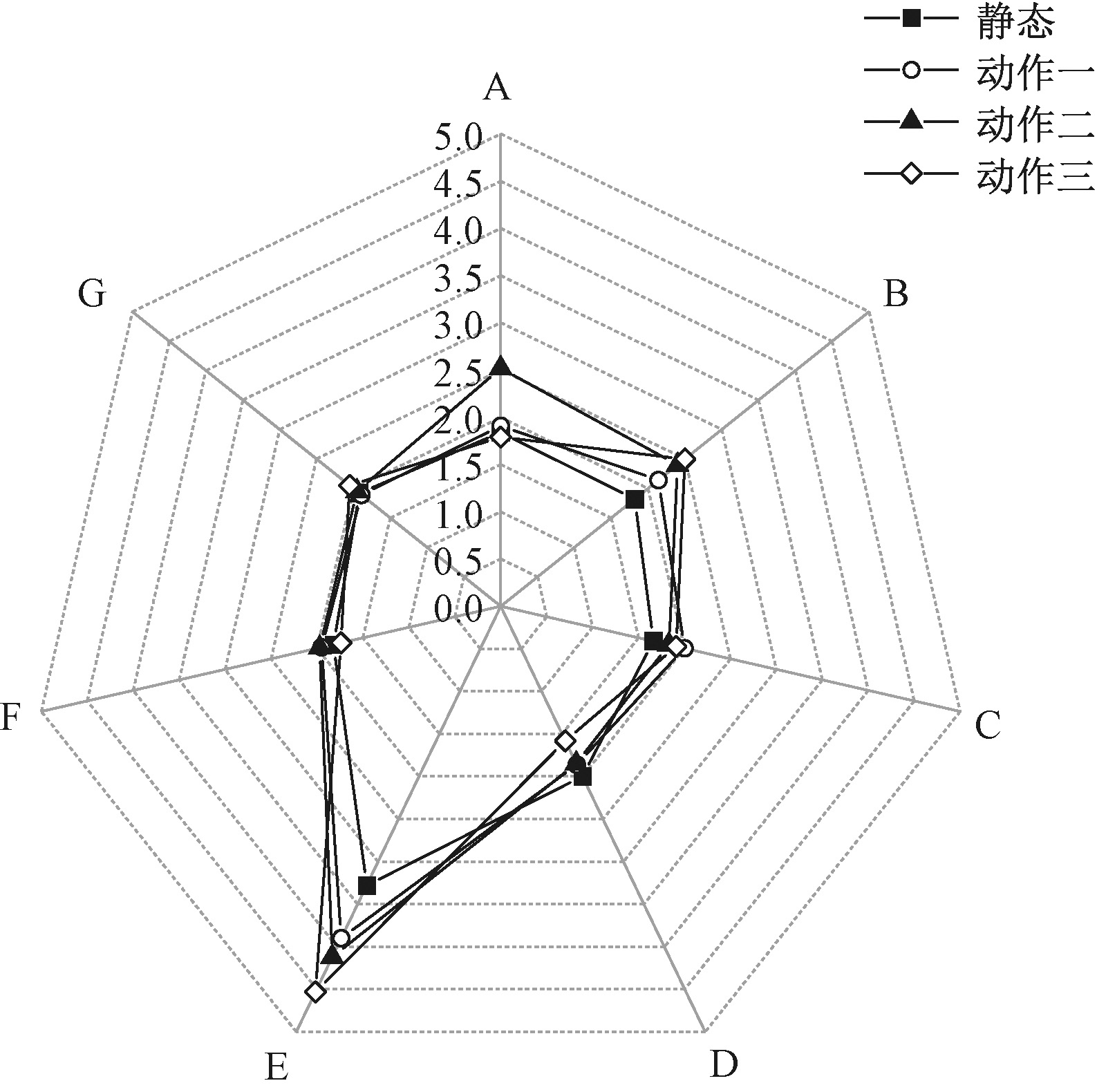
Results The training pants feature the functional partitioning design targeting different leg muscle groups, achieving region specific pressure comfort and elastic stretch performance through various knitting structures. Pressure tests and subjective comfort evaluation were conducted. In the pressure tests, the subjects wore training pants to familiarise with the training actions, and the dynamic pressure test in the rehabilitation training actions was performed. The static pressure test at 7 lower limb test points showed a pressure range of 1.34 to 3.66 kPa. The pressure on the knee was the largest, with an average of 3.28 kPa, and the pressure on the front side of the thigh was the smallest, with an average of 1.66 kPa. The test values of the remaining parts were relatively stable, and the test pressure values range from 1.82 kPa to 2.00 kPa. Dynamic tests included three types of rehabilitation movements, where the pressure values at different test points displayed stable changes across different movements. In the static and dynamic experiments, each part can adapt to different training actions to achieve a comfortable pressure range. The rehabilitation training pants performed well in both static and dynamic tests, with pressure thresholds within a comfortable range and adaptability to various rehabilitation exercises. In the subjective comfort evaluation, the subjects evaluated the four indicators which are comfort, stability, sultry feeling and fatigue of the training pants using a 0 to 5 score system with 0 indicating no obvious effect and 5 having a clear sense of effect. The experimental results show that the positive feedback comfort and stability experience are obvious, and when test was stablized, the comfort score was 4.66-4.03 and stability score was 4.90-4.73. The feeling of sultry and fatigue increased with time but still not obvious, with stablized sultry feeling score being 0.53-2.43 and fatigue score 0.00-2.66. Additionally, all tests confirmed that the training pants performance was good in comfort, stability, and muscle fatigue relief, making them comfortable to wear.

Conclusion A tight-fitting and comfortable whole garment rehabilitation training pants were designed and developed for lower limb rehabilitation training. Taking into consideration of the in-depth analysis of the major muscle groups and leg shape of the lower limbs, muscle dynamics and joint needs in rehabilitation training, and whole garment technology, the pants was engineered utilizing appropriate yarn materials and various knitting structures. Testing has verified the effectiveness in meeting the needs of lower limb rehabilitation training, enhancing rehabilitation outcomes, and preventing sports injuries. The whole garment rehabilitation training pants designed in this study not only provide a new type of rehabilitation training equipment for patients with lower limb functional disorders but also offer new rehabilitation training equipment ideas and methods.

Key words: whole garment, knitting technology, functional partitioning, muscle fatigue, rehabilitation training, clothing pressure

中图分类号: 

  • TS184.4

图1

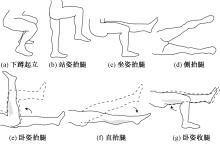
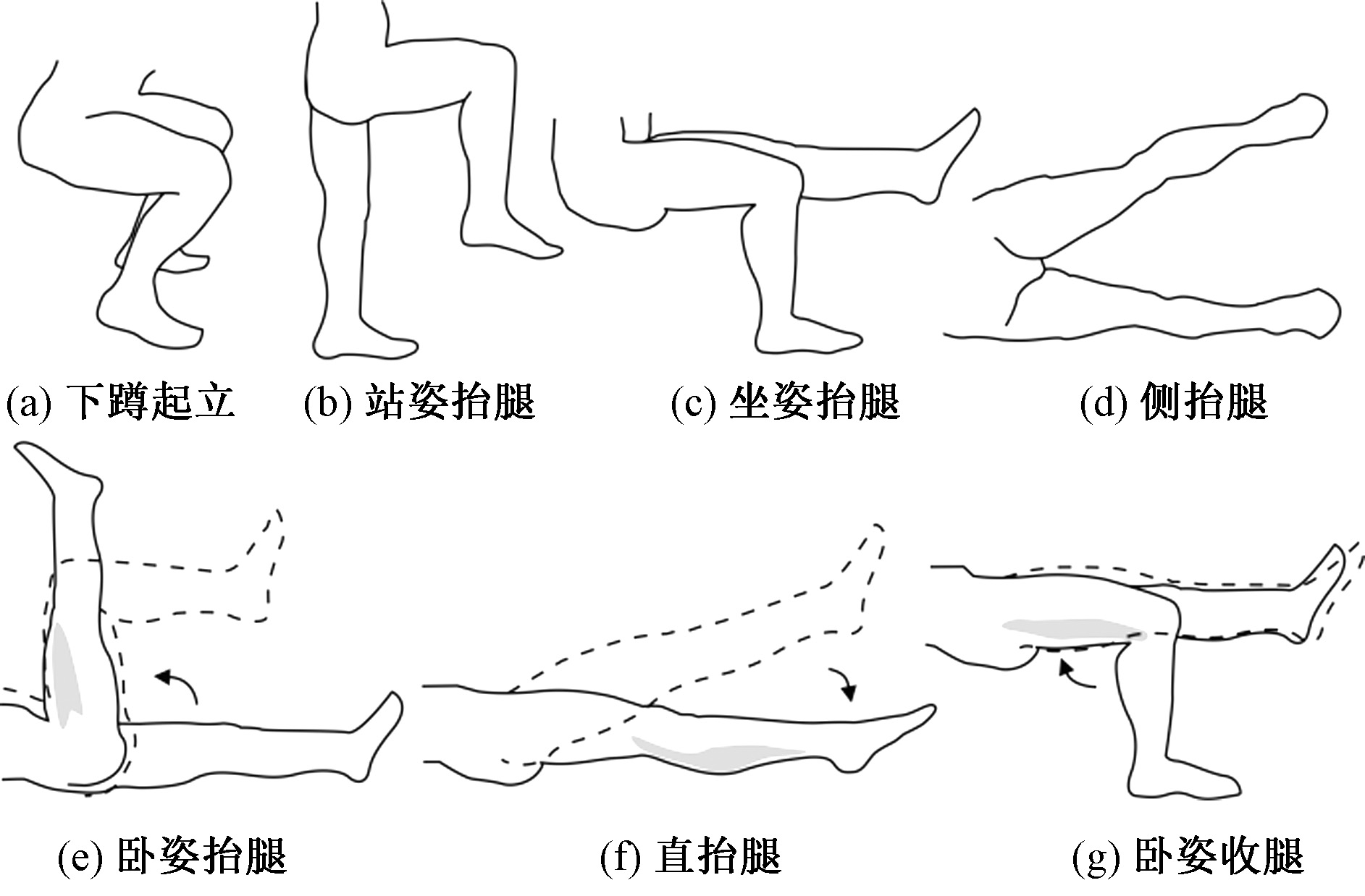
下肢康复训练中常见训练动作"

图2

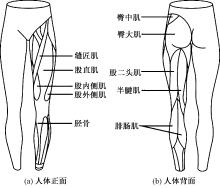
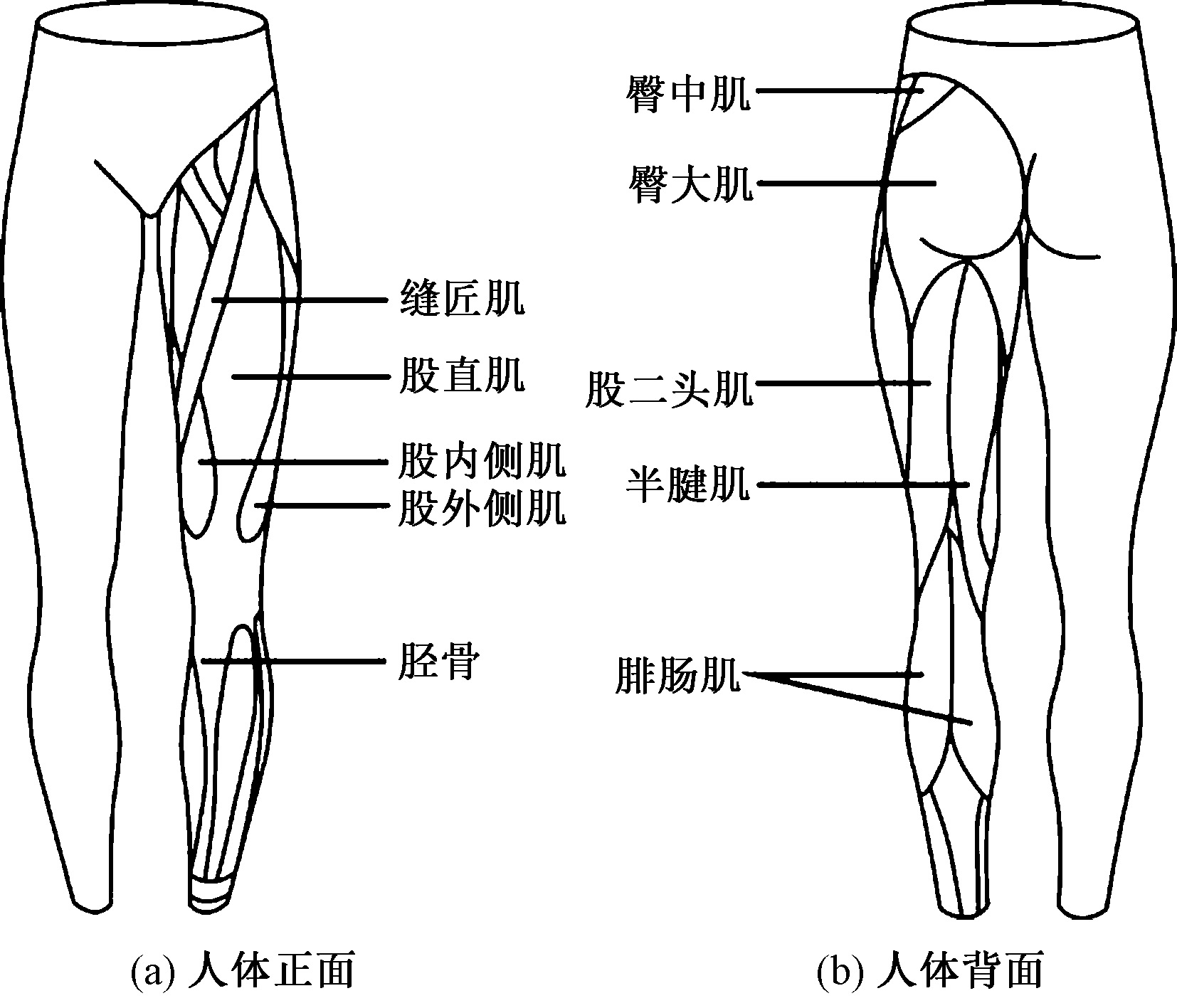
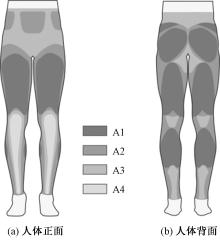
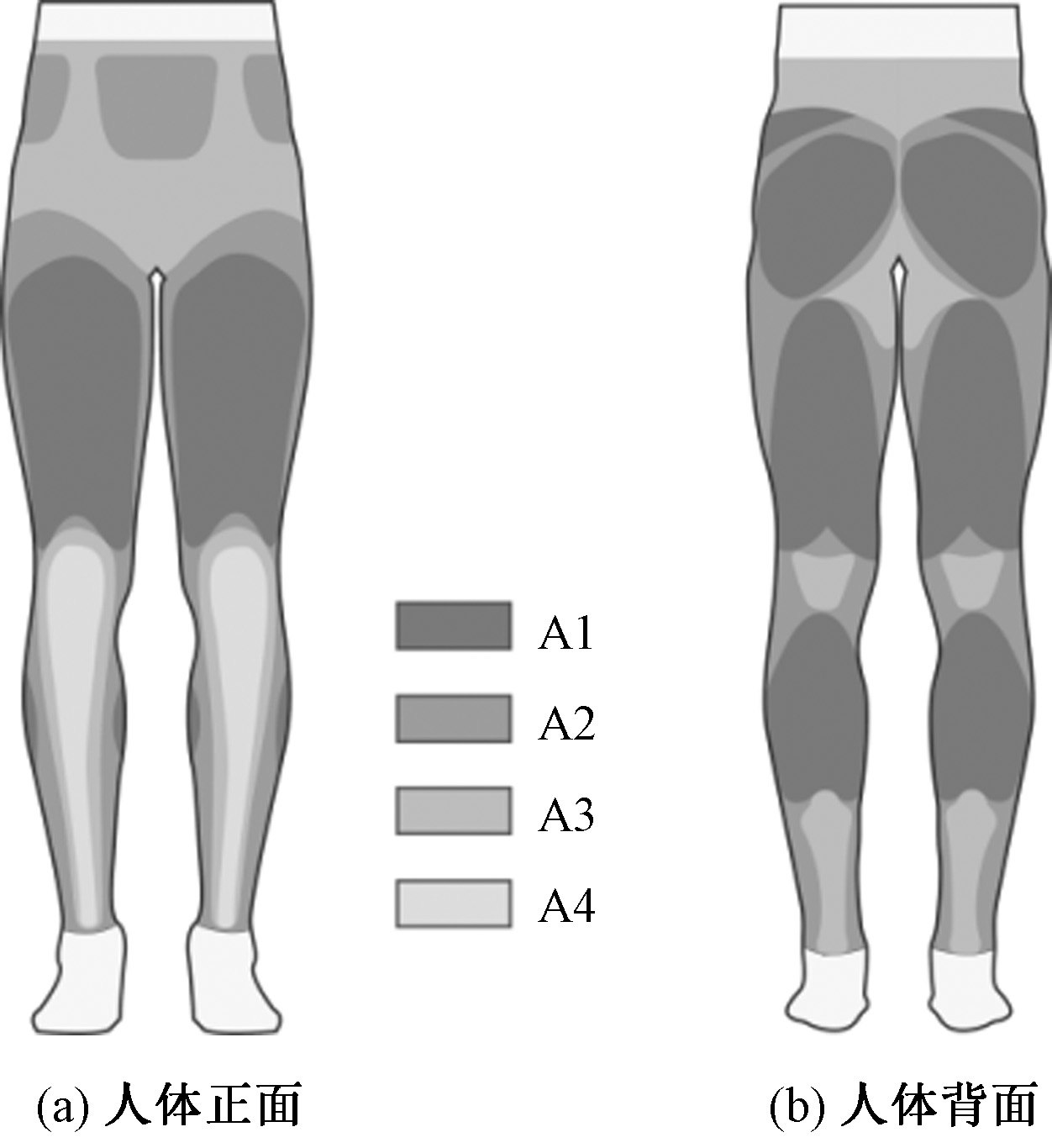
人体下肢结构示意图"

图3

下肢结构分区"

图4

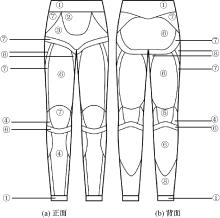
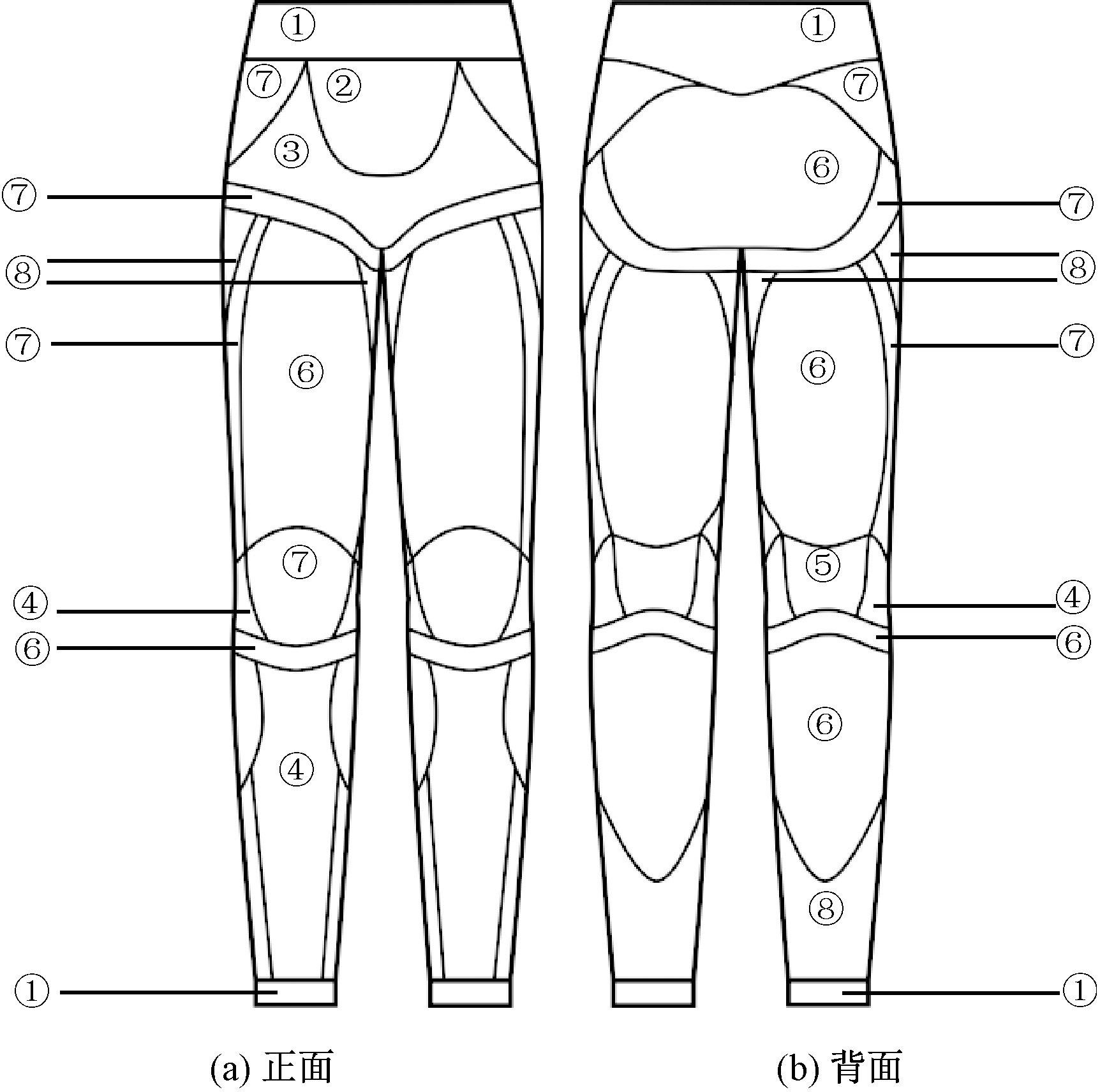
康复裤款式图"

图5

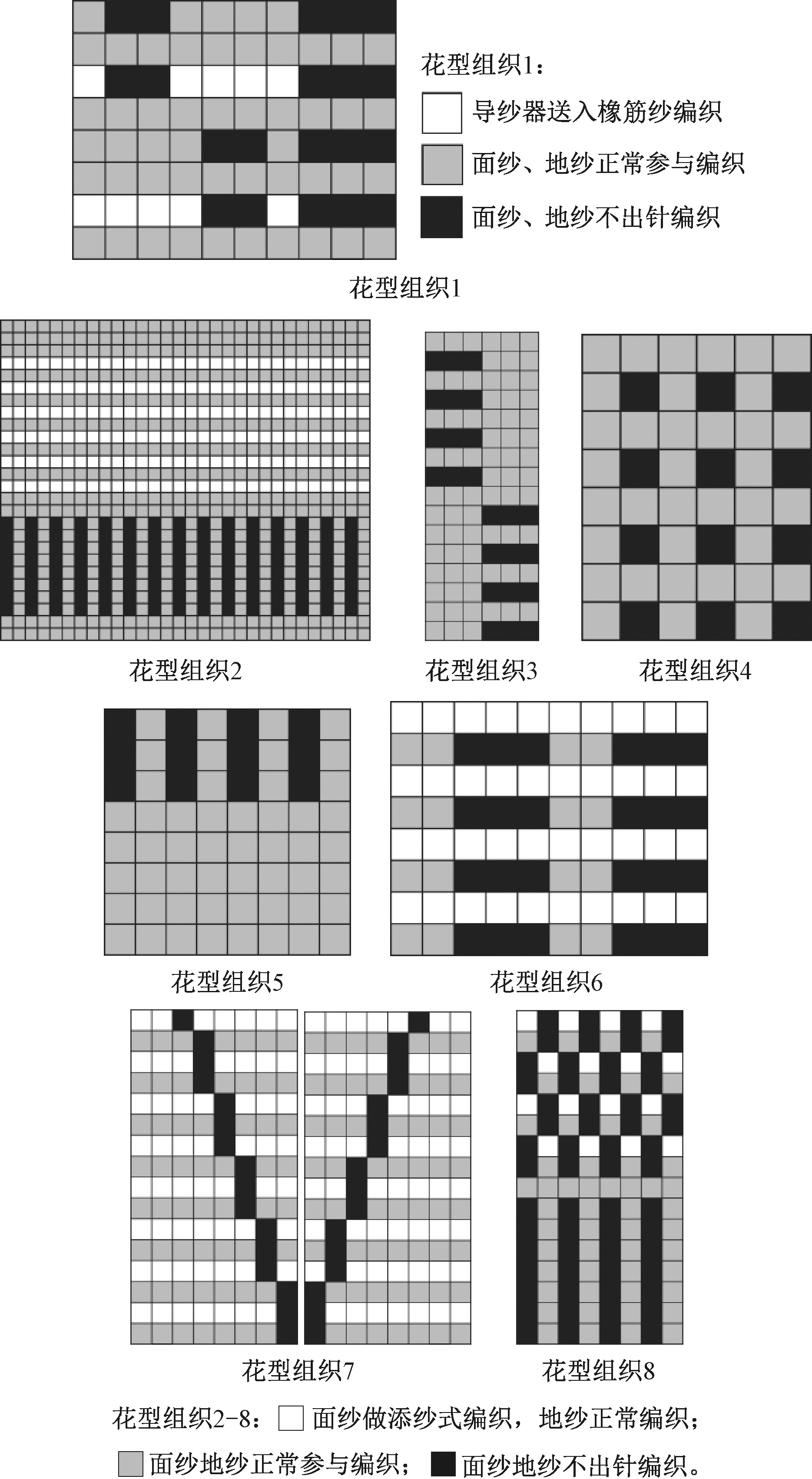
花形组织结构"

表1

定伸长反复弹性回复率"

定伸长率/% 定伸长反复弹性回复率/%
纵向 横向
10 98.5 99.0
30 99.2 99.5

图6

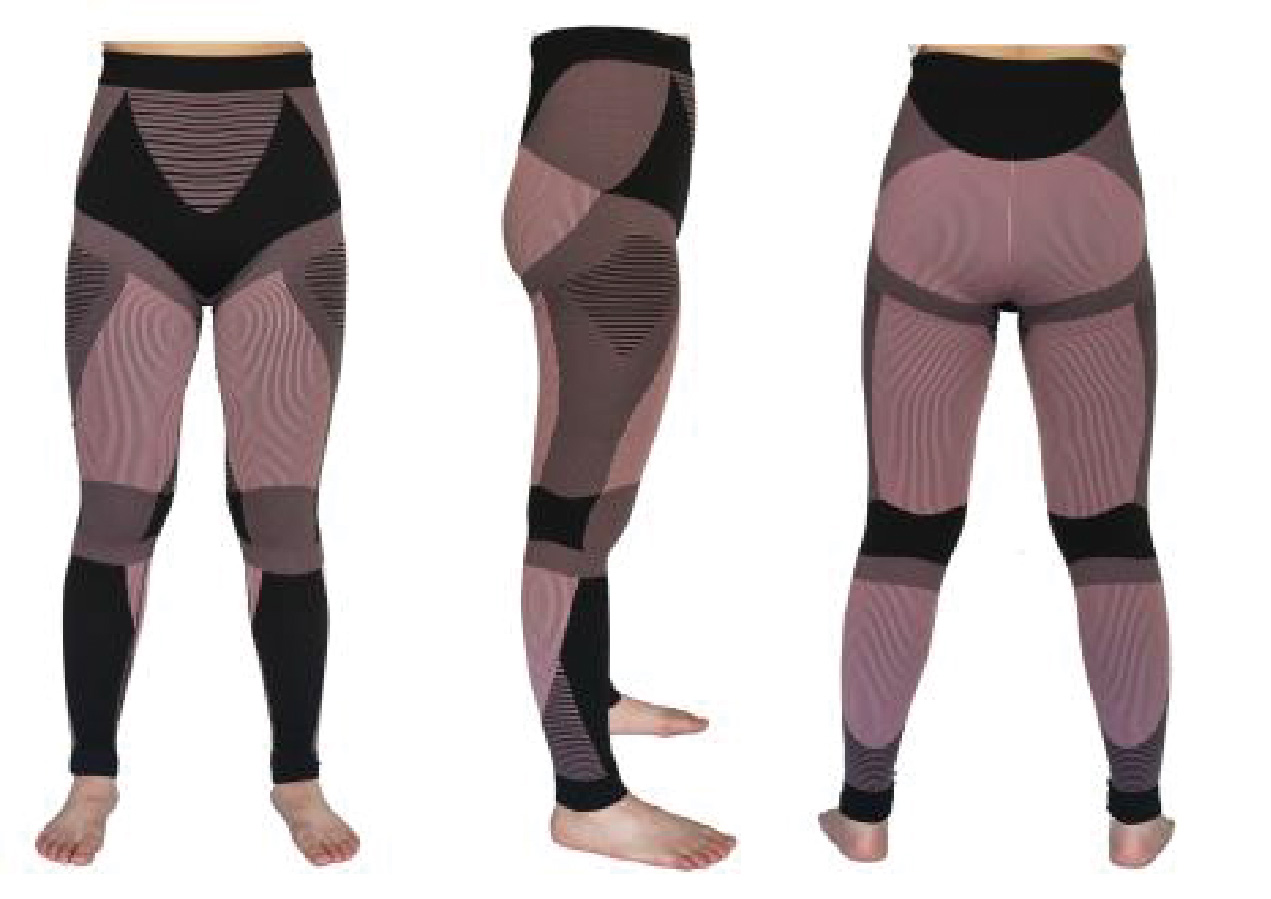
康复裤工艺成品"

表2

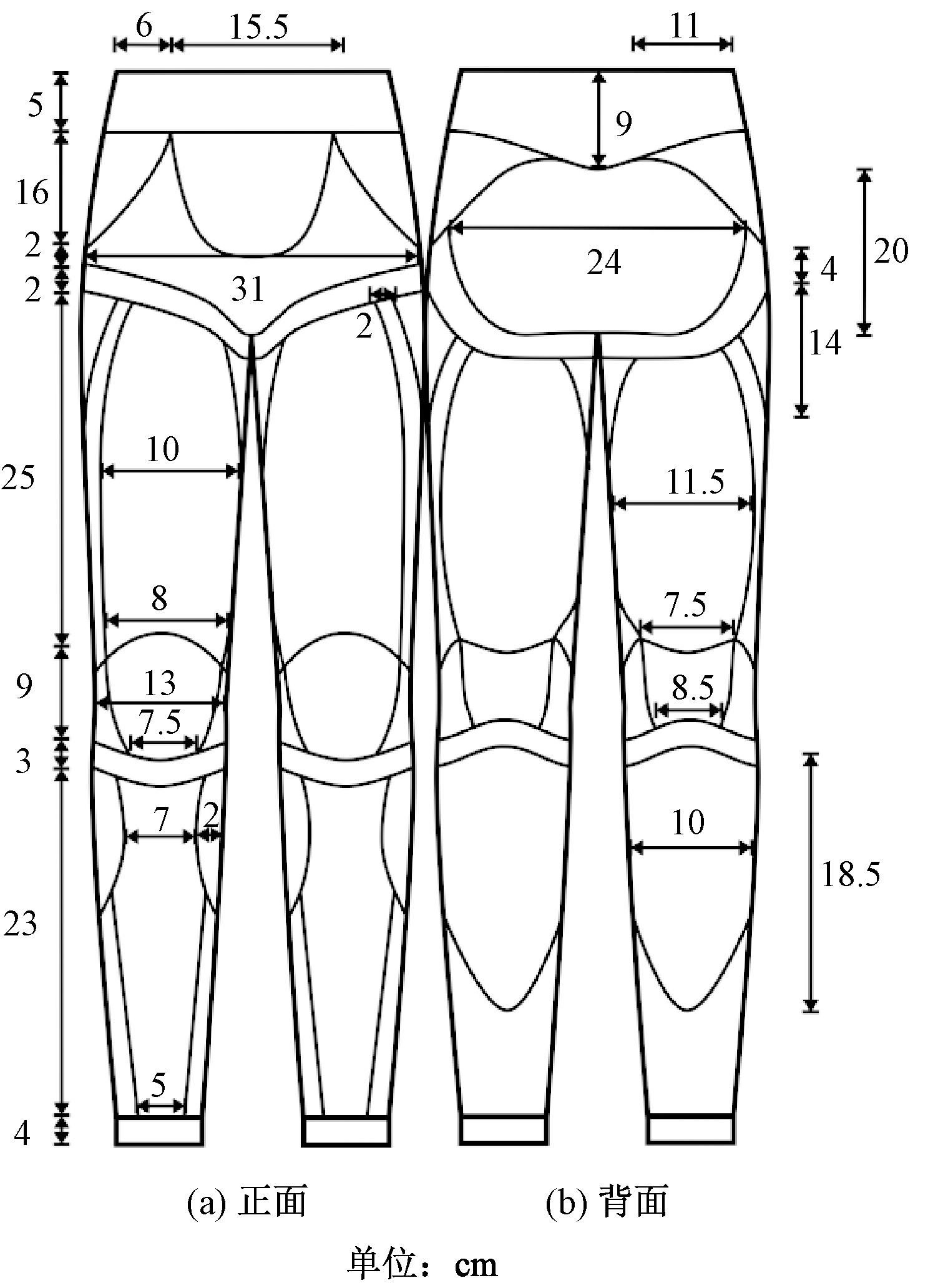
设计尺寸表"

编号 部位名称 人体尺寸/cm 设计尺寸/cm
1 裤长 98 89
2 腰围 68 54
3 臀围 90 62
4 大腿最大围度 55 34
5 膝上围 36 27
6 膝下围 33 24.5
7 小腿最大围度 35 21
8 脚踝围 21 18

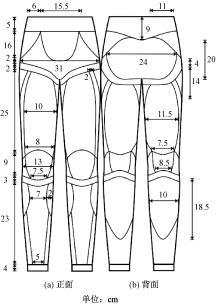
图7

康复裤各部位尺寸"

表3

测试点参考位置"

测试点编号 测试位置 传感器放置参考点
A 腹部 腹中部胯骨上侧位置
B 臀部 臀大肌外侧皮肤最凸位置
C 大腿前侧 大腿前侧正中位置
D 大腿后侧 大腿后侧正中位置
E 膝盖 髌骨正中
F 小腿前侧 小腿前侧胫骨外侧正中部位
G 小腿后侧 小腿后侧腓肠肌外侧正中部位

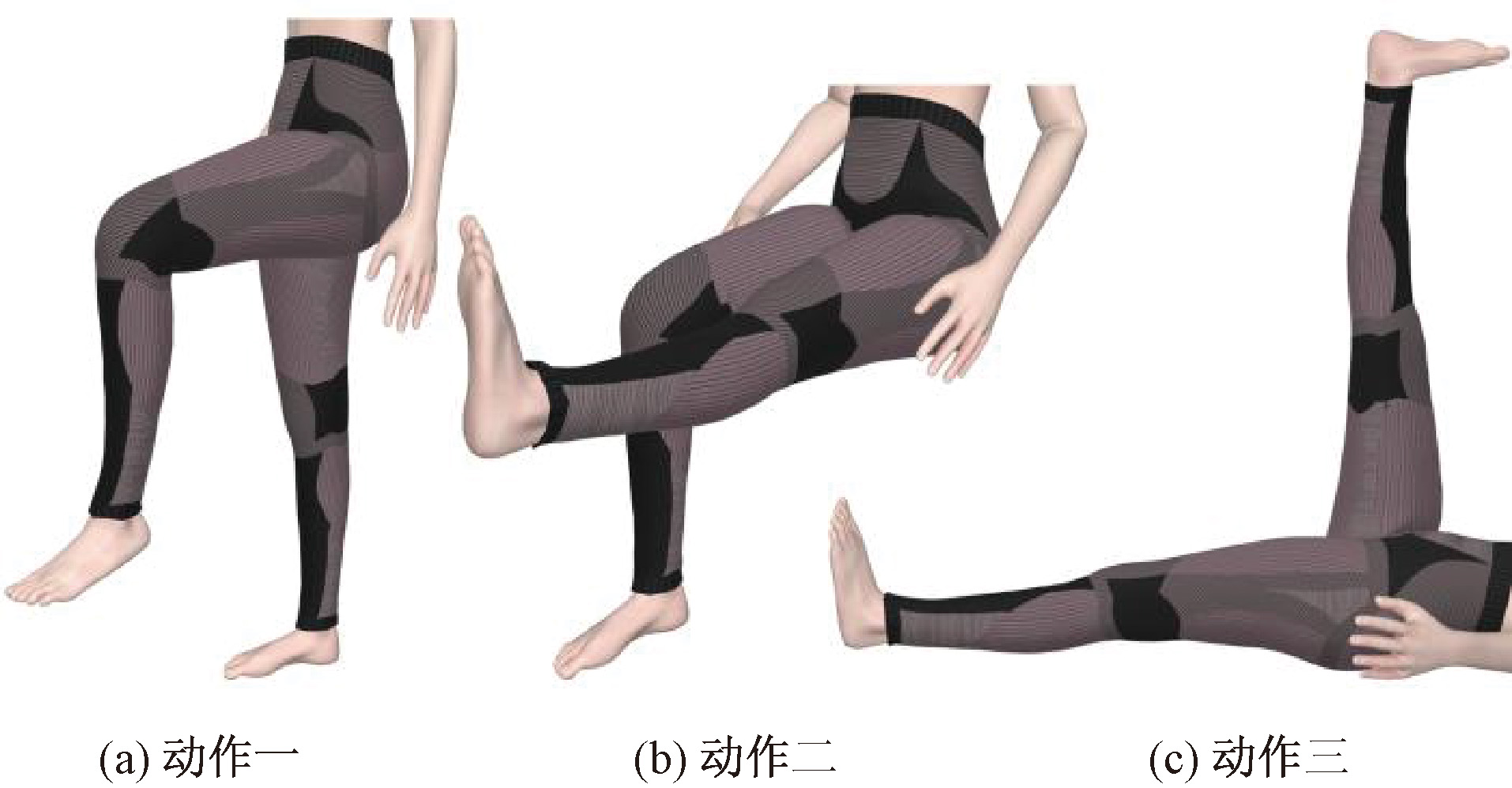
图8

训练动作示意图"

表4

静态测试压力"

测试点编号 平均值 最大值 最小值
A 1.84 2.05 1.68
B 1.82 2.05 1.47
C 1.66 1.91 1.34
D 2.00 2.21 1.79
E 3.28 3.66 2.78
F 1.82 2.44 1.38
G 1.92 2.25 1.53

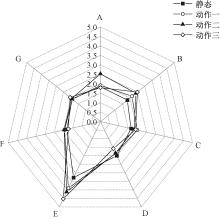
图9

动态测试压力"

表5

主观舒适度评价表"

指标 试穿不同时间后的各指标平均值
0 min 15 min 30 min
舒适性 4.66 4.33 4.03
稳定性 4.90 4.86 4.73
闷热感 0.53 1.73 2.43
疲劳感 0.00 1.90 2.66
[1] 高聪, 蒲蜀湘, 朱德仪. 早期康复治疗对脑卒中偏瘫患者肢体功能及日常生活能力的影响[J]. 中国康复医学杂志, 2001, 16(1):27-29.
GAO Cong, PU Shuxiang, ZHU Deyi. Effects of early rehabilitation on motor function of upper and lower extremities and activities of daily living in patients with hemiplegia after stroke[J]. Chinese Journal of Rehabilitation Medicine, 2001, 16(1): 27-29.
[2] LI N Y, LU M A, DAI Q X, et al. effect of garment pressure on lower limb muscle activity during run-ning[J]. Advanced Materials Research, 2011, 175: 832-836.
[3] 赵凯. 基于肌电信号和虚拟现实的下肢康复训练系统的设计及疲劳检测的研究[D]. 天津: 天津理工大学,2023:1-50.
ZHAO Kai. Study on lower limb rehabilitation training system based on sEMG and virtual reality and fatigue detection[D]. Tianjin: Tianjin University of Technology, 2023:1-50.
[4] BELIARD S, CHAUVEAU M, MOSCATIELLO T, et al. Compression garments and exercise: no influence of pressure applied[J]. Journal of Sports Science & Medicine, 2015, 14(1): 75-83.
[5] MIZUNO S, ARAI M, TODOKO F, et al. Wearing lower-body compression garment with medium pressure impaired exercise-induced performance decrement during prolonged running[J]. PloS One, 2017. DOI: 10.1371/journal.pone.0178620.
[6] NAKAHASHI M, MOROOKA H, MOROOKA H. An estimation of the comfortable and critical clothing pressure values on legs, and an analysis of factors affecting those values[J]. Journal-Japan Research Association for Textile End Uses, 2000, 41(9): 45-51.
[7] 骆顺华. 功能性紧身骑行短裤的结构分区设计[J]. 针织工业, 2020(10):66-70.
LUO Shunhua. Structural partition design of functional tight cycling shorts[J]. Knitting Industries, 2020(10): 66-70.
[8] 宋晓涵. 基于稳定肌肉与减缓肌肉疲劳的女性有氧健身裤研发[D]. 北京: 北京服装学院, 2023:1-36.
SONG Xiaohan. Research on female aerobics pants based on muscle stablition and muscle fatigue allevia-tion[D]. Beijing: Beijing Institute of Fashion Technology, 2023:1-36.
[9] 沈文静. 针织横机全成型技术在服装设计上的应用[D]. 北京: 北京服装学院,2019:1-45.
SHEN Wenjing. Application of knitting flat knitting machine full forming technology in garment design[D]. Beijing: Beijing Institute of Fashion Technology, 2019:1-45.
[10] 李珂, 吴志明. 全成形毛衫C形编织工艺与应用[J]. 上海纺织科技, 2018, 46(4):12-16.
LI Ke, WU Zhiming. Knitting process and application of whole garment sweater of C-knitting[J]. Shanghai Textile Science & Technology, 2018, 46(4): 12-16.
[11] 王丽娟, 李文晖, 任潇庆, 等. 老年与青年人体组织层厚度的差异分析[J]. 西安工程大学学报, 2024, 38(1):1-6.
WANG Lijuan, LI Wenhui, REN Xiaoqing, et al. Analysis of the difference in tissue layer thickness between the elderly and the young[J]. Journal of Xi'an Polytechnic University, 2024, 38(1):1-6
[12] 苑尧尧. 下肢康复训练中的运动意图识别与疲劳估计研究[D]. 曲阜: 曲阜师范大学,2020:1-45.
YUAN Yaoyao. Research on motion intention recognition and fatigue estimation in lower limb rehabilitation training[D]. Qufu: Qufu Normal University, 2020:1-45.
[13] 段相林, 郭炳冉, 辜清. 人体组织学与解剖学[M]. 第4版. 北京: 高等教育出版社,2006:10-100.
DUAN Xianglin, GUO Bingran, GU Qing. Human anatomy and histology[M]. 4th ed. Beijing: Higher Education Press, 2006:10-100.
[14] 金佳勤. 基于人体下肢模型的紧身运动裤压力预测研究[D]. 青岛: 青岛大学,2022:1-35.
JIN Jiaqin. Research on pressure prediction of tight sports pants based on human lower limb model[D]. Shandong: Qingdao University, 2022:1-35.
[15] STRUHÁR I, KUMSTÁT M, KRÁLOVÁ D M. Effect of compression garments on physiological responses after uphill running[J]. Journal of Human Kinetics, 2018, 61: 119.
doi: 10.1515/hukin-2017-0136 pmid: 29599865
[16] GELDENHUYS G A, SWART J, BOSCH A. Investigation of the impact of below-knee compression garments on markers of exercise-induced muscle damage and performance in endurance runners: a prospective randomized controlled trial[J]. Sports Health: A Multidisciplinary Approach, 2019, 11(3):254-264.
[1] 王菁, 董智佳, 郑飞, 黄守东, 彭会涛, 吴光军, 马丕波. 横编全成形鞋体的结构设计与工艺实现[J]. 纺织学报, 2025, 46(04): 89-95.
[2] 罗璇, 周奕, 李端, 刘博. 基于头部特征区域的全成形防护帽的结构建模与工艺实现[J]. 纺织学报, 2025, 46(02): 244-250.
[3] 巫晓雯, 方蕾妹, 江昆, 丛洪莲. 基于热湿舒适性的横编全成形运动内衣的分区设计[J]. 纺织学报, 2024, 45(12): 172-179.
[4] 谢红, 张林蔚, 沈云萍. 基于人体臂部的连续动态服装压力预测模型及准确性表征方法[J]. 纺织学报, 2024, 45(07): 150-158.
[5] 王馨雨, 田明伟. 具有距离监测与辅助提示功能的自闭症儿童智能服装设计[J]. 纺织学报, 2024, 45(03): 156-162.
[6] 朱圆圆, 覃蕊, 金佳勤, 雷彧腾, 于淼. 基于ANSYS的人体下肢服装压虚拟仿真预测[J]. 纺织学报, 2024, 45(03): 148-155.
[7] 董凯, 吕天梅, 盛非凡, 彭晓. 面向个性化健康医疗的智能纺织品研究进展[J]. 纺织学报, 2024, 45(01): 240-249.
[8] 董智佳, 郭燕雨秋, 刘海桑, 姚思宏. 经编全成形镂空紧身衣的结构设计与实现[J]. 纺织学报, 2023, 44(12): 130-137.
[9] 王予涛, 丛洪莲, 顾洪阳. 纬编成形护膝结构设计及其热湿舒适性[J]. 纺织学报, 2023, 44(10): 68-74.
[10] 李玉贤, 丛洪莲, 吴光军. 针织立体构型产品的全成形工艺设计[J]. 纺织学报, 2023, 44(05): 132-138.
[11] 彭来湖, 罗昌, 戴宁, 胡旭东, 牛冲. 动态恒张力氨纶输送控制研究[J]. 纺织学报, 2023, 44(04): 194-203.
[12] 赖安琪, 蒋高明, 李炳贤. 全成形毛衫花式结构三维仿真[J]. 纺织学报, 2023, 44(02): 103-110.
[13] 牛丽, 刘青, 陈超余, 蒋高明, 马丕波. 仿生鳞片针织结构自供能传感织物的制备及其性能[J]. 纺织学报, 2023, 44(02): 135-142.
[14] 冯英杰, 蒋高明, 吴光军, 金帅. 全成形运动护膝结构设计及成形方法[J]. 纺织学报, 2023, 44(01): 112-118.
[15] 徐艳华, 袁新林. 纸样技术在全成形斜裙编织工艺中的应用[J]. 纺织学报, 2022, 43(10): 141-147.
Viewed
Full text


Abstract

Cited

  Shared   
  Discussed   
No Suggested Reading articles found!