纺织学报 ›› 2025, Vol. 46 ›› Issue (07): 186-192.doi: 10.13475/j.fzxb.20241002801

• 服装工程 • 上一篇    下一篇

马面裙坠感指数及结构解析

杨子田(), 王诗琪, 雷梦洁   

  1. 东华大学 服装与艺术设计学院, 上海 200051
  • 收稿日期:2024-10-15 修回日期:2025-03-24 出版日期:2025-07-15 发布日期:2025-08-14
  • 作者简介:杨子田(1971—),男,副教授,博士。主要研究方向为汉服学、服装设计与技术。E-mail:yangzitian@dhu.edu.cn

Drape index and structural analysis of horse-face skirts

YANG Zitian(), WANG Shiqi, LEI Mengjie   

  1. College of Fashion and Design, Donghua University, Shanghai 200051, China
  • Received:2024-10-15 Revised:2025-03-24 Published:2025-07-15 Online:2025-08-14

摘要:

为更直观地理解马面裙穿着舒适性并量化表征其因复杂结构和厚重面料产生的下坠感,提出“坠感指数”这个概念,通过系统性研究揭示其与马面裙结构设计参数的关系。首先,定义了坠感指数物理意义与计算方法,通过坠感指数,进一步分析了马面裙总面积与下坠感之间的关系;其次,对马面裙的结构和主要设计参数进行详细解析;最后,基于900组马面裙结构实验数据,通过Pearson相关分析和多元线性回归法建立了结构设计参数与坠感指数的数学模型,通过残差分析与拟合优度检验验证模型的可靠性。结果表明:马面裙的裙门宽对下坠感的影响较小,且与坠感指数无线性相关关系,而马面裙裙长、腰围、对褶数和单褶量均对马面裙的下坠感呈正相关,其中单褶量对马面裙下坠感的影响最为显著。

关键词: 服装设计, 马面裙, 结构设计参数, 下坠感, 坠感指数, 多元线性回归分析

Abstract:

Objective Current research on the horse-face skirts has primarily focused on craftsmanship, style, and fabrics, with limited attention to its wearing comfort. In order to provide a more intuitive understanding of the comfort associated with the horse-face skirts and to quantify the drape sensation caused by its complex structure and heavy fabric, this study introduces the concept of the "drape index" (defined as a metric reflecting the intensity of downward sagging during wearing). By establishing a mathematical model, the research further investigates the relationship between the design parameters of the horse-face skirts and the drape index, analyzing how the skirt's structure influences its drape sensation. This provides theoretical guidance for optimizing the design and improving the wearing comfort of the horse-face skirts.

Method The definition and calculation formula of the drape index were analyzed, and the definitions of the design parameters of the horse-face skirts and their regression relationships were listed. The area calculation formula for the horse-face skirts was proposed. A total of 900 experimental data sets on the structures of horse-face skirts were collected. Correlation analysis and multiple regression analysis were employed to establish a mathematical model between the structural design parameters of the horse-face skirt and the drape index, thereby analyzing the influence of the skirt structure on the drape sensation.

Results The drape index of the horse-face skirt was determined by its total area. Through the correlation analysis of the structural design parameters and the drape index, it was found that the Pearson correlation coefficient between skirt width and the drape index was 0.257, with a significance level of 0.183. This indicates that the change in skirt width has a minimal effect on the drape index, and no significant correlation exists between the two. This result may be related to the characteristics of the skirt width as a planar structural component of the skirt, which occupies a relatively small area and has a more uniform force distribution, thus having a limited impact on the overall drape sensation. The remaining four variables (skirt length, waist size, number of pleats, and pleat overlap) showed significant correlation with the drape index, which were used as independent variables to construct a linear model. According to the multiple linear regression analysis, the adjusted coefficient of determination for the model incorporating skirt length, waist size, number of pleats and pleat overlap reached 0.970, indicating these parameters collectively explain 97% of the variance in the drape index. Additionally, the Durbin-Watson statistic was 1.963, suggesting that the sample parameters of the horse-face skirt are independent and that there is no autocorrelation among them. The contribution rates of skirt length, waist size, number of pleats, and pleat volume to the drape index were 18.4%, 8.5%, 65.4% and 68.9%, respectively. Both pleat volume (68.9%) and number of pleats (65.4%) demonstrated particularly significant effects, while skirt length (18.4%) and waist size (8.5%) showed relatively minor impacts. This phenomenon may be attributed to how pleat volume directly affects the density of skirt folds and fabric stacking degree, thereby increasing the skirt's weight and drape sensation. The established mathematical formula confirmed that all four variables positively influence the drape sensation of the horse-face skirt, with pleat volume having the greatest effect. The regression coefficients provide quantitative guidance for adjusting structural design parameters, enabling an optimal balance between wearing comfort and aesthetic appeal.

Conclusion The proposed quantitative method for evaluating the weighted drape sensation of horse-face skirts offers theoretical guidance for the design of more comfortable versions of skirt and enriches the research on horse-face skirts. However, it only considers the influence of design parameters on the drape sensation. Future research is needed to explore the relationship between different styles of horse-face skirt structures and their drape sensations, as well as the influences of various fabrics and manufacturing techniques on the drape sensation.

Key words: fashion design, horse-face skirt, structural design parameter, drape sensation, drape index, multiple regression analysis

中图分类号: 

  • TS941.71

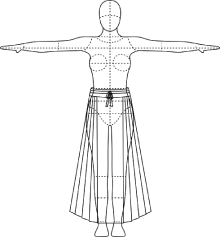
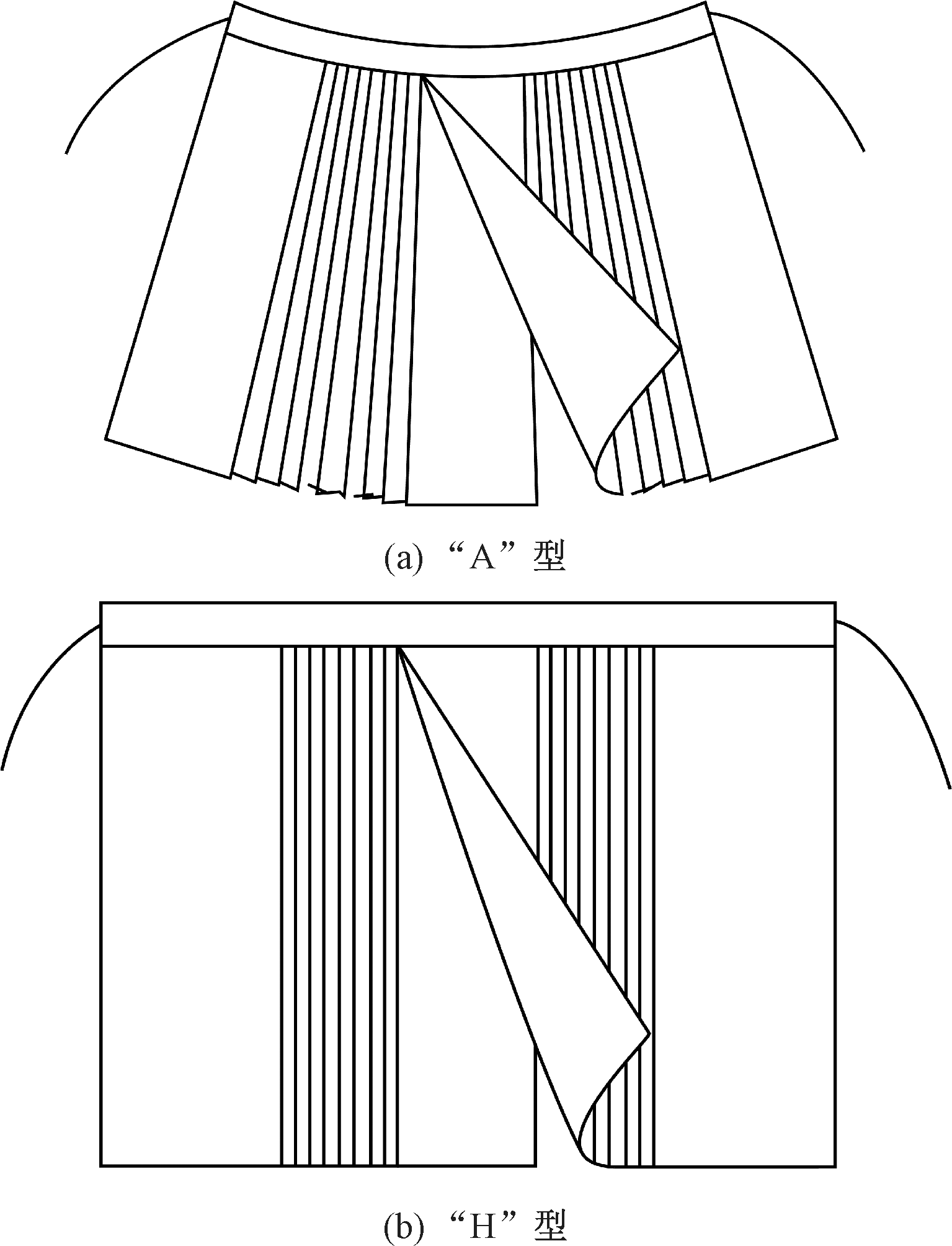
图1

马面裙穿着效果示意图"

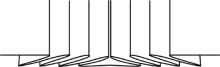
图2

马面裙合抱褶示意图"

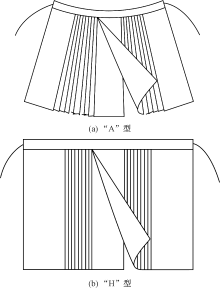
图3

马面裙廓形示意图"

表1

马面裙设计参数"

设计参数 定义解释 回归关系式 取值范围/cm 限制条件
腰围(W) 人体净腰围加上保证基本活动松量的总和,直接影响腰部贴合度和压力分布 W=W*+(0~2) 60~84 取值根据实际身材调整
结构裙长(C) 马面裙(不含裙腰宽)的长度,决定裙子的垂坠效果和活动自由度 C=0.6h+(3~5) 94~106 取值根据身高h调整
裙长(L) 马面裙(含裙腰宽)的总长度,影响裙子的外观比例和面料用量 L=L+d 100~112 取值根据设计的外观要求调整
裙门宽(M) 裙门指马面裙裙片中无褶的平面结构部分,影响裙子的平衡性和美观性 M=0.3W+(0~5) 16~30 取值根据腰围W值以及设计的外观要求调整
单褶量(n) 单个褶裥的大小,决定褶裥的立体效果和面料用量 3~6 取值根据面料的褶皱效果需求调整
裙腰长(y) 裙腰部分条状布幅的长度,决定腰部覆盖范围,影响腰部压力分布的均匀性 y=W+M 74~114 取值根据腰围W及裙门宽M调节
裙腰宽(d) 裙腰部分条状布幅的宽度,影响腰部的支撑效果和活动自由度 3~6 取值根据个人需求调节
裙带宽(j) 系带的宽度,影响腰部的固定效果和舒适性 1~3 取值根据个人需求调节
裙带长(k) 系带的长度,决定腰部的松紧度和活动自由度 k=1.5W+(10~40) 90~150 取值根据设计和活动自由度调整
裙摆围(G) 裙子完全展开时,2个裙片的底边相连的总长度,影响裙子的体积和下坠感 G=y+8nf 170~498 取值由相关设计参数决定

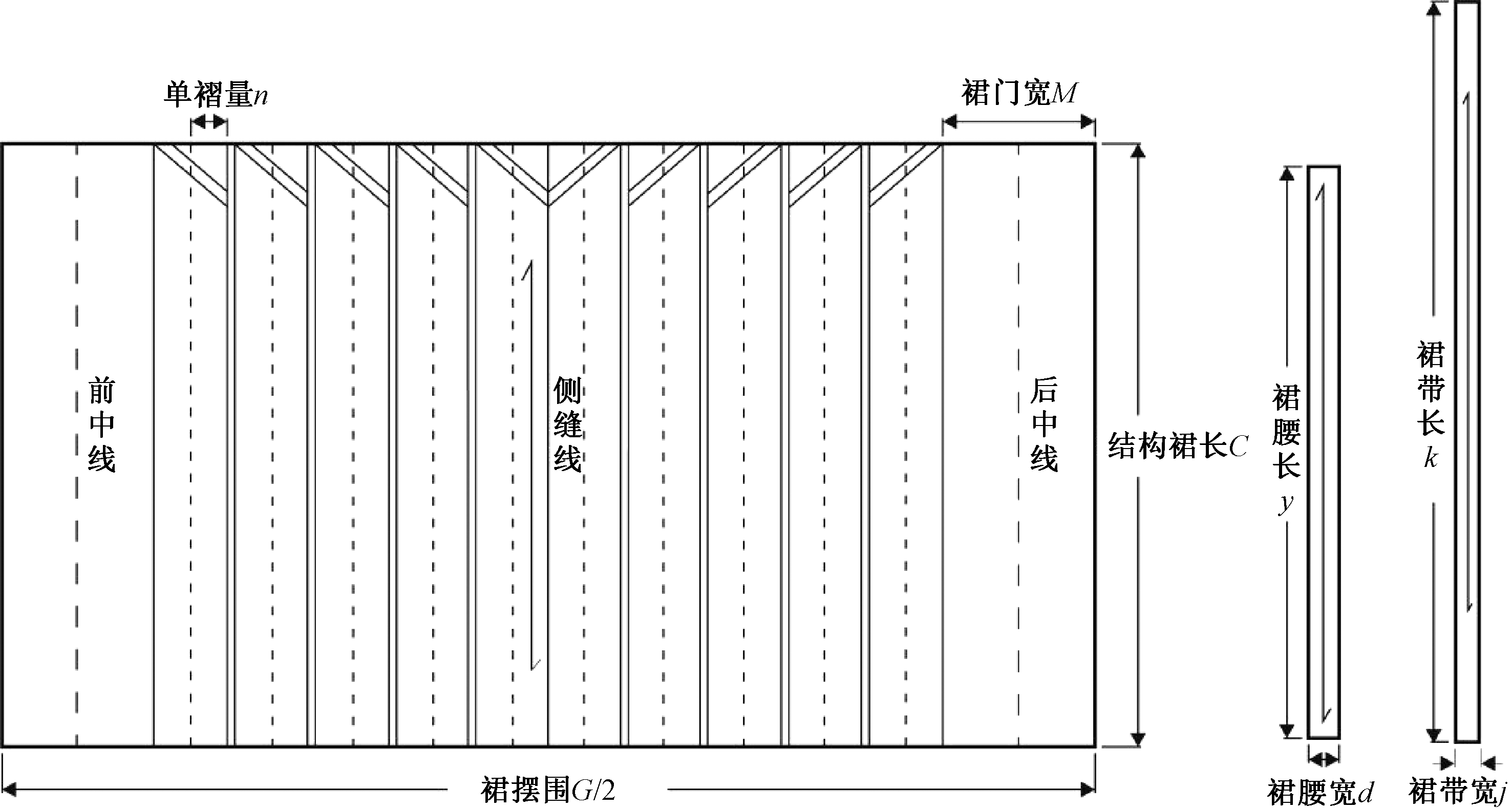
图4

马面裙单片裙幅展开示意图"

表2

900个马面裙样本参数汇总表"

马面裙
序号
腰围
W/cm
裙长
L/cm
结构裙长
C/cm
裙门宽
M/cm
单褶量
n/cm
裙腰长
y/cm
裙腰宽
d/cm
裙带宽
j/cm
裙带长
k/cm
对褶数
f/对
裙子总面积
S/cm2
坠感指数
T
1 76 106 100 22 5 98 6 3 120 8 46 616 2.33
2 68 103 97 24 5 92 6 3 120 8 44 836 2.14
3 78 112 106 24 5 102 6 3 120 7 45 700 2.29
4 68 103 97 26 3 94 6 3 120 8 32 832 1.64
5 68 106 100 224 4 92 6 3 120 7 36 544 1.83
6 76 106 100 22 5 98 6 3 120 5 34 616 1.73
7 60 100 94 22 6 82 6 3 120 7 43 784 2.19
8 76 112 106 22 4 98 6 3 120 7 39 080 1.95
9 78 112 106 26 5 104 6 3 120 6 41 908 2.10
10 76 109 103 22 5 98 6 3 120 8 47 936 2.40
... ... ... ... ... ... ... ... ... ... ... ... ...
899 78 109 103 24 6 102 6 3 120 8 55 194 2.76
900 68 106 100 22 5 90 6 3 120 5 33 720 1.69

表3

5个影响因素和马面裙坠感指数的相关性检验"

设计参数 坠感指数
皮尔逊相关性(r值) 显著性检验(P值)
裙长L 0.257** 0.000
腰围W 0.244** 0.000
裙门宽M 0.044 0.183
对褶数f 0.654** 0.000
单褶量n 0.689** 0.000

表4

实验模型汇总结果"

R2 调整后R2 F 标准估算的错误 Durbin-Waston值
0.985 0.970 7 226.807 0.676 77 1.963

表5

实验模型系数回归结果"

参数 未标准化回归系数 标准化回归系数 t 显著性 共线性统计
B 标准错误 Beta 容差 IVIF
(常量) -2.534 0.073 -34.923 <0.001
裙长L 0.017 0.001 0.184 15.841 <0.001 0.25 4.004
腰围W 0.006 0.001 0.085 7.335 <0.001 0.25 4.004
对褶数f 0.180 0.002 0.654 112.841 <0.001 1 1
单褶量n 0.240 0.002 0.689 118.945 <0.001 1 1
[1] 王懿, 张竞琼. 近代马面裙形制类型与演变的实例分析[J]. 纺织学报, 2014, 35(4): 110-115.
WANG Yi, ZHANG Jingqiong. Study on molding types and development of horse-face skirt in morden times[J]. Journal of Textile Research, 2014, 35(4): 110-115.
[2] 牛犁, 林鹏飞. 明末江南地区士族墓出土马面裙考析[J]. 艺术设计研究, 2023(6): 42-48.
NIU Li, LIN Pengfei. A study on the horse-face skirt unearthed from the tombs of scholars in Jiangnan area in the late Ming Dynasty[J]. Art & Design Research, 2023(6): 42-48.
[3] 黄紫薇, 杨浪. 襕干裙的结构创想与三维虚拟复原[J]. 纺织学报, 2024, 45(9):154-163.
HUANG Ziwei, YANG Lang. Structural creation of striped skirt and its three-dimensional virtual restor-ation[J]. Journal of Textile Research, 2024, 45(9):154-163.
[4] 梁惠娥, 崔荣荣. 民间裙装中褶皱的效用价值[J]. 纺织学报, 2006(9): 118-120.
LIANG Huie, CUI Rongrong. Effective value of pleats in folk costume[J]. Journal of Textile Research, 2006(9): 118-120.
[5] 王雪, 方方. 服装压力舒适性研究分析[J]. 纺织科技进展, 2015(1):47-51.
WANG Xue, FANG Fang. Research and analysis of clothing pressure comfort[J]. Progress in Textile Science & Technology, 2015(1): 47-51.
[6] 贾玺增. 中国古代马面裙研究:兼论清华大学艺术博物馆藏马面裙[J]. 东华大学学报(社会科学版), 2023, 23(1): 48-61.
JIA Xizeng. Study on ancient Chinese horse-faced skirt: on the horse-faced skirt in the Art Museum of Tsinghua University[J]. Journal of Donghua University (Social Science Edition), 2023, 23(1): 48-61.
[7] 杨子田, 雷梦洁, 王诗琪. 马面裙的定义与结构特征来源探析[J]. 服装学报, 2024, 9(4):290-295.
YANG Zitian, LEI Mengjie, WANG Shiqi. Analysis of the definition and structural feature source of the horse-face skirt[J]. Journal of Clothing Researsh, 2024, 9(4): 290-295.
[8] 张佩, 杨景壹. 马面裙在现代服饰中的创新应用[J]. 轻纺工业与技术, 2022, 51(5): 79-81.
ZHANG Pei, YANG Jingyi. Innovative application of horse face skirt in modern clothing[J]. Textile Industry and Technology, 2022, 51(5): 79-81.
[9] 林鹏飞, 牛犁. 明代常州王洛家族墓出土马面裙研究[J]. 丝绸, 2023, 60(7): 135-142.
LIN Pengfei, NIU Li. Study on horse-face skirts unearthed from tombs of the Wang Luo family in Changzhou in the Ming Dynasty[J]. Journal of Silk, 2023, 60(7): 135-142.
[10] 周亚茹. 明代马面裙的文化研究及创新设计应用[D]. 北京: 北京服装学院, 2023:25-27.
ZHOU Yaru. Cultural research and innovative design application of Mamian skirt in Ming Dynasty[D]. Beijing: Beijing Institute of Fashion Technology, 2023:25-27.
[11] 张文斌. 服装结构设计[M]. 北京: 中国纺织出版社, 2006:68.
ZHANG Wenbin. Pattern making for fashion design[M]. Beijing: China Textile & Apparel Press, 2006: 68.
[12] 杜强, 贾丽艳, 严先锋. SPSS统计分析从入门到精通[M]. 北京: 人民邮电出版社, 2014:161.
DU Qiang, JIA Liyan, YAN Xianfeng. From beginner to expert in SPSS statistical analysis[M]. Beijing: Posts & Telecom Press, 2014: 161.
[1] 罗玉玲, 杨喜竹, 王星岚, 郑晓慧, 赵胜男, 常素芹. 以相变包为冷源的冷却服研究进展[J]. 纺织学报, 2025, 46(07): 253-261.
[2] 于晓坤, 易萍, 谢冠婧, 蔡凌霄. 基于人体动力学的服装衣袖运动舒适性探究[J]. 纺织学报, 2025, 46(06): 196-202.
[3] 吕迎蕊, 王朝晖, 叶勤文, 刘欢欢, 孙月鑫. 运动服装的设计方法及发展趋势[J]. 纺织学报, 2025, 46(03): 256-265.
[4] 黄紫薇, 杨浪. 襕干裙的结构创想与三维虚拟复原[J]. 纺织学报, 2024, 45(09): 154-163.
[5] 周莉, 樊培宏, 金玉婷, 张龙琳, 李新荣. 服装逆向造型的数字化设计方法[J]. 纺织学报, 2023, 44(12): 138-144.
[6] 杨钰蝶, 李承璋, 金剑, 郑晶晶. 基于上肢活动性的灭火防护服背带的设计与评价[J]. 纺织学报, 2023, 44(11): 183-189.
[7] 刘咏梅, 刘思忆, 于晓坤, 薛惠心, 张向辉. 中国东部地区中老年女性体型特征与分类[J]. 纺织学报, 2023, 44(07): 184-191.
[8] 陈佳, 杨聪聪, 刘军平, 何儒汉, 梁金星. 手绘草图到服装图像的跨域生成[J]. 纺织学报, 2023, 44(01): 171-178.
[9] 王迪, 柯莹, 王宏付. Voronoi图形在参数化服装造型构建中的应用[J]. 纺织学报, 2021, 42(12): 131-137.
[10] 唐茜, 张冰冰, 郑笑雨. 婴幼儿可穿戴智能监测服装设计[J]. 纺织学报, 2021, 42(08): 156-160.
[11] 金鹏, 薛哲彬, 江润恬, 刘丹宇, 张弛. 具有安全防护功能的智能盲人服设计[J]. 纺织学报, 2021, 42(08): 135-143.
[12] 徐增波, 张玲, 张艳红, 陈桂清. 基于复杂网络提取和支持向量机模型分类的服装领型研究[J]. 纺织学报, 2021, 42(06): 146-152.
[13] 张恒. 基于翻领松量结构模型的翻折领结构设计方法[J]. 纺织学报, 2020, 41(11): 128-135.
[14] 杨娟, 张远鹏. 服装设计知识图谱中的服装装饰工艺分类模型[J]. 纺织学报, 2020, 41(08): 95-100.
[15] 刘佟. 基于人体曲面变化的服装几何空间设计[J]. 纺织学报, 2019, 40(11): 155-160.
Viewed
Full text


Abstract

Cited

  Shared   
  Discussed   
No Suggested Reading articles found!