纺织学报 ›› 2025, Vol. 46 ›› Issue (07): 128-135.doi: 10.13475/j.fzxb.20241004101
张一帆1,2, 安柳絮1,2, 闫英杰1,2, 邹齐3, 刘晓志4, 郭俊华5, 陈利1,2( )
)
ZHANG Yifan1,2, AN Liuxu1,2, YAN Yingjie1,2, ZOU Qi3, LIU Xiaozhi4, GUO Junhua5, CHEN Li1,2()
摘要:
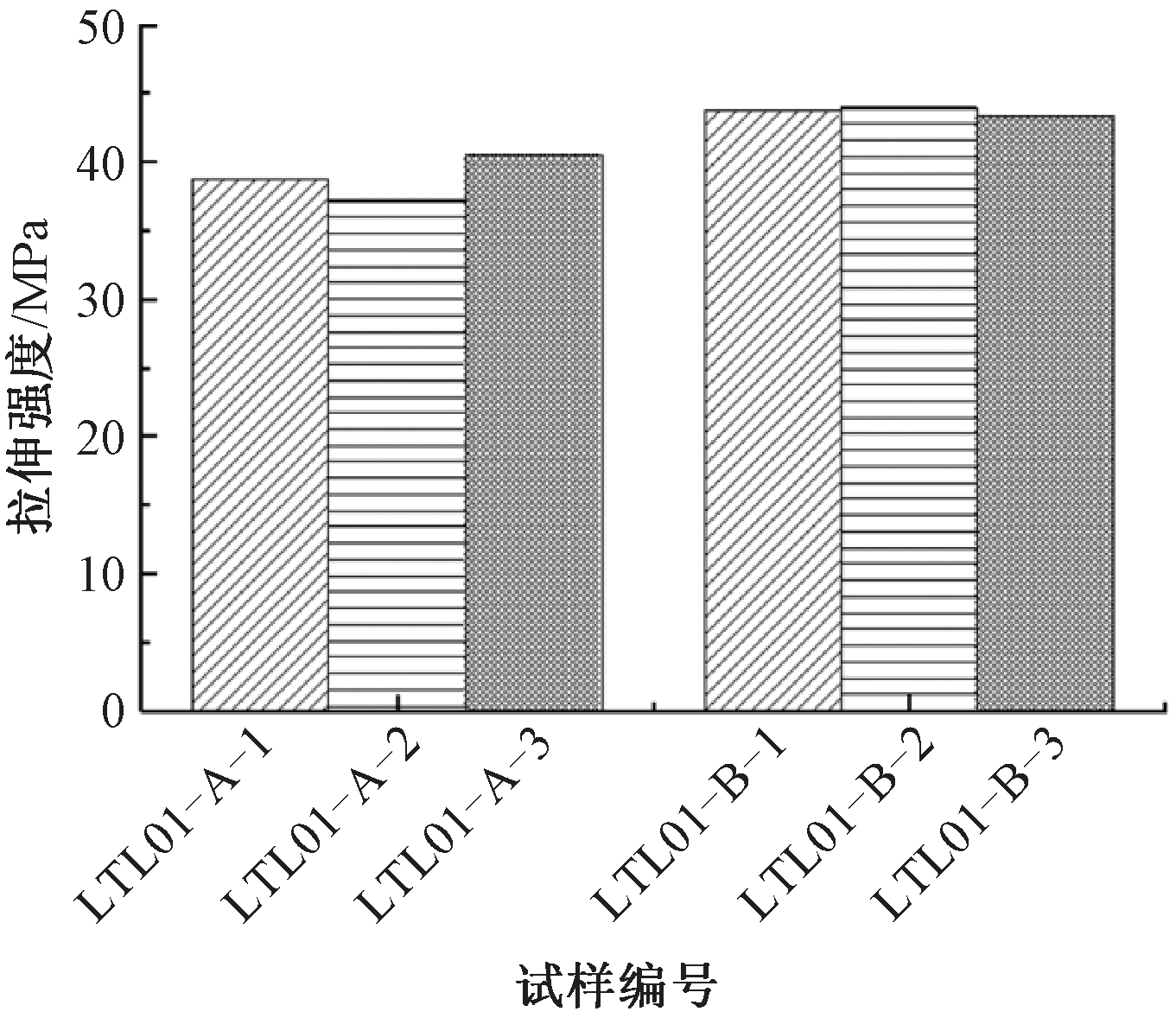
为研究不同交织结构对三维机织复合材料T型接头拉伸性能的影响,设计了不同织物结构以及不同连接方式的复合材料T型接头,并采用树脂传递模塑(RTM)成型工艺复合成型。采用拉伸试验结合非接触全场应变测量系统研究了复合材料T型结构的宏观力学行为,利用Micro-CT技术阐明其失效机制,并细致讨论了不同织物结构和不同连接方式对复合材料T型接头拉伸性能的影响规律。结果表明:交叉连接试样的拉伸强度相比于分叉连接试样提高了12.46%,交叉引入的纬纱可以抵抗拉伸载荷在连接处产生的剪切作用,能有效提高复合材料T型接头的损伤容限;多层多向复合材料T型接头的拉伸强度相比于层联机织复合材料T型接头提升了98.46%,多层多向结构由于±45°斜向纱的引入改善了试样在连接处的应力分布,能有效提高复合材料T型接头底板的抗剪切性能。
中图分类号:
| [1] | MOSALLAM A, FEO L, ELSADEK A, et al. Structural evaluation of axial and rotational flexibility and strength of web-flange junctions of open-web pultruded composites[J]. Composites Part B: Engineering, 2014, 66: 311-327. |
| [2] | FASCETTI A, FEO L, NISTICÓ N, et al. Web-flange behavior of pultruded GFRP I-beams: a lattice model for the interpretation of experimental results[J]. Composites Part B: Engineering, 2016, 100: 257-269. |
| [3] | THOPPUL S D, FINEGAN J, GIBSON R F J C S, et al. Mechanics of mechanically fastened joints in polymer-matrix composite structures: a review[J]. Composites Science and Technology, 2009, 69(3/4): 301-329. |
| [4] | TAN Y, LI Y, HUAN D, et al. Failure analysis and strengthening mechanism of Z-pinned composite T-joints under tensile loading[J]. Science and Engineering of Composite Materials 2017, 24(5): 783-790. |
| [5] | KIM C H, JO D H, CHOI J H J C S. Failure strength of composite T-joints prepared using a new I-thread stitching process[J]. Composite Structures, 2017, 178: 225-231. |
| [6] | YAN S, ZENG X, LONG A J C P B E. Experimental assessment of the mechanical behavior of 3D woven composite T-joints[J]. Composites Part B: Engineering, 2018, 154: 108-113. |
| [7] | HAO A, SUN B, QIU Y, et al. Dynamic properties of 3-D orthogonal woven composite T-beam under transverse impact[J]. Composites Part A: Applied Science and Manufacturing, 2008, 39(7): 1073-1082. |
| [8] | 孙文博. 填充物、胶膜和Z-pin对复合材料T型接头强度影响对比[J]. 复合材料学报, 2018, 35(1): 110-116. |
| SUN Wenbo. Comparison of the effects of filler, adhesive film and Z-pin on the strength of composite T-joints[J]. Acta Materiae Compositae Sinica, 2018, 35(1): 110-116. | |
| [9] | 段春续. Z-pin增强复合材料T型接头的性能研究[D]. 南昌: 南昌航空大学, 2020:1-7. |
| DUAN Chunxu. Study on the performance of Z-pin reinforced composite T-joints[D]. Nanchang: Nanchang Hangkong University, 2020:1-7. | |
| [10] | 孙晓伦. 多层多向机织复合材料开孔连接性能研究[D]. 天津: 天津工业大学, 2022:1-31. |
| SUN Xiaolun. Study on the perforated connection properties of multi-layer and multi-directional woven composites[D]. Tianjin: Tiangong University, 2022:1-31. | |
| [11] | ZHOU H. The transverse impact responses of 3-D braided composite I-beam[J]. Composites Part A: Applied Science and Manufacturing, 2017, 94: 158-169. |
| [12] | WU X, GU B, SUN B J O C M. Comparisons of axial compression behaviors between four-directional and five-directional braided composite tubes under high strain rate loading[J]. Journal of Composite Materials, 2016, 50(28): 3905-3924. |
| [13] | ZHANG W, GU B H, SUN B Z. Transverse impact behaviors of 3D braided composites T-beam at elevated temperatures[J]. Journal of Composite Materials, 2016, 50(28): 3961-3971. |
| [14] | 赵丽滨, 徐吉峰. 先进复合材料连接结构分析方法[M]. 北京: 北京航空航天大学出版社, 2015: 261. |
| ZHAO Libin, XU Jifeng. Analysis method of advanced composite connection structure[M]. Beijing: Beihang University Press, 2015: 261. | |
| [15] | 齐红宇, 王天龙, 梁晓波, 等. 弯曲载荷下机织复合材料T型接头渐进失效分析[J]. 复合材料学报, 2016, 33(6): 1161-1170. |
| QI Hongyu, WANG Tianlong, LIANG Xiaobo, et al. Progressive failure analysis of woven composite T-joints under bending load[J]. Acta Materiae Compositae Sinica, 2016, 33(6): 1161-1170. | |
| [16] | 王帅, 陈梦熊, 李伟东, 等. RTM成型非对称复合材料T型接头的拉伸失效机制[J]. 复合材料学报, 2023, 40(1):613-624. |
| WANG Shuai, CHEN Mengxiong, LI Weidong, et al. Tensile failure mechanism of RTM-molded asymmetric composite T-joints[J]. Journal of Composite Materials, 2023, 40(1):613-624. | |
| [17] | BAI J B, DONG C H, XIONG J J, et al. Progressive damage behavior of RTM-made composite T-joint under tensile loading[J]. Composites Part B: Engineering, 2019, 160: 488-497. |
| [18] | 王力立, 杨胜春, 汪厚冰, 等. 蒙皮刚度对复合材料T型接头拉脱失效行为的影响[J]. 科学技术与工程, 2018, 18(16):186-192. |
| WANG Lili, YANG Shengchun, WANG Houbing, et al. Effect of skin stiffness on the pull-off failure behavior of composite T-joints[J]. Science Technology and Engineering, 2018, 18(16):186-192. | |
| [19] | 秦卓, 魏小玲, 胡晗, 等. 机织T字型加筋板复合材料的抗低速冲击性能[J]. 复合材料学报, 2023, 40(6):3673-3682. |
| QIN Zhuo, WEI Xiaoling, HU Han, et al. Low-speed impact resistance of woven T-shaped stiffened plate composites[J]. Acta Materiae Compositae Sinica, 2023, 40(6):3673-3682. | |
| [20] | ZHANG H, GUO J, WEN W, et al. Bending/tensile tests and simulations of the 2.5D woven T-shaped hooking composite structure[J]. Composite Structures, 2018, 206: 155-163. |
| [21] | YAN S, ZENG X, LONG A J C S. Effect of fiber architecture on tensile pull-off behavior of 3D woven composite T-joints[J]. Composite Structures, 2020, 242: 112194. |
| [22] | QUADRINO A, PENNA R, FEO L, et al. Mechanical characterization of pultruded elements: fiber orientation influence vs web-flange junction local problem. Experimental and numerical tests[J]. Composites Part B: Engineering, 2018, 142: 68-84. |
| [23] | 梁双强. 开孔三维编织复合材料力学性能研究[D]. 上海: 东华大学, 2020: 1-56. |
| LIANG Shuangqiang. Study on mechanical properties of open-cell three-dimensional braided composites[D]. Shanghai: Donghua University, 2020: 1-56. | |
| [24] | YAN S, ZENG X, LONG A J C S, et al. Meso-scale modelling of 3D woven composite T-joints with weave variations[J]. Composites Science and Technology, 2019, 171: 171-179. |
| [25] | OUYANG Y, WU X J T R J. A review on the mechanical properties of textile structural composite T-beams[J]. Textile Research Journal, 2020, 90(5/6): 710-727. |
| [26] | LI Y, GAN X, GU B, et al. Dynamic responses and damage evolutions of four-step three-dimensional braided composites subjected to high strain rate punch shear loading[J]. Journal of Composite Materials, 2016, 50(12): 1635-1650. |
| [1] | 江文杰, 郭明瑞, 高卫东. 棉/涤纶短纤皮芯纱及其织物的力学性能[J]. 纺织学报, 2025, 46(03): 49-55. |
| [2] | 敖利民, 潘柳菲, 唐雯, 方瑞峰. 四轴系喂入包覆纱的复合结构与性能[J]. 纺织学报, 2025, 46(01): 52-61. |
| [3] | 张琦, 屠佳妮, 张燕婷, 丁宁宇, 郝佳姝, 彭诗语. 经编贾卡间隔鞋面材料提花层结构对其拉伸性能的影响[J]. 纺织学报, 2024, 45(08): 150-157. |
| [4] | 李天宇, 沈伟, 陈立峰, 竺铝涛. 三维角联锁机织复合材料的制备及其弯曲压缩失效机制[J]. 纺织学报, 2024, 45(08): 183-189. |
| [5] | 李久刚, 金鑫鹏, 邓文韬, 秦雪, 张贺, 黄丛, 刘可帅. 氧化铝纱线的合股数与捻度对其强度的影响[J]. 纺织学报, 2023, 44(10): 48-52. |
| [6] | 张华, 刘帅, 杨瑞华. 长丝包覆复合包芯纱拉伸性能建模研究[J]. 纺织学报, 2023, 44(08): 57-62. |
| [7] | 周濛濛, 蒋高明. 玻璃纤维衬经衬纬纬编管状织物的制备及其拉伸性能[J]. 纺织学报, 2023, 44(07): 132-140. |
| [8] | 成悦, 左涵, 安琪, 李大伟, 张伟, 付译鋆. 非可吸收倒刺缝合线握持力及其影响因素[J]. 纺织学报, 2023, 44(06): 66-71. |
| [9] | 陈小明, 任志鹏, 郑宏伟, 吴凯杰, 苏星兆, 陈利. 基于预/主刺协同的针刺织物力学性能提升方法[J]. 纺织学报, 2023, 44(04): 100-107. |
| [10] | 孙晓伦, 陈利, 张一帆, 李默涵. 开孔三维机织复合材料的拉伸性能[J]. 纺织学报, 2022, 43(08): 74-79. |
| [11] | 谷元慧, 周红涛, 张典堂, 刘景艳, 王曙东. 碳纤维增强编织复合材料圆管的扭转力学性能及其损伤机制[J]. 纺织学报, 2022, 43(03): 95-102. |
| [12] | 刘明洁, 林婧, 关国平, BROCHU G, GUIDOIN R, 王璐. 典型纺织基人工韧带及其移出物结构与力学性能[J]. 纺织学报, 2020, 41(11): 66-72. |
| [13] | 马莹, 何田田, 陈翔, 禄盛, 王友棋. 基于数字单元法的三维正交织物微观几何结构建模[J]. 纺织学报, 2020, 41(07): 59-66. |
| [14] | 王翔华, 成玲, 张一帆, 彭海锋, 黄志文, 刘晓志. 三维机织复合材料板簧式起落架结构设计及其有限元分析[J]. 纺织学报, 2020, 41(03): 68-77. |
| [15] | 刘俊岭, 孙颖, 陈利. 含变异结构的三维机织复合材料的轴向拉伸性能[J]. 纺织学报, 2019, 40(12): 162-168. |
|
||
 京公网安备11010502044800号