纺织学报 ›› 2025, Vol. 46 ›› Issue (08): 62-70.doi: 10.13475/j.fzxb.20241105501

• 纺织工程 • 上一篇    下一篇

基于主要化学成分的红麻与大麻拉伸强度预测

岳航1, 鹿超2, 王春红1(), 李瀚宇3   

  1. 1.天津工业大学 纺织科学与工程学院, 天津 300387
    2.应急管理部天津消防研究所, 天津 300381
    3.中国纺织科学研究院有限公司, 北京 100025
  • 收稿日期:2024-11-25 修回日期:2025-03-06 出版日期:2025-08-15 发布日期:2025-08-15
  • 通讯作者: 王春红(1980—),女,教授,博士。主要研究方向为绿色纺织复合材料。E-mail:wangchunhong@tiangong.edu.cn
  • 作者简介:岳航(1999—),男,硕士生。主要研究方向为绿色纺织复合材料。
  • 基金资助:
    国家自然科学基金项目(11802205)

Method for tensile strength prediction of bast fibers

YUE Hang1, LU Chao2, WANG Chunhong1(), LI Hanyu3   

  1. 1. School of Textile Science and Engineering, Tiangong University, Tianjin 300387, China
    2. Tianjin Fire Science and Technology Research Institute of MEM, Tianjin 300381, China
    3. China Textile Academy, Beijing 100025, China
  • Received:2024-11-25 Revised:2025-03-06 Published:2025-08-15 Online:2025-08-15

摘要: 为提升麻纤维力学性能评价效率,以红麻、大麻为例,采用湿化学分析法和单纤维强度测试法对27个麻纤维样本进行化学成分含量和纤维强度测定,采用主成分分析、聚类分析对以3个主要化学成分替代整体化学成分实现对麻纤维强度响应的可行性分析,分别以整体化学成分和3个主要化学成分为自变量,采用支持向量回归模型对纤维强度进行预测,并对预测效果进行评价。结果表明:主成分数量为3时的累计贡献率达94.48%,分别以主成分纤维素、半纤维素、木质素3个主要化学成分为分类依据,所得聚类结果与以全部化学成分为分类依据所得聚类结果的一致性分别为96.3%和92.3%,支持向量回归模型校正样本集的内部交叉验证效果好,对于未知麻纤维样本的预测相对误差均值分别为1.78%和2.19%;利用麻纤维3个主要化学成分可替代全部化学成分实现基于支持向量回归模型的麻纤维强度的预测。

关键词: 麻纤维, 化学成分, 拉伸强度预测, 纤维力学性能评价, 红麻纤维, 大麻纤维

Abstract:

Objective In order to improve the efficiency of evaluating the mechanical properties of bast fibers, wet chemical analysis and single fiber strength testing methods were used to determine the chemical composition content and fiber strength of 27 kenaf and hemp fiber samples. The differences in chemical composition content and mechanical properties of these bast fibers were analyzed.

Method The feasibility of replacing the overall chemical composition with three main chemical components to achieve strength response of bast fiber was analyzed using principal component analysis and cluster analysis. The overall chemical composition and three main chemical components (cellulose, hemicellulose, and lignin) were used as independent variables, and support vector regression model was used to predict fiber strength. The prediction effect of bast fiber strength was evaluated.

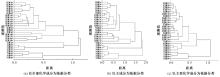
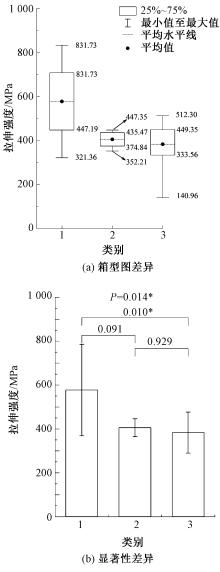
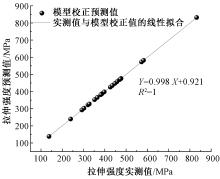
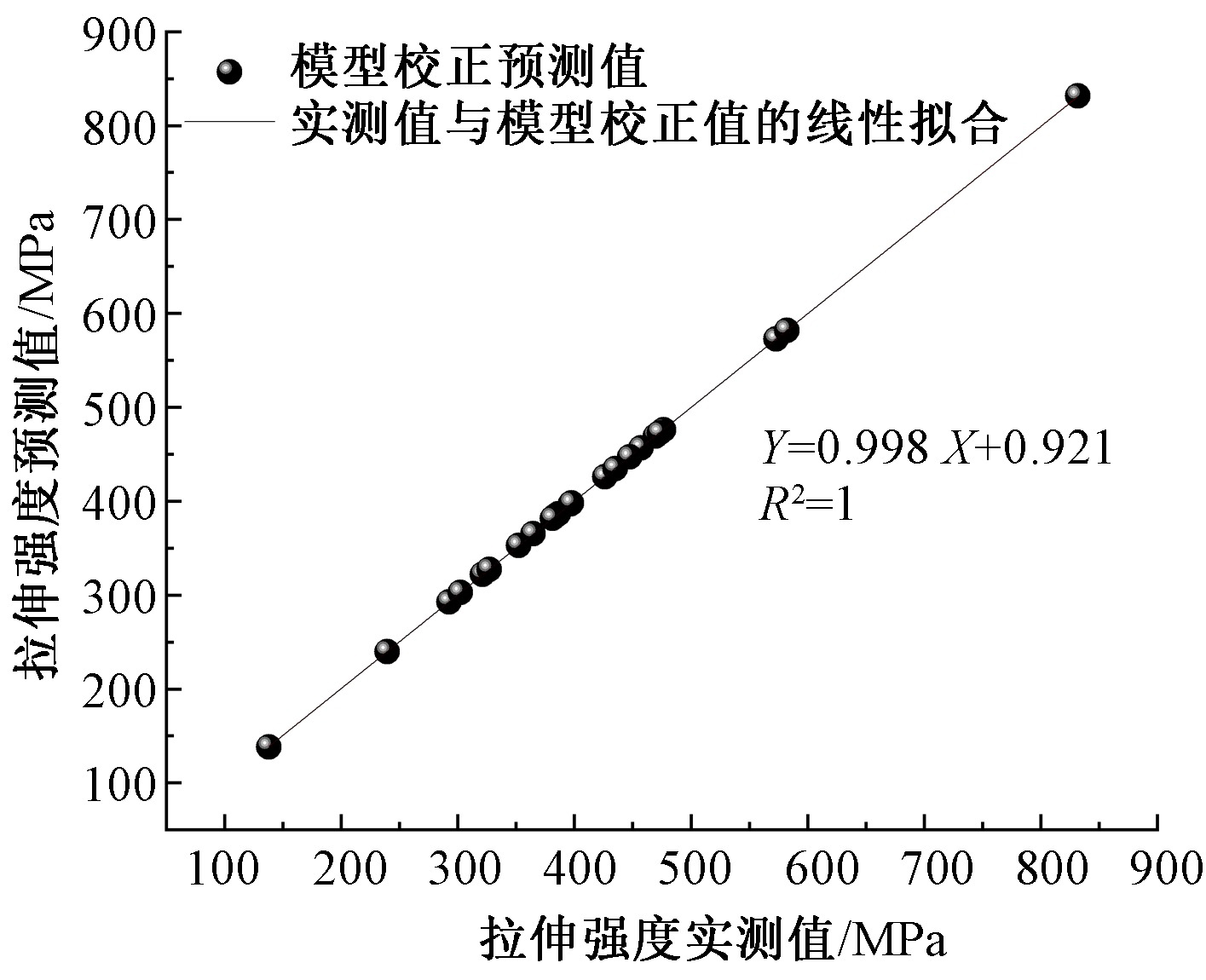
Results The results of principal component analysis showed that when the number of principal components was 3, the cumulative contribution rate of principal components reached 94.48%, which basically reflects the response of fiber chemical composition to fiber mechanical properties in the original population sample data. Cluster analysis was conducted on bast fiber samples using all chemical components, principal components, and the main chemical components of cellulose, hemicellulose, and lignin as indicators. After classification, significant differences were observed in the mean mechanical properties of each type of fiber. The consistency between the clustering results based on principal components and those based on all chemical components was 96.3%. The consistency between the clustering results obtained based on the main chemical components cellulose, hemicellulose, and lignin as indicators and the clustering results obtained based on the classification of all chemical components was 92.3%. A support vector regression model was constructed with the overall chemical composition and three main chemical components as input variables, and bast fiber strength as output variable. The model performed well in internal cross validation of the corrected sample set, with mean relative prediction errors of 1.78% and 2.19% for unknown bast fiber samples, respectively.

Conclusion The research results proved that cellulose, hemicellulose, and lignin as the three main chemical components, are able to replace all chemical components to reflect the mechanical properties of bast fibers. The use of the three main chemical components of bast fibers can replace the overall chemical composition to achieve the prediction of bast fiber tensile strength based on support vector regression model.

Key words: bast fiber, chemical component, tensile strength, prediction, evaluation of fiber mechanical property, kenaf fiber, hemp fiber

中图分类号: 

  • TS121

表1

麻纤维样品信息"

麻纤维
编号
产地 生长周
期/月
土壤类型
大麻1# 中国黑龙江省 3 砂质壤土
大麻2# 中国黑龙江省 3 砂质壤土
大麻3# 中国黑龙江省 3 砂质壤土
大麻4# 中国黑龙江省 3 砂质壤土
大麻5# 中国黑龙江省 3 砂质壤土
大麻6# 中国黑龙江省 3 砂质壤土
大麻7# 中国黑龙江省 3 砂质壤土
大麻8# 中国黑龙江省 3 砂质壤土
红麻1# 马来西亚玻璃市州 3 沙质黏土
红麻2# 马来西亚彭亨州 3 沙质黏土
红麻3# 马来西亚玻璃市州 4 沙质黏土
红麻4# 马来西亚彭亨州 4 沙质黏土
红麻5# 马来西亚柔佛州 3 沙质黏土
红麻6# 马来西亚柔佛州 4 沙质黏土
红麻7# 马来西亚丁加奴州 3 沙土
红麻8# 马来西亚丁加奴州 3 沙质黏土
红麻9# 马来西亚丁加奴州 4 沙土
红麻10# 马来西亚丁加奴州 4 沙质黏土
红麻11# 马来西亚吉兰丹州 3 黏土
红麻12# 马来西亚吉兰丹州 3 沙质黏土
红麻13# 马来西亚吉兰丹州 4 黏土
红麻14# 马来西亚吉兰丹州 4 沙质黏土
红麻15# 马来西亚吉兰丹州 4 沙质黏土
红麻16# 马来西亚吉兰丹州 4 沙质黏土
红麻17# 马来西亚吉兰丹州 4 沙质黏土
红麻18# 马来西亚吉兰丹州 4 沙质黏土
红麻19# 马来西亚吉兰丹州 4 沙质黏土

表2

27批次麻纤维各项指标"

麻纤维
编号
各成分含量/% 纤维
强度/
MPa
纤维
半纤
维素
木质
果胶 脂蜡
水溶
大麻1# 61.22 16.48 10.11 2.77 2.75 6.68 473.23
大麻2# 81.86 3.31 10.51 0.43 1.31 2.59 423.59
大麻3# 85.38 2.45 8.49 0.18 0.83 2.66 447.35
大麻4# 86.05 1.92 8.46 0.04 1.19 2.33 352.21
大麻5# 72.70 13.79 5.33 3.21 2.28 2.69 573.02
大麻6# 73.54 12.77 5.59 3.28 2.33 2.49 831.73
大麻7# 76.40 11.26 4.24 3.41 2.38 2.30 582.28
大麻8# 91.66 2.18 2.71 0.45 0.72 2.28 397.46
红麻1# 66.77 12.89 18.29 0.04 0.48 1.48 292.42
红麻2# 69.80 10.92 17.67 0.04 0.55 1.02 386.30
红麻3# 66.75 12.68 17.49 0.78 1.51 0.79 137.87
红麻4# 69.04 11.85 15.85 0.20 1.27 1.79 364.68
红麻5# 68.82 12.65 17.44 0.06 0.50 0.53 404.77
红麻6# 70.11 12.71 15.25 0.00 0.71 1.22 376.52
红麻7# 68.08 12.25 17.62 0.00 1.38 0.67 321.42
红麻8# 78.89 10.75 8.68 0.00 0.45 1.24 302.17
红麻9# 69.01 13.73 13.11 1.30 0.89 1.95 383.65
红麻10# 71.30 12.56 14.23 0.74 0.69 0.48 469.60
红麻11# 68.76 15.53 14.43 0.32 0.35 0.61 426.18
红麻12# 71.67 15.31 11.54 0.24 0.36 0.89 476.52
红麻13# 72.07 13.18 13.53 0.11 0.53 0.57 457.31
红麻14# 66.55 11.65 16.09 0.09 2.53 3.10 435.21
红麻15# 70.81 13.37 14.51 0.00 0.58 0.73 239.34
红麻16# 67.92 15.70 14.34 0.00 0.52 1.53 396.69
红麻17# 62.34 12.19 18.78 1.66 2.46 2.58 327.03
红麻18# 62.42 12.66 16.97 1.36 2.16 4.43 417.01
红麻19# 63.11 14.45 17.33 1.11 1.73 2.26 381.33

表3

27批次麻纤维样本各成分含量变异数据表"

成分 极大值/% 极小值/% 均值/% 标准差/% CV值/%
纤维素 91.6 61.22 71.60 7.74 10.82
半纤维素 16.48 1.92 11.53 4.11 35.65
木质素 18.78 2.71 12.91 4.91 38.02
果胶 3.41 0.00 0.84 1.12 133.57
脂蜡质 2.75 0.35 1.27 1.08 85.17
水溶物 6.68 0.48 1.92 1.55 80.58

表4

麻纤维批次对麻纤维主要化学成分及纤维拉伸强度影响的单因素方差分析"

麻纤维
指标
离均差
平方和
自由
均方
统计
显著水
平值
显著
纤维素 2942.88 26.00 113.19 12.94 1.72×10⁻⁹ **
半纤维素 876.50 26.00 33.71 50.19 7.87×10⁻¹⁷ **
木质素 1164.00 26.00 44.77 10.70 1.54×10⁻⁸ **
纤维强度 6.66×10⁶ 26.00 2.56×10⁵ 5.36 2.08×10⁻¹⁵ **

表5

麻纤维成分主成分因子与贡献率"

成分 特征值 贡献率/% 累积贡献率/%
1 2.783 46.390 46.390
2 2.013 33.551 79.940
3 0.872 14.535 94.475
4 0.246 4.102 98.577
5 0.085 1.423 100.000
6 5.115×10⁻⁸ 8.525×10⁻⁷ 100.000

表6

麻纤维6种化学成分载荷矩阵"

化学成分含量指标 第1主成分 第2主成分 第3主成分
X1(纤维素含量) -0.910 0.407 0.061
X2(半纤维素含量) 0.708 -0.377 -0.577
X3(木质素含量) 0.518 -0.766 0.347
X4(果胶含量) 0.436 0.766 -0.427
X5(脂蜡质含量) 0.779 0.427 0.307
X6(水溶物含量) 0.623 0.590 0.371

表7

主成分因子得分系数矩阵"

化学成分含
量指标
因子得分系数
F1 F2 F3
X1 -0.545 0.287 0.065
X2 0.424 -0.266 -0.618
X3 0.310 -0.540 0.372
X4 0.261 0.540 -0.457
X5 0.467 0.301 0.329
X6 0.373 0.416 0.397

图1

27个批次麻纤维类群划分结果"

表8

27个批次麻纤维类群划分结果"

分类依据 类群编号 样品编号
全部化学成分 第1类 红麻1#~19#
第2类 大麻1#,大麻5#~7#
第3类 大麻2#~4#,大麻8#
主成分
F1F2F3
第1类 红麻1#~19#,大麻1#
第2类 大麻5#~7#
第3类 大麻2#~4#,大麻8#
主要化学成分
纤维素、半纤
维素、木质素
第1类 红麻1#~7#,红麻9#~19#,大麻1#
第2类 大麻5#~7#,红麻8#
第3类 大麻2#~4#,大麻8#

图2

类别间差异性对比"

图3

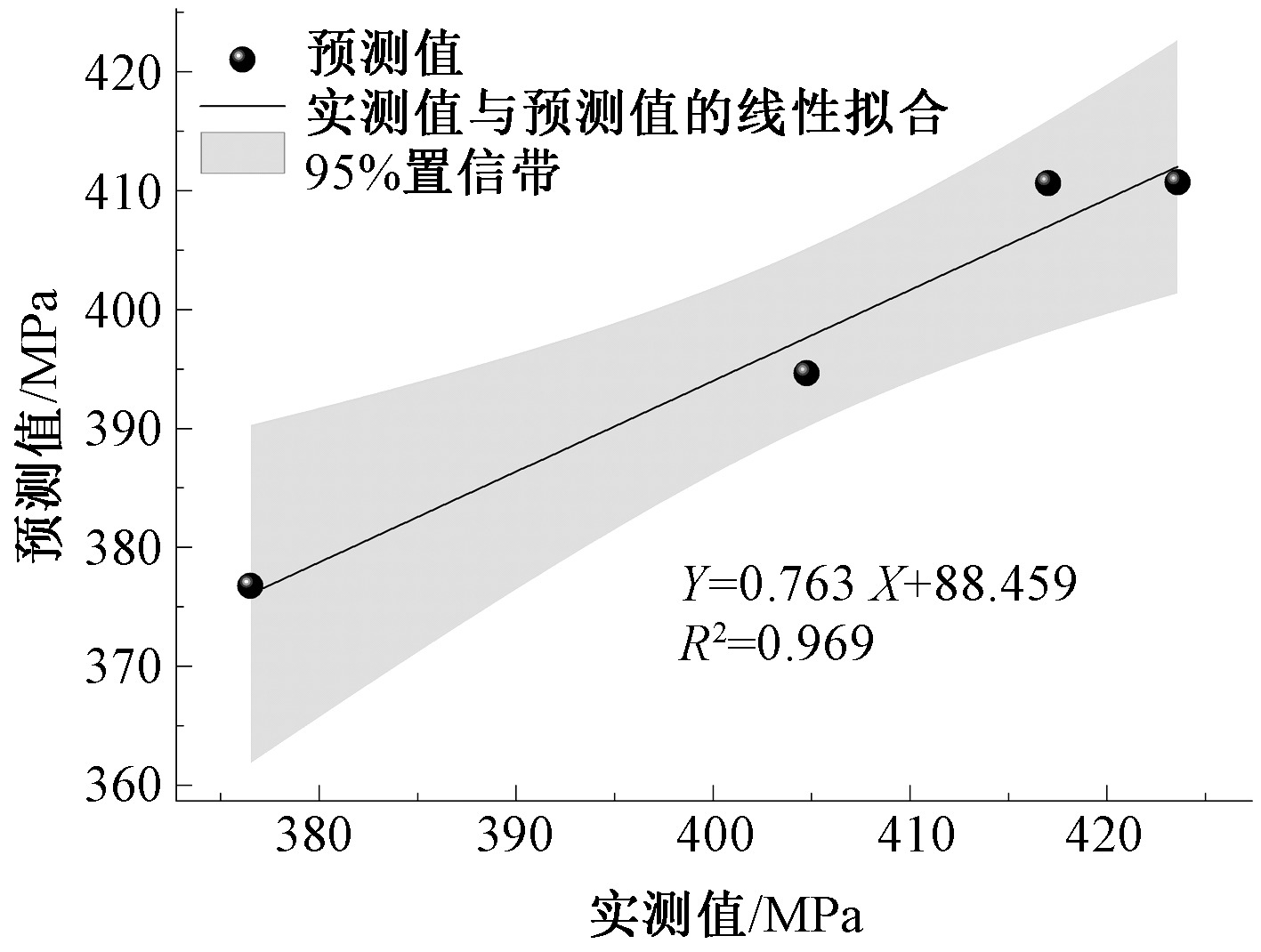
麻纤维强度校正数据代入模型的回归结果"

图4

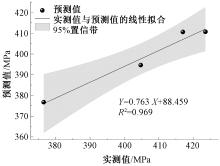
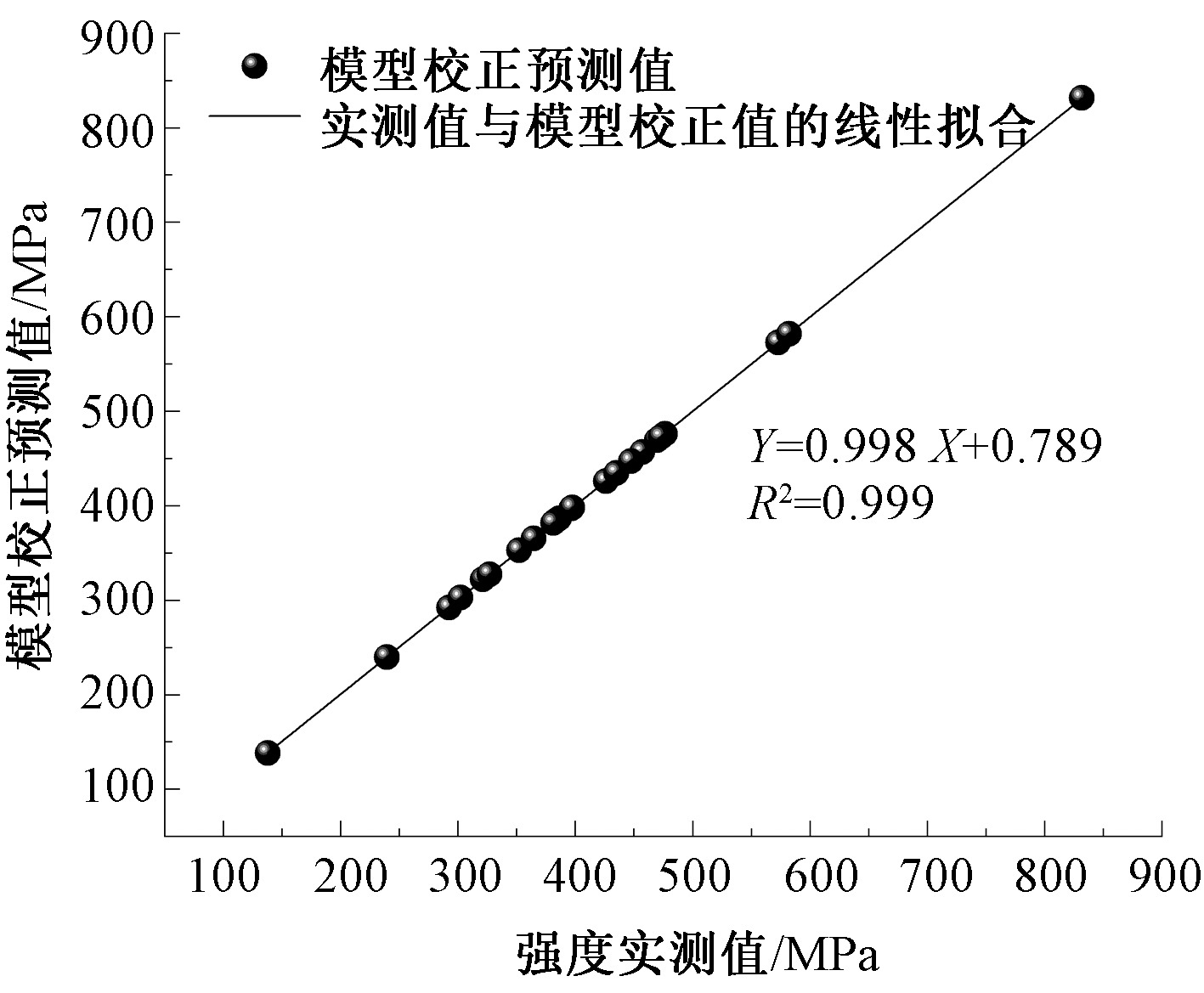
基于全成分的麻纤维强度预测结果"

表9

基于全成分的麻纤维强度预测数据代入模型的回归结果"

预测试样
编号
不同成分含量/% 单纤维拉伸强度
纤维素 半纤维素 木质素 果胶 脂蜡质 水溶物 测试值/MPa 预测值/MPa 相对误差/%
1 68.82 12.65 17.44 0.06 0.50 0.53 404.77 394.65 2.50
2 70.11 12.71 15.25 0.00 0.71 1.22 376.52 376.77 0.068
3 62.42 12.66 16.97 1.36 2.16 4.43 417.01 410.64 1.53
4 81.86 3.31 10.51 0.43 1.31 2.59 423.59 410.71 3.04

图5

基于主要成分的麻纤维强度校正数据代入模型的回归结果"

图6

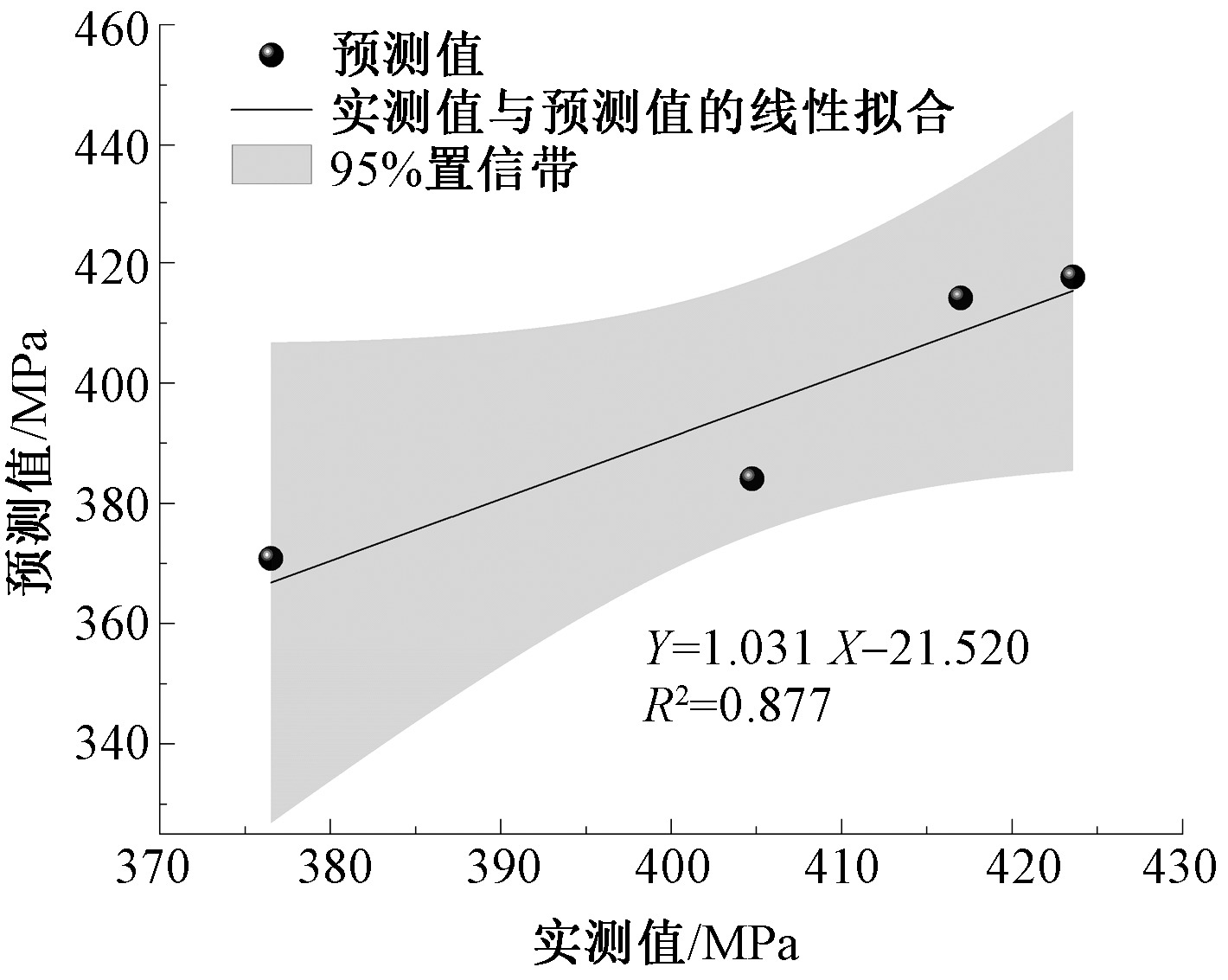
基于主要成分的麻纤维强度预测结果"

表10

基于主要成分的麻纤维强度预测数据代入模型的回归结果"

预测试
样编号
主要成分含量/% 强度/MPa 预测误
差/%
纤维
半纤
维素
木质
测试值 预测值
1 68.82 12.65 17.44 404.77 384.05 5.12
2 70.11 12.71 15.25 376.52 370.75 1.53
3 62.42 12.66 16.97 417.01 414.14 0.69
4 81.86 3.31 10.51 423.59 417.64 1.41
[1] ZHU S Y, XIE J X, SUN Q Q, et al. Recent advances on bast fiber composites: engineering innovations, applications and perspectives[J]. Composites Part B: Engineering, 2024. DOI:10.1016/j.compositesb.2024.111738.
[2] LIU M, MEYER A S, FERNANDO D, et al. Effect of pectin and hemicellulose removal from hemp fibres on the mechanical properties of unidirectional hemp/epoxy composites[J]. Composites Part A: Applied Science and Manufacturing, 2016, 90: 724-735.
[3] PISUPATI A, WILLAERT L, GOETHALS F, et al. Variety and growing condition effect on the yield and tensile strength of flax fibers[J]. Industrial Crops and Products, 2021. DOI:10.1016/J.INDCROP.2021.113736.
[4] 喻春明, 张彦红, 朱爱国, 等. 苎麻种质资源纤维结晶度变异及其主要品质性状的关联性研究[J]. 中国麻业科学, 2011, 33(5):223-231,239.
YU Chunming, ZHANG Yanhong, ZHU Aiguo, et al. Association study of the fiber crystallinity variation and its main quality traits in ramie germplasm resources[J]. Plant Fiber Sciences in China, 2011, 33 (5): 223-231,239.
[5] 管丽媛, 王钟, 祁宁, 等. 基于近红外光谱技术的亚麻纤维化学成分含量快速测定[J]. 分析测试学报, 2020, 39(6): 795-799.
GUAN Liyuan, WANG Zhong, QI Ning, et al. Rapid determination of chemical composition content of flax fiber based on near-infrared spectroscopy technology[J]. Journal of Instrumental Analysis, 2020, 39(6): 795-799.
[6] LU C, WANG C H, LI C H, et al. Structural and mechanical properties of hemp fibers: effect of progressive removal of hemicellulose and lignin[J]. Journal of Natural Fibers, 2022, 19(16): 13985-13994.
[7] BEROUAL M, TRACHE D, MEHELLI O, et al. Effect of the delignification process on the physicochemical properties and thermal stability of microcrystalline cellulose extracted from date palm fronds[J]. Waste Biomass Valorization, 2021, 12(5): 2779-2793.
[8] SEN M K, HERMANS P H. The structure of the jute fibre: part II: the role of the lignin-hemicellulose complex and other noncellulosic constituents[J]. Journal of the Royal Netherlands Chemical Society-Recueil, 2010, 68: 1079-1105.
[9] WANG C H, BAI S Y, YUE X M, et al. Relationship between chemicalcomposition, crystallinity, orientation and tensile strength of kenaf fiber[J]. Fibers and Polymers, 2016, 17(11): 1757-1764.
[10] 童元建, 禹凡, 王宇, 等. 碳纤维拉伸模量准确测试研究[J]. 高科技纤维与应用, 2014, 39(3): 21-24,31.
TONG Yuanjian, YU Fan, WANG Yu, et al. Research on accurate testing of tensile modulus of carbon fiber[J]. High Tech Fibers and Applications, 2014, 39(3): 21-24,31.
[11] 白肃跃, 洋麻纤维化学成分对其力学性能的调控机理探究[D]. 天津: 天津工业大学, 2017: 23-33.
BAI Suyue. Exploration of the regulatory mechanism of chemical composition of jute fiber on its mechanical properties[D].Tianjin: Tiangong University, 2017: 23-33.
[12] AMIANDAMHEN S O, MEINCKEN M, TYHODA L. Natural fibre modification and its influence on fibre-matrix interfacial properties in biocomposite materials[J]. Fibers and Polymers, 2020, 21(4): 677-689.
[13] SAHU P, GUPTA M K. A review on the properties of natural fibres and its bio-composites: effect of alkali treatment[J]. Journal of Materials: Design and Applications, 2020, 234(1): 198-217.
[14] JARIWALA H, JAIN P. A review on mechanical behavior of natural fiber reinforced polymer composites and its applications[J]. Journal of Reinforced Plastics and Composites, 2019, 38(10): 441-453.
[15] XIE N M. Explanations about grey information and framework of grey system modeling[J]. Grey Systems, 2017, 7(2): 179-193.
[1] 张文丽, 刘鑫, 张俏俏, 支超, 李建伟, 樊威. 基于废旧亚麻织物的超弹性气凝胶制备及其性能[J]. 纺织学报, 2025, 46(04): 47-55.
[2] 孙明涛, 陈成玉, 闫伟霞, 曹珊珊, 韩克清. 针刺加固频率对黄麻纤维/聚乳酸短纤复合板性能的影响[J]. 纺织学报, 2023, 44(09): 91-98.
[3] 孙颖, 李端鑫, 于洋, 陈嘉琳, 范皖月. 大麻纤维的芬顿法脱胶及其性能[J]. 纺织学报, 2022, 43(08): 95-100.
[4] 崔启璐, 李佳蔚, 潘柳桂, 杨飞, 郁崇文. 黄麻纤维中黄酮类化合物提取工艺优化及表征[J]. 纺织学报, 2021, 42(08): 90-95.
[5] 胡静, 张开威, 李冉冉, 林金友, 刘宇清. 亚麻分层纳米纤维素的制备及其增强热电复合材料性能[J]. 纺织学报, 2021, 42(02): 47-52.
[6] 张铮烨, 辛斌杰, 邓娜, 陈阳, 邢文宇. 基于边界跟踪测量麻纤维横截面参数的算法研究与应用[J]. 纺织学报, 2020, 41(02): 39-43.
[7] 郑振荣, 智伟, 邢江元, 杜换福, 徐子健. 大麻纤维草酸铵-酶联合脱胶工艺[J]. 纺织学报, 2019, 40(11): 88-93.
[8] 李梦珍, 张斌, 郁崇文. 采用N-甲基吡咯烷酮的苎麻纤维柔软处理[J]. 纺织学报, 2019, 40(04): 72-76.
[9] 金肖克 田伟 朱炜婧 蒋晶晶 祝成炎. 基于高光谱成像系统的纺织品成分定性鉴别[J]. 纺织学报, 2018, 39(10): 50-57.
[10] 石大为 王瑞 陈旭 吴炳洋. 基于射频处理的胡麻生物脱胶工艺[J]. 纺织学报, 2018, 39(03): 73-78.
[11] 王春红 陈祯 李园平 YOUSFANI Sheraz Hussain Siddique 陈雅颂. 竹原纤维的分级提取及其性能[J]. 纺织学报, 2017, 38(11): 9-15.
[12] 刘笑莹 方斌 朱守艾 程隆棣 张瑞云 俞建勇. 棉/大麻纤维混纺低损耗工艺优化[J]. 纺织学报, 2017, 38(01): 35-39.
[13] 钟智丽 朱敏 张宏杰 翁琦. 大麻纤维在氯化锂/N,N-二甲基乙酰胺溶解体系中的溶解特性[J]. 纺织学报, 2016, 37(11): 92-97.
[14] 王晓婷 程隆棣 刘丽芳. 玉米苞叶及其纤维的基本结构与性能[J]. 纺织学报, 2016, 37(07): 7-12.
[15] 陈美玉 来侃 孙润军 陈立成 王玉. 大麻/聚乳酸复合发泡材料的力学性能[J]. 纺织学报, 2016, 37(01): 28-34.
Viewed
Full text


Abstract

Cited

  Shared   
  Discussed   
No Suggested Reading articles found!