纺织学报 ›› 2025, Vol. 46 ›› Issue (05): 96-104.doi: 10.13475/j.fzxb.20241200602
俞世雄1, 林参天1, 祝顺天1, 胡鸿霞1, 高彦峰1, 马儒军2( )
)
YU Shixiong1, LIN Cantian1, ZHU Shuntian1, HU Hongxia1, GAO Yanfeng1, MA Rujun2()
摘要:
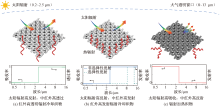
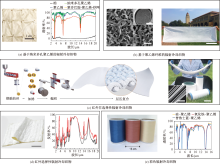
辐射热管理织物可以选择性地调控太阳光谱和中红外光谱的吸收/反射/透射,有助于维持人体热舒适的同时降低主动式制冷和加热的能耗,对节能降碳具有重要意义。为此,概述了辐射热管理织物的光谱设计原则,并从光子角度出发分析了热动态的过程,介绍了基于此的主要辐射热管理织物类型及其最新研究进展。最后,指出辐射热管理织物在面向商业化过程中面临的挑战和问题,讨论了以实际应用为核心的未来发展方向,提出研发具有光谱吸收率/发射率连续可调特性的辐射热管理织物,以及在织物设计过程中应兼顾光谱设计、舒适性和色彩等要求。
中图分类号:
| [1] | HU Run, LIU Yida, SHIN Sunmi, et al. Emerging materials and strategies for personal thermal manage-ment[J]. Advanced Energy Materials, 2020. DOI: 101002/aenm.201903921. |
| [2] |
KIM Gunwoo, PARK Kyuin, HWANG Kyung-Jun, et al. Highly sunlight reflective and infrared semi-transparent nanomesh textiles[J]. ACS Nano, 2021, 15(10): 15962-15971.
doi: 10.1021/acsnano.1c04104 pmid: 34661392 |
| [3] | ZHANG Xiaoshuang, YANG Weifeng, SHAO Zhuwang, et al. A moisture-wicking passive radiative cooling hierarchical metafabric[J]. ACS Nano, 2022, 16(2): 2188-2197. |
| [4] | CUI Ying, GONG Huaxin, WANG Yujie, et al. A thermally insulating textile inspired by polar bear hair[J]. Advanced Materials, 2018, 30(14): 1706807. |
| [5] |
GONG Wei, GUO Yang, YANG Weifeng, et al. Scalable and reconfigurable green electronic textiles with personalized comfort management[J]. ACS Nano, 2022, 16(8): 12635-12644.
doi: 10.1021/acsnano.2c04252 pmid: 35930746 |
| [6] | PENG Yucan, CUI Yi. Advanced textiles for personal thermal management and energy[J]. Joule, 2020, 4(4): 724-742. |
| [7] |
ZHU Bin, LI Wei, ZHANG Qian, et al. Subambient daytime radiative cooling textile based on nanoprocessed silk[J]. Nature Nanotechnology, 2021, 16(12): 1342-1348.
doi: 10.1038/s41565-021-00987-0 pmid: 34750560 |
| [8] | DENG Weijie, SHEN Chao, WANG Panlong, et al. Continuous fabrication of polyethylene microfibrilar bundles for wearable personal thermal management fabric[J]. Applied Surface Science, 2021. DOI: 10.1016/j.apsusc.2021.149255. |
| [9] | LAN Xiaohua, WANG Yi, PENG Jiebin, et al. Designing heat transfer pathways for advanced thermoregulatory textiles[J]. Materials Today Physics, 2021. DOI: 10.1016/j.mtphys.2021.100342. |
| [10] |
WU Mingrui, SHAO Ziyu, ZHAO Nifang, et al. Biomimetic, knittable aerogel fiber for thermal insulation textile[J]. Science, 2023, 382(6677): 1379-1383.
doi: 10.1126/science.adj8013 pmid: 38127754 |
| [11] | LUO Hao, ZHU Yining, XU Ziquan, et al. Outdoor personal thermal management with simultaneous electricity generation[J]. Nano Letters, 2021, 21(9): 3879-3886. |
| [12] |
WU Jiajia, WANG Mingxu, DONG Li, et al. A trimode thermoregulatory flexible fibrous membrane designed with hierarchical core-sheath fiber structure for wearable personal thermal management[J]. ACS Nano, 2022, 16(8): 12801-12812.
doi: 10.1021/acsnano.2c04971 pmid: 35947793 |
| [13] |
HSU Pochun, SONG Alex Y, CATRYSSE Peter B, et al. Radiative human body cooling by nanoporous polyethylene textile[J]. Science, 2016, 353(6303): 1019-1023.
pmid: 27701110 |
| [14] | PENG Yucan, CHEN Jun, SONG Alex Y, et al. Nanoporous polyethylene microfibres for large-scale radiative cooling fabric[J]. Nature Sustainability, 2018, 1(2): 105-112. |
| [15] | CAI Lili, SONG Alex Y., LI Wei, et al. Spectrally selective nanocomposite textile for outdoor personal cooling[J]. Advanced Materials, 2018. DOI: 10.1002/adma.201802152. |
| [16] | TONG Jonathan K, HUANG Xiaopeng, BORISKINA Svetlana V, et al. Infrared-transparent visible-opaque fabrics for wearable personal thermal management[J]. ACS Photonics, 2015, 2(6): 769-778. |
| [17] | SHAN Xiameng, LIU Ling, WU Yusi, et al. Aerogel-functionalized thermoplastic polyurethane as waterproof, breathable freestanding films and coatings for passive daytime radiative cooling[J]. Advanced Science, 2022. DOI: 10.1002/advs.202201190. |
| [18] |
ZENG Shaoning, PIAN Sijie, SU Minyu, et al. Hierarchical-morphology metafabric for scalable passive daytime radiative cooling[J]. Science, 2021, 373(6555): 692-696.
doi: 10.1126/science.abi5484 pmid: 34353954 |
| [19] | ZHANG Quan, LV Yiwen, WANG Yufeng, et al. Temperature-dependent dual-mode thermal management device with net zero energy for year-round energy saving[J]. Nature Communications, 2022, 13(1): 4847. |
| [20] | XUE Xiao, QIU Meng, LI Yanwen, et al. Creating an eco-friendly building coating with smart subambient radiative cooling[J]. Advanced Materials, 2020. DOI: 10.1002/adma.201906751. |
| [21] |
KIM Hyeon Ho, IM Eunji, LEE Seungwoo. Colloidal photonic assemblies for colorful radiative cooling[J]. Langmuir, 2020, 36(23): 6589-6596.
doi: 10.1021/acs.langmuir.0c00051 pmid: 32370514 |
| [22] |
LIU Ruina, ZHAO Siming, WU Xueke, et al. Radiative cooling meta-fabric integrated with knitting perspiration-wicking and coating heat conduction[J]. ACS Nano, 2025, 19(1), 826-836.
doi: 10.1021/acsnano.4c12196 pmid: 39810371 |
| [23] | LI Jinlei, LIANG Yuan, LI Wei, et al. Protecting ice from melting under sunlight via radiative cooling[J]. Science Advances, 2022. DOI:10.1126/sciadv.abj9756. |
| [24] | CHEN Yijun, MANDAL Jyotirmoy, LI Wenxi, et al. Colored and paintable bilayer coatings with high solar-infrared reflectance for efficient cooling[J]. Science Advances, 2020. DOI: 10.1126/sciadv.aaz5413. |
| [25] |
CAI Lili, PENG Yucan, XU Jinwei, et al. Temperature regulation in colored infrared-transparent polyethylene textiles[J]. Joule, 2019, 3(6): 1478-1486.
doi: 10.1016/j.joule.2019.03.015 |
| [26] | ROH Jungsim, CHI Yongseung, KANG Taejin. Thermal insulation properties of multifunctional metal composite fabrics[J]. Smart Materials and Structures, 2009, 18(2): 025018. |
| [27] | HSU Pochun, LIU Xiaoge, LIU Chong, et al. Personal thermal management by metallic nanowire-coated textile[J]. Nano Letters, 2014, 15(1): 365-371. |
| [28] |
CAI Lili, SONG Alex Y., WU Peilin, et al. Warming up human body by nanoporous metallized polyethylene textile[J]. Nature Communications, 2017, 8(1): 496.
doi: 10.1038/s41467-017-00614-4 pmid: 28928427 |
| [29] | LI Lei, SHI Mengke, LIU Xiaoya, et al. Ultrathin titanium carbide (MXene) films for high-temperature thermal camouflage[J]. Advanced Functional Materials, 2021, 31(35): 2101381. |
| [30] | WANG Zongqian, YANG Haiwei, LI Yu, et al. Robust silk fibroin/graphene oxide aerogel fiber for radiative heating textiles[J]. ACS Applied Materials & Interfaces, 2020, 12(13): 15726-15736. |
| [31] |
SHI Mengke, SHEN Mingming, GUO Xinyi, et al. Ti3C2Tx MXene-decorated nanoporous polyethylene textile for passive and active personal precision heating[J]. ACS Nano, 2021, 15(7): 11396-11405.
doi: 10.1021/acsnano.1c00903 pmid: 34165297 |
| [32] |
YU Shixiong, ZHOU Yuetong, BAI Peijia, et al. Anodization-processed colored radiative thermoregulatory film[J]. Nano Letters, 2024, 24(46): 14758-14765.
doi: 10.1021/acs.nanolett.4c04073 pmid: 39514293 |
| [33] | YUAN Hao, LIU Ruojuan, CHENG Shuting, et al. Scalable fabrication of dual-function fabric for zero-energy thermal environmental management through multiband, synergistic, and asymmetric optical modulations[J]. Advanced Materials, 2023. DOI: 10.1002/adma.202209897. |
| [34] | HSU Pochun, LIU Chong, SONG Alex Y, et al. A dual-mode textile for human body radiative heating and cooling[J]. Science Advances, 2017. DOI: 10.1126/sciadv.1700895. |
| [35] | LI Keqiao, LI Meng, LIN Chongjia, et al. A Janus textile capable of radiative subambient cooling and warming for multi-scenario personal thermal manage-ment[J]. Small, 2023. DOI: 10.1002/smll.202206149. |
| [36] | CHAI Jiale, KANG Zhanxiao, YAN Yishu, et al. Thermoregulatory clothing with temperature-adaptive multimodal body heat regulation[J]. Cell Reports Physical Science, 2022. DOI: 10.1016/j.xcrp.2022.100958. |
| [37] | LI Xiuqiang, MA Boran, DAI Jingyuan, et al. Metalized polyamide heterostructure as a moisture-responsive actuator for multimodal adaptive personal heat management[J]. Science Advances, 2021. DOI: 10.1126/sciadv.abj7906. |
| [38] | WANG Yang, REN Jing, YE Chao, et al. Thermochromic silks for temperature management and dynamic textile displays[J]. Nano-Micro Letters, 2021. DOI: 10.1007/s40820-021-00591-w. |
| [39] |
ZHANG Xu A., YU Shangjie, XU Bbeibei, et al. Dynamic gating of infrared radiation in a textile[J]. Science, 2019, 363(6427): 619-623.
doi: 10.1126/science.aau1217 pmid: 30733415 |
| [40] |
YU Shixiong, ZHANG Quan, LIU Lili, et al. Thermochromic conductive fibers with modifiable solar absorption for personal thermal management and temperature visualization[J]. ACS Nano, 2023, 17(20): 20299-20307.
doi: 10.1021/acsnano.3c06289 pmid: 37831602 |
| [1] | 孙晚红, 张鹏飞, 陈勇, 张林, 潘跃山, 宋飞虎, 刘恩星, 王玉萍. 智能发热服装用柔性碳纳米管电加热元件的制备及应用[J]. 纺织学报, 2025, 46(05): 17-22. |
| [2] | 张喆, 王瑞, 蔡涛. 图案化耐久水性聚氨酯/碳纳米管涂层多功能抗静电复合织物的高效经济制备[J]. 纺织学报, 2025, 46(02): 207-217. |
| [3] | 张蕊, 应迪, 陈冰冰, 田欣, 郑莹莹, 王建, 邹专勇. 碳纳米管修饰三维纤维网非织造布传感器的制备及其性能[J]. 纺织学报, 2024, 45(11): 46-54. |
| [4] | 刘婷, 闫涛, 潘志娟. 香蕉茎秆纤维/抗菌纤维混纺纱的制备及其性能[J]. 纺织学报, 2024, 45(10): 48-54. |
| [5] | 郭晨宇, 蒋云, 杨瑞华. 基于环锭纺的三组分负泊松比纱制备及其性能[J]. 纺织学报, 2024, 45(10): 55-63. |
| [6] | 吴涛, 李婕, 鲍劲松, 王新厚, 崔鹏. 羊毛混纺面料生产流程的碳图谱建模与应用[J]. 纺织学报, 2024, 45(09): 97-105. |
| [7] | 史伟民, 李洲, 陆伟健, 屠佳佳, 徐寅哲. 基于改进Yolov5模型的纱筒余纱量检测方法[J]. 纺织学报, 2024, 45(07): 196-203. |
| [8] | 王建, 张蕊, 郑莹莹, 董正梅, 邹专勇. 二维过渡金属碳/氮化合物基柔性纺织压力传感器的研究进展[J]. 纺织学报, 2024, 45(06): 219-226. |
| [9] | 居傲, 向卫宏, 崔艳超, 孙颖, 陈利. 基于定制纤维铺放工艺的电加热织物制备及其半球成型性能[J]. 纺织学报, 2024, 45(02): 67-76. |
| [10] | 陆伟健, 屠佳佳, 王俊茹, 韩思捷, 史伟民. 基于改进残差网络的空纱筒识别模型[J]. 纺织学报, 2024, 45(01): 194-202. |
| [11] | 李好义, 贾紫初, 刘宇亮, 谭晶, 丁玉梅, 杨卫民, 牟文英. 高压静电加载形式对聚合物熔体静电直写制备效果的影响[J]. 纺织学报, 2023, 44(04): 32-37. |
| [12] | 吴俊雄, 尉霞, 罗璟娴, 闫姣儒, 吴磊. 阻燃腈纶/芳纶包芯纱的制备及其紫外光稳定性[J]. 纺织学报, 2023, 44(03): 60-66. |
| [13] | 彭阳阳, 盛楠, 孙丰鑫. 纤维基湿敏柔性驱动器的跨尺度构建及其性能[J]. 纺织学报, 2023, 44(02): 90-95. |
| [14] | 吴靖, 韩晨晨, 高卫东. 基于类骨骼肌结构的纱线基驱动器性能及应用[J]. 纺织学报, 2023, 44(02): 128-134. |
| [15] | 张倩, 牛文鑫, 姜成华, 高晶, 王璐. 对抗微重力环境下肌肉骨骼废用性病变的压力服装研究进展[J]. 纺织学报, 2023, 44(01): 38-46. |
|
||
 京公网安备11010502044800号