纺织学报 ›› 2025, Vol. 46 ›› Issue (09): 171-180.doi: 10.13475/j.fzxb.20250104801
贾彦军1, 高璐2, 赵莹莹3, 荆兆敬2, 郭紫阳3, 王海涛3, 常娜2,4( )
)
JIA Yanjun1, GAO Lu2, ZHAO Yingying3, JING Zhaojing2, GUO Ziyang3, WANG Haitao3, CHANG Na2,4()
摘要:
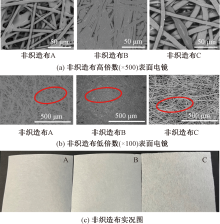
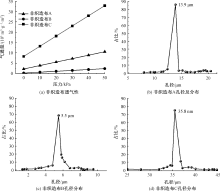
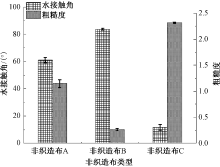
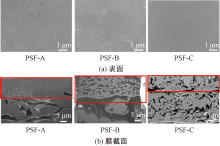
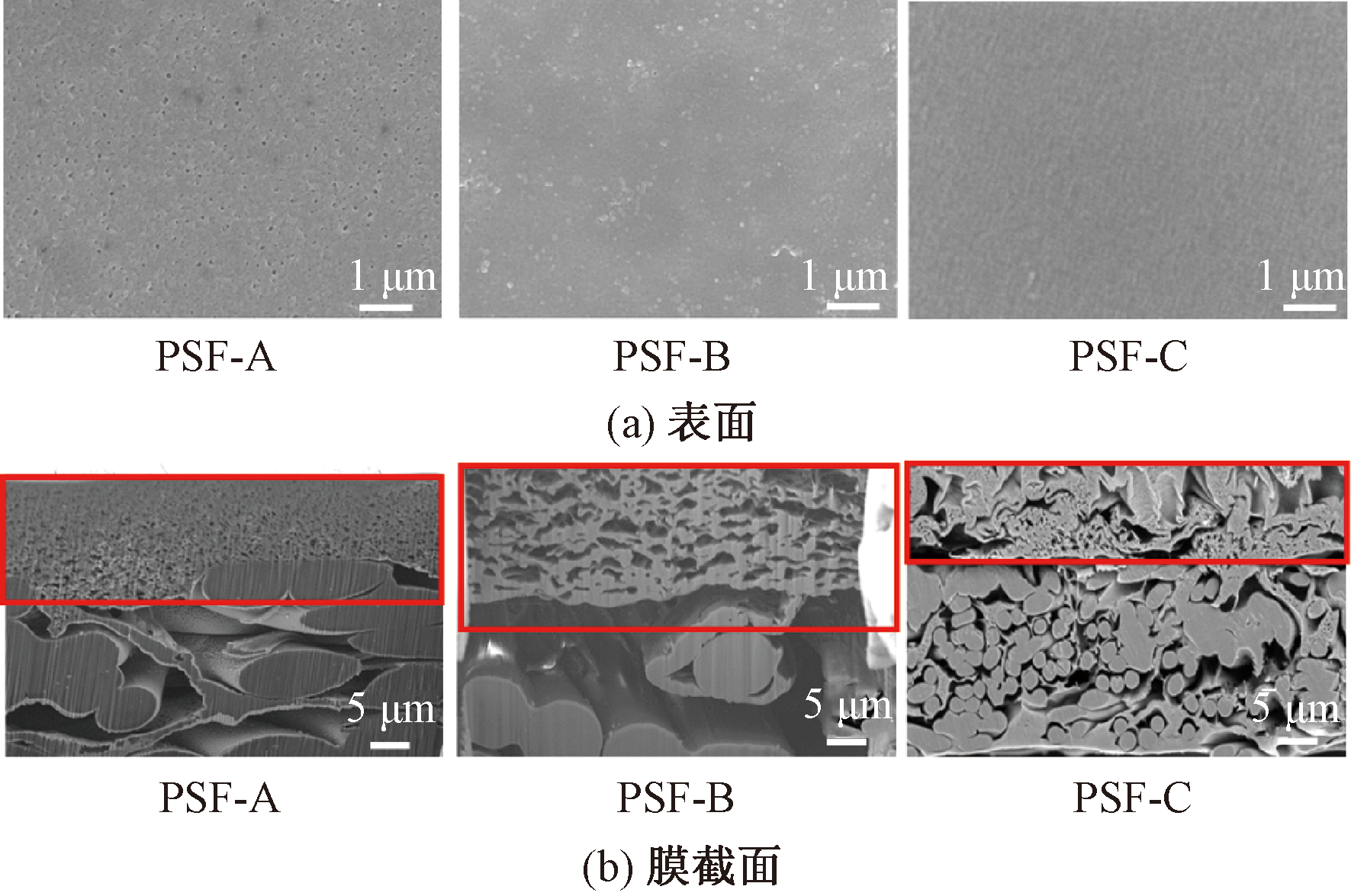
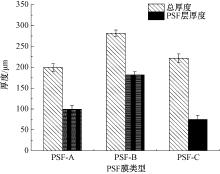
聚酰胺复合反渗透膜主要由非织造布织物层、聚砜超滤支撑层和聚酰胺分离层构成。非织造布的微观结构及特性对聚砜超滤支撑层的结构具有重要影响,为制备高性能的复合反渗透膜,通过采用相转化法,基于不同结构特性的聚对苯二甲酸乙二醇酯非织造布制备了一系列聚砜超滤基膜,探讨了非织造布平均截面密度、水接触角及温泽尔粗糙度等参数对基膜结构的影响。研究发现,当非织造布平均截面密度达到约0.75 g/(m2·μm)时,通过平衡铸膜液的毛细渗透使其均匀渗透非织造布厚度的1/2,可形成孔径小于35 nm,分布均匀的聚砜超滤基膜;同时,在表面水接触角为60°±5°、温泽尔粗糙度为1.15±0.1的协同作用下,可保证间苯二胺水溶液均匀分散,促进界面聚合反应,最终形成了均匀、致密的聚酰胺层,使反渗透膜的脱盐率超过97%。
中图分类号:
| [1] |
TAKEUCHI K, CRUZ-SILVA R, FUJISHIGE M, et al. Preparation of polysulfone support for higher-performance reverse osmosis membranes[J]. J Environ Chem Eng, 2022, 10(3): 107860.
doi: 10.1016/j.jece.2022.107860 |
| [2] | PENG L E, GAN Q, YANG Z, et al. Deciphering the role of amine concentration on polyamide formation toward enhanced RO performance[J]. ACS ES&T Engineering, 2022, 2(5): 903-912. |
| [3] |
JING Z, WANG J, GAO Z, et al. Regulation of micro-structure and surface property of SWRO membrane via introducing albumin into polyamide layer for improving permselectivity[J]. Desalination, 2023, 555: 116551.
doi: 10.1016/j.desal.2023.116551 |
| [4] |
LEE J, WANG R, BAE T H. High-performance reverse osmosis membranes fabricated on highly porous microstructured supports[J]. Desalination, 2018, 436: 48-55.
doi: 10.1016/j.desal.2018.01.037 |
| [5] |
ZHANG Q, ZHOU R, PENG X, et al. Development of support layers and their impact on the performance of thin film composite membranes (TFC) for water treatment[J]. Polymers (Basel), 2023, 15(15): 3290.
doi: 10.3390/polym15153290 |
| [6] | GUAN P, WANG D. The improvement of CTA forward osmosis membrane performance by hydrophilic modification on interface between support layer and non-woven fabric[J]. Desalination and Water Treatment, 2016, 57(57):27501-27518. |
| [7] |
DLAMINI D S, QUEZADA-RENTERIA J A, WU J, et al. On the role of the porous support membrane in seawater reverse osmosis membrane synthesis, properties and performance[J]. J Membr Sci, 2024, 708: 123032.
doi: 10.1016/j.memsci.2024.123032 |
| [8] |
MOKARIZADEH H, MOAYEDFARD S, MALEH M S, et al. The role of support layer properties on the fabrication and performance of thin-film composite membranes: the significance of selective layer-support layer connectivity[J]. Sep Purif Technol, 2022, 278: 119451.
doi: 10.1016/j.seppur.2021.119451 |
| [9] |
ZHAO Y, LAI G S, WANG Y, et al. Impact of pilot-scale PSF substrate surface and pore structural properties on tailoring seawater reverse osmosis membrane performance[J]. J Membr Sci, 2021, 633: 119395.
doi: 10.1016/j.memsci.2021.119395 |
| [10] |
TANG Y, XU J, GAO C. Ultrafiltration membranes with ultrafast water transport tuned via different substrates[J]. Chemical Engineering Journal, 2016, 303: 322-330.
doi: 10.1016/j.cej.2016.06.010 |
| [11] |
WANG S, LI T, CHEN C, et al. Non-woven PET fabric reinforced and enhanced the performance of ultrafiltration membranes composed of PVDF blended with PVDF-g-PEGMA for industrial applications[J]. Appl Surf Sci, 2018, 435: 1072-1079.
doi: 10.1016/j.apsusc.2017.11.193 |
| [12] |
WU H, ZHAO H, LIN Y, et al. Fabrication of polysulfone membrane with sponge-like structure by using different non-woven fabrics[J]. Sep Purif Technol, 2022, 297: 121553.
doi: 10.1016/j.seppur.2022.121553 |
| [13] |
SAIRAM M, SEREEWATTHANAWUT E, LI K, et al. Method for the preparation of cellulose acetate flat sheet composite membranes for forward osmosis-desalination using MgSO4 draw solution[J]. Desalination, 2011, 273(2/3): 299-307.
doi: 10.1016/j.desal.2011.01.050 |
| [14] |
TIRAFERRI A, YIP N Y, PHILLIP W A, et al. Relating performance of thin-film composite forward osmosis membranes to support layer formation and structure[J]. J Membr Sci, 2011, 367(1/2): 340-352.
doi: 10.1016/j.memsci.2010.11.014 |
| [15] |
GAO L, ZHAO Y, HUO X, et al. Investigation of the pore structure and surface properties of polysulfone membrane on the resultant polyamide layer and the performance of the reverse osmosis membrane[J]. J Taiwan Inst Chem Eng, 2025, 173: 106147.
doi: 10.1016/j.jtice.2025.106147 |
| [16] |
XU R, GAO F, WU Y, et al. Influences of support layer hydrophilicity on morphology and performances of polyamide thin-film composite membrane[J]. Sep Purif Technol, 2022, 281: 119884.
doi: 10.1016/j.seppur.2021.119884 |
| [17] |
YAN W T, WANG Z, WU J H, et al. Enhancing the flux of brackish water TFC RO membrane by improving support surface porosity via a secondary pore-forming method[J]. J Membr Sci, 2016, 498: 227-241.
doi: 10.1016/j.memsci.2015.10.029 |
| [18] |
TAMAYOL A, BAHRAMI M. Transverse permeability of fibrous porous media[J]. Phys Rev E, 2011, 83(4): 046314.
doi: 10.1103/PhysRevE.83.046314 |
| [19] |
PHILLIP W A, YONG J S, ELIMELECH M. Reverse draw solute permeation in forward osmosis: modeling and experiments[J]. Environ Sci Technol, 2010, 44(13): 5170-5176.
doi: 10.1021/es100901n |
| [20] | 刘倩男. 分离膜支撑体用湿法非织造材料的制备及性能研究[D]. 天津: 天津工业大学,2021:1-63. |
| LIU Qiannan. Preparation and performance study of wet-laid nonwoven materials for separation membrane supports[D]. Tianjin: Tiangong Uiversity,2021:1-63. | |
| [21] |
DAS D, ISHTIAQUE S M, DAS S. Influence of fibre cross-sectional shape on air permeability of non-wovens[J]. Fibers Polym, 2015, 16(1): 79-85.
doi: 10.1007/s12221-015-0079-9 |
| [22] |
MISDAN N, LAU W J, ISMAIL A F, et al. Formation of thin film composite nanofiltration membrane: effect of polysulfone substrate characteristics[J]. Desalination, 2013, 329: 9-18.
doi: 10.1016/j.desal.2013.08.021 |
| [23] |
OH S J, KIM N, LEE Y T. Preparation and characterization of PVDF/TiO2 organic-inorganic composite membranes for fouling resistance improve-ment[J]. J Membr Sci. 2009, 345(1/2): 13-20.
doi: 10.1016/j.memsci.2009.08.003 |
| [24] |
VANDEZANDE P, LI X F, GEVERS L E M, et al. High throughput study of phase inversion parameters for polyimide-based SRNF membranes[J]. J Membr Sci, 2009, 330(1-2): 307-318.
doi: 10.1016/j.memsci.2008.12.068 |
| [25] |
SHI M, WANG Z, ZHAO S, et al. A support surface pore structure re-construction method to enhance the flux of TFC RO membrane[J]. J Membr Sci, 2017, 541: 39-52.
doi: 10.1016/j.memsci.2017.06.087 |
| [26] | DING S G, CHENG X Q, JIANG Z X, et al. Pore morphology control and hydrophilicity of polyacrylonitrile ultrafiltration membranes[J]. J Appl Polym Sci, 2015, 132(20): 41991. |
| [27] |
SABZI Dizajikan B, ASADOLLAHI M, MUSAVI S A, et al. Preparation of poly(vinyl chloride) (PVC) ultrafiltration membranes from PVC/additive/solvent and application of UF membranes as substrate for fabrication of reverse osmosis membranes[J]. J Appl Polym Sci, 2018, 135(21): 46267.
doi: 10.1002/app.v135.21 |
| [28] |
GENG H, HUO X, JING Z, et al. Monitoring the process of interfacial polymerization for fabrication of polyamide reverse osmosis membrane via molecular simulation based on π-π interaction between surfactant and monomer[J]. J Membr Sci, 2024, 713: 123369.
doi: 10.1016/j.memsci.2024.123369 |
| [29] |
JING Z, WANG J, HUO X, et al. Exploration of the critical structural parameter of polyamide decisive for permeability based on SWRO membrane regulated by environmental-friendly solvent gamma-valero-lactone[J]. J Membr Sci, 2024, 709: 123093.
doi: 10.1016/j.memsci.2024.123093 |
| [1] | 李雨洁, 王承勤, 王伟, 袁如超, 俞建勇, 李发学. 聚酰胺6基弹性体及其并列弹性纤维的制备及其性能[J]. 纺织学报, 2025, 46(09): 46-56. |
| [2] | 孙鹤情, 赵聪颖, 吴冰雪, 张幼维. 长效型抗菌聚酰胺 66 纤维的制备及其性能[J]. 纺织学报, 2025, 46(09): 66-73. |
| [3] | 王泓力, 张辉, 刘建宇, 尉海泽, 张雅宁, 王丽丽, 许学潮. 棉基生物炭-ZIF-L(Zn)-壳聚糖/聚丙烯复合膜的制备及其吸附-光催化性能[J]. 纺织学报, 2025, 46(09): 84-93. |
| [4] | 王浩鹏, 张佳文, 牛云蔚, 柯勤飞, 赵奕. 芳香抗菌双包络结构芳樟醇/聚酰胺/玉米醇溶蛋白微纳米非织造材料[J]. 纺织学报, 2025, 46(09): 94-103. |
| [5] | 刘美, 崔丽娜, 关福旺, 李甫, 费鹏飞, 马驰, 王华平. 一次性卫生用竹浆纤维水刺非织造材料的疏水改性及其性能[J]. 纺织学报, 2025, 46(09): 188-196. |
| [6] | 左卓帆, 卢凯亮, 李倩雯, 张维. 基于铝镁合金阳极的靛蓝染色废水电絮凝处理效能优化[J]. 纺织学报, 2025, 46(09): 197-204. |
| [7] | 张新宇, 金小培, 朱金唐, 崔华帅, 吴鹏飞, 崔宁, 史贤宁. 聚乳酸熔喷非织造布热尺寸稳定性提升方法[J]. 纺织学报, 2025, 46(08): 127-135. |
| [8] | 廖梦蝶, 肖汪洋, 李鸿鑫, 赵漫, 张须臻, 王秀华. 聚酰胺6/共聚酰胺偏心皮芯复合纤维的制备与性能[J]. 纺织学报, 2025, 46(07): 53-61. |
| [9] | 徐丽亚, 汪瑱, 杨鸿杰, 汪蔚. 氧化锌-银/生物基聚酰胺56纳米纤维膜的制备及其抗菌性能[J]. 纺织学报, 2025, 46(07): 37-45. |
| [10] | 项文龙, 杨静冉, 肖晓珍. 铁钴双金属有机框架/稻谷壳复合材料的制备及其染料脱色性能[J]. 纺织学报, 2025, 46(06): 178-186. |
| [11] | 邱月, 杨询, 李昊, 李海东, 吴国忠, 张彩丹. 聚琥珀酰亚胺纳米纤维膜改性及其染料吸附性能[J]. 纺织学报, 2025, 46(06): 88-95. |
| [12] | 王薇, 高建南, 裴笑涵, 陆鑫, 孙银银, 吴建兵. 纤维素/甲基三甲氧基硅烷气凝胶的制备及其油水分离效能[J]. 纺织学报, 2025, 46(05): 135-142. |
| [13] | 闫静, 王亚倩, 刘晶晶, 李好义, 杨卫民, 康卫民, 庄旭品, 程博闻. 熔融静电纺长丝纱的制备及其在摩擦纳米发电机中的应用[J]. 纺织学报, 2025, 46(05): 23-29. |
| [14] | 金汝诗, 陈万明, 刘国金, 刘承海, 戚栋明, 翟世民. 生物炭在印染废水处理中的应用研究进展[J]. 纺织学报, 2025, 46(04): 235-243. |
| [15] | 张蕊, 叶苏娴, 王建, 邹专勇. 全织物型离电式柔性压力传感器的制备及其性能[J]. 纺织学报, 2025, 46(02): 113-121. |
|
||
 京公网安备11010502044800号