纺织学报 ›› 2026, Vol. 47 ›› Issue (07): 177-185.doi: 10.13475/j.fzxb.20251006301
万雨飞, 王芮杰, 陈伟, 张丽雯, 许福军( )
)
WAN Yufei, WANG Ruijie, CHEN Wei, ZHANG Liwen, XU Fujun()
摘要:
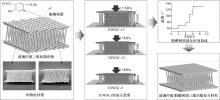
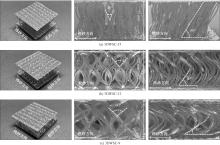
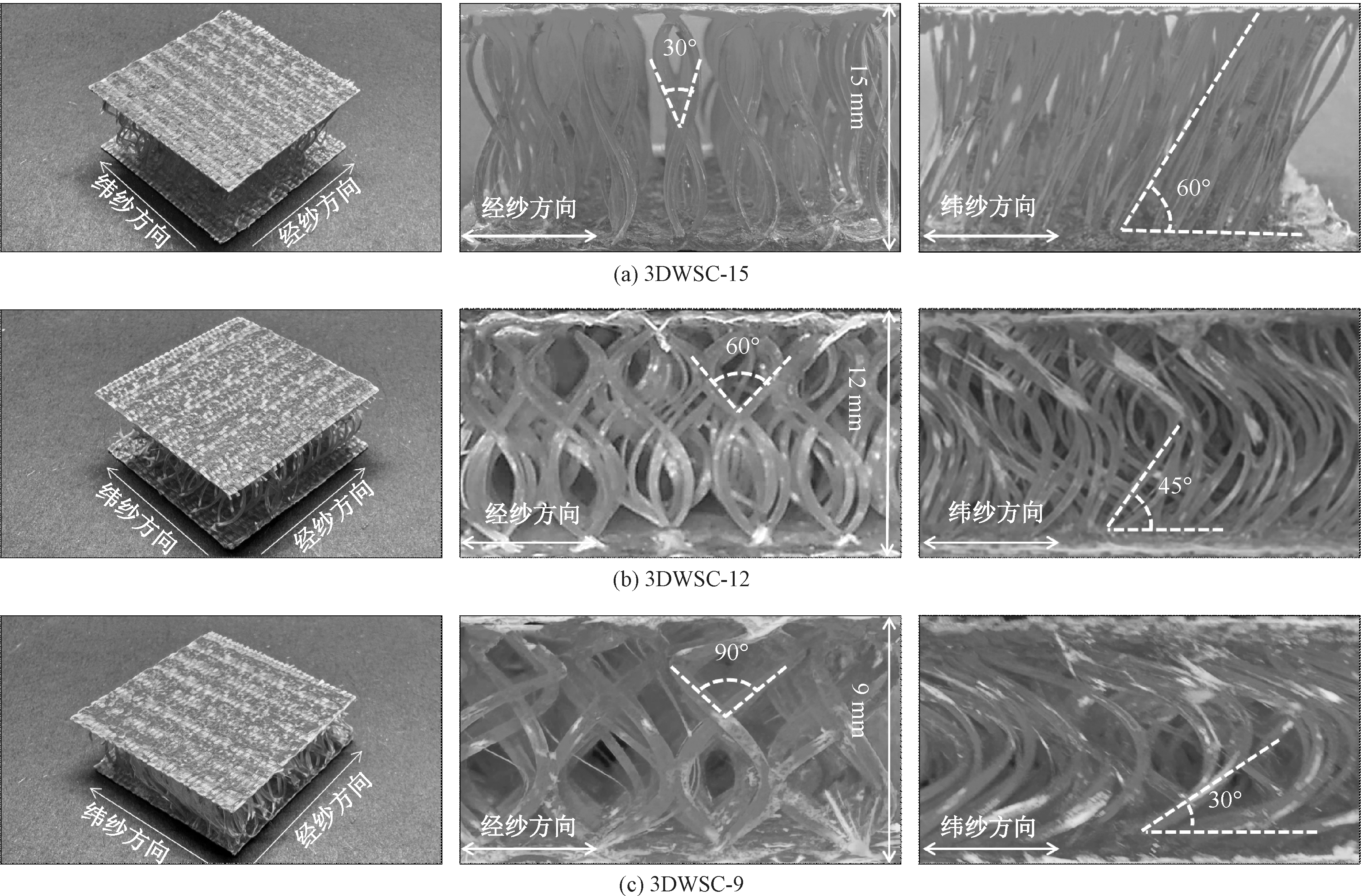
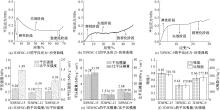
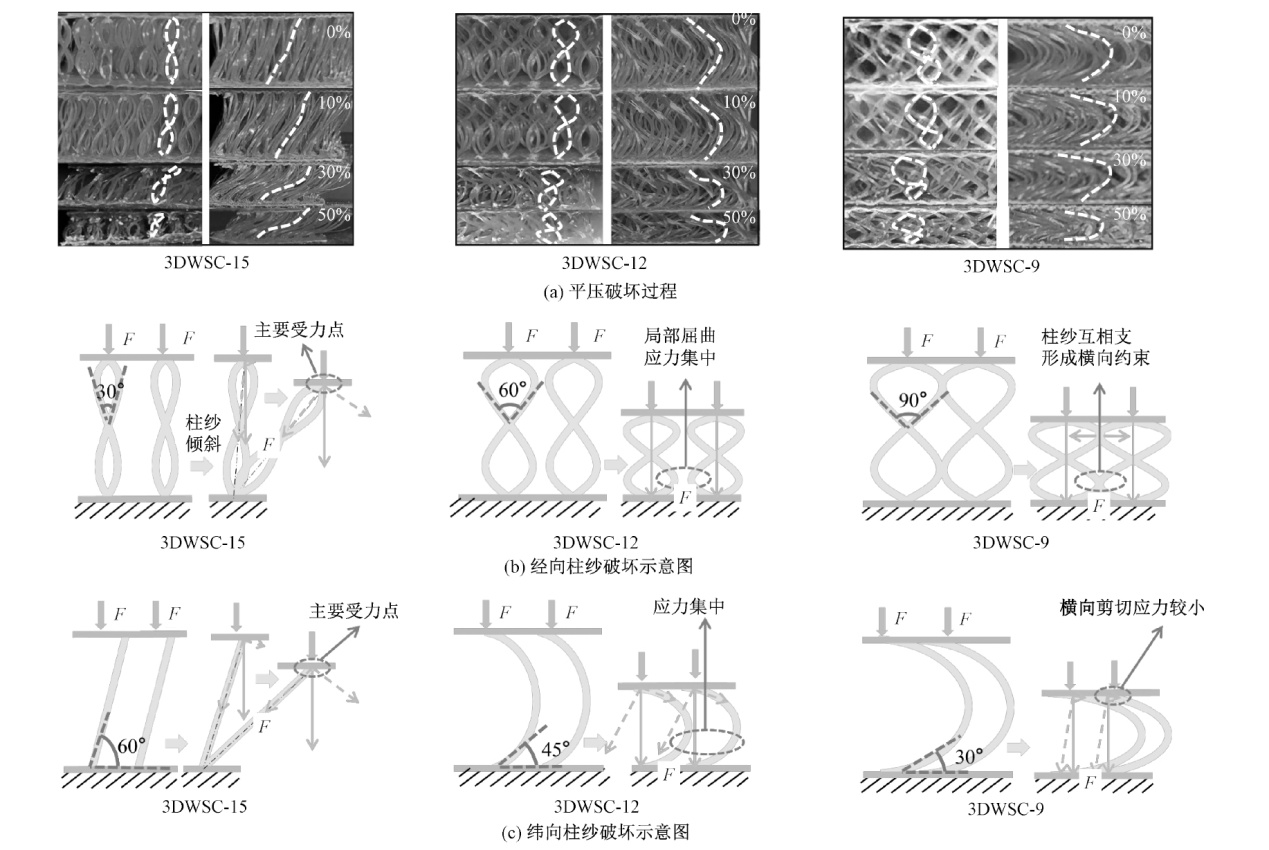
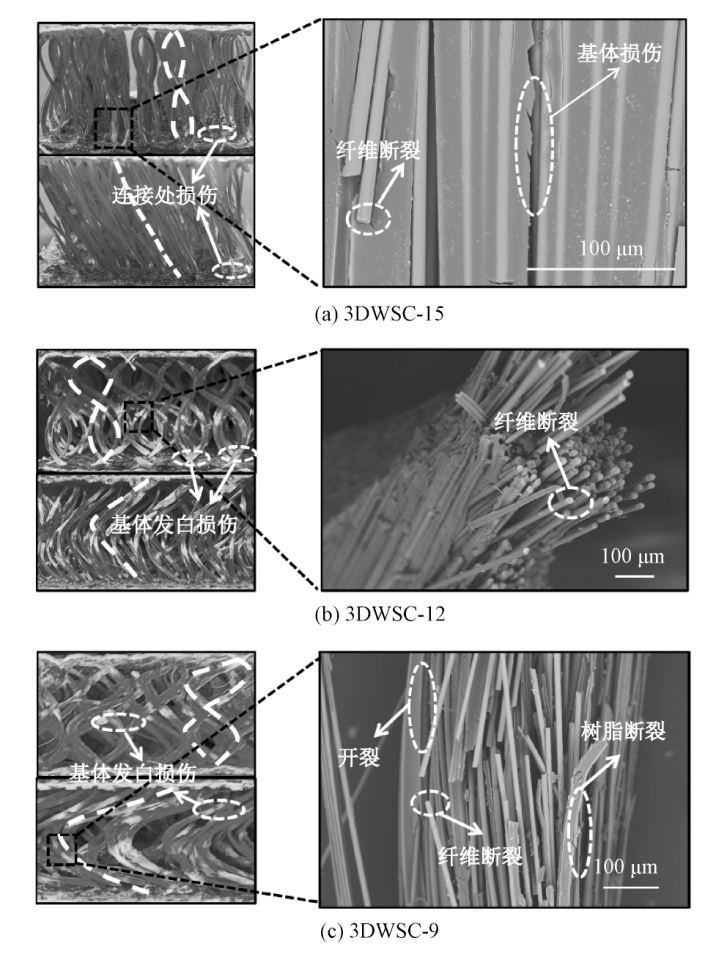
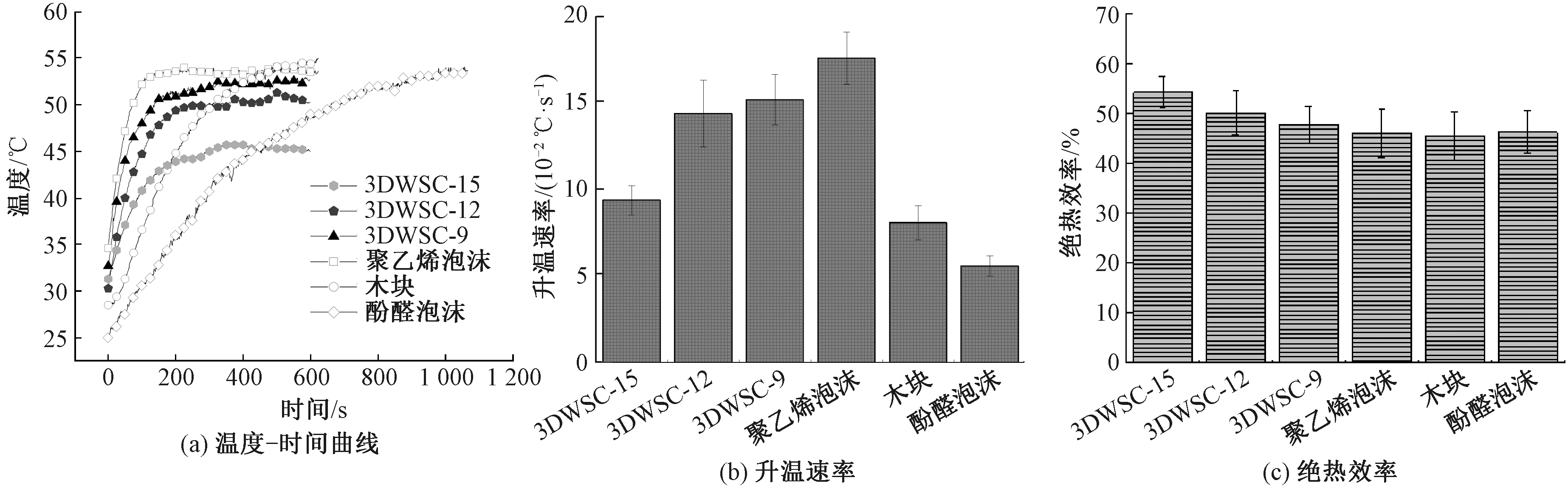
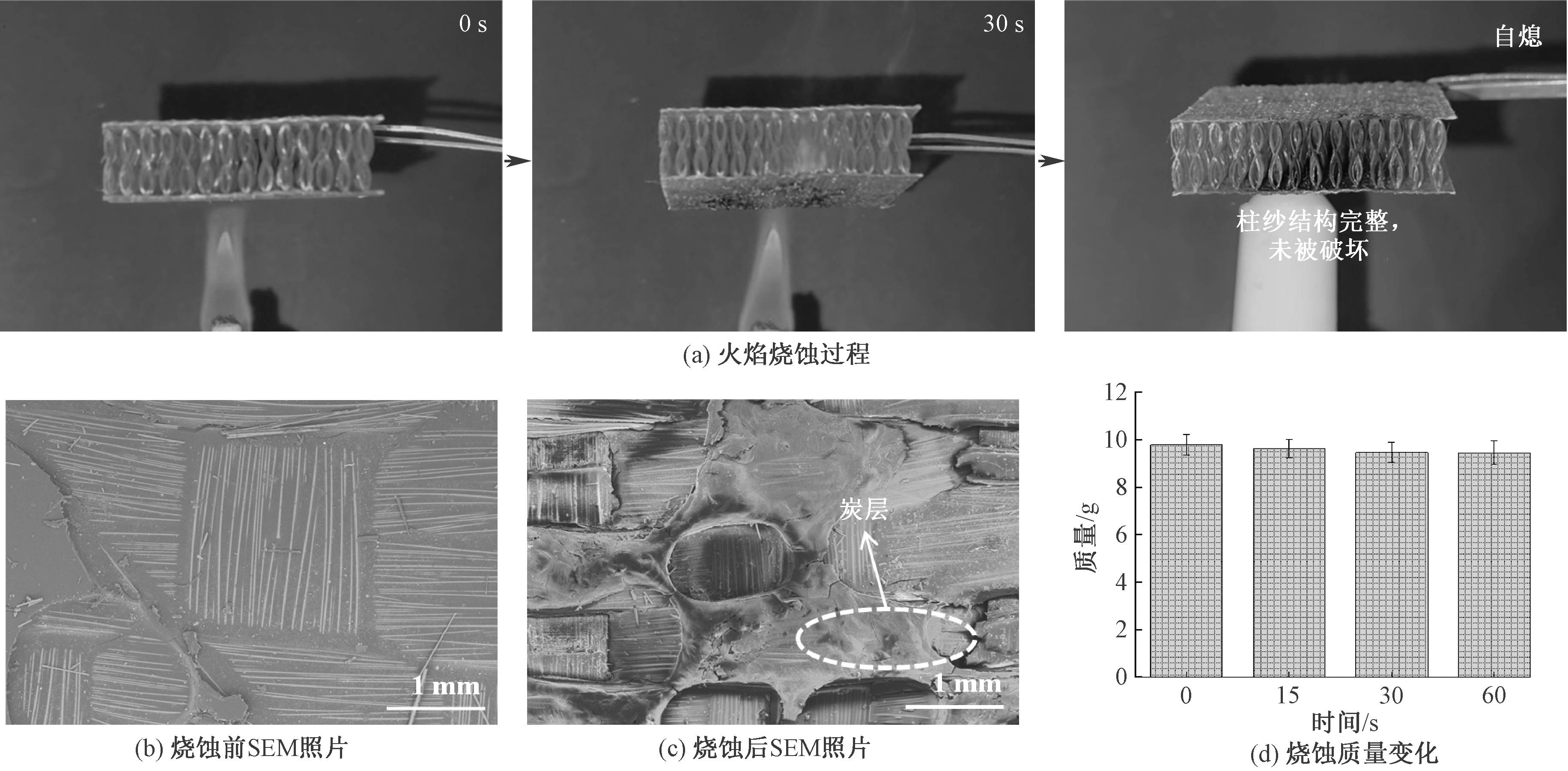
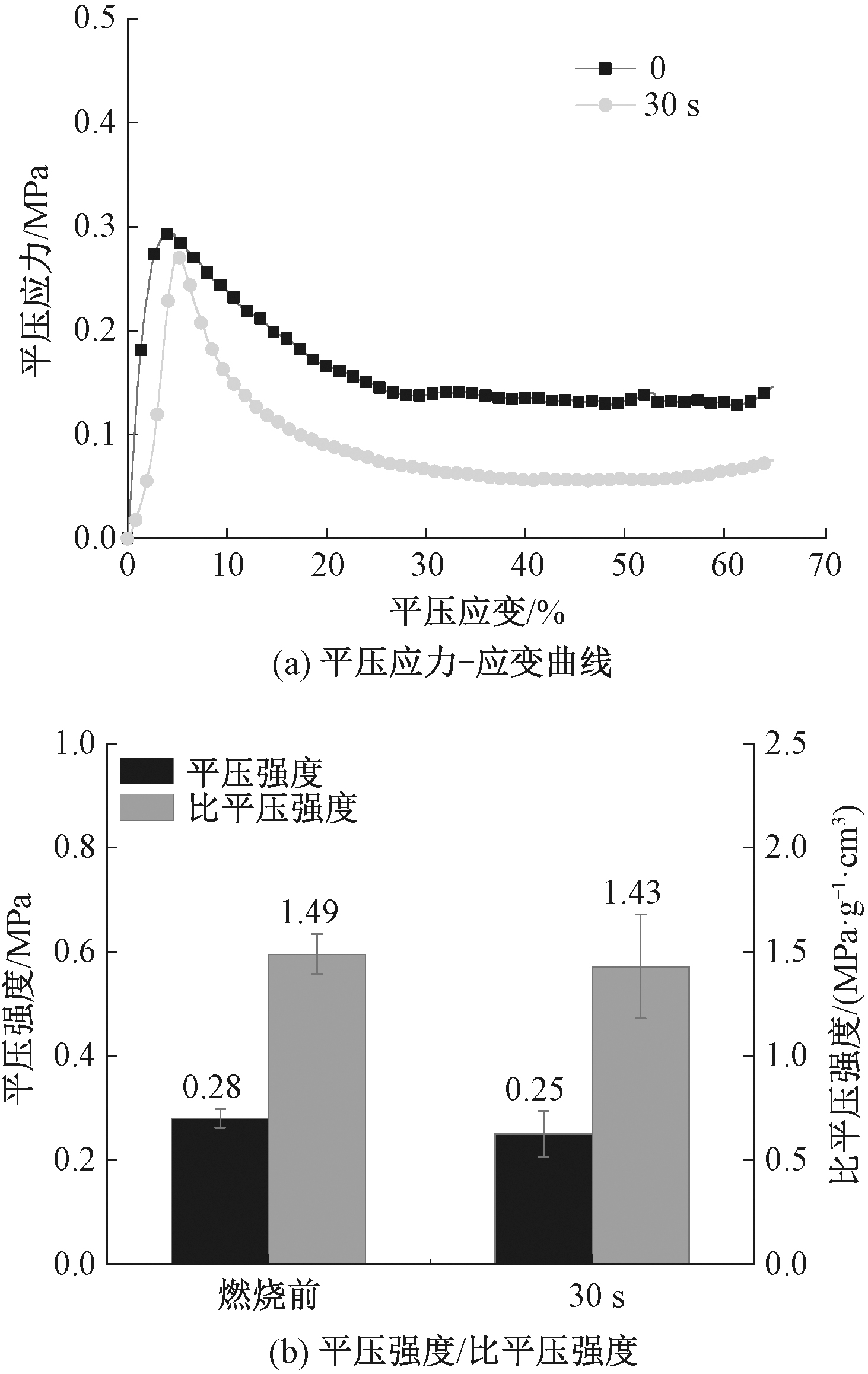
为满足航空航天领域对轻质高强、隔热耐火材料的需求,采用手糊成型工艺将酚醛树脂与玻璃纤维三维间隔织物复合,制备了不同柱纱交叉角度与倾斜角度的复合材料,并对其压缩性能、破坏模式、隔热及耐火性能进行了研究。结果表明:随着柱纱交叉角度增加,倾斜角度变小,三维间隔复合材料的压缩强度呈现先降低后增加的趋势,当柱纱交叉角度从30°增加至60°,平压强度从0.28 MPa降低至0.18 MPa,下降了约35.71%;随着柱纱交叉角度进一步增大至90°,压缩强度回升至0.21 MPa,增加了约16.67%,其破坏模式由倾倒失效转变为脆性断裂和压溃破坏;由于三维间隔复合材料内部丰富的空腔结构有效阻断了热流路径,使其具备了较高的绝热效率与优异的热稳定性,离开火焰后具有自熄现象,烧蚀后质量仅损失3.47%,压缩强度仍保留了89.29%,证明该复合材料是一种兼具优异力学和热学协同防护的一体化结构功能材料。
中图分类号:
| [1] |
AGNIHOTRI S, SHEIKH J N, SINGH S P, et al. Comparative analysis of flame retardant and mechanical properties of different resin-based fiber-reinforced composites[J]. Fire and Materials, 2025, 49(6): 960-972.
doi: 10.1002/fam.v49.6 |
| [2] | 胡小丽, 刘江南, 要玉宏, 等. 温度和湿态处理对酚醛/玻纤复合材料抗拉强度的影响[J]. 西安工业大学学报, 2014, 34(4): 325-330. |
| HU Xiaoli, LIU Jiangnan, YAO Yuhong, et al. Effect of temperature and wet treatment on tensile strength of phenolic/glass fiber composites[J]. Journal of Xi'an Technological University, 2014, 34(4): 325-330. | |
| [3] |
ZHANG K T, WANG Z, NIE J C, et al. Study on combustion characteristics of glass fiber/phenolic resin composites[J]. Heliyon, 2024, 10(13): e32939.
doi: 10.1016/j.heliyon.2024.e32939 |
| [4] | 牟秀娟, 姚璐璐, 李洋, 等. 蜂窝结构增强酚醛树脂基复合材料制备及性能研究[J]. 高科技纤维与应用, 2023, 48(3): 27-33. |
| MOU Xiujuan, YAO Lulu, LI Yang, et al. Preparation and properties of honeycomb structure reinforced phenolic resin matrix composites[J]. Hi-Tech Fiber and Application, 2023, 48(3): 27-33. | |
| [5] | MIHAILOVIC T V, ASANOVIC K A, CEROVIC D D. Structural design of face fabrics and the core as a premise for compression behavior of 3D woven sandwich fabric[J]. Journal of Sandwich Structures & Materials, 2018, 20(6): 718-734. |
| [6] | KUS A, DURGUN I, ERTAN R. Experimental study on the flexural properties of 3D integrated woven spacer composites at room and subzero temperatures[J]. Journal of Sandwich Structures & Materials, 2018, 20(5): 517-530. |
| [7] |
NEJE G, BEHERA B K. Investigation of mechanical performance of 3D woven spacer sandwich composites with different cell geometries[J]. Composites Part B: Engineering, 2019, 160: 306-314.
doi: 10.1016/j.compositesb.2018.10.036 |
| [8] |
芮珂, 何佳臻. 三维间隔织物隔热性能的研究进展[J]. 现代纺织技术, 2023, 31(1): 259-268.
doi: 10.19398/j.att.202206022 |
|
RUI Ke, HE Jiazhen. Research progress on the thermal insulation performance of 3D spacer fabrics[J]. Advanced Textile Technology, 2023, 31(1): 259-268.
doi: 10.19398/j.att.202206022 |
|
| [9] |
YANG C B, PAN Y N, LI W Z, et al. Lightweight and robust SiO2f/SiO2 composites with superior dielectric properties via three-dimensional woven spacer technique[J]. Ceramics International, 2025, 51(7): 8329-8338.
doi: 10.1016/j.ceramint.2024.12.262 |
| [10] | 李慧敏, 刘淑强, 杜琳琳, 等. 玄武岩/聚酰亚胺三维间隔机织物的参数化建模及高温环境传热数值模拟[J]. 纺织学报, 2025, 46(1): 87-94. |
| LI Huimin, LIU Shuqiang, DU Linlin, et al. Parametric modeling of basalt/polyimide three-dimensional spacer woven fabric and numerical simulation of heat transfer in high temperature environment[J]. Journal of Textile Research, 2025, 46(1): 87-94. | |
| [11] |
ZHANG K, BAO Y R, ZHENG L G, et al. Ultra-lightweight porous ceramic-polymer composites with enhanced strength and dielectric temperature stability for temperature-stable antennas[J]. Ceramics International, 2025, 51(18): 25351-25360.
doi: 10.1016/j.ceramint.2025.03.219 |
| [12] |
ZHANG K, ZHENG L G, XU F J. Compressive strength of copper yarn/Kevlar yarn 3D woven spacer hybrid composites and its application for multifunctional composite antennas[J]. Journal of Materials Science, 2023, 58(17): 7303-7318.
doi: 10.1007/s10853-023-08476-6 |
| [13] |
WANG L Y, CHEN L, LI W Z, et al. Ultra-high compressive strength of 3D woven spacer composites with bulked glass fiber and saturated resin absorption[J]. Composite Structures, 2022, 290: 115542.
doi: 10.1016/j.compstruct.2022.115542 |
| [14] |
ZHENG L G, ZHANG K, LIU L, et al. Biomimetic architectured Kevlar/polyimide composites with ultra-light, superior anti-compressive and flame-retardant properties[J]. Composites Part B: Engineering, 2022, 230: 109485.
doi: 10.1016/j.compositesb.2021.109485 |
| [15] |
LI W Z, ZHANG K, PEI R, et al. Composite metamaterial antenna with super mechanical and electromagnetic performances integrated by three-dimensional weaving technique[J]. Composites Part B: Engineering, 2024, 273: 111265.
doi: 10.1016/j.compositesb.2024.111265 |
| [16] | 杜琳琳, 吴改红, 刘淑强, 等. 间隔跨距对玄武岩纤维/聚酰亚胺纤维三维间隔热防护织物性能的影响[J]. 毛纺科技, 2023, 51(9): 12-16. |
| DU Linlin, WU Gaihong, LIU Shuqiang, et al. Effect of spacing weft number on properties of basalt/polyimide three-dimensional interthermal insulation fabric[J]. Wool Textile Journal, 2023, 51(9): 12-16. | |
| [17] | 程广益. 低密度玻璃/酚醛复合材料常温及高温压缩性能研究[D]. 哈尔滨: 哈尔滨工业大学, 2018:14-23. |
| CHENG Guangyi. Research on compression properties of low density glass/phenolic composites at room and high temperature[D]. Harbin: Harbin Institute of Technology, 2018:14-23. |
| [1] | 冯冰灿, 陈立峰, 刘国金, 戚栋明, 杨小兵, 翟世民. 碳纤维增强树脂基复合材料的增韧研究进展[J]. 纺织学报, 2026, 47(07): 254-260. |
| [2] | 吕丽华, 潘佳欣, 张多多. 废弃大麻纤维吸声复合材料的制备及其性能[J]. 纺织学报, 2026, 47(05): 133-140. |
| [3] | 王赋宇, 董九志, 陈晓霞, 陈云军, 李锐. 圆锥段碳/碳复合材料预制体增强纤维缠绕成形机器人系统设计[J]. 纺织学报, 2026, 47(05): 228-235. |
| [4] | 代文居, 张天雨, 吴倩, 支超. 三维间隔织物/离子凝胶复合材料的光热电性能[J]. 纺织学报, 2026, 47(02): 181-187. |
| [5] | 贺辛亥, 冯温柔, 王博, 刘菲, 梁军浩, 孙勇. 复合材料三维预制体整体穿刺虚拟样机设计[J]. 纺织学报, 2025, 46(12): 224-232. |
| [6] | 谢宜轩, 钟林, 徐柠浩, 黄晓梅, 曹海建. 三维深角联芳纶织物/环氧树脂复合材料的弯曲性能[J]. 纺织学报, 2025, 46(11): 118-125. |
| [7] | 费旌源, 徐乃库, 肖长发. 水可溃散砂质芯模设计及其在中空异形碳纤维复合材料成型中的应用[J]. 纺织学报, 2025, 46(11): 137-146. |
| [8] | 高龙威, 蒋金华, 陈南梁, 邵慧奇. 经编双轴向碳纤维织物增强复合材料的冲击损伤特性[J]. 纺织学报, 2025, 46(11): 147-154. |
| [9] | 郭艳文, 夏蕊, 黄晓梅, 陈红霞, 曹海建. 经纬向紧度比对三维浅交弯联机织复合材料拉伸性能的影响[J]. 纺织学报, 2025, 46(10): 103-110. |
| [10] | 唐曾华, 李宏杰, 毕思伊, 邵光伟, 蒋金华, 陈南梁, 邵慧奇. 增强结构对碳纤维/热塑性聚氨酯柔性复合材料电磁屏蔽性能的影响[J]. 纺织学报, 2025, 46(10): 111-119. |
| [11] | 顾戚惠, 阳知乾, 王海楼, 魏发云, 张伟. 机织间隔织物增强水泥基复合材料的制备及其力学性能[J]. 纺织学报, 2025, 46(10): 120-128. |
| [12] | 唐春霞, 王一帆, 毛云山, 刘健, 付少海. 电磁屏蔽用纤维素基复合材料结构设计的研究进展[J]. 纺织学报, 2025, 46(09): 36-45. |
| [13] | 陈晴宇, 陆春红, 张斌, 晋义凯, 黄琪帏, 王超, 丁彬, 俞建勇, 王先锋. 碳纤维增强水泥基灌浆料的制备及其性能[J]. 纺织学报, 2025, 46(08): 120-126. |
| [14] | 张一帆, 安柳絮, 闫英杰, 邹齐, 刘晓志, 郭俊华, 陈利. 三维机织复合材料T型接头的拉伸性能[J]. 纺织学报, 2025, 46(07): 128-135. |
| [15] | 张毅, 沈殷, 高金霞, 郁崇文. 棕榈纤维吸声复合材料的老化性能[J]. 纺织学报, 2025, 46(06): 127-134. |
|
||
 京公网安备11010502044800号