纺织学报 ›› 2025, Vol. 46 ›› Issue (04): 197-206.doi: 10.13475/j.fzxb.20240405801

• 机械与设备 • 上一篇    下一篇

角联织机多经轴送经张力控制系统研究

张久尚1, 杨涛1(), 周玉峰2, 田秀峰2, 宋良2, 刘畅1, 刘健1, 杜宇1   

  1. 1.天津工业大学 机械工程学院, 天津 300387
    2.吴江万工机电设备有限公司, 江苏 苏州 215000
  • 收稿日期:2024-04-23 修回日期:2024-08-08 出版日期:2025-04-15 发布日期:2025-06-11
  • 通讯作者: 杨涛(1970—),男,教授,博士。主要研究方向为纺织复合材料成形与装备、复合材料机械加工与检测。E-mail:yangtao@tiangong.edu.cn
  • 作者简介:张久尚(1997—),男,硕士生。主要研究方向为机电一体化设计。

Research on tension control system of multi-warp beam let-off mechanism of 3-D fabric loom

ZHANG Jiushang1, YANG Tao1(), ZHOU Yufeng2, TIAN Xiufeng2, SONG Liang2, LIU Chang1, LIU Jian1, DU Yu1   

  1. 1. School of Mechanical Engineering, Tiangong University, Tianjin 300387, China
    2. Wujiang Wangong Electromechanical Equipment Co., Ltd., Suzhou, Jiangsu 215000, China
  • Received:2024-04-23 Revised:2024-08-08 Published:2025-04-15 Online:2025-06-11

摘要:

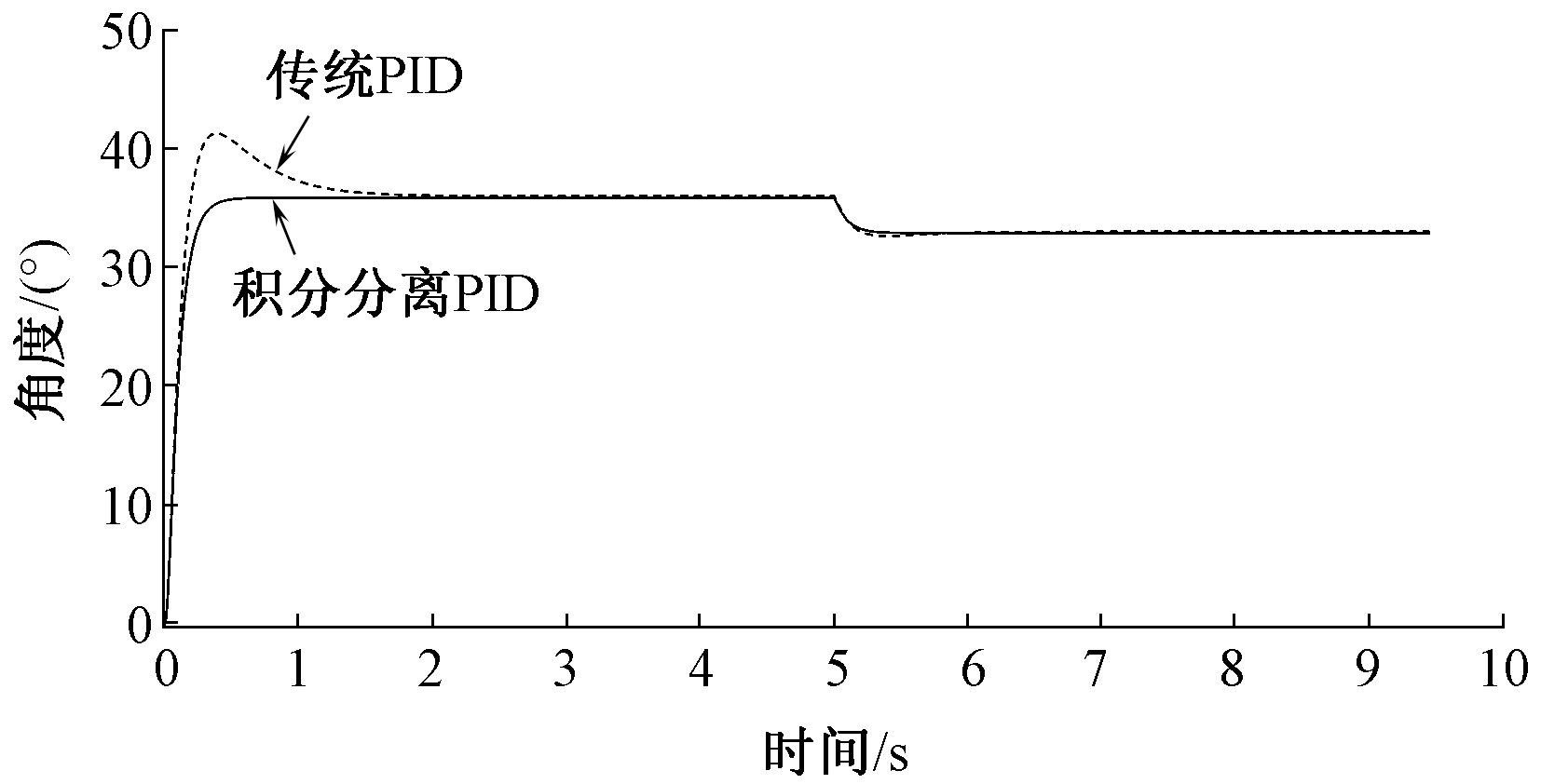
角联织机的张力控制是实现织造多层角联锁织物的核心之一,针对30层角联织物的特殊织造工艺以及送经运动特性,在分析经纱张力主要影响因素的基础上,采用组合式PID控制算法来实现经纱恒张力控制。利用直接控制法控制每纬送经量,同时针对多经轴结构提出一种经轴直径估算法,保证足够送经量。针对织造过程中的动态张力变化结合张力摆杆与角度传感器,检测摆杆位置偏差,控制使之处于相对稳态。对送经控制算法进行仿真,并采集现场实际数据进行分析,结果表明,阶跃干扰下张力摆杆迅速响应,无超调量。在连续织造过程中张力摆杆的波动幅度保持在±1°内,满足角联织机的特殊织造要求,纱线张力的稳定性和控制精度都有明显提高,经纱张力无明显波动。

关键词: 石英纤维, 角联锁织物, 送经系统, 张力控制, 角联织机, 仿真

Abstract:

Objective With the continuous development of three-dimensional textile technology, composite materials with three-dimensional fabric as the skeleton are increasingly emerging. The design and manufacture of 3D looms with better performance has become one of the key factors in improving the performance of composite materials reinforced with 3D fabric preforms. In the research and development of three-dimensional loom, the warp tension control is the core of the control in the weaving process, too high tension may lead to yarn breakage, and too small tension will affect the effect of fabric forming. Therefore, it is necessary to study the control of the warp tension of each layer under different yarn path conditions, as well as the corresponding control algorithm. In order to ensure the stability and uniformity of the warp tension.

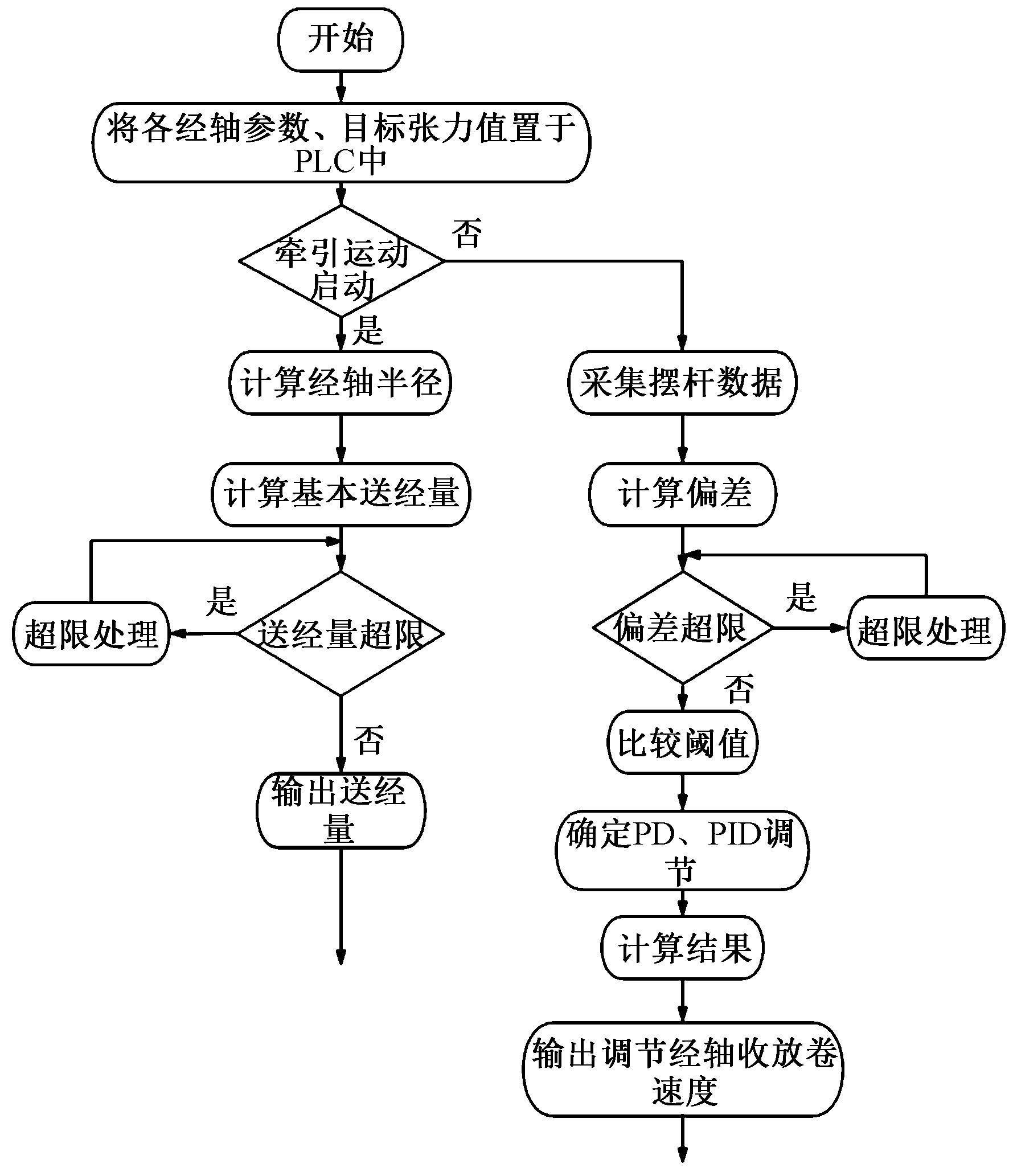
Method In view of the characteristics of the multi-layer let-off system and the analysis of the main influencing factors of the warp tension, the let-off control system adopts the control concept of distributed control and centralized management, fully considers the requirements of the multi-channel multi-function and fast servo operation function of the control system, designs and adopts the combined PID (Proportional-Integral-Derivative Control) algorithm to realize the constant tension control, uses the direct control method to control the warp feed volume, and proposes a warp beam diameter estimation method for the multi-warp beam structure to ensure sufficient warp feed volume. According to the dynamic tension change, the tension pendulum and the angle sensor are combined to detect the balance position deviation, and the PID algorithm is used to control the tension of the war-off motor rewinding and unwinding speed control system in real time, so that it is in a relatively stable state. The let-off control algorithm is simulated, and the let-off control algorithm is verified and optimized through simulation analysis. Simulation simulates the response of the system under different operating conditions and evaluates the performance of the control algorithm. This process helps to identify potential problems and solve them, improving the stability and reliability of the system.

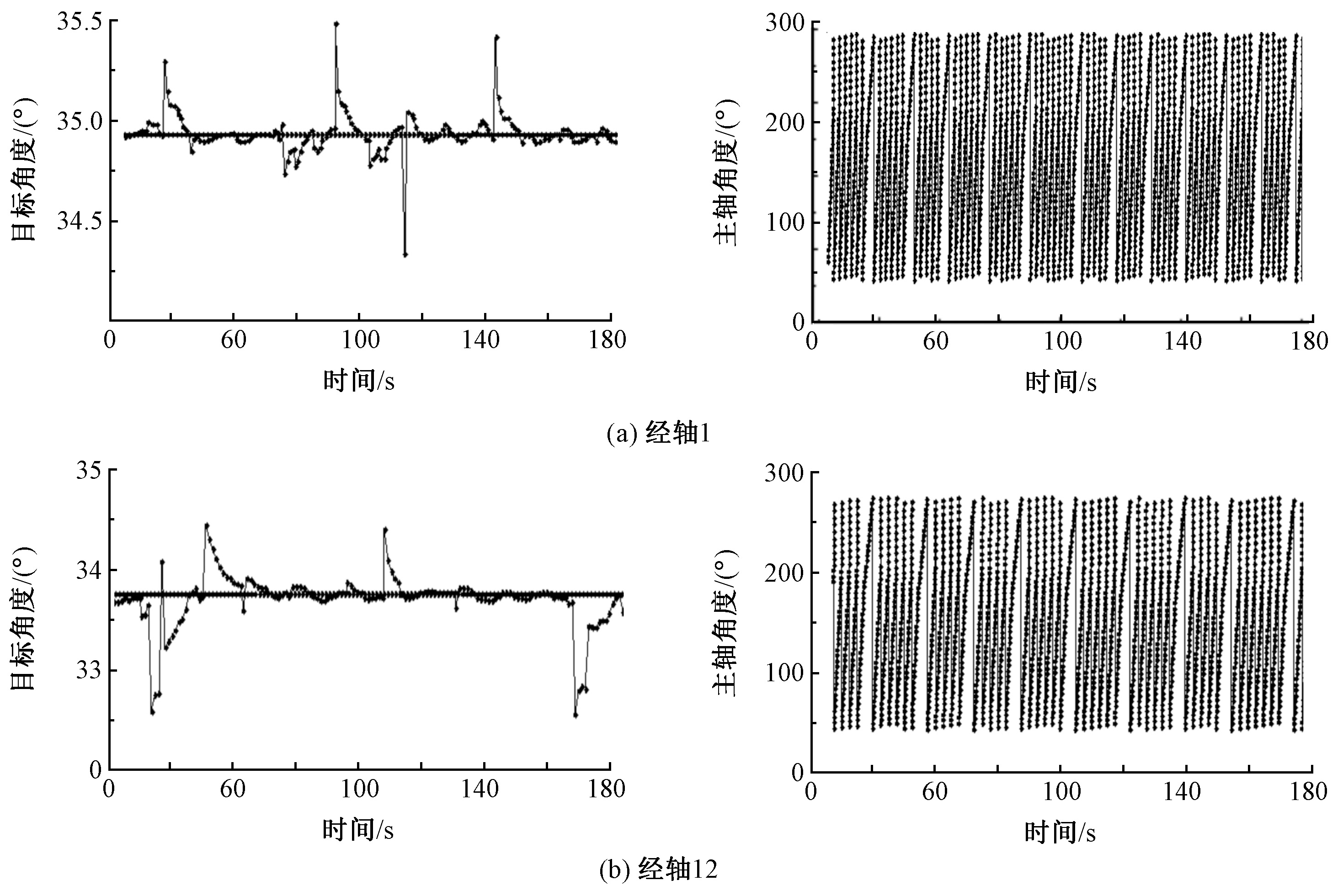
Results The fluctuation monitoring results of the tension balance pendulum rod of warp beams 1, 6 and 12 during the weaving process show that the tension curve shows a continuous change. At 28 seconds and 32 seconds (the up and down arrows indicate the disturbance of the opening motion), the effect of the opening motion of the heald frame on the tension is the most frequent, showing periodic fluctuations. Due to the different distances between the heald frame and the warp axis of each weft opening, the degree of interference between the rise and fall of the heald frame on the tension pendulum is also different. The maximum observed angle of interference is 0.47°. At 1 min and 20 s, there is a tension fluctuation caused by the beating motion, and after the interference occurs, the main controller uses the speed mode integral separation PID algorithm to quickly control the rewinding and unwinding response of the warp beam 1 motor, so that the pendulum 1 quickly returns to the set position and stabilizes within ±1°. At 1 minute and 30 seconds, there is a tension fluctuation caused by the let-off traction movement, and the basic let-off amount is compensated by the position mode, and the fluctuation of the stable tension pendulum is within ±1°. This shows that the control algorithm has a strong anti-interference ability, and in the face of various motion interferences, each warp axis can respond quickly, adjust the winding and unwinding, and send out a precise basic let-off amount to keep the tension pendulum in a dynamic equilibrium state.

Conclusion Through the analysis of tension fluctuation in the continuous weaving of No. 1, 6 and 12 warp beams, it can be seen that when disturbed, the tension fluctuation of each warp beam is consistent. When the let-off traction is synchronized, the position mode is used to calculate the influence of the tension fluctuation caused by the speed difference and the decrease in the diameter of the warp beam caused by the basic let-off amount to compensate for the speed difference, and control the synchronous movement of all warp beams. After the speed mode integral separation PID algorithm is used to adjust the tension pendulum of each warp beam to receive interference signals such as opening and weft beating, it can quickly and independently adjust each warp beam motor, so that the tension pendulum of each warp beam can be dynamically balanced and maintained near the target value. Therefore, the control system uses EtherCAT fieldbus communication and adopts the combined PID algorithm to carry out real-time synchronous control and independent control of each warp axis, and each warp axis can respond quickly to meet the tension control requirements of the angular loom.

Key words: quartz fiber, angle interlock fabric, let-off system, tension control, angle interlock loom, simulation

中图分类号: 

  • TS103.2

图1

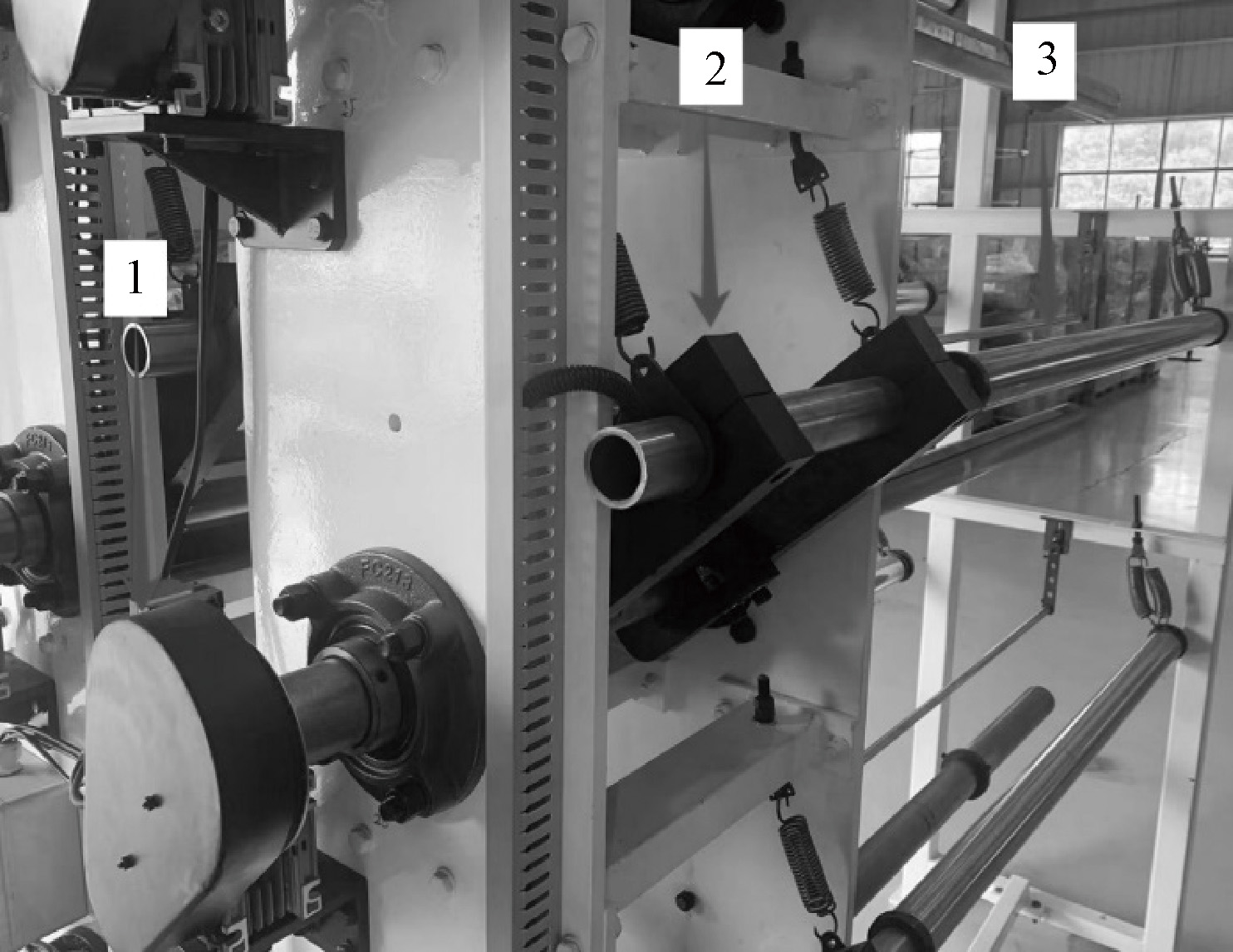
经轴安装图 注:1—伺服驱动系统;2—张力传感器;3—张力摆杆。"

图2

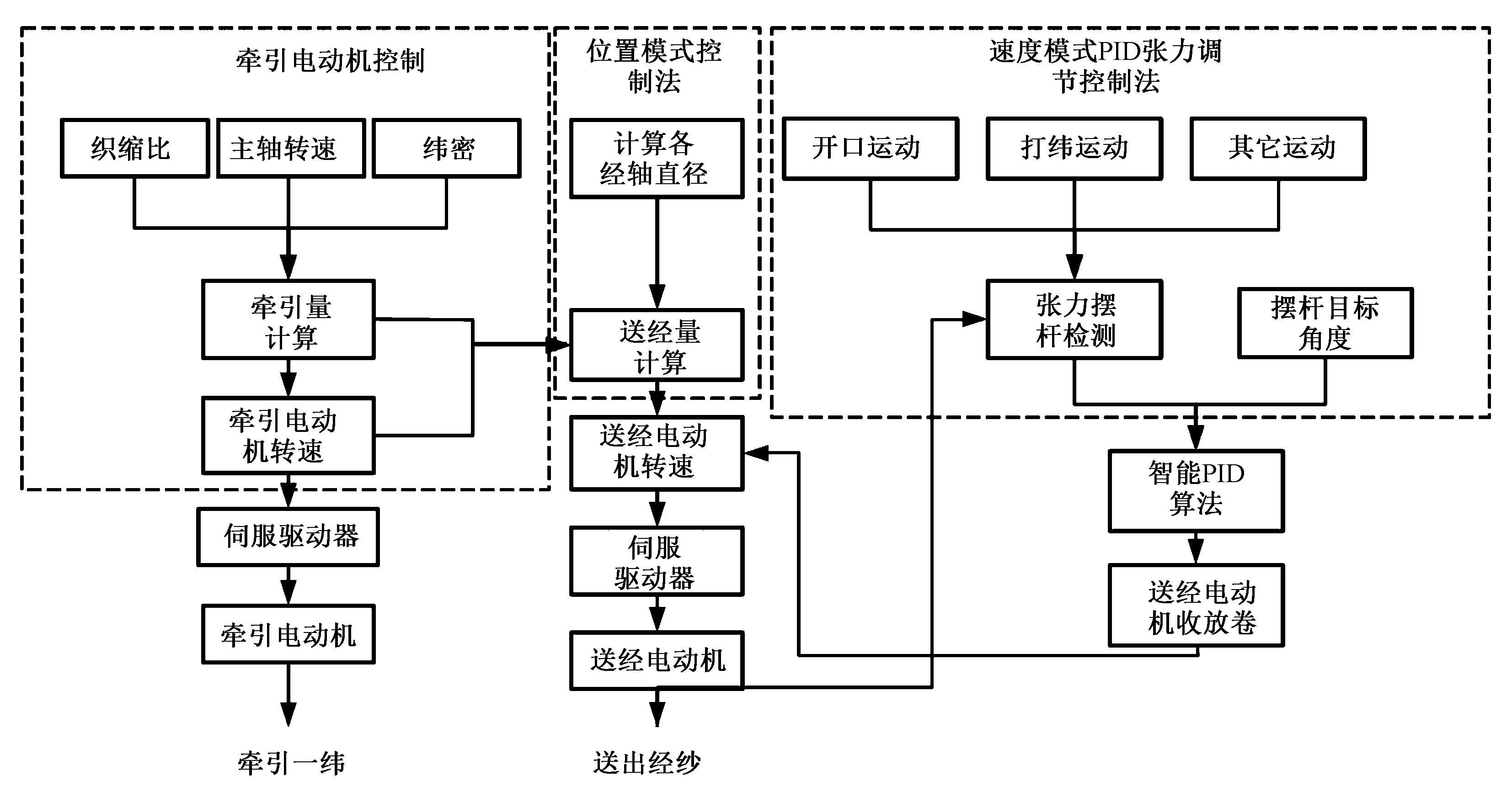
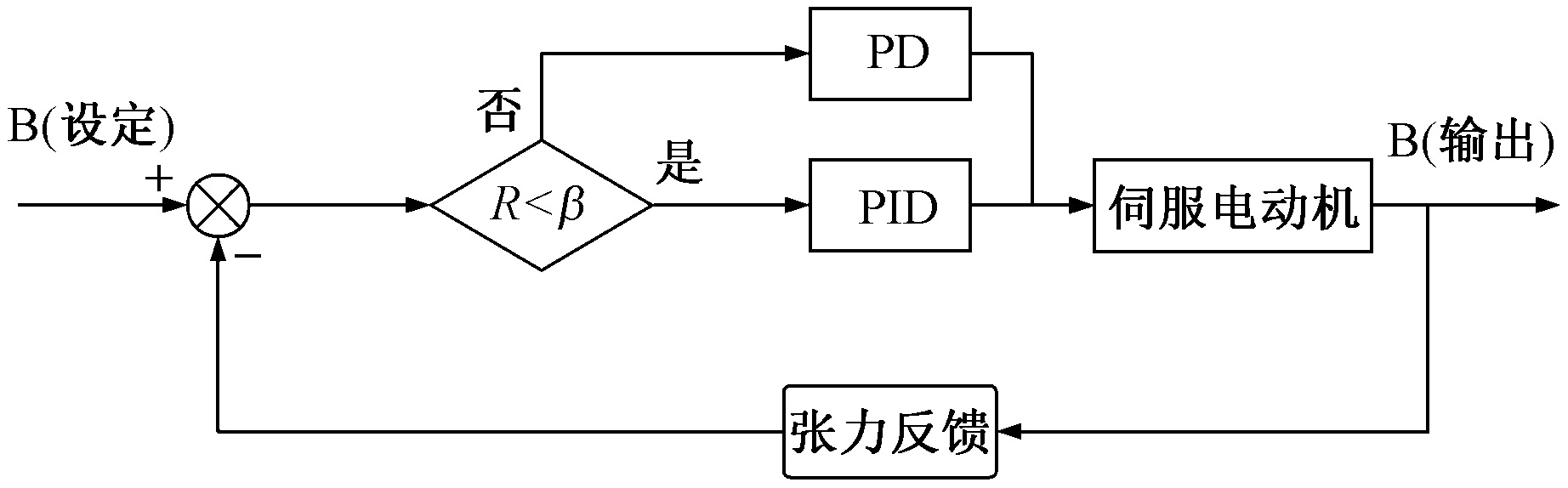
经纱张力控制方案"

图3

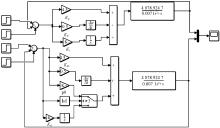
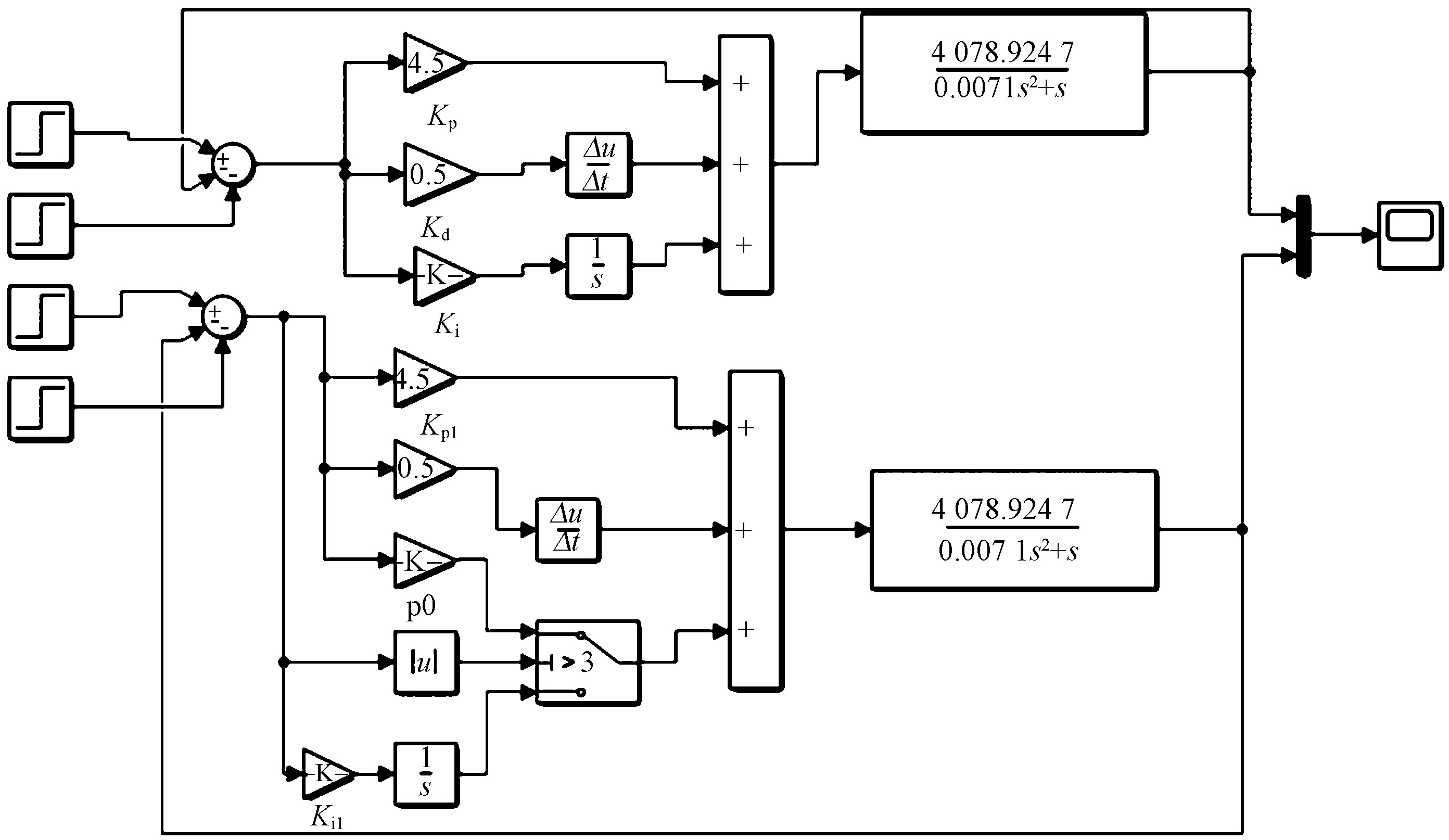
积分分离PID控制算法原理图"

图4

速度模式控制原理图"

图5

积分分离Kil仿真图"

图6

阶跃干扰响应图"

图7

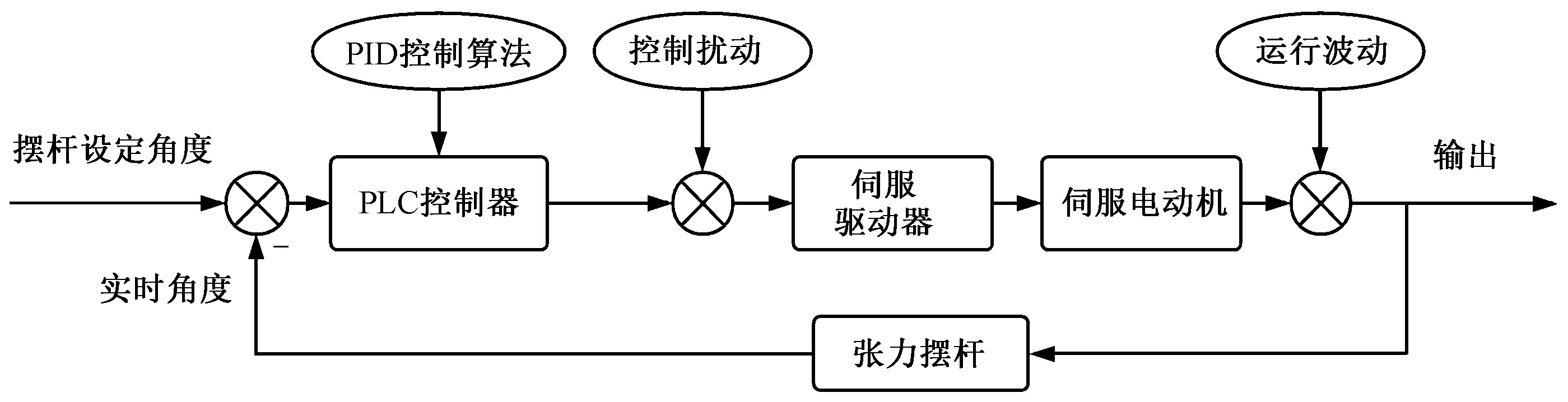
经纱张力电气控制原理"

图8

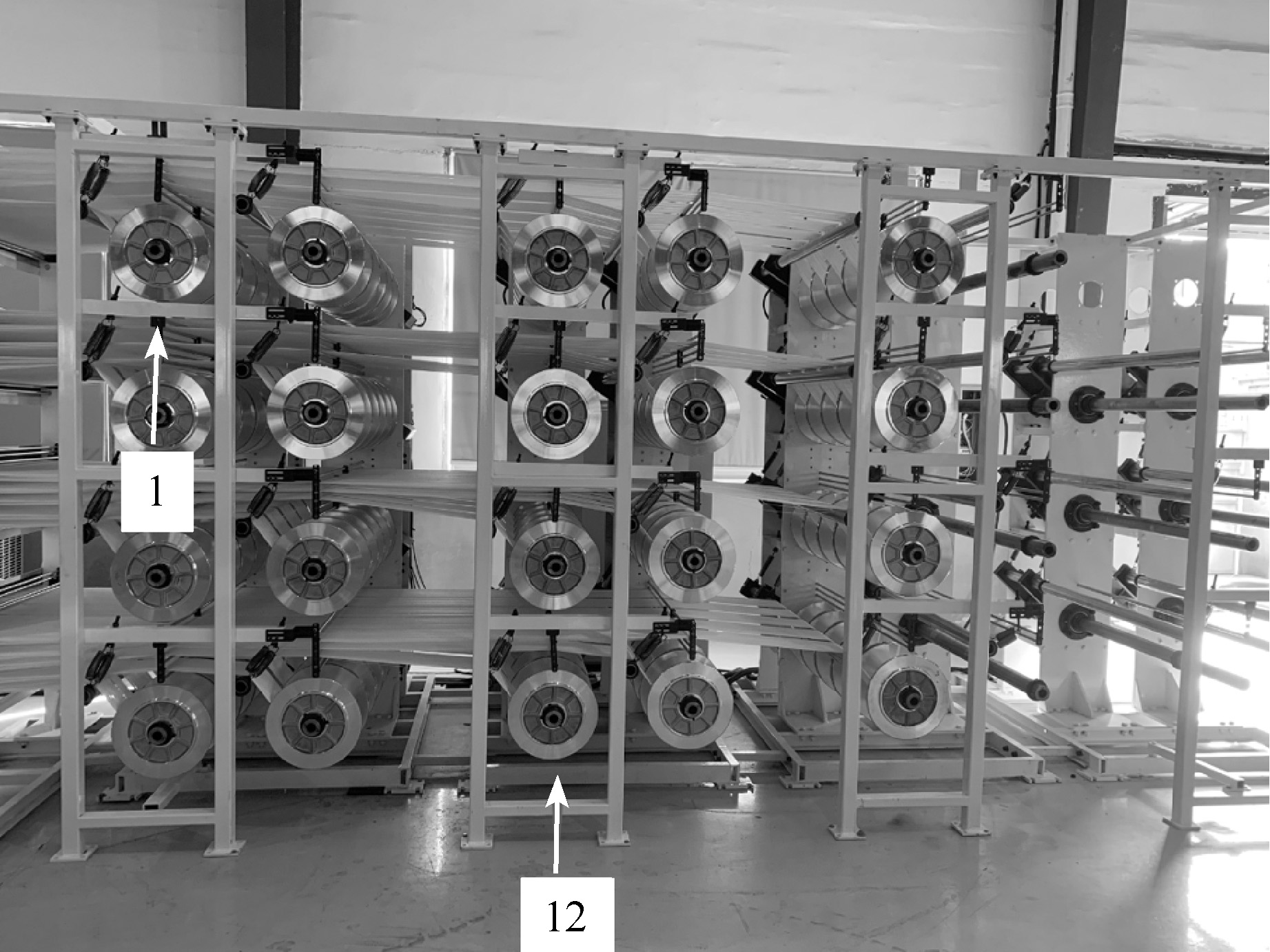
实验装置"

图9

部分送经程序"

表1

实验经轴参数"

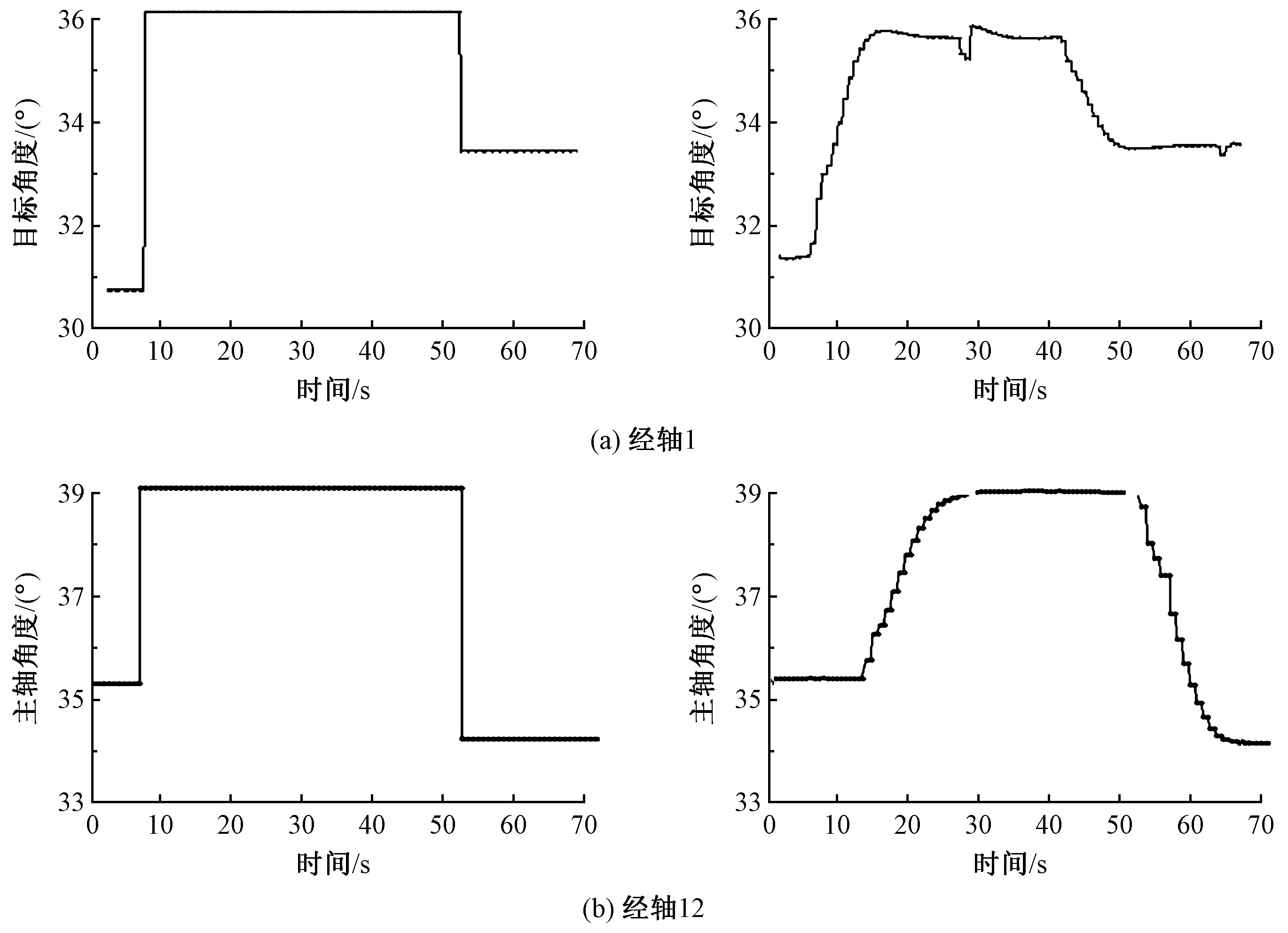
经轴编号 一次阶跃/(°) 二次阶跃/(°) 经轴直径/mm 整经圈数
1 32~36 36~34 336 190
12 35.5~39 39~34 339 193

图10

经轴1、12张力阶跃干扰"

表2

实验经轴参数"

经轴
编号
目标角
度/(°)
整经
圈数
经轴直
径mm
上下限角
度/(°)
1 35.0 196 336 31、37
12 33.8 198 339 29、36

图11

经轴1、经轴12张力波动"

[1] 屈国欣, 宋若康, 戴珍, 等. 石英纤维增强酚醛多孔复合材料的制备及性能[J]. 新技术新工艺, 2022(7):27-32.
QU Guoxin, SONG Ruokang, DAI Zhen, et al. Preparation and properties of quartz fiber reinforced phenolic porous composites[J]. New Technology and New Process, 2022(7):27-32.
[2] 卢绪凤, 杨建成. 碳纤维多层角联织机多经轴送经机构经纱张力计算及控制算法[J]. 玻璃钢/复合材料, 2017(12):14-18.
LU Xufeng, YANG Jiancheng. Calculation and control algorithm of warp tension of multi-warp beam let-off mechanism of carbon fiber multi-layer corner loom[J]. FRP/Composites, 2017(12):14-18.
[3] 韩天赐, 周其洪, 陈革, 等. 基于LabVIEW的立体织机经纱张力检测系统设计[J]. 东华大学学报(自然科学版), 2018, 44(5):762-765,771.
HAN Tianci, ZHOU Qihong, CHEN Ge, et al. Design of warp tension detection system for three-dimensional loom based on LabVIEW[J]. Journal of Donghua University(Natural Science Edition), 2018, 44(5):762-765,771.
[4] 陈家新, 赵博, 张永红. 织机经纱张力检测与控制技术[J]. 纺织机械, 2013(2):32-35.
CHEN Jiaxin, ZHAO Bo, ZHANG Yonghong. Warp tension detection and control technology of loom[J]. Textile Machinery, 2013 (2):32-35.
[5] 郑华. 电子送经卷取系统的研究与开发[D]. 上海: 东华大学, 2012:1-50.
ZHENG Hua. Research and development of electronic take-off system[D]. Shanghai: Donghua University, 2012:1-50.
[6] 夏鹏飞, 刘薇. 碳纤维角联织机经纱张力的H_∞网络化控制[J]. 科学技术与工程, 2022, 22 (20): 8771-8780.
XIA Pengfei, LIU Wei. H_∞ network control of warp tension in carbon fiber angle loom[J]. Science Technology and Engineering, 2022, 22 (20): 8771-8780.
[7] 张庆龙. 喷水织机的张力调节与控制系统设计[D]. 青岛: 青岛大学,2023:1-49.
ZHANG Qinglong. Design of tension adjustment and control system of water jet loom[D]. Qingdao: Qingdao University,2023:1-49.
[8] HUANG J, GAO M, HE Z. The application of PID controller with dead zone for yarn's constant tension control system[C]// Industrial Electronics and Application(ICIEA). Melbourne: IEEE, 2013, 348-351.
[9] 陈学军, 吴钢华, 林海波. 基于PID 积分分离算法的多线切割机恒张力控制研究[J]. 组合机床与自动化加工技术, 2012(1):81-84,92.
CHEN Xuejun, WU Ganghua, LIN Haibo. Research on constant tension control of multi-wire cutter based on pid integral separation algorithm[J]. Combined Machine Tool and Automatic Processing Technology, 2012(1):81-84,92.
[10] BECK T, LENZ C, HAMBACH L D, 等. 张力可控的自适应供纱系统[J]. 国际纺织导报, 2018, 46(9):10-12.
BECK T, LENZ C, HAMBACH L D, et al. Adaptive yarn supply system with controllable tension[J]. Melliand International Textile Reports, 2018, 46 (9): 10-12.
[11] 黄祥源. 基于积分分离PID 算法的张力控制器的设计[J]. 工业控制计算机, 2011, 24(5):36-38.
HUANG Xiangyuan. Design of tension controller based on integral separation PID algorithm[J]. Industrial Control Computer, 2011, 24(5):36-38.
[12] 李品. 积分分离PID控制算法在PLC炉温控制系统中的应用[J]. 电子设计工程, 2013, 21(24):54-55,58.
LI Pin. Application of integral separation PID control algorithm in PLC furnace temperature control Sys-tem[J]. Electronic Design Engineering, 2013, 21(24):54-55,58.
[13] 张锐, 白连平. 永磁交流伺服电机控制系统的研究[J]. 电气技术. 2011(3): 6-9.
ZHANG Rui, BAI Lianping. Research on permanent magnet AC servo motor control system[J]. Electrical Technology. 2011(3): 6-9.
[14] 施兴华, 季葛盛, 钱佶麒, 等. 基于PID的ROV运动控制仿真[J]. 中国海洋平台, 2024, 39(1):26-32,50.
SHI Xinghua, JI Gesheng, QIAN Jiqi, et al. PID-based ROV motion control simulation[J]. China Ocean Platform, 2024, 39(1):26-32,50.
[1] 陈馨蔚, 顾冰菲, 田佳莉, 周思凡, 刘瑜希, 刘金灵, 易洁伦, 孙玥. 基于参数化设计和数值模拟仿真技术的运动文胸版型优化[J]. 纺织学报, 2025, 46(04): 162-170.
[2] 杜诚杰, 洪剑寒, 张昆, 梁宽, 谢国炎, 梁贤君. 旋转式圆形编织机拨盘与锭子座传动间隙分析及优化[J]. 纺织学报, 2025, 46(04): 207-214.
[3] 尚静雨, 蒋高明, 陈钰珊, 刘海桑, 李炳贤. 花式纱罗织物设计与三维仿真[J]. 纺织学报, 2025, 46(04): 81-88.
[4] 梁金星, 李东盛, 韩开放, 胡新荣, 彭佳佳, 李立军. 基于物理约束的纬编针织物动态形变模拟[J]. 纺织学报, 2025, 46(03): 109-115.
[5] 马运娇, 王蕾, 潘如如. 基于双斜交平面镜的纱线条干三维仿真[J]. 纺织学报, 2025, 46(02): 86-91.
[6] 黄小源, 王青云, 侯珏, 杨阳, 刘正. 基于技能熟练度的服装流水线仿真优化及其应用[J]. 纺织学报, 2025, 46(01): 169-178.
[7] 郭琦, 吴宁, 孟影, 安达, 黄建龙, 陈利. 变厚度头锥体织物的工艺设计与验证[J]. 纺织学报, 2024, 45(12): 98-108.
[8] 刘健, 王程皓, 董守骏, 刘泳汝. 半封闭自由表面式静电纺丝喷头设计与优化[J]. 纺织学报, 2024, 45(11): 215-225.
[9] 陈钰珊, 蒋高明, 李炳贤. 基于双扎口的纬编管状无缝织物三维仿真[J]. 纺织学报, 2024, 45(10): 95-102.
[10] 张佃平, 王昊, 林文峰, 王振秋. 多喷头纺丝装置的仿真与设计[J]. 纺织学报, 2024, 45(10): 200-207.
[11] 关松松, 蒋高明, 杨美玲, 李炳贤. 基于线圈结构的双针床经编毛绒织物三维仿真[J]. 纺织学报, 2024, 45(09): 84-90.
[12] 王遵钦, 刘东炎, 王晓旭, 张典堂. 机织角联锁变密度复合材料的面外压缩力学特性[J]. 纺织学报, 2024, 45(07): 63-71.
[13] 陶静, 汪俊亮, 张洁. 数据驱动与有限元仿真融合的纱线断裂强力分析方法[J]. 纺织学报, 2024, 45(02): 238-245.
[14] 丁彩红, 左今朝. 不停丝自动化铲板系统的集排丝技术研究[J]. 纺织学报, 2023, 44(12): 162-169.
[15] 赵俊杰, 蒋高明, 程碧莲, 李炳贤. 毛衫绞花织物的三维仿真与实现[J]. 纺织学报, 2023, 44(12): 81-87.
Viewed
Full text


Abstract

Cited

  Shared   
  Discussed   
No Suggested Reading articles found!