纺织学报 ›› 2025, Vol. 46 ›› Issue (07): 202-208.doi: 10.13475/j.fzxb.20241204401
吴雪杨1,2, 徐启程1,2, 单英浩1,2( ), 林孝武1,2, 刘晨铭1,2
WU Xueyang1,2, XU Qicheng1,2, SHAN Yinghao1,2(), LIN Xiaowu1,2, LIU Chenming1,2
摘要:
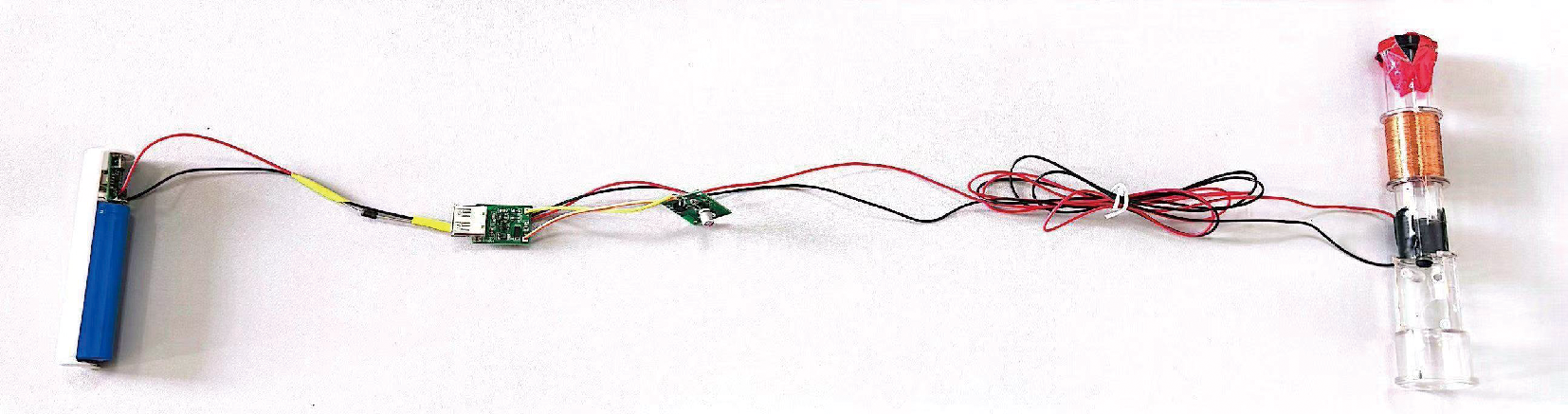
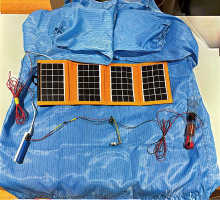
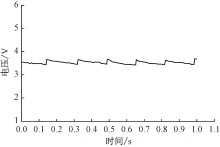
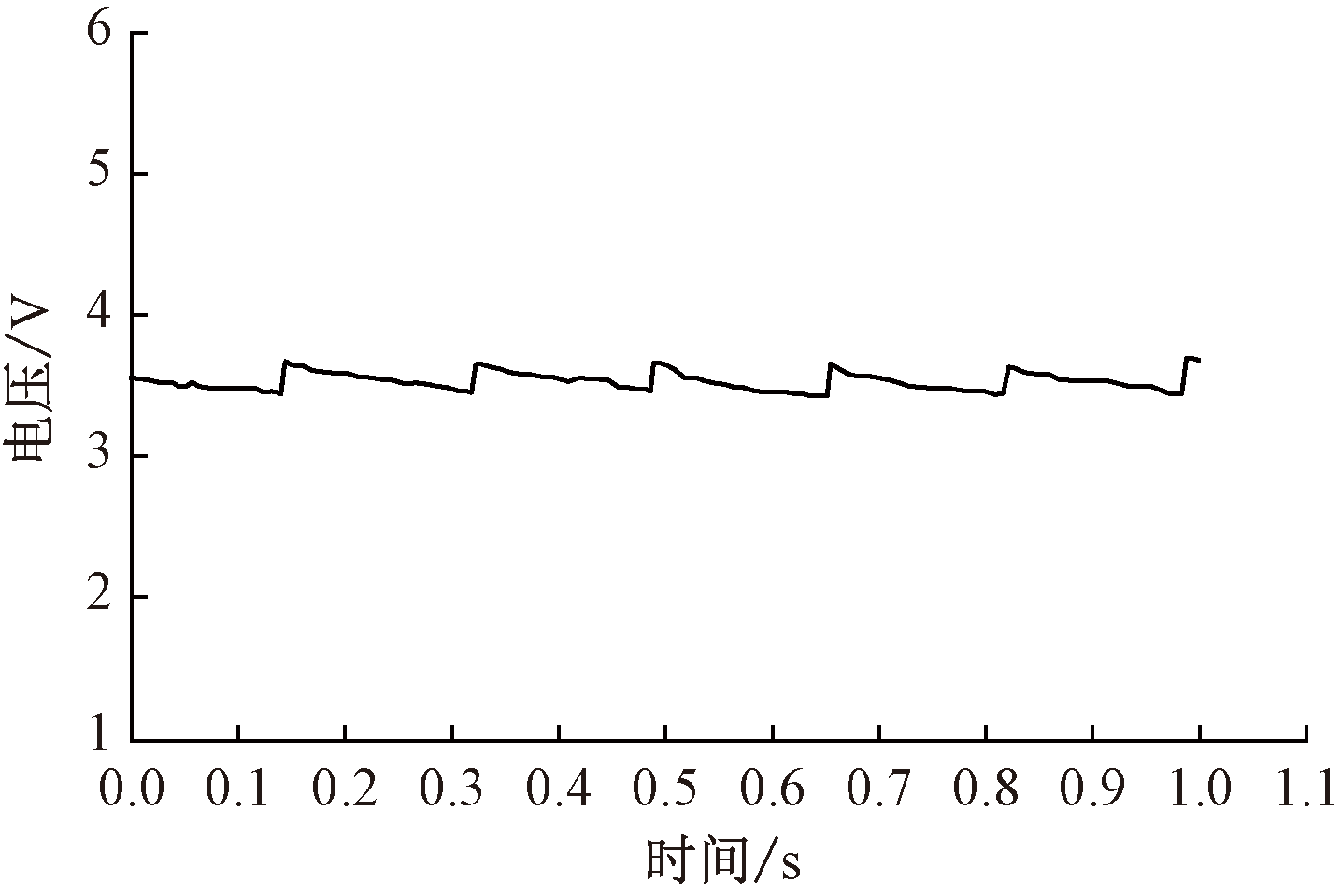
目前在可穿戴设备能量系统设计中,其能量来源主要依靠化学电池或外部电源,为解决可穿戴等设备供电环节中存在的供应能量少、充电不便利以及无法长时间自主供电等问题,集成了高效的可折叠太阳能电池与电磁能量收集装置,并利用SY3511芯片设计电能变换电路,研发了一种集成太阳能与电磁能量收集装置的人体可穿戴纳电网系统。最后,在光照充足及人体正常运动的条件下通过测试人员穿着配备有纳电网系统的测试服进行太阳能与电磁能能量收集的性能测试。研究结果表明:太阳能收集装置在白天光照正常时能实现200 mW左右的电能输出,电磁能量收集装置在人体活动时能够产生5 V左右的电压对储能电池进行充电,整个系统在天气晴朗时对锂电池充电约1.5 h后,使其电压从0.6 V左右升至3.7 V,达到对外部设备供电的条件。最后,验证了所设计的可穿戴供电系统能够实现对手机等电子设备的稳定持久充电。
中图分类号:
| [1] | 许子傲, 吴雅梦, 郭浩, 等. 纤维基摩擦纳米发电机的构建及其在可穿戴技术领域的研究进展[J]. 纺织工程学报, 2023, 1(6):71-85. |
| XU Ziao, WU Yameng, GUO Hao, et al. Research progress in the fabrication and wearable applications of fiber-based triboelectric nanogenerators[J]. Journal of Advanced Textile Engineering, 2023, 1(6): 71-85. | |
| [2] | BAGIC F, KIM K, LIU Y C, et al. Evaluation of power maximization and curtailment control methods for converters in wearable photovoltaic energy harvesting applications[J]. IEEE Open Journal of Power Electronics, 2022, 3: 508-520. |
| [3] |
孙悦, 范杰, 王亮, 等. 可穿戴技术在纺织服装中的应用研究进展[J]. 纺织学报, 2018, 39(12):131-138.
doi: 10.13475/j.fzxb.20180200308 |
|
SUN Yue, FAN Jie, WANG Liang, et al. Research progress of wearable technology in textiles and apparels[J]. Journal of Textile Research, 2018, 39(12): 131-138.
doi: 10.13475/j.fzxb.20180200308 |
|
| [4] |
YU K, RICH S, LEE S, et al. Organic photovoltaics: toward self-powered wearable electronics[J]. Proceedings of the IEEE, 2019, 107(10): 2137-2154.
doi: 10.1109/JPROC.2019.2929797 |
| [5] | CHANG A, UY C, XIAO X, et al. Self-powered environmental monitoring via a triboelectric nanogenerator[J]. Nano Energy, 2022. DOI: 10.1016/j.nanoen.2022.107282. |
| [6] | SMITH R I L, JOHNSTON M. Analysis of skin-worn thermoelectric generators for body heat energy harvesting to power wearable devices[C]// 2021 43rd Annual International Conference of the IEEE Engineering in Medicine & Biology Society (EMBC). Mexico: IEEE, 2021: 7158-7161. |
| [7] | 王子洵, 魏传辉, 吕天梅, 等. 自供电可穿戴智能纺织品研究进展[J]. 纺织工程学报, 2023, 1(6):35-53. |
| WANG Zixun, WEI Chuanhui, LV Tianmei, et al. Research progress of self-powered smart wearable textiles[J]. Journal of Advanced Textile Engineering, 2023, 1(6): 35-53. | |
| [8] |
FAN D, LOPEZ RUIZ L, GONG J, et al. EHDC: an energy harvesting modeling and profiling platform for body sensor networks[J]. IEEE Journal of Biomedical and Health Informatics, 2018, 22(1): 33-39.
doi: 10.1109/JBHI.2017.2733549 pmid: 28767376 |
| [9] | KUMAR S, HEMOJIT SINGH H, KHARE N. Flexible hybrid piezoelectric thermoelectric generator for harnessing electrical energy from mechanical and thermal energy[J]. Energy Conversion and Management, 2019. DOI: 10.1016/j.enconman.2019.111783. |
| [10] | MOHSEN S, ZEKRY A, YOUSSEF K, et al. A self-powered wearable wireless sensor system powered by a hybrid energy harvester for healthcare applications[J]. Wireless Personal Communications, 2021, 116(4): 3143-3164. |
| [11] | 王宁, 龚维, 王宏志. 面向可穿戴电子产品的自供能摩擦电纺织品研究进展[J]. 纺织学报, 2024, 45(4):41-49. |
| WANG Ning, GONG Wei, WANG Hongzhi. Review on self-powered triboelectric textiles for wearable electr-onics[J]. Journal of Textile Research, 2024, 45(4): 41-49. | |
| [12] | VIET TRAN T, CHUNG W Y. High-efficient energy harvester with flexible solar panel for a wearable sensor device[J]. IEEE Sensors Journal, 2016, 16(24): 9021-9028. |
| [13] | ZHAO J W, XU Z Y, LAW M K, et al. Simulation of crystalline silicon photovoltaic cells for wearable applications[J]. IEEE Access, 2021, 9: 20868-20877. |
| [14] | KHAN A S, KHAN F U. A wearable solar energy harvesting based jacket with maximum power point tracking for vital health monitoring systems[J]. IEEE Access, 2022, 10: 119475-119495. |
| [15] | YU B Y, WANG Z H, JU L, et al. Flexible and wearable hybrid RF and solar energy harvesting system[J]. IEEE Transactions on Antennas and Propagation, 2022, 70(3): 2223-2233. |
| [16] | MAGNO M, SALVATORE G A, JOKIC P, et al. Self-sustainable smart ring for long-term monitoring of blood oxygenation[J]. IEEE Access, 2019, 7: 115400-115408. |
| [17] | ZHANG S, LIU Z, WU Z H, et al. Boosting self-powered wearable thermoelectric generator with solar absorber and radiative cooler[J]. Nano Energy, 2024. DOI: 10.1016/j.nanoen.2024.110381. |
| [18] | FAN S Y, FU M Y, ZHOU Y S, et al. Ultralow-frequency biomechanical energy scavenging and human activity recognition at different positions using a multifunctional wearable energy harvester[J]. IEEE Transactions on Instrumentation and Measurement, 2024, 73: 1-14. |
| [19] | GORNEVS I, JURKANS V, BLUMS J. Development of wearable multiple source energy-harvesting system for smart clothing[J]. IEEE Access, 2023, 11: 100284-100294. |
| [20] | SAMAD F A, KARIM M F, PAULOSE V, et al. A curved electromagnetic energy harvesting system for wearable electronics[J]. IEEE Sensors Journal, 2016, 16(7): 1969-1974. |
| [21] | WU S, LUK P C K, LI C F, et al. Investigation of an electromagnetic wearable resonance kinetic energy harvester with ferrofluid[J]. IEEE Transactions on Magnetics, 2017, 53(9): 1-6. |
| [22] | TAHIR M S M, WAHID A N, HANIF N H H M, et al. Micro energy harvesting via piezoelectric and electromagnetic dynamics for higher power output[C]// 2023 IEEE 9th International Conference on Smart Instrumentation, Measurement and Applications (ICSIMA), Kuala Lumpur, Malaysia: IEEE, 2023: 274-278. |
| [23] | SUN L, HE L P, LI Q Z, et al. Piezoelectric-electromagnetic motion monitoring device with identification capability and motion pattern recognition function[J]. IEEE Sensors Journal, 2024, 24(17): 28314-28323. |
| [24] | 李敏, 李玲, 张加宏, 等. 可穿戴生理信息监测的自供电系统研究[J]. 传感技术学报, 2024, 37(1):147-155. |
| LI Min, LI Lin, ZHANG Jiahong, et al. Research on self-powered system for wearable physiological information monitoring[J]. Chinese Journal of Sensors and Actuators, 2024, 37(1): 147-155. | |
| [25] |
吕冬翔, 张晓辉, 李钏, 等. 适用于可穿戴设备的柔性能源系统研究与设计[J]. 电源技术, 2023, 47(7):828-833.
doi: 10.3969/j.issn.1002-087X.2023.07.001 |
|
LV Dongxiang, ZHANG Xiaohui, LI Chuan, et al. Research and design of flexible energy system for wearable devices[J]. Chinese Journal of Power Sources, 2023, 47(7): 828-833.
doi: 10.3969/j.issn.1002-087X.2023.07.001 |
|
| [26] | 何海龙, 李祎, 陈赦, 等. 面向电力装备自供电传感的微纳能源收集技术[J]. 高电压技术, 2024, 50(8):3387-3402. |
| HE Hailong, LI Yi, CHEN She, et al. Micro energy harvesting technologies for self-powered sensing of electrical equipment[J]. High Voltage Engineering, 2024, 50(8): 3387-3402. |
| [1] | 王旭, 李环宇, 付凡, 杨伟峰, 龚维. 镍掺杂液态金属复合纤维的连续制备及其应用[J]. 纺织学报, 2025, 46(06): 23-30. |
| [2] | 严艺, 朱达辉. 老年智能服装研究现状与发展趋势[J]. 纺织学报, 2025, 46(04): 244-254. |
| [3] | 王军, 殷晓玉, 周晓琪, 王思远. 智能矫姿服装设计[J]. 纺织学报, 2025, 46(04): 179-186. |
| [4] | 齐路漫, 孟家光, 余灵婕, 支超. 异形针织间隔结构界面太阳能蒸汽发生器的制备及其性能[J]. 纺织学报, 2025, 46(02): 122-129. |
| [5] | 侯煜杰, 刘欢欢, 王朝晖. 智能坐姿矫正服装研究现状与发展趋势[J]. 纺织学报, 2024, 45(08): 250-258. |
| [6] | 王建萍, 朱妍西, 沈津竹, 张帆, 姚晓凤, 于卓灵. 软体机器人在服装领域的应用进展[J]. 纺织学报, 2024, 45(05): 239-247. |
| [7] | 王馨雨, 田明伟. 具有距离监测与辅助提示功能的自闭症儿童智能服装设计[J]. 纺织学报, 2024, 45(03): 156-162. |
| [8] | 潘露琪, 任李培, 肖杏芳, 徐卫林, 张骞. 纤维基界面光热蒸发器表面除盐的研究进展[J]. 纺织学报, 2023, 44(11): 225-231. |
| [9] | 娄辉清, 上媛媛, 曹先仲, 徐蓓蕾. 碳氮化钛/粘胶纤维束集合体太阳能界面水蒸发器的制备及其性能[J]. 纺织学报, 2023, 44(10): 9-15. |
| [10] | 蒋逸飞, 田焰宽, 戴俊, 王学利, 李发学, 俞建勇, 高婷婷. 太阳能驱动多级海水淡化器件的设计及其集水率探究[J]. 纺织学报, 2023, 44(08): 9-17. |
| [11] | 王中昱, 苏云, 王云仪. 机器学习建立的个体热舒适模型及其在服装领域的应用展望[J]. 纺织学报, 2023, 44(05): 228-236. |
| [12] | 何满堂, 王黎明, 覃小红, 俞建勇. 静电纺纳米纤维在界面太阳能蒸汽转化应用中的研究进展[J]. 纺织学报, 2023, 44(03): 201-209. |
| [13] | 王晨露, 马金星, 杨雅晴, 韩潇, 洪剑寒, 占海华, 杨施倩, 姚绍芳, 刘姜乔娜. 聚苯胺涂层经编织物的应变传感性能及其在呼吸监测中的应用[J]. 纺织学报, 2022, 43(08): 113-118. |
| [14] | 黄锐, 肖爱民. 基于温湿度传感器的特护失禁内裤的研发[J]. 纺织学报, 2022, 43(07): 141-148. |
| [15] | 韩宜君, 许君, 畅琪琪, 张诚. 纺织基柔性染料敏化太阳能电池的研究进展[J]. 纺织学报, 2022, 43(05): 185-194. |
|
||
 京公网安备11010502044800号